
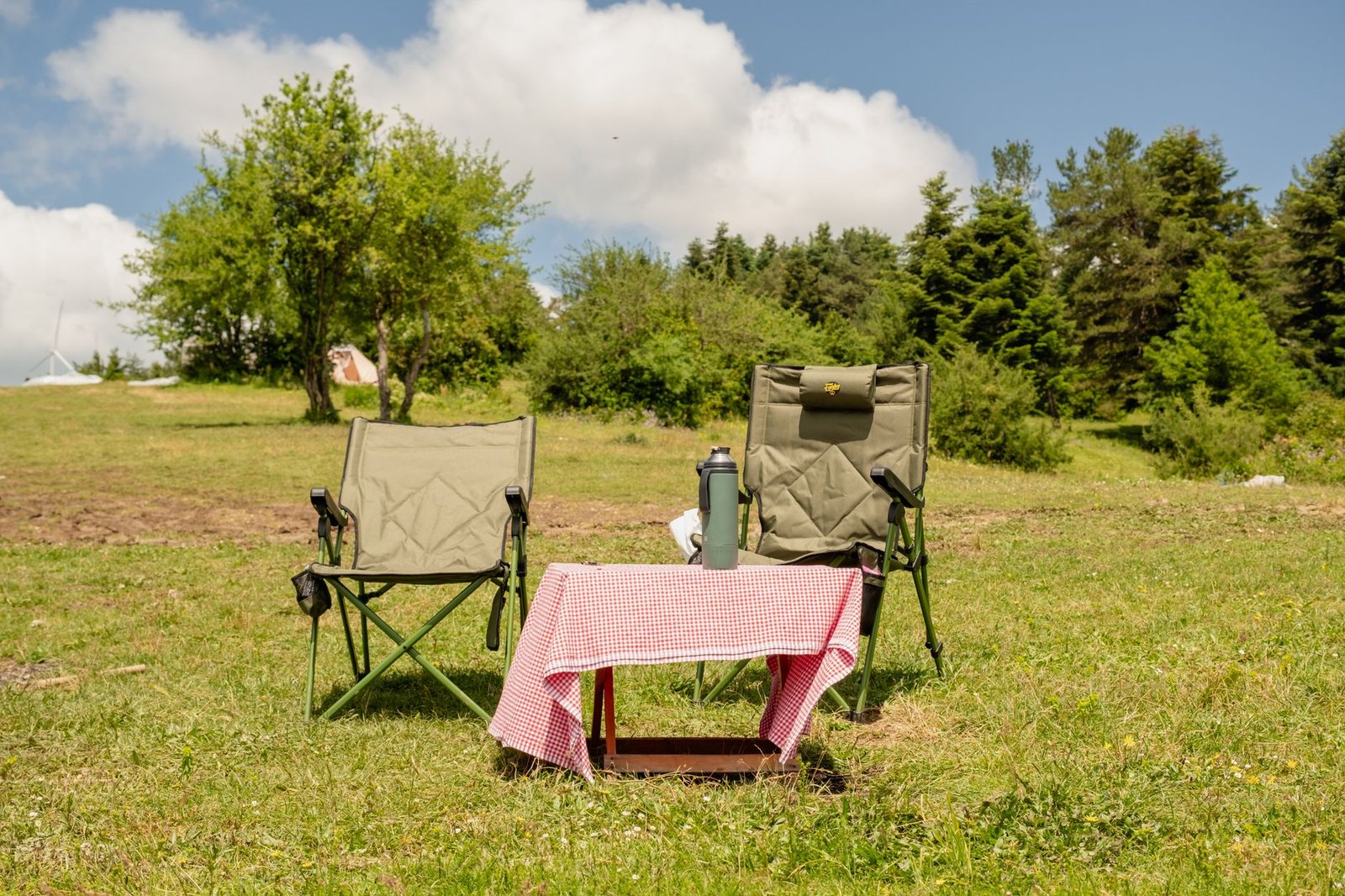
The best setup leaves room in the vehicle and a place to sit when it arrives.
At dusk, a camper with a warm tent can still end up eating dinner with a plate balanced on one knee. A supportive chair for each person makes meals and downtime easier; a compact table keeps food, lights, and small items off the ground.
Before packing a table, check whether the campsite provides a picnic table. If it does, chairs may be enough. If not, choose a table that stands steadily on uneven ground and sits at a usable height beside the chairs. Cooking calls for a stable, heat-safe surface—not a plastic cooler. The aim is to solve the places where people actually sit and set things down, without filling the vehicle with furniture that stays folded.
Build a campsite furniture list around actual needs
-
Allow one seat per camper
A chair gives everyone a place to eat and rest without waiting for a turn. For a short trip with limited cargo space, compact stools can substitute for full-size chairs.
-
Add a shared table only when it earns its space
It is useful for food preparation and meals when the site has no suitable surface. Check its packed dimensions before committing trunk space.
-
Pack an insulating sleeping pad for each sleeper
A pad limits heat loss to the ground and cushions pressure points. Choose its insulation rating for the expected nighttime conditions.
-
Consider a cot for a specific sleep problem
A cot can make getting up easier or lift a sleeper off uneven ground, but its bulk and weight rarely justify it on a minimal trip.
Air circulating beneath a cot can draw away heat. An insulating pad is still needed on top, especially in cool weather.
Choose a seat that suits the stay
A seat for every regular camper matters more than side tables, footrests, or other accessories. Meals may be short, but an evening beside the fire can keep someone seated for hours. For that use, a chair with a backrest usually earns its packing space.
The choice between a stool and a chair comes down to how long the seat will be occupied. A stool packs small and works well for a quick cooking task, a short rest, or an occasional guest. Without back support, it is a poor substitute for a chair when most of the evening will be spent sitting.
Fit matters as much as padding. A seat that is too low can make standing difficult; one that is too high may leave feet dangling. Check the stated seat height and weight limit, and look for a stable frame with a firm, supportive seat. On soft ground, wide feet are less likely to sink than narrow legs.
For trips with little space, pack comfortable chairs for the people who will use them daily before adding compact stools for visitors. That trade-off preserves the seats that make the greatest difference at camp.
Choose chairs for the people using them
A chair can feel comfortable at first and still make every trip to the table awkward. For anyone who finds standing difficult, a seat that keeps the feet flat and the knees near hip height is usually easier to leave than a low sling chair. Firm armrests offer a place to push from; soft fabric arms often do not. The seat-height guide for easier standing explains what to check when comparing chairs.
Fit matters beyond height. A seat should leave some clearance between the hips and armrests without being so wide that the arms cannot rest comfortably. Tall campers may need enough seat depth to support the thighs, but the front edge should not press behind the knees. For long evenings, look for a backrest that supports the lower back without forcing a reclined posture; a high back alone does not guarantee support.
A published weight limit is a starting point, not a comfort rating. It does not reveal whether the frame twists when someone shifts position, whether the seat sags, or how securely the feet rest on uneven ground. Check the limits of chair weight ratings, then consider the chair’s frame, stance and intended use. A lightweight beach lounger and a sturdy dining-height chair solve different problems even if their listed capacities match.
If possible, test a chair by sitting for several minutes and standing without pulling on a table. Check for pressure behind the knees, a stable frame and armrests that remain useful when weight is placed on them.
Decide whether a table earns its space
A dining table earns its place when several people eat together, prepare food, play games, or need a clean surface for shared gear. If the campsite has a usable picnic table, packing another may add little. For one or two campers eating from their laps, a compact side table may be enough to hold drinks, a lantern, and small essentials off damp ground.
Size the table around seated people, not just the tabletop. Set the camp chairs at the proposed table height: armrests may prevent chairs from pulling in, while low chairs can leave the tabletop awkwardly high. Allow room for knees beneath the frame and for people to get in and out without stepping over table legs. Four diners may fit around a small table, but plates, serving dishes, and food prep need more working surface.
A broad, level table also needs a firm frame and feet suited to the ground. Stability does not make a tabletop stove-safe: heat can damage plastic or fabric tops, and an unstable stove remains hazardous even on a sturdy table. Follow the stove and table manufacturers’ instructions for permitted surfaces and clearances.
- Usable dining space
Check the surface with plates and shared dishes in place, not just the number of seats advertised.
Look forRoom for meals and the activities planned.AvoidA crowded tabletop that leaves no prep space. - Chair and ground fit
Check knee clearance, armrest height, and whether the feet sit firmly at the intended campsite.
Look forA comfortable seated position and a steady frame.AvoidLeg braces that block knees or feet that rock.
When a camping cot is worth packing
A cot is a targeted upgrade, not a replacement for a sleeping pad. Its raised surface can make getting in and out of bed easier, keep bedding above damp or uneven ground, and free space underneath for soft bags. Those benefits matter most on car-camping trips where packed size and weight are less restrictive.
Check the cot’s assembled length, width, and height against the tent’s usable floor area—not just its advertised capacity. Sloping walls can crowd a tall cot even when its legs fit on the floor. Allow room to open the door and move around, and protect a lightweight tent floor from concentrated pressure at the feet.
A cot also needs insulation. Air circulating beneath it can draw heat away, while body weight compresses the underside of a sleeping bag. In cool weather, place an appropriately insulated sleeping pad on top rather than relying on the raised bed alone.
For side sleepers, a tightly stretched fabric deck or rigid edge can press into the hip and shoulder. A pad may soften those contact points, but it will not fix a cot that is too narrow; the fit and surface details that affect side-sleeper comfort deserve a closer look before purchase. Factor in setup time, too: some compact cots demand considerable force to tension their frames.
Assemble the cot at home, then lie on it in the usual sleeping position. Check for frame contact, wobble, and enough clearance to sit up inside the tent.
Keep furniture steady on difficult ground
A level-looking campsite can still have soft patches that cause a chair to tilt or a table to rock. Set furniture on firm, well-drained ground where possible, and press on each leg before settling in. Avoid placing a chair where one foot rests on a buried root while the others sit on loose soil.
On sand or soft ground, narrow chair feet concentrate weight and sink. Wide, flat foot pads or purpose-made sand feet spread the load; a rigid board can support multiple feet if it lies flat and cannot slide. Check the chair again after someone sits down, since the ground may compress under load.
For a rocking table, use adjustable legs if available. Otherwise, place a stable, broad shim beneath the short leg rather than balancing a foot on a loose stone. Press each corner of the empty tabletop to check for movement before adding cookware or drinks. Keep heavy items near the center, and move the table if it cannot be made steady—especially before using hot equipment.
Set up every piece at home first
- Check the packed load
Measure folded furniture against the vehicle space reserved for it. A cot that fits only when placed across the door opening may block access to everything else.
- Assemble it in order
Follow the manufacturer’s sequence on a clear floor, keeping sleeves, hinges, and locking points visible. Note any step that requires a second person or more room than the campsite may offer.
- Test the fit under normal use
Sit at the table with chairs fully open. Set the cot inside the tent to check door access, wall clearance, and space for other sleepers.
- Inspect before folding
Brush grit from joints and check for loose fasteners, torn fabric around load-bearing seams, cracked hubs, or bent tubing. Fold each piece completely and confirm it returns to its bag without excessive pressure.
A new cot cover may be tight, and a chair hinge may catch on folded fabric or trapped grit. Stop and check alignment rather than forcing a frame or cot end bar. Do not use furniture with cracked joints, bent load-bearing tubes, or torn structural seams; those faults can worsen suddenly under weight.
Pack a usable seat for each person who will sit at camp at the same time. Add a table when meals, games, or other shared tasks need a dependable surface—not when the site already provides one. A cot earns its bulk only if easier bed access or a better night’s sleep justifies it; an insulating pad is still needed.
Before loading extras, check the packed furniture against vehicle space and weight limits. Then check the tent layout with the cot in place: can doors open, and can people move around it? Consider whether the ground will support the furniture and how long each piece takes to set up. If space or effort is tight, leave the least-used item behind.
CampEquipmentPlus relies on reader support. Purchases made via links on our website may earn us an affiliate commission at no extra cost to you, helping keep the site running.