
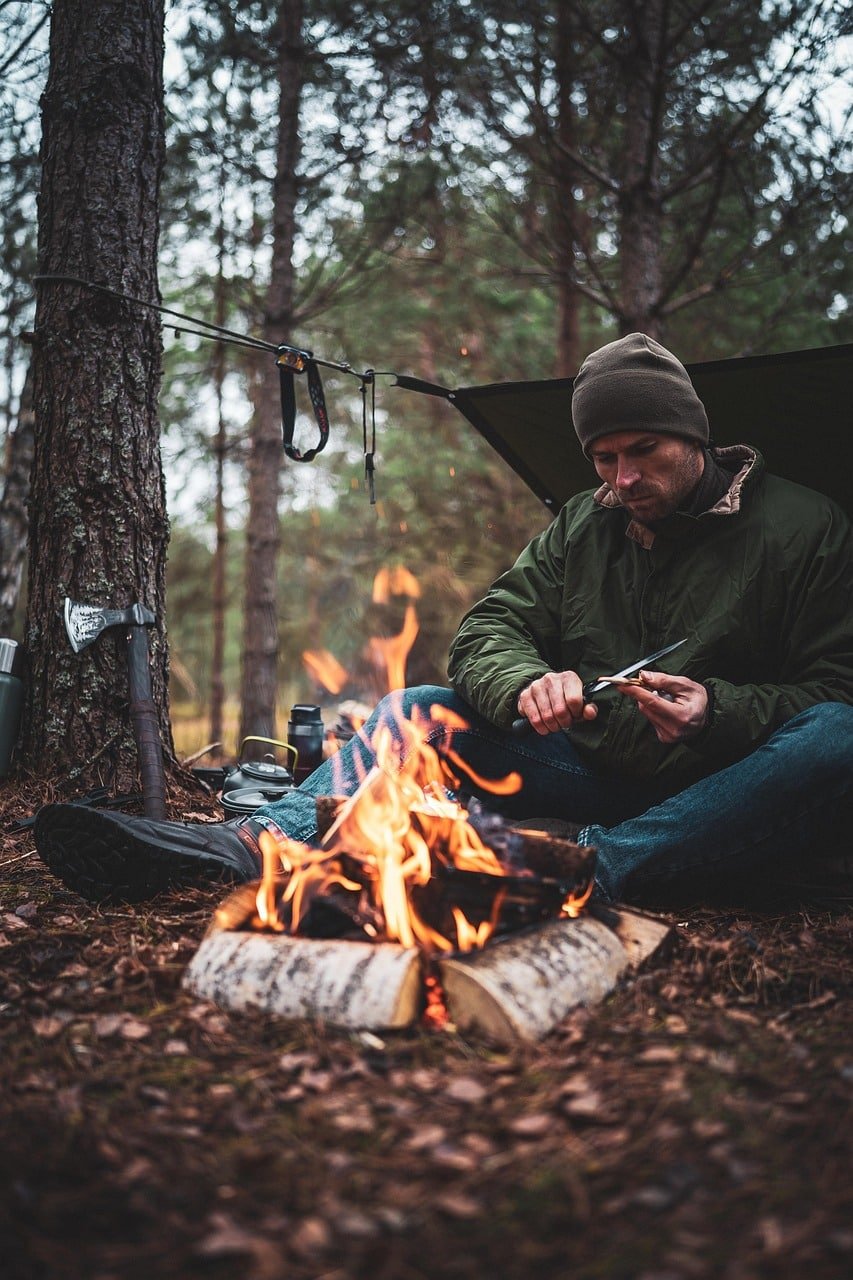
A small setback can become serious when there is no tap, ranger, or quick ride out.
A sleeping bag left against a damp tent wall may be too wet to keep a camper warm by morning. At a remote campsite, prevention and backup serve different purposes: a waterproof pack liner protects the bag; dry spare layers help if it still gets soaked.
The same distinction applies elsewhere. A water filter makes untreated water usable, while purification tablets cover a broken filter; neither helps if no water source is available. A map and compass help prevent a wrong turn, while a satellite messenger can summon help when an injury makes walking out impossible. Carry both kinds of gear—and know how each works before leaving.
Size the kit for the wait, not just the trip
- Exposure protection
Cold rain, wind, or an unexpected night out can become dangerous before food runs short. Pack insulation that stays dry, rain protection, and a shelter suitable for the worst plausible weather.
CarryDry layers and a weatherproof overnight barrierDo not rely onTreating a campfire as the only source of warmth - Safe water
Water needs rise with heat, exertion, and group size. Carry enough to reach a reliable source, plus treatment capacity for the likely wait; filters that freeze may crack internally and should be protected.
CarryA dependable source and a backup treatment methodDo not rely onAssuming clear water is safe - Navigation
A downloaded map helps only while the phone works. A paper map and compass provide a backup, particularly where trails are faint or roads are far away.
CarryOffline and non-electronic route informationDo not rely onRelying on cell coverage for directions - Calling for help
Beyond cell coverage, a satellite messenger or personal locator beacon can send an emergency alert. Extra battery capacity matters if help could take a day or longer to arrive.
CarryA tested signal method with power to spareDo not rely onAssuming someone will quickly pass the campsite
A small pouch with an emergency bivy, fire starter, whistle, light, water-treatment backup, and critical medication remains useful when the main pack is left at camp. Packaged options are compared in solo survival kits worth carrying; contents still need checking against local conditions.
Shelter and warmth
A tent, tarp, or other shelter must withstand the wind and precipitation expected at the campsite—not merely provide shade. Check that it can be pitched on the available ground and that stakes, guylines, and a repair item are packed. A waterproof jacket and pants protect against exposure while setting up camp or moving outside the shelter; a tent alone cannot do that job.
Ground insulation matters as much as the sleeping bag. A compressed bag offers little warmth underneath the body, so pair it with a sleeping pad rated for the expected ground temperature. For cold conditions, look at the pad’s R-value as well as the bag’s temperature rating. Bag ratings vary in meaning; a comfort rating is a better starting point than a lower-limit rating for someone who sleeps cold.
Keep one dry base layer and dry socks sealed in a waterproof bag for sleeping. Damp clothing, wind, and exhaustion can cause dangerous heat loss even when the air is above freezing. Carry an emergency bivy or reflective blanket separately from the main sleeping kit, where it remains accessible if the pack or shelter is lost.
Persistent shivering, confusion, or clumsy movements need prompt attention. Follow the steps for suspected hypothermia while help is on the way; do not rely on building a fire as the primary warming plan.
An emergency bivy in a jacket pocket or small day bag is more useful during an unplanned stop than one buried with the tent.
Water, food, and sanitation
Carry enough drinking water to reach a verified, currently reliable source—or the exit route, with a reserve for delays. A stream marked on a map may be seasonal or dry. Hot weather, strenuous travel, and meals that need rehydrating all increase demand; a filter does not replace the water needed to reach the next supply.
Bring a backcountry filter and an independent treatment backup matched to local risks. Many common filters remove bacteria and protozoa but not viruses; chemical disinfectants can address viruses, though cold or cloudy water may require longer treatment. Check the product’s instructions and keep untreated water away from clean bottle openings.
Pack food that can be eaten without a stove or added water, including enough for an unplanned extra day. Keep soap or hand sanitizer accessible for use before handling food and after toileting; sanitizer works poorly on visibly dirty hands. Check local waste rules before leaving. Where catholes are permitted, dig them at least 200 feet from water, trails, and camp; pack out toilet paper. In sensitive areas, human waste may also need to be packed out.
Filters, disinfectants, and UV treatment do not reliably make water contaminated by fuel, pesticides, mining runoff, or other dissolved chemicals safe. Avoid suspect sources and carry enough water to bypass them.
Navigation and light
A phone can show a precise location until its battery dies, its screen breaks, or a downloaded map proves incomplete. Carry a paper map and compass alongside a charged phone with offline maps and backup power. Before leaving camp, locate the route on the paper map, check the compass against a known landmark, and mark the camp, water source, trail junctions, and intended turnaround point. In areas where magnetic declination matters, account for it when converting between map bearings and compass bearings.
Set a turnaround time that leaves daylight for the return, not merely enough time to reach the destination. A headlamp keeps both hands free for reading a map or negotiating rough ground after dark; spare batteries or a compatible power bank should stay dry and accessible. Leave a trip plan with a reliable contact, including the route, expected return time, and when to call for help if no message arrives.
If landmarks stop matching the map, stop before moving farther. Check the last confirmed position, the direction of travel, and the time and light remaining. Backtrack only if the route is clear and safe; otherwise, stay put and follow the first steps for getting oriented when lost rather than guessing at a shortcut.
Signaling and calling for help
Finding the route back and contacting rescuers are separate problems. Keep a pealess whistle on the person, not buried in a pack: repeated blasts carry farther than shouting with less effort. A bright jacket or signal panel helps nearby searchers spot a stationary group; a headlamp serves the same purpose after dark.
Beyond cell coverage, a satellite messenger or personal locator beacon (PLB) can send a distress alert. Both need a clear view of the sky; canyon walls and dense canopy can delay transmission. If it is safe to do so, move into the open, follow the device’s antenna instructions, and leave it powered on after activating SOS. Two-way messengers may also let responders ask about injuries, while PLBs generally send a one-way alert.
Before departure, check the device’s coverage, battery, and emergency contacts. Confirm that a messenger’s subscription is active, or that a PLB is registered, and leave a trusted contact the route and overdue check-in time. The ways to reach help without cell service explain what happens after an alert.
First aid for a longer wait
A remote-camping first aid kit should handle common injuries without assuming help will arrive that day. Pack several pairs of nitrile gloves, a wound-irrigation syringe, clean water for rinsing, sterile gauze, nonstick dressings, medical tape, and elastic bandages. Rinse dirt from minor wounds thoroughly; alcohol and hydrogen peroxide can irritate tissue and are poor substitutes for irrigation.
Blisters can make a walk out difficult. Carry blister pads or hydrocolloid dressings, plus tape to protect a hot spot before skin breaks. Add tweezers, a small pair of scissors, and any supplies needed for known allergies or medical conditions. The camping first aid kit checklist helps catch smaller essentials that are easy to overlook.
Include familiar over-the-counter medicines for pain, allergies, and stomach trouble, checking age limits, contraindications, and expiration dates. Each camper should carry essential prescriptions in a protected, accessible place, with an extra supply where feasible for a delayed return. Anyone prescribed an epinephrine auto-injector should bring it and ensure companions know where it is.
Pack enough gloves, dressings, blister care, and medication for every camper through a plausible rescue delay, not just one treatment per person. For severe bleeding, substantial gauze and a pressure dressing are useful; add a commercial tourniquet or hemostatic gauze only if someone has been trained to use it. First aid buys time—it does not replace an evacuation plan.
Fire and stove supplies
Pack a lighter and an independent backup, such as stormproof matches or a ferro rod. Seal matches and tinder in separate waterproof bags; petroleum-jelly-soaked cotton or commercial fire tabs burn long enough to help catch small kindling. A spark is not a sustained fire: wet wood still needs dry tinder, progressively larger fuel, and time to ignite.
Where regulations permit, a compact stove is more dependable than a campfire for cooking and heating water. Match fuel to the stove, test it before departure, and carry enough for the planned meals plus a delay. Upright canister stoves lose pressure in freezing temperatures. Run any stove outdoors, away from tent openings, to avoid carbon monoxide buildup.
Check current fire restrictions, which may also limit stove use. If flames are prohibited, fuel is soaked, or an injury makes fire-building impractical, shelter, a ground pad, and dry insulation remain the warmth plan.
Check the kit against the actual trip
-
Shelter and warmth
Pack a shelter that can withstand the forecast wind and rain, a ground pad suited to expected temperatures, and dry sleep layers. Keep an emergency shelter accessible if the main camp becomes unusable.
-
Water and food
Carry enough water to reach the first confirmed source, plus a reserve if that source fails. Match treatment to local hazards, protect filters from freezing, and include food that can be eaten without a stove.
-
Navigation and light
Carry a paper map and compass alongside downloaded maps or GPS. Give each person a headlamp with spare power; mark exit routes before departure rather than relying on a phone signal.
-
Communication
Bring a whistle and the emergency communicator appropriate to the area. Confirm its subscription or registration, know how to send an alert, and carry charging power for the expected delay.
-
First aid and fire
Check wound supplies, blister care, personal medications, and any bleeding-control equipment against group size and training. Pack protected tinder and independent ignition, plus sufficient stove fuel where fires are prohibited.
-
Run a predeparture test
Check forecasts and fire restrictions; confirm water sources and exits. Charge and operate devices, inspect supplies and expiration dates, then leave a route and overdue check-in time with a reliable contact.
A generic survival kit cannot verify a water source, reveal a closed exit, or fix an untested satellite device. The useful kit is the one matched to the route, conditions, group, and likely wait for help.
CampEquipmentPlus relies on reader support. Purchases made via links on our website may earn us an affiliate commission at no extra cost to you, helping keep the site running.