
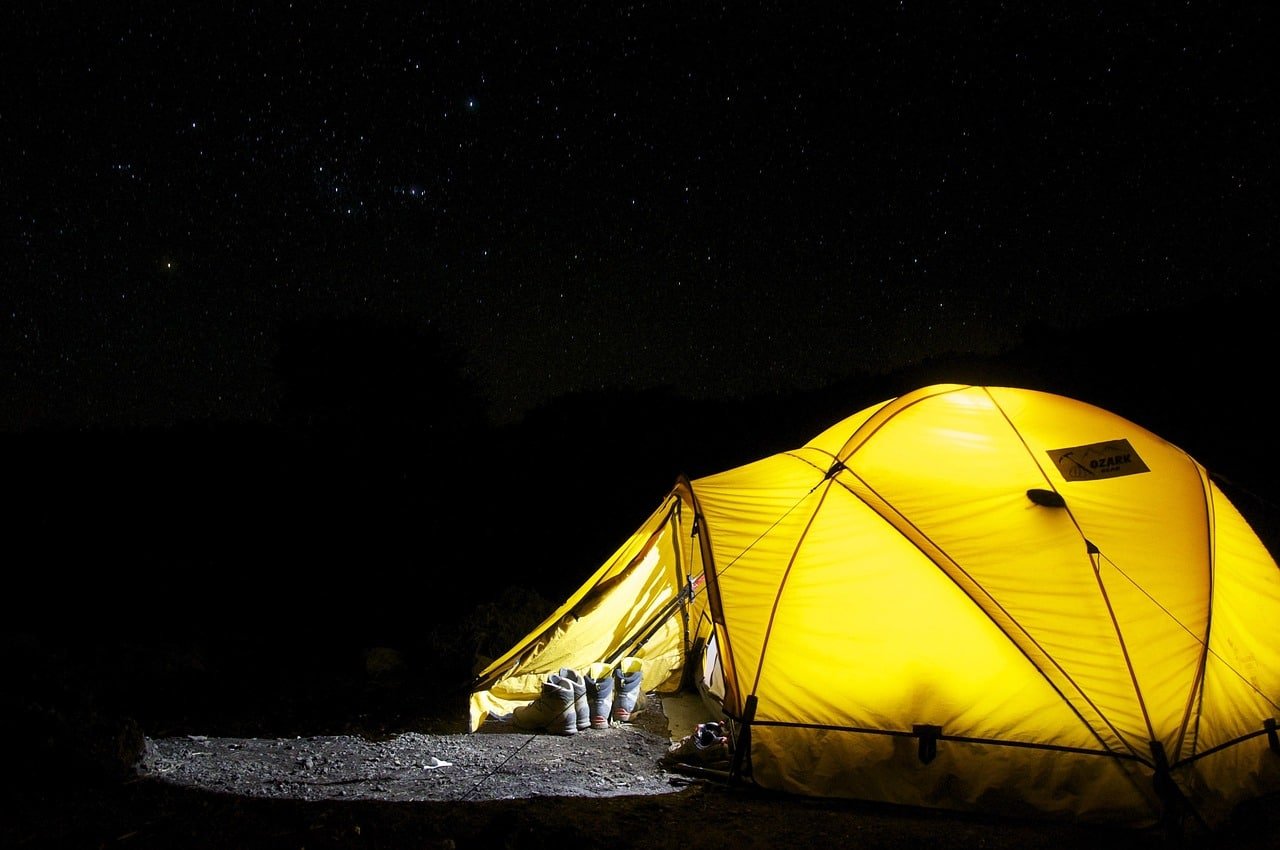
A four-person rating promises sleeping spots, not elbow room.
Four adults arrive with sleeping pads, backpacks and rain-soaked jackets. The tent may have room for the pads, but nowhere to put the rest without blocking the door or pressing gear against the walls.
Check usable floor width, not just the capacity label. Four 25-inch pads need 100 inches side by side; a tapered floor or sloping walls can make even that measurement misleading. Vestibules can keep packs and wet boots outside the sleeping area, though they rarely provide room to sit together. For four adults seeking comfort rather than a tightly packed night’s sleep, a six-person tent is usually the better starting point.
Will four adults be comfortable?
Can four adults sleep in a four-person tent?
Often, yes—but “four-person” describes sleeping capacity, not comfortable living space. Four adults may fit at night while having little room to change clothes or sit apart.
Does the type of tent change the answer?
Considerably. A four-person backpacking tent typically keeps weight down with a low peak and steeply sloping walls; a four-person car-camping tent can offer more headroom and usable space without the same weight constraint.
When is a four-person tent enough?
It works best for a short trip when the group is content to use the tent mainly for sleeping. For longer stays or rainy days, choosing a camping tent for the whole trip means considering how four people will share the space while awake.
Would a larger tent be more comfortable?
Usually. A five- or six-person model gives four adults more room to move, though the extra size brings more weight and a larger campsite footprint.
If four adults need to sit inside during bad weather, compare the tent’s usable headroom with its advertised sleeping capacity. A tall peak alone may leave most of the interior too low to use comfortably.
Do four sleeping pads actually fit?
The first fit test is whether four actual sleeping pads lie flat on the usable floor. Add their inflated widths, not the widths printed on their stuff sacks: four standard 20-inch pads need at least 80 inches across, while four 25-inch pads need 100 inches. An 84-inch-wide tent technically accepts the first set, but leaves only four inches total for gaps between pads and clearance from the walls.
Floor area alone can hide the problem. An 86-inch-wide head end may narrow to 70 inches at the foot, where four rectangular pads no longer fit side by side. Tapered mummy pads may work if their narrow ends line up with that taper; alternating sleepers head-to-foot can sometimes improve the fit. A double sleeping pad for a couple may remove the gap between two sleepers, but it does not recover missing floor width.
Check length as carefully as width. A 78-inch pad in a 96-inch tent appears to leave 18 inches, but inward-sloping walls can push a pillow or sleeping bag against the fabric. For a reliable test, pitch the tent taut, inflate all four pads, and place them as they would be used. If pads buckle, overlap, or press into wet-prone walls, the layout is too tight—regardless of the tent’s four-person rating.
Does headroom matter when four adults share a tent?
Yes. A floor plan shows where pads can lie, but not whether occupants can sit up or turn without pressing against the walls. Peak height is only one point: in a dome tent, the ceiling may drop sharply toward the sides, leaving the two outer sleepers with little room at shoulder height.
Wall shape and pole structure matter more than the advertised peak alone. Steeper walls or a ridge pole can preserve headroom across a wider area; low corners can make even a generous-looking floor feel cramped. Thick pads raise sleepers closer to the canopy, while tall adults may find their heads or feet brushing sloped ends. Anyone needing extra length and clearance can compare tents with more sleeping space for tall campers.
A useful test is to place four inflated pads inside, then have everyone sit up, change layers and reach the door. If those movements require others to shift, the tent fits four lying down—not comfortably living inside.
Can four adults manage gear and rainy days?
Four pads fitting on the floor does not mean four adults can use the tent easily. Pitch it with the pads inflated, then place four packs and four pairs of shoes in the vestibules. Check whether the doors still open fully and whether anyone reaching an exit must step across another person’s pad. Two doors on opposite sides can make nighttime trips much less disruptive than one door at the foot of a tightly packed row.
Dressing is another space test. With everyone seated on their pads, can each person pull on layers without leaning into a neighbor or brushing a damp wall? A tent that works for a fair-weather overnight may feel cramped when rain keeps everyone inside for hours. Wet jackets and boots need a place that does not block the exits; vents need to remain open enough to limit condensation, even when the fly is closed.
Ground protection matters in prolonged rain, too. When sizing a footprint for the tent, keep it inside the fly’s drip line: an exposed edge can catch runoff and direct water beneath the floor.
Test the tent with all four pads, packs and occupants in place. Have each person reach a door and put on a jacket; if either task requires clearing the floor first, comfort depends on favorable weather.
Should four adults choose a six-person tent?
For a one- or two-night trip in fair weather, a four-person tent can be a reasonable choice if the group uses narrow pads, keeps packs in the vestibules, and expects to spend little waking time inside. Four 20-inch pads need at least 80 inches of usable floor width—and more if campers want a gap between them or room to avoid touching damp walls.
Wide pads change the calculation quickly. Four 25-inch pads need 100 inches before allowing for tapered corners, sloping walls, or a clear route to the door. For a longer stay, especially where rain may keep everyone inside, a six-person tent often provides welcome space for dressing, shifting positions, and keeping gear away from bedding. Its advertised capacity is not a guarantee, though: floor dimensions and wall shape still matter.
That extra room carries trade-offs. A six-person model generally costs and weighs more, takes up more packed space, and needs a larger, reasonably level patch of ground to pitch. If campsite space is limited, a well-designed four-person tent may be the more practical compromise. Likewise, whether an instant tent suits the group is a separate question: a faster pitch does not add floor area or shoulder room.
How can four adults check the fit before a trip?
-
Recreate the floor
Inspect a pitched tent if possible. Otherwise, mark its published interior dimensions on the ground, including any taper; a rectangular outline can overstate the space at the ends.
-
Place all four pads
Use inflated pads, not their packed dimensions. Check that each sleeping position clears the walls and leaves room to move without shifting another pad.
-
Account for gear
Set aside space for packs, shoes and clothing. Confirm that vestibules can hold the gear intended for them without blocking an entrance.
-
Walk the door routes
Check whether occupants can reach a door at night without stepping over sleepers or gear.
-
Check height where people sit
Peak height alone is misleading: sloping walls may leave little shoulder room over the outer pads.
If four pads fit but door access or gear storage does not, the four-person rating describes maximum sleeping capacity, not comfortable occupancy. A larger tent is the safer choice.
CampEquipmentPlus relies on reader support. Purchases made via links on our website may earn us an affiliate commission at no extra cost to you, helping keep the site running.