
CampEquipmentPlus relies on reader support. Purchases made via links on our website may earn us an affiliate commission at no extra cost to you, helping keep the site running.
Your feet are screaming at you three miles into the trail, and you’re wondering why you trusted that random pair of boots from the clearance rack.
I’ve been there—limping back to the trailhead, blisters forming, ankles aching, swearing I’d never make that mistake again. Finding the best hiking boots for men shouldn’t feel like a gamble, but somehow it always does.
Here’s what I’ve learned after years of testing boots on everything from casual day hikes to multi-day backpacking trips: the right boots transform your hiking experience, while the wrong ones turn nature into torture.
Let me walk you through the nine best options that actually deliver on their promises.
What Actually Makes a Hiking Boot Great?
Before we jump into specific boots, you need to understand what separates trail-worthy boots from expensive mistakes. Construction quality sits at the top of the list.
We’re talking about how the upper connects to the sole, the materials used, and whether everything stays together after 100 miles of abuse.
Ankle support matters more than most people realize. A good boot stabilizes your ankle on uneven terrain, preventing rolls and reducing fatigue.
I twisted my ankle badly on a rocky trail in Colorado wearing low-cut hikers—learned that lesson the hard way. Now I pay attention to collar height and structure.
The outsole design determines whether you stay upright or spend your hike slipping and sliding. Deep, multidirectional lugs grip various surfaces, while the rubber compound affects durability and traction.
Vibram soles dominate for good reason—they simply outperform cheaper alternatives in most conditions.
Key Features to Prioritize
When you’re shopping for hiking boots for men, these features separate the contenders from the pretenders:
- Waterproofing (Gore-Tex or similar membranes)
- Break-in period (some boots need weeks, others work immediately)
- Weight (lighter isn’t always better for technical terrain)
- Toe protection (reinforced caps save your toenails on descents)
- Heel counter (firm support prevents blisters and fatigue)
Ever notice how your heel lifts inside poorly designed boots? That small movement creates friction, and friction creates blisters. A proper heel counter locks your foot in place, eliminating that problem entirely.
The 9 Best Hiking Boots for Men
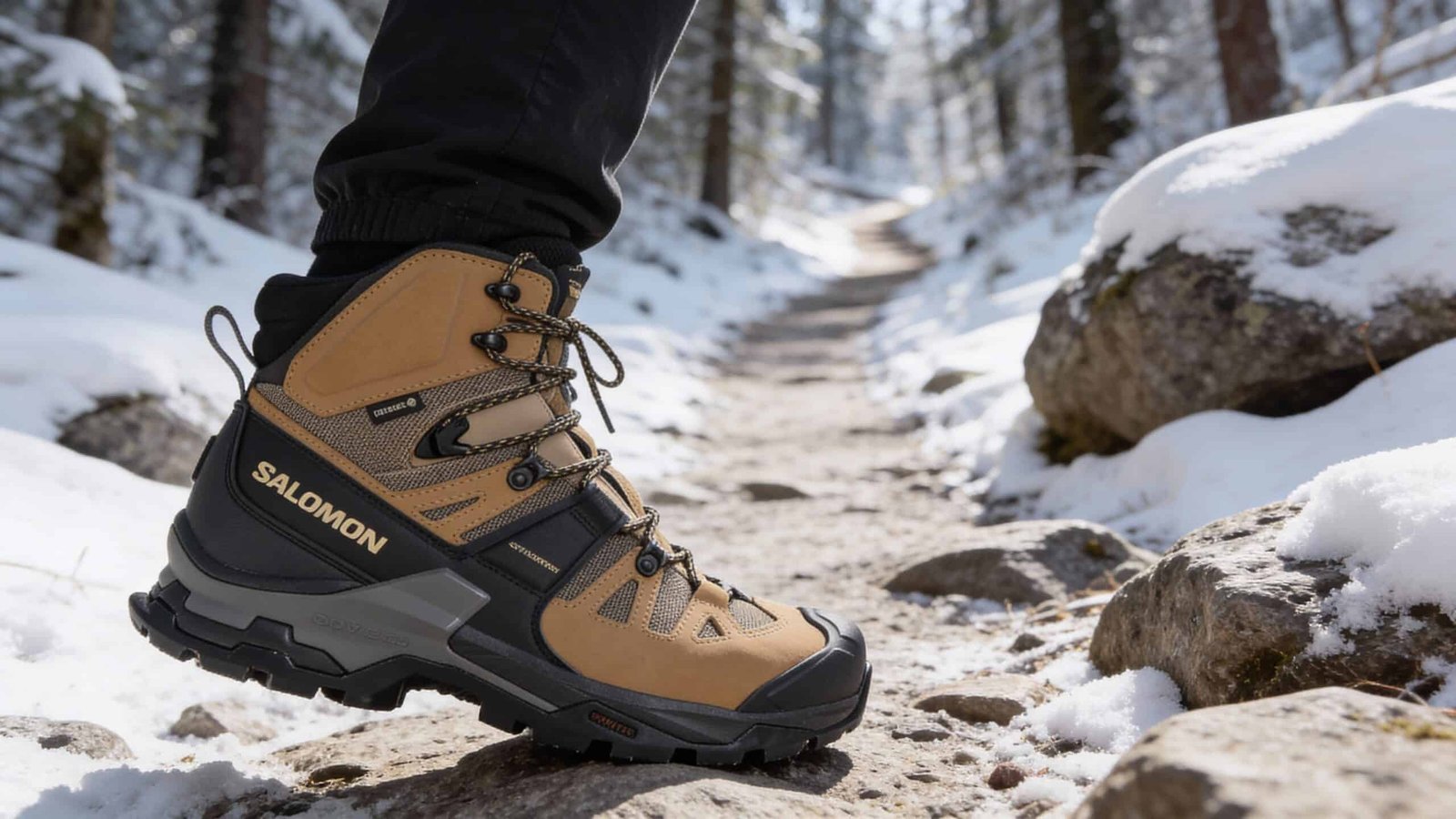
1. Salomon Quest 4 GTX
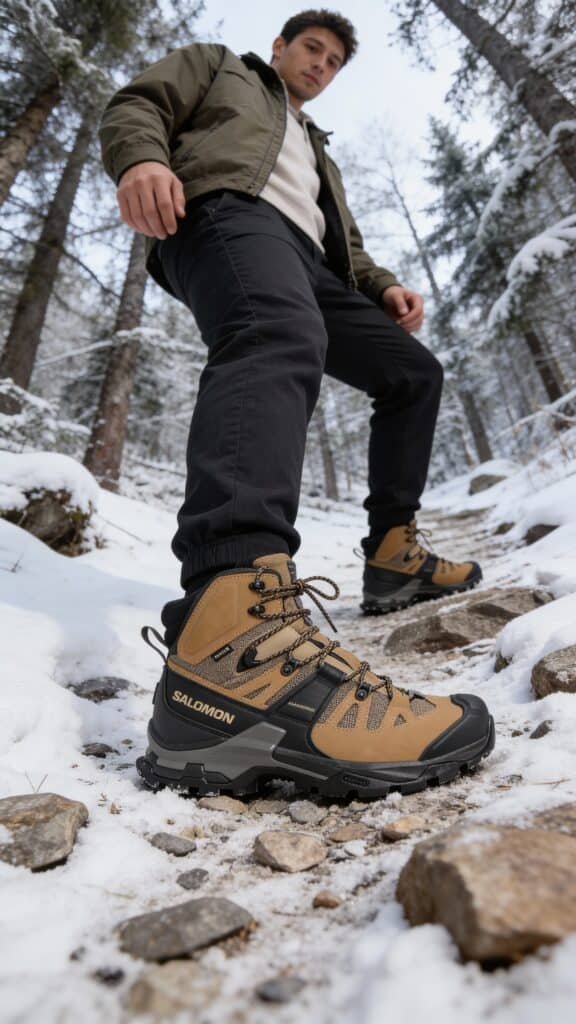
These boots handle technical terrain like nothing else I’ve tested. The 4D Advanced Chassis provides incredible stability without feeling stiff or restrictive. I wore these on a challenging section of the Pacific Crest Trail, and they performed flawlessly on loose scree and rocky switchbacks.
The Gore-Tex membrane keeps water out while maintaining breathability—your feet stay dry from both external moisture and internal sweat. The Contagrip sole grips wet rocks better than most competitors, which I appreciated during stream crossings.
Key specs:
- Weight: 1 lb 14 oz per boot
- Drop: 11mm
- Best for: Technical trails and backpacking
- Break-in: Minimal, comfortable within a few miles

These run narrow, so order a half size up if you have wider feet. The support justifies the weight for serious hiking, though they’re overkill for easy trails.
2. Merrell Moab 3 Mid Waterproof
Want boots that feel comfortable immediately? The Moab 3 delivers out-of-the-box comfort that rivals broken-in boots. I recommend these to beginners constantly because they require basically zero break-in period.
The Vibram TC5+ outsole provides solid traction on most surfaces, though it doesn’t match more aggressive tread patterns on wet rock. The waterproofing works well for stream crossings and light rain, but I wouldn’t trust them for sustained wet conditions.
What makes them special:
- Incredibly comfortable from day one
- Great for moderate trails and day hiking
- Durable construction that lasts seasons
They’re heavier than they look, which surprises people. The weight adds stability but reduces agility on technical sections. Perfect for maintained trails; less ideal for scrambling.
3. Lowa Renegade GTX Mid
These boots define versatility. I’ve worn mine on everything from muddy Pacific Northwest trails to dry desert hikes, and they adapt to conditions beautifully. The Monowrap frame provides support without the bulkiness you get from traditional hiking boots.
Lowa nailed the fit—these conform to your foot shape better than most boots without feeling sloppy. The leather/synthetic upper breaks in gradually, molding to your specific foot over 20-30 miles. Worth the patience, trust me.
Performance highlights:
- Excellent all-around performance
- Superior build quality and materials
- Works across diverse terrain types
- Comfortable for 12+ hour days
They run a bit stiff initially, which some people hate. I appreciated the structure once broken in, but impatient hikers might struggle. Also, they’re pricey at $250+, though they justify the cost.
4. Danner Trail 2650 Mid GTX
Finally, someone created hiking boots that don’t look like hiking boots. The Trail 2650 bridges the gap between lightweight trail runners and traditional boots, offering a modern aesthetic that works off-trail too.
I love these for fast-paced day hikes where you want support without bulk. The Vibram 460 outsole grips surprisingly well given the lighter weight and lower profile. They breathe better than chunkier boots, which matters during summer hiking.
Best features:
- Lightweight at 1 lb 8 oz
- Stylish enough for casual wear
- Quick break-in period
- Nimble on varied terrain
The trade-off? Less ankle support than burlier options. These excel on well-maintained trails but struggle with heavy loads or extremely rocky terrain. Know your limits with these.
5. KEEN Targhee III Mid Waterproof
If you have wide feet, KEEN boots probably fit you better than anything else. The generous toe box accommodates wider feet without sizing up, and the overall fit runs roomier than most brands.
I appreciate the 4mm multi-directional lugs that handle mud and loose soil effectively. These boots grip slippery roots and muddy trails better than comparable options. The waterproofing holds up well—I’ve slogged through countless creek crossings without wet feet.
Why people love them:
- Wide-foot friendly design
- Excellent value at $150-170
- Proven durability over multiple seasons
- Comfortable for all-day wear
They’re bulkier and heavier than modern lightweight options. Some people find them clunky, but I consider the weight acceptable for the support and protection. Also, the styling is dated—these won’t win any fashion awards :/
6. Arc’teryx Acrux TR GTX
Premium boots for people who demand performance and don’t mind paying for it. The Adaptive Fit liner molds to your foot, creating a custom feel that’s hard to match. I’ve never experienced anything quite like these boots.
Arc’teryx engineered these for alpine and technical terrain. The extended rand protection, aggressive sole, and supportive structure handle serious mountain conditions. I’ve used them for scrambling and light mountaineering with confidence.
Technical advantages:
- Superior materials and construction
- Exceptional ankle support
- Precise fit and control
- Outstanding traction on rock
At $400+, they’re expensive. Really expensive. You’re paying for Arc’teryx’s obsessive attention to detail and premium materials. Worth it for dedicated hikers; overkill for casual users, IMO.
7. Vasque Breeze LT Mid GTX
These feel lighter than their specs suggest, making them perfect for fast-paced hiking and long-distance trails. The Breeze LT offers a rare combination of low weight and adequate support that usually don’t coexist.
I wore these for a 50-mile section hike, and my feet felt fresh at the end of each day. The Gore-Tex membrane breathes better than most waterproof boots, preventing the swampy-foot syndrome that plagues sealed boots.
Key advantages:
- Light and nimble (1 lb 12 oz)
- Excellent breathability
- Comfortable for high-mileage days
- Good value at $200
They sacrifice some durability for weight savings. The materials show wear faster than burlier boots. If you’re hard on gear or hike abrasive terrain frequently, consider more robust options.
8. Scarpa Zodiac Plus GTX
Old-school hikers love these boots, and for good reason. The full-grain leather upper provides durability and support that synthetic materials can’t match. These boots last years—I’m talking 500+ miles before needing replacement.
The stiff midsole requires a break-in period, but once broken in, these boots support heavy loads exceptionally well. I’ve backpacked with 40-pound packs in these without the fatigue I get from less supportive boots.
What they offer:
- Exceptional durability and longevity
- Superior load-carrying support
- Excellent torsional rigidity
- Resoleable construction
They’re heavy (2 lbs per boot) and require patience during break-in. Modern lightweight hikers might find them unnecessarily robust. They’re designed for traditional backpacking, not ultralight approaches.
9. Oboz Bridger Mid Waterproof
These boots punch above their price point. For around $180, you get features and performance that compete with boots costing $100 more. The B-DRY waterproofing works surprisingly well, keeping feet dry in sustained wet conditions.
I appreciate the wider platform and stable base that prevent ankle rolls on uneven terrain. The outsole provides reliable traction without being overly aggressive. These handle moderate trails and light backpacking confidently.
Why they’re excellent:
- Outstanding value proposition
- Comfortable fit right away
- Reliable performance across conditions
- Great customer support and warranty
They’re not as refined as premium options. The materials and construction are solid but not exceptional. If you want the absolute best, look elsewhere. If you want great performance at a fair price, buy these.
How to Choose Your Perfect Hiking Boot
Match Boots to Your Hiking Style
Day hikers need different boots than thru-hikers. If you’re out for 4-6 hours on maintained trails, prioritize comfort and reasonable weight. Multi-day backpackers need durability and support for heavy loads. Technical scramblers require precision fit and aggressive traction.
I own three different pairs for different purposes. Sounds excessive? Maybe. But using the right tool for the job makes every hike better. You wouldn’t use a sledgehammer to hang a picture frame, right?
Consider Your Terrain
Rocky, technical trails demand stiffer soles and better ankle support. Muddy, wet conditions require aggressive tread patterns and waterproofing. Desert hiking benefits from breathability over waterproofing. Match your boot choice to where you actually hike, not where you imagine hiking.
Living in the Pacific Northwest taught me that waterproofing isn’t optional—it’s essential. My friends in Arizona prioritize breathability instead. Know your environment and choose accordingly.
Don’t Ignore Fit
The best hiking boots for men are the ones that fit YOUR feet. Everyone’s foot shape differs—width, arch height, heel volume, toe spread. What works for your buddy might torture you.
Always try boots with hiking socks, walk around for 20+ minutes, and test them on inclines if possible. Your toes should barely touch the front on descents, and your heel shouldn’t lift when walking. If a store won’t let you properly test boots, shop elsewhere.
Break-In Tips and Care
Some boots need breaking in; others work immediately. Leather boots require the most break-in time—wear them around the house, on short walks, then gradually increase distance. Synthetic boots typically need minimal break-in but won’t conform to your feet as precisely.
I start breaking in new boots at least two weeks before major hikes. Short walks turn into longer walks, then easy trails, then progressively harder terrain. This gradual approach prevents blisters and identifies problems before they ruin your trip.
Maintenance Matters
Want your boots to last? Actually take care of them. Clean mud and dirt after every hike, dry them slowly at room temperature (never near direct heat), and treat leather regularly with conditioner. Store them in a cool, dry place, and check for damage periodically.
I’ve extended boot lifespan by years through basic maintenance. Neglected boots fall apart prematurely, no matter how much you paid. Ten minutes of care after each hike saves hundreds of dollars in replacements.
Common Mistakes to Avoid
Buying boots that are too small tops the list. Your feet swell during hiking, and you need space for thicker socks. Size up if between sizes—better slightly loose than crushing your toes.
Ignoring break-in requirements leads to painful learning experiences. That new boot feeling shouldn’t exist on mile five of a difficult hike. Break them in properly or suffer the consequences.
Choosing fashion over function seems obvious but happens constantly. Boots need to perform first, look good second. I’ve seen too many people struggle in inadequate boots because they liked the style. Function first, always.
Final Thoughts
Finding the best hiking boots for men comes down to understanding your needs, trying multiple options, and being honest about where and how you hike. The “best” boot depends entirely on your specific situation—terrain, climate, hiking style, and foot shape.
I’ve shared my experiences with these nine boots because they’ve proven themselves across various conditions. Some excel at specific tasks; others offer versatile all-around performance. Choose based on your priorities, not someone else’s preferences.
And FYI? Don’t cheap out on boots if you hike regularly. Quality footwear prevents injuries, increases enjoyment, and lasts longer than budget options. Your feet carry you everywhere—treat them right. Happy trails! 🙂