
You’re standing in the Lake District at 3am, rain hammering down, watching water pool inside your tent while questioning every life choice that led you here. I’ve been that person—shivering in a cheap tent that promised “waterproof” but delivered “light mist protection at best.” Finding the best tents for camping UK means understanding our weather doesn’t mess around, and your shelter needs to actually work when conditions get properly grim.
British camping demands tents that handle rain, wind, and the occasional surprise heatwave, sometimes all in the same weekend. After years of camping across the UK, from Scottish Highlands to Cornish coastlines, I’ve learned what actually keeps you dry and comfortable versus what leaves you soggy and miserable.
Why UK Camping Needs Different Tents
British weather plays by its own rules. You can’t trust forecasts beyond about three hours, and even summer camping requires preparing for rain. The best tents for camping UK prioritize waterproofing and wind resistance over ventilation and lightweight materials that work fine in predictable climates.
I’ve camped in tents designed for California summers during Welsh weekends. Spoiler alert: it went badly. Condensation dripped constantly, seams leaked, and the tent nearly blew away during a moderate breeze. UK-specific considerations aren’t marketing nonsense—they’re survival requirements.
Hydrostatic Head ratings matter here more than anywhere else. You need minimum 3000mm for flysheets and 5000mm+ for groundsheets. Lower ratings mean you’re gambling with staying dry. I learned this watching water literally seep through my 2000mm rated tent floor during a Peak District downpour.
Essential Features for UK Weather
Waterproofing That Actually Works
Taped seams separate functional tents from expensive mistakes. Every seam represents a potential leak point unless properly sealed. Quality UK tents have fully taped seams throughout—flysheet, groundsheet, everywhere water might sneak through.
I once owned a tent with “partially taped seams” which apparently meant “taped wherever they felt like it.” Water found every untaped seam during the first proper rain. Never again. Check seam construction before buying—this feature alone determines whether you sleep dry or wake up in a puddle.
Bathtub-style groundsheets with raised edges prevent water pooling underneath from seeping inside. The groundsheet should extend 10-15cm up the tent walls, creating a waterproof basin. This design handles the standing water that’s inevitable when camping on saturated British ground.
Wind Resistance
Strong pole systems using aluminum or high-quality fiberglass withstand the wind that constantly batters UK campsites. Cheap fiberglass poles snap; quality aluminum poles flex and survive. I’ve replaced broken poles enough times to know this upgrade matters.
Guy lines and multiple stake points provide the structure needed for stability. The best tents for camping UK include reinforced guy line attachment points and come with proper stakes, not the flimsy wire things that bend immediately. Add extra guy lines yourself if needed—wind resistance is too important to cheap out on.
Geodesic or semi-geodesic designs handle wind better than tunnel tents in exposed locations. The cross-pole structure distributes wind force across the entire tent rather than concentrating stress at specific points. For Scottish Highlands or coastal camping, this design proves essential.
Best Tent Styles for UK Camping
Dome Tents
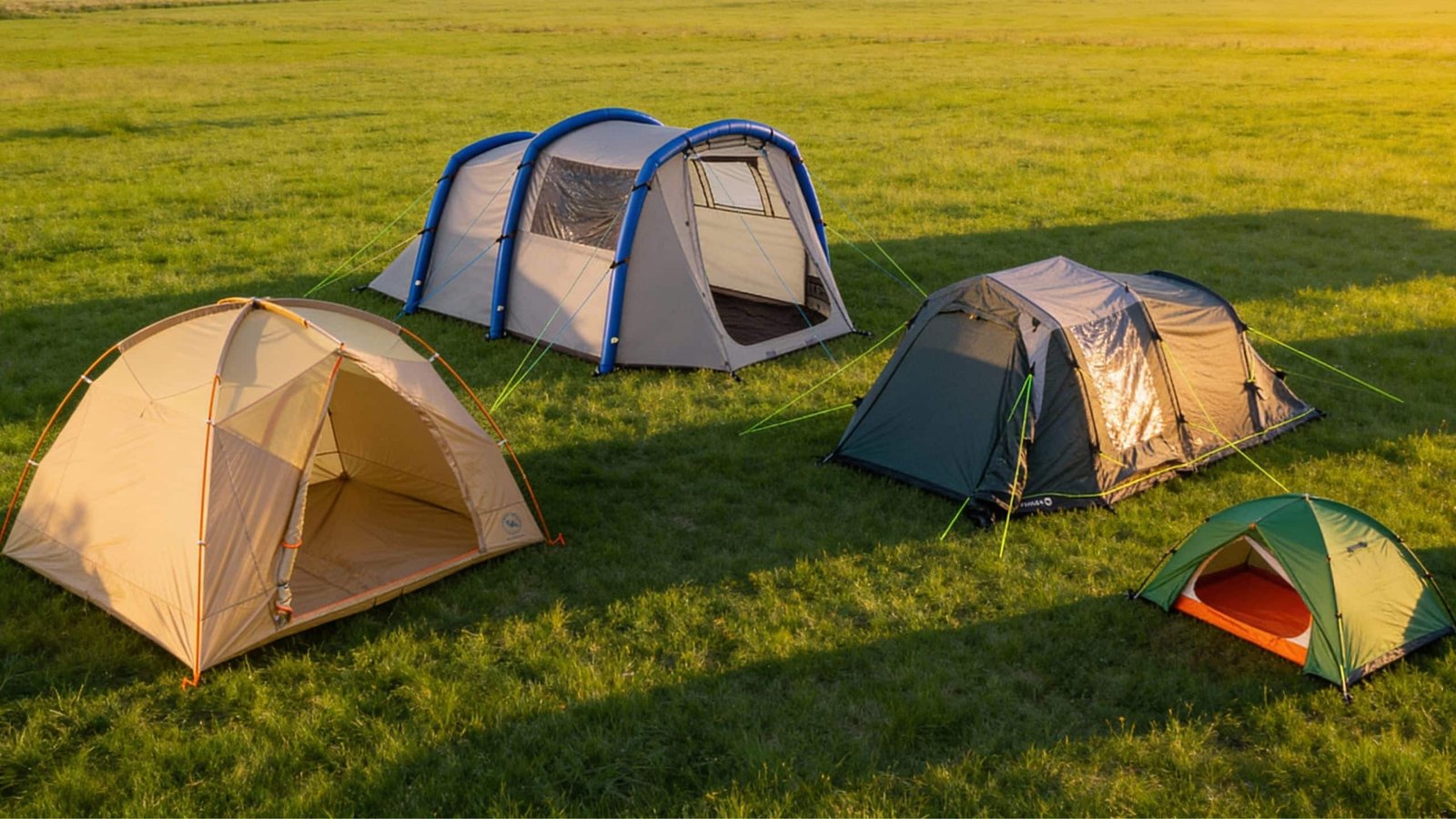
Dome tents offer excellent all-around performance for British conditions. The shape sheds rain effectively, handles wind reasonably well, and provides good internal space. They’re the reliable all-rounder that works for most UK camping situations.
I’ve used dome tents for years because they just work. Setup is straightforward, they pack down efficiently, and the symmetrical shape means you can position them however wind direction requires. Not the most exciting choice, but dependability matters more than novelty when weather turns nasty.
Quality dome tents include models from Vango, Coleman, and Berghaus. These brands understand UK weather and design accordingly. Expect to spend £150-400 for solid dome tents that last multiple seasons.
Tunnel Tents
Tunnel tents maximize internal space while keeping weight manageable. The elongated shape creates excellent headroom and living area, making them popular for family camping. The trade-off? Wind resistance suffers compared to dome designs.
Position tunnel tents with the narrow end facing prevailing wind. This orientation improves stability significantly, though you’re still more vulnerable than with dome or geodesic tents. I use tunnel tents for sheltered campsites where wind isn’t the primary concern—festivals, forest sites, protected valleys.
Vango’s tunnel tents dominate UK camping for good reason. Their Icarus and Odyssey lines handle British weather well while providing impressive internal space. Just respect their wind limitations and pick campsites thoughtfully.
Geodesic Tents
Geodesic tents represent premium wind resistance through multiple intersecting poles creating incredible structural strength. They’re overkill for casual camping but essential for exposed locations and winter use.
I borrowed a friend’s geodesic tent for Scottish winter camping and finally understood the hype. Winds that would have destroyed my dome tent barely fazed the geodesic design. The stability felt bombproof, which you genuinely appreciate when camping in serious conditions.
The downside? Weight, complexity, and cost. Geodesic tents are heavier, take longer to pitch, and cost significantly more than comparable dome tents. Unless you’re regularly camping in harsh conditions, simpler designs suffice, IMO.
Pop-Up Tents
Pop-up tents offer unmatched convenience for festival camping and casual use. They pitch in literal seconds, require zero skill, and pack down reasonably compact. Perfect for situations where convenience trumps performance.
I keep a cheap pop-up tent specifically for festivals where theft and damage are concerns. It’s not my primary camping tent—the wind resistance and waterproofing don’t match proper tents—but for short-term use in reasonable weather, they’re brilliantly simple.
Don’t trust pop-up tents for serious camping trips or adverse weather. They’re convenient, not capable. The compromise in structural integrity and weather resistance becomes obvious quickly when conditions deteriorate.
Size and Capacity Considerations
Solo Tents (1-2 Person)
Solo tents balance weight with liveable space for individual campers. A proper 2-person solo tent gives you room for gear without excessive weight penalty. True 1-person tents feel claustrophobic unless you’re seriously weight-conscious backpackers.
I use a 2-person tent when solo camping. The extra space holds gear, allows sitting up comfortably, and doesn’t feel like a coffin during extended stays. The minimal weight increase (~500g) justifies the comfort improvement substantially.
Look for models around 2-3kg for backpacking or 3-5kg for car camping. UK conditions mean you need proper construction, which adds weight compared to ultralight options designed for predictable climates.
Family Tents (3-6 Person)
Family camping requires proper size or everyone’s miserable. The rating system lies—a “4-person tent” comfortably sleeps 3 adults or 2 adults and 2 small children. Always size up from manufacturer ratings for actual comfort.
Multiple compartments separate sleeping areas from living space, which transforms family camping. I camped in single-room family tents and hated it—no privacy, no organization, everyone’s gear mixed together. Separate sleeping pods and communal areas make extended trips actually enjoyable.
Expect 5-8kg for quality family tents. Yes, they’re heavy, but you’re car camping anyway. Prioritize liveable space and weather protection over weight savings.
UK-Specific Brands Worth Trusting
Vango
Vango dominates British camping for excellent reasons. They design specifically for UK weather, offer outstanding value, and provide reliable performance across price points. I’ve owned multiple Vango tents and they consistently exceed expectations.
The Vango Icarus and Banshee lines offer exceptional weather protection at reasonable prices. Their Airbeam technology using inflatable poles rather than traditional poles divides opinion, but the waterproofing and construction quality remain consistently excellent.
Berghaus
Berghaus brings mountaineering expertise to camping tents. Their designs prioritize weather resistance and durability, reflecting decades of experience with harsh British conditions. Expect premium pricing but genuine performance.
I’ve used Berghaus tents in Scottish winter conditions where cheaper options would have failed catastrophically. The build quality and attention to detail justify the cost for serious camping in challenging environments.
Coleman
Coleman provides budget-friendly reliability for casual campers. They’re not the lightest or most technical, but they keep you dry at prices that don’t require second mortgages. Perfect for families and occasional campers.
My first proper tent was a Coleman, and it served me well for years before upgrading to lighter options for backpacking. For car camping and festival use, Coleman remains hard to beat on value versus performance.
Wild Country
Wild Country specializes in lightweight options for backpackers who refuse to compromise on weather protection. Their tents handle British conditions while maintaining packability for serious hiking trips.
The Wild Country Hoolie and Zephyros lines balance weight reduction with the waterproofing and wind resistance UK camping demands. Expensive, but worth it for dedicated backpackers.
Pitching and Setup Tips
Practice pitching at home before your trip. Figuring out tent setup during driving rain at a dark campsite ranks among camping’s most miserable experiences. I’ve been there multiple times before learning this obvious lesson.
Footprint groundsheets extend tent life significantly by protecting the integrated groundsheet from abrasion and punctures. They cost £20-40 but prevent £200+ tent replacements. I resisted buying footprints for years, thinking they were unnecessary extras. Wrong. They’re essential protection, especially on rocky British ground.
Guy out properly even when weather looks calm. British weather changes rapidly, and midnight tent adjustments during sudden storms are no fun. I’ve learned to guy out everything immediately, using all available attachment points. Takes 10 extra minutes during setup but prevents problems later :/
Maintenance for UK Conditions
Dry your tent completely before storage. British camping means wet takedowns are inevitable, but storing wet tents creates mildew and degrades waterproof coatings. I pitch tents in my garage or garden after trips, letting them dry thoroughly before packing away.
Re-waterproof periodically using products like Nikwax or Fabsil. Waterproof coatings degrade with use and UV exposure. I retreat flysheets every 2-3 years and groundsheets annually. This simple maintenance extends tent life and maintains weather protection.
Check and repair damage promptly. Small tears become big problems if ignored. I carry a tent repair kit always and fix issues immediately. A £5 patch kit beats replacing a £300 tent because a small tear wasn’t addressed.
Budget Expectations
Entry-Level (£50-150)
Budget options work for occasional summer camping in relatively protected conditions. They’ll keep you mostly dry in moderate rain but struggle with wind and sustained wet weather. Fine for testing whether you enjoy camping before major investments.
Don’t trust budget tents for serious trips or challenging conditions. I’ve watched cheap tents flood, collapse, and generally fail when weather got difficult. They’re adequate for calm conditions only.
Mid-Range (£150-400)
This range offers the best value for regular UK camping. You get proper waterproofing, wind resistance, and durability that handles British weather across multiple seasons. Most campers should shop here.
I’ve settled in this range for all my primary tents. They perform reliably, last years with care, and don’t require paranoid handling. The performance jump from budget to mid-range justifies every penny.
Premium (£400+)
High-end tents deliver marginal improvements in weight, materials, and extreme condition performance. Unless you’re regularly wild camping in harsh locations or obsessing over every gram for long-distance backpacking, mid-range options satisfy most needs.
I own one premium tent for serious mountain use. It’s brilliant, but honestly, my mid-range tents handle 90% of my camping equally well. Premium options are for specific demanding uses, not general camping.
Common Mistakes to Avoid
Trusting manufacturer capacity ratings leads to cramped, miserable camping. Always size up—a 4-person tent comfortably accommodates 3 people. Ignore marketing claims and prioritize actual usable space.
Ignoring condensation management causes problems even in waterproof tents. British camping generates condensation constantly. Look for tents with good ventilation and multiple vents you can adjust without letting rain in. I’ve woken up to condensation dripping like rain from tent ceilings in perfectly waterproof tents with poor ventilation.
Choosing too lightweight for UK conditions sacrifices weather protection. Those ultralight tents designed for summer backpacking in California don’t handle British weather. Accept reasonable weight in exchange for waterproofing and wind resistance.
Final Thoughts
Finding the best tents for camping UK requires prioritizing weather protection over weight savings, accepting that our climate demands robust construction, and choosing designs that handle rain and wind reliably. The perfect tent depends on your specific camping style, but all UK tents need serious waterproofing and wind resistance.
Start with mid-range options from brands like Vango, Coleman, or Berghaus that understand British conditions. Test your tent in your garden, maintain it properly, and upgrade specific features as you discover your preferences through experience. The right tent transforms camping from endurance test to genuine enjoyment, even when weather gets typically British.
If you have the budget, own multiple tents for different purposes if you camp regularly. My collection includes a lightweight backpacking tent, a spacious family tent, and a festival disposable. Each serves specific needs, and having options makes every trip better.
CampEquipmentPlus relies on reader support. Purchases made via links on our website may earn us an affiliate commission at no extra cost to you, helping keep the site running.