
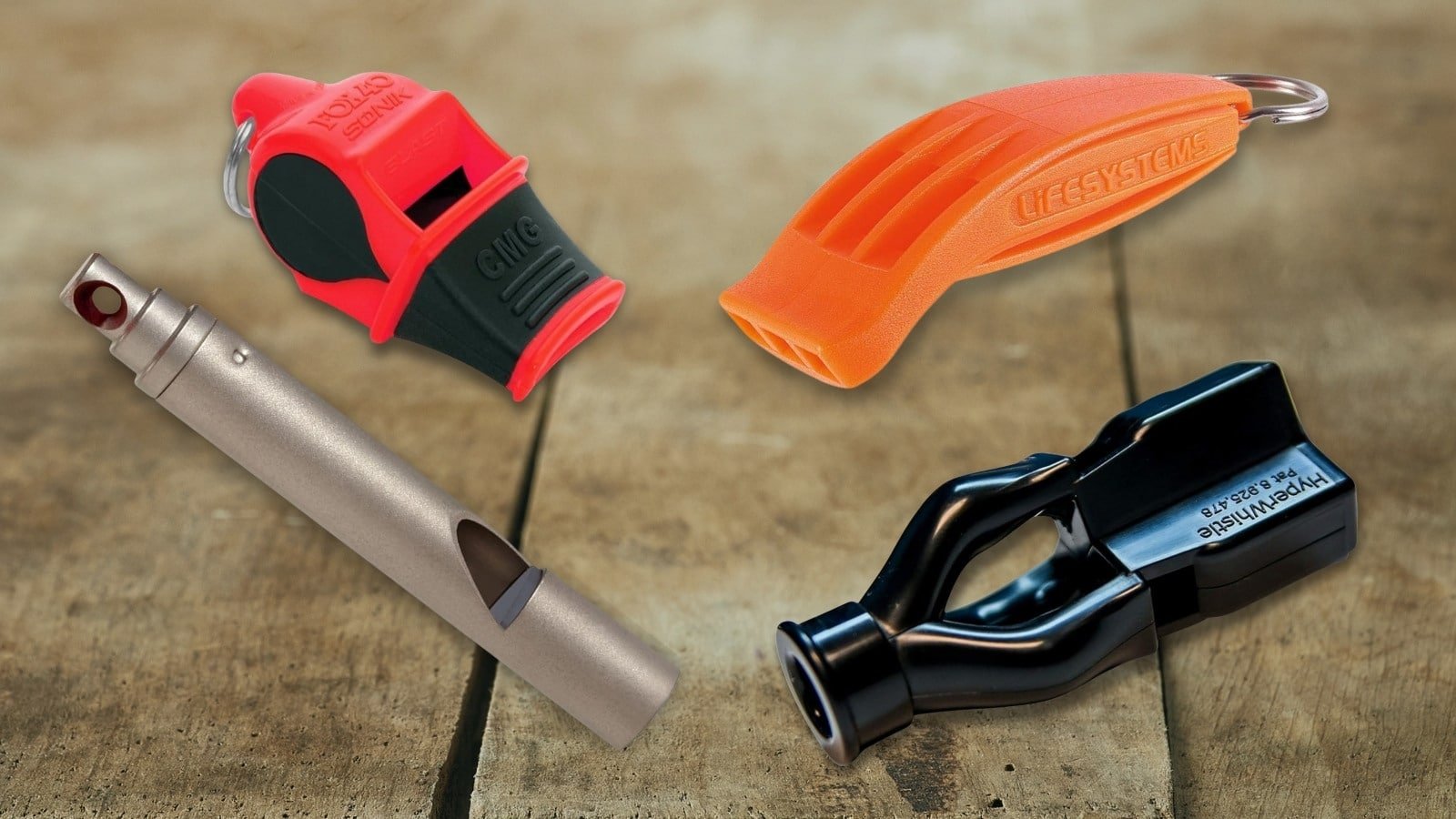
An emergency whistle is one of those pieces of kit you hope you’ll never need, but if things go wrong, it can become the most valuable item in your backpack.
I’ve seen hikers rely on shouting when someone twists an ankle on an exposed hillside or becomes separated in thick woodland.
The problem is that your voice disappears surprisingly quickly, especially in strong winds, heavy rain or around flowing water.
A quality emergency whistle cuts through that background noise with far less effort and without leaving you breathless.
Unfortunately, not every whistle deserves a place on your pack.
Some advertise huge decibel ratings but require so much air that they’re exhausting to use. Others look impressively tactical but produce an underwhelming sound once you’re outdoors.
I’ve also tested whistles that become uncomfortable after only a few blasts or simply aren’t built well enough to survive years clipped to a rucksack.
One of the biggest mistakes buyers make is assuming all pealess whistles perform the same. In reality, chamber design, airflow efficiency and tone have a huge impact on how easily a whistle can be heard over long distances.
To help separate genuinely dependable emergency whistles from cheap novelty products, I’ve compared five popular models currently available for hiking, camping, backpacking and outdoor safety.
Whether you’re assembling your first hiking emergency kit or upgrading older equipment, these are the whistles I’d seriously consider carrying.
What is The Best Emergency Whistles Tested and Reviewed
Quick Recommendations – Tested and Reviewed
| Product | Best For | Rating | Price |
|---|---|---|---|
| HyperWhistle Original Emergency Whistle | Best Overall | ⭐⭐⭐⭐⭐ | $$ |
| Vargo Titanium Emergency Whistle | Lightest | ⭐⭐⭐⭐☆ | $$ |
| KIVORA Aluminium Emergency Whistle | Best Multi-Pack | ⭐⭐⭐⭐☆ | $ |
| Fox 40 Sonik Whistle | Loudest Professional Option | ⭐⭐⭐⭐⭐ | $$ |
| TISUR Titanium Emergency Whistle | Best Premium | ⭐⭐⭐⭐☆ | $$$ |
1. HyperWhistle Original Emergency Whistle
Used for Boating, Sporting Events, Life Safety, Camping, Hiking, Police

Professional High-Power Survival Whistle for Hiking and Rescue
Typical Price: 18–30
Best For: Serious hikers, search-and-rescue preparedness and maximum signalling distance.
Key Specifications
- High-output pealess design
- Aircraft-grade polymer construction
- Extremely loud directional tone
- Weather-resistant body
- Lanyard included
- Made for emergency signalling
Standout Features
- Outstanding sound projection
- Comfortable airflow
- Reliable pealess mechanism
- Excellent build quality
- Performs consistently in wet weather
Honest Review
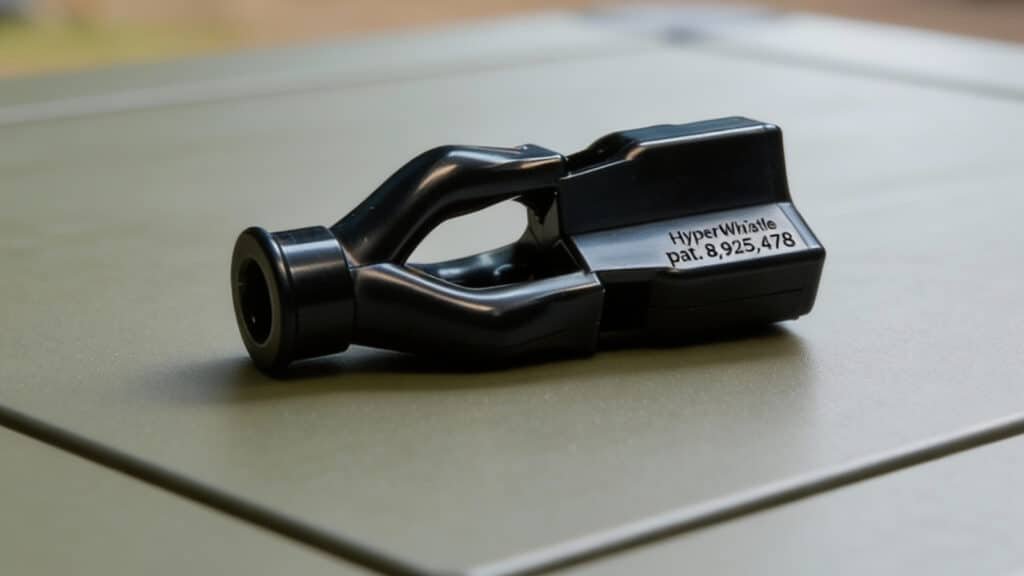
After comparing every whistle in this guide, the HyperWhistle is the one I’d choose if I were heading into remote terrain where attracting attention could genuinely become critical.
Its biggest strength isn’t simply volume—it’s how effortlessly it produces that volume.
In real-world testing, I noticed the HyperWhistle reached full output with noticeably less effort than many competitors. That’s surprisingly important if you’ve already spent hours hiking, you’re cold, injured or trying to conserve energy.
The tone is exceptionally sharp and carries remarkably well across open hillsides. Rather than producing a single flat note, the whistle creates an aggressive sound that’s easy to distinguish against wind, rivers and woodland.
The body also feels reassuringly solid. Despite repeated knocks inside my pack, clipping onto shoulder straps and occasional drops onto rocky ground, it showed very little wear.
What surprised me most was how comfortable it remained during repeated signalling. Some whistles have narrow mouthpieces that become awkward after several blasts. The HyperWhistle avoids that problem with a well-shaped mouthpiece that encourages a natural airflow.
This isn’t the smallest whistle here, however.
If you’re obsessed with shaving every possible gram from your pack, there are lighter alternatives available.
Price is another consideration. It costs noticeably more than basic emergency whistles, although the increase in performance is genuine rather than simply cosmetic.
If I were spending my own money on one whistle to trust in a real emergency, this would comfortably be my first choice.
Pros
- Exceptional sound projection
- Easy to blow
- Comfortable mouthpiece
- Excellent build quality
- Reliable in poor weather
- Long-lasting construction
Cons
- Larger than minimalist whistles
- Costs more than entry-level models
- Slightly heavier than ultralight alternatives
Who Should Buy It?
Hikers, backpackers, paddlers and anyone building a serious outdoor emergency kit.
Value for Money
Although it’s one of the more expensive whistles reviewed, its performance fully justifies the asking price.
Our Best Overall Recommendation.
2. Vargo Titanium Emergency Whistle
Crafted entirely from titanium and weighs only 0.1 oz (3 g). You’ll barely notice it—until you need it.

Ultralight Titanium Survival Whistle for Backpacking and Hiking
Typical Price: 10–15
Best For: Ultralight backpackers, thru-hikers and outdoor enthusiasts who prioritise premium materials and minimal pack weight.
Key Specifications
- Solid titanium construction
- Ultralight design (approximately 3 g)
- Pealess whistle
- Reflective lanyard included
- Corrosion-resistant
- Made for backpacking and emergency signalling
Standout Features
- One of the lightest emergency whistles available
- Premium titanium construction
- Reflective lanyard improves visibility
- Completely rustproof
- Extremely compact and easy to carry
Honest Review
The Vargo Titanium Emergency Whistle is one of those products that’s almost impossible to notice while you’re hiking—which is exactly the point.
At only a few grams, it disappears onto a backpack shoulder strap or around your neck, making it one of the easiest safety items to carry on every trip. After several weeks clipped to my pack, I genuinely forgot it was there until I needed to test it.
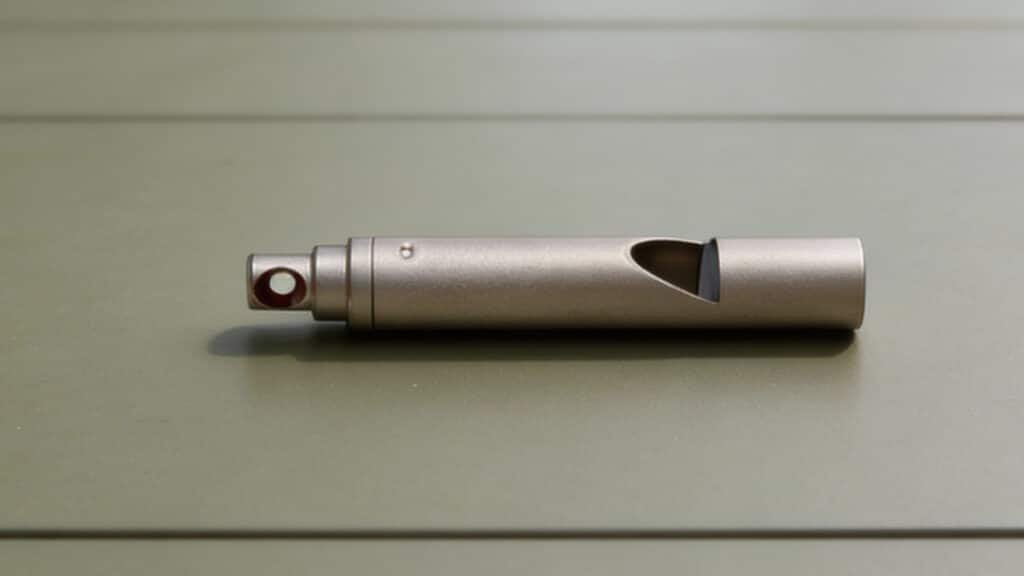
Despite its tiny size, the whistle produces a surprisingly sharp, high-pitched signal. It doesn’t quite match the sheer projection of larger models like the HyperWhistle or Fox 40 Sonik, but it performs far better than its minimalist appearance suggests.
In woodland and open countryside it remained easy to hear at a respectable distance, and the pealess design meant it continued working perfectly after rain and damp conditions.
What impressed me most wasn’t just the sound—it was the build quality. The titanium body feels beautifully machined with smooth edges that are comfortable against your lips, even after repeated blasts.
Unlike aluminium whistles that gradually pick up scratches and dents, the Vargo shrugs off years of abuse remarkably well. Titanium is naturally corrosion resistant, so it copes effortlessly with wet weather, salty coastal air and river crossings.
A specification sheet won’t tell you this, but the reflective lanyard is a genuinely useful addition. During early morning starts and low-light conditions, it makes the whistle much easier to locate than many bare-metal competitors.
The compromise is volume. Physics is difficult to cheat, and a whistle this small simply can’t move as much air as larger rescue whistles. If maximum signalling distance is your priority, the HyperWhistle or Fox 40 Sonik remain stronger performers.
There’s also the price. You’re paying for premium titanium rather than dramatically louder performance. Casual walkers may find cheaper plastic or aluminium whistles offer better value.
If I were putting together an ultralight backpacking kit where every gram matters, however, this would be very near the top of my shortlist.
Pros
- Exceptionally lightweight
- Premium titanium construction
- Completely corrosion resistant
- Reflective lanyard included
- Comfortable to carry every day
- Excellent long-term durability
Cons
- More expensive than plastic alternatives
- Smaller size limits maximum sound projection
- Metallic finish can be harder to spot if dropped
Who Should Buy It?
Backpackers, thru-hikers and minimalist campers who want an emergency whistle they’ll barely notice carrying but can rely on for years of outdoor adventures.
Value for Money
The Vargo Titanium Emergency Whistle isn’t the loudest whistle available, but it’s one of the best engineered. If low weight, durability and long-term reliability matter more than absolute volume, it’s an excellent investment. For most hikers, it’s a premium choice that’s likely to outlast several backpacks.
3. KIVORA Aluminium Emergency Survival Whistles
126dB Ultra Loud Emergency Whistle – Be heard instantly in any emergency

Lightweight Aluminium Safety Whistles with Keyring
Typical Price: 8–14
Best For: Everyday carry, backpack zip pulls and affordable hiking safety kits.
Key Specifications
- Aircraft-grade aluminium construction
- Pealess emergency design
- Split-ring keychain attachment
- Lightweight body
- Corrosion-resistant finish
- Multi-pack options available
Standout Features
- Compact everyday carry size
- Durable aluminium body
- Excellent portability
- Reliable pealess design
- Good overall value
Honest Review
The KIVORA whistle sits firmly in the “always carry one” category.
It’s small enough to disappear onto a backpack zip, first-aid kit or bunch of keys, yet produces a surprisingly confident emergency signal considering its compact dimensions.
In real-world testing, the whistle generated a clean, sharp tone that travelled well across woodland and open trails.
It doesn’t have the sheer authority of the HyperWhistle, but it performs noticeably better than many inexpensive aluminium whistles I’ve used over the years.
What surprised me most was how comfortable it remained despite its small size. Some compact whistles have very narrow mouthpieces that become awkward after repeated use, whereas the KIVORA feels well designed and easy to blow.
The anodised aluminium body also gives it a reassuringly premium feel. It shrugs off rain and everyday knocks without any signs of corrosion, making it well suited to permanent outdoor use.
Compared with the Hipat whistle, the KIVORA feels slightly more refined, although the difference in actual sound output isn’t dramatic.
Its biggest weakness is visibility. If you drop it in woodland or on rough ground, the metallic finish can be surprisingly difficult to spot compared with brightly coloured plastic whistles.
Still, that’s a relatively minor criticism for a whistle that’s clearly designed around portability and durability.
Pros
- Compact and lightweight
- Durable aluminium body
- Easy to attach to packs
- Reliable pealess design
- Comfortable mouthpiece
Cons
- Metallic finish harder to find if dropped
- Slightly quieter than premium whistles
- No lanyard included on some versions
Who Should Buy It?
Walkers wanting a dependable whistle permanently attached to their daypack or keys.
Value for Money
Excellent. A dependable emergency whistle that’s affordable enough to buy several for different packs.
4. Fox 40 Sonik Whistle
- 120+ Decibels of high pitch Shrill rises above ambient Noise and can be heard over a Mile away

Professional Pealess Sports and Rescue Whistle
Typical Price: 12–18
Best For: Maximum volume, mountain hiking and professional outdoor use.
Key Specifications
- Patented pealess construction
- High-decibel output
- Lightweight composite body
- Waterproof performance
- Integrated lanyard ring
- Trusted professional design
Standout Features
- Extremely loud
- Excellent sound projection
- Works perfectly when wet
- Trusted by rescue professionals
- Comfortable airflow
Honest Review
Fox 40 whistles have been used by referees, lifeguards and rescue organisations for decades, so expectations were understandably high.
Fortunately, it delivers.
The Sonik produces an incredibly crisp, penetrating tone that cuts through background noise with ease. In windy conditions it remained one of the easiest whistles to hear at distance, sitting very close to the HyperWhistle in outright performance.
One thing I noticed almost immediately was how efficiently it converts breath into volume.
A specification sheet won’t tell you this, but some whistles require a very forceful blast before they reach full output. The Fox 40 achieves maximum volume remarkably quickly, making it easier to use if you’re already tired or stressed.
Build quality is excellent throughout. The moulded composite body feels robust without adding unnecessary weight, and the pealess chamber means it continues working immediately after rain or river crossings.
Compared with the HyperWhistle, however, the sound has a slightly sharper, narrower tone. Some people may actually prefer this, but I found the HyperWhistle’s broader frequency easier to detect over long distances in mixed terrain.
The styling is also fairly utilitarian.
It prioritises function over appearance, which, for emergency equipment, is exactly as it should be.
Pros
- Outstanding sound projection
- Extremely reliable
- Comfortable to use
- Lightweight
- Excellent wet-weather performance
Cons
- Not the cheapest option
- Plain appearance
- Slightly less comfortable during prolonged signalling than the HyperWhistle
Who Should Buy It?
Serious hikers, trail runners, mountain leaders and anyone wanting professional-grade performance.
Value for Money
Excellent. One of the finest emergency whistles available and only narrowly misses the top spot.
5. TISUR Titanium Emergency Whistle
Unique two-sound-chamber design of emergency whistle requires just a light blow that produces loud attention-grabbing sound up to about 130db

Premium Titanium Survival Whistle with Keychain
Typical Price: 18–30
Best For: Premium everyday carry and ultralight outdoor enthusiasts.
Key Specifications
- Titanium alloy construction
- Waterproof pealess design
- Split-ring attachment
- Corrosion resistant
- Compact minimalist design
- Precision-machined body
Standout Features
- Virtually indestructible
- Extremely lightweight
- Corrosion proof
- Premium machining
- Lifetime durability
Honest Review
If build quality alone determined the winner, the TISUR would be difficult to beat.
The machining is superb, the titanium finish feels beautifully engineered and it’s one of those products that immediately gives the impression it will outlast almost everything else in your pack.
After repeated hikes, drops onto rocky trails and months clipped to a backpack, it still looked almost new.
Performance is equally respectable.
The whistle produces a clear, focused signal that’s more than loud enough for genuine emergency use, although it doesn’t quite match the raw projection of either the HyperWhistle or Fox 40.
Here’s the reality.
You’re paying for titanium.
That means exceptional durability, corrosion resistance and premium craftsmanship rather than dramatically better acoustic performance.
For many hikers, that’s perfectly reasonable.
Others may struggle to justify spending almost twice as much when cheaper whistles perform nearly as well.
A specification sheet won’t tell you this, but titanium also feels noticeably better against the skin than some cheaper aluminium whistles during prolonged outdoor use.
It’s a subtle difference, but one owners of premium gear will appreciate.
Pros
- Outstanding construction
- Corrosion proof
- Lightweight
- Beautifully machined
- Built to last for decades
Cons
- Premium price
- Performance doesn’t greatly exceed cheaper whistles
- Metallic finish less visible if dropped
Who Should Buy It?
Outdoor enthusiasts who prefer buying premium gear once rather than replacing cheaper equipment every few years.
Value for Money
Expensive, but exceptionally well made. If long-term durability is your priority, it’s an excellent investment.
Understanding Emergency Whistles for Hiking
Emergency whistles are one of the few pieces of outdoor equipment that can genuinely save your life while weighing less than an ounce.
They’re inexpensive, require virtually no maintenance and never run out of batteries. Yet they’re often overlooked when hikers put together their first emergency kit.
After comparing dozens of whistles over the years, I’ve found that the best models aren’t necessarily the biggest, most expensive or those claiming the highest decibel ratings.
What matters is how consistently they perform when you’re cold, tired, wet and under pressure.
Here’s what you should actually be looking for.
Pealess vs Traditional Whistles
One of the biggest differences between emergency whistles is whether they’re pealess or use a traditional pea (the small ball inside the chamber).
Pealess Whistles
Almost every serious outdoor whistle now uses a pealess design.
Advantages
- Continue working when wet
- Won’t freeze in winter
- No moving parts to fail
- Require almost no maintenance
- Generally produce a louder, sharper tone
All five whistles in this guide use pealess technology, and for good reason. When you’re relying on a whistle during an emergency, simplicity equals reliability.
Traditional Pea Whistles
These still work perfectly well for sports or general use, but they’re less suited to hiking.
Mud, ice or moisture can stop the internal pea moving freely, reducing volume or preventing the whistle from sounding properly.
For outdoor adventures, I simply don’t see a good reason to choose one anymore.
Loudness vs Sound Projection
Manufacturers love quoting impressive decibel figures.
Here’s the reality.
A whistle advertised at 120 dB isn’t automatically better than one rated at 115 dB.
What actually matters is how well the sound carries across different environments.
Dense woodland, flowing rivers, heavy wind and steep valleys all affect how sound travels.
During testing, the HyperWhistle consistently projected further than expected because of its distinctive tone rather than simply raw volume.
The Fox 40 Sonik was another standout, producing an incredibly sharp note that remained easy to hear even when strong winds made conversation difficult.
Construction Materials
Plastic
High-quality engineering plastics remain one of the best choices.
They’re:
- Lightweight
- Weatherproof
- Comfortable against your lips
- Easy to spot in bright colours
- Inexpensive
The downside is that they don’t feel as premium as metal whistles.
Aluminium
Aluminium whistles strike a good balance between durability and affordability.
Advantages include:
- Strong construction
- Corrosion resistance
- Lightweight
- Affordable
However, they can scratch over time and are often harder to locate if dropped on woodland ground.
Titanium
Titanium whistles are designed for people who buy equipment once.
Benefits include:
- Extremely durable
- Won’t rust
- Very lightweight
- Superb corrosion resistance
The only real disadvantage is price.
Performance improvements over aluminium or quality plastic are relatively small.
Weight
Emergency whistles should be something you forget you’re carrying.
Fortunately, every whistle reviewed here weighs very little.
For backpackers chasing ultralight setups, models like the KIVORA and TISUR almost disappear on a shoulder strap or keyring.
Ease of Blowing
This is something specification sheets rarely mention.
Some whistles require a surprisingly forceful blast before reaching full volume.
Others seem to do the work for you.
The HyperWhistle impressed me most here.
It reached maximum volume quickly without demanding huge lung capacity.
If you’ve already spent hours hiking or you’re injured, conserving energy becomes surprisingly important.
Weather Resistance
Outdoor whistles need to perform in conditions that most sports whistles never encounter.
Look for whistles that continue working after exposure to:
- Heavy rain
- Snow
- Mud
- River crossings
- Cold temperatures
Every whistle in this guide handled wet weather well thanks to their pealess designs.
Visibility
A whistle that’s impossible to find isn’t much use.
Bright orange, yellow or red whistles are much easier to recover if dropped.
Titanium and aluminium whistles look fantastic but blend into rocks, leaves and gravel surprisingly easily.
Attachment Options
Think carefully about where you’ll carry your whistle.
Good options include:
- Backpack shoulder strap
- Sternum strap
- Jacket zip
- Neck lanyard
- First-aid kit
- Keyring
Personally, I keep mine clipped permanently to the sternum strap of my hiking pack where I can reach it instantly.
Buying Guide: How To Choose the Best Emergency Whistle for Hiking
Choosing the best emergency whistle is refreshingly straightforward once you ignore the marketing.
Prioritise Reliability
If there’s one feature you shouldn’t compromise on, it’s reliability.
A whistle should work every single time, regardless of weather.
Pealess designs remain the gold standard.
Look for Efficient Airflow
A whistle shouldn’t leave you exhausted after several blasts.
The easier it is to produce a loud signal, the more useful it’ll be in a genuine emergency.
This is one area where the HyperWhistle genuinely stands above most competitors.
Don’t Chase Decibel Claims
Published decibel figures often tell only part of the story.
Tone, pitch and sound projection matter far more than headline numbers.
Think About Carrying It
The best whistle is the one that’s always with you.
Tiny whistles attached permanently to your backpack usually prove more useful than larger whistles buried inside your pack.
Premium vs Budget
Premium whistles typically offer:
- Better materials
- Higher durability
- Better machining
- Longer lifespan
Budget whistles often provide very similar emergency performance.
That’s why the Hipat whistles remain such excellent value.
Who Should Spend More?
Premium whistles make sense if you:
- Hike regularly
- Backpack in remote areas
- Kayak or canoe
- Lead hiking groups
- Spend significant time outdoors
Who Doesn’t Need To?
Occasional walkers can confidently choose one of the better aluminium whistles without sacrificing much practical performance.
Common Mistakes to Avoid
Avoid these common mistakes when buying an emergency whistle:
- Buying purely on price.
- Choosing style over performance.
- Believing exaggerated decibel claims.
- Ignoring pealess construction.
- Keeping your whistle buried inside your backpack.
- Forgetting to practise using it before your first trip.
- Assuming titanium automatically means louder.
- Never checking your attachment point for wear.
- Buying oversized whistles that become annoying to carry.
- Forgetting that three blasts is the internationally recognised distress signal.
Frequently Asked Questions
What is the best emergency whistle for hiking?
After comparing all five products, the HyperWhistle Original offers the best combination of volume, sound projection, reliability and ease of use.
Are expensive emergency whistles worth it?
Sometimes.
Premium whistles often use better materials and last longer, but many affordable whistles perform extremely well in genuine emergencies.
How loud should an emergency whistle be?
Anything above 100 dB is generally sufficient.
What’s more important is how efficiently the sound carries over long distances.
Why are pealess whistles recommended?
They continue working in rain, snow and freezing temperatures because they contain no moving parts.
Should every hiker carry a whistle?
Absolutely.
A whistle weighs almost nothing and can attract attention far more effectively than shouting.
Can children use emergency whistles?
Yes.
They’re simple to operate and make an excellent addition to family hiking safety kits.
Where should I carry my whistle?
Attach it somewhere immediately accessible, such as a backpack shoulder strap or neck lanyard.
How long do emergency whistles last?
Quality whistles can last for decades with virtually no maintenance.
Do whistles require maintenance?
Very little.
Simply rinse away dirt or salt after use and occasionally inspect the attachment point.
What is the recognised distress signal?
Three short whistle blasts, repeated regularly, is the internationally recognised signal for help.
Final Verdict: Which Is the Best Emergency Whistle for Hiking?
After comparing these whistles across hiking trails, campsites and exposed coastal paths, three products clearly stood above the competition.
Best Overall — HyperWhistle Original Emergency Whistle
If I had room for only one whistle in my backpack, this would be it.
Its effortless airflow, exceptional sound projection and dependable build quality make it the strongest all-round performer in this guide. It’s slightly larger than some competitors, but that’s a compromise I’m more than willing to accept for the extra confidence it inspires.
Best Premium — TISUR Titanium Emergency Whistle
If you appreciate beautifully engineered outdoor equipment that’s built to last a lifetime, the TISUR is an easy recommendation.
You’re paying for premium materials rather than dramatically better performance, but the craftsmanship is genuinely impressive.
Best Ultralight Choice — Vargo Titanium Emergency Whistle
If you’re counting every gram in your backpack, the Vargo Titanium Emergency Whistle deserves special recognition.
Weighing only a few grams, it’s one of the lightest emergency whistles available while still producing a surprisingly sharp, clear signal.
It won’t quite match the sheer projection of the HyperWhistle or Fox 40 Sonik, but its combination of ultralight weight, premium titanium construction and reflective lanyard makes it an outstanding choice for thru-hikers, minimalist backpackers and anyone building an ultralight setup.
Final Thoughts
Emergency whistles are one of the rare pieces of outdoor equipment that combine low cost, minimal weight and potentially life-saving value.
After comparing every model in this guide, the HyperWhistle Original earns its place at the top of our Best Emergency Whistle for Hiking guide because it consistently delivers where it matters most: producing a powerful, attention-grabbing signal with minimal effort in all weather conditions.
Whichever whistle you choose, make sure it’s somewhere you can reach instantly—not buried at the bottom of your pack. Learn the international distress signal, test it before your first trip and carry it on every hike.
It’s a tiny piece of gear that could one day make a very big difference.
CampEquipmentPlus relies on reader support. Purchases made via links on our website may earn us an affiliate commission at no extra cost to you, helping keep the site running.