
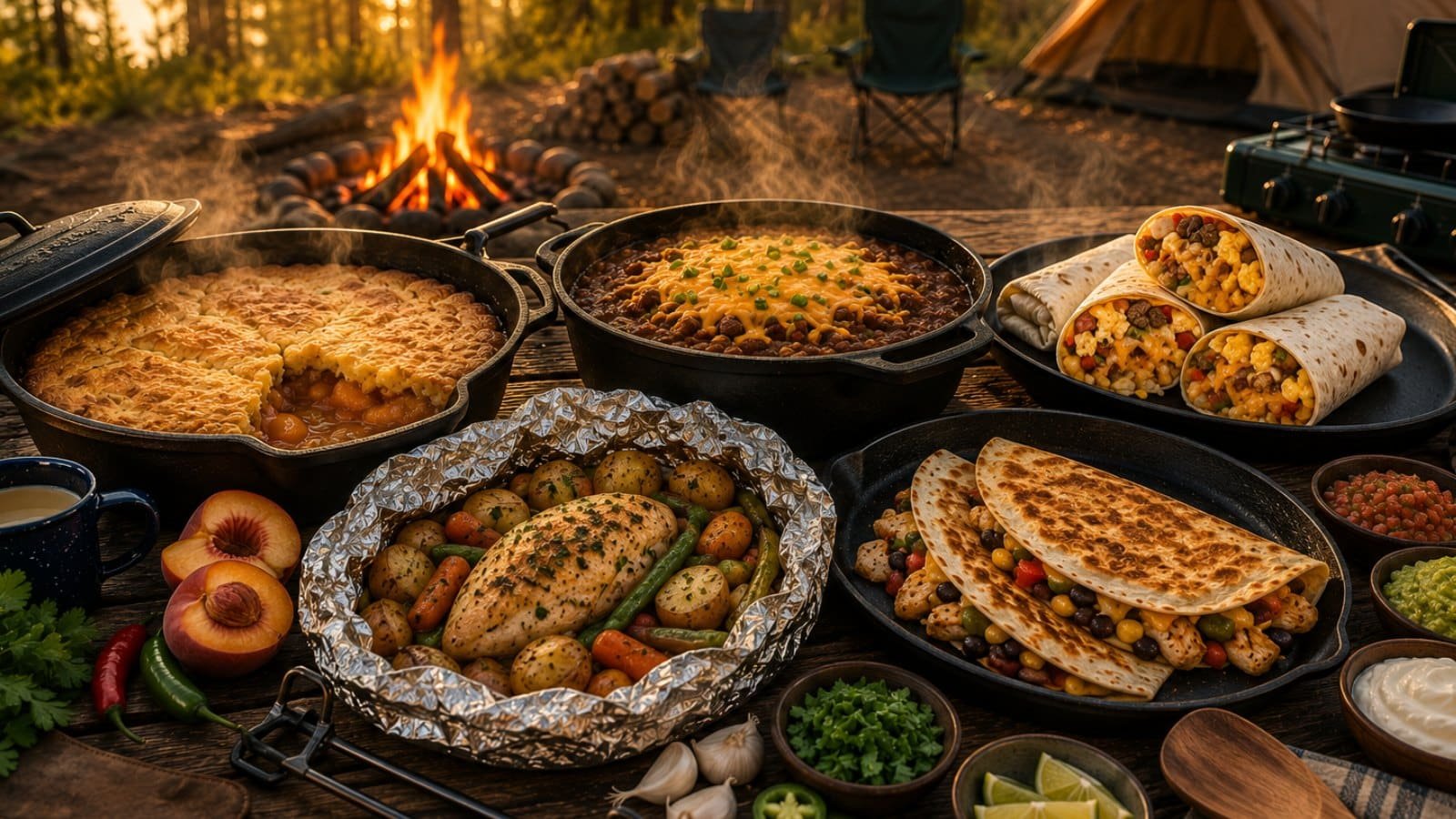
After more than two decades of cooking outdoors, I’ve learned that the best camp recipes aren’t the most complicated ones—they’re the meals everyone asks for again on the next trip.
Good campsite food should be filling, easy to prepare, and simple to clean up afterward. I’ve also found that camping meals easy to prepare give you more time to enjoy hiking, fishing, or simply relaxing around the fire instead of standing over a stove.
Whether you’re camping with family, heading out with friends, or planning a solo weekend in the woods, choosing dependable recipes makes every trip more enjoyable.
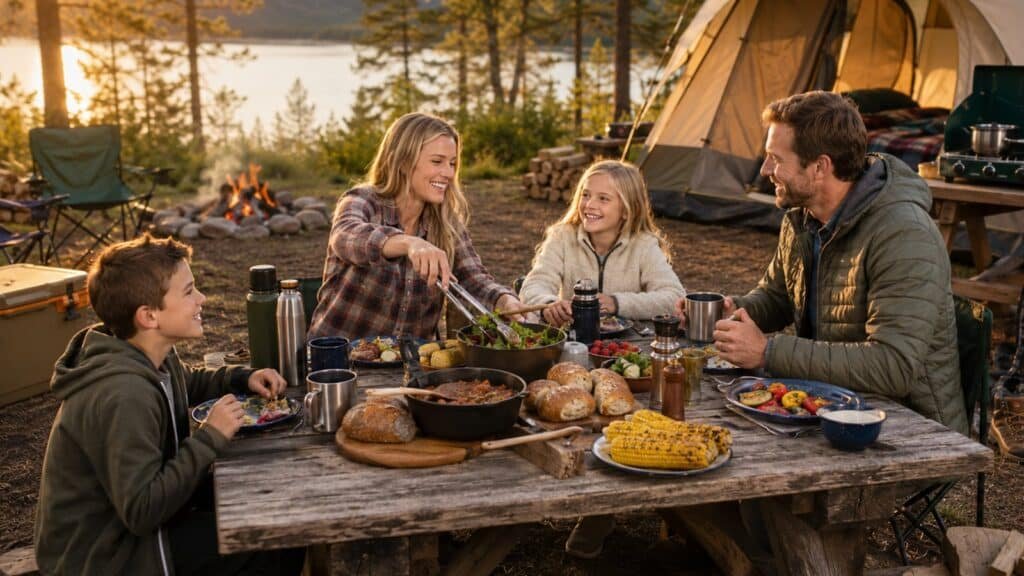
I’ve cooked everything from quick breakfasts on a compact propane stove to slow-cooked chili in a cast iron Dutch oven buried beneath glowing coals.
Some recipes have become traditions, while others were born from forgetting ingredients at home and making do with whatever was left in the cooler. Those unexpected meals often turn out to be the ones everyone remembers.
This guide shares the recipes and cooking methods I return to year after year.
Every recommendation comes from real campsite experience, with practical advice that works whether you’re using a campfire, a propane stove, or a portable grill.
What Are the Best Camp Recipes?
The best camp recipes are simple meals that require minimal equipment, cook reliably over a campfire or camp stove, and feed hungry campers with little cleanup.
Favorites include Dutch oven chili, breakfast burritos, foil packet chicken, campfire mac and cheese, walking tacos, skillet breakfast hash, and peach cobbler.
My Recommened Recipies For Camping:
| Recipe | Cook Time | Difficulty | Best For |
|---|---|---|---|
| Breakfast Burritos | 20 min | Easy | Families |
| Dutch Oven Chili | 2 hrs | Medium | Groups |
| Walking Tacos | 15 min | Easy | Kids |
| Foil Packet Chicken | 35 min | Easy | Beginners |
| Campfire Quesadillas | 15 min | Easy | Lunch |
| Peach Cobbler | 45 min | Easy | Dessert |
Why Easy Camping Meals Matter
Complicated recipes usually stay at home.
At camp, your priorities change. Water can be limited, daylight disappears quickly, and washing dishes isn’t anyone’s favorite evening activity. Meals that use fewer ingredients and fewer pans almost always win.
One mistake I made years ago was planning restaurant-style dinners with dozens of ingredients.
By the second evening, I was exhausted from chopping vegetables and scrubbing cookware instead of enjoying the campsite.
Since then, I’ve focused on recipes that taste great while keeping preparation simple.
The best campsite meals usually share a few characteristics:
- Minimal preparation
- One or two cooking vessels
- Easy cleanup
- Readily available ingredients
- Flexible substitutions
- Filling enough after a long day outdoors
Another advantage is reliability. Outdoor cooking rarely offers perfect conditions.
Wind, rain, uneven fire temperatures, and changing weather all affect cooking times. Straightforward recipes are much more forgiving.
Planning Meals Before Leaving Home
Every successful camping menu starts before the vehicle leaves the driveway.
I always build a simple meal plan covering breakfast, lunch, dinner, snacks, and drinks for each day. Doing this prevents overpacking while ensuring enough food for everyone.
A basic three-day camping menu might include:
Breakfast
- Breakfast burritos
- Pancakes
- Skillet hash
- Bacon and eggs
- Overnight oats
Lunch
- Sandwiches
- Wraps
- Pasta salad
- Grilled cheese
- Soup
Dinner
- Dutch oven chili
- Foil packet chicken
- Burgers
- Campfire tacos
- Sausage and vegetables
Snacks
- Trail mix
- Fresh fruit
- Beef jerky
- Cheese
- Crackers
- Granola bars
Packing ingredients by meal also saves time. Instead of digging through coolers looking for shredded cheese or onions, everything needed for one recipe stays together in a reusable container.
Essential Camp Cooking Equipment
I’ve experimented with plenty of cooking gear over the years. Some items looked impressive but stayed in the storage box after one trip.
Others have become permanent fixtures in my camping kit because they genuinely make cooking easier.
Camp Cooking Gear I Never Leave Home Without
- Lodge Cast Iron Dutch Oven
- Coleman Cascade Stove
- Stanley Adventure Cook Set
- YETI Cooler
- Fireproof Gloves
- Folding Camp Table
- Instant Read Thermometer
Cast Iron Dutch Oven
If I could only bring one cooking pot, it would be a cast iron Dutch oven.
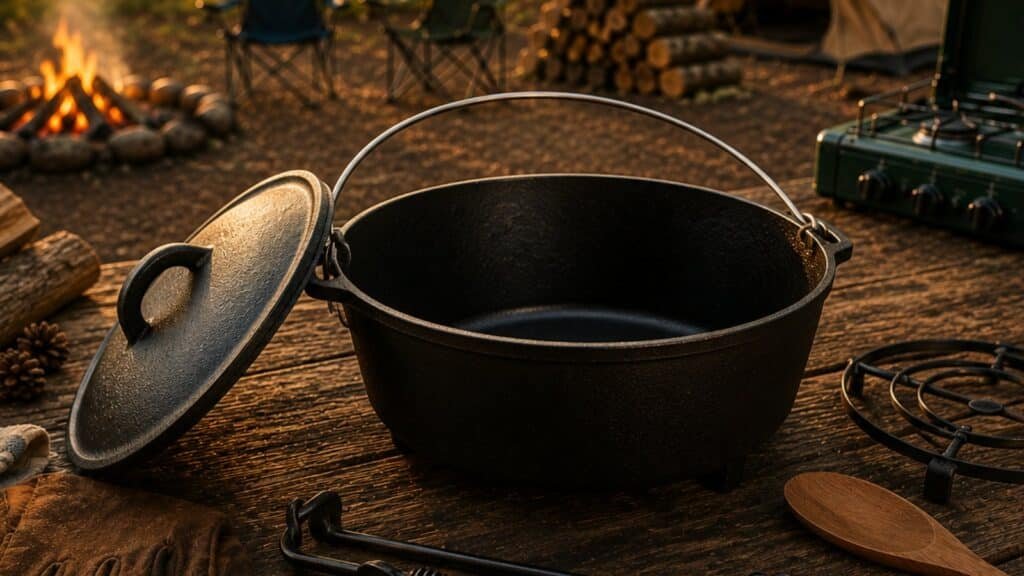
A Lodge Cast Iron Dutch Oven handles everything from chili and stew to fresh bread and cobbler. Properly seasoned cast iron distributes heat evenly and lasts for decades with basic care.
Dutch ovens work equally well on campfires and charcoal.
Coleman Cascade Camp Stove
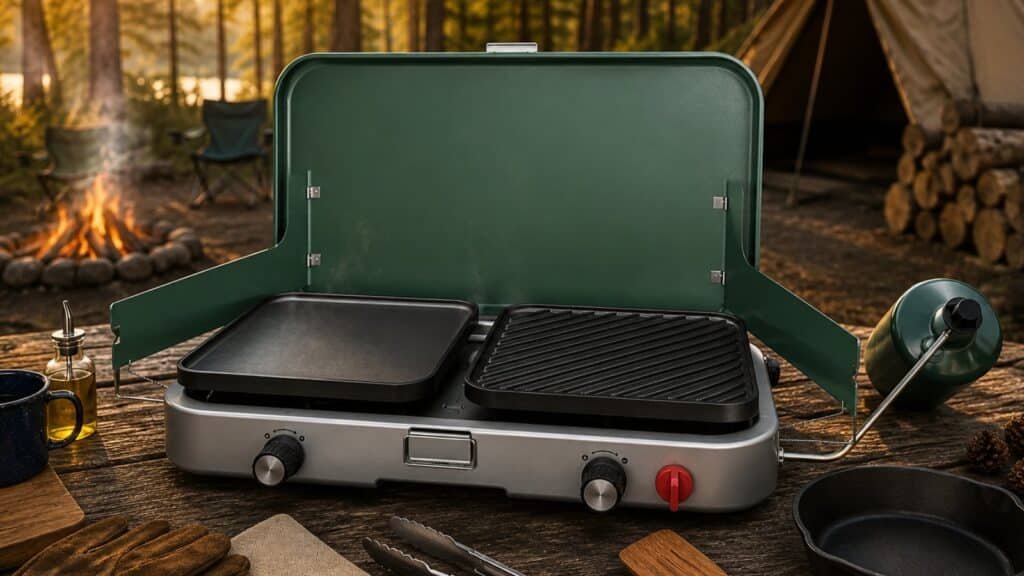
For family camping, a dependable two-burner stove saves enormous amounts of time.
The Coleman Cascade Camp Stove provides consistent heat that’s much easier to manage than an open fire. I use mine for breakfast almost every trip because it boils water quickly while frying bacon or eggs at the same time.
Coleman Triton 2-Burner Stove
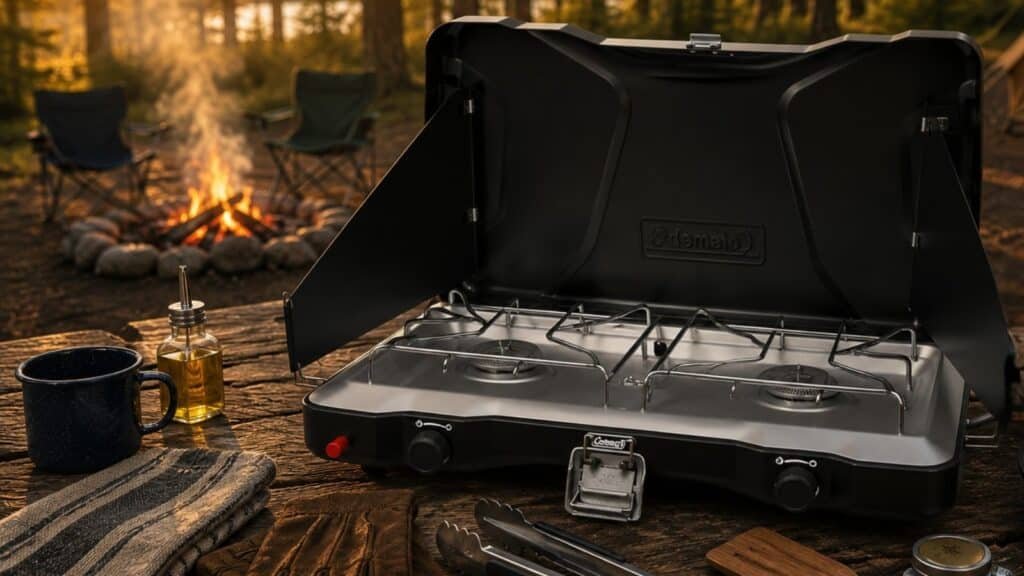
If you already own the Triton, there’s little reason to replace it.
Its burners are powerful enough for boiling pasta while simmering sauces, making it ideal for larger family meals.
Jetboil Genesis Basecamp
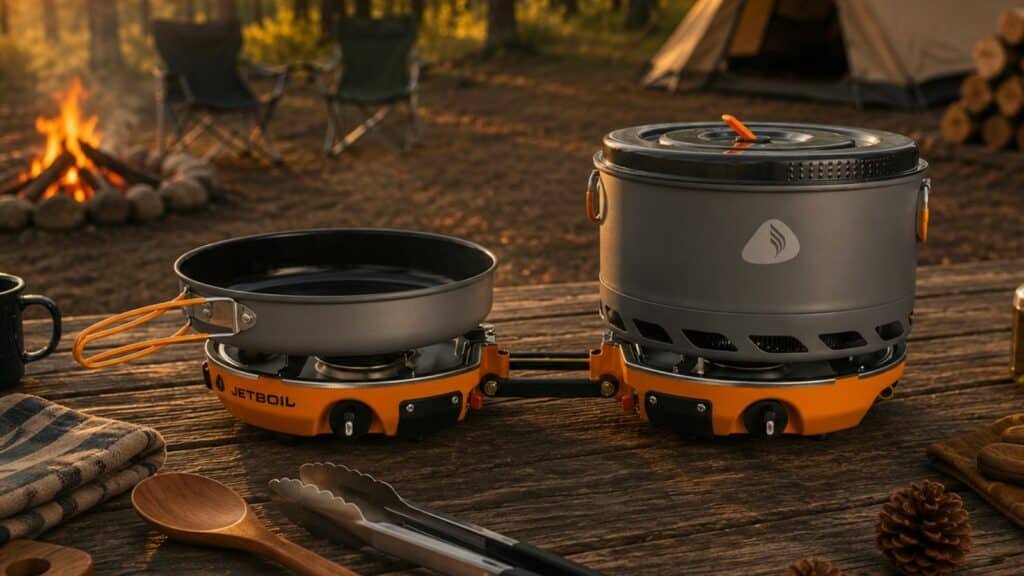
For campers who cook frequently, the Jetboil Genesis Basecamp offers impressive temperature control.
I’ve found it particularly useful during windy weather when many portable stoves struggle to maintain consistent heat.
Lodge Cast Iron Skillet
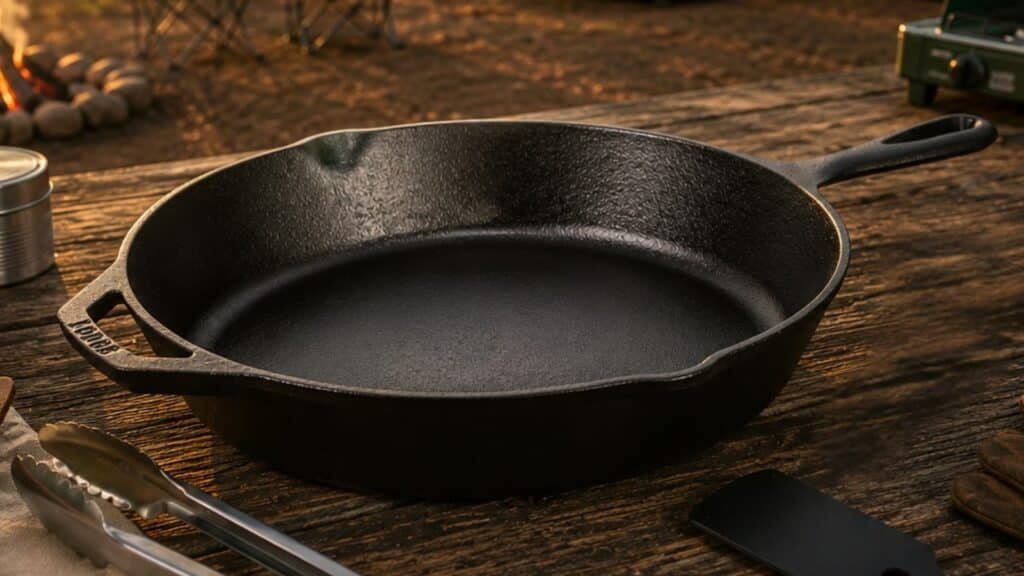
A good skillet earns its place on every camping trip.
Mine handles:
- Breakfast hash
- Burgers
- Pancakes
- Steaks
- Quesadillas
- Grilled vegetables
Cast iron also retains heat remarkably well after leaving the fire.
Stanley Adventure Cook Set
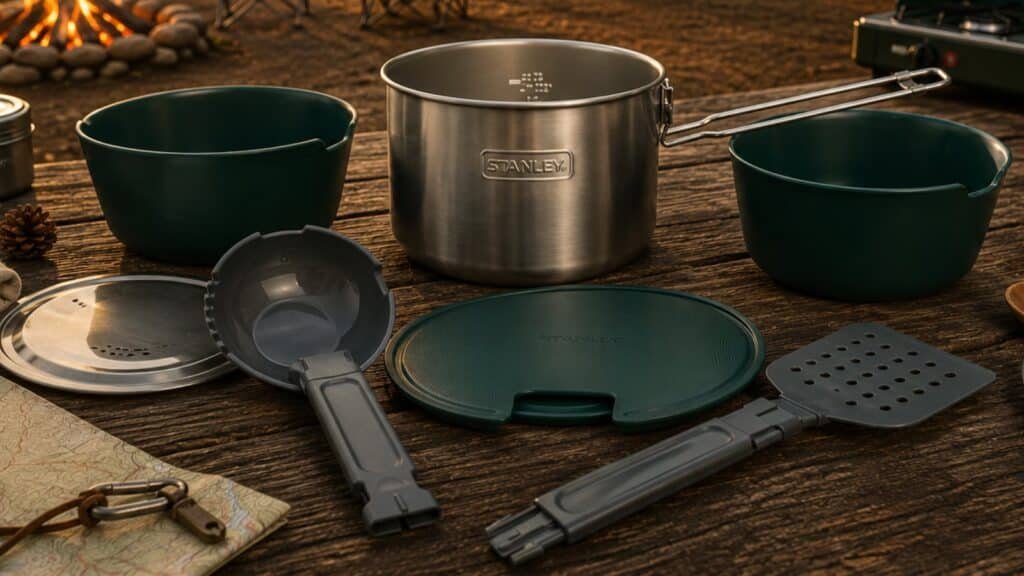
Solo campers and couples don’t always need a full cookware collection.
The Stanley Adventure Cook Set packs neatly into a compact space while covering nearly every basic cooking task.
GSI Outdoors Cookware
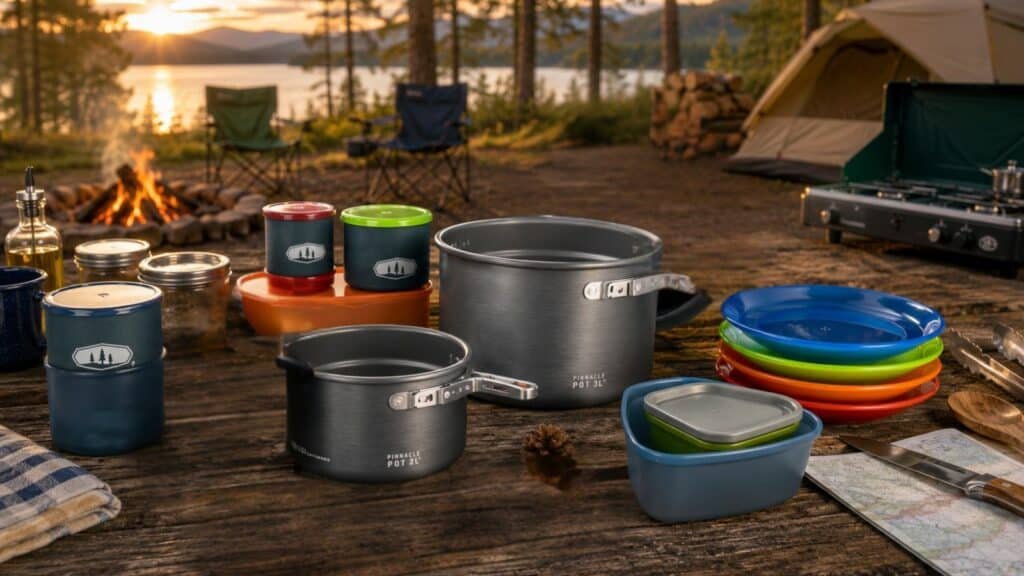
When cooking for four or more people, lightweight nesting cookware becomes invaluable.
I’ve used GSI Outdoors cookware on numerous trips because it packs efficiently without sacrificing durability.
Coghlan’s Camp Grill
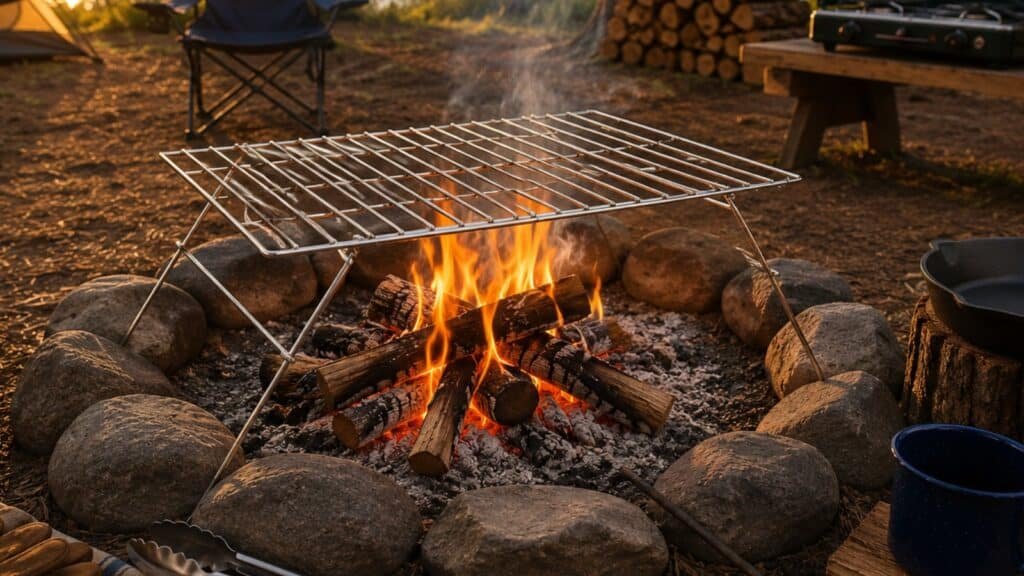
Not every campsite includes a cooking grate.
A portable Coghlan’s Camp Grill solves that problem immediately, creating a stable cooking surface over most fire pits.
Cooler Selection
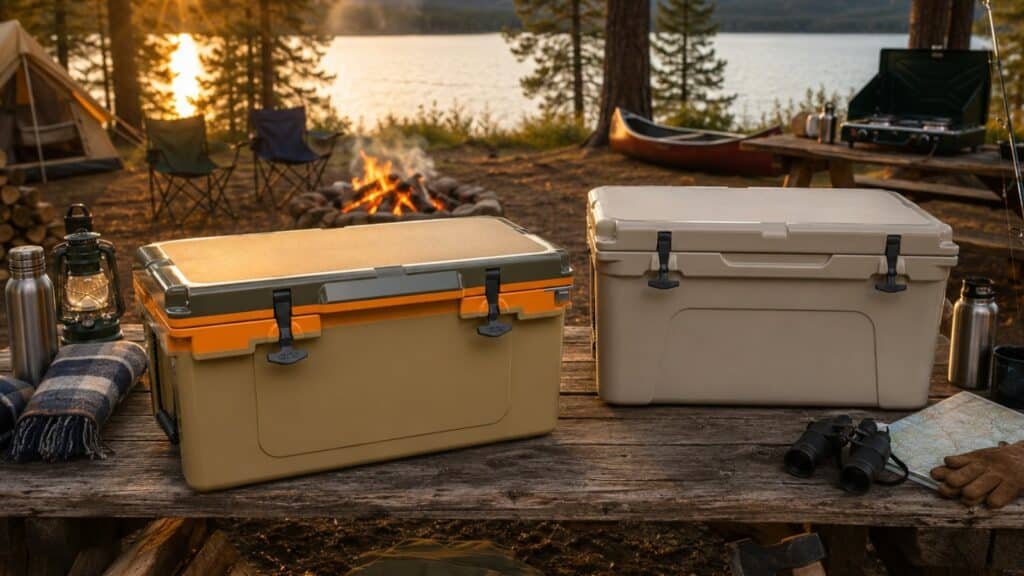
Keeping ingredients cold safely matters far more than expensive recipes.
For longer trips, insulated coolers like the YETI Cooler or RTIC Cooler maintain safe temperatures significantly longer than budget alternatives.
No matter which cooler you choose:
- Freeze water bottles beforehand.
- Keep raw meat at the bottom.
- Open the lid as little as possible.
- Store drinks separately if possible.
- Replenish ice whenever available.
Small Accessories Worth Packing
These inexpensive items make outdoor cooking noticeably easier:
- Fireproof cooking gloves
- Long campfire tongs
- Folding camp table
- Aluminum foil
- Reusable food containers
- Sharp chef’s knife
- Cutting board
- Measuring spoons
- Can opener
- Food thermometer
- Camp coffee percolator
- Small spice containers
I’ve forgotten spices more than once, and every meal tasted noticeably flatter. Now I carry a small waterproof seasoning kit containing salt, pepper, garlic powder, paprika, Italian seasoning, chili flakes, and brown sugar.
Food Safety Around Camp
Food poisoning ruins camping trips faster than almost anything else.
I treat campsite food exactly the same way I would at home.
A few habits have never let me down:
- Keep raw meat separate from ready-to-eat food.
- Wash hands before handling ingredients.
- Use separate cutting boards when possible.
- Cook chicken to 165°F.
- Cook ground beef to 160°F.
- Refrigerate leftovers promptly.
- Discard anything that’s been sitting in the sun too long.
A digital food thermometer weighs almost nothing and removes all guesswork.
How to deal with food poisoning while traveling.
Campfire Cooking vs. Camp Stove Meals
People often ask whether campfire cooking is better than using propane.
Honestly, both have their place.
I use my camp stove whenever I need speed or precise temperature control. It’s perfect for coffee, pancakes, eggs, pasta, and sauces.
The campfire comes into its own for slower cooking. Dutch oven chili, foil packet meals, grilled vegetables, steaks, and cobblers simply develop flavors that are difficult to recreate over a burner.
After cooking this dozens of times, I’ve learned that glowing coals—not large flames—produce the most consistent results. High flames burn food quickly, while a steady bed of coals cooks evenly without scorching the outside.
Learning to manage heat is one of the biggest improvements any camper can make.
The recipes in the next section are the ones I’ve returned to year after year because they consistently deliver great results with minimal fuss.
From hearty breakfasts to satisfying dinners and crowd-pleasing desserts, these are the best camp recipes that have earned a permanent place in my camping meal rotation.
Best Camp Recipes Everyone Should Know
I’ve experimented with plenty of campsite recipes over the years, but only a handful make it onto nearly every trip. Some are family favorites, while others are simply dependable after a long day on the trail.
These meals don’t require fancy ingredients or advanced cooking skills—they’re satisfying, forgiving, and well suited to outdoor cooking.
Campfire Breakfast Burritos
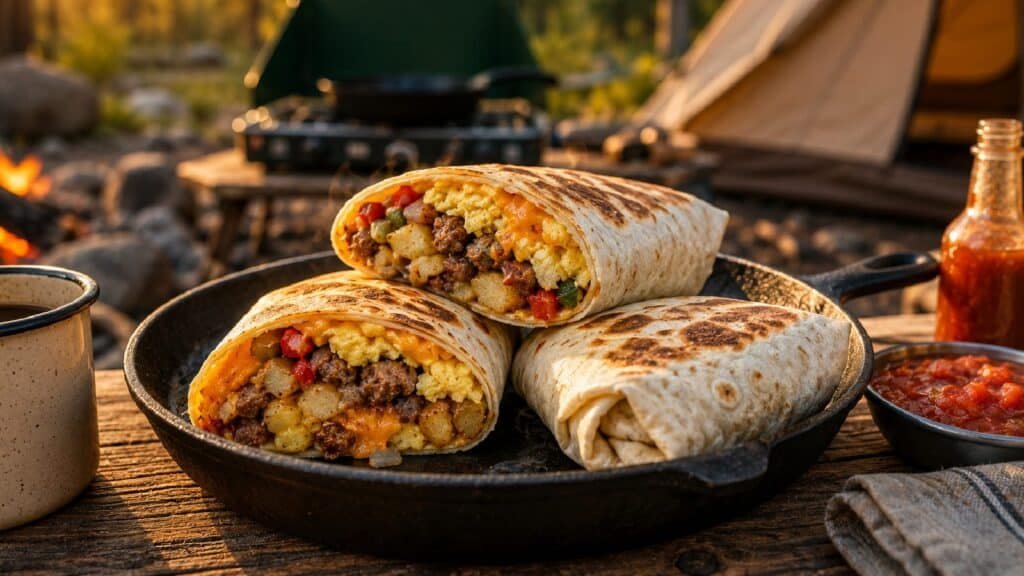
A hot breakfast sets the tone for the day, especially before a long hike or paddle. Breakfast burritos are one of those meals that everyone enjoys, and they’re easy to customize for different tastes.
Ingredients
- Flour tortillas
- Eggs
- Breakfast sausage or bacon
- Hash browns
- Shredded cheddar cheese
- Diced onions
- Bell peppers
- Salsa
- Hot sauce (optional)
Cook the sausage first in a Lodge Cast Iron Skillet, then sauté the onions and peppers in the rendered fat. Add the hash browns until crisp before scrambling the eggs into the mixture.
Spoon everything into warm tortillas, top with cheese and salsa, then wrap tightly.
One trick I’ve learned is to wrap finished burritos in aluminum foil and place them near the edge of the fire for five minutes.
The cheese melts perfectly, and the tortillas stay warm while everyone gathers around for breakfast.
If you have leftovers, they also make an excellent camping lunch.
Foil Packet Garlic Butter Chicken
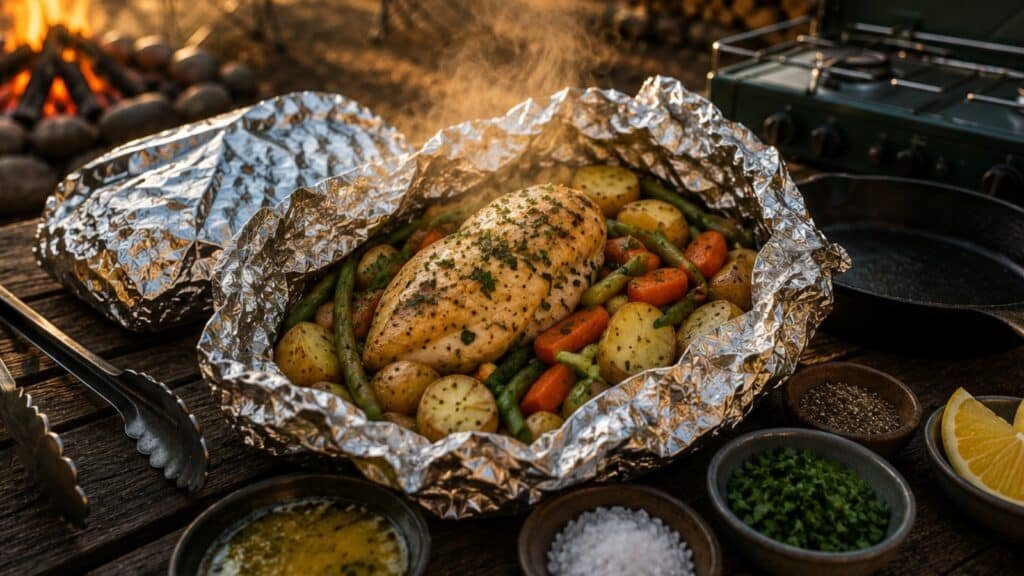
Few recipes deliver such consistent results with so little cleanup.
This has become one of my go-to camping meals easy enough for first-time campers because almost everything cooks inside a single foil packet.
Ingredients
- Chicken breasts or thighs
- Baby potatoes
- Carrots
- Green beans
- Butter
- Garlic
- Italian seasoning
- Salt
- Pepper
Place the vegetables on heavy-duty aluminum foil before adding the chicken. Top with butter, garlic, and seasoning before sealing the packet tightly.
Cook over medium campfire coals for approximately 30–40 minutes, turning once halfway through.
I always double-wrap the foil. One mistake I made years ago was using thin household foil, which split open over the fire and dumped dinner straight into the ashes.
A digital food thermometer removes any guesswork and confirms the chicken has reached 165°F.
Dutch Oven Chili
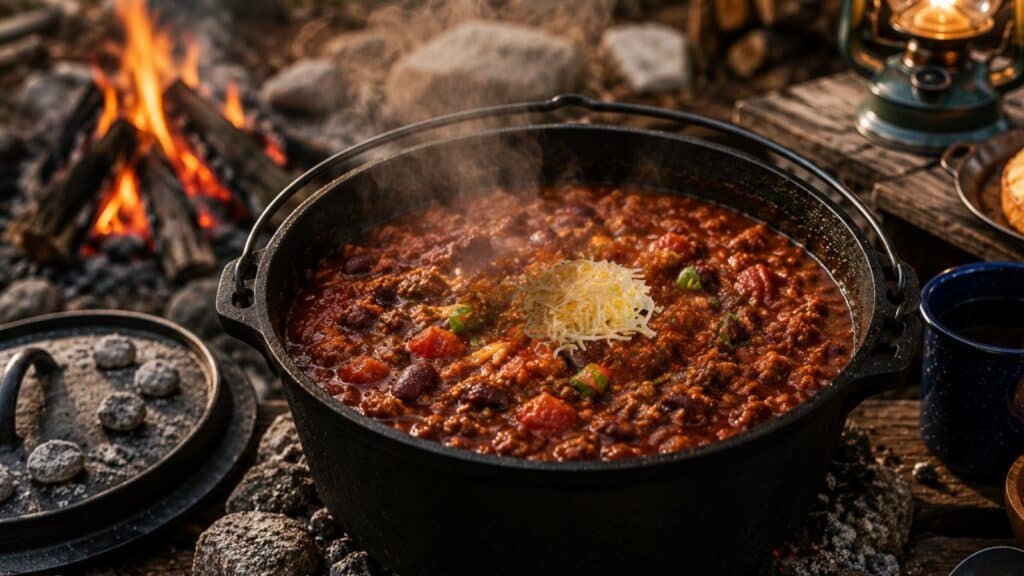
Every camping group has that one meal everyone hopes appears on the menu.
For mine, it’s chili.
A cast iron Lodge Dutch Oven transforms simple ingredients into a rich, hearty dinner that tastes even better the following day.
Ingredients
- Ground beef
- Onion
- Garlic
- Kidney beans
- Pinto beans
- Chopped tomatoes
- Tomato paste
- Beef stock
- Chili powder
- Cumin
- Paprika
Brown the beef first, then cook the onions until softened. Add the remaining ingredients, stir thoroughly, cover with the lid, and place hot coals underneath and on top.
Allow the chili to simmer for about two hours.
I’ve found that rotating the Dutch oven every twenty minutes helps prevent hot spots and gives a more even cook.
Serve with:
- Cornbread
- Tortilla chips
- Grated cheese
- Sour cream
- Fresh spring onions
This recipe also ranks among my favorite one-pot camping meals because cleanup takes only a few minutes.
Campfire Mac and Cheese
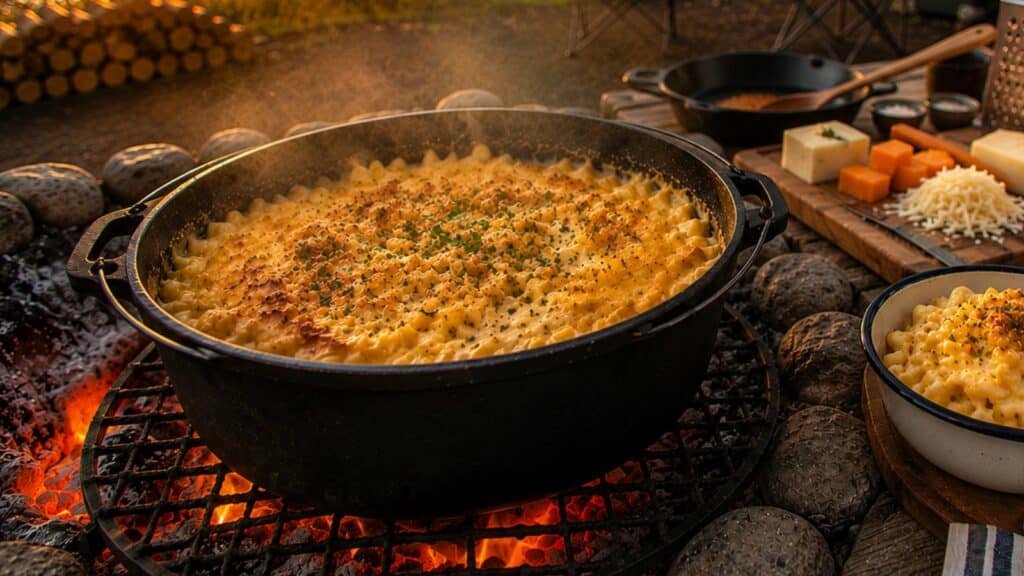
Mac and cheese is one of those family camping recipes that disappears surprisingly quickly.
Children love it, adults always take seconds, and it pairs well with grilled sausages or burgers.
Ingredients
- Elbow macaroni
- Whole milk
- Cheddar cheese
- Mozzarella
- Butter
- Dijon mustard
- Garlic powder
- Black pepper
Cook the pasta first before combining everything inside a Dutch oven.
Place several hot coals beneath and over the lid.
Cook until the cheese becomes bubbling and golden.
Adding a small amount of smoked paprika gives the finished dish subtle campfire flavor without overpowering it.
Walking Tacos
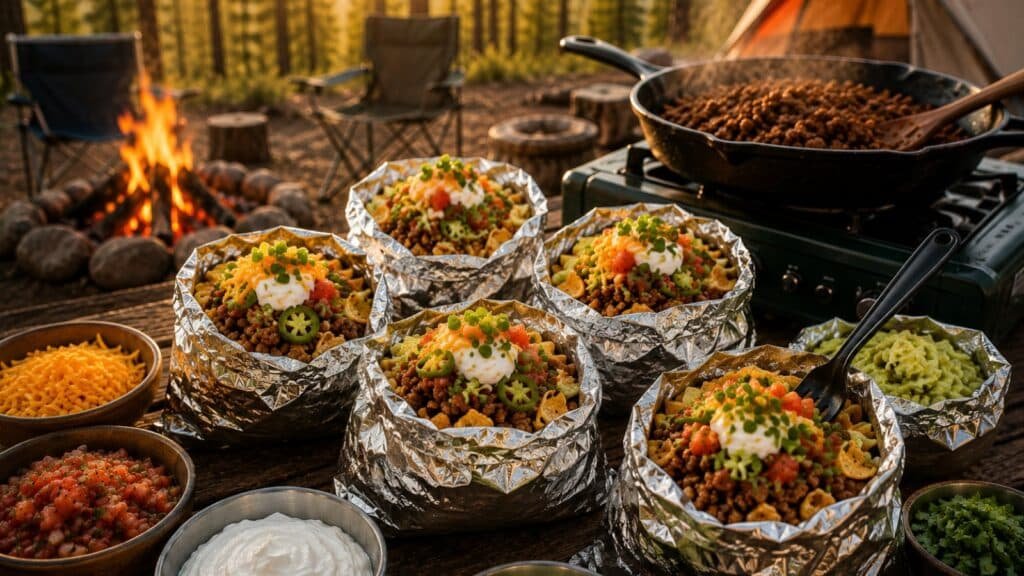
If you’re feeding hungry campers after an active day, Walking Tacos rarely disappoint.
They’re quick, fun, and require almost no washing up.
Ingredients
- Individual corn chip bags
- Taco-seasoned ground beef
- Shredded lettuce
- Cheese
- Tomatoes
- Sour cream
- Jalapeños
- Salsa
Open each chip bag, spoon in the hot beef mixture, then let everyone customize their own toppings.
The bags become individual serving bowls, making cleanup almost effortless.
I’ve served these at youth camping trips, scout weekends, and family reunions. They consistently disappear faster than expected.
Grilled Sausage and Vegetables
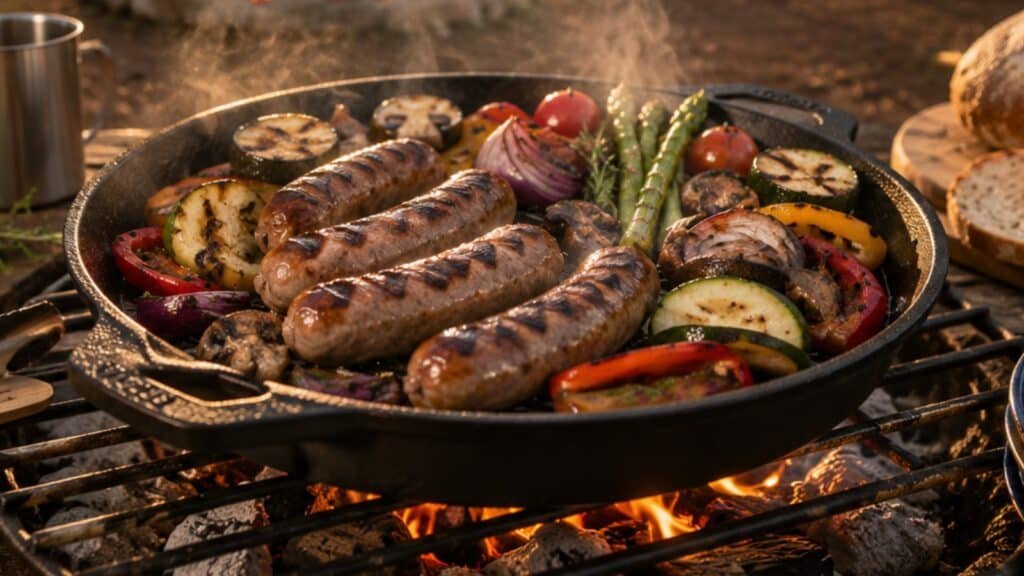
Sometimes the simplest meals become the most memorable.
Good-quality smoked sausage combined with seasonal vegetables makes an excellent camping dinner after a full day outdoors.
Use:
- Smoked sausage
- Bell peppers
- Courgettes
- Mushrooms
- Red onions
- Olive oil
- Garlic powder
- Black pepper
Cook everything on a Coghlan’s Camp Grill or directly in a cast iron skillet.
The vegetables soak up the smoky flavor from the fire while the sausage crisps beautifully around the edges.
I usually bring extra because leftovers become excellent breakfast hash the following morning.
One-Pot Pasta
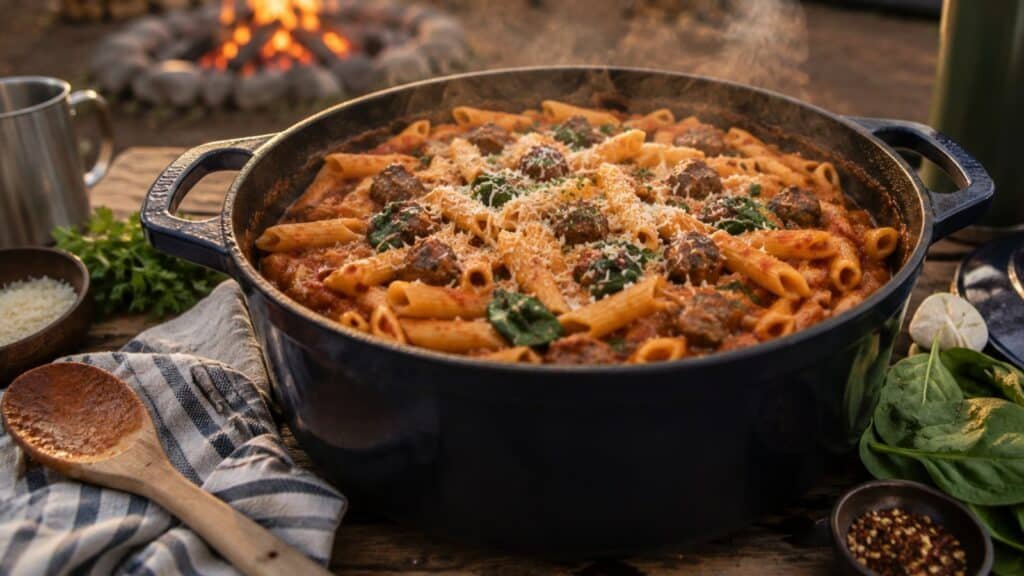
Pasta remains one of my favorite choices whenever fresh water is limited.
Instead of boiling pasta separately, everything cooks together.
Ingredients
- Penne pasta
- Italian sausage
- Marinara sauce
- Chicken stock
- Spinach
- Parmesan
- Garlic
Simply brown the sausage, pour in the remaining ingredients, cover, and simmer.
The pasta absorbs the stock while thickening the sauce naturally.
This recipe uses remarkably little water and only one cooking pot, making it one of my preferred camp stove meals after busy hiking days.
Campfire Quesadillas
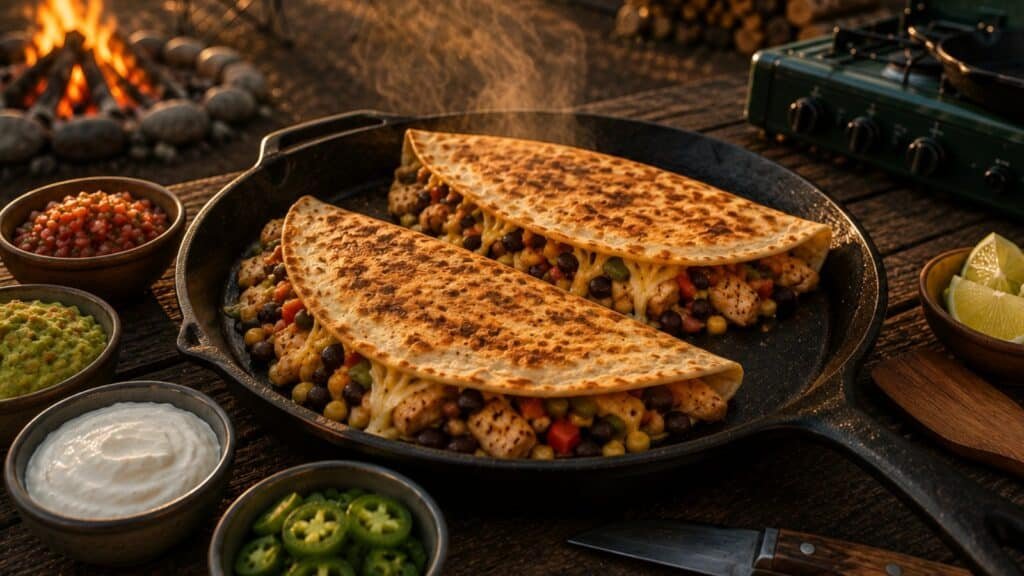
Quesadillas are often overlooked, but they’re one of the quickest hot meals you’ll ever prepare.
Fill tortillas with:
- Cheese
- Cooked chicken
- Leftover steak
- Peppers
- Onions
- Sweetcorn
- Black beans
Cook in a lightly buttered cast iron skillet until golden on both sides.
Slice into wedges and serve with salsa and sour cream.
They’re equally good for lunch or dinner and make excellent use of leftovers.
Skillet Breakfast Hash
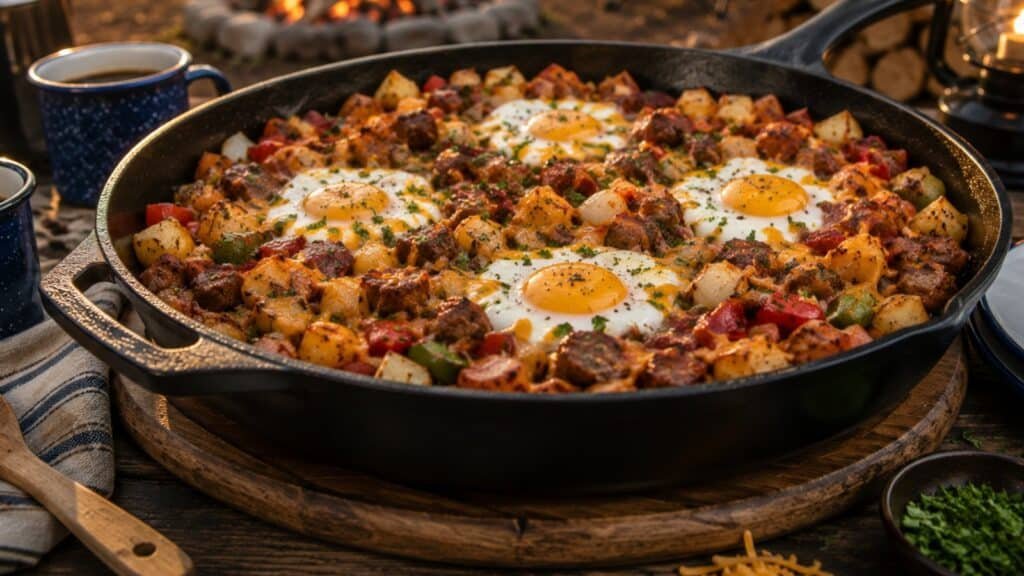
Whenever I’m camping with my family, this is one breakfast I never skip.
Everything cooks together in one skillet, and everyone can eat at the same time.
Ingredients
- Diced potatoes
- Bacon
- Sausage
- Eggs
- Onion
- Bell pepper
- Cheese
Cook the potatoes until crisp before adding the meat and vegetables.
Finally, crack eggs directly into the skillet and cover until cooked.
Scatter grated cheese over the top before serving.
This hearty breakfast easily fuels a full morning of hiking or kayaking.
Dutch Oven Peach Cobbler
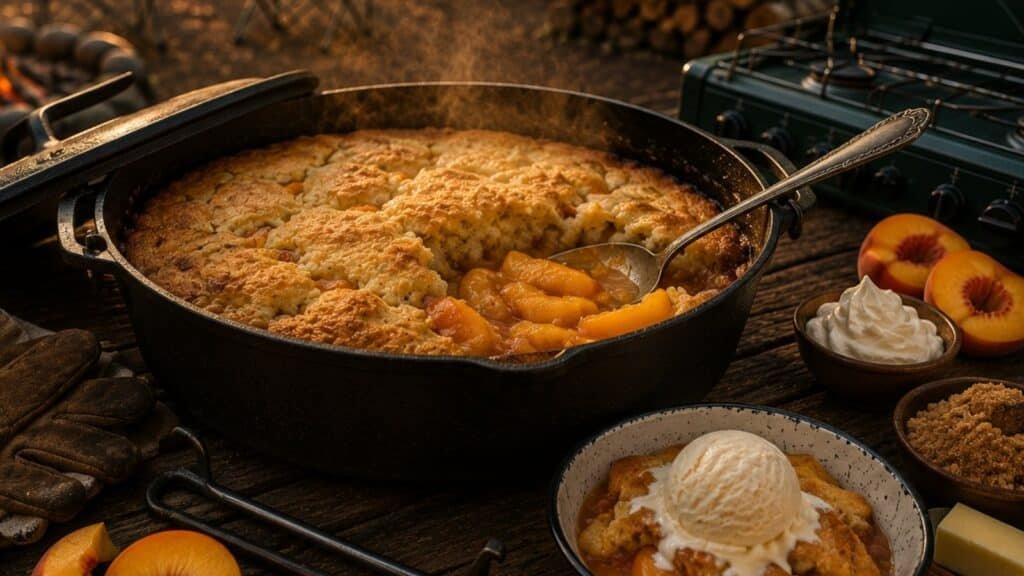
Dessert around a campfire somehow tastes even better.
Peach cobbler remains my favorite because it’s nearly impossible to get wrong.
Ingredients
- Canned peaches
- Yellow cake mix
- Butter
- Cinnamon
Layer peaches into a Dutch oven.
Sprinkle cake mix evenly across the top.
Place slices of butter over everything before covering with the lid.
Cook using hot coals above and below until the topping becomes crisp and golden.
Serve warm with vanilla ice cream if your cooler still has some left.
It’s one of the simplest easy campfire recipes you’ll ever make, yet people talk about it long after the trip ends.
My Go-To Meal Rotation for a Three-Day Camping Trip
After years of experimenting, I’ve settled on a meal plan that keeps everyone well-fed without overcomplicating things.
Day One
Breakfast
- Breakfast burritos
Lunch
- Sandwiches and fresh fruit
Dinner
- Foil packet garlic butter chicken
Day Two
Breakfast
- Skillet breakfast hash
Lunch
- Campfire quesadillas
Dinner
- Dutch oven chili with cornbread
Day Three
Breakfast
- Pancakes and bacon
Lunch
- Walking tacos
Dinner
- Grilled sausage with vegetables
Dessert
- Dutch oven peach cobbler
This menu balances quick meals with slower campfire favorites while keeping ingredient crossover high. The same cheese, onions, peppers, potatoes, and tortillas appear in multiple recipes, reducing both waste and packing space.
I’ve found that planning meals this way makes grocery shopping easier and leaves more room in the cooler for drinks and fresh ingredients.
In the next section, I’ll cover practical meal ideas for families, large camping groups, make-ahead dishes, and the kind of lazy camping food that still tastes fantastic after a full day outdoors.
Easy Camping Meals for Family
Cooking for children at camp is completely different from cooking for adults. After years of family camping trips, I’ve learned that keeping meals familiar is usually more successful than introducing something new.
Kids spend all day burning energy, so they generally want food that’s hot, filling, and recognizable.
One thing I’ve noticed is that children love helping with outdoor cooking.
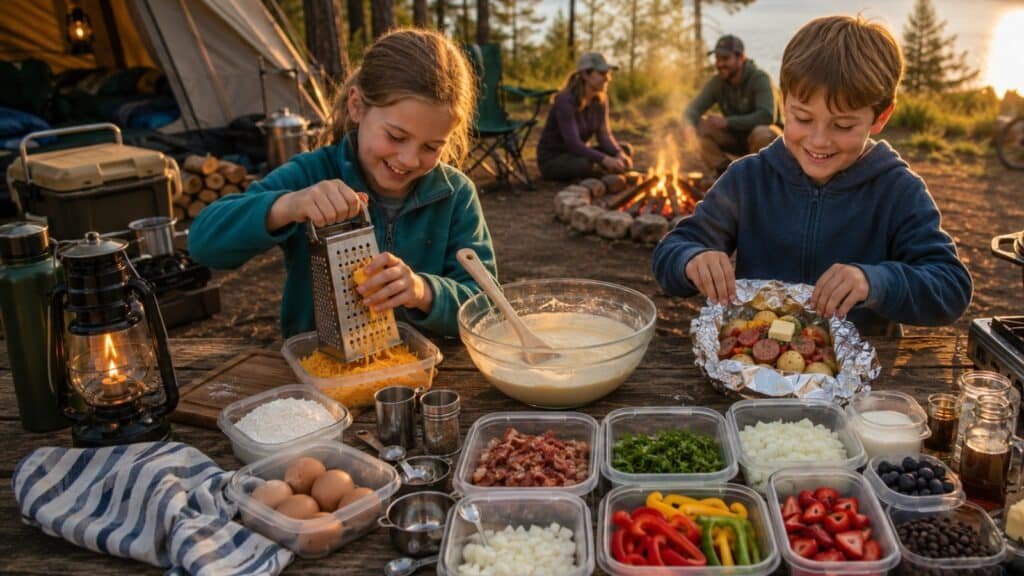
Giving them simple jobs—such as grating cheese, wrapping foil packets, stirring pancake batter, or assembling burritos—keeps them involved and often encourages even picky eaters to try their meal.
Our regular family favorites include:
- Breakfast burritos
- Campfire grilled cheese
- Hot dogs with baked beans
- Campfire mac and cheese
- Walking tacos
- Cheeseburgers
- Pancakes with fresh berries
- Chicken quesadillas
These recipes have become staples because they’re reliable, inexpensive, and don’t require dozens of ingredients.
Get Kids Involved
I’ve found that meals go much more smoothly when everyone has a small role.
Children can:
- Wash vegetables
- Mix pancake batter
- Fill foil packets
- Butter bread
- Assemble wraps
- Pass out plates and cutlery
Obviously, all fire management and hot cookware should remain the responsibility of adults.
Cook One Meal for Everyone
Preparing separate meals quickly becomes frustrating.
Instead, choose flexible recipes where everyone can customize their own plate.
Good examples include:
- Taco bars
- Burger nights
- Pasta with optional toppings
- Baked potato stations
- Burrito bowls
This keeps preparation simple while allowing everyone to eat what they enjoy.
Easy Camping Meals for Large Groups
Cooking for ten or twenty campers isn’t simply a matter of doubling a recipe.
Organization becomes far more important than cooking ability.
I’ve cooked for scout groups, extended family weekends, and large fishing trips, and the biggest lesson I’ve learned is to prepare as much as possible before leaving home.
Large-group favorites include:
- Dutch oven chili
- Pulled pork sandwiches
- Taco bars
- Pasta bake
- Sausage casserole
- Jambalaya
- Breakfast casserole
- Chicken fajitas
All of these scale well without dramatically increasing cooking time.
Batch Cooking Makes Life Easier
Large Dutch ovens become invaluable here.
Instead of preparing multiple smaller meals, cook one large batch that everyone serves themselves from.
I normally use:
- Two Dutch ovens
- One large propane stove
- One campfire grill
That setup comfortably feeds around twenty people.
Set Up a Serving Station
Rather than passing food around the campsite, create a serving table.
A folding camp table works perfectly.
Arrange it with:
- Plates
- Cutlery
- Napkins
- Sauces
- Seasonings
- Drinks
- Dessert
People naturally move through the line, reducing congestion around the cooking area.
Prep Ingredients Before You Leave
If you’re feeding a crowd, avoid chopping vegetables at camp.
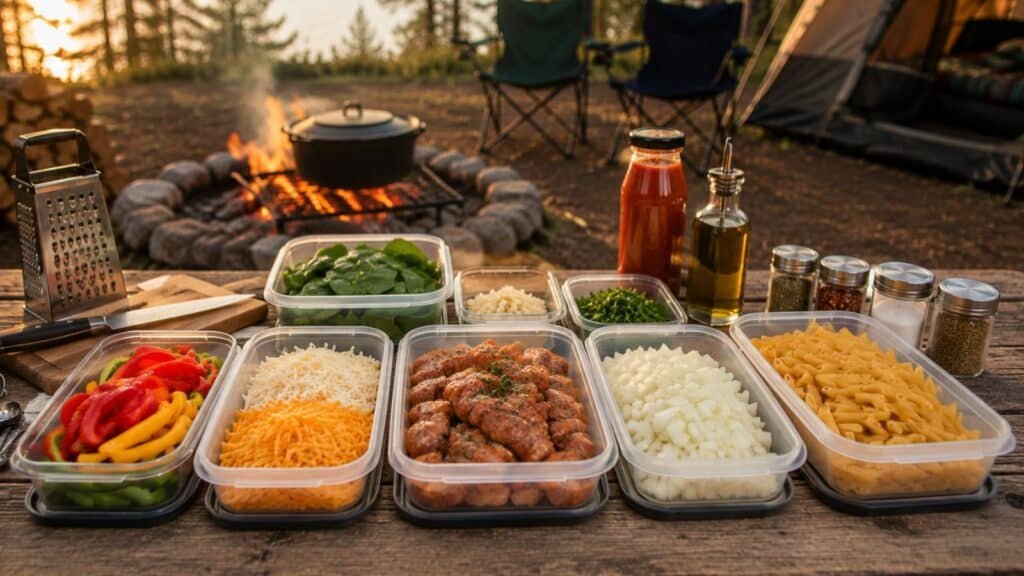
Dice onions.
Slice peppers.
Grate cheese.
Marinate meat.
Store everything inside clearly labelled reusable food containers.
It saves a surprising amount of time once dinner starts.
Simple Make Ahead Camping Meals
Some of the best camping food is actually prepared in your own kitchen.
I’ve gradually shifted more preparation to the day before a trip because it means less work at camp and far less mess.
These simple make ahead camping meals save valuable time.
Breakfast Burritos
Cook everything at home.
Wrap each burrito individually in foil.
Store them inside the cooler.
Reheat beside the campfire or on a camp stove for about fifteen minutes.
They’re especially useful on the first morning when everyone wants breakfast quickly.
Marinated Chicken
Place chicken together with your marinade inside freezer bags.
The meat absorbs more flavor while travelling in the cooler.
Once you arrive, it’s ready for the grill without any extra preparation.
Pasta Salad
Cold pasta salad travels extremely well.
I usually prepare one large container using:
- Pasta
- Cherry tomatoes
- Cucumber
- Red onion
- Feta
- Italian dressing
It makes an excellent camping lunch and pairs nicely with grilled meats
Homemade Chili
Chili actually improves overnight.
Cook it completely at home before refrigerating.
At camp, simply reheat it inside your Dutch oven.
Nobody will know it wasn’t cooked from scratch that evening.
Pancake Batter
Instead of carrying separate ingredients, mix pancake batter beforehand.
Pour it into a squeeze bottle.
Breakfast becomes incredibly simple.
Just squeeze circles directly into your skillet.
No bowls.
No measuring.
No unnecessary washing up.
Organizing Your Cooler Properly
Keeping ingredients cold isn’t difficult if the cooler is packed correctly.
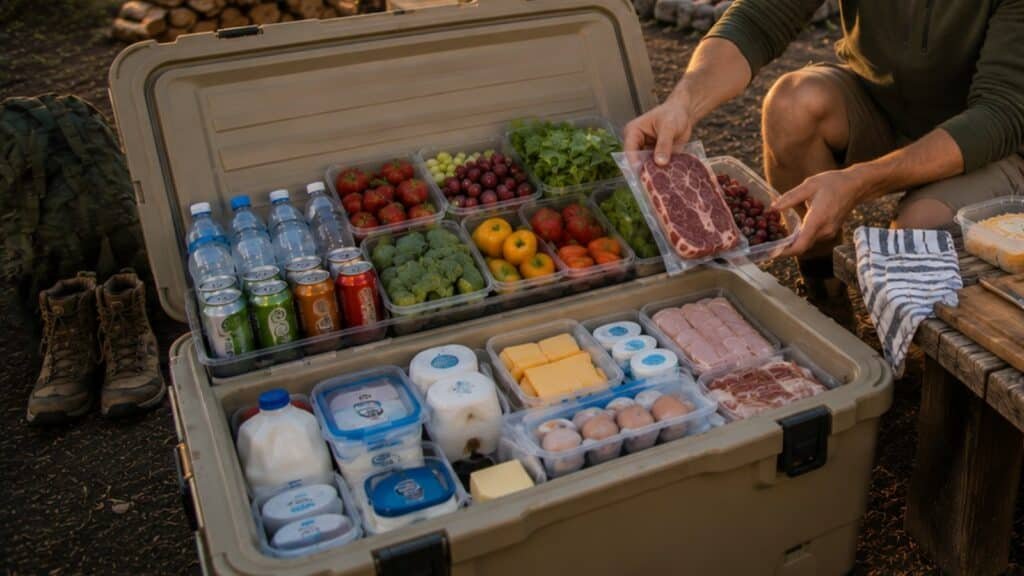
I always follow the same system.
Bottom Layer
- Frozen meat
- Ice packs
- Frozen water bottles
Middle Layer
- Dairy products
- Eggs
- Butter
- Bacon
Top Layer
- Drinks
- Sandwich ingredients
- Fruit
- Vegetables
Opening the cooler less often makes just as much difference as buying a premium model.
If possible, keep food and drinks in separate camping coolers.
The drink cooler gets opened constantly, while the food cooler stays cold much longer.
Lazy Camping Food That Actually Tastes Good
Not every camping trip needs elaborate meals.
Sometimes everyone is tired after hiking fifteen miles or spending all day kayaking.
That’s when lazy camping food earns its place.
Quick doesn’t have to mean boring.
Grilled Cheese and Tomato Soup
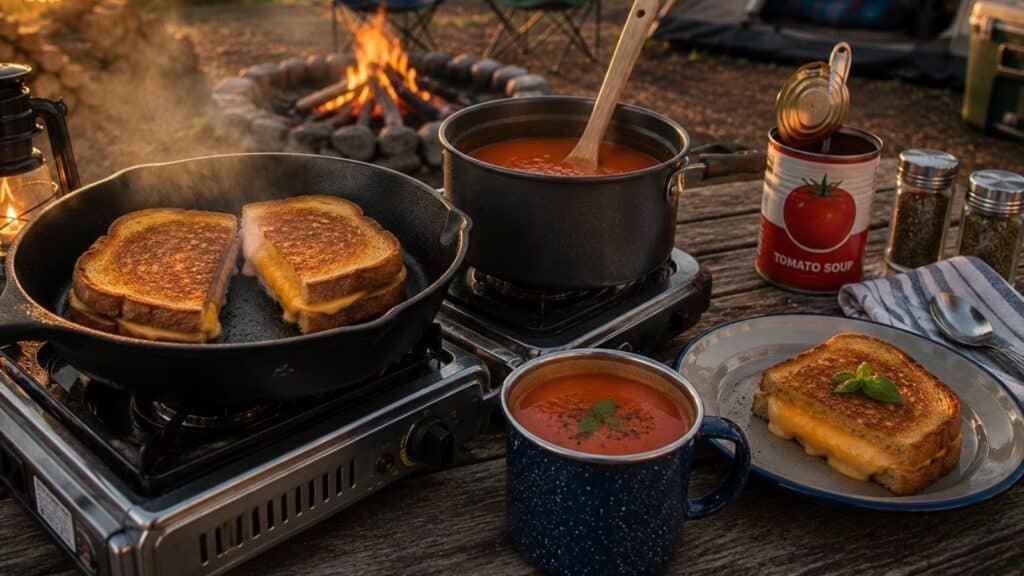
Cook sandwiches inside a cast iron skillet while heating canned tomato soup on your camp stove.
Dinner is ready in fifteen minutes.
Loaded Hot Dogs
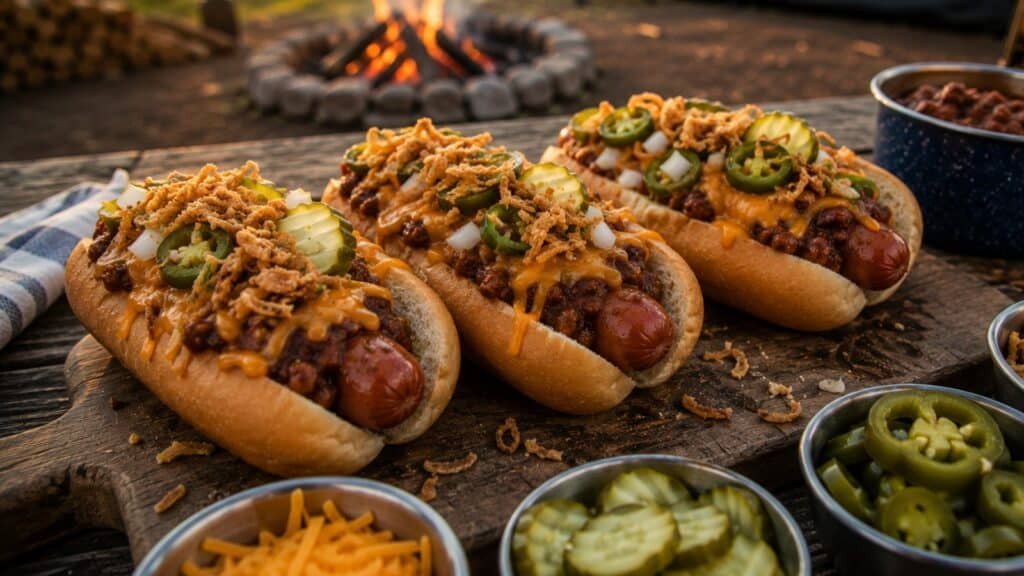
Upgrade ordinary hot dogs with:
- Fried onions
- Jalapeños
- Chili
- Cheese
- Crispy onions
- Pickles
It feels far more satisfying than plain hot dogs.
Nachos
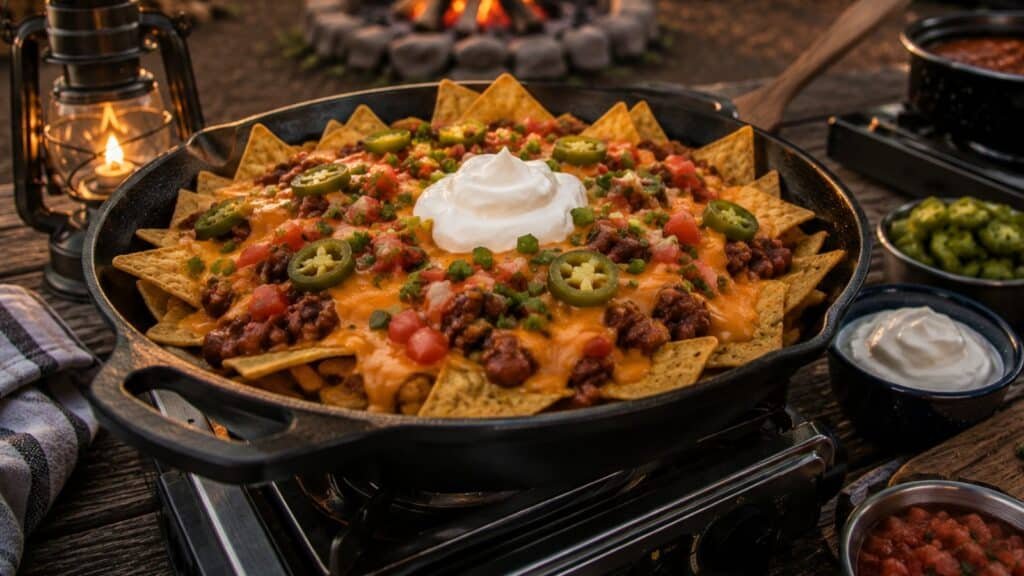
Scatter tortilla chips into a skillet.
Add:
- Cheese
- Leftover chili
- Salsa
- Jalapeños
- Sour cream
Cover briefly until melted.
Minimal effort.
Maximum reward.
Rotisserie Chicken Wraps
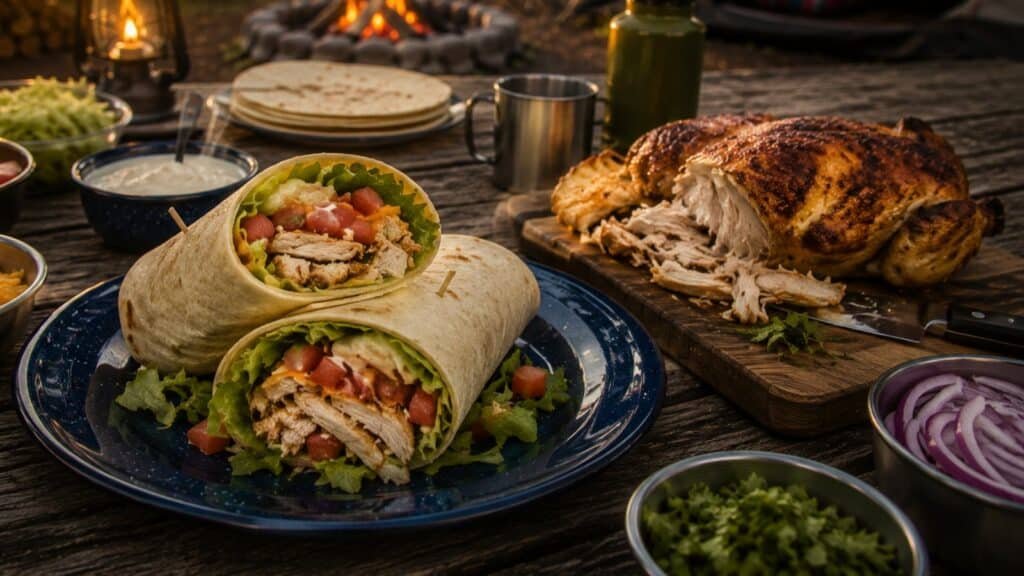
Buy a cooked chicken before reaching camp.
Use it throughout the weekend for:
- Wraps
- Sandwiches
- Salads
- Quesadillas
One chicken often becomes three separate meals.
Campfire Pizza
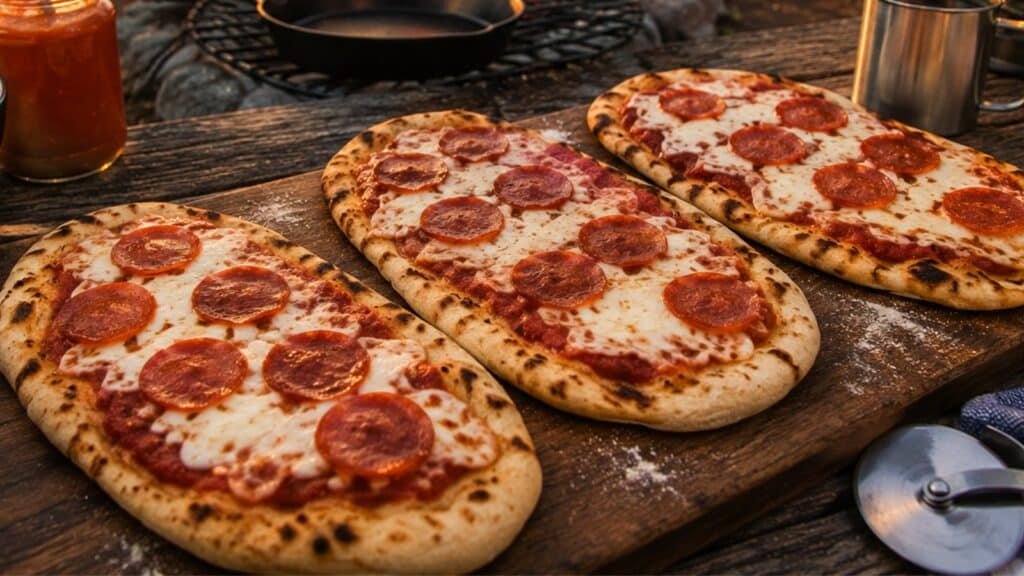
Use naan bread or flatbread instead of making dough.
Top with:
- Pizza sauce
- Mozzarella
- Pepperoni
- Mushrooms
Cook over medium heat until the cheese bubbles.
I’ve made these dozens of times, and they’re always popular.
Instant Rice Bowls
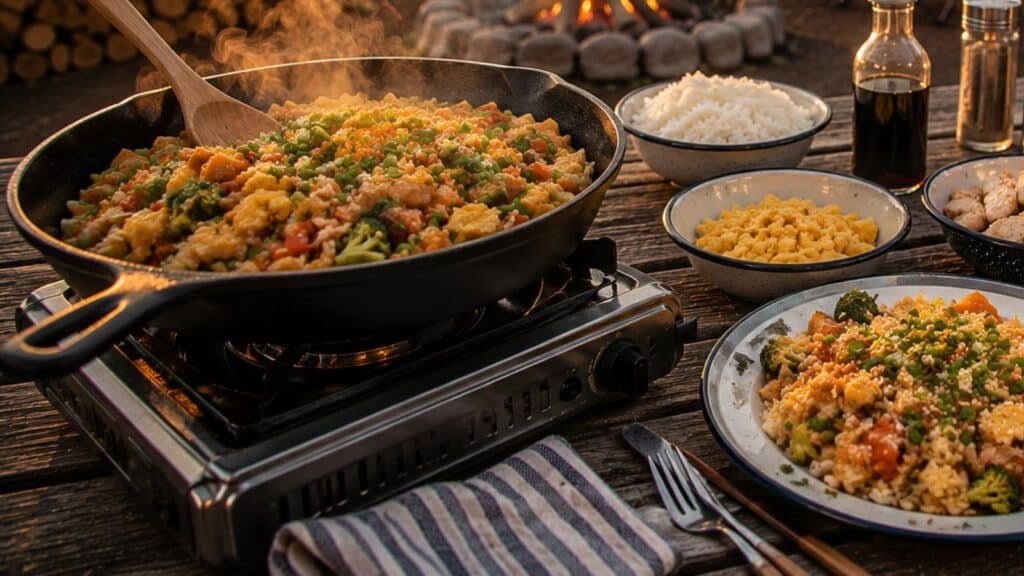
Instant rice has improved enormously over the years.
Combine it with:
- Cooked chicken
- Vegetables
- Soy sauce
- Scrambled eggs
Dinner takes less than twenty minutes.
Cleanup Tips That Save Time
The easiest meal to clean up is usually the one you’ll cook again.
A few habits have dramatically reduced cleanup on my trips.
Line Dutch Ovens Carefully
For sticky desserts, lining the base with baking paper makes cleaning much easier without affecting cooking performance.
Use Heavy-Duty Foil
Cheap foil tears easily.
Heavy-duty aluminum foil survives direct campfire cooking much better.
Heat Water Immediately After Eating
Warm water cleans greasy pans much faster than cold water.
I always place a kettle on the stove before anyone starts eating.
Wipe Cast Iron First
Never soak cast iron.
Instead:
- Wipe with paper towels.
- Scrub gently with hot water.
- Dry thoroughly.
- Apply a thin coat of oil before storage.
Proper care keeps cast iron naturally non-stick for years.
Pack a Small Cleaning Kit
Mine always contains:
- Biodegradable washing-up liquid
- Dish cloth
- Sponge
- Scrubbing brush
- Microfiber towel
- Bin bags
- Rubber gloves
Having everything together avoids searching through boxes after dinner.
By preparing meals before leaving home, organizing your cooler properly, and relying on dependable recipes instead of complicated ones, you’ll spend far less time cooking and much more time enjoying camp.
In the final section, we’ll look at classic camping meals, affordable family recipes, the best camp dutch oven recipes, and practical outdoor cooking tips I’ve learned after years around the campfire.
Classic Camping Meals That Never Get Old
Some meals have earned a permanent place in every camper’s recipe collection. They don’t rely on trendy ingredients or complicated techniques—they simply work.
After countless weekends in forests, state parks, and mountain campgrounds, these are the classic camping meals I keep coming back to because they consistently satisfy hungry campers.
Burgers Over the Campfire
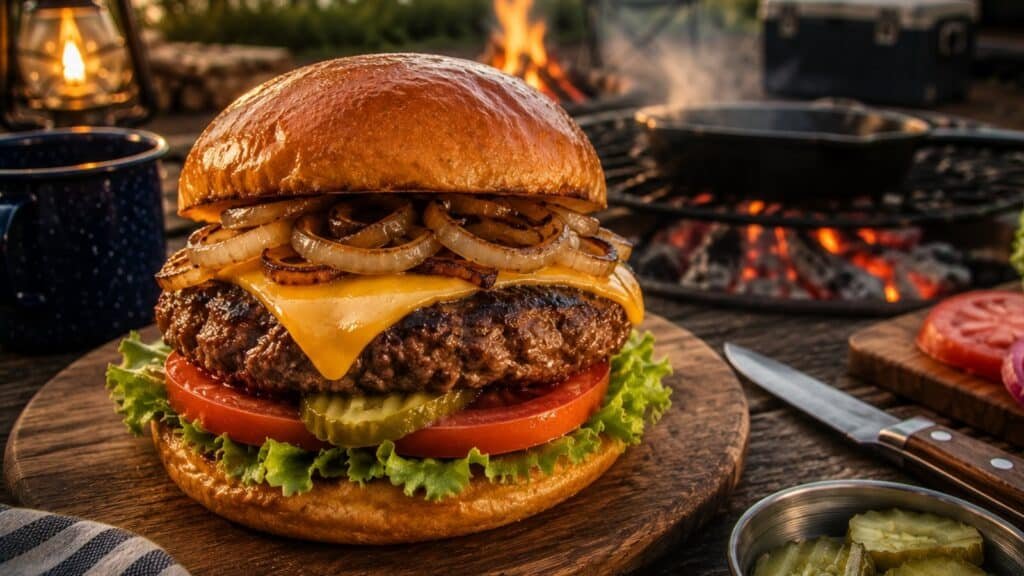
A thick burger cooked over hardwood coals has a flavor that’s difficult to recreate at home.
I like to season the patties simply with salt, pepper, and garlic powder before cooking them on a Coghlan’s Camp Grill. Toast the buns lightly over the fire and top them with cheese, grilled onions, lettuce, tomatoes, and pickles.
Serve with:
- Potato salad
- Corn on the cob
- Baked beans
- Crisps
Campfire Steaks
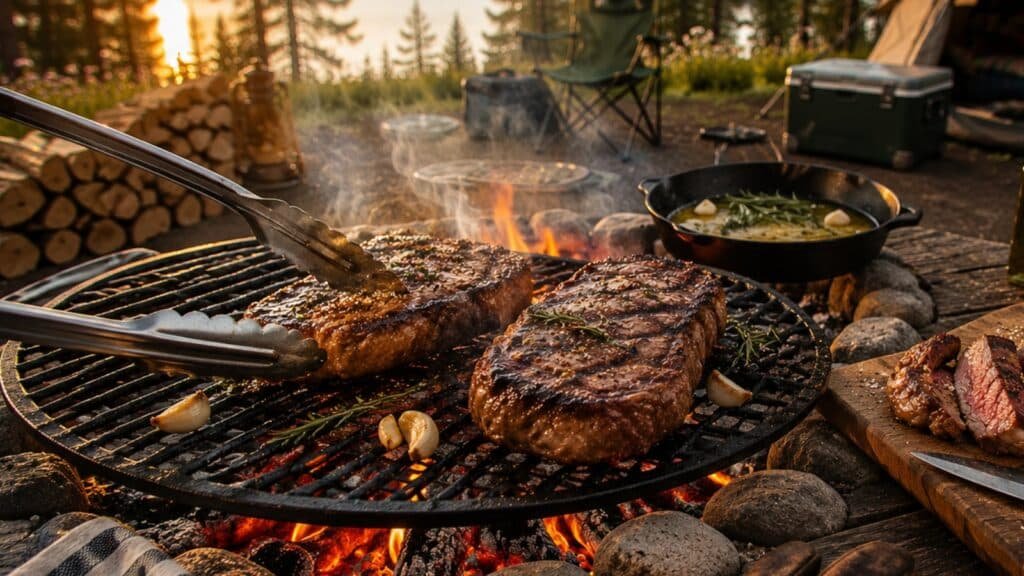
You don’t need an expensive steakhouse when you’ve got a good fire.
Let the steaks come close to room temperature before cooking, season generously, and use a Lodge Cast Iron Skillet over hot coals for a fantastic crust.
A digital food thermometer helps avoid overcooking, especially when light fades in the evening.
Hot Dogs Done Properly
Hot dogs might sound ordinary, but they’re still one of the easiest campsite dinners.
As I mentioned earlier, rather than serving them plain, create a topping station with:
- Fried onions
- Cheese
- Jalapeños
- Relish
- Mustard
- Chili
- Crispy bacon
Everyone builds their own, and cleanup stays simple.
Campfire Baked Potatoes
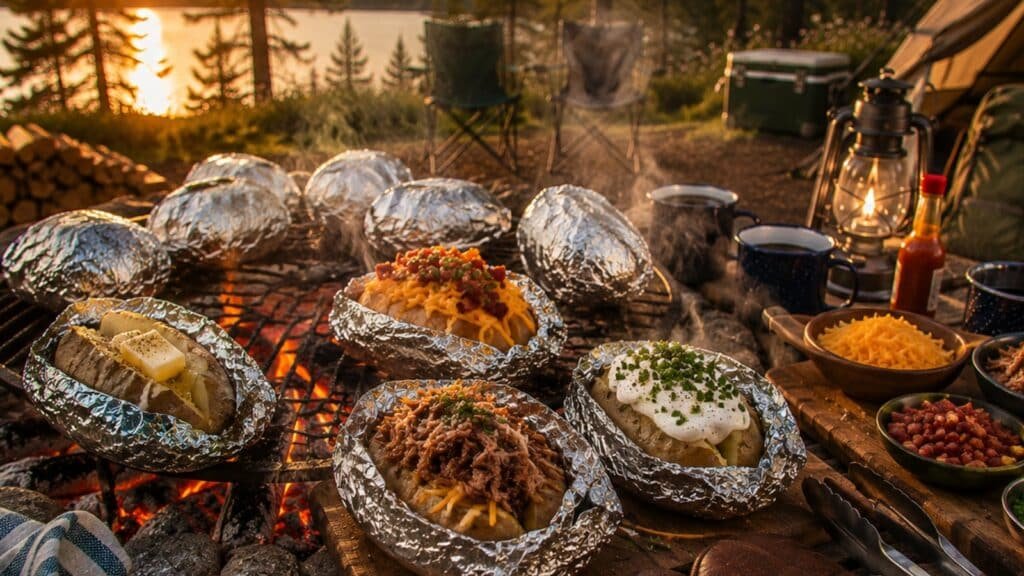
Wrap large potatoes in foil and bury them beneath glowing coals for around an hour.
While they’re cooking, prepare toppings like:
- Butter
- Cheese
- Bacon bits
- Sour cream
- Chives
- Pulled pork
- Chili
This meal is inexpensive, filling, and surprisingly satisfying after a full day outdoors.
Pancakes and Bacon
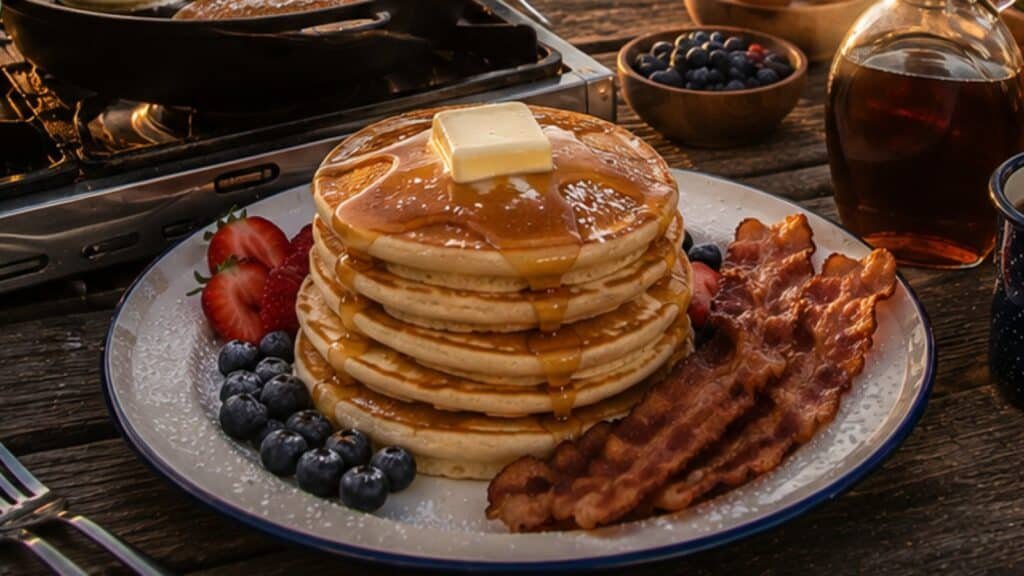
Few smells attract sleepy campers faster than bacon sizzling in a cast iron skillet.
I normally cook the bacon first before using the rendered fat to fry pancakes. The subtle smoky flavor is worth it.
A camp coffee percolator bubbling away beside the skillet completes the morning.
Easy Camping Meals for Family on a Budget
Camping doesn’t have to involve expensive ingredients. Some of the tastiest meals I’ve made have also been the cheapest.
These easy camping meals for family on a budget rely on affordable staples that stretch a long way without sacrificing flavor.
Buy Ingredients That Work Across Multiple Meals
Instead of buying unique ingredients for every recipe, choose versatile items.
For example:
| Ingredient | Uses |
|---|---|
| Tortillas | Burritos, wraps, quesadillas |
| Cheese | Burgers, tacos, pasta, potatoes |
| Potatoes | Breakfast hash, foil packets, sides |
| Onions | Nearly every savory meal |
| Ground beef | Chili, tacos, burgers |
| Eggs | Breakfasts, fried rice, baking |
Buying this way reduces waste while saving cooler space.
Shop in Bulk
Warehouse stores can save a surprising amount if you’re feeding several people.
I regularly buy:
- Rice
- Pasta
- Beans
- Flour tortillas
- Cheese
- Coffee
- Marshmallows
Most keep well between trips.
Use Leftovers Creatively
Leftovers rarely go to waste at our campsite.
Extra chili becomes:
- Loaded baked potatoes
- Nachos
- Burritos
- Pasta topping
Grilled chicken turns into:
- Wraps
- Salads
- Fried rice
- Quesadillas
Planning these second meals before leaving home helps reduce food waste significantly.
Skip Single-Use Convenience Foods
Pre-packaged camping meals have their place for backpacking, but family camping is usually cheaper with fresh ingredients.
Cooking from scratch costs less, tastes better, and often produces larger portions.
Best Camp Dutch Oven Recipes
A Dutch oven has earned a permanent place in my camping kit because it’s incredibly versatile.
You can bake, roast, fry, simmer, steam, and even make desserts using one pot.
If you’re only going to invest in one piece of cast iron cookware, I’d recommend a quality Lodge Dutch Oven or Camp Chef Dutch Oven. With basic care, either should last decades.
These are my favorite best camp dutch oven recipes.
Dutch Oven Beef Stew
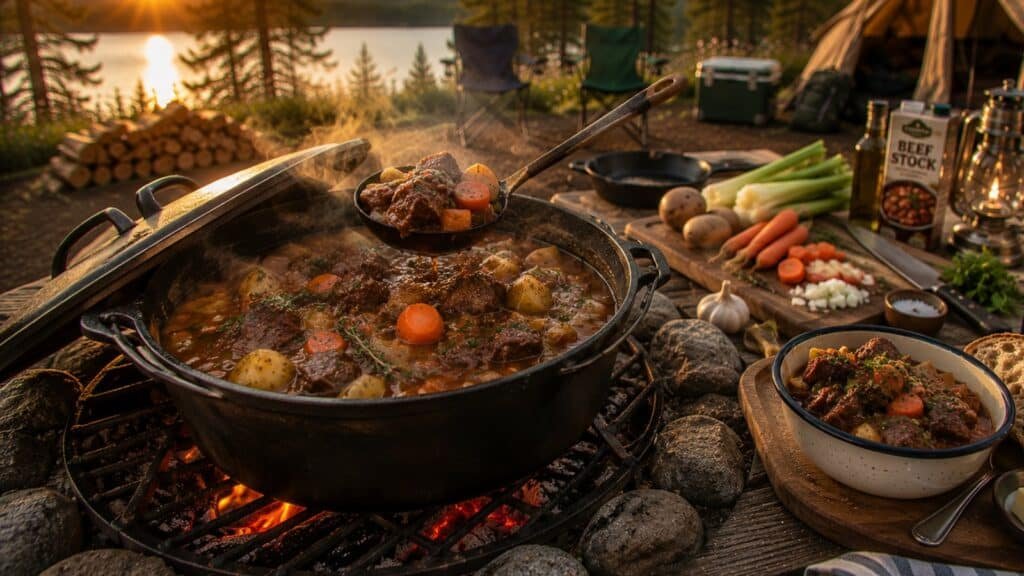
Nothing beats a slow-cooked stew after hiking in cold weather.
Ingredients include:
- Stewing beef
- Potatoes
- Carrots
- Celery
- Onion
- Beef stock
- Tomato paste
- Thyme
Allow it to simmer slowly beneath hot coals for around two and a half hours.
The meat becomes incredibly tender, and the vegetables absorb all the rich flavor.
Dutch Oven Lasagna
Many people are surprised you can cook lasagna outdoors.
Layer:
- Meat sauce
- Lasagna sheets
- Ricotta
- Mozzarella
- Parmesan
Cook gently with coals above and below until bubbling.
I’ve made this for large camping groups several times, and it’s always one of the first dishes to disappear.
Dutch Oven Cinnamon Rolls
Breakfast desserts might sound excessive…
Until you’ve tried warm cinnamon rolls beside a morning campfire.
Using refrigerated dough keeps preparation simple.
Top with icing immediately after baking while they’re still hot.
Dutch Oven Apple Crisp
Fresh apples, oats, butter, brown sugar, cinnamon, and a little flour create an excellent campsite dessert.
Serve with whipped cream or vanilla ice cream if your cooler still has plenty of ice.
Expert Camp Cooking Tips I’ve Learned Over the Years
After cooking outdoors for more than twenty years, a handful of habits consistently make every trip easier.
Don’t Cook Over Flames
This is probably the biggest mistake beginners make.
Large flames burn food.
Glowing coals cook food.
Wait until your fire settles before putting any cookware over it.
Carry More Seasoning Than You Think You’ll Need
Food cooked outdoors benefits from proper seasoning.
I never leave home without:
- Salt
- Pepper
- Garlic powder
- Onion powder
- Smoked paprika
- Italian herbs
- Chili flakes
- Brown sugar
They take almost no space but dramatically improve simple meals.
Freeze Meat Before Packing
Frozen meat acts like an additional ice block inside the cooler.
By the time you’re ready to cook it, it’s usually thawed safely.
This also helps keep other ingredients colder for longer.
Label Containers
When every reusable food container looks the same, dinner prep becomes frustrating.
Simple labels save time.
Especially after dark.
Keep One “Quick Meal” in Reserve
Weather changes.
Plans change.
Sometimes everyone returns to camp completely exhausted.
I always pack one emergency meal such as:
- Pasta
- Jarred sauce
- Sausage
- Tortillas
- Instant rice
Dinner can still be ready in under twenty minutes.
Clean as You Cook
Rather than leaving everything until after dinner, wash knives, boards, and mixing bowls while food cooks.
There’s far less to tackle afterwards.
Protect Your Cast Iron
Never leave cast iron wet overnight.
Dry it immediately.
Rub on a light coating of cooking oil.
Store it somewhere dry.
Properly maintained cast iron improves with age.
Frequently Asked Questions
What is the easiest meal to cook while camping?
Breakfast burritos, foil packet chicken, burgers, hot dogs, and one-pot pasta are among the easiest camping meals because they require minimal preparation and cleanup.
What food should you prepare before camping?
Prepare chili, marinated meats, chopped vegetables, breakfast burritos, pasta salad, pancake batter, and sandwich fillings before leaving home.
What is the best Dutch oven meal for camping?
Dutch oven chili is one of the most popular because it feeds large groups, cooks evenly over coals, and tastes even better the next day.
How do you keep food cold while camping?
Use frozen meat, quality coolers, block ice, frozen water bottles, and avoid opening the cooler unnecessarily.
What foods are best for large camping groups?
Chili, taco bars, pulled pork, pasta bake, breakfast casserole, jambalaya, and Dutch oven stews all scale well.
Final Thoughts
The best camp recipes aren’t necessarily the fanciest—they’re the ones that consistently bring people together after a day outdoors.
Over the years, I’ve found that simple ingredients, reliable equipment, and a little preparation beat complicated recipes every time.
Whether you’re cooking breakfast on a Coleman Cascade Camp Stove, simmering chili in a Dutch oven over glowing coals, or grilling burgers on a campfire grate, the goal is always the same: great food with minimal stress.
Keep your meal plan practical, prep what you can before leaving home, and don’t be afraid to repeat recipes that work well. Before long, they’ll become traditions that friends and family look forward to on every trip.
As you build your own collection of campsite favorites, consider expanding your gear with quality camping cookware, dependable camping stoves, versatile Dutch ovens, reliable campfire cooking equipment, well-insulated camping coolers, and other camping kitchen essentials.
The right equipment won’t make you a better cook overnight, but it will make outdoor cooking easier, more enjoyable, and far more consistent.
Good campsite meals create lasting memories, and in my experience, those memories almost always begin around a fire with good company and a hot meal.
CampEquipmentPlus relies on reader support. Purchases made via links on our website may earn us an affiliate commission at no extra cost to you, helping keep the site running.