
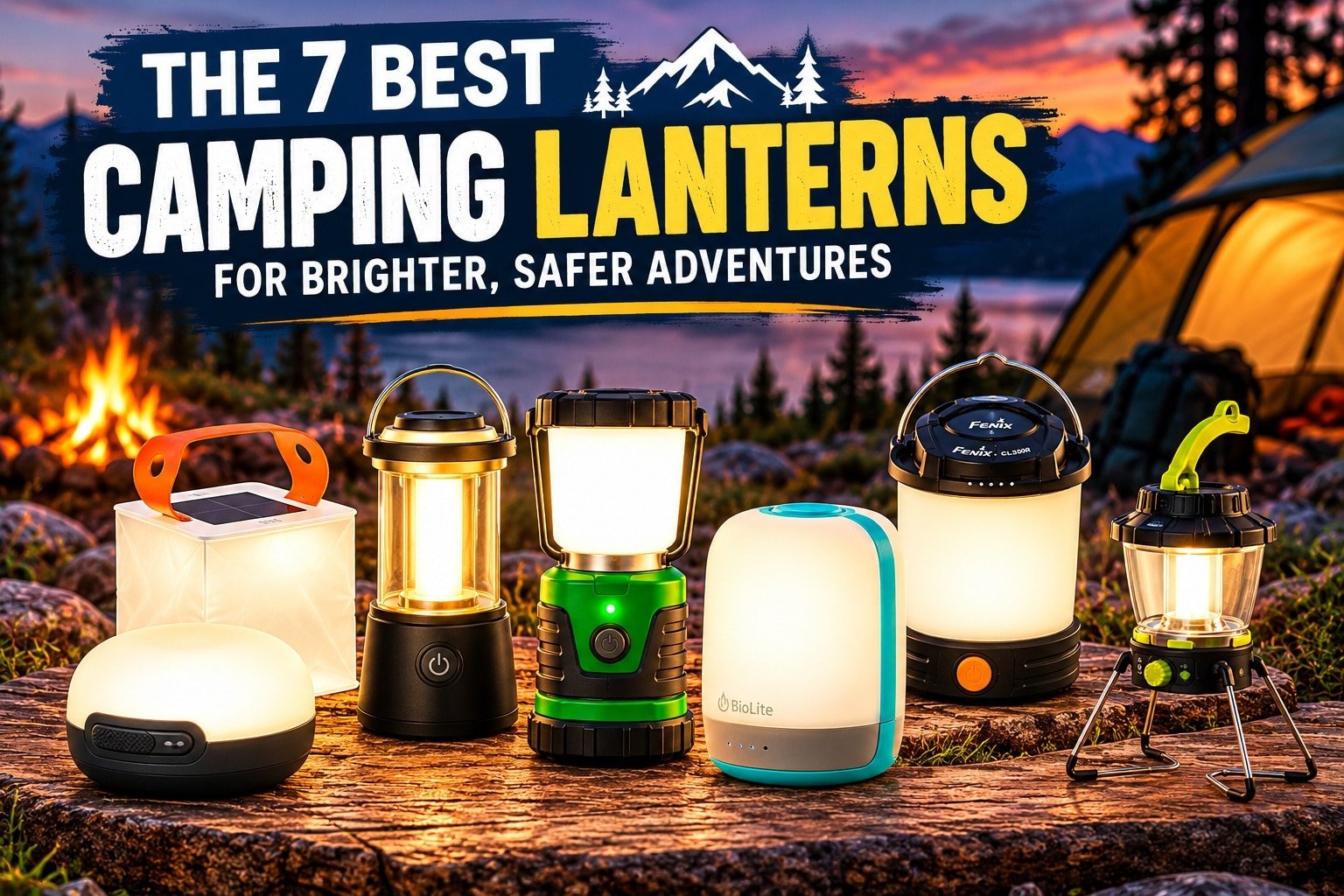
Finding the best rechargeable lanterns for camping comes down to more than maximum brightness.
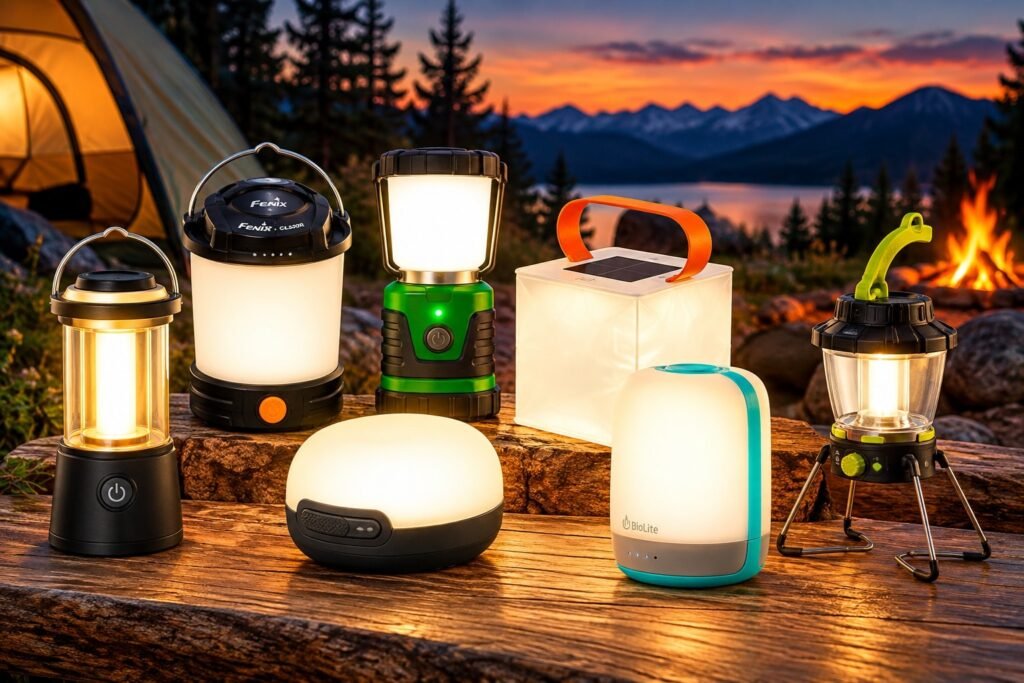
Battery life, adjustable output, charging options, weather resistance and weight all affect how useful a lantern is once you are actually at camp.
For this guide, we compared seven of the best rechargeable camping lanterns for different uses, from compact tent lighting to powerful 1,000-lumen models for family and car camping.
Our picks include USB rechargeable lanterns, solar charging options and models that can double as a power bank.
Battery capacity deserves particular attention. On one camping trip, I used two small power banks to keep my phone and rechargeable lantern charged.
Both were empty after two days. I now use a larger portable power station with portable solar panels on longer trips.
That experience changed how I judge a camping rechargeable lantern. A big lumen figure looks good on the specification sheet, but useful runtime, brightness control and convenient recharging often matter more.
Our Best Overall pick is the BioLite AlpenGlow 500. Its 500-lumen output, 6,400 mAh rechargeable battery and adjustable warm and cool lighting give it a strong balance of brightness, runtime and campsite practicality.
The other six lanterns earn their places for specific needs, including compact size, wet-weather use, solar charging and higher output.
Best Rechargeable Camping Lanterns
- Best Overall: BioLite AlpenGlow 500. Excellent balance of 500-lumen output, 6,400 mAh battery, adjustable color temperature and useful campsite lighting.
- Best for Car Camping: Goal Zero Lighthouse 600. Bright, directional and able to charge devices, with solar and hand-crank charging options.
- Best for Wet Weather: Fenix CL30R. IPX7 water resistance and replaceable 18650 batteries make it an interesting choice for rougher conditions.
- Best Compact: Black Diamond Moji R+. A small 200-lumen rechargeable camp lantern weighing about 6 oz.
- Best Solar: LuminAID PackLite Max 2-in-1. Collapsible, solar rechargeable and particularly useful where packed space matters.
- Best High-Output Value: Lepro Rechargeable 1000LM Lantern. High maximum output, multiple light temperatures and a 4,400 mAh battery.
- Best for Family Camping: Lepro Hybrid Rechargeable Lantern. Combines a 1,000-lumen main lantern with two detachable flashlights and optional D-cell backup power.
Camp Equipment Plus covers more rechargeable lighting, power banks and portable power equipment in our lighting guide.
Best Rechargeable Lantern for Camping Comparison
| Product | Max Output | Battery | Stated Runtime | Water Resistance | Weight | Best For |
|---|---|---|---|---|---|---|
| BioLite AlpenGlow 500 | 500 lumens | 6,400 mAh | Up to 200 hrs | IPX4 | 13.4 oz | Best Overall |
| Goal Zero Lighthouse 600 | 600 lumens | 5,200 mAh | Up to 320 hrs* | Not specified as immersion-rated | 1.1 lb | Car camping |
| Fenix CL30R | 650 lumens | Replaceable 18650 | Up to 400 hrs | IPX7 | 14.5 oz without batteries | Wet weather |
| Black Diamond Moji R+ | 200 lumens | 1,500 mAh | Mode dependent | IPX4 | 6 oz | Compact use |
| LuminAID PackLite Max 2-in-1 | 150 lumens | 2,000 mAh | Up to 50 hrs | Waterproof design | Approx. 8.5 oz | Solar charging |
| Lepro Rechargeable 1000LM | 1,000 lumens | 4,400 mAh | Up to 12 hrs | IP44 | Approx. 14 oz | High output |
| Lepro 2000LM LED Hybrid Rechargeable | 2,000 lumens | Rechargeable + AA backup | Not verified | IPX4 | 14.5 oz | Maximum brightness -Family camping |
*Maximum manufacturer runtime figures generally apply to low-output settings. They should not be compared directly with runtime at maximum brightness.
What Is the Best Rechargeable Lantern for Camping?
The BioLite AlpenGlow 500 is our pick for the best rechargeable lantern for camping because it balances brightness, battery capacity, weight and adjustable light particularly well.
Maximum output is 500 lumens, which is plenty for most campsite jobs. More useful is the ability to dim the light and switch between warm and cool white illumination. A warm light works well around the table or inside a tent, while brighter white light is useful when cooking or sorting equipment.
The BioLite specifications list a 6,400 mAh rechargeable battery, five-hour runtime on high and up to 200 hours on low. It can also provide USB power to another device.
At 13.4 oz, this is still reasonable for a full-size lantern.
There is one dated feature. Charging uses Micro-USB rather than USB-C. If the rest of your camping electronics have moved to USB-C, carrying another cable feels increasingly unnecessary.
#1 – BioLite AlpenGlow 500: Best Overall
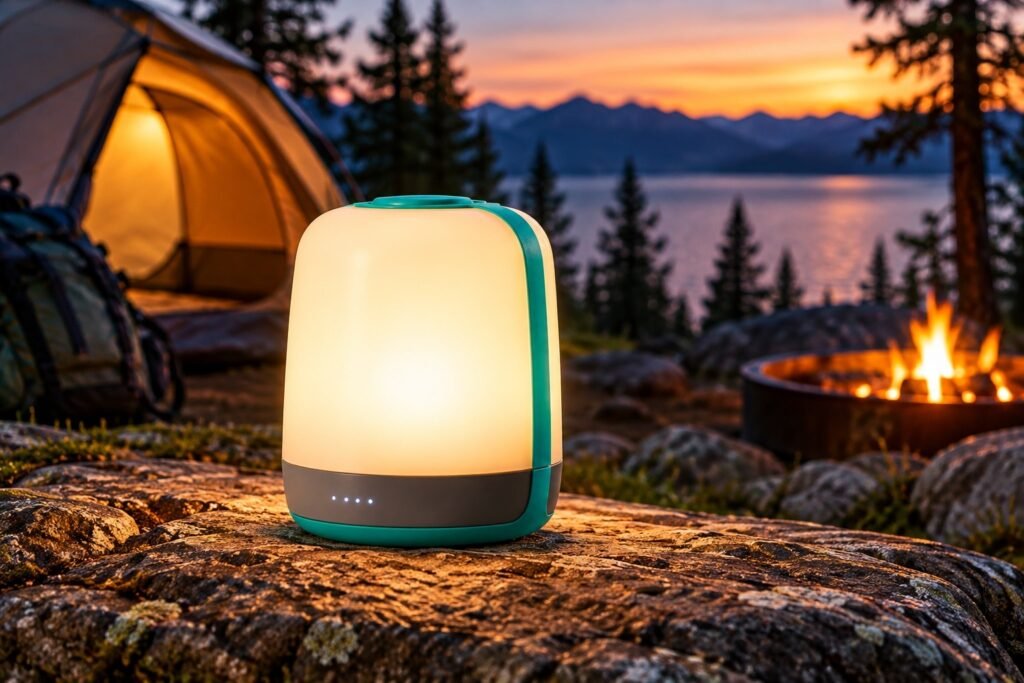
The BioLite AlpenGlow 500 suits campers who want one rechargeable LED lantern capable of handling most general campsite lighting.
Built-In Charging Port, IPX4 Waterproof, Perfect for Nighttime Cooking and Photography, Runs for 5h HI and 200h LO

Its 500-lumen maximum output sits in a useful middle ground. There is enough output for a campsite table, cooking area or larger tent without moving into the size and battery demands of some 1,000-lumen lanterns.
The 6,400 mAh battery is one of its biggest advantages. BioLite states approximately five hours of operation at maximum brightness and up to 200 hours at minimum brightness.
You also get adjustable color temperature. That sounds like a minor feature until you spend an evening with a harsh cool-white LED shining across the table. Being able to reduce the brightness and move toward warmer light makes the lantern more pleasant at close range.
There are several color modes too. They are fun, but I would not buy the AlpenGlow because it can produce different colors. Battery capacity, light quality and brightness adjustment are the features that justify it.
Independent long-term use has also identified battery life and versatility as strengths, while noting weaknesses including the hanging arrangement and cost.
Who Is the AlpenGlow 500 Best For?
Choose it if you want one general-purpose rechargeable camping lantern for car camping, tent lighting and evenings around the campsite.
Backpackers have lighter choices. Campers wanting maximum weather resistance should also look at the Fenix CL30R.
Pros
- 500-lumen maximum output
- Large 6,400 mAh rechargeable battery
- Adjustable brightness
- Warm and cool white light
- USB device charging
- Relatively compact
- IPX4 water resistance
Cons
- Micro-USB rather than USB-C
- More lighting modes than some campers need
- IPX4 protection falls behind the IPX7 Fenix CL30R
#2 – Goal Zero Lighthouse 600: Best for Car Camping
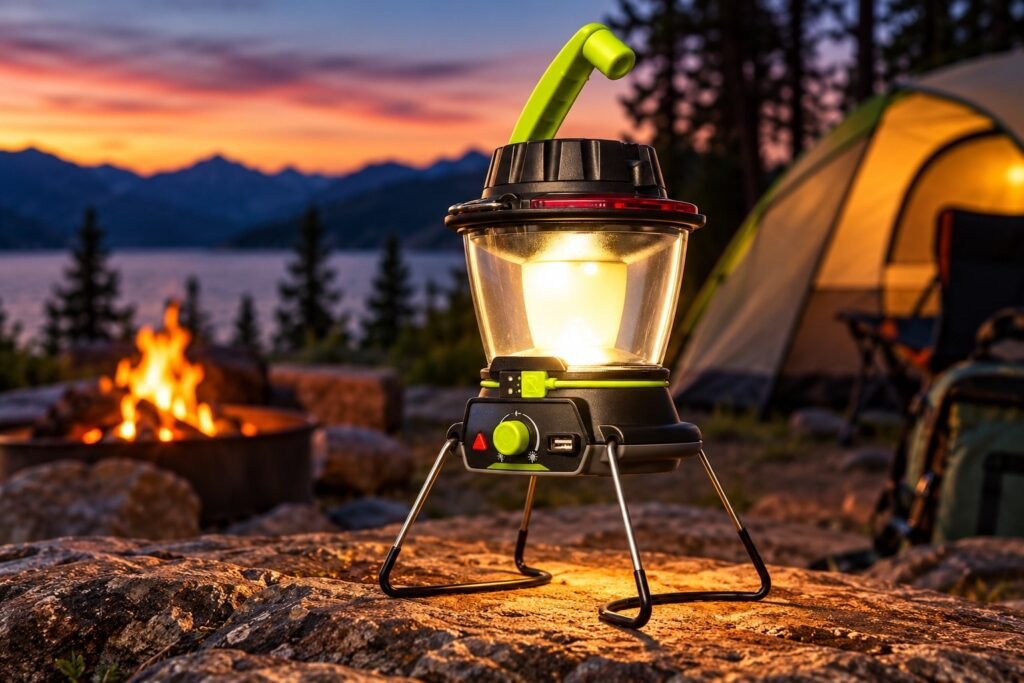
The Goal Zero Lighthouse 600 makes the most sense when weight matters less than versatility.
Perfect for Camping, Outdoor Events, or Emergency use Lumens USB Charging of Phones and Small Devices Long-Lasting Lithium Battery.

Maximum output is 600 lumens. More interesting is the ability to illuminate either half of the lantern.
That sounds simple. It is also useful.
If the lantern is sitting at the edge of a picnic table, you may not need to throw light behind it. Running one side reduces unnecessary light and extends battery runtime.
According to Goal Zero, the internal battery has a 5,200 mAh capacity. Runtime depends heavily on how the lantern is configured.
Using both sides at maximum output gives a stated runtime of about 2.5 hours. One side on high increases that to about five hours. At the lowest single-side setting, the stated maximum stretches to 320 hours.
That illustrates why maximum runtime figures need context.
The Lighthouse 600 can also function as a USB power bank. Charging options include USB and compatible solar equipment, while an integrated hand crank provides another source of emergency power.
I would view the hand crank as backup rather than the main reason to buy it. Nobody goes camping because they want another repetitive arm exercise.
Who Is the Lighthouse 600 Best For?
Car campers, RV users and campers building a larger rechargeable lighting and power setup.
For backpacking, 1.1 lb is difficult to justify when much smaller lanterns exist.
Pros
- 600-lumen maximum output
- Directional half-lantern operation
- 5,200 mAh battery
- USB power-bank function
- Solar charging compatibility
- Emergency hand crank
- Adjustable brightness
Cons
- Heavy for backpacking
- Maximum-output runtime is relatively short
- Bulkier than minimalist lanterns
3. Fenix CL30R: Best for Wet Weather
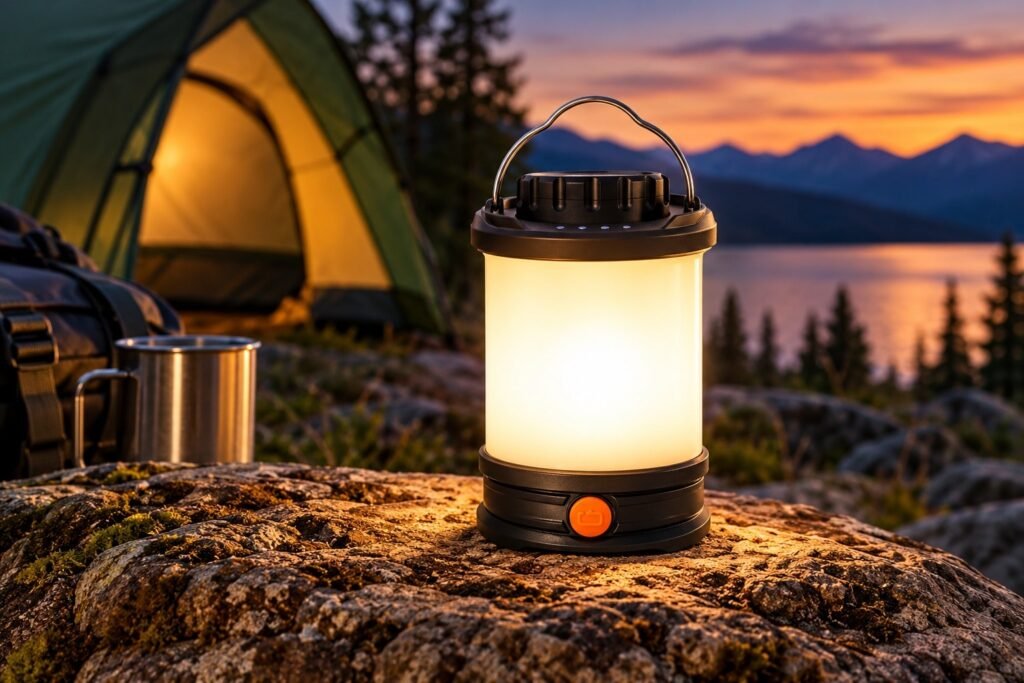
The Fenix CL30R stands out because of two features: IPX7 water resistance and replaceable batteries.
- Max 650 Lumen output from up to three 18650 Rechargeable Li-Ion batteries
- Six modes including 5 brightness levels and flashing mode
- USB Rechargeable with low battery indicator

According to the Fenix specifications, maximum output reaches 650 lumens. There are five brightness levels, USB device charging and a manufacturer-claimed maximum runtime of up to 400 hours at the lowest setting.
IPX7 protection is a substantial step above the IPX4 splash resistance found on several lanterns in this guide.
Then there are the batteries.
Rather than permanently sealing the power source inside the lantern, the CL30R accepts up to three rechargeable 18650 batteries. That gives you options. Batteries can be replaced as they age, and compatible charged spares can extend a trip without waiting for the lantern itself to recharge.
There is a cost.
Fenix lists the lantern at 14.5 oz before batteries. Add three 18650 cells and this is no lightweight backpacking lantern.
Charging is also Micro-USB. USB-C would make more sense on a rechargeable USB lantern today.
Who Is the Fenix CL30R Best For?
Campers who regularly deal with wet conditions or specifically want replaceable rechargeable batteries.
Pros
- 650-lumen maximum output
- IPX7 water resistance
- Replaceable 18650 batteries
- Five brightness levels
- USB power-bank output
- Long low-output runtime
Cons
- Heavy once batteries are installed
- Micro-USB charging
- Overkill for simple tent lighting
4. Black Diamond Moji R+: Best Compact Rechargeable Camp Lantern
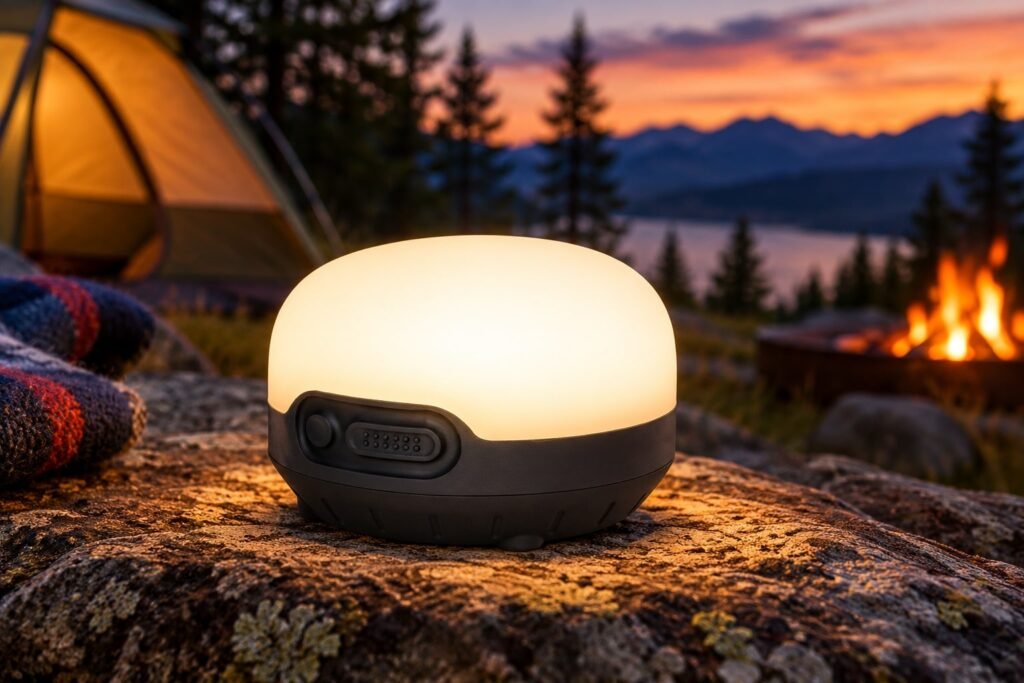
The Black Diamond Moji R+ proves that a rechargeable camp lantern does not need 1,000 lumens to be useful.
Produces up to 200 lumens of warm, even light. Perfect for illuminating tents, campsites, or van interiors without harsh glare. Small enough to pack for every trip.
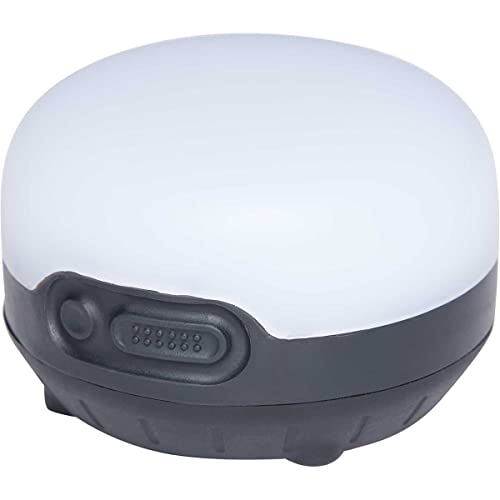
Maximum output is 200 lumens. The lantern weighs approximately 6 oz and uses a built-in 1,500 mAh lithium-ion battery.
Those figures tell you exactly where this lantern belongs.
It is better suited to lighting a tent, small table or immediate campsite area than flooding a large family campsite with light. For campers who prioritize packed size and weight, that can be the right compromise.
The Black Diamond specifications also list IPX4 water resistance and magnetic mounting.
The magnets are genuinely practical around vehicles and other suitable metal surfaces. A hanging lantern is useful. A lantern you can stick exactly where you need it can be even better.
The compromise is battery capacity. At 1,500 mAh, there is far less stored energy than in the BioLite AlpenGlow 500.
Who Is the Moji R+ Best For?
Campers who prioritize compact size and low weight over maximum brightness and very long battery life.
Pros
- Approximately 6 oz
- Compact design
- 200 lumens is sufficient for many close-range tasks
- Magnetic mounting
- Adjustable lighting
- IPX4 water resistance
Cons
- 1,500 mAh battery
- Only 200 lumens maximum
- Less suited to illuminating a large campsite
- Micro-USB charging
5. LuminAID PackLite Max 2-in-1: Best Rechargeable Lantern Solar Option
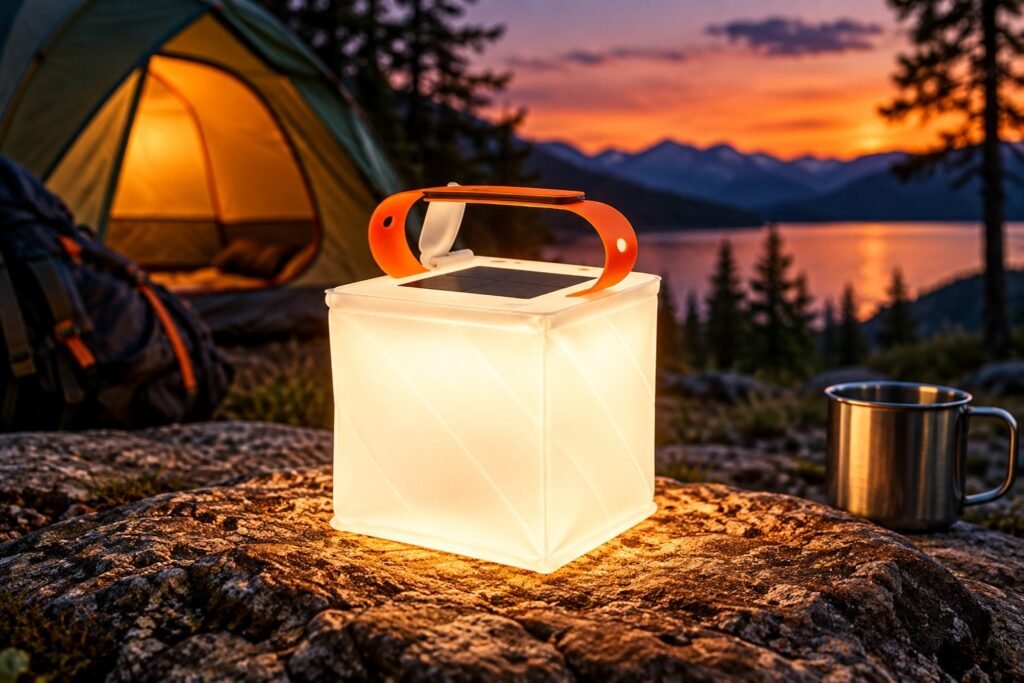
The LuminAID PackLite Max 2-in-1 takes a different approach. Rather than building a conventional rigid outdoor rechargeable lantern, LuminAID uses an inflatable, collapsible body with integrated solar charging.
200 Lumens, Twist-to-Inflate Design, Waterproof, Camping, Hiking & Travel, Emergency Light for Power Outages, Hurricane

That makes storage its main advantage.
According to the LuminAID comparison, the PackLite Max provides up to 150 lumens. Its rechargeable battery has a 2,000 mAh capacity, and maximum stated runtime reaches 50 hours depending on brightness.
USB charging is available alongside the solar panel.
Treat solar as a useful secondary charging method, not free unlimited electricity. A small panel integrated into a lantern has far less collection area than the larger portable solar panels used with camping power stations.
Sun angle, weather and available daylight also affect charging.
For a short weekend where you can charge before leaving home, USB remains straightforward. Solar becomes more interesting during longer trips or where access to conventional charging is limited.
Who Is the PackLite Max Best For?
Campers who value compact storage, solar charging and relatively modest campsite illumination.
If maximum brightness is your priority, 150 lumens puts it well behind the BioLite, Goal Zero, Fenix and Lepro options.
Pros
- Integrated solar charging
- USB rechargeable
- Collapsible design
- Lightweight
- Up to 50-hour stated runtime
- Can provide emergency USB power
Cons
- Only 150 lumens
- 2,000 mAh battery is relatively small
- Solar charging depends heavily on conditions
- Less suitable for lighting large areas
6. Lepro Rechargeable 1000LM Lantern: Best High-Output Value
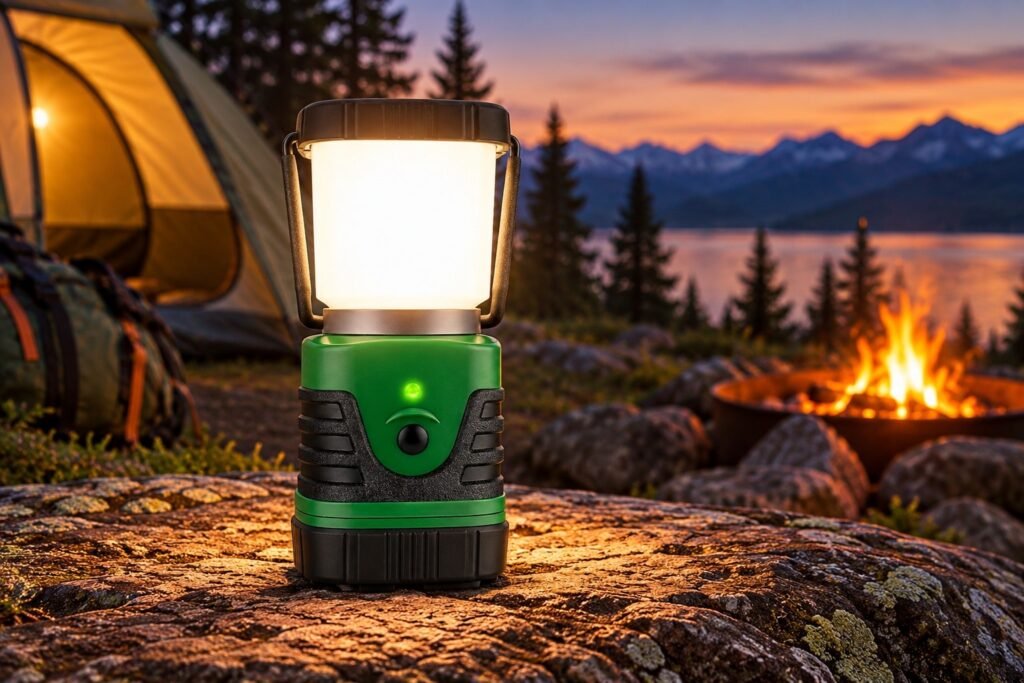
If you want considerably more light, the Lepro rechargeable LED lantern reaches a manufacturer-rated 1,000 lumens.

The lantern provides separate cool white and warm white modes plus a combined high-output mode. Its 4,400 mAh rechargeable battery can also supply USB power to another device.
According to Lepro, the individual lighting modes produce 700 lumens in cool white, 300 lumens in warm white and 1,000 lumens when combined.
The manufacturer lists up to 12 hours of battery life, depending on the selected output. That last part matters.
Running 1,000 lumens continuously asks far more from the battery than using 300 lumens around a table.
The warm-white option is another useful feature. For close-range evening use, I would rather have 300 lumens of comfortable warm light than blast everyone around the table with 1,000 lumens simply because the larger number looks better on the box.
Who Is the Lepro 1000LM Best For?
Car campers and families wanting a bright camping rechargeable lantern without moving into a large lighting system.
Pros
- Up to 1,000 lumens
- 4,400 mAh rechargeable battery
- Warm and cool white modes
- Dimmable
- USB power-bank function
- High output for larger tents and campsite areas
Cons
- Maximum output will reduce runtime
- Less compact than minimalist lanterns
- IP44 weather protection is adequate for outdoor use but less substantial than the Fenix CL30R’s IPX7 rating
7. Lepro 2000LM LED Camping Lantern Rechargeable: Best for Maximum Brightness
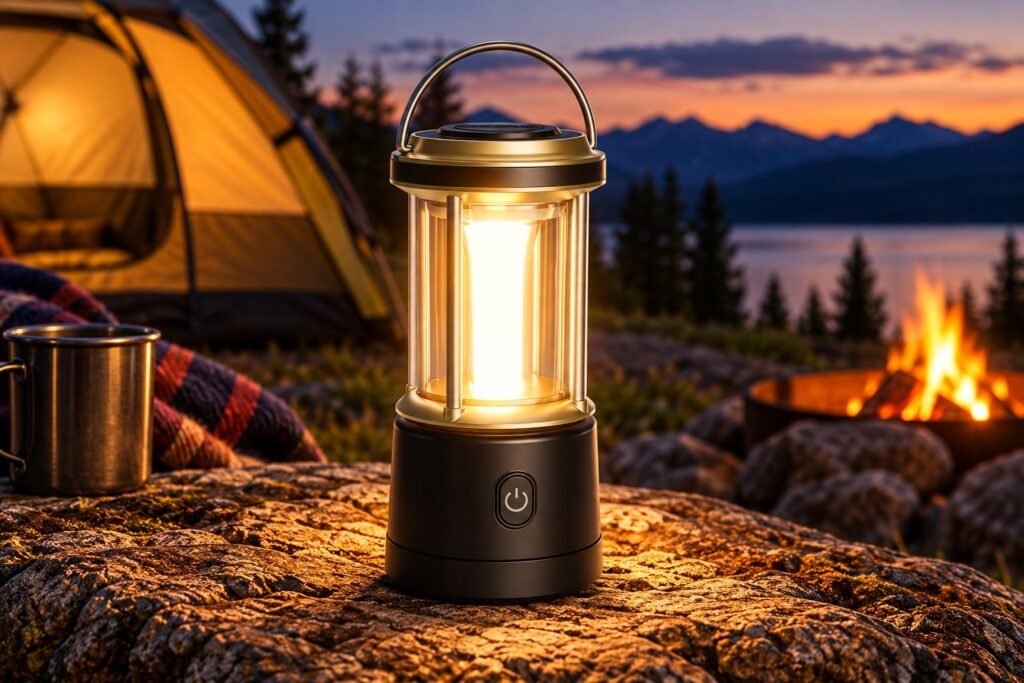
The Lepro 2000LM LED Camping Lantern Rechargeable is the brightest lantern in this roundup on paper. Its manufacturer-rated 2,000-lumen maximum output makes it better suited to lighting a large tent, picnic table or wider campsite than campers who only need a soft light inside their tent.
Rechargeable, Waterproof Tent Light with 5 Light Modes, Camping Essentials, Portable Lantern Flashlight for Camping, Emergency Light, Power Outage, USB Cable Included

The more useful feature is its range of lighting options. Amazon lists cool white at 5500 to 6000K, warm gold at 2350 to 2650K, combined light, red and red flashing modes.
Stepless dimming lets you reduce the output rather than running 2,000 lumens when you only need enough light to cook or sit around the table.
Power flexibility is another advantage. The lantern contains a built-in rechargeable battery but can also run from six AA batteries.
That backup option makes sense for longer camping trips because you are not completely dependent on finding somewhere to recharge the internal battery.
Charging is handled through USB-C, with Lepro stating a full recharge takes around six to seven hours. That is a welcome improvement over the Micro-USB connections still found on several lanterns elsewhere in this roundup.
The lantern weighs 410 g, about 14.5 oz, and measures 3.31 x 3.31 x 7.48 inches. That keeps it within sensible territory for car and family camping, although there are lighter choices here for backpacking.
Its IPX4 rating protects against splashing water from different directions. That is suitable for normal campsite use and unexpected rain, but the Fenix CL30R remains the stronger choice when water resistance is a priority.
Who Is the Lepro 2000LM Best For?
Choose this rechargeable camping lantern if maximum brightness, USB-C charging and backup AA battery power matter more than keeping your lighting kit as small and light as possible.
The 2,000-lumen output also gives it more headroom for larger family campsites. For close-range tent lighting, that much output is unnecessary, so the dimming control becomes particularly important.
Pros
- Up to 2,000 lumens
- Built-in rechargeable battery
- Six-AA battery backup
- USB-C charging
- Five lighting modes
- Stepless dimming
- Warm and cool white light
- Red and red flashing modes
- IPX4 water resistance
- Approximately 14.5 oz
Cons
- 2,000 lumens is unnecessary for most close-range campsite lighting
- AA backup requires six batteries
- IPX4 falls behind the Fenix CL30R’s IPX7 protection
- Heavier than compact lanterns such as the Black Diamond Moji R+
How Many Lumens Should a Rechargeable Camping Lantern Have?
For most camping, roughly 100 to 500 adjustable lumens covers the jobs a lantern performs regularly. Higher output becomes useful when you want to illuminate a larger campsite, group area or family tent.
More is not automatically better.
Inside a tent, even 100 lumens can feel bright. Around a picnic table, 200 to 500 lumens provides substantially more usable illumination. A 600 to 1,000-lumen mode is useful when you temporarily need to light a larger area.
Dimming matters.
A lantern capable of 1,000 lumens but adjustable down to comfortable levels gives you options. Running it at maximum output all evening simply drains the battery faster.
For walking away from camp, I would usually reach for a headlamp rather than carry a large lantern. The lantern can stay where everyone else needs it.
How Long Should a Rechargeable Camp Lantern Last?
A rechargeable camp lantern should provide enough usable runtime for your trip without forcing you to recharge every day. For weekend camping, several evenings at low or medium output is a more useful target than an enormous maximum-runtime claim.
Manufacturers may advertise 100, 200 or even 400 hours.
Read the small print.
Those figures normally relate to the lowest brightness setting. Maximum-output runtime can be dramatically shorter. Goal Zero, for example, lists 320 hours for one side of the Lighthouse 600 operating on low but about 2.5 hours with both sides operating on high.
The ANSI FL1 standard also matters when interpreting flashlight and lantern specifications because standardized runtime measurements do not mean the product maintains its initial brightness for every minute of the quoted period.
For camping, check runtime at the brightness you are likely to use.
I learned the charging side of this the inconvenient way. On one trip, I expected two small power banks to handle my phone and rechargeable lantern. Both were drained after two days.
For longer trips, I now use a larger portable power station and portable solar panels. You can find related equipment in the Camp Equipment Plus power section.
Is a Lantern With a Rechargeable Battery Better Than Disposable Batteries?
A lantern with a rechargeable battery makes sense for regular camping because you can recharge it at home, in a vehicle or from suitable portable power equipment. Disposable and replaceable batteries still have an advantage when access to electricity is limited.
There are three useful approaches.
Built-in lithium batteries keep the design simple and reduce the need to buy disposable batteries. BioLite and Black Diamond follow this approach.
Replaceable rechargeable batteries offer more flexibility. The Fenix CL30R accepts removable 18650 cells, allowing worn batteries to be replaced instead of retiring the entire lantern because its internal battery has deteriorated.
Hybrid lanterns provide another option. The Lepro Hybrid combines an internal rechargeable battery with optional D-cell power.
For normal weekend camping, I prefer rechargeable power. For longer trips, having another charging or battery option becomes more valuable.
Is USB-C Worth Having on a Rechargeable Camping Lantern?
USB-C is worth prioritizing if your phone, power bank and other camping electronics already use the same connection.
One cable can then serve several devices.
Older Micro-USB lanterns are still perfectly usable, and charging-port type should not outweigh battery capacity, light quality or weather resistance. It simply means another cable needs to make the trip.
That is why USB-C is a genuine advantage rather than a reason by itself to choose a lantern.
Before buying, check the exact model. Manufacturers sometimes update charging ports without making major changes to the product name.
Should You Buy a Solar Rechargeable Lantern for Camping?
A solar rechargeable lantern makes sense when you treat solar as a supplementary charging option rather than expecting a small integrated panel to replace normal charging in every situation.
The LuminAID PackLite Max is a good example.
Its solar panel provides another way to replenish the battery, which can be useful during extended trips. The panel is also small because it needs to remain portable.
That limits how much solar energy it can collect.
Weather matters too. Several cloudy days are very different from leaving a panel in strong direct sunlight.
For longer off-grid trips with multiple electronic devices, a separate portable solar panel and larger power station provide considerably more charging capacity. For one lantern, an integrated solar panel can still be useful.
What IP Rating Should an Outdoor Rechargeable Lantern Have?
IPX4 is adequate for many camping lanterns because it provides protection against splashing water. Campers expecting heavier exposure to water should consider stronger protection such as the Fenix CL30R’s IPX7 rating.
Do not read an IP rating as a general toughness score.
IP ratings describe specific protection against water and, where stated, solid particles. They do not tell you how well a lantern survives being dropped onto rocks or crushed under camping equipment.
Placement still matters. Keep electronic equipment out of unnecessary exposure even when the manufacturer provides a water-resistance rating.
What Should You Look for in the Best Rechargeable Lantern?
Brightness
Do not buy by maximum lumens alone.
Look for adjustable brightness. A 500-lumen lantern that dims smoothly can be more useful than a 1,000-lumen lantern with poorly chosen output levels.
Battery Capacity
Battery capacity is commonly expressed in mAh.
A larger number can indicate greater stored capacity when comparing similar battery systems, but battery voltage, LED efficiency and brightness settings also affect actual runtime.
Use manufacturer runtime figures alongside capacity rather than judging from mAh alone.
Runtime
Check runtime at several brightness levels.
Maximum runtime is usually achieved at minimum output. Maximum brightness normally produces a very different figure.
Light Quality
Warm light tends to feel more comfortable around a table and inside a tent. Cooler white light can be useful when you need clearer task lighting.
A lantern offering both gives you more control.
Charging Connection
USB-C simplifies your charging kit if your other electronics use the same connector.
Micro-USB still works. It is simply becoming less convenient.
Weather Resistance
IPX4 suits general campsite splashes and rain exposure. Higher ratings become more relevant if the lantern will regularly encounter wet conditions.
Weight
Car camping and backpacking require different compromises.
A 1.59 lb family lantern is easy to throw in a vehicle. Carrying the same lantern for 10 miles is another matter.
If you are building a lighter camping setup, our camping equipment section covers other gear where weight and packed size deserve similar attention.
Hanging and Mounting
Check for handles, hooks and magnetic mounts.
A lantern that works perfectly on a picnic table may be awkward inside a tent if there is no sensible way to hang it.
Power-Bank Function
Using a camping lantern to charge your phone sounds convenient.
Remember where that electricity comes from.
Every bit of energy transferred to your phone reduces the energy available for lighting. Treat the feature as backup unless the lantern has enough battery capacity for both jobs.
Solar Charging
Integrated solar works best as an additional charging method.
For substantial off-grid electricity requirements, larger portable panels connected to an appropriate power station make more sense.
What Are the Most Common Rechargeable Lantern Mistakes?
The first is buying by lumens alone. Maximum brightness tells you very little about how pleasant the lantern is at a table, how long the battery lasts or whether you can dim it properly.
The second is comparing maximum runtime figures without checking the brightness setting. A lantern advertising 300 hours may run for only a few hours at maximum output.
Do not arrive at camp with a half-charged lantern either. Charge rechargeable equipment before leaving home and check that the correct cable is packed.
I also would not rely entirely on a tiny integrated solar panel for a trip where lighting is essential every night. Start with a charged battery. Treat solar as additional capacity.
Finally, think before using the lantern as a power bank. Charging a phone from your lantern is useful when necessary, but you are trading lighting runtime for phone battery.
How We Chose the Best Rechargeable Camping Lanterns
Camp Equipment Plus assessed these lanterns using manufacturer specifications, battery information, brightness, stated runtime, charging methods, weight, weather resistance, practical campsite features, available independent information and suitability for different types of camping.
We also considered the difference between impressive specifications and useful specifications.
A 1,000-lumen output does not automatically beat 500 lumens. A 400-hour maximum runtime figure does not mean 400 hours at full brightness. A solar panel is not automatically better than USB charging.
Products were matched to different camping situations rather than assuming one lantern suits everybody.
Camp Equipment Plus has more than 16 years of camping experience, but we have not personally tested every lantern featured in this roundup. Product-specific assessments are based on the cited research and documented specifications rather than invented hands-on testing.
Frequently Asked Questions
What Is the Best Rechargeable Lantern for Camping?
The BioLite AlpenGlow 500 is our Best Overall rechargeable lantern for camping because its 500-lumen output, 6,400 mAh battery, adjustable light temperature and manageable size provide a strong balance for general campsite use.
The Goal Zero Lighthouse 600 makes more sense if you prioritize car camping and charging flexibility. The Black Diamond Moji R+ is better suited to campers wanting something considerably smaller.
How Many Lumens Do I Need for a Camping Lantern?
Around 100 to 500 adjustable lumens is enough for many normal campsite jobs. Higher outputs of 600 to 1,000 lumens are useful for lighting larger areas, but maximum brightness reduces battery runtime.
Prioritize adjustable output over the largest number on the box.
How Long Do Rechargeable Camping Lanterns Last?
Runtime ranges from a few hours at maximum brightness to dozens or even hundreds of hours at very low output, depending on the lantern.
Always compare runtime at similar brightness levels.
Battery lifespan is a separate issue. Rechargeable lithium batteries gradually lose capacity as they age and accumulate charge cycles.
Can You Charge a Rechargeable Lantern With a Power Bank?
Yes, if the lantern supports USB charging and the power bank provides a compatible output.
Check the manufacturer’s charging requirements before connecting equipment.
Remember to account for the power bank’s capacity if it also needs to charge your phone, GPS or other electronics.
Are Solar Rechargeable Lanterns Worth Buying?
Solar rechargeable lanterns are useful for campers who spend longer periods away from conventional electricity, but integrated solar panels are small.
For most trips, charge the lantern fully before leaving and consider solar an additional charging method.
Can a Rechargeable Lantern Charge a Phone?
Some can.
The BioLite AlpenGlow 500, Goal Zero Lighthouse 600, Fenix CL30R and several Lepro models include power-bank functionality.
Charging your phone consumes energy that would otherwise run the lantern, so I would treat this as a backup feature rather than your main phone-charging strategy.
Which Rechargeable Camping Lantern Should You Buy?
For most campers, I would start with the BioLite AlpenGlow 500. Its 500-lumen output, large rechargeable battery, adjustable color temperature and sensible size make it the strongest all-round option in this group.
For car camping, the Goal Zero Lighthouse 600 gives you more charging flexibility and directional lighting.
If packed size matters, choose the Black Diamond Moji R+. You sacrifice output and battery capacity, but carrying a 6 oz lantern makes far more sense when every ounce is going on your back.
For solar charging, the LuminAID PackLite Max 2-in-1 offers the most interesting combination of collapsible storage and alternative charging.
And if you are camping with a family, the Lepro 2000 lumens Hybrid deserves consideration.
Do not choose purely by lumens. Look at the brightness you will actually use, how long the lantern lasts at that setting, how you will recharge it and how much weight you are prepared to carry.
That is what separates a good rechargeable lantern for camping from a very bright object that needs charging halfway through your trip.
CampEquipmentPlus relies on reader support. Purchases made via links on our website may earn us an affiliate commission at no extra cost to you, helping keep the site running.