

A leaking RV roof can quickly turn a relaxing road trip into an expensive repair job.
Choosing the best roof sealant for RV maintenance helps create a waterproof barrier over aging roofing, seams, small cracks, and vulnerable areas exposed to rain, heat, and UV radiation.
Whether you own a motorhome, fifth wheel, travel trailer, or camper, the right product can help extend the life of your roof while reducing the risk of water intrusion.

For this guide, we’ve selected four different RV roof sealing solutions, ranging from full-coverage liquid coatings to complete repair kits.
Our overall pick is Liquid Rubber RV Roof Coating, while the Kohree option stands out for campers wanting a flexible silicone-based coating.
Best RV Roof Sealants at a Glance
| Product | Best For | Type |
|---|---|---|
| Liquid Rubber RV Roof Coating | Best Overall | Liquid rubber coating |
| Reflective RV Roof Sealant | Best for Sun & Heat | Reflective coating |
| Kohree Silicone RV Roof Coating | Best Silicone Coating | Silicone coating |
| BEEST RV Roof Repair Kit | Best Repair Kit | Repair/sealant system |
Important: RV roofing materials vary considerably. Before applying any coating or sealant, confirm that the product is compatible with your specific EPDM, TPO, fiberglass, aluminum, or other roof surface.
1. Liquid Rubber RV Roof Coating — Best Overall
Liquid Rubber RV Roof
Professional-Grade, Solar Reflective, Flexible Waterproof Membrane for Travel Trailer, EPDM, TPO, Fiberglass & Aluminum

Best For: Full-roof waterproofing and preventative maintenance
Type: Liquid rubber coating
Liquid Rubber earns our top position because it provides a practical way to coat a large portion—or potentially the entirety—of an RV roof rather than simply treating individual seams.
It creates a flexible protective membrane, making it particularly appealing for older campers where the roof needs more comprehensive attention.
The coating format is also useful because RV roofs aren’t static. They experience vibration, movement, temperature fluctuations, and prolonged exposure to the elements. A flexible coating is better suited to these conditions than a rigid repair material.
Application requires more preparation than squeezing sealant around a vent. The roof needs to be properly cleaned and prepared, and users should follow the manufacturer’s instructions regarding application conditions, coverage, and number of coats.
For owners searching for the best roof sealant for RV restoration rather than a small spot repair, this is our favorite of the products featured here.
Pros
- Excellent option for large roof areas
- Creates a continuous protective membrane
- Flexible once applied
- Suitable for preventative roof maintenance
- Good choice for aging RV roofs
Cons
- More preparation than spot sealants
- Full-roof applications take time
- Correct surface preparation is essential
Our Verdict:
Best Overall. A strong choice for RV owners wanting a complete liquid coating rather than simply patching isolated cracks.
Read our full Liquid Rubber RV Roof Coating Review
2. Reflective Waterproof RV Roof Sealant — Best for Sun & Heat
Waterproof Solar Reflective & Leak Repair for Trailers Campers Motorhomes

Best For: RVs frequently exposed to strong sunlight
Type: Waterproof reflective coating
If your RV spends much of the year sitting in exposed campgrounds, driveways, or storage areas, a reflective roof coating is worth considering. This product combines waterproofing with a light-colored reflective finish intended for RVs, trailers, and motorhomes.
That makes it particularly interesting for campers traveling throughout warmer areas of the United States.
RV roofs can spend hours under direct sunlight, so we’d generally favor a light, reflective finish over a dark coating when both are otherwise appropriate for the roofing material.
As with other liquid coatings, don’t assume it can simply be painted directly over a deteriorating roof. Loose material, dirt, oils, failed sealant, and existing damage should be addressed according to the manufacturer’s preparation requirements.
It’s a compelling candidate for the best roof sealant for RV owners who prioritize weather protection alongside a reflective roof surface.
Pros
- Waterproof coating
- Reflective finish
- Designed for RVs, trailers, and motorhomes
- Covers larger areas than tube sealant
- Useful for exposed RV roofs
Cons
- Requires careful roof preparation
- Not necessarily the best choice for isolated seam repairs
- Compatibility should be checked before application
Our Verdict:
Best for Sun & Heat. Particularly attractive for RVs regularly parked in sunny, exposed locations.
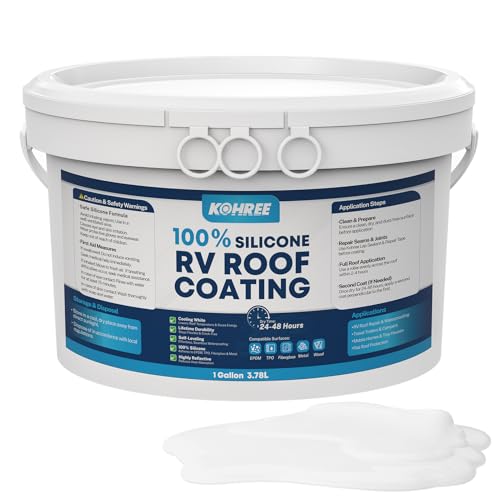
3. Kohree Silicone RV Roof Coating — Best Silicone Coating
100% Silicone RV Roof Sealant, White | No Primer Needed, Waterproof Solar Reflective Flexible RV Sealant for EPDM, TPO, Campers, Trailers, Leak Repairs
Best For: Flexible waterproof roof protection
Type: Silicone roof coating
Kohree’s RV roof coating is another whole-roof option and an interesting alternative to liquid rubber products. It’s marketed as a waterproof, reflective, and flexible silicone coating for RV roof applications.
Flexibility matters on recreational vehicles. Your camper experiences road vibration, changing temperatures, and movement that a stationary residential roof doesn’t encounter in quite the same way.
A coating capable of remaining flexible therefore makes sense for this application.
The reflective white surface is another useful characteristic for campers exposed to direct sunshine.
When comparing products for the best roof coating for RV use, we’d consider both waterproofing and long-term exposure to sunlight rather than choosing purely on price.
The Kohree is especially appealing if you specifically want a silicone-based coating rather than an acrylic or liquid-rubber alternative.
Pros
- Silicone-based coating
- Waterproof design
- Flexible finish
- Reflective surface
- Intended for RV roof applications
Cons
- Surface preparation remains important
- More involved than using a tube sealant
- Existing roof material must be compatible
Our Verdict:
Best Silicone Coating. A versatile choice for RV owners looking for flexible, reflective whole-roof protection.
4. BEEST RV Roof Repair Kit — Best Complete Repair Kit
Includes: Roof Coating 5G, EPDM Primer 1G, RV Cleaner 32 Oz, Non-Sag Lap sealant, Self-Leveling Lap Sealant, Seam Roller, Seam Tape & Gloves| Repair & Maintenance Bundle

Best For: DIY roof repairs and maintenance
Type: RV roof repair kit with self-leveling sealant
Not every camper needs an entirely new roof coating. Sometimes the problem is concentrated around vents, skylights, seams, penetrations, or other specific areas. That’s where the BEEST kit becomes more appealing.
Rather than positioning itself solely as a full-roof coating, this option is designed as an RV roof repair system and includes self-leveling sealant.
Self-leveling products are particularly useful on appropriate horizontal roof areas because the material spreads after application, helping create a smooth seal around compatible roof penetrations and fixtures.
That makes the BEEST one of the more approachable choices for routine maintenance. If an inspection reveals aging sealant around a vent rather than widespread deterioration across the entire roof, buying gallons of coating may be unnecessary.
For someone looking for the best roof sealant for camper maintenance and wanting a more complete DIY solution, the repair-kit format makes considerable sense.
Pros
- Complete repair-oriented solution
- Includes self-leveling sealant
- Good for localized roof maintenance
- Convenient for DIY RV owners
- Useful around compatible roof fixtures
Cons
- Less suitable for complete roof resurfacing
- Self-leveling sealant isn’t appropriate for every surface
- Existing failed sealant may need removing first
Our Verdict:
Best Repair Kit. We’d choose this for localized RV roof maintenance rather than resurfacing an entire camper roof.
Which Is the Best Roof Sealant for RV Owners?
The right choice depends heavily on what you’re actually trying to repair.
For broad preventative maintenance or restoring an aging roof surface, Liquid Rubber RV Roof Coating is our top choice.
It provides a practical whole-roof approach and creates a flexible membrane rather than concentrating protection around individual joints.
Kohree is our preferred silicone alternative, particularly if you want a reflective coating. The BEEST kit makes more sense when your roof remains generally sound but individual seams or fixtures require attention.
The best roof sealant for RV maintenance isn’t necessarily the thickest or most expensive product. Matching the sealant to your roof material and the type of repair is far more important.
RV Roof Coating vs. RV Roof Sealant: What’s the Difference?
These terms are often used interchangeably, but they’re not always the same thing.
RV roof sealant usually refers to material applied around specific vulnerable areas. These can include vents, skylights, antennas, plumbing penetrations, roof edges, screw heads, and seams.
RV roof coating, meanwhile, generally covers a much larger surface. A liquid coating can create a continuous protective layer across most or all of the roof.
If you’re dealing with one deteriorated vent seal, a full gallon of coating could be unnecessary. Conversely, applying small beads of sealant across an extensively weathered roof isn’t equivalent to recoating it.
For owners specifically researching the best roof coating for RV restoration, we’d prioritize flexible products designed to cover large surfaces.
How to Choose the Best RV Roof Sealant
Before ordering anything, identify your RV’s roof material. This is arguably the most important step because not every sealant or coating is suitable for every roofing system.
Common RV roof materials include EPDM rubber, TPO, fiberglass, aluminum, and PVC-based membranes. Check your RV manufacturer’s documentation if you’re uncertain.
Then consider the repair itself. Small deteriorated areas around fixtures may need lap or self-leveling sealant, whereas an aging roof surface may benefit from a compatible coating.
Also consider flexibility. RVs move considerably during travel, so roof materials experience vibration and expansion and contraction as temperatures change.
Waterproofing is obviously essential, but UV resistance and reflectivity are also valuable for RVs that spend substantial periods outdoors.
Finally, pay close attention to preparation. Even the best roof sealant for RV applications can perform poorly when applied over dirty, oily, damp, incompatible, or poorly prepared material.
How to Apply RV Roof Sealant
Always follow the instructions supplied with the specific product and your RV manufacturer’s maintenance recommendations. However, the basic process usually starts with a thorough roof inspection.
Look closely around roof vents, skylights, air-conditioning units, antennas, seams, edges, and other penetrations. Existing sealant that’s badly cracked, detached, or deteriorated may require attention before anything new is applied.
Clean and prepare the surface according to the coating manufacturer’s instructions. Allow it to dry properly, then mask areas that shouldn’t receive coating.
Apply the sealant or coating at the manufacturer’s recommended thickness and allow sufficient curing time before exposing the RV to rain.
Don’t simply paint over active damage and assume the leak has been fixed. If the roof structure, decking, or membrane has suffered significant water damage, professional repair may be necessary.
How Often Should You Inspect an RV Roof?
Regular inspections are considerably cheaper than repairing extensive water damage.
A sensible routine is to inspect the roof periodically and additionally after severe weather, long road trips, or whenever you notice evidence of moisture inside the RV.
Pay particular attention to penetrations and seams where water is most likely to find a path inside.
Early warning signs include cracking, lifting sealant, bubbles, discoloration, gaps around fixtures, soft areas, and water staining inside the RV.
Finding these problems early can make the difference between applying the best roof sealant for RV maintenance and facing a much larger structural repair.
Frequently Asked Questions
What is the best sealant to use on an RV roof?
It depends on the roof material and type of repair. For broad roof coverage, we favor Liquid Rubber RV Roof Coating from this selection.
For localized horizontal repairs around appropriate roof fixtures, a self-leveling RV sealant may be more suitable.
What is the best roof coating for an RV?
A good RV coating should be waterproof, flexible, weather resistant, compatible with the existing roof, and relatively straightforward to maintain.
Liquid Rubber is our overall choice, while Kohree is worth considering if you prefer a silicone-based reflective coating.
Can I apply new RV roof sealant over old sealant?
Sometimes, but you shouldn’t automatically apply new material over badly deteriorated sealant. Loose, contaminated, cracked, or incompatible material can compromise adhesion.
Follow the sealant manufacturer’s preparation instructions and your RV manufacturer’s recommendations.
Can I coat my entire RV roof?
Yes, certain products are specifically intended as full roof coatings. However, compatibility with the existing roofing membrane is essential, and vents, fixtures, drains, and other components may require special preparation.
How long does RV roof sealant last?
There’s no universal lifespan. Product chemistry, preparation, application thickness, UV exposure, climate, storage conditions, roof movement, and maintenance all affect durability.
Inspecting the roof regularly is safer than assuming a coating will remain watertight for a fixed number of years.
Final Verdict
For most owners looking for the best roof sealant for RV restoration and preventative protection, Liquid Rubber RV Roof Coating is our top overall pick. Its liquid-rubber format makes it particularly attractive when you want broad coverage rather than a small spot repair.
Choose Kohree Silicone RV Roof Coating if you specifically want a flexible silicone-based reflective coating. The reflective waterproof coating is another option worth considering for RVs exposed to substantial sunshine, while the BEEST RV Roof Repair Kit is our choice for localized DIY maintenance.
Whichever product you choose, compatibility and preparation matter just as much as the sealant itself. Identify your roof material, locate the actual source of any leak, and follow the manufacturer’s application instructions carefully. That’s the best route to getting lasting value from the best roof sealant for RV maintenance.
CampEquipmentPlus relies on reader support. Purchases made via links on our website may earn us an affiliate commission at no extra cost to you, helping keep the site running.