
CampEquipmentPlus relies on reader support. Purchases made via links on our website may earn us an affiliate commission at no extra cost to you, helping keep the site running.
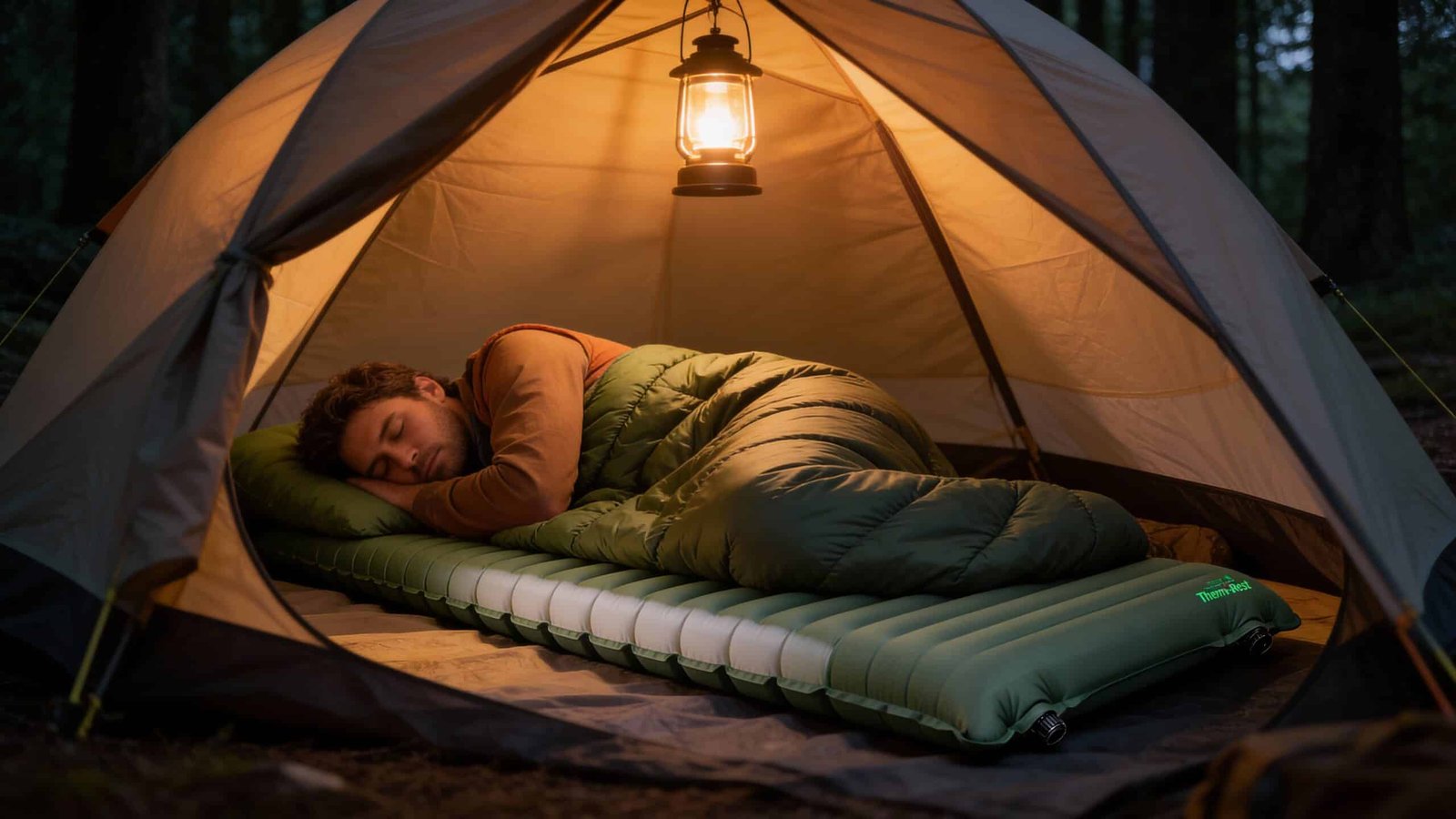
If you’re a side sleeper, camping can feel like a personal attack. You lie down feeling smug and organised… then two hours later your hip is drilling into the ground like it’s trying to reach the Earth’s core. Sound familiar?
I’ve done the whole “I’ll be fine on a thin foam mat” routine. I was not fine. I woke up with a dead arm, a sore hip, and the kind of mood that makes you accidentally slam the car door twice. That’s why finding the best sleeping pad for side sleepers isn’t just “nice to have” — it’s the difference between a decent trip and three days of complaining.
So let’s sort this properly: the best pads for side sleepers, what actually matters (thickness, shape, insulation), and what to avoid if you value your joints. 😅
Quick Comparison Table: Best Sleeping Pad for Side Sleepers
| Sleeping Pad | Best For | Thickness | R-Value | Weight | Why Side Sleepers Like It |
|---|---|---|---|---|---|
| Therm-a-Rest NeoAir Topo Luxe | Luxury comfort backpacking | ~10 cm | ~3.7 | ~0.85 kg | Plush thickness + stable feel |
| Exped MegaMat 10 | Car camping / “proper bed” vibe | 10 cm | ~8.1 | Heavy | Foam + air = hip-saving comfort |
| Sea to Summit Ether Light XT | Backpacking side sleepers | ~10 cm | ~3.2–3.5 | ~0.5–0.6 kg | Air Sprung Cells reduce pressure points |
| NEMO Tensor (Insulated) | Lightweight comfort | ~9 cm | ~4.2 | ~0.43–0.5 kg | Quiet, supportive, packs small |
| Klymit Static V Luxe | Budget + roomy | ~7.6 cm | ~1.9–2.0 | ~1 kg | Wider for shoulder/hip space |
Notes: Specs vary slightly by size/version; think “ballpark” rather than gospel.
Individual Product Mini-Reviews
Therm-a-Rest NeoAir Topo Luxe
Best for: Side sleepers who backpack but refuse to suffer
This pad feels like cheating. The first time I used it, I actually slept through the night in a tent — no hip pain, no midnight wobble, no “why am I doing this” spiral.
It’s thick enough to keep your hip off the ground, and it stays stable when you shift positions. If you roll over like a rotisserie chicken (hi 🙋♂️), that stability matters.
Key pros
- Excellent thickness for pressure relief
- Supportive without feeling bouncy
- Packs down reasonably for the comfort level
Key cons
- Expensive
- Not the lightest option
Side sleeper verdict: If you want the best sleeping pad for side sleepers that still works for backpacking, this is a top contender.
Ideal for: Side sleepers who backpack and hate sore hips
✔ Thick, stable support
✔ Excellent pressure relief
✔ Packs down smaller than you’d expect
👉 Check current availability on Amazon
👉 Read verified camper reviews
Exped MegaMat 10
Best for: Car camping comfort (aka “I want a real bed, mate”)
This is the pad you bring when you’re not counting grams. I once used one on a cold shoulder-season trip and immediately understood why people rave about it. It’s thick, warm, and feels more like a mattress than a pad.
Foam + air is a brilliant combo for side sleepers because it cushions pressure points while keeping you supported. Your hip and shoulder get a proper buffer.
Key pros
- Ridiculously comfortable for side sleeping
- Super warm for cold ground
- Durable and plush
Key cons
- Heavy and bulky
- Overkill for backpacking
Side sleeper verdict: For car camping, this is close to the best sleeping pad for side sleepers you can buy.
Ideal for: Car campers who want bed-level comfort
✔ 10 cm thick foam + air design
✔ Extremely warm for cold ground
✔ Brilliant for side sleepers
👉 See today’s deals on Amazon
👉 View sizes and versions
Sea to Summit Ether Light XT (Insulated)
Best for: Backpacking side sleepers who want “soft but not sinky”
This one surprised me. It’s light enough for the trail but still has that “ahhh” feeling when you lie down. The Air Sprung Cells design spreads your weight nicely, so your hip doesn’t punch straight through.
One small note: like many thick air pads, you’ll want to get the inflation level right. Too firm and it feels like a bouncy castle. Too soft and you’ll bottom out. Dial it in, though, and it’s lovely.
Key pros
- Fantastic pressure relief
- Light for the comfort level
- Packs small
Key cons
- Needs careful inflation for best support
- Pricier than budget pads
Side sleeper verdict: A strong pick if you’re chasing the best sleeping pad for side sleepers without hauling a heavy mat.
Ideal for: Side sleepers who count weight but want cushioning
✔ Air Sprung Cells reduce hip pressure
✔ Lightweight and packable
✔ Excellent comfort-to-weight ratio
👉 Check availability on Amazon
👉 Compare insulated vs non-insulated models
NEMO Tensor Insulated
Best for: Lightweight comfort + quiet sleep
Some sleeping pads sound like you’re wrestling a crisp packet all night. The Tensor is noticeably quieter, which makes a difference if you camp with someone who mutters “for goodness’ sake” every time you roll over.
Comfort-wise, it’s supportive and nicely cushioned for side sleeping. It also packs down small and feels well-built.
Key pros
- Quiet fabric (your tent neighbours will thank you)
- Supportive for hips/shoulders
- Lightweight and compact
Key cons
- Needs a bit of care on rough ground
- Premium price
Side sleeper verdict: If noise annoys you and you want a comfy, packable option, this belongs on any best sleeping pad for side sleepers shortlist.
Ideal for: Light sleepers and restless side sleepers
✔ тих ✔ Quiet fabric
✔ Stable support
✔ Packs very small
👉 View current models on Amazon
👉 Read long-term user reviews
Klymit Static V Luxe
Best for: Budget comfort + extra width
If you’re broad-shouldered or you just hate feeling like you’re balancing on a narrow mat, the Luxe version gives you more space to flop around. I’ve recommended this to friends who wanted comfort without spending top-shelf money, and they were pretty chuffed with it.
It’s not as thick or insulated as the premium pads, but it can still work well for side sleepers, especially in milder weather.
Key pros
- Roomy width helps side sleepers
- Affordable compared to premium brands
- Decent comfort for the price
Key cons
- Lower insulation (cold ground will bite)
- Not as plush as 9–10 cm mats
Side sleeper verdict: A good budget entry in the best sleeping pad for side sleepers conversation, especially for summer camping.
Ideal for: Side sleepers who want more width on a budget
✔ Roomy design
✔ Good summer comfort
✔ Excellent value
👉 Check today’s price on Amazon
👉 See Luxe vs standard comparison
Buying Guide: How to Choose the Best Sleeping Pad for Side Sleepers
Side sleeping needs a different setup than back sleeping. You’ve got two main pressure points: hip and shoulder. If your pad doesn’t cushion those properly, you’ll either wake up sore or keep turning all night.
1) Thickness: Aim for 8–10 cm (or More)
This is the big one. Thicker pads reduce the chance of “bottoming out” — where your hip compresses the pad and hits the ground.
- Back sleepers can sometimes get away with thinner pads
- Side sleepers usually can’t
If you want the best sleeping pad for side sleepers, start at 8 cm and work up.
2) Width: Don’t Squeeze Yourself Into a Skinny Pad
Ever tried side sleeping on a narrow mat while wearing a bulky sleeping bag? You end up perched like a bird on a branch.
Look for:
- Regular wide (often ~64 cm)
- Long wide if you’re tall
- Rectangular shapes if you move around a lot
Wider pads reduce shoulder drop-off, which helps your spine stay aligned.
3) R-Value: Don’t Ignore Insulation
R-value measures insulation from the ground. Cold ground steals heat even if your sleeping bag is decent. If you camp in the UK, damp and chilly nights are basically a national hobby.
General guide:
- Summer: R 1–2
- Spring/Autumn UK: R 3–4
- Cold weather: R 5+
If you sleep cold, bump it up. Your future self will say thanks 👍
4) Shape and Baffles: Stability Matters
Some pads wobble when you move. Side sleepers tend to shift positions, so a stable baffle design helps.
Look for:
- Side rails or supportive outer baffles
- Designs that distribute pressure (like cell structures)
- A surface that doesn’t feel like you’re sliding off
5) Inflation: Firm Enough for Support, Soft Enough for Comfort
Here’s my real-world trick: inflate fully, lie down on your side, then let out tiny bits of air until your hip feels cushioned but not sagging.
If your hip touches the ground, it’s too soft.
If your shoulder feels jammed upward, it’s too firm.
Sounds obvious, but loads of people get this wrong and blame the pad.
6) Pump Sack vs Mouth Inflation (Do Yourself a Favour)
Mouth inflation works, but it’s annoying. Also, moisture from your breath can build up inside the pad over time.
A pump sack:
- Inflates faster
- Keeps moisture out
- Saves you from wheezing like you’ve run a marathon 😵💫
FAQs: Best Sleeping Pad for Side Sleepers
What thickness sleeping pad do side sleepers need?
Most side sleepers do best with 8–10 cm. If you’ve got sensitive hips or shoulders, go thicker.
Are self-inflating pads better for side sleepers?
Often, yes — especially for car camping. Foam + air can feel more “mattress-like” and reduces pressure points. For backpacking, air pads win on weight.
Can I just use a foam pad as a side sleeper?
You can, but it’s usually uncomfortable unless you’re on soft ground. Foam pads work better as:
- A base layer under an air pad
- A minimalist option for back sleepers
What’s the best sleeping pad for side sleepers on a budget?
A wider budget pad like the Klymit Static V Luxe can work well for summer trips. If you camp in colder months, prioritise a higher R-value.
Why do my hips hurt on an air mattress?
Usually one of these:
- Pad is too thin
- Pad is under-inflated
- Pad is too narrow and your alignment is off
- Ground is uneven (sneaky cause!)
Verdict: What’s the Best Sleeping Pad for Side Sleepers?
Here’s the straight-talking wrap-up:
- Best overall backpacking comfort: Therm-a-Rest NeoAir Topo Luxe
- Best “real bed” car camping option: Exped MegaMat 10
- Best balance of light + cushy: Sea to Summit Ether Light XT
- Best quiet + compact pick: NEMO Tensor Insulated
- Best budget roomy choice: Klymit Static V Luxe
If you’re serious about sleeping well outdoors, don’t skimp here. The best sleeping pad for side sleepers is the one that keeps your hips happy, your spine aligned, and your mornings free from that zombie shuffle out of the tent.