
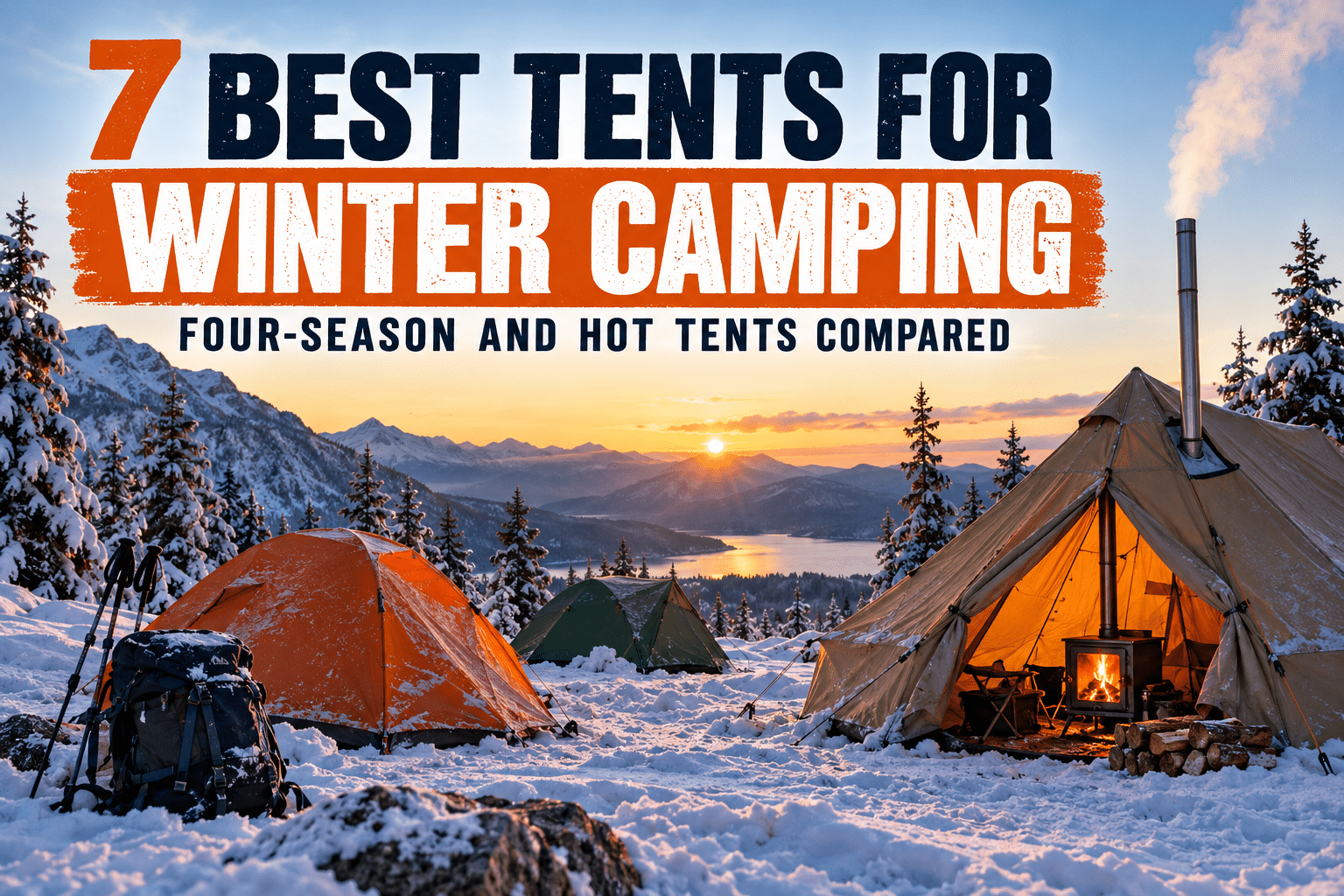
The best tent for winter camping has a harder job than keeping rain off your sleeping bag. It needs to cope with colder temperatures, stronger wind, potential snow, condensation and the extra equipment winter camping brings.
That does not mean the heaviest four-season tent automatically wins.
A backpacker carrying everything for several miles has very different priorities from someone winter camping beside a truck. Add hot tents to the equation and you have another category entirely.
For this guide, we researched seven winter-oriented tents available on Amazon.com. We compared their construction, weight, usable space, ventilation, vestibules, winter features and intended use.
None of these seven tents has been personally tested by Camp Equipment Plus. The product assessments below are based on manufacturer specifications, documentation and the supporting research cited throughout the guide.
- Best Overall: Mountain Hardwear Mineral King 3 All Season. It combines a manageable 6 lb 9.9 oz minimum weight with 42.5 sq. ft. of floor space and construction intended for demanding all-season conditions.
- Best Value Four-Season Tent: ALPS Mountaineering Tasmanian 3. You get plenty of interior and vestibule space, but the 9 lb 10 oz total weight makes more sense when split between campers.
- Best for Winter Car Camping: Browning Camping Glacier 4. Its 72 sq. ft. floor and 72-inch center height provide far more living room, at the cost of a hefty 21 lb 4 oz total weight.
- Best Group Hot Tent: OneTigris ORBITIS. The four-person layout, stove jack, four doors and large vestibules make it interesting for winter base camps.
- Your shelter is only part of the system. Sleeping bags for winter camping, an insulated sleeping pad, appropriate clothing and other winter camping essentials deserve equal attention.
Best Tent for Winter Camping: Our Top Picks
| Tent | Best For | Capacity | Type | Listed Weight | Stove Jack |
|---|---|---|---|---|---|
| Mountain Hardwear Mineral King 3 All Season | Best Overall | 3 | All-season | 6 lb 9.9 oz minimum | No |
| ALPS Mountaineering Tasmanian 3 | Best Value | 3 | Four-season | 9 lb 10 oz | No |
| Browning Camping Glacier 4 | Car Camping | 4 | Heavy-duty camping | 21 lb 4 oz | No |
| GEERTOP Navigator | Lower Weight | 2 | Four-season | 6.27 lb | No |
| OneTigris ORBITIS | Group Hot Tent | 4 | Four-season hot tent | 12.7 lb | Yes |
| Naturehike Massif | 2-Person Hot Tent | 2 | Four-season hot tent | 7.28 lb minimum | Yes |
| Naturehike Dune 7.6 | Spacious Base Camp | 2* | Hot tent | 15.8 lb | Yes |
*Naturehike calls the Dune 7.6 a “3-Person Hot Tent” in its product-page title, but its specification table lists capacity as two people. We have used the specification-table figure.
1. Mountain Hardwear Mineral King 3 All Season, Best Overall
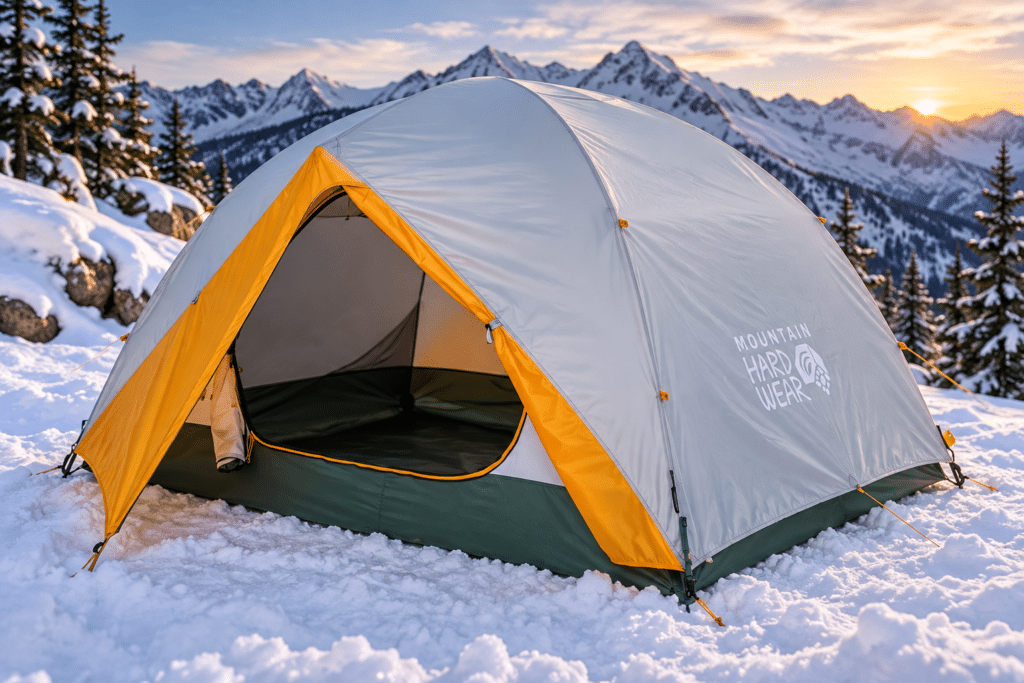
The Mountain Hardwear Mineral King 3 All Season is our best overall choice for campers who want stronger cold-weather construction without carrying a huge expedition shelter.
This is the Mineral King 3 All Season, not the standard three-season Mineral King 3. Mountain Hardwear describes it as suitable for backpacking, camping and winter camping, but stops short of positioning it as a full winter-expedition tent.
According to the Mountain Hardwear specifications, the tent uses a 68D polyester fly with a 1,500 mm PU coating, 40D nylon canopy and 70D nylon floor with a 10,000 mm coating. DAC Featherlight NSL poles and an internal stabilizing system support the structure.
Minimum weight is 6 lb 9.9 oz, rising to 7 lb 13.4 oz packed. Inside, you get 42.5 sq. ft. of floor space plus 20.9 sq. ft. across two vestibules.
That storage is useful in winter, when boots, packs and damp outer layers quickly consume space. Two doors also make the three-person layout easier to use.
The Mineral King is heavier than a normal three-season backpacking tent, but considerably lighter than some of the more substantial winter shelters here. For two campers wanting extra room for gear, it strikes a particularly useful balance.
Pros:
- 6 lb 9.9 oz minimum weight
- 42.5 sq. ft. floor
- 20.9 sq. ft. vestibule area
- Two doors and two vestibules
- DAC Featherlight NSL poles
- Footprint included
- Designed for all-season use
Cons:
- Heavier than typical three-season backpacking tents
- Not positioned for full winter expeditions
- Three campers plus winter gear could feel cramped
Best for: Campers wanting a relatively portable all-season shelter with enough room for two people and plenty of equipment.
2. ALPS Mountaineering Tasmanian 3, Best Value Four-Season Tent
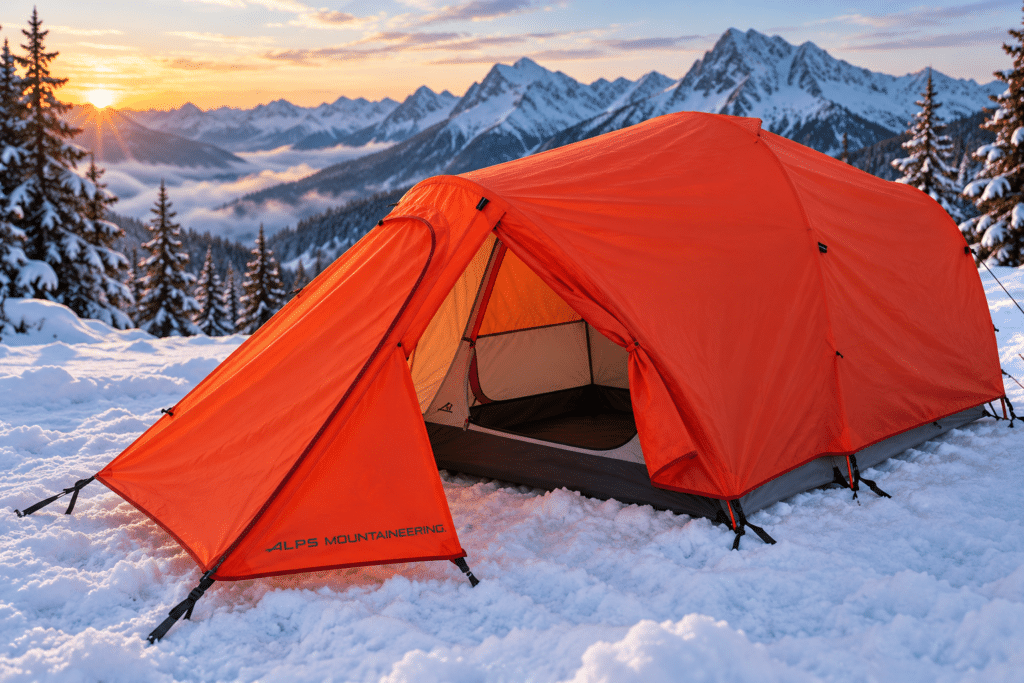
The ALPS Mountaineering Tasmanian 3 makes sense when four-season construction, storage and interior room matter more than minimizing weight.
ALPS describes the Tasmanian as a four-season tent. It uses 7000-series aluminum poles, including an additional pole across the tent for greater stability. The vents can be closed and the full-coverage fly extends over two vestibules.
According to the ALPS specifications, the polyester fly has a 1,500 mm coating while the floor uses a 5,000 mm coating.
Floor area is 43.5 sq. ft., with another 21 sq. ft. across the vestibules. A 4 ft 6 in center height also gives you more room for changing clothes and organizing equipment than the lower GEERTOP Navigator.
The tradeoff is 9 lb 10 oz of total weight. Split between two or three campers, that is easier to manage. For solo winter backpacking, it is a substantial load.
Pros:
- Four-season design
- 43.5 sq. ft. interior
- 21 sq. ft. vestibule area
- Two doors
- Closable vents
- 7000-series aluminum poles
- Full-coverage fly
Cons:
- 9 lb 10 oz total weight
- Heavy for solo backpacking
- Footprint sold separately
Best for: Two or three campers who prioritize four-season construction and storage over low weight.
3. Browning Camping Glacier 4, Best for Winter Car Camping
The Browning Camping Glacier 4 is the one to consider when interior space matters and the tent does not need to travel far from your vehicle.
The documented Browning specifications give it 72 sq. ft. of floor area, 35 sq. ft. of vestibule space and a 72-inch center height.
Construction includes aluminum poles, a 210D polyester Oxford floor with a 2,000 mm coating, a full-coverage polyester fly and additional guy-out points.
The catch is a 21 lb 4 oz total weight.
That effectively rules it out for most backpacking, but matters far less for car camping. In return, you get enough height to stand upright and considerably more space for bulky winter equipment.
Do not take the four-person rating too literally, either. Four winter sleeping systems, packs, boots and insulated clothing consume a surprising amount of floor space.
Pros:
- 72 sq. ft. floor
- 35 sq. ft. vestibule space
- 72-inch center height
- Aluminum poles
- Full-coverage fly
- Extra guy-out points
- Two large vestibules
Cons:
- 21 lb 4 oz total weight
- Impractical for most backpacking
- Large packed size
Best for: Winter car campers, families and small groups wanting substantially more living space.
4. GEERTOP Navigator 2-Person, Best Lightweight Winter Tent
The GEERTOP Navigator is the lightest conventional four-season shelter in our selection, with a manufacturer-listed weight of approximately 6.27 lb.
GEERTOP describes it as a two-person, four-season mountaineering tent. The double-wall design uses aluminum poles and includes a snow skirt.
According to the GEERTOP specifications, the 20D nylon fly has an 8,000 mm PU coating, while the polyester floor is listed at 5,000 mm. Packed dimensions are approximately 6.3 x 6.3 x 18 inches.
Those waterproof ratings are manufacturer figures, not independent performance results. Pole structure, seams, ventilation, pitching and exposure also affect how a tent performs in bad weather.
The 39.4-inch peak height is another compromise. Two campers with winter equipment will need to use the limited interior space carefully.
Pros:
- Approximately 6.27 lb
- Four-season double-wall construction
- Snow skirt
- Aluminum poles
- Compact packed dimensions
Cons:
- Low 39.4-inch peak height
- Limited interior space
- Waterproof ratings are manufacturer specifications
Best for: Two campers prioritizing carrying weight and packed size over living space.
5. OneTigris ORBITIS, Best Hot Tent for Groups
The OneTigris ORBITIS is our pick for campers wanting a larger hot tent with room for a small group and a compatible stove setup.
According to the OneTigris specifications, it uses 40D silicone-coated nylon, 7075 aluminum alloy poles and a 210D polyester groundsheet. OneTigris lists a 3,000 mm waterproof rating and 12.7 lb total weight.
The four-person layout has four entrances, multiple vents, vestibules at both ends and a built-in stove jack.
That makes it better suited to establishing a winter camp than covering long distances on foot.
There are limitations. OneTigris says the ORBITIS should not be used in extreme weather and advises removing accumulated snow to avoid damaging the tent. Long-term customer feedback is also limited, so we would not make strong durability claims yet.
Pros:
- Four-person manufacturer capacity
- Built-in stove jack
- Four doors
- Multiple vents
- Large vestibules
- Footprint included
Cons:
- 12.7 lb
- Limited long-term owner evidence
- Manufacturer warns against extreme-weather use
- Snow accumulation needs active management
Best for: Small groups wanting a stove-compatible winter base-camp shelter.
6. Naturehike Massif, Best 2-Person Hot Tent
The Naturehike Massif is a compact hot tent for two campers who want separate sleeping and stove-compatible living areas.
According to the Naturehike specifications, it uses a 30D silicone-coated ripstop nylon fly, polyester mesh inner, 70D nylon groundsheet and 7001 aluminum alloy poles.
Minimum weight is approximately 7.28 lb, rising to about 9.7 lb packed. The design also includes a stove jack and snow skirt.
The room-and-hall layout is the main attraction. Winter sleeping systems, boots, packs and stove equipment consume space quickly, so keeping the sleeping area separate from the larger vestibule is useful.
The obvious tradeoff is total system weight. Add a stove, stovepipe and related equipment and this becomes a base-camp setup rather than a minimalist backpacking shelter.
Pros:
- Purpose-designed two-person hot tent
- Stove jack
- Snow skirt
- Separate sleeping and vestibule areas
- 7001 aluminum poles
- 7.28 lb minimum tent weight
Cons:
- Around 9.7 lb packed
- Stove equipment adds further weight
- More involved than a small backpacking tent
Best for: Two campers wanting a hot tent with separate sleeping and stove-compatible space.
7. Naturehike Dune 7.6, Best Spacious Winter Base-Camp Tent
The Naturehike Dune 7.6 suits campers who value a roomy winter base camp more than portability.
Naturehike lists dimensions of approximately 126 x 94.5 x 70.9 inches. That 70.9-inch peak height provides considerably more living room than a low-profile mountaineering tent.
According to the Naturehike specifications, construction includes 75D polyester, a 150D polyester Oxford groundsheet and 7001 aluminum alloy poles. Listed weight is 15.8 lb.
There is an inconsistency in the manufacturer’s capacity information. Naturehike calls it a “3-Person Hot Tent” in the page title but lists capacity as two people in the specifications. We would plan around the more conservative two-person figure.
At 15.8 lb, the Dune makes much more sense for car camping or short approaches than conventional backpacking.
Pros:
- Large interior
- 70.9-inch peak height
- 75D polyester construction
- 150D polyester Oxford groundsheet
- 7001 aluminum poles
- Hot-tent design
Cons:
- 15.8 lb
- Bulky for backpacking
- Conflicting manufacturer capacity information
Best for: Campers prioritizing winter living space and hot-tent capability over carrying weight.
Which Is the Best Winter Camping Tent for You?
The best winter camping tent depends mainly on how you camp.
For a balance of weight, room and all-season construction, the Mountain Hardwear Mineral King 3 All Season is our first choice.
Choose the ALPS Tasmanian 3 if you are prepared to carry more weight for a conventional four-season design and generous storage. The Browning Glacier 4 is the obvious car-camping option, while the GEERTOP Navigator is more attractive when pack weight matters.
For hot-tent camping, the Naturehike Massif suits two campers. The OneTigris ORBITIS offers more group space.
Buy for your actual trips rather than the most impressive specification sheet.
What Makes the Best Tent for Camping in Winter Different?
The best tent for camping in winter needs a structure and ventilation system suited to colder, windier and potentially snowier conditions.
Look beyond the “four-season” label.
Pole Structure
Check pole material, layout, crossing points and guy-out locations. Winter-oriented tents often use additional structural support to deal with more demanding conditions.
Do not assume a tent can withstand a particular wind speed unless the manufacturer provides suitable evidence.
Fabric and Ventilation
Winter tents generally use more solid fabric than warm-weather shelters, helping reduce direct drafts and wind-driven snow.
The tradeoff is condensation.
Your breath and damp equipment still introduce moisture, so closable vents are useful. More fabric does not mean ventilation stops mattering.
Snow Skirts
Snow skirts can reduce wind-driven snow and drafts around the tent perimeter.
They are useful features, but they do not turn an otherwise unsuitable shelter into an expedition tent.
Vestibules
Winter equipment is bulky and often wet.
A useful vestibule gives boots, packs and outer layers somewhere to go without consuming sleeping space.
Do You Need a Four-Season Tent for Winter Camping?
You should consider a four-season tent when significant snow, sustained cold or stronger winds are likely, but conditions matter more than the label.
A protected winter campground and an exposed mountain campsite can require very different shelters.
Check pole construction, fly coverage, ventilation, guy-out points, vestibule space and manufacturer weather limitations. Then match those features to the forecast, terrain and type of trip.
Should You Buy a Hot Tent for Winter Camping?
A hot tent makes sense if you specifically want a stove-compatible shelter and accept the extra weight, equipment and operating requirements.
Purpose-designed hot tents such as the OneTigris ORBITIS and Naturehike Massif incorporate stove jacks for compatible tent-stove systems.
They are generally more appealing for winter base camps and shorter approaches than lightweight backpacking. Remember that the tent weight is only the start. The stove, stovepipe and related equipment all need carrying too.
Are Wood Stoves Safe in Hot Tents?
Only use a stove with a compatible shelter and follow the instructions supplied by both manufacturers.
Carbon monoxide is a serious risk. The CPSC warns about carbon-monoxide poisoning from camping heaters, lanterns and stoves in enclosed spaces.
OneTigris tells ORBITIS users to maintain ventilation, use a carbon-monoxide detector, never leave an operating stove unattended and avoid placing a burning stove directly on the groundsheet.
A stove jack does not eliminate fire or carbon-monoxide risk.
What Equipment for Winter Camping Do You Need?
Your tent is only one part of your equipment for winter camping.
The National Park Service includes a season-appropriate sleeping bag and pad, shelter, navigation equipment, lighting, first-aid supplies and snow-travel equipment appropriate to the conditions.
Camp Equipment Plus has a broader camping equipment section if you are building a complete setup.
One area deserves particular attention: what you sleep on.
How Important Are Sleeping Bags for Winter Camping?
Sleeping bags for winter camping need to work with the sleeping pad underneath you.
I learned that during a mid-October trip in the Adirondacks when temperatures unexpectedly dropped to around 23°F.
I had a 32°F sleeping bag, but the bigger problem was my cheap, virtually uninsulated air pad. I spent the night severely cold and shivering despite wearing every layer I had. At one point, I put my empty backpack underneath my torso for extra insulation.
That trip changed how I approach cold-weather sleeping.
I now treat the bag and pad as one system and use an insulated pad with an R-value of 4 or higher for colder trips.
The NPS winter backpacking checklist likewise includes both a season-appropriate sleeping bag and sleeping pad.
See our sleeping equipment section for more options.
What Clothing for Winter Camping Should You Pack?
Clothing for winter camping should use adjustable layers that help manage moisture, insulation, wind and precipitation.
The National Park Service recommends layering for cold conditions. Your system should account for both activity and periods when you are standing around camp.
Pay particular attention to your hands, head and feet, and keep spare clothing dry.
See our outdoor clothing section for more cold-weather gear.
What Are the Most Important Winter Camping Essentials?
The most important winter camping essentials are the ones that keep the entire system working, not just the tent.
Depending on your destination and conditions, that can include:
- Winter-appropriate shelter
- Suitable sleeping bag
- Insulated sleeping pad
- Layered clothing
- Suitable boots
- Gloves and warm headwear
- Navigation equipment
- Headlamp and spare power
- Food and cooking equipment
- Water and treatment equipment
- First-aid supplies
- Emergency communication
- Snowshoes, traction equipment or skis where required
- Shovel where appropriate
Use local weather, terrain, snow conditions and regulations to refine the list for your trip.
How Should You Pitch a Tent in Bad Winter Weather?
Site choice, orientation and anchoring can matter as much as some specifications on the tent itself.
I learned that during a storm on an exposed ridge. Heavy rain arrived with wind gusts of around 40 mph, and I had pitched my tent broadside to the wind.
The saturated ground eventually allowed a peg to pull out. At around 2:00 AM, I woke in a puddle with the tent pressing against my shins and spent the rest of the night supporting a pole with my backpack.
Since then, I pay much more attention to wind direction, drainage and ground conditions. Where the tent design allows, I orient the lower-profile end toward the prevailing wind, use the appropriate guylines and keep the fly correctly tensioned.
Follow your tent manufacturer’s instructions and use anchoring appropriate to the terrain.
A tent groundsheet can help protect the floor, while suitable heavy-duty pegs can help on difficult ground.
And pitch a new tent at home first. Freezing weather after dark is a rotten time to discover you have misunderstood the pole layout.
Best Tent for Winter Camping: Final Verdict
The Mountain Hardwear Mineral King 3 All Season offers the best balance here for campers wanting manageable weight, useful space and construction intended for demanding all-season weather.
The ALPS Tasmanian 3 is the stronger alternative when you can accept more weight for a conventional four-season design and generous vestibules. The Browning Glacier 4 suits winter car camping, while the GEERTOP Navigator makes more sense when pack weight matters.
For hot-tent camping, the Naturehike Massif provides a compact two-person setup, while the OneTigris ORBITIS offers more group space.
Whichever shelter you choose, treat it as one part of your winter system. Your sleeping bag, insulated pad and clothing still have to do their jobs.
I learned that at 23°F.
The ground does not care how good your tent is.
CampEquipmentPlus relies on reader support. Purchases made via links on our website may earn us an affiliate commission at no extra cost to you, helping keep the site running.