
CampEquipmentPlus relies on reader support. Purchases made via links on our website may earn us an affiliate commission at no extra cost to you, helping keep the site running.
Outdoor cooking always sounds better than it starts.
You picture relaxed evenings, great food, and zero stress, right?
Then the wind kicks up, the stove struggles, and everyone suddenly gets very hungry.
If that sounds familiar, don’t worry—you’re not alone 😅
This outdoor cooking guide is here to help you avoid those frustrating moments and enjoy cooking outside without overthinking it.
Think of this as advice from a camping mate who’s already made the mistakes so you don’t have to.
Why Outdoor Cooking Often Goes Wrong
Most outdoor cooking disasters follow the same pattern.
It usually isn’t bad weather or bad luck.
The real issues are poor planning, unsuitable gear, and trying to cook meals that are too ambitious for the conditions.
Outdoor cooking rewards simplicity, not creativity under pressure.
The good news is that once you understand the common problems, the solutions are surprisingly straightforward.
Plan Your Outdoor Cooking Like a Pro
The easiest way to improve outdoor cooking is to start before you even leave home.
A little planning makes a massive difference once you’re outside.
Choose Meals That Actually Work Outdoors
Complicated meals sound fun when you’re packing.
They’re far less fun when you’re cold, tired, and waiting to eat.
Ask yourself a simple question before committing to any recipe.
Can I cook this easily with limited space, tools, and patience?
If the answer feels uncertain, simplify it.
Outdoor-friendly meal ideas include:
- One-pot pasta or rice dishes
- Stir-fries using pre-cut ingredients
- Wraps with cooked fillings
- Easy breakfasts like porridge or eggs
Simple meals cook faster and taste better outdoors anyway.
Prep as Much Food as Possible at Home
Food prep is where most outdoor cooks save or lose time.
Doing it at home makes everything easier.
Prep these in advance:
- Chop vegetables
- Marinate meats
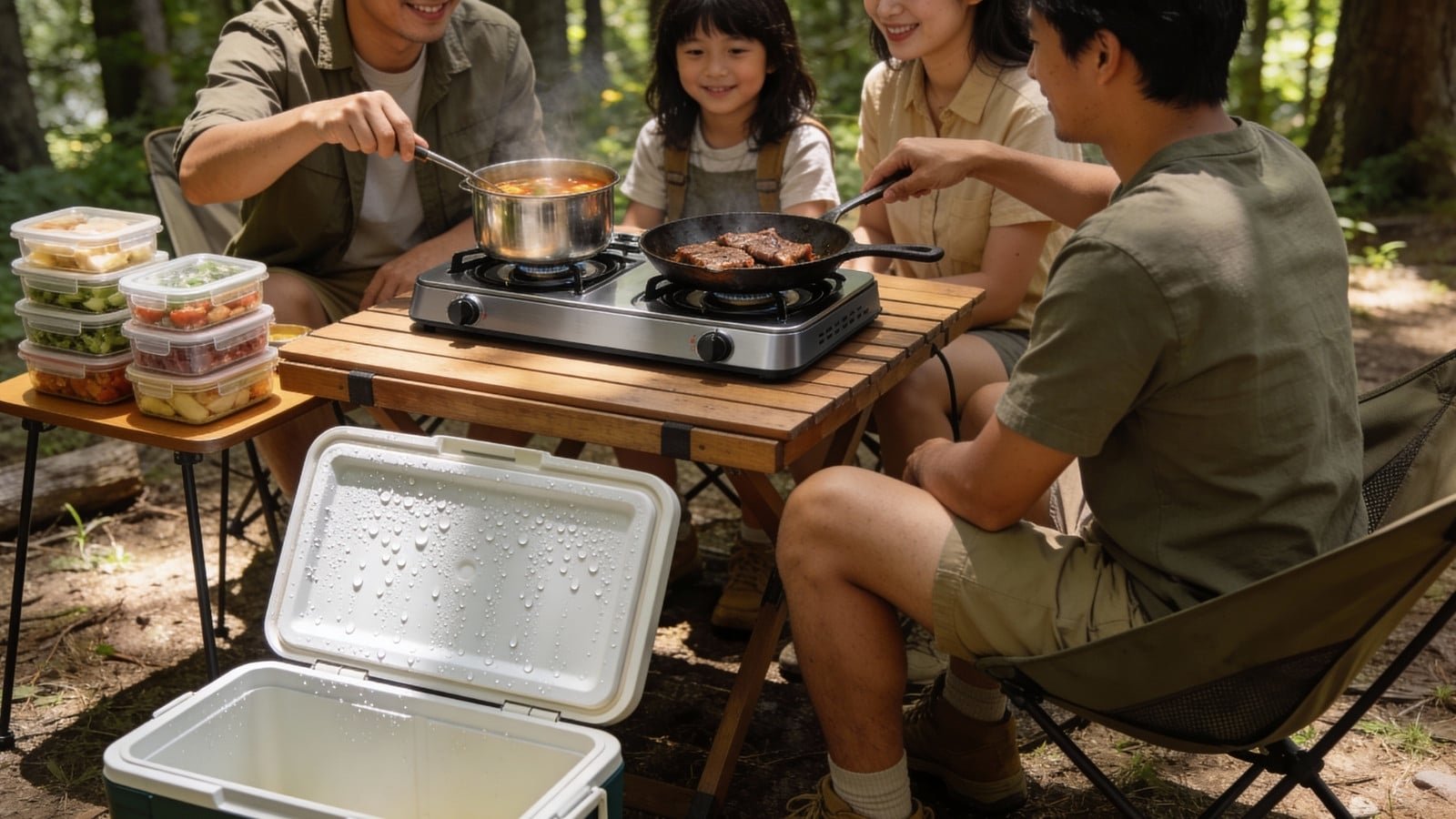
- Portion meals into containers
- Pre-mix spices and sauces
Less prep outdoors means less stress and more time to relax.
Choosing the Right Outdoor Cooking Setup
Not every cooking method suits every trip.
Your setup should match how you travel and what you plan to cook.
Camping Stove Cooking
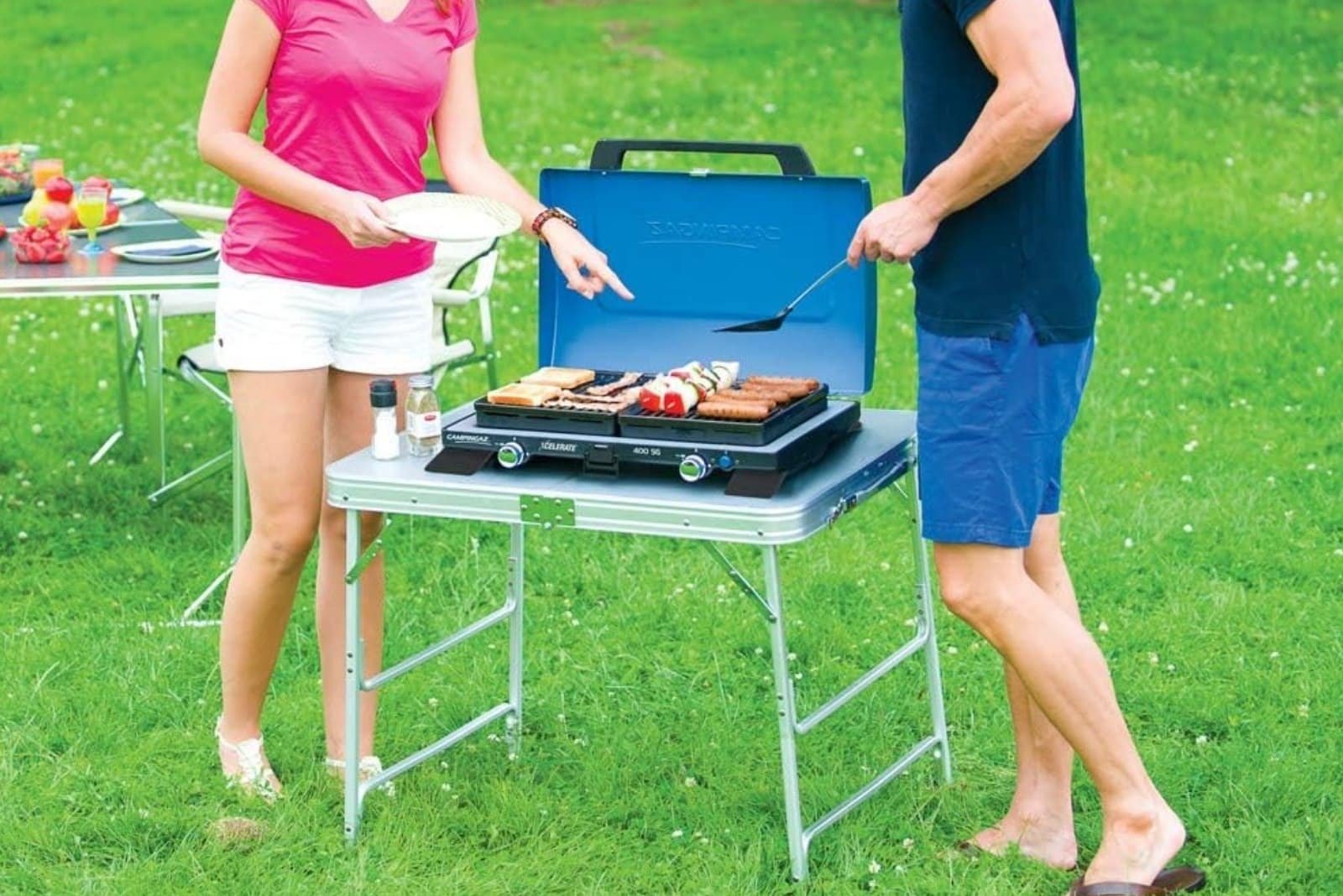
Camping stoves are the most reliable option for outdoor cooking.
They’re quick, clean, and easy to control.
If you want predictable results, a stove should be your first choice.
A compact option is the MSR PocketRocket 2. It’s ideal for boiling water and cooking simple meals efficiently.
Camping stoves reduce guesswork, which is exactly what you want when hunger kicks in.
Campfire Cooking
Campfire cooking looks fantastic, but it’s far less forgiving.
Heat control takes practice, and conditions change constantly.
This method works best for simple foods and relaxed cooking.
It’s not ideal if everyone is already starving.
Use campfires for:
- Marshmallows
- Foil-wrapped meals
- Sausages or basic grilling
Save advanced cooking for another day.
Portable Grills
Portable grills offer more control than campfires and better flavour than stoves.
They’re a great choice for car camping trips.
The downside is weight and bulk.
They’re best left behind on hiking trips.
Essential Outdoor Cooking Gear
Good equipment removes stress from outdoor cooking.
Bad equipment creates it.
You don’t need a full kitchen.
You need a smart setup.
Basic Outdoor Cooking Kit
These essentials cover most outdoor cooking needs.
Must-have items:
- Camping stove or grill
- Enough fuel
- Lightweight cookware
- Sharp knife
- Utensils or spork
This setup handles most meals without overpacking.
Choosing Cookware That Makes Sense
Outdoor cookware should be functional, not fancy.
Heavy pans slow you down and take longer to clean.
Look for cookware that is:
- Lightweight
- Non-stick
- Durable
- Easy to clean
One reliable pan is better than carrying several awkward ones.
Outdoor Cooking Safety Basics
Safety is more important outdoors than at home.
Mistakes escalate quickly without proper precautions.
Fire and Stove Safety
Always cook on flat, stable ground.
Never cook inside a tent or enclosed space.
Check gas connections before lighting your stove.
Keep water nearby just in case.
Key safety rules include:
- Controlled flames
- Proper ventilation
- Never leaving cooking unattended
These habits prevent most accidents.
Food Safety Outdoors
Food spoils faster outside, especially in warm weather.
Good habits keep everyone healthy.
Food safety tips to follow:
- Keep raw meat sealed
- Use cool boxes where possible
- Cook food thoroughly
- Clean hands or use wipes
If something smells wrong, don’t risk it.
Using a Camping Stove Effectively
Camping stoves are simple, but technique still matters.
Small adjustments improve results instantly.
Control the Heat
High heat burns food quickly.
Lower heat cooks evenly.
Boiling water is easy.
Cooking meals takes patience.
Let the pan warm gradually before adding food.
Deal With Wind Properly
Wind steals heat and wastes fuel.
It’s one of the biggest outdoor cooking problems.
Use natural shelter where possible.
A compatible wind shield helps massively.
This alone can double cooking efficiency.
Outdoor Cooking Tips That Make Life Easier
These tips come from real experience, not theory.
They work.
Cook One Dish at a Time
Outdoor cooking isn’t built for multitasking.
Trying to juggle multiple dishes causes mistakes.
Focus on one meal.
Finish it properly, then move on.
Clean as You Go
Food hardens fast outdoors.
Leftovers also attract animals.
Wipe cookware while it’s warm.
Store waste securely.
Your campsite stays cleaner and safer.
Always Pack Backup Food
Sometimes things go wrong.
Weather changes or equipment fails.
Always bring:
- Energy bars
- Dehydrated meals
- Instant noodles
Backup food saves trips 👍
Outdoor Cooking for Different Types of Trips
Your cooking approach should change depending on the trip.
Car Camping Cooking
Car camping allows flexibility.
You can bring more equipment and fresh ingredients.
Cool boxes work well.
Larger stoves and grills shine here.
This is where you can experiment.
Hiking and Backpacking Cooking
Weight matters when hiking.
Every item needs a purpose.
Stick to:
- Lightweight stoves
- Simple meals
- Boil-only cooking
Efficiency matters more than creativity.
Outdoor Cooking With Kids
Kids love being involved in outdoor cooking.
They just don’t like waiting.
Give them small tasks like stirring or wrapping food.
It keeps them engaged.
Stick to familiar meals.
Hungry kids lose patience fast.
Common Outdoor Cooking Mistakes
Avoid these mistakes and you’ll already be ahead.
Common problems include:
- Packing too much gear
- Underestimating fuel
- Overcomplicated meals
- Ignoring weather conditions
Planning fixes most of them.
Fuel Management Tips
Running out of fuel ruins meals quickly.
It happens more often than people admit.
Estimate Fuel Properly
Boiling water uses less fuel than cooking meals.
Cold temperatures and wind increase usage.
Always carry extra fuel.
It weighs less than hunger.
Cleaning Up After Outdoor Cooking
Respect the outdoors and other campers.
Clean properly before leaving.
Eco-Friendly Cleaning Tips
Use biodegradable soap sparingly.
Avoid washing near water sources.
Pack out food waste.
Leave no trace behind.
Final Thoughts on Outdoor Cooking
Outdoor cooking doesn’t need to be stressful.
It just needs sensible planning and realistic expectations.
Choose simple meals.
Use reliable gear like a solid camping stove.
Respect basic safety rules.
Once you get it right, outdoor cooking becomes a highlight of every trip.
And yes—food really does taste better outside.