
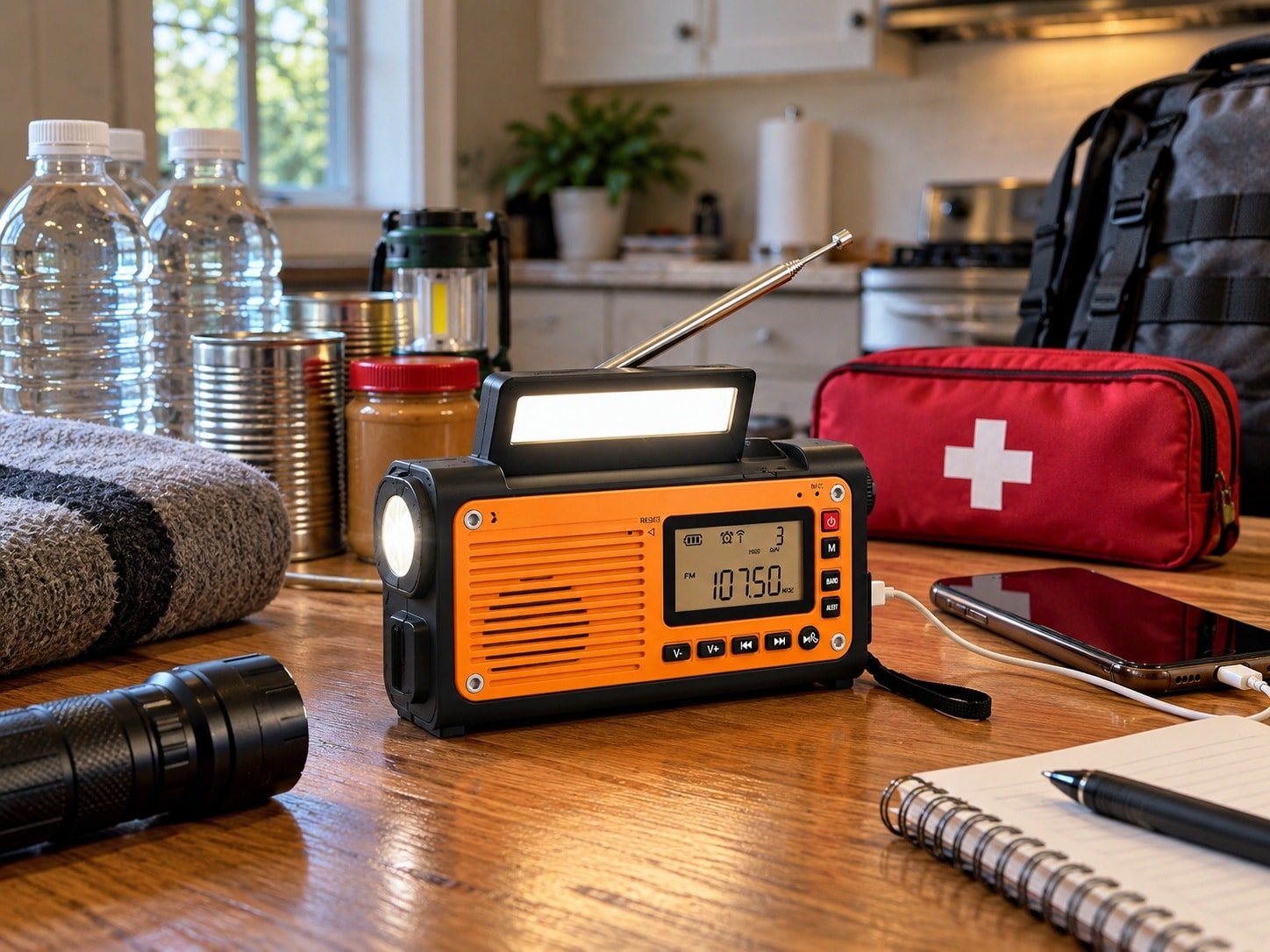


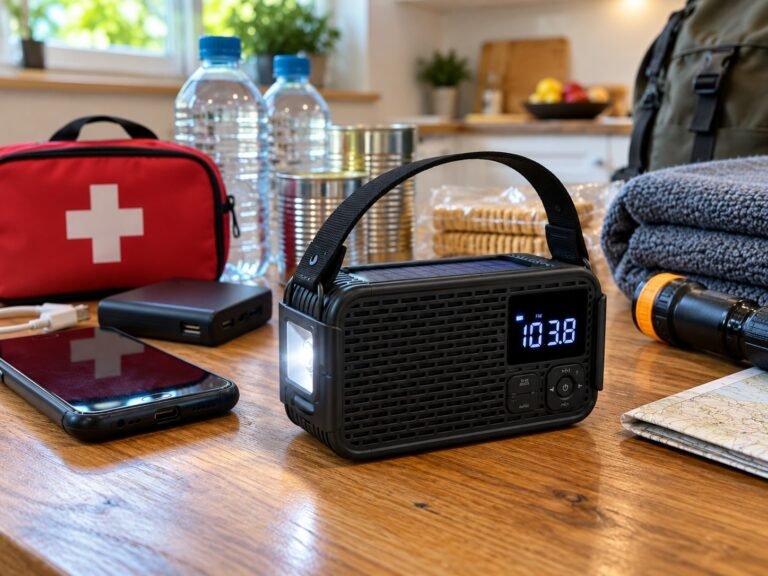

The XHDATA D-608WB emergency radio is designed for people who want reliable access to news, weather information, and emergency broadcasts when electricity or internet connections become unavailable.
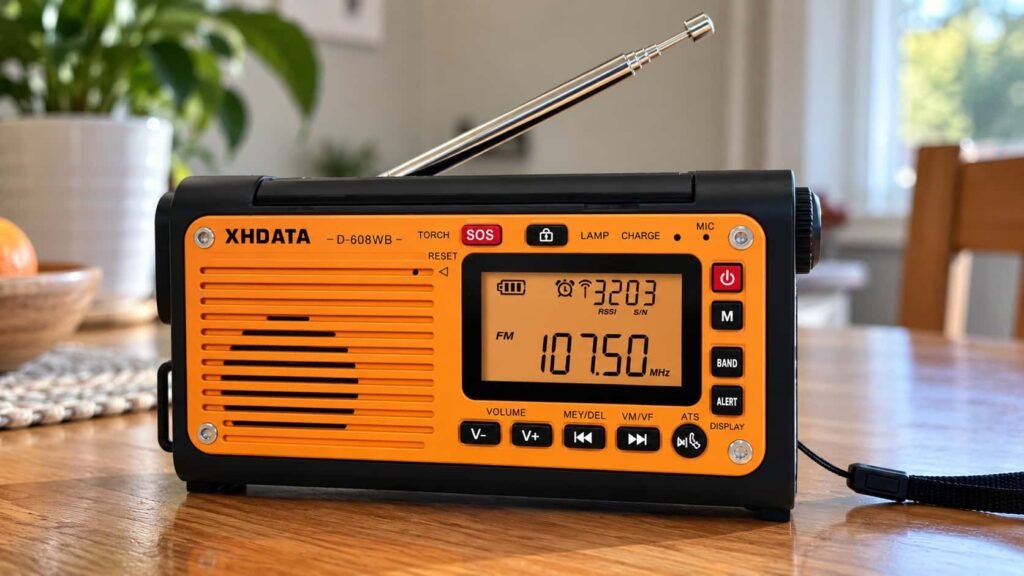
Whether you’re preparing for a power outage, assembling an emergency kit, or planning a camping trip, having a radio that can operate without a wall outlet makes practical sense.
For this XHDATA D 608WB review, I’ve examined the manufacturer’s specifications, operating manual, charging methods, radio reception features, and emergency functions to see whether this compact radio deserves a place in your emergency supplies.
What caught my attention was the combination of AM/FM and shortwave reception, NOAA weather channels, Bluetooth connectivity, solar charging, a hand crank, and a rechargeable battery.
Unlike many basic emergency radios, the XHDATA D-608WB also offers digital tuning, station memory, and music playback.
On paper, this makes the radio useful for everyday listening as well as emergency preparedness. But how practical are these features, and are there any compromises worth considering?
At a Glance: XHDATA D-608WB Emergency Radio
USB/Solar/Hand Crank Charging, Bluetooth MP3, Flashlight, Reading Lamp and SOS Alarm for Camping and Emergencies

XHDATA D-608WB Multi-Powered Emergency Radio
Best for: Household emergency kits, camping, weather monitoring, and portable radio listening.
AM/FM, shortwave, NOAA weather band, Bluetooth, emergency flashlight, and multiple charging methods.
| Specification | XHDATA D-608WB |
|---|---|
| Radio reception | AM/FM, shortwave, NOAA weather band |
| Charging methods | USB-C, hand crank, solar |
| Rechargeable battery | 3,000 mAh, 3.7V 18650 |
| Speaker output | Up to 2W |
| Display | Digital LCD |
| Flashlight | Built-in |
| Emergency alarm | SOS siren |
| Phone charging | 5V USB output |
| Bluetooth | Bluetooth 5.0 |
| Memory card | TF/microSD, up to 32GB |
| Headphone connection | 3.5mm |
| Weather resistance | No verified IP rating |
| Weight | Approximately 11.7 oz |
| Dimensions | Approximately 5.9 × 3.0 × 1.7 inches |
The figures above come from the XHDATA D-608WB operating manual. Some published listings report different external dimensions, so check the exact model before ordering.
What Makes the XHDATA D-608WB Different?
There are plenty of emergency radios offering a hand crank, small solar panel, and built-in flashlight.
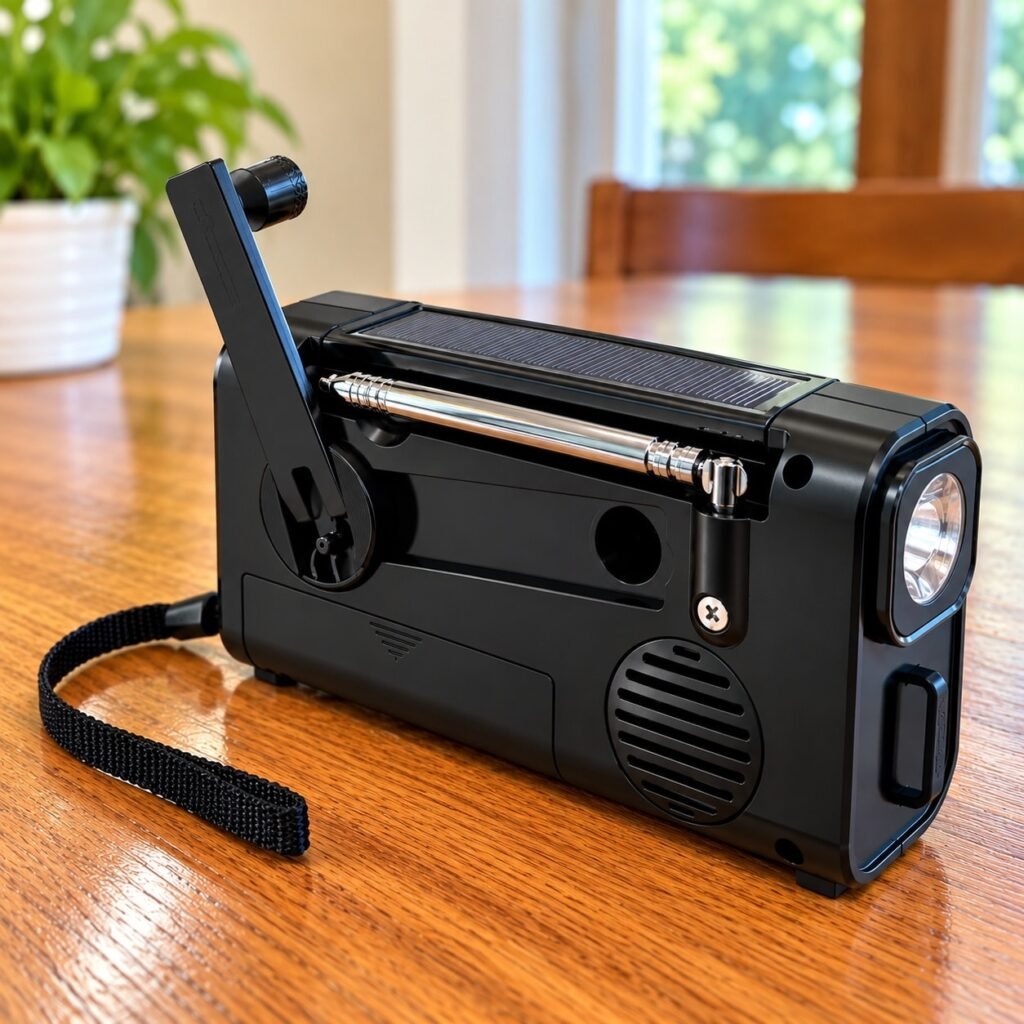
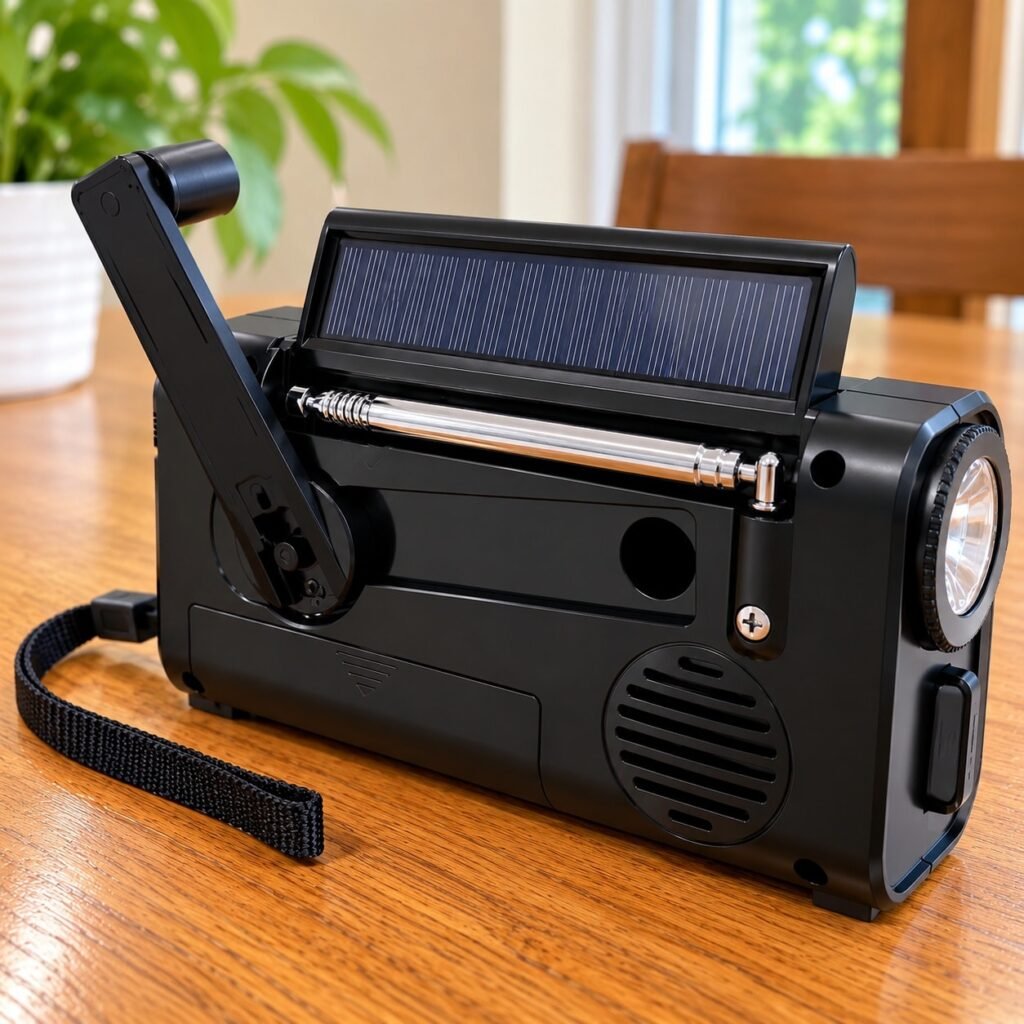

The XHDATA D-608WB stands out because it combines those emergency features with several functions normally associated with portable digital radios.
The five main attractions are straightforward.
- AM/FM and shortwave reception provide more listening options than a basic AM/FM radio.
- Seven NOAA weather channels support access to official weather broadcasts in the United States.
- USB-C, solar, and hand crank charging reduce dependence on a single electricity source.
- Bluetooth and memory card playback make the radio useful outside emergencies.
- A built-in flashlight, SOS alarm, and USB phone charging provide additional backup functions.
I particularly like the inclusion of shortwave reception. Although shortwave listening requires patience and suitable reception conditions, having another broadcast band is useful for radio enthusiasts and people interested in international broadcasts.
Bluetooth is another welcome addition.
You can connect a compatible smartphone and use the radio as a portable speaker while camping or relaxing outdoors.
Of course, extra features don’t automatically make a better emergency radio.
For emergency preparedness, reception, battery reliability, and straightforward operation matter more than entertainment functions.
XHDATA D-608WB Charging Options: How Practical Are They?
One of the strongest selling points of the XHDATA D-608WB emergency radio is the ability to recharge its internal battery using different methods.
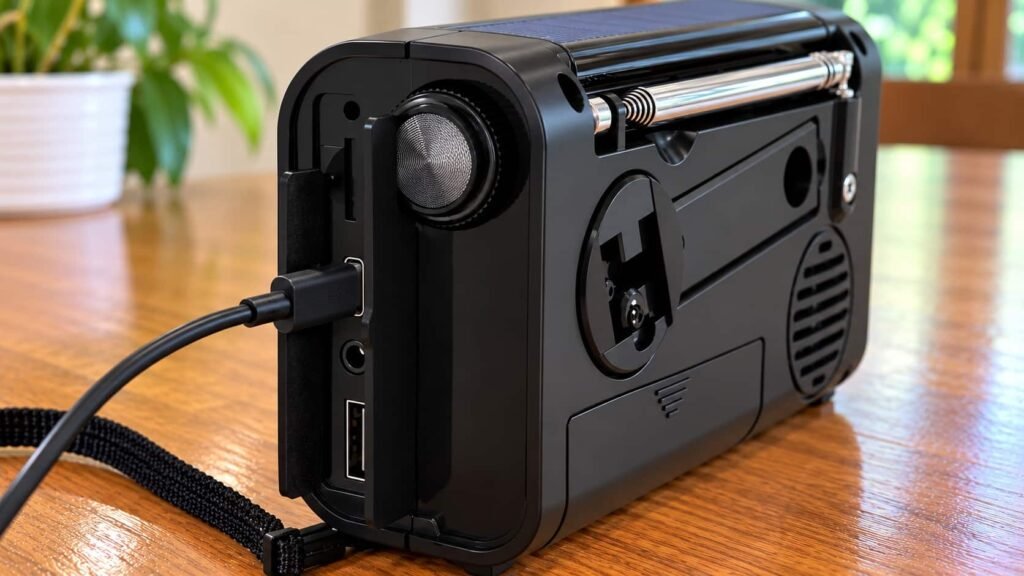
This flexibility matters when preparing for power outages or spending several days away from electrical outlets.
USB-C Charging
USB-C is the most practical way to recharge the radio during normal use.
The D-608WB uses a 3.7V rechargeable 18650 lithium-ion battery with a stated capacity of 3,000 mAh.
According to the operating manual, the radio supports a 5V USB charging input rated at 1A.
For everyday use, I’d recommend charging the battery fully before storing the radio with your emergency supplies.
USB-C also makes charging convenient before a camping trip, particularly if you already carry compatible charging cables and a portable power bank.
The main advantage is convenience.
Rather than relying on the solar panel or spending time operating the hand crank, you can recharge the battery from a suitable USB power source.
Hand Crank Charging
The integrated hand crank is one of the most useful emergency features.

If electricity becomes unavailable and the rechargeable battery runs low, you can generate additional power by turning the handle.
This provides another option for keeping the radio operational during a prolonged outage.
There is an important limitation.
Hand crank charging generates relatively small amounts of electricity compared with charging from a wall outlet.
You should expect to spend time turning the crank to obtain a limited amount of usable power.
I would treat the hand crank as an emergency backup for listening to essential broadcasts, rather than a practical method of fully recharging the battery.
It is also worth checking the crank periodically to ensure the mechanism operates correctly.
Solar Charging
The XHDATA D-608WB includes an integrated solar panel.
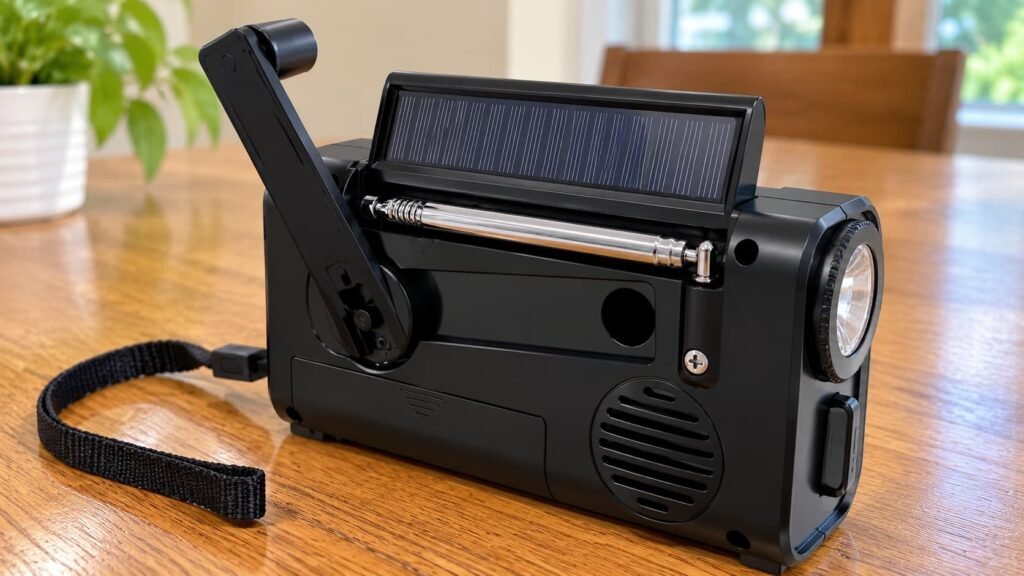
This provides another way to replenish the rechargeable battery when sunlight is available.
For camping, the solar panel adds flexibility when you’re away from conventional charging points.
But there are limitations.
The panel is relatively small, so charging performance depends heavily on sunlight intensity, positioning, and weather conditions.
Cloudy weather and indirect sunlight can substantially reduce charging effectiveness.
I wouldn’t rely on the solar panel as the main charging method during a prolonged emergency.
Instead, consider it a supplementary source of power that may help extend operating time when conditions are favorable.
Rechargeable 18650 Battery
The radio uses a 3,000 mAh rechargeable 18650 battery.
This gives the D-608WB a rechargeable power source for its radio, lighting, and other functions.
A useful consideration is that 18650 batteries are a common lithium-ion battery format.
If you plan to keep a compatible replacement, follow XHDATA’s battery requirements and confirm the correct battery dimensions, protection configuration, and polarity.
Not every 18650 battery is interchangeable.
The manufacturer does not establish a single guaranteed runtime covering every combination of radio listening, Bluetooth playback, flashlight use, and phone charging.
For emergency preparedness, I’d charge the battery regularly and test the radio before storing it for extended periods.
Radio Reception and Sound Quality
A radio’s most important job during an emergency is receiving information clearly.
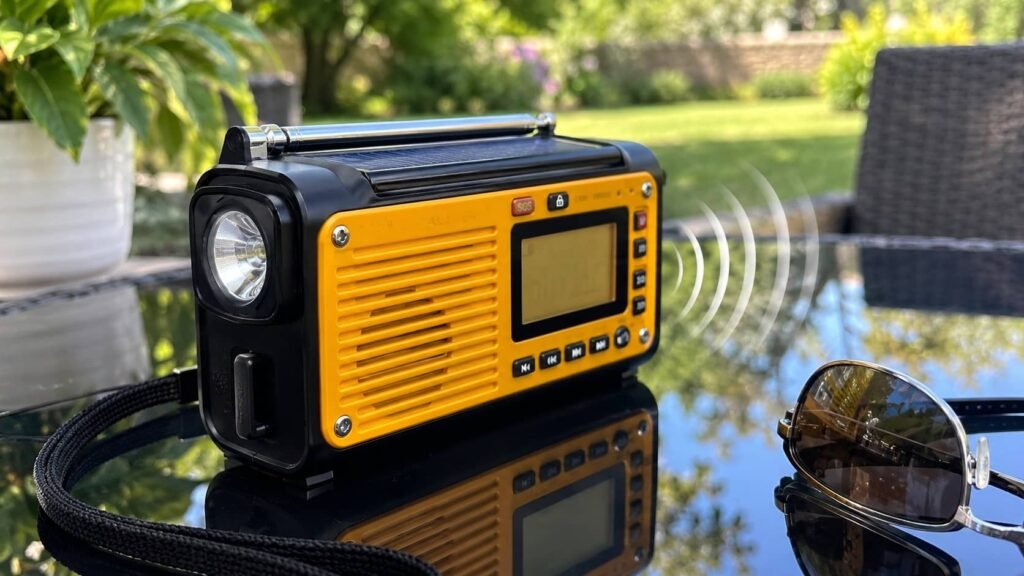
The XHDATA D-608WB offers a wider range of radio reception than many basic emergency models.
It supports:
- FM broadcasts for local news, music, and general listening.
- AM broadcasts for news, talk radio, and other available programming.
- Shortwave broadcasts for receiving stations across different frequency bands.
- NOAA weather radio for compatible weather broadcasts in the United States.
The D-608WB also includes digital tuning and automatic station scanning.
According to the operating manual, the radio supports memory storage for up to 100 FM stations, 100 AM stations, and 300 shortwave frequencies.
This is useful if you regularly switch between stations.
Rather than manually searching for the same frequency every time, you can store frequently used stations for quicker access.
How Good Is the Speaker?
XHDATA specifies a 40mm speaker with a maximum audio output of 2W.
For a compact radio, this provides a reasonable specification for speech broadcasts and personal listening.
The radio also includes a headphone connection.
This is particularly useful when listening privately in a tent, sharing accommodation, or monitoring broadcasts without disturbing others.
I haven’t independently measured the D-608WB’s speaker volume, reception sensitivity, or audio clarity.
Actual performance will depend on signal strength, local interference, antenna positioning, and the surrounding environment.
Shortwave Reception
Shortwave reception is one of the more interesting features of the D-608WB.
The published manual specifies shortwave coverage from approximately 1.711 MHz to 29.999 MHz.
Shortwave broadcasts can travel considerable distances under suitable atmospheric conditions.
This gives the radio access to a different range of broadcasts from standard local FM stations.
For radio enthusiasts, this adds another reason to consider the XHDATA.
But shortwave reception isn’t always straightforward.
Signal strength changes with time of day, atmospheric conditions, interference, and antenna positioning.
Some frequencies may have little or no useful programming available in your location.
For emergency preparedness, I’d regard shortwave as an additional listening option rather than a guaranteed source of local emergency information.
Does the XHDATA D-608WB Receive NOAA Weather Alerts?
Yes. The XHDATA D-608WB supports the seven NOAA weather radio frequencies used in the United States.
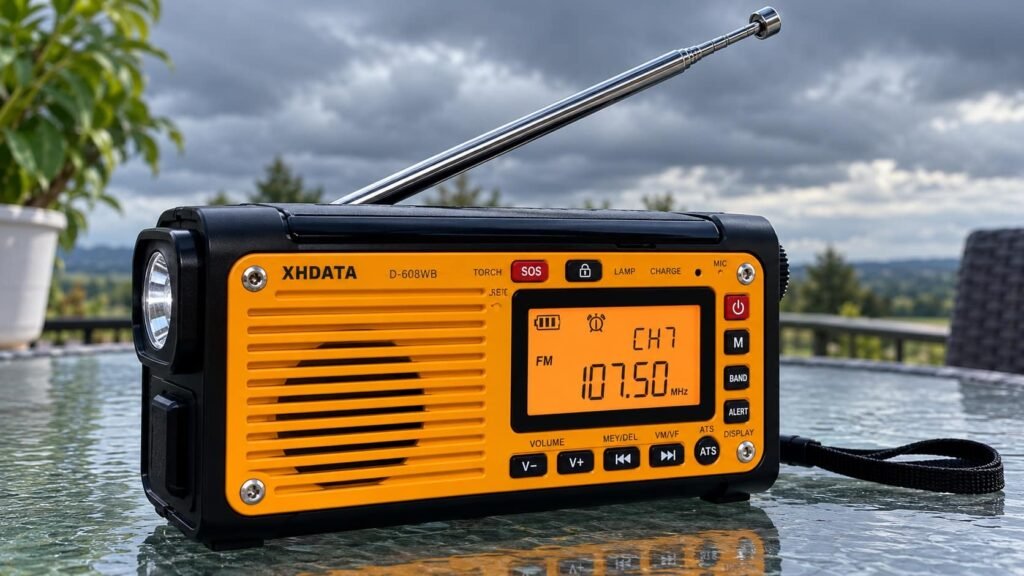
These cover 162.400 MHz through 162.550 MHz.
The manufacturer also advertises a NOAA weather-alert scanning function.
This is particularly relevant for US households preparing for severe storms, hurricanes, tornadoes, and other weather emergencies.
NOAA Weather Radio broadcasts official weather information and warnings through compatible transmitters.
Having access to these broadcasts is useful when internet access is interrupted or your phone battery becomes depleted.
There is an important distinction between receiving weather broadcasts and automatically activating an alert.
The D-608WB documentation describes NOAA scanning and alert functions, but I haven’t independently verified how reliably the alarm activates across different warning types.
For severe weather preparedness, I’d recommend familiarizing yourself with the weather-alert settings before an emergency occurs.
You should also maintain other methods of receiving official warnings, including Wireless Emergency Alerts on your smartphone.
For more information, visit the National Weather Service NOAA Weather Radio guide.
The NOAA weather band is designed for North American use. XHDATA confirms that this function is not intended for regions such as the UK.
Bluetooth Connectivity and Music Playback
Unlike many traditional emergency radios, the XHDATA D-608WB includes Bluetooth 5.0 connectivity.
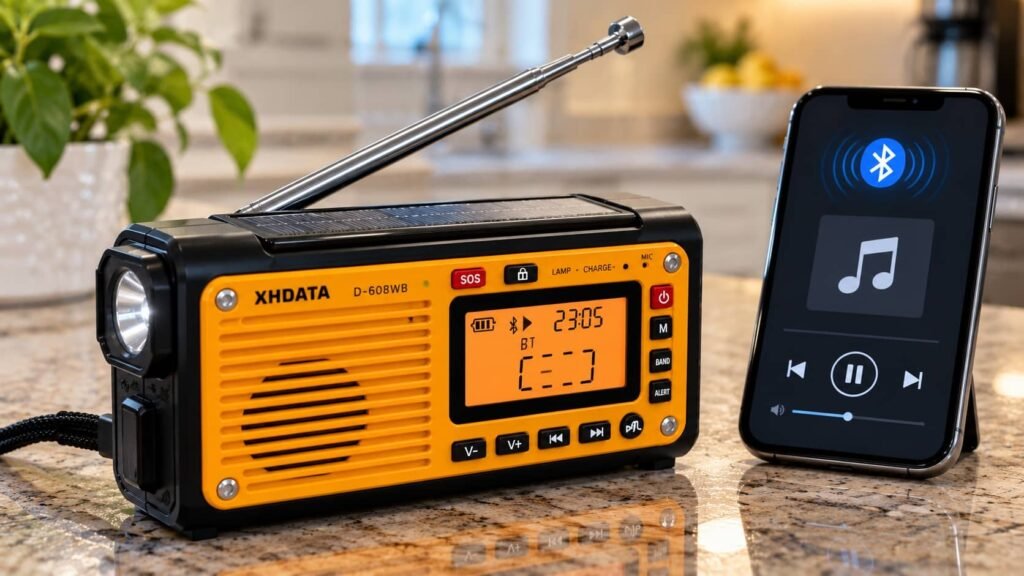
This allows you to connect a compatible smartphone or another Bluetooth audio source.
For camping trips, the feature adds everyday usefulness.
You can listen to music, podcasts, or downloaded audio through the radio’s speaker without relying on radio reception.
XHDATA lists a Bluetooth transmission distance of approximately 33 feet under suitable conditions.
Actual range will depend on obstacles, interference, and the connected device.
TF Card Playback
The D-608WB also supports TF or microSD memory cards with capacities up to 32GB.
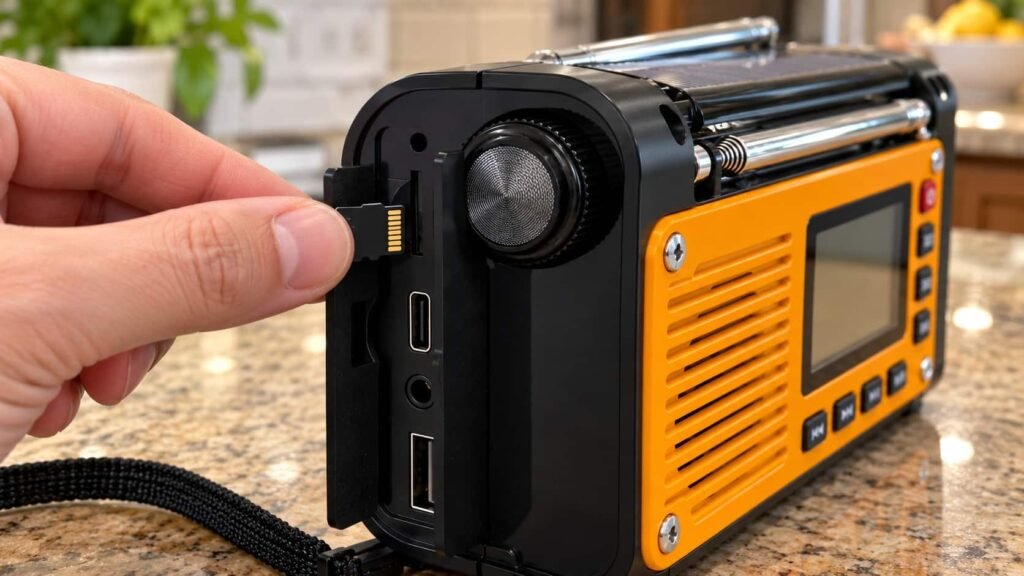
The operating manual lists compatibility with several audio formats, including MP3, WMA, WAV, and FLAC.
This provides another way to listen to stored audio without requiring an internet connection.
For example, you might keep downloaded music or spoken-word recordings on a compatible memory card for camping trips.
There is one consideration.
Bluetooth playback and music functions consume battery power that may be needed for emergency radio listening.
During a prolonged power outage, I’d prioritize conserving battery capacity for essential information.
Built-In Flashlight and Emergency Lighting
The XHDATA D-608WB includes a built-in flashlight.
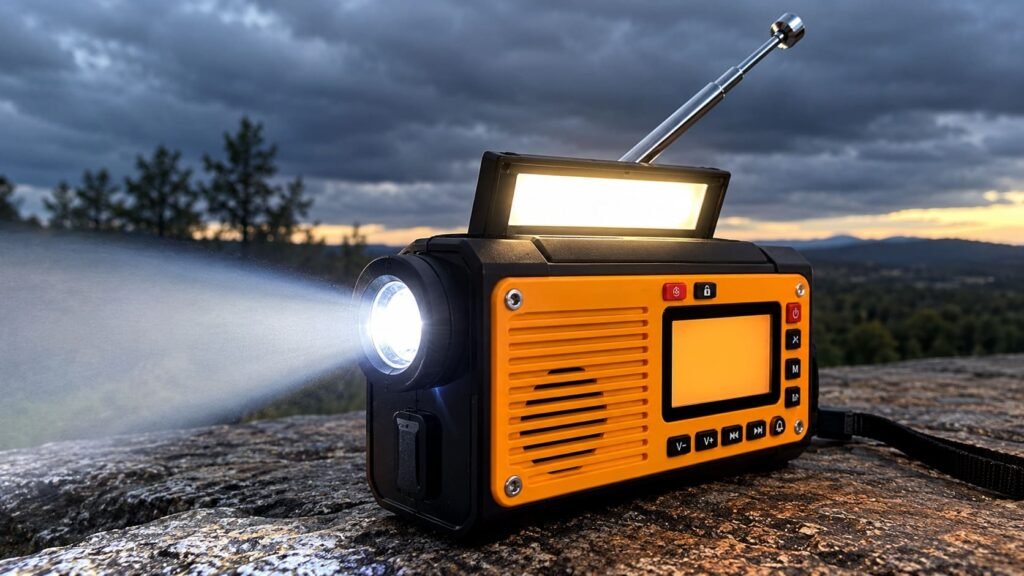
This is useful when searching for emergency supplies during a blackout, moving around a dark campsite, or locating items inside a tent.
Having a flashlight integrated into the radio means one device can provide both communication and basic lighting.
For example, during a nighttime power outage, you might use the flashlight to locate your main emergency kit before switching on a separate lantern.
The main limitation is that the radio is not designed to replace a dedicated high-output flashlight.
I would still keep a separate LED flashlight and suitable backup batteries with household emergency supplies.
A standalone flashlight is more convenient when you need to move around while leaving the radio in a fixed position.
SOS Alarm and Emergency Signaling
The D-608WB includes an SOS alarm function.

This provides an audible signal intended to attract attention during an emergency.
For campers and households preparing emergency supplies, an additional signaling function may be useful.
The alarm is particularly relevant when you need to alert someone nearby.
But there are limits to what this feature can accomplish.
An SOS siren does not automatically contact emergency services, send your GPS location, or replace a satellite emergency communicator.
Its usefulness also depends on whether another person is close enough to hear the alarm.
I would regard this as a supplementary safety feature rather than a primary reason to purchase the radio.
Can the XHDATA D-608WB Charge Your Phone?
Yes. The XHDATA D-608WB includes a 5V USB output for charging compatible mobile devices.
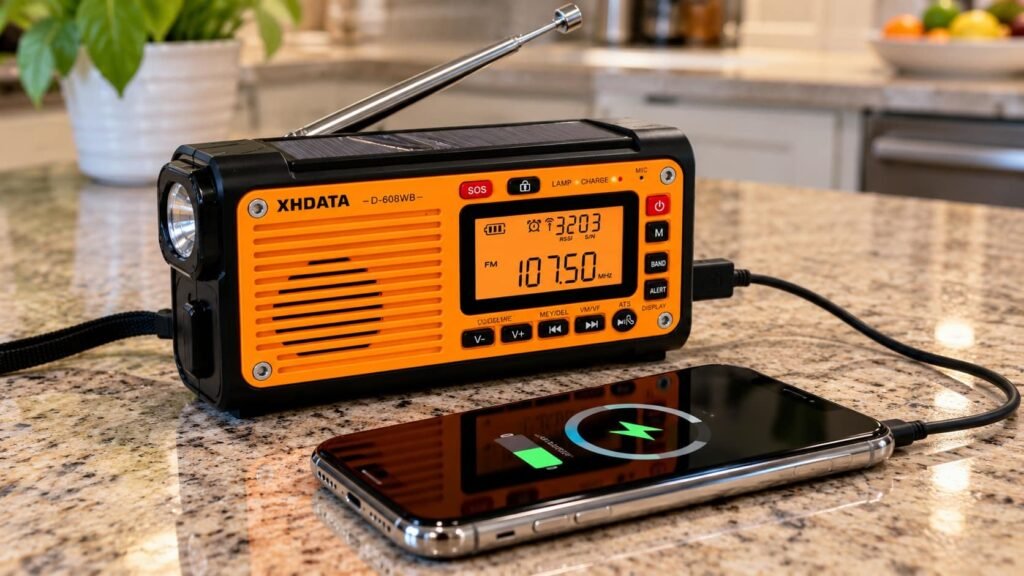
This is useful when you’re preparing for an electricity outage.
If your smartphone battery becomes depleted, the radio may provide a limited amount of emergency charging.
But there is an important trade-off.
The D-608WB has a 3,000 mAh rechargeable battery, and that same battery powers the radio’s other functions.
Charging a smartphone reduces the energy available for listening to broadcasts, operating the flashlight, and using emergency features.
The actual amount of charge transferred depends on battery condition, remaining capacity, your phone, and conversion losses.
I wouldn’t expect the D-608WB to replace a dedicated high-capacity power bank.
For a household emergency kit, I’d keep a separate charged power bank alongside the radio.
That way, you can preserve the radio’s battery for receiving essential information.
Build Quality, Portability, and Weather Resistance
The XHDATA D-608WB is designed as a compact, portable emergency radio.
According to the operating manual, the radio weighs approximately 11.7 ounces with its supplied battery.
Its compact dimensions make it suitable for storing in a household emergency kit, camping bag, or vehicle emergency supplies.
One advantage is that the D-608WB combines several functions without requiring you to carry separate devices for every task.
You get a digital radio, rechargeable battery, flashlight, emergency alarm, and limited phone charging in one unit.
The housing is made from plastic, which helps keep the radio relatively lightweight.
Is the XHDATA D-608WB Waterproof?
One specification worth checking carefully is water resistance.
I couldn’t verify an official IP water-resistance rating for the D-608WB in the manufacturer’s documentation.
This means I wouldn’t assume the radio is waterproof or suitable for prolonged exposure to rain.
For camping trips, I’d keep the radio inside a tent, under a shelter, or in a protective bag when the weather deteriorates.
The solar panel also needs suitable exposure to sunlight, so you’ll need to balance charging opportunities against protecting the radio from moisture.
If water resistance is a major purchasing priority, consider a radio with a clearly documented IP rating.
The Sangean MMR-99 review covers another emergency radio worth comparing for outdoor use.
XHDATA D-608WB Pros and Cons
After examining the manufacturer’s specifications and operating instructions, there are several reasons to consider the XHDATA D-608WB, along with some limitations worth understanding.
Pros
- Multiple charging methods, including USB-C, solar, and hand crank.
- AM/FM, shortwave, and NOAA weather-band reception.
- Digital tuning with automatic station scanning.
- 3,000 mAh rechargeable lithium-ion battery.
- Bluetooth 5.0 connectivity for wireless audio playback.
- TF/microSD card support for stored music.
- Built-in flashlight for emergency lighting.
- SOS alarm provides an additional signaling option.
- USB output supports limited emergency phone charging.
- Compact design makes storage and transportation convenient.
Cons
- Small solar panel provides limited charging power.
- Hand crank charging requires sustained manual effort.
- Phone charging reduces battery capacity available for radio operation.
- No verified official waterproof or water-resistance rating.
- Digital menus and multiple operating modes may require familiarization.
- Battery runtime varies depending on which functions are active.
- NOAA weather-band reception is intended for North America.
- Not a replacement for a dedicated power bank or high-output flashlight.
Is the XHDATA D-608WB Good for an Emergency Kit?
I think the XHDATA D-608WB is worth considering for a household emergency kit, particularly if you want a radio with several charging options and access to NOAA weather broadcasts.
During a power outage, access to local news and weather information can help you make informed decisions.
If internet access becomes unavailable or mobile networks are disrupted, a radio provides another way to receive broadcast information.
The D-608WB offers several useful functions in one compact device.
Its rechargeable battery, hand crank, solar panel, flashlight, and emergency alarm all have practical applications.
But I wouldn’t rely on one device for every emergency requirement.
For a typical household, I’d keep the following supplies alongside the radio:
- A fully charged dedicated power bank.
- Compatible USB charging cables.
- A separate LED flashlight.
- Spare batteries for other emergency equipment.
- Three days of drinking water.
- Nonperishable food and a manual can opener.
- A basic first aid kit.
- Essential medication arrangements.
- A printed emergency contact list.
- A waterproof pouch for important documents.
The radio should form part of a wider preparedness plan rather than serve as your entire emergency kit.
For official US emergency preparedness advice, Ready.gov’s emergency kit checklist provides guidance on essential household supplies.
XHDATA D-608WB vs Other Emergency Radios
The XHDATA D-608WB isn’t the only emergency radio worth considering.
Several alternatives offer different combinations of battery capacity, weather resistance, charging methods, and emergency features.
Which radio makes the most sense depends on how you intend to use it.
| Emergency radio | Main advantage | Main consideration |
|---|---|---|
| XHDATA D-608WB | Shortwave, NOAA, Bluetooth, and multiple charging options | No verified IP rating |
| Sangean MMR-99 | Weather-resistant design and emergency features | Larger outdoor-focused design |
| Philips TAR3500 | Multiple power options and AAA battery backup | No Bluetooth |
| Midland ER310 Pro | Dedicated emergency preparedness features | Compare battery and charging specifications |
XHDATA D-608WB vs Sangean MMR-99
The Sangean MMR-99 is another option worth considering if you want an emergency radio for outdoor activities.
The Sangean places greater emphasis on weather resistance and outdoor operation.
The XHDATA offers a different combination of features, including shortwave reception, Bluetooth, and memory card playback.
For someone who enjoys listening to international broadcasts or using a portable radio for entertainment, the D-608WB has an advantage.
For outdoor use where protection against rain is a priority, I’d investigate the Sangean first.
XHDATA D-608WB vs Philips TAR3500
The Philips TAR3500 takes a more traditional approach to emergency preparedness.
Its combination of rechargeable power, hand crank charging, solar charging, and AAA battery backup is particularly appealing for household emergency supplies.
The XHDATA provides more listening options through shortwave and Bluetooth.
For buyers who want a straightforward household emergency radio with replaceable AAA battery backup, the Philips is worth comparing.
For those who also want a portable entertainment radio, I’d lean toward the XHDATA.
XHDATA D-608WB vs Midland ER310 Pro
The Midland ER310 Pro is another emergency radio to consider for storm preparedness and power outages.
Both models offer functions intended to support emergency communication.
The XHDATA’s main attraction is its combination of traditional radio reception and additional audio features.
The Midland is worth considering if your priority is a dedicated emergency radio rather than a multipurpose portable entertainment device.
Before choosing, compare the exact model specifications, NOAA alert functionality, battery arrangements, and weather protection.
If you’re researching additional hand crank radios, our Best Wind-Up Emergency Radios Guide covers other models and buying considerations.
That guide focuses on UK buyers, so US readers should confirm NOAA compatibility and regional radio frequencies.
Who Should Buy the XHDATA D-608WB?
The XHDATA D-608WB is worth considering if you want a compact radio that combines emergency functions with everyday listening features.
I’d particularly recommend researching this model if you’re:
- Preparing a household emergency kit for storms or power outages.
- Looking for a portable camping radio with several charging methods.
- Interested in listening to shortwave broadcasts.
- Seeking an emergency radio with NOAA weather-band reception.
- Looking for a rechargeable radio with Bluetooth connectivity.
- Putting together backup communication supplies for your vehicle.
- Wanting a portable radio with a flashlight and limited phone charging.
The combination of digital tuning, shortwave reception, and multiple charging methods makes the D-608WB particularly appealing to buyers who want more than a basic emergency radio.
Who Should Look Elsewhere?
The XHDATA D-608WB won’t suit every buyer.
If your main priority is charging smartphones, a dedicated high-capacity power bank is a more practical purchase.
If you regularly camp in wet conditions, I’d prioritize a radio with a verified water-resistance rating.
If you prefer simple controls, the D-608WB’s digital menus and additional functions may feel more complicated than a basic analog radio.
And if automatic severe weather warnings are your main concern, choose a radio with clearly documented NOAA alert behavior and test that function before relying on it.
Frequently Asked Questions
Is the XHDATA D-608WB a good emergency radio?
Based on its published specifications, the XHDATA D-608WB offers a useful combination of emergency features.
Its multiple charging methods, NOAA weather-band reception, flashlight, and rechargeable battery make it suitable for consideration as part of a household emergency kit.
Long-term reliability and real-world reception performance haven’t been independently tested for this review.
Does the XHDATA D-608WB work without electricity?
Yes. The radio operates using its rechargeable 18650 battery.
It also supports hand crank and solar charging, providing alternative ways to replenish the battery when conventional electricity is unavailable.
These backup charging methods are best reserved for emergency use rather than replacing regular USB charging.
How long does the XHDATA D-608WB battery last?
The D-608WB uses a rechargeable 3,000 mAh lithium-ion battery.
Actual runtime depends on the volume level, reception conditions, and which functions are operating.
Bluetooth playback, flashlight use, and phone charging can increase battery consumption.
I couldn’t verify a consistent manufacturer-guaranteed runtime for every operating mode.
Can the XHDATA D-608WB charge a smartphone?
Yes. The radio includes a USB output that supports charging compatible mobile devices.
The amount of charge available depends on the radio’s remaining battery capacity and the connected phone.
For prolonged power outages, a separate power bank is a better option for regular smartphone charging.
Does the XHDATA D-608WB receive NOAA weather alerts?
The D-608WB supports all seven NOAA weather radio frequencies used in the United States.
XHDATA also advertises a weather-alert scanning function.
Buyers should check the operating instructions and verify the alert settings before relying on the radio during severe weather.
Is the XHDATA D-608WB waterproof?
There is no verified official IP water-resistance rating in the documentation reviewed.
I would therefore avoid exposing the radio to heavy rain, prolonged moisture, or immersion.
For camping, keep the radio protected when conditions become wet.
XHDATA D 608WB Review: Final Verdict
The XHDATA D-608WB is an interesting option for anyone looking for a portable emergency radio that offers more than basic AM/FM reception.
What appeals to me most is its versatility.
Having AM/FM, shortwave, and NOAA weather reception in one compact radio provides several ways to access broadcasts.
The addition of USB-C charging, a hand crank, and solar power gives you alternative charging options when conventional electricity isn’t available.
Bluetooth connectivity and memory card playback also make the radio useful for everyday listening.
There are compromises.
The small solar panel and hand crank should be regarded as emergency charging methods, while the 3,000 mAh battery limits how much power you can spare for charging a smartphone.
The lack of a verified water-resistance rating is another consideration, particularly for campers who expect to use their equipment in wet weather.
For household emergency preparedness, occasional camping, and portable radio listening, though, the XHDATA D-608WB offers a useful combination of functions.
My recommendation is to consider the D-608WB if you want a multipurpose emergency radio with shortwave reception and Bluetooth.
If weather resistance or simple backup battery arrangements matter more, compare the Sangean MMR-99 and Philips TAR3500 before deciding.
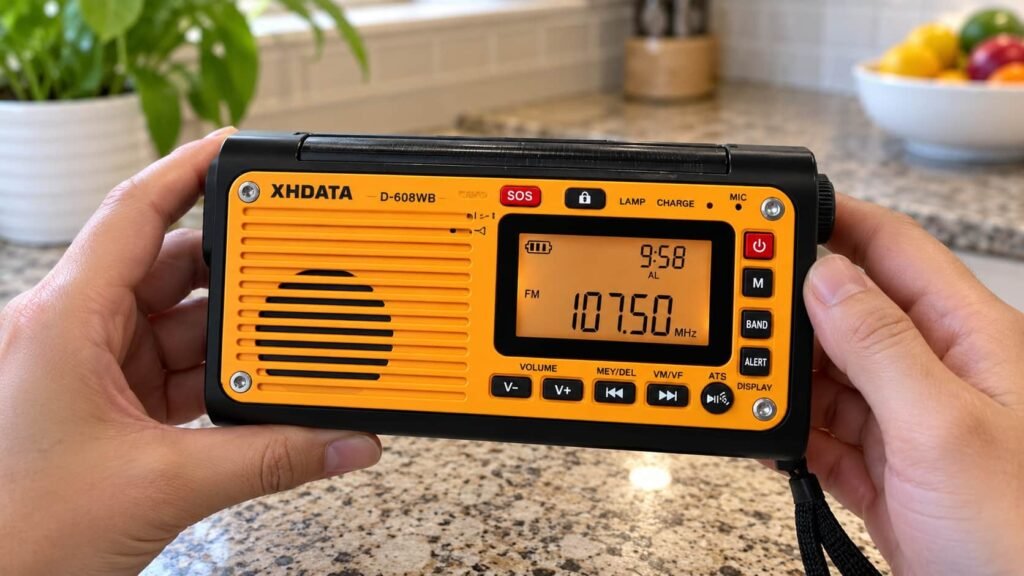
XHDATA D-608WB Emergency Radio
Best for: Household emergency preparedness, camping, shortwave listening, and backup weather information.
Check the XHDATA D-608WB on Amazon.com
Research sources: XHDATA official product information, XHDATA D-608WB operating manual, NOAA Weather Radio, and Ready.gov emergency supplies guidance.
CampEquipmentPlus relies on reader support. Purchases made through links on our website may earn us an affiliate commission at no additional cost to you, helping keep the site running.
CampEquipmentPlus relies on reader support. Purchases made via links on our website may earn us an affiliate commission at no extra cost to you, helping keep the site running.