
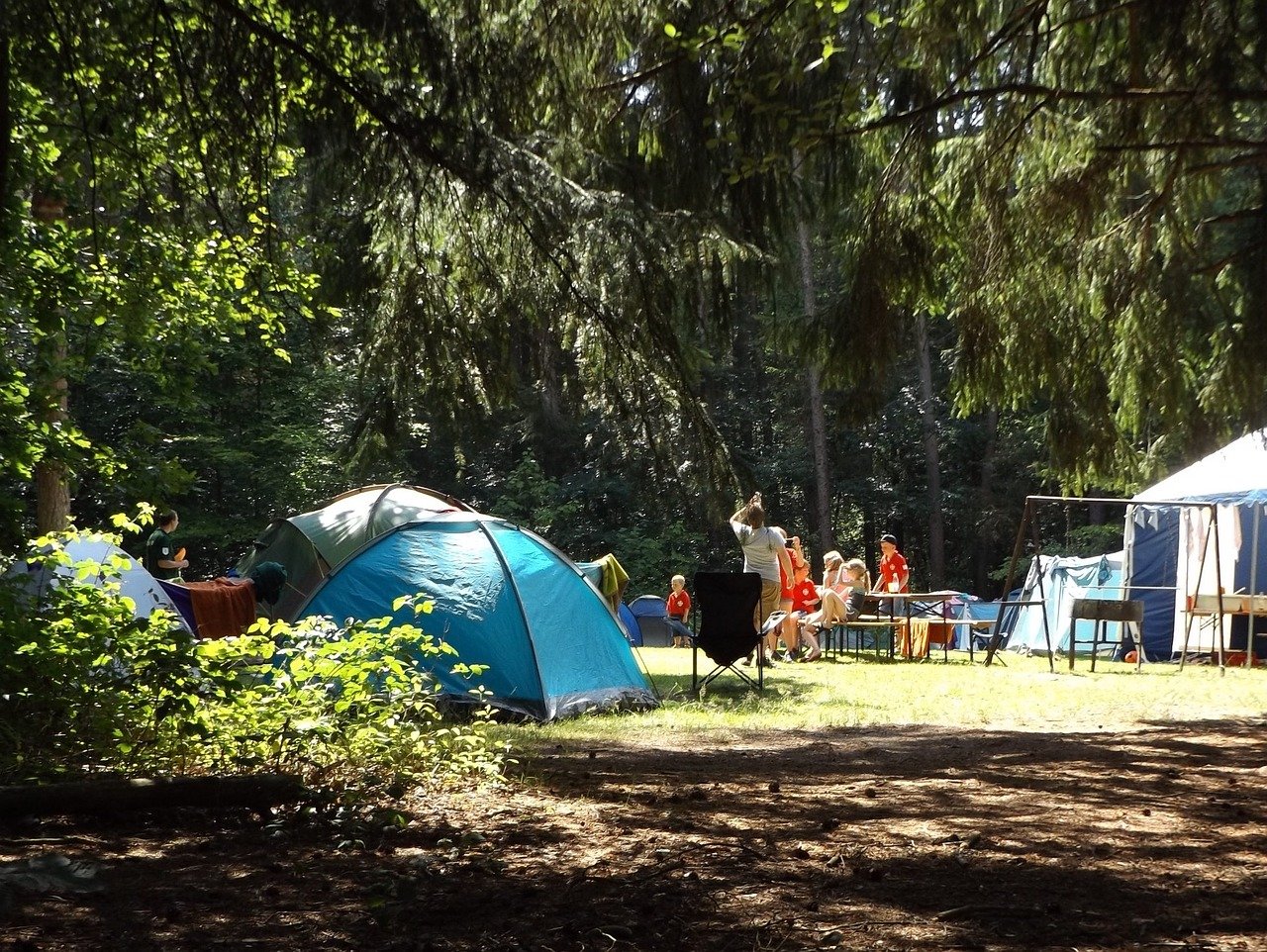
Best 6 Person Family Tents UK
The best 6 person family tents in the UK give a family of four or five real room to live in, keep the rain out through a long wet weekend and still go up before the kids lose patience.
We compared five six-berth tents on what UK families raise most often: how much space is really left once the airbeds are down, seam and floor waterproofing, porch or screen-room space, headroom for getting changed, how dark the bedroom is at dawn, and how easy the tent is to pitch with two adults. Our picks cover a weather-ready dome with a full-fly porch, a big cabin with a screen room, an instant blackout tent, a screen-room dome for warm evenings and a budget cabin.
- Our five picks at a glance
- Side-by-side comparison
- Detailed reviews with pros and cons
- How to choose a 6 person family tent
- 6 person tent FAQs
- Buy one berth more than your headcount Capacity ratings assume people lying shoulder to shoulder. Which? advises sizing up, so a 6 person tent is the comfortable choice for a family of four or five with kit.
- Seams matter more than the HH number Most leaks come through seams and zips rather than the fabric, so look for taped or inverted seams and a welded or tub-style floor, not just a big waterproof figure.
- Covered space keeps the bedroom dry A porch, vestibule or screen room gives wet coats, boots and bags somewhere to go, and gives you a place to sit out a shower.
- Check the weight and pack size Six-berth tents range from about 8kg to over 25kg. Make sure yours fits the boot alongside everything else and that two adults can carry it to the pitch.
The best 6 person family tents UK campers rely on combine real living space with dependable seams, a dry floor and somewhere to stash wet kit. A six-berth is often the tent a family of four or five grows into, so it needs to cope with airbeds, bags, rainy afternoons and early sunrises without feeling cramped. This guide adds practical advice on layout, weather, pitching and campsite life to help you choose from our five picks.


Best overall Skydome 6 FF | Most space Coleman WM6 | Best blackout EA Blackout 6 | Best screen room Evanston 6 | Best budget UNP Cabin 6 | |
|---|---|---|---|---|---|
|
|
|
|
|
| |
| Tent style | Dome | Cabin | Instant cabin | Dome | Cabin |
| Floor size | Not quoted | 11 x 9 ft | 9 x 9 ft | Not quoted | 10 x 9 ft |
| Centre height | Not quoted | 6 ft 8 in | 6 ft 1 in | Not quoted | 6 ft 6 in |
| Taped or inverted seams | Yes | Yes | No | Yes | No |
| Porch or screen room | Yes | Yes | No | Yes | No |
| Darkened bedroom | No | No | Yes | No | No |
| Check price | Check price | Check price | Check price | Check price |
Best 6 person family tents UK: our detailed reviews
Each review covers what the tent does well, where it falls short and which families it suits. We focused on the problems UK campers report most with six-berth tents: leaking seams in long spells of rain, condensation in a full tent, wind stability, pitching time and how cramped the bedroom gets once six people or two big airbeds are inside.
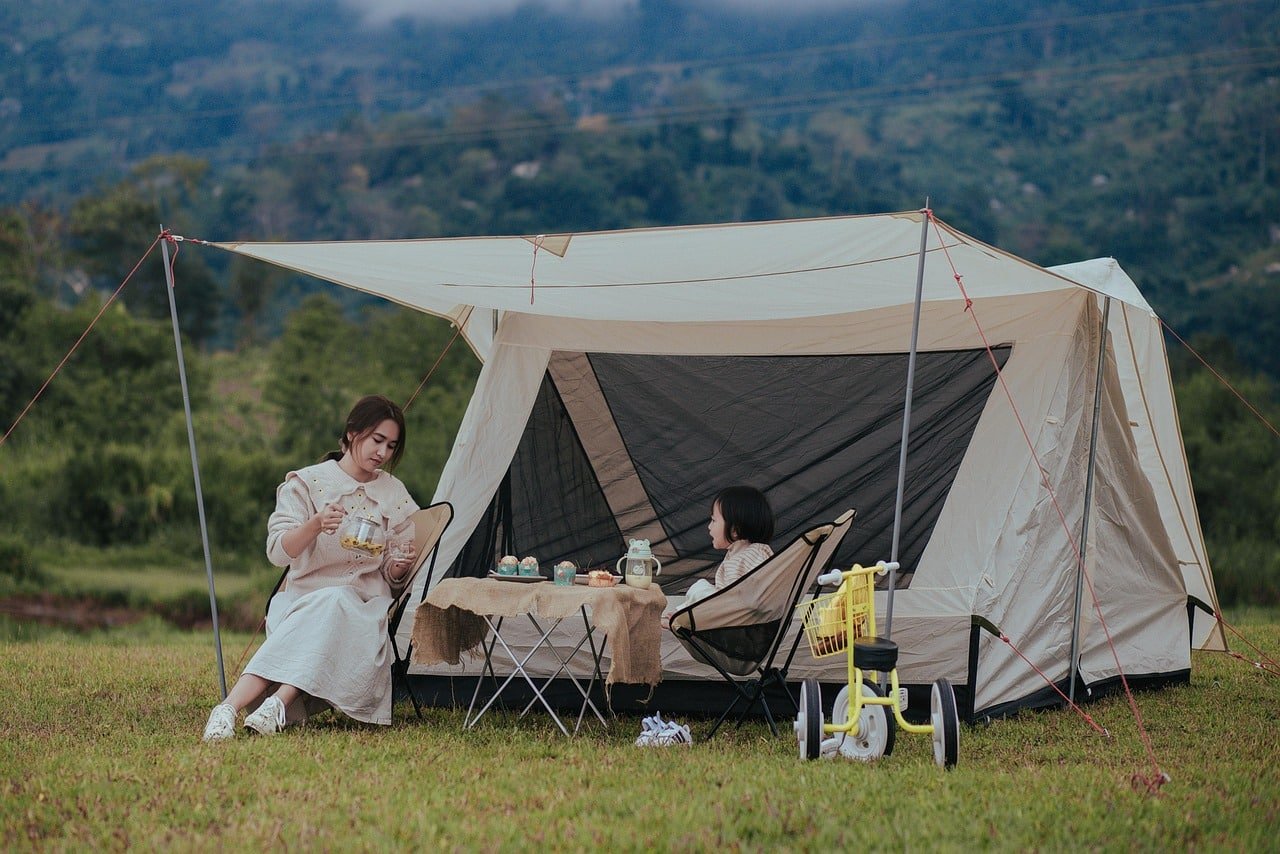
A family dome that takes British weather seriously
The Skydome Full-Fly Vestibule takes Coleman’s popular quick-pitch dome and adds the weather protection UK families actually need. The rainfly covers the whole tent and has taped seams, while Coleman’s WeatherTec floor uses welded corners and inverted seams so water does not wick in at ground level. At the front, a 10 x 4 ft vestibule gives you a covered entrance and somewhere dry for boots, coats and the cool box. The near-vertical walls offer around 20% more headroom than Coleman’s traditional domes, the wide door makes moving airbeds in and out easier, and the floor fits two queen-size airbeds. Poles come pre-attached, so it pitches in about five minutes, and the frame has been tested in 35 mph winds. As with any dome, pegging and guying it out properly makes a big difference on an exposed field.
- Full-coverage rainfly with taped seams
- Welded corners and inverted floor seams
- 10 x 4 ft vestibule for wet gear
- Pre-attached poles for a 5-minute pitch
- E-port for electric hook-ups
- No hydrostatic head figure quoted
- Single bedroom with no divider
- Vestibule is storage rather than living space
Cabin-style space with a separate screen room
If space is the priority, the WeatherMaster 6 is the roomiest tent in this guide. The main room measures 11 x 9 ft with a 6 ft 8 in centre height, so most adults can stand up straight, and there is room for two queen airbeds plus bags. In front sits a floorless 9 x 6 ft screen room that works as a bug-free lounge or a place to cook and eat out of the rain. A hinged door makes coming and going far easier than fighting a zip, and angled windows help air circulate to keep condensation down. Coleman’s WeatherTec system, with welded floors and inverted seams, is there to keep the interior dry, and an E-port lets you run power inside. The trade-off is size: it is a big, heavy tent that needs a large pitch and a decent car boot, and the tall cabin walls catch more wind than a dome.
- 11 x 9 ft floor and 6 ft 8 in headroom
- 9 x 6 ft screen room
- Hinged door for easy access
- Welded floors and inverted seams
- Angled windows for airflow
- Large footprint needs a big pitch
- Heavy and bulky to transport
- Tall walls catch the wind
- Screen room has no floor
Instant set-up and a bedroom that stays dark
UK summer sunrises arrive before 5am, and that is where the EVER ADVANCED Blackout earns its place. Its darkened fabric keeps the inside dim well past dawn, which helps young children sleep in and takes the edge off afternoon heat. The frame is pre-attached, so one person can have it standing in about a minute and pack it down just as quickly. Inside you get a 9 x 9 ft floor and 73 in of headroom, with three large mesh windows plus a roof net for airflow, which matters because blackout tents can feel stuffy. The rainfly covers the skylight in bad weather, the coating is rated to 4,000mm, and there is a power pass-through and a lantern loop. It is the smallest floor in this guide, so a family of six will be snug, and it has no porch, so wet gear needs to stay in the car or under a separate shelter. At 22.3 lbs it is still manageable for car camping.
- Blackout fabric for lie-ins
- Pre-attached frame pitches in about a minute
- 4,000mm-rated coating
- Three mesh windows and a roof vent
- Power pass-through and lantern loop
- Smallest floor in this guide
- No porch or vestibule
- Seam taping not stated
A dome with a floored screen room for warm nights
The Evanston 6 pairs a classic Coleman dome with a screen room that has a full floor, so it can double as extra sleeping space on warm, dry nights or as a bug-free place for the kids to play. Window awnings let you keep the windows open in the rain, which is a simple but effective defence against condensation in a full tent. Coleman’s WeatherTec tub floor, patented corner welds and protected seams are there to keep water out, and the frame is tested in 35+ mph winds. Snag-free continuous pole sleeves and Coleman’s pin-and-ring corners make pitching more forgiving than many sleeved domes, although it is not as fast as the pre-attached-pole tents in this guide. The screen room is mesh, so in a cold or blustery UK spring it is better as a porch for gear than as a bedroom.
- Screen room with a full floor
- Window awnings allow ventilation in rain
- Tub floor with welded corners
- Frame tested in 35+ mph winds
- Snag-free pole sleeves
- Slower to pitch than pre-attached-pole tents
- Mesh screen room is cold in poor weather
- No headroom figure quoted
A tall, simple cabin that keeps costs down
The UNP cabin is the value pick for families who want standing room without spending a lot. It offers a 10 x 9 ft floor and a 78 in centre height, the tallest in this guide, so changing and moving around is easy. Four steel leg poles and a rectangular roof make for a stable shape, one mesh door and five mesh windows plus a mesh top keep air moving, and a polyurethane-coated fabric with a rainfly provides the weather protection. It packs into a 24.6 x 8.3 x 8.3 in bag and weighs 18 lb, which is light for a six-berth. Two people can pitch it in about five minutes. The compromises are what you would expect at this price: no waterproof rating or seam detail is quoted, there is no porch, and owners of budget cabins often find the bedroom feels tight with six adults, so treat it as a roomy tent for four or five.
- 78 in centre height
- Light 18 lb pack weight
- Five mesh windows plus mesh top
- Steel leg poles for stability
- Budget price
- No HH rating or seam taping stated
- No porch for wet gear
- Tight for six adults
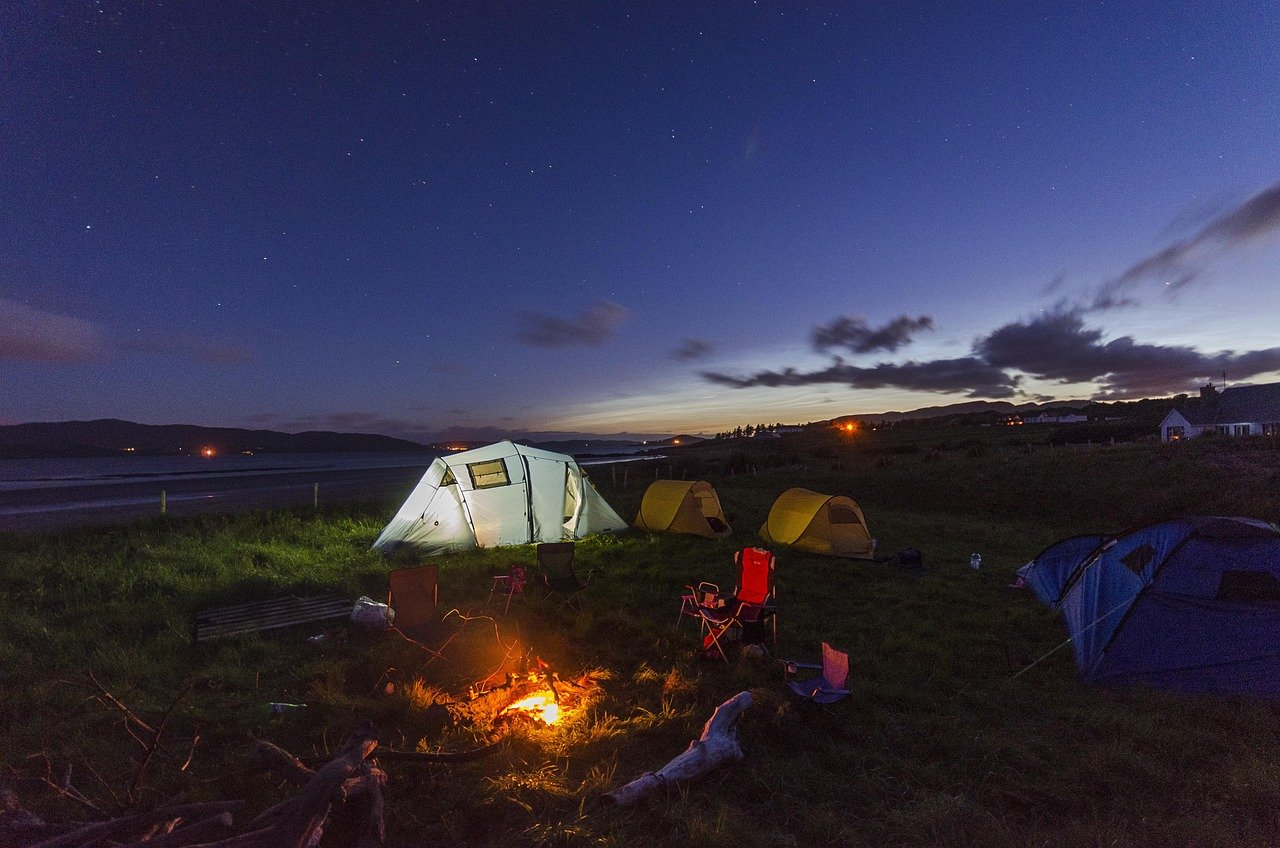
How to choose a 6 person family tent for UK camping
The checklist below draws on consumer testing advice from Which? on tent waterproof ratings and the issues owners mention most. For a wider look at tent types, see how to choose a camping tent for different trips, check what waterproof rating a tent should have for rain, and if a six-berth is more than you need, our best 4 person tents for camping UK guide has smaller options.
Dome, cabin or screen room: picking a six-berth style
All five tents in our list are six-berth designs, but they take very different approaches to the same problem. Some focus on headroom, some on covered space and some on speed. Understanding the shape of each style makes it easier to judge which one will feel comfortable for your family on a wet Saturday, not just on a sunny test pitch.
Domes
Dome tents such as the Coleman Skydome 6 Full-Fly Vestibule and the Coleman Evanston 6 are freestanding, so they keep their shape before you peg them out. That makes them easier to position and more forgiving on uneven ground. Their curved walls lose a little headroom at the edges, but a well-guyed dome handles gusts calmly, which suits breezy coastal and upland sites.
Cabins
Cabin tents like the Coleman WeatherMaster 6, the EVER ADVANCED Blackout and the UNP 6 Person Cabin have near-vertical walls, so adults can stand up across most of the floor. That is a real luxury when dressing children or making beds. The trade-off is that tall, flat walls catch more wind, so they need every guy line pegged out and a sheltered spot when the forecast turns blustery.
Screen rooms and vestibules
A screen room or vestibule adds a second space for gear, meals or play. The WeatherMaster’s large screen room and the Evanston’s floored screen room work best in mild weather, while the Skydome’s full-fly vestibule is designed more as a dry porch. Think about whether you want an extra room for summer evenings or a sheltered spot for boots and coats in the rain.
6 person family tents UK: planning the layout
A six-berth only feels big if the layout suits the way your family sleeps. Before choosing between 6 person family tents UK retailers offer, sketch where each person, airbed and bag will go. One large bedroom suits parents with young children who want everyone close by, while families with older children may prefer a tent with a divider or the option to add a separate inner.
Airbeds are usually the deciding factor. Several tents in this guide mention fitting two queen-size airbeds, which typically leaves a narrow strip for bags rather than lots of spare floor. If you want a double for the adults and singles for the children, measure the beds you own against the floor dimensions. Our guide to the best double camping mattresses can help if you are buying new bedding too.
Keep the floor clear by giving everything a home. Wet coats, wellies and the cool box belong in the porch or vestibule, while clothes stay in soft bags at the foot of each bed. Mesh pockets and lantern loops keep torches and phones off the floor. A simple rule like this makes a 6 person tent feel noticeably roomier by the end of a long weekend.
Headroom is the other comfort factor. Cabin designs with tall centre heights let adults stand and move around easily, while domes have the most height in the middle. If someone in your family is tall, compare centre heights carefully, and remember that only part of the floor will be at that full height.
Keeping a big tent dry in British weather
A 6 person tent has more seams, more zips and more fabric for the wind to catch, so weather protection matters even more than in a small one. When you compare 6 person family tents UK weather will test, look closely at how the floor meets the walls, whether the rainfly seams are taped and how well the doors and windows are covered when it pours.
Tub-style or welded floors, like those on the Coleman models in this guide, raise the groundsheet up the walls so surface water cannot seep in at the edges. Window awnings, such as those on the Evanston 6, let you keep some ventilation open in the rain. A full-coverage fly, like the Skydome’s, protects mesh panels from driving rain and gives a more weatherproof shell overall.
Condensation is the other challenge. Six sleepers breathe out a lot of moisture overnight, and a closed-up tent traps it. Keep roof vents and some windows open, store wet clothes in the porch and air the tent each morning when the weather allows. Droplets across the whole roof usually point to condensation, while a drip from one spot is more likely a leak worth checking.
Pitching, transport and packing away
Pitching a 6 person tent is a two-person job in most conditions. Agree roles before you start: one person lays out the tent and inserts poles while the other handles pegs and guy lines. Pre-attached frames, like those on the Skydome and the EVER ADVANCED cabin, speed this up a lot, but you still need to peg and guy the tent properly once it is standing.
Check the packed size and weight before you buy. Big family tents vary a lot, and a heavy bag can be awkward to carry from a car park to a field pitch. Measure your boot with the seats in the position you will actually use, and remember that bedding, chairs and cooking kit need space too. A folding trolley helps on sites where cars stay away from pitches.
When it is time to go home, start by emptying the tent and opening every door so trapped air can escape as you fold. Brush off grass and mud, and keep the pegs and poles together. If the tent comes down wet, pitch or hang it at home within a day or two so the fabric dries fully, which protects the coatings and prevents mildew between trips.
Making the most of UK campsites
Most family campsites in the UK offer a mix of grass and hard-standing pitches, and some have electric hook-up. Several tents in this guide include an E-port or power pass-through for running a cable inside, which is handy for lights and chargers. Always use a proper camping hook-up unit, and keep cables tidy so nobody trips over them in the dark.
Pitch size matters with larger tents. A tent with a big screen room or long guy lines can fill a standard plot, so check the campsite’s pitch dimensions when you book, or ask for a larger pitch if one is available. Leave room around the tent for guy lines, a cooking area and a little privacy from neighbours, especially during busy school holidays.
Think about orientation too. Face the door away from the prevailing wind where possible, avoid dips where water collects after rain and keep clear of overhanging branches. These small choices often make more difference to comfort than the tent’s spec sheet, particularly on exposed sites where the weather can change within an hour.
Booking ahead helps too. The larger 6 person family tents UK holidaymakers bring in August need generous plots, and the best pitches on popular sites go early. If you are flexible, camping just outside the school holidays usually means quieter fields, more choice of pitch and an easier time finding a sheltered spot for a big tent.
Final thoughts on choosing a six-berth
The right family tent depends on your family’s size, the trips you take and the weather you expect. If you want a quick pitch and a dry porch, a full-fly dome is a strong all-rounder. If standing room is the priority, a cabin gives you space to live. Blackout fabric helps with early mornings, and a screen room adds flexibility on warm evenings.
Our five 6 person family tents UK families can choose from cover each of these needs at different budgets. Size up if you are unsure, check the seams and floor construction, practise pitching at home and dry the tent thoroughly after every trip, and your six-berth should give you many comfortable holidays.
What to look for in a 6 person family tent
A 6 person rating means six mats side by side with no room for bags. Which? suggests buying one size up, so a six-berth is ideal for a family of four or five, or for two adults and two kids who want space for airbeds.
Which? points out that most leaks come through seams and zips rather than the fabric. Taped rainfly seams, inverted or welded floor seams and a tub-style or sewn-in groundsheet matter more than a headline waterproof figure.
A higher HH means the fabric resists more water pressure. For UK camping, around 3,000mm on the flysheet is a sensible guide, but treat it as one factor alongside seam construction.
With six people’s kit, a porch or vestibule keeps wet coats, boots and the cool box out of the bedroom, and gives you somewhere to sit out a shower.
A full tent produces a lot of condensation, since each sleeper breathes out moisture overnight. Look for roof vents, mesh panels and windows you can leave open in the rain.
Domes are freestanding and quick to pitch; tunnels make the most of floor space but must be pegged out; tall cabins give standing room but catch more wind, so guy them out fully.
Big family tents can weigh 20kg or more. Check the packed size fits your boot and that two adults can carry it from the car park to the pitch.
How we chose these tents
We have not pitched every tent in this list ourselves. Our picks are based on manufacturer specifications, consumer and camping-club advice, and the recurring themes in owner feedback.
-
Weather protection
We prioritised seam construction, floor design, stated waterproof ratings and wind-tested frames.
-
Usable space
We compared floor area, headroom and covered porch or screen-room space for a real family with kit.
-
Ease of pitching
We favoured pre-attached poles and simple pole layouts that two adults can manage quickly.
-
Common complaints
We weighed up cramped bedrooms, condensation, leaks at seams and zips, and bulky pack sizes.
Practise pitching a new tent at home before your first trip, and air it thoroughly before packing it away.
How many people really fit in a 6 person tent?
Six people can sleep in one, but with no room for bags or airbeds. For comfort, a 6 person tent suits a family of four or five, or two adults and two or three children with gear.
What waterproof rating does a 6 person tent need in the UK?
Around 3,000mm hydrostatic head on the flysheet is a sensible guide for British rain, but seams, zips and the floor are where most leaks start, so taped or welded seams matter just as much.
Why is there water inside my tent in the morning?
Usually it is condensation rather than a leak. Each sleeper breathes out moisture overnight, so keep vents open and air the tent during the day. A steady drip from one spot is more likely a leak.
Is a dome or cabin tent better for a family?
Domes are freestanding, quick to pitch and handle wind well. Cabins have near-vertical walls and more standing room but catch more wind, so they need to be guyed out properly.
How heavy is a 6 person tent?
It varies widely. The UNP cabin in this guide weighs about 8kg and the EVER ADVANCED Blackout about 10kg, while larger tunnel and air tents for six can weigh well over 20kg.
Which 6 person family tent should you buy?
- Best overall: Coleman Skydome 6 Full-Fly Vestibule
- Most space: Coleman WeatherMaster 6 Screened
- Best blackout: EVER ADVANCED 6 Person Blackout Cabin
- Best screen room: Coleman Evanston 6 Screen Room
- Best budget: UNP 6 Person Cabin Tent
For most UK families the Coleman Skydome 6 Full-Fly Vestibule is the best 6 person family tent: it pitches in minutes, has taped rainfly seams and a sealed floor, and its vestibule keeps wet kit out of the bedroom. Choose the Coleman WeatherMaster 6 if you want the most living space, the EVER ADVANCED Blackout for dark mornings and a one-minute pitch, the Coleman Evanston 6 for a flexible screen room, and the UNP cabin if budget matters most.
CampEquipmentPlus relies on reader support. Purchases made via links on our website may earn us an affiliate commission at no extra cost to you, helping keep the site running.