

Best Budget Camping Tents Under £100 UK
The best budget camping tents under £100 in the UK keep you dry, pitch quickly and leave money for the rest of your kit, as long as you know where cheap tents cut corners.
A tent under £100 can be perfectly good for summer weekends, festivals and family campsite trips. The usual compromises are lower or unstated waterproof ratings, thinner fabrics, fibreglass poles, flimsy pegs and more condensation, and owners’ most common complaints are leaks at the seams, bent pegs and poles that snap in strong wind. We picked five tents that listed below the equivalent of £100 when we checked, from a 2-person dome to a 6-person cabin, and compared floor space, height, waterproofing, poles, doors and pitching time.
- Our five picks at a glance
- Side-by-side comparison
- Detailed reviews with pros and cons
- What to look for in a cheap tent
- How to make a budget tent last
- Budget tent FAQs
- Aim for 1,500mm or more UK retailers generally treat a 1,500mm hydrostatic head as the minimum for a flysheet, with 3,000mm better for wet weather. Many cheap tents do not quote a figure at all.
- Seams and fly matter as much as the number Taped or welded seams and a fly that reaches close to the ground keep more rain out than a high rating on its own.
- Size up by one berth A tent’s berth number assumes sleepers packed shoulder to shoulder. Buy one size up if you want room for bags and kit.
- Budget for better pegs Supplied pegs are the most common weak point on cheap tents. A set of stronger pegs is a small cost that makes a big difference in wind.
The best budget camping tents under 100 UK campers can buy will happily handle summer weekends, festivals and family campsite trips, as long as you know where the savings come from. Waterproof ratings, seam construction, pole material and real living space vary far more at this price than the box suggests. This guide explains which compromises matter, which you can fix cheaply, and how to match a cheap tent to the trips you actually take.

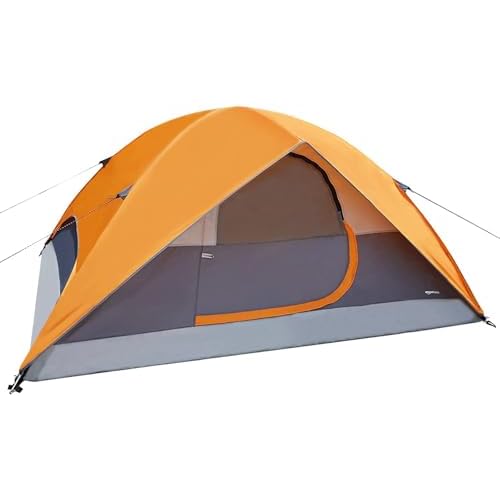


Best overall Sundome 4 | Best value Basics 4P | Best for families UNP Cabin 6 | Best for wet weather Night Cat 2P | Cheapest pick UNP Dome 2 | |
|---|---|---|---|---|---|
|
|
|
|
|
| |
| Capacity | 4 person | 4 person | 6 person | 2 person | 2 person |
| Floor size | 274 x 213 cm | 274 x 213 cm | 305 x 274 cm | 207 x 140 cm | 213 x 152 cm |
| Centre height | 150 cm | 122 cm | 198 cm | 110 cm | 114 cm |
| Waterproof rating | Not quoted | Not quoted | Not quoted | 3000mm | Not quoted |
| Seams | Welded corners | Welded | Not quoted | Taped | Not quoted |
| Poles | Not quoted | Shock-corded | Steel legs | Aluminium | Not quoted |
| Doors | 1 | 1 | 1 | 2 | 1 |
| Stated weight | Not quoted | Not quoted | 8.2 kg | Not quoted | 2.2 kg |
| Pitch time | 10 min | Under 6 min | 5 min (2 people) | 3 min | 3 min |
| Check price | Check price | Check price | Check price | Check price |
Best budget camping tents under £100 UK: our detailed reviews
Each review covers space, weather protection, ease of pitching and who the tent suits. We paid most attention to the problems budget tent owners raise most often: rain getting in at seams and doors, condensation on still nights, flimsy pegs and poles, and berth numbers that overstate how many people fit comfortably.

Trusted brand, quick to pitch
The Coleman Sundome is one of the best-selling budget tents in the world, and the 4-person version is our best overall pick for campers on a tight budget. Coleman quotes a 9 x 7 ft (about 274 x 213 cm) floor and a 4 ft 11 in (about 150 cm) centre height, which fits one queen-size air bed or three to four sleeping mats. It pitches in around 10 minutes thanks to continuous, snag-free pole sleeves, so it suits first-timers. Coleman’s WeatherTec system uses a tub-style floor with welded corners and inverted seams to keep ground water out, and the frame is rated to withstand winds of 35+ mph. Large windows and a ground vent help with airflow, and the E-Port lets you run an electric hook-up lead inside on a serviced pitch. The main caveat for UK use is the rainfly: it is a dome-style fly that does not come right down to the ground on every side and there is no real porch, so on long, wind-driven wet weekends it is less protective than a European-style tent with a full fly and vestibule. Coleman does not quote a hydrostatic head figure on this listing. For summer weekends, festivals and campsite trips with a decent forecast, it is the safest budget buy here, backed by a one-year limited warranty.
- Trusted brand with a 1-year warranty
- Welded-corner tub floor
- Rated for 35+ mph winds
- E-Port for electric hook-ups
- Quick 10-minute pitch
- Fly does not reach the ground on all sides
- No porch for wet kit
- Waterproof rating not quoted
Simple dome that pitches in minutes
The Amazon Basics 4-Person tent is a no-frills dome that does the basics well for the money. Its floor matches the Sundome at 9 x 7 ft (about 274 x 213 cm), with a lower 48 in (about 122 cm) centre height, so you can sit up but not stand. Two shock-corded poles and a ridge pole slide through snag-free sleeves, and Amazon says it pitches in under six minutes. The polyester fly is removable and the seams are welded, while a back window and a cool-air port help reduce stuffiness on warm nights. Inside there is a mesh pocket and a storage net for torches and phones. The fly and floor fabric are made with recycled polyester, but no waterproof rating is quoted, and owners of tents in this price bracket commonly report that the supplied pegs bend in hard ground and that condensation builds up on still nights, so open the vents and consider a set of stronger pegs. It is a sensible choice for two adults with kit, or a couple with a young child, on fair-weather trips.
- Low price for a 4-person tent
- Pitches in under 6 minutes
- Welded seams and removable rainfly
- Recycled polyester fabric
- Interior pocket and storage net
- Waterproof rating not quoted
- Lower 122 cm centre height
- Basic supplied pegs
Standing height for under £100
If you need room for a family and want to stay under £100, the UNP 6 Person Cabin Tent offers the most space here. UNP quotes a 10 x 9 ft (about 305 x 274 cm) floor, enough for two air mattresses or six sleeping bags, and a 78 in (about 198 cm) centre height, so most adults can stand up to get changed. The near-vertical cabin walls make more of that floor usable than a dome. Four steel leg poles and a rectangular roof give it a firmer frame than most budget tents, and the double-layer design has a polyurethane-coated fly. One large mesh door, five mesh windows and a mesh roof give plenty of ventilation in summer. It weighs about 8.2 kg and packs into a 62 x 21 x 21 cm bag, so it is a car-camping tent rather than one to carry far. UNP does not state a hydrostatic head rating, and tall cabin tents catch more wind than low domes, so guy it out fully and pitch with the narrow end into the wind on exposed sites. UNP offers a one-year quality guarantee.
- Most space here at 305 x 274 cm
- 198 cm standing height
- Steel leg poles for a firm frame
- Five mesh windows and mesh roof
- Fits two air mattresses
- Heavy at about 8.2 kg
- Tall walls catch the wind
- Waterproof rating not quoted
3000mm fly and aluminium poles
The Night Cat 2 Person Backpacking Tent is our pick if British rain is your main worry. It is the only tent in this list with a stated waterproof rating, up to 3000mm on the flysheet, comfortably above the 1,500mm many UK retailers suggest as a minimum. It also has seam-taped construction, a welded waterproof floor and a full-coverage rainfly, which matters more in a downpour than the number alone. Two aluminium poles are stronger and lighter than the fibreglass poles common at this price, and the tent pitches in around three minutes. The inner measures about 207 x 140 cm with a 110 cm peak, and two D-shaped doors with two vestibules mean each person has their own entrance and somewhere dry for boots and bags. Full mesh inner walls and two ceiling vents help with condensation, though a mesh inner can feel cool on cold, windy nights. Night Cat does not quote the weight on this listing. For couples, festival-goers and hikers who want a dependable small tent for less, it is excellent value.
- Stated 3000mm waterproof rating
- Taped seams and full-coverage fly
- Aluminium poles
- Two doors and two porches
- Quick 3-minute pitch
- Snug for two adults
- Mesh inner can feel cool
- Weight not quoted
A basic tent for festivals and fair weather
The UNP 2 Person Dome Tent is the cheapest tent we recommend and is best treated as a fair-weather shelter. UNP quotes a 7 x 5 ft (about 213 x 152 cm) floor, a 45 in (about 114 cm) peak and a weight of about 2.2 kg (4.8 lb), so it is light enough to carry from the car park to a festival field. It comes with a removable rainfly, guy ropes and pegs, and one person can put it up in about three minutes using the instructions sewn into the bag. A skylight net, a large mesh window and an interior storage pocket make it comfortable on warm nights. It fits one full-size air mattress. There is no stated waterproof rating, and at this price you should expect thinner fabrics, basic pegs and fibreglass-style poles that are less tolerant of strong wind, so it is not the tent for a wet bank holiday in the Lake District. For summer festivals, back-garden camping and occasional campsite weekends with a good forecast, it does the job for very little money.
- Cheapest tent here
- Light at about 2.2 kg
- Pitches in around 3 minutes
- Fits a full-size air mattress
- Mesh window and skylight for airflow
- Waterproof rating not quoted
- Thinner fabrics and basic pegs
- Not built for strong wind

How to choose a budget camping tent under £100
The checklist below draws on the Camping and Caravanning Club’s expert guide to buying a tent and the complaints owners of cheap tents raise most often. For more detail see our guide on how to choose a camping tent for different trips, read what waterproof rating a tent should have for rain, or compare our picks for the best family camping tents UK if you can stretch your budget.
Types of budget camping tents under 100 UK shoppers will find
Spend a little time on any retailer’s site and the same few designs appear again and again at this price. Each has strengths and weak spots, so it helps to know which type you are looking at before comparing berth numbers or colours. The five tents in our list cover the main styles, from small two-person domes to a tall six-person cabin.
Classic dome tents
Domes like the Coleman Sundome 4 and Amazon Basics 4-Person are the most common budget tent. Two crossing poles make them freestanding and quick to pitch, and their rounded shape copes reasonably with wind. The downside is sloping walls, so the usable space is smaller than the floor size suggests, and short dome flysheets often leave little or no porch for wet boots and bags.
Cabin tents
Cabin tents such as the UNP 6 Person Cabin use near-vertical walls and a squarer roof to give standing height and more usable floor. They suit families who want to get changed standing up and fit air beds side by side. Tall, flat walls catch more wind, though, and cabins are heavier and bulkier, so they are strictly car-camping tents for sheltered campsite pitches.
Small backpacking-style tents
Two-person tents like the Night Cat 2 Person borrow features from backpacking designs: aluminium poles, a full-coverage fly and small porches either side. They are light enough for festivals and short walks and often punch above their price for weather protection. The catch is space. Two adults will be snug, and there is no room to sit out a long wet afternoon inside.
Where a cheap tent saves money, and what matters
Every cheap tent saves money somewhere. The trick is spotting which savings will spoil a trip and which you will barely notice. Thinner fabrics, basic pegs and simple stuff sacks are easy to live with. An unstated waterproof rating, a short flysheet or fragile poles matter far more if you camp in the UK outside the driest weeks of summer.
Waterproof ratings are the clearest example. Of the budget camping tents under 100 UK listings we compared, only the Night Cat 2 Person quotes a figure. That does not mean the others leak, but it does mean you are relying on seam construction, fly coverage and careful pitching rather than a tested number, so treat an unstated rating as a fair-weather tent until you have proved it in rain.
Poles are the next thing to check. Steel legs on the UNP Cabin and aluminium poles on the Night Cat are stronger than the fibreglass found on many cheap tents, which can splinter in strong wind or cold weather. If a listing does not say what the poles are made of, assume fibreglass, pack a repair sleeve and choose a sheltered pitch when the forecast looks breezy.
Finally, look at the shape of the flysheet. A dome fly that stops well short of the ground on some sides, as on the Coleman Sundome, lets wind-driven rain reach the inner tent and offers no dry porch. A fly that reaches the ground all round, with even a small vestibule, makes a much bigger difference in a British downpour than most other features at this price.
Matching a budget tent to your trip
The cheapest way to camp well is to buy the tent your trips need, not the biggest one in your budget. A festival-goer, a family on a campsite and a couple walking between villages all want different things, and a tent that suits one can be frustrating for the others. Start with where you will pitch, how far you will carry it and how wet it is likely to be.
For festivals and back-garden nights, a light, quick dome like the UNP 2 Person is plenty. You will rarely spend daylight hours inside, and losing a cheap tent to theft or a muddy field hurts less than losing an expensive one. Mark your tent with something bright so you can find it in a crowded field at night, and never leave valuables inside it.
Families on summer campsite weekends should prioritise space and height over weight. Following the usual rule of sizing up by one berth, a family of four will be far more comfortable in a six-person tent such as the UNP Cabin than squeezed into a four-person dome. If you would also like separate bedrooms or more weather protection, a little extra budget opens up larger family tents.
If you camp in spring, autumn or the wetter north and west, weather protection comes first. A small tent with a stated rating, taped seams and a full fly, like the Night Cat 2 Person, will usually serve you better than a bigger dome with an unknown rating. For anyone new to all of this, our guide to the best camping tents for beginners UK looks at simple, forgiving designs.
Small upgrades that make a budget tent better
A few low-cost extras can lift a cheap tent closer to a mid-range one. The best known is a set of stronger pegs, but there are other upgrades worth thinking about before your first trip. Spending a little on the right accessories is often better value than stretching your budget for a pricier tent that you only use twice a year.
A footprint or groundsheet protector cut slightly smaller than the floor protects thin budget groundsheets from stones and wear and adds a layer between you and wet grass. Keep it tucked in under the edges of the tent, because a footprint that sticks out collects rain and channels it underneath you. An old tarp cut to size works perfectly well if you are watching costs.
A rubber mallet and a peg extractor make pitching on hard summer ground much easier and help stop bent pegs. Extra guy cord lets you add lines where cheap tents only supply a few, and a small brush and cloth help you clear grass and wipe condensation before packing. None of these costs much, and together they make a budget tent noticeably easier to live with.
Condensation is the complaint that most often makes people think a cheap tent is leaking. Opening every vent, keeping wet clothes out of the inner and choosing a pitch where air moves all help. If you wake to damp walls and are not sure why, our guide on why your tent is wet inside explains how to tell condensation from a genuine leak.
UK campsites, weather and hook-ups on a budget
Most budget camping in Britain happens on campsites, and that changes what matters. Pitches have mown grass, toilets nearby and often a car next to the tent, so weight hardly matters and extra space is welcome. Check the size of the pitch you have booked, because a large cabin plus guy lines needs more room than a compact dome.
Electric hook-ups are increasingly common, even on modest sites. The Coleman Sundome’s E-Port lets you run a hook-up lead inside neatly without leaving a door unzipped, which keeps out rain and insects. Without a port, run the lead under the edge of a door that you can still close most of the way, and keep the unit off the floor where condensation can collect.
British weather is the real test of budget camping tents under 100 UK families rely on for a week away. A dry July weekend is easy; a windy bank holiday on the coast is not. Watch the forecast, pitch with the narrow end into the wind, keep the fly taut and be ready to move to a sheltered corner of the site or go home early if a storm is due.
Final thoughts on budget camping tents under 100 UK
You do not need to spend a fortune to camp comfortably in Britain, but you do need to choose carefully. Under £100, the Coleman Sundome 4 is the safest all-rounder, the UNP Cabin gives families the most space, and the Night Cat 2 Person offers the strongest rain protection. The Amazon Basics 4-Person and UNP 2 Person keep costs lowest for fair-weather trips.
Whichever of these budget camping tents under 100 UK campers choose, pitch it at home first, check every part is in the bag and look closely at the seams while you can still return it. Add stronger pegs and a footprint, keep it dry between trips, and a cheap tent can give you several happy seasons of summer weekends and festivals.
What to look for in a cheap tent
Look for a flysheet of at least 1,500mm hydrostatic head, and 3,000mm if you camp in spring, autumn or the wetter west and north. Treat an unstated rating with caution and plan for fair-weather use.
Taped or welded seams stop water creeping through stitch holes. A fly that comes close to the ground on all sides, with a porch, protects far better than a short dome fly in wind-driven rain.
A tub-style or bathtub floor that rises a few centimetres up the walls keeps out surface water. A sewn-in groundsheet also keeps out insects and draughts.
Fibreglass poles are cheap but can splinter or snap in strong wind or cold. Aluminium or steel poles are stronger. Carry a pole repair sleeve either way.
Berth numbers assume tight packing. Check floor size and centre height, and size up by one berth if you want room for bags or a standing-height cabin for a family.
Condensation is one of the most common complaints about budget tents. Mesh panels, roof vents and windows on opposite sides help keep the inside drier.
Supplied pegs are often thin and bend in hard ground. Stronger pegs and using every guy line make a cheap tent far more stable in wind.
Only matters if you carry the tent far. Car campers can trade weight for space, while festival-goers and hikers should look for something under about 3 kg.
How to make a budget tent last longer
- Practise pitching at home
Pitch the tent in the garden or a park before your first trip so you know the method, can check all the parts are there and can spot any faulty seams while you can still return it.
- Seal the seams
If the seams are stitched rather than taped, a tube of seam sealer on the fly seams and corners is a cheap way to stop the most common leaks.
- Upgrade the pegs and guy out fully
Swap thin supplied pegs for stronger ones, peg out every guy line and pitch the lowest or narrowest end into the wind.
- Keep the fly off the inner
Tension the fly so it does not touch the inner tent. Contact lets water and condensation wick through.
- Dry it before you store it
Never leave a tent packed away wet. Dry it fully at home within a day or two to prevent mould and damage to the waterproof coating.
How we chose these tents
We have not pitched every tent in this list ourselves. Our picks are based on manufacturer specifications, published advice from UK camping organisations and retailers, and recurring themes in owner feedback about budget tents. Each tent listed below the equivalent of £100 when we checked; prices change, so check the current price.
-
Weather protection
We looked at stated waterproof ratings, seam construction, fly coverage and groundsheet design.
-
Space
We compared floor sizes and centre heights against the stated berth numbers.
-
Build quality
We weighed up pole materials, wind ratings and the extras included.
-
Ease of use
We favoured tents with quick, simple pitching and clear instructions, and noted warranties.
A budget tent can serve you well for years if you pitch it carefully, use every guy line and always dry it before storing it.
Can you get a good tent for under £100?
Yes, for summer weekends, festivals and campsite trips. Under £100 you usually give up some waterproofing, pole strength and fabric thickness compared with premium tents, so choose carefully and avoid very exposed, wet trips.
What waterproof rating should a budget tent have for the UK?
Look for at least 1,500mm hydrostatic head on the flysheet, and ideally 3,000mm for wetter weather. Taped seams and a fly that reaches the ground matter as much as the figure. Of our picks, only the Night Cat 2 Person quotes a rating (3000mm).
Are cheap tents waterproof?
Many are fine in showers but struggle in long, heavy rain, usually because of untaped seams, short flysheets or thin fabric. Sealing the seams, pitching the fly taut and avoiding hollows where water collects make a big difference.
Why does my cheap tent get wet inside?
Often it is condensation rather than a leak. Breath and damp kit release moisture that condenses on a cold fly. Open the vents, keep wet gear in the porch and stop the fly touching the inner tent.
What size tent should I buy?
Buy one berth larger than the number of people sleeping in it if you want space for bags. A family of four will be more comfortable in a six-person tent such as the UNP Cabin.
Is a budget tent OK for a festival?
Yes. A light, quick-pitching dome like the UNP 2 Person or the Night Cat 2 Person suits festivals well. Pitch it carefully and take valuables with you, as tents are not secure.
Which budget camping tent under £100 should you buy?
- Best overall: Coleman Sundome 4-Person Camping Tent
- Best value: Amazon Basics 4-Person Dome Tent
- Best for families: UNP 6 Person Family Cabin Tent
- Best for wet weather: Night Cat 2 Person Backpacking Tent
- Cheapest pick: UNP 2 Person Dome Tent
For most people, the Coleman Sundome 4-Person is the best budget camping tent under £100 here: it pitches in about 10 minutes, has a welded tub floor and a wind-rated frame, and comes from a brand with a long track record. Choose the Amazon Basics 4-Person for the lowest price on a 4-person dome, the UNP 6 Person Cabin for family space and standing height, the Night Cat 2 Person for the best rain protection and the UNP 2 Person for cheap festival and summer use.
CampEquipmentPlus relies on reader support. Purchases made via links on our website may earn us an affiliate commission at no extra cost to you, helping keep the site running.