
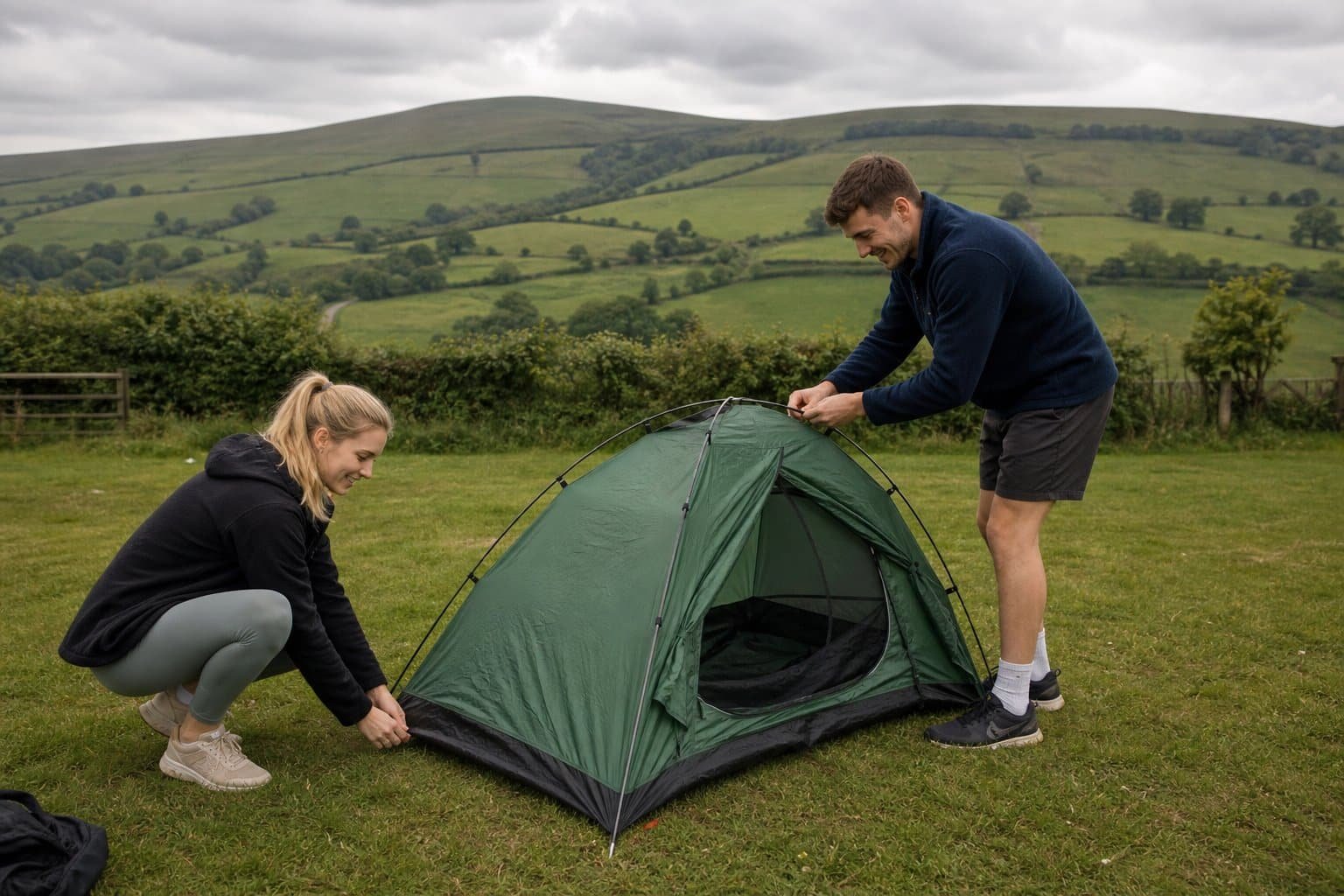
Best Camping Tents for Beginners UK
The best camping tents for beginners are quick to pitch, hard to get wrong and tough enough for a wet British weekend, so your first trip makes you want to go again.
New campers in the UK tend to make the same mistakes: buying a tent that is too small, choosing the cheapest option and finding it leaks at the seams, struggling with fiddly poles in the dark, or waking up to condensation and assuming the tent is faulty. UK camping guides give the same advice: buy at least one berth bigger than you need, look for a flysheet rated to 2,000 to 3,000 mm, choose a simple dome, tunnel or instant design, and practise pitching at home first. We compared five beginner-friendly tents, from a cheap two-person dome to a one-minute instant tent and a proper UK trekking tent, on ease of pitching, space, weather protection and value.
- Our five picks at a glance
- Side-by-side comparison
- Detailed reviews with pros and cons
- Which type of tent is easiest for beginners
- Your first pitch, step by step
- Beginner tent FAQs
- Size up one berth A 4-person tent fits four sleeping mats with no room for bags. Buy one or two berths more than the number of people.
- Aim for 2,000 to 3,000 mm 1,000 mm is the legal minimum for ‘waterproof’ and is too low for UK rain. Taped seams matter as much as the number.
- Keep pitching simple Pre-attached poles, instant frames, colour-coding and freestanding domes are the easiest designs for first-timers.
- Practise at home Pitch it in the garden or a park before your trip to check every part is there and learn how it goes up.
Picking from the many camping tents for beginners UK shops sell is easier once you know which features actually make a first trip go smoothly. Simple pitching matters most, followed by honest sizing, a flysheet and seams that cope with British rain, and a porch for wet kit. This guide explains each of those choices, plus the small habits that stop common first-night problems, so you can match the five picks above to the camping you plan to do.


Best overall Skydome 4 | Easiest to pitch Instant 6 | Best budget Basics Dome 2 | Best for UK weather Vango Orion 2 | Best for first hikes Crane Creek 2 | |
|---|---|---|---|---|---|
|
|
|
|
|
| |
| Sleeps | 4 | 6 | 2 | 2 | 2 |
| Tent type | Dome | Instant cabin | Dome | Tunnel | Dome |
| Pitch time | About 5 min | About 1 min | Under 4 min | Not quoted | Not quoted |
| Floor size | Not quoted | 3.0 x 2.7 m | 2.1 x 1.5 m | Not quoted | 3.0 sq m |
| Peak height | Not quoted | 183 cm | 114 cm | Not quoted | Not quoted |
| Flysheet rating | Not quoted | Not quoted | Not quoted | 5000 mm | Not quoted |
| Poles | Pre-attached | Built-in frame | Shock-corded | Alloy | Aluminium |
| Porch | Yes | No | No | Yes | Two |
| Check price | Check price | Check price | Check price | Check price |
Best camping tents for beginners: our detailed reviews
Each review covers how easy the tent is to pitch, living space, weather protection and the problems new owners most often report. If you are still deciding what kind of trip you will do, start with our guide on how to choose a camping tent for different trips, and if you are camping on a tight budget see our best budget camping tents under £100.
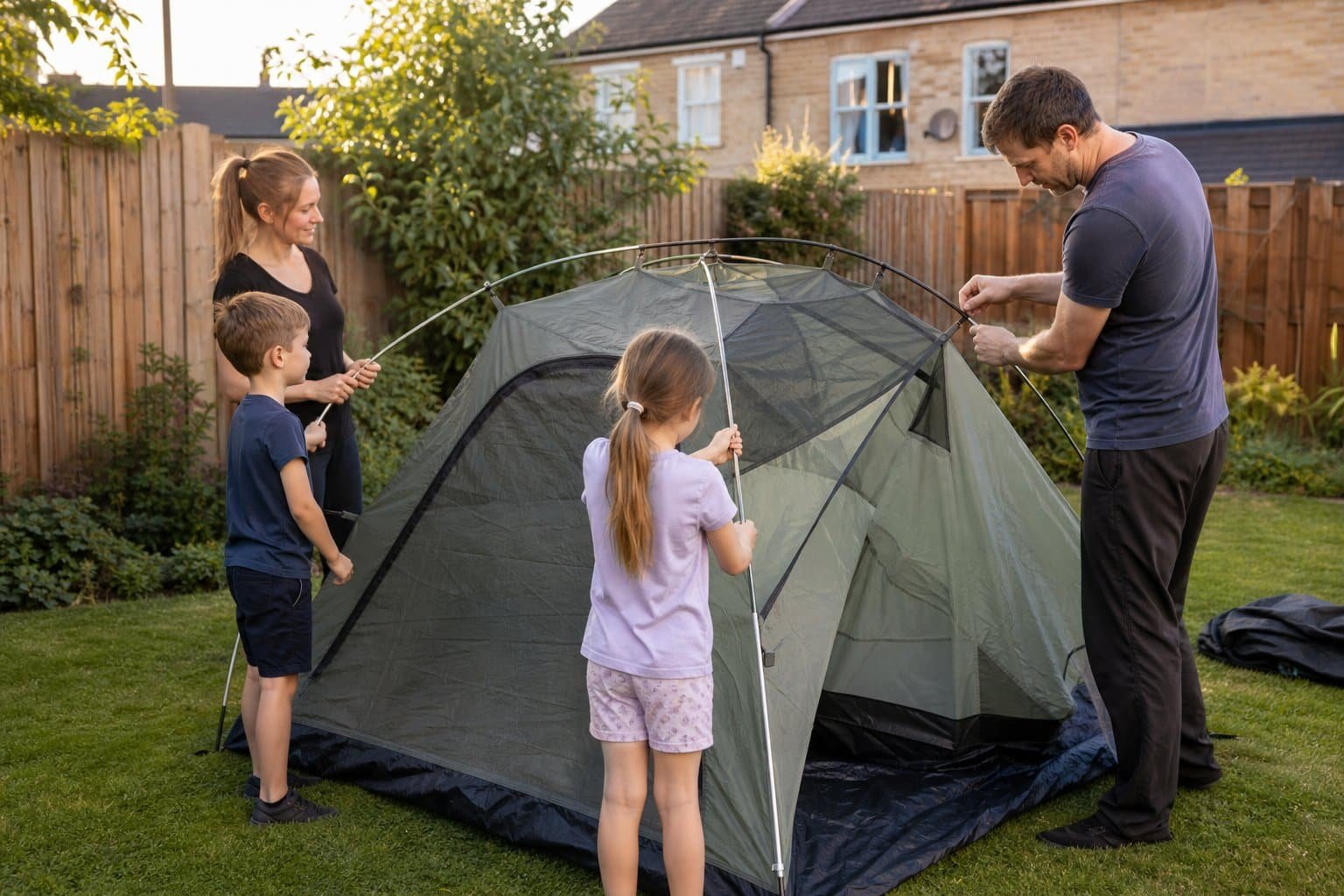
Pre-attached poles, a 5-minute pitch and a full-width porch
The Coleman Skydome 4-Person Tent with Vestibule is our best camping tent for beginners because it removes most of the things that go wrong on a first trip. The poles come pre-attached, so Coleman says it goes up in under five minutes, and the front left corner, fly pole and sleeve are colour-coded red so you can see which way the flysheet goes on. The full-fly vestibule measures about 4.0 x 1.1 m (13 x 3.5 ft), which gives you a covered space for muddy boots, coats and a cool box, something new campers often only realise they need once it rains. Coleman’s WeatherTec system uses welded corners, inverted seams and taped flysheet seams, and the frame is tested to 35 mph winds. Inside, nearly vertical walls give about 20% more headroom than older Coleman domes and there is room for one queen-size air bed, with roof vents and a mesh back wall to reduce condensation and an e-port for an electric hook-up lead. The listing does not quote a hydrostatic head, floor size or weight, so treat it as a three-season campsite tent rather than one for exposed hills.
- Pre-attached poles, 5-minute pitch
- Colour-coded fly for easy orientation
- Full-width porch for wet gear
- Welded corners and taped fly seams
- E-port for electric hook-up
- Waterproof rating not quoted
- Floor size and weight not quoted
- Fits one queen air bed, so tight for four adults
Pole-free one-minute pitch with 183 cm of headroom
If pitching is what worries you most, the Coleman 6-Person Instant Tent is the one to look at. The poles are built into the tent, so you unfold it, extend the legs and click them into place, and Coleman says it can be up in as little as one minute. That matters on a first trip, when you may arrive late, tired or in the rain with children waiting. It has a 3.0 x 2.7 m (10 x 9 ft) floor with a 183 cm (6 ft) centre height, so most adults can stand to change, and there is room for two queen-size air beds. The integrated rainfly saves another step, WeatherTec welded corners and inverted seams help keep water out, and Coleman uses a double-thick Polyguard 2X fabric. The trade-offs are the ones owners mention with all instant frames: the pack is bulky and heavier than a dome of the same size, and if a frame joint breaks you need a Coleman part rather than a generic pole. There is no porch, so plan for wet boots.
- Poles built in, 1-minute pitch
- 183 cm centre height
- Fits two queen air beds
- Integrated rainfly
- Double-thick Polyguard 2X fabric
- Bulky pack, weight not quoted
- No porch
- Waterproof rating not quoted
Simple freestanding dome that pitches in under four minutes
The Amazon Basics 2-Person Dome Camping Tent is the lowest-cost way to find out whether you enjoy camping. It is a classic two-pole freestanding dome with shock-corded poles and snag-free sleeves, so even if you have never pitched a tent before you can follow the logic, and Amazon says it goes up in under four minutes. The floor is 2.1 x 1.5 m (7 x 5 ft) with a 114 cm (45 in) centre height, which fits two adults lying down but means sitting, not standing. The polyester is coated and the seams are welded, and the removable flysheet has a back window and a cool-air port for airflow. It is the most basic tent here: there is no porch, the waterproof rating is not quoted, and UK camping guides warn that very cheap tents can struggle in heavy rain and wind, so choose a sheltered pitch, peg out every guy line and use it for summer weekends rather than wet holidays. For solo campers it makes a roomy one-person tent.
- Lowest price in this list
- Simple two-pole dome
- Welded seams
- Cool-air port and back window
- Light and easy to carry
- Waterproof rating not quoted
- No porch
- Sitting headroom only

UK-designed tunnel tent with a 5000 mm flysheet
The Vango Orion 200 Trekking Tent is the pick for beginners who expect proper British weather. Vango is a Scottish brand, and the Orion has the clearest weather specification in this list: a ProTex 70D polyester flysheet rated to 5000 mm hydrostatic head and a 6000 mm groundsheet, both well above the 2,000 to 3,000 mm that UK retailers suggest for regular camping. PowerLite 7001-T6 alloy poles are stronger and less likely to splinter than the fibreglass poles in many budget tents, and Vango’s TBSII tension band system braces the frame so it copes better in wind. Vango says it is weather tested to a European tent standard. A tunnel shape gives good space for its weight, and the porch has a removable groundsheet, so you get a clean, dry area for boots and kit. As a tunnel tent it is not freestanding, so it must be pegged out properly, ideally tail into the wind, which takes a practice pitch or two to get right. Floor size and weight are not quoted on the listing.
- 5000 mm flysheet, 6000 mm groundsheet
- Strong alloy poles
- Tension band system for wind
- Porch with removable groundsheet
- UK brand with spares available
- Not freestanding, must be pegged well
- Floor size and weight not quoted
- Two-person size only
Freestanding backpacking tent with two doors and two porches
The Marmot Crane Creek 2P Tent is a good first tent if you think you might carry it, not just drive it to a campsite. It is a freestanding dome with 7000-series aluminium poles, so it stands up before you peg it and is easy to move to a flatter spot, which is very forgiving for beginners. Two large D-shaped doors and two vestibules mean neither person has to climb over the other at night, and each has a covered space for a pack and boots. Marmot gives it about 3.0 square metres (32 sq ft) of floor, with a seam-taped floor and seam-taped polyester flysheet, and backs it with a limited lifetime warranty. It is made without PFAS. A footprint is not included, the listing does not quote a weight or hydrostatic head, and like any small two-person tent it is cosy for two adults with kit, so it works best for one or two campers who value easy access over space.
- Freestanding, easy to reposition
- Two doors and two porches
- 7000-series aluminium poles
- Seam-taped floor and flysheet
- Limited lifetime warranty
- Weight and waterproof rating not quoted
- Footprint not included
- Snug for two adults
Which type of tent is easiest for beginners?
For most first-timers a small dome or an instant tent is the easiest place to start. Domes are freestanding, so they stand up before you peg them and you can lift them to a flatter spot, but the Camping and Caravanning Club tent buying guide notes that large domes are less stable, so keep them small. Tunnel tents such as the Vango Orion are also simple to pitch and very stable once pegged, but they rely on their guy lines and must be pitched tail into the wind. Instant tents with built-in frames are the quickest of all and suit families, at the cost of a bulkier pack, while pop-up tents are best kept for festivals and short summer trips (see our best pop up tents for camping). Whatever you choose, do not panic about damp walls on your first morning: condensation is normal in polyester tents and is not a leak, as we explain in why a tent gets wet inside when it hasn’t rained.
Camping tents for beginners UK: which style suits your trips?
The best first tent is the one that matches how you will actually camp. A couple driving to a farm site for the weekend needs something very different from a family of five on a week-long holiday, or a walker planning a first night on the hills. Start with where you will go and who is coming, and the shortlist gets much shorter.
Small domes for couples and solo campers
Freestanding domes like the Amazon Basics 2-Person Dome and the Marmot Crane Creek 2P stand up before you peg them, so you can lift the whole tent to a flatter spot if the first patch of grass turns out to be lumpy. Two crossing poles are easy to understand, which makes a small dome a forgiving beginner tent for campsites and festivals.
Pre-attached and instant tents for families
Families usually benefit most from poles that are already fixed to the fabric. The Coleman Skydome 4-Person Tent with Vestibule has pre-attached poles and colour-coding, while the Coleman 6-Person Instant Tent has a built-in frame you simply extend and lock. Both cut out the fiddly stage of threading long poles while children are waiting, though instant frames pack bulkier.
Tunnel tents for wetter, windier weather
Tunnel tents such as the Vango Orion 200 give a lot of space for their weight and are very stable once properly pegged, but they rely on guy lines to stand up. They suit beginners who expect proper British weather and are happy to practise a couple of pitches first. Pitch the low end into the wind and they cope well on open sites.
Sizing your first tent: berths, bedrooms and boot space
Berth numbers are the most misleading figure on any tent listing. A four-person tent is measured for four sleeping mats lying side by side, with no room for bags, shoes or a midnight trip to the toilet. Most first-time campers are far happier buying one or two berths more than the number of people, which is advice repeated by almost every UK camping guide.
Check how your sleeping kit will fit, not just the people. Air beds take up more floor than foam mats, and a queen-size air bed can fill the bedroom of a smaller dome on its own. If the listing states how many air beds fit, as several in this guide do, use that as a more honest guide than the berth count.
Then look at the packed size. A big family tent can take up most of a hatchback boot before you add bedding, chairs and a cool box. Instant tents in particular pack long and heavy. Measure your boot and compare it with the packed dimensions on the listing before you choose any of the camping tents for beginners UK shops sell.
Reading the specs on a beginner tent
Tent listings are full of numbers and brand names, but only a handful matter on your first trips. The most important is the hydrostatic head of the flysheet, usually given in millimetres. UK retailers suggest 2,000 to 3,000 mm for regular camping and more for the hills. Many cheaper tents do not quote a figure at all, so treat those as fair-weather tents.
Next, look at the seams. Taped or welded seams stop water seeping through stitching holes, and welded floor corners keep ground water out. A good figure on the flysheet means little if the seams are left open. Poles matter too: alloy poles are lighter and stronger than fibreglass, which can splinter if bent too far or forced into a sleeve.
Finally, check for a porch and ventilation. A porch keeps wet coats and boots out of the bedroom, and roof vents or mesh panels reduce condensation. When you are weighing up two camping tents for beginners UK reviewers rate similarly, these practical details usually make more difference to a wet weekend than a slightly higher waterproof figure.
Your first trip: setting up camp beyond the tent
A good tent is only half of a comfortable first night. Most new campers who sleep badly blame the tent, when the real cause is cold coming up from the ground. A proper insulated mat matters as much as the sleeping bag, and an air bed on its own can feel surprisingly chilly. Our guide on what sleeping pad you need for camping explains the options.
Pack a few small items that make pitching easier: a rubber mallet, a handful of spare pegs, a head torch for each person and a bin bag for wet kit. Arrive in daylight if you can, so you can pick your pitch and learn the tent without fumbling in the dark. Most UK campsites ask you to arrive within set hours, so check before you leave.
Think about how you will stay warm and dry once the tent is up. A three-season sleeping bag suits most campsite trips from spring to autumn, and a change of dry clothes for bed helps a lot. If you are buying a bag at the same time as your tent, our roundup of the best sleeping bags for UK camping covers warm, damp-tolerant options.
Common first-trip problems and simple fixes
Damp walls in the morning
Waking to wet inner walls is the most common shock for new campers, and it is almost always condensation rather than a leak. Your breath and damp clothes release moisture overnight, which settles on the cooler fabric. Open the vents before bed, keep wet kit in the porch and make sure the flysheet is taut so it does not touch the inner tent.
A tent that flaps or sags
Loose, noisy fabric usually means the tent has not been pegged out evenly or the guy lines are slack. Go round the tent once it is up and tension each line so the panels are smooth. Check them again after an hour or after rain, because fabric stretches once it gets wet and can sag onto the inner tent.
Missing parts or broken poles
The surest way to avoid a ruined first trip is a practice pitch at home, which shows up any missing pegs or poles while you can still replace them. Tents from brands that sell spare parts are easier to keep going. A pole repair sleeve and some strong tape take up almost no space and can rescue a split pole on site.
Pitching in the rain
Sooner or later you will arrive to rain. Get everything ready in the car first: pegs, mallet and poles in one bag, so the tent spends as little time open on wet grass as possible. Tents with an integrated rainfly, such as the Coleman 6-Person Instant Tent, keep the inside drier because the cover goes up with the frame. With other designs, work quickly, get the flysheet on before anything else goes inside and leave wet coats in the car or porch until the bedroom is set up.
Final thoughts on camping tents for beginners UK
Your first tent does not need to be expensive, but it does need to be easy to pitch, a little larger than you think and honest about its weather protection. Pre-attached poles, instant frames and small freestanding domes are the friendliest designs, while a tunnel tent rewards a little practice with better stability in wind and rain.
Whichever of these camping tents for beginners UK campers choose, the habits matter as much as the tent: practise at home, pitch on level ground with shelter from the wind, peg out every line and keep the vents open. Get those basics right and your first trip is far more likely to be the start of many more.
What to look for in a beginner camping tent
Pre-attached or built-in poles, colour-coded sleeves and freestanding designs cut pitching time and mistakes on your first trips.
Berth numbers assume people lying shoulder to shoulder. Add one or two berths for bags and comfort, and check your air beds fit the bedroom.
Look for a flysheet of 2,000 to 3,000 mm for regular UK camping and 3,000 mm or more for the hills, plus taped or welded seams. Read our guide to what waterproof rating a tent should have.
A covered porch keeps wet boots, coats and cooking kit out of the sleeping area, and makes a rainy weekend much easier.
Roof vents and mesh panels reduce condensation, which is the most common surprise for new campers.
Alloy poles are stronger and lighter than fibreglass, which can splinter if bent or mis-threaded. Brands that sell spare parts are easier to repair.
Instant tents and big family tents pack bulky. Check your car boot, or choose a lighter dome if you might carry it.
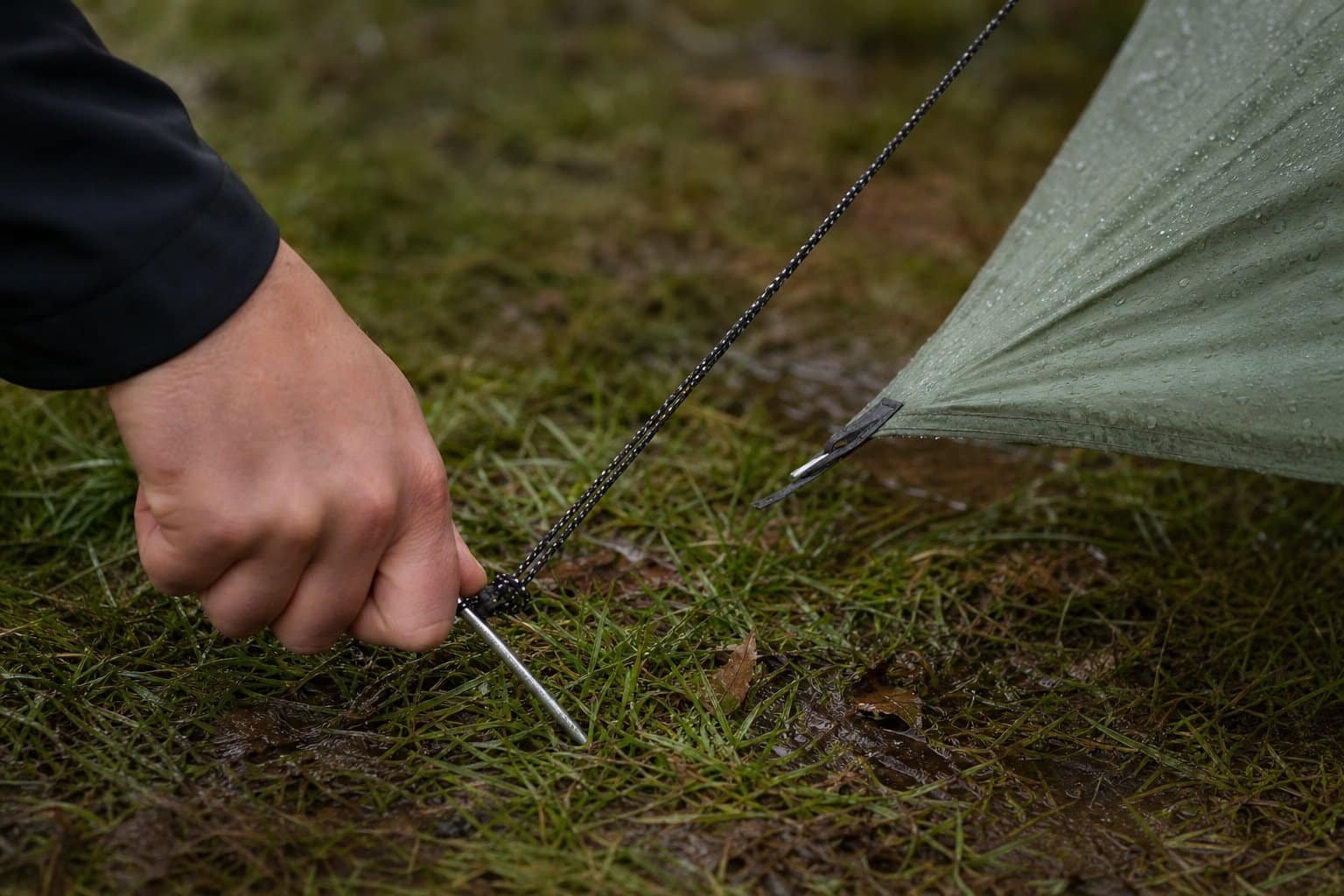
Your first pitch, step by step
- Practise at home
Pitch the tent in the garden or a park before your trip, count the pegs and poles, and note how long it takes.
- Choose the pitch
Pick flat ground away from the bottom of slopes where water collects, look up for dead branches, and use hedges or walls as shelter from the wind.
- Clear the ground
Remove stones and sticks, then lay out the tent with the door facing away from the wind.
- Raise the frame
Thread or clip the poles, or extend the instant frame, following any colour-coding on the corners.
- Peg it properly
Peg the corners at 45 degrees, leaning away from the tent, and push them in by hand or with a mallet, never with your foot.
- Tension the guy lines
Peg out every guy line, tighten the flysheet so it does not touch the inner, and open the vents before you go to bed.
How we chose these tents
We have not pitched every tent in this list ourselves. Our picks are based on manufacturer specifications, published advice from UK camping organisations and retailers, and recurring themes in feedback from first-time campers. Prices change, so check the current price before you buy.
-
Ease of pitching
We favoured pre-attached poles, instant frames, colour-coding and freestanding designs.
-
Space
We compared berths, floor size, height, doors and porches.
-
Weather protection
We checked stated waterproof ratings, seam construction, pole material and wind features.
-
Value
We weighed features against price, and noted where specifications are not quoted.
Specifications such as waterproof ratings and weights are not quoted for every tent. Where a figure is missing we say so rather than guess.
What is the easiest tent for a beginner to put up?
Instant tents with built-in frames, such as the Coleman 6-Person Instant Tent, are the quickest, followed by domes with pre-attached poles like the Coleman Skydome. Small freestanding domes are also easy because they stand up before you peg them.
What size tent should a beginner buy?
Buy at least one berth more than the number of people. A couple is usually more comfortable in a 3 or 4-person tent, and a family of four in a 6-person tent.
What waterproof rating do I need for UK camping?
UK retailers suggest 2,000 to 3,000 mm for regular camping and 3,000 mm or more for Scotland, Wales and the Lake District. Seams, zips and correct pitching matter as much as the number.
Is a cheap tent okay for my first trip?
For a summer weekend on a sheltered campsite, yes. In wet or windy weather very cheap tents can leak or bend, so choose a sheltered pitch, peg out every guy line and check the forecast.
Why is my tent wet inside?
Usually it is condensation from your breath and damp clothes, not a leak. Open the vents, keep wet gear in the porch and make sure the flysheet does not touch the inner tent.
Should I practise pitching before I go?
Yes. A practice pitch at home shows you how the tent goes up and lets you check nothing is missing before you are on a campsite in the dark or rain.
Which camping tent should a beginner buy?
- Best overall: Coleman Skydome 4-Person Tent with Vestibule
- Easiest to pitch: Coleman 6-Person Instant Tent
- Best budget: Amazon Basics 2-Person Dome Camping Tent
- Best for UK weather: Vango Orion 200 Trekking Tent
- Best for first hikes: Marmot Crane Creek 2P Tent
For most new campers, the Coleman Skydome 4-Person Tent with Vestibule is the best camping tent for beginners in the UK: pre-attached poles and colour-coding make it quick to pitch, and its porch keeps wet kit out of the bedroom. Choose the Coleman 6-Person Instant Tent if pitching worries you or you have children, the Amazon Basics 2-Person Dome to try camping on a small budget, the Vango Orion 200 for the best waterproofing in wet British weather, and the Marmot Crane Creek 2P if you plan to carry your tent on walking trips.
CampEquipmentPlus relies on reader support. Purchases made via links on our website may earn us an affiliate commission at no extra cost to you, helping keep the site running.