
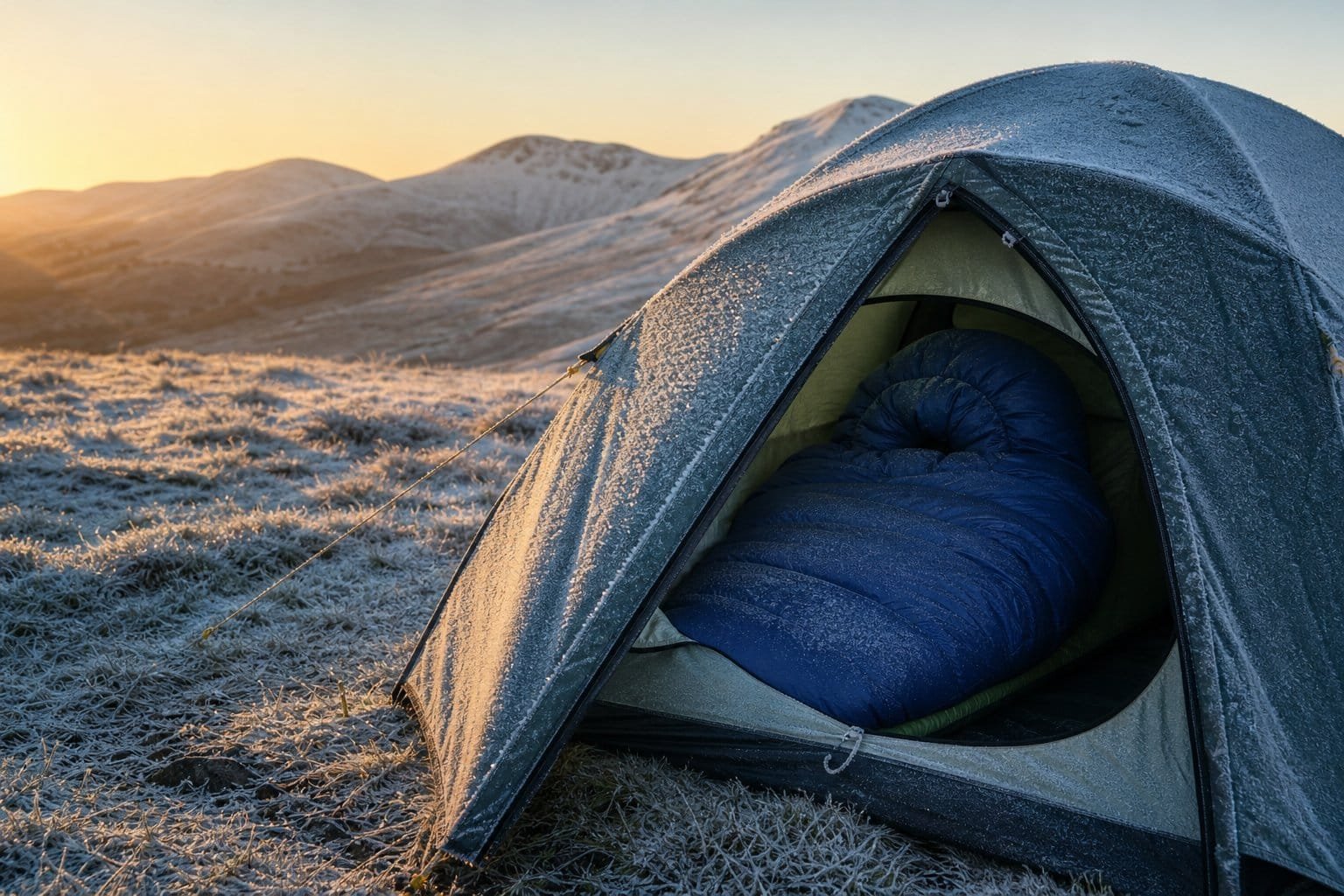
Best Sleeping Bags for Cold Weather Camping UK
The best sleeping bags for cold weather camping in the UK keep you warm on frosty, damp British nights, when a three-season bag leaves you awake and shivering at 3am.
Cold weather camping in Britain is less about extreme temperatures and more about damp cold. Winter campsites usually sit somewhere between about -5°C and 5°C, but humidity is high, condensation forms on every surface and the ground pulls heat out of you all night. That is why the complaints about winter sleeping bags are so consistent: cold feet, draughts around the neck and zip, down that slowly goes flat over a damp weekend, ratings that turn out to be wildly optimistic, and bags so big they barely fit in the car. The right bag has a realistic rating with a margin below the coldest night you expect, a draught collar and baffled zip, and insulation that suits how damp your trips are. We have picked five, from a British-designed four-season synthetic bag to a down bag that packs small and a heavyweight bag for people who always sleep cold.
- Choose a comfort rating at least 5°C below the coldest night you expect
- Synthetic fill handles damp UK winters best; down packs smaller
- Your mat matters as much as your bag in cold weather
- Ratings are often optimistic Most bags sold on Amazon quote US limit or extreme figures. Expect to sleep comfortably several degrees warmer than the number on the label.
- Damp is the UK's real enemy Condensation and humidity slowly flatten down. Synthetic fill keeps working when damp, which is why many UK winter campers prefer it.
- Seal the draughts A draught collar, zip baffle and a hood you can cinch tight do more for warmth than extra fill alone.
- Insulate from the ground In winter you need a mat with an R-value of about 4 or more. Even the warmest bag is cold on a thin mat.
When comparing sleeping bags for cold weather camping UK conditions demand, the biggest factor is not the lowest number on the label but how a bag copes with damp, frosty nights on cold ground. Insulation type, draught sealing, fit and a realistic rating all decide whether you sleep through a January frost or lie awake shivering. This guide explains each of those points so you can match one of the five bags above to your trips.


Best overall Snugpak Exp | Best down Cosmic 0 | Best value North Rim | Warmest rating Endeavor | Most comfortable Celsius | |
|---|---|---|---|---|---|
|
|
|
|
|
| |
| Rating | -17°C (Snugpak) | 0°F / -18°C (US) | 0°F / -18°C (US) | -20°F / -29°C (US) | 0°F / -18°C (US) |
| Insulation | Isofibre synthetic | 550 down | Hollow polyester | TechLoft Silver | Synthetic fibre |
| Size | Not quoted | Long | 208 x 81 cm | 203 x 81 cm | Regular |
| Weight | Not quoted | Not quoted | Not quoted | 3.2 kg | Not quoted |
| Warranty | Maker's warranty | Ltd lifetime | 5 years | Ltd lifetime | Ltd lifetime |
| Check price | Check price | Check price | Check price | Check price |
Best sleeping bags for cold weather camping: our detailed reviews
Each review covers warmth, insulation, fit and the trade-offs owners mention most when camping in cold, damp conditions. If you are new to temperature ratings and fill types, start with our guide on how to choose a camping sleeping bag, and if you camp mainly in spring and summer, see our best sleeping bags for UK camping instead.
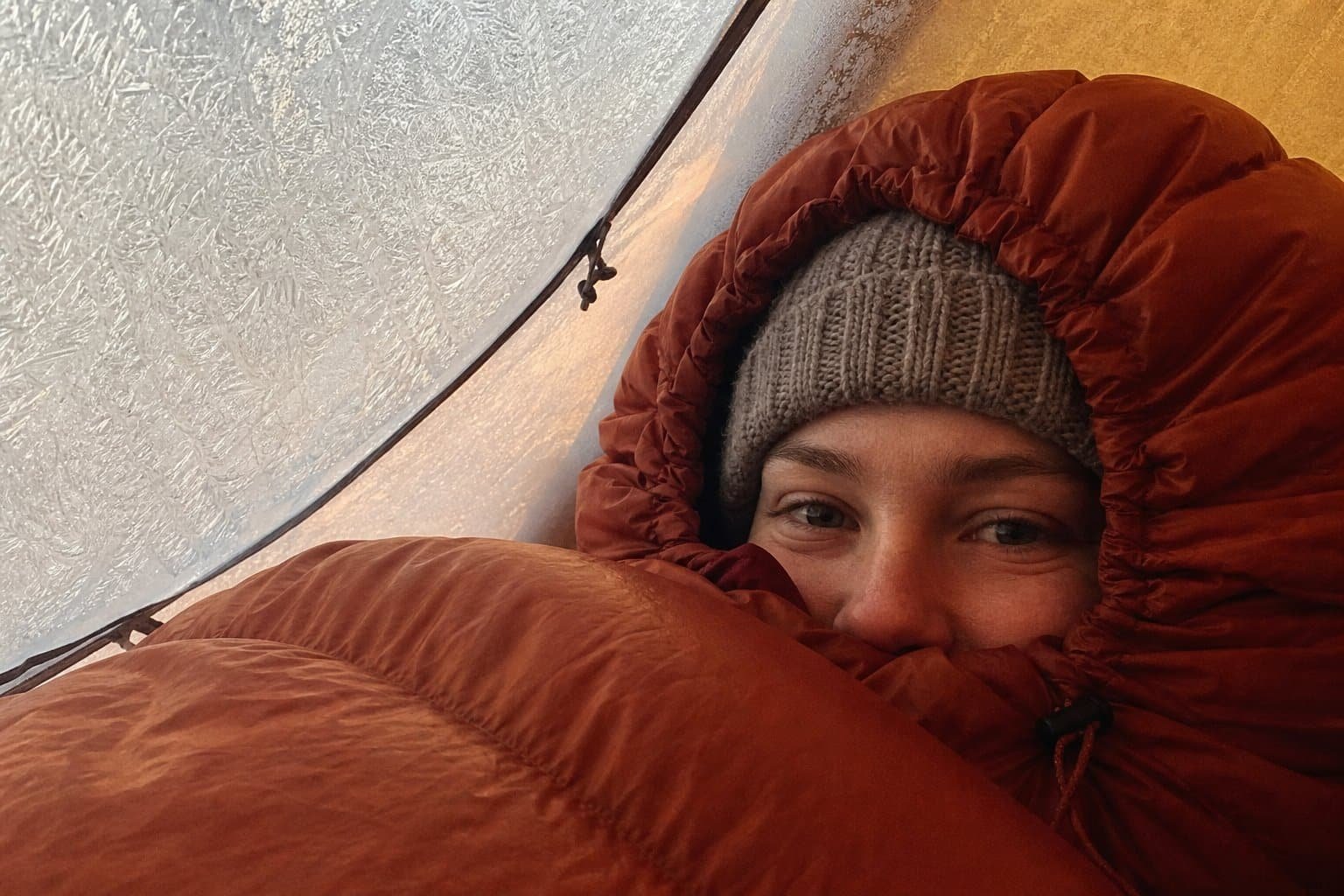
British-designed four-season synthetic bag with a snug hood and draught collar
The Snugpak Basecamp Ops Sleeper Expedition is our top pick because it is built for exactly the conditions that catch out British winter campers: temperatures hovering around freezing, high humidity and condensation dripping off the inner tent. Snugpak is a Yorkshire brand, and this bag uses its Isofibre synthetic insulation, which keeps insulating when it gets damp and dries far faster than down, the single most common complaint we found about down bags used in UK winters. The listing quotes a -17°C rating for four-season use. Snugpak’s figures are its own rather than an EN/ISO comfort test, so treat -17°C as the cold end of its range: for most people that still means comfortable nights well below freezing on a campsite in January. The Snugfit hood and draught collar seal heat in around your head and shoulders, there is a zip baffle behind the anti-snag zip, and hanging tabs make it easier to dry out between nights. The trade-off is bulk and weight: synthetic winter bags are big, and while it comes with a compression sack, it is a car-camping or short-walk-in bag rather than one for a long hike. The Amazon listing does not quote a weight or packed size.
- Synthetic fill copes with damp UK winters
- Four-season -17°C rating
- Snugfit hood and draught collar
- Anti-snag zip with zip baffle
- Compression sack included
- Bulky for walking in
- Weight not quoted on the listing
- Rating is Snugpak’s own, not EN/ISO
550 fill-power down mummy bag with two draught collars and a lifetime warranty
If you want winter warmth that packs smaller than a synthetic bag, the Kelty Cosmic 0 is the one to look at. It uses 550 fill-power down in trapezoidal baffles, which reduce the cold spots that stitched-through bags suffer from, and it has two draught collars: a full collar at the shoulders and an upper collar higher up, so heat does not pump out of the neck every time you roll over. The shell and lining are fully recycled with a PFAS-free water-repellent finish, which helps against frost and condensation dripping onto the bag but does not make down waterproof. That is the main thing to understand about down in a British winter: it is wonderfully warm when dry, but owners regularly report it losing loft over several damp nights, so it suits campers who can air it each morning or who sleep in a well-ventilated tent. Kelty rates it to 0°F, about -18°C. That is a US limit-style rating rather than an EN/ISO comfort figure, so plan on comfortable sleep a good few degrees warmer, which still covers hard frosts. This listing is the long size for taller sleepers, and there is a zipped stash pocket to keep your phone battery warm. The listing does not quote weight or packed size. Kelty backs it with a limited lifetime warranty.
- 550 fill down packs smaller than synthetic
- Trapezoidal baffles cut cold spots
- Two draught collars
- PFAS-free water-repellent shell
- Limited lifetime warranty
- Most expensive bag here
- Down loses loft if it gets damp
- Weight and pack size not on the listing
Big and tall synthetic mummy bag with a Thermolock draught tube and machine-washable fill
The Coleman North Rim gets you a cold-rated mummy bag for well under half the price of a down bag, which is why it is one of the most popular winter bags on Amazon. It is cut big and tall, at 82 x 32 inches (about 208 x 81 cm), and Coleman says it fits campers up to 6 ft 2 in (188 cm), so it avoids the cramped feeling many people complain about in winter mummy bags. Coletherm hollow polyester insulation keeps warmth up and weight down for a budget synthetic, the Thermolock draught tube runs behind the zip to stop heat leaking out of the side, and the adjustable hood lets you cinch it right down on a freezing night or open it if you overheat. The no-snag zip addresses one of the most common grumbles with cheap bags, and it is machine washable, which helps with family camping and muddy campsites. Coleman rates it to 0°F, about -18°C. Treat that as the coldest you would survive rather than a comfort figure: in practice most owners find it comfortable a fair bit above freezing, and adding a liner and a good mat pushes that further. It is large when packed and not one to carry far. Coleman gives a five-year limited warranty.
- Strong price for a cold-rated bag
- Big and tall cut, fits up to 188 cm
- Thermolock draught tube
- No-snag zip
- Machine washable
- 0°F rating is optimistic for comfort
- Bulky when packed
- Heavier than down
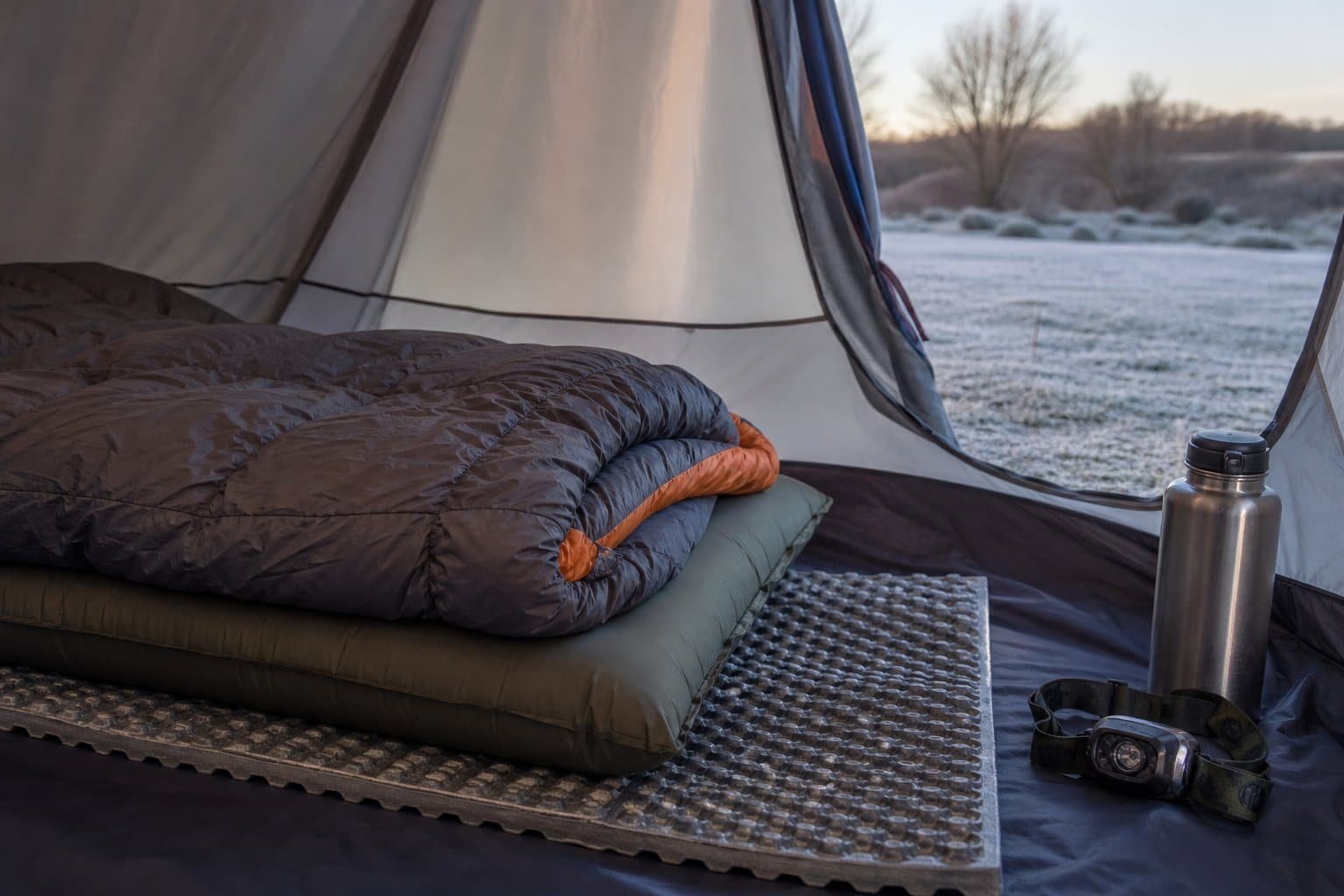
Heavyweight double-layer synthetic bag with 84 oz of fill for the coldest nights
The Browning Endeavor is the bag for people who always feel cold, or who camp somewhere genuinely harsh, such as a winter campsite in the Scottish Highlands. It has the lowest rating in this roundup at -20°F, about -29°C, and the numbers back that up: Browning quotes 84 oz (about 2.4 kg) of TechLoft Silver insulation in a two-layer construction, which removes the stitched-through seams where heat escapes. Zip and chest baffles stop draughts at the two places winter campers notice them most, and the mummy cut with a hood keeps the volume you have to heat to a minimum. At 80 x 32 inches (about 203 x 81 cm) it suits most adults. The price of all that warmth is weight: the listing quotes 7 lb, about 3.2 kg, so this is strictly a bag to carry from the car to the tent. As with every US-rated bag here, -29°C is not a comfort rating and nobody should plan to sleep comfortably at that temperature in it, but it gives a big margin for British winter nights, which rarely go below -10°C at campsites. Browning backs it with a limited lifetime warranty.
- Coldest rating in this list
- 84 oz of synthetic fill
- Two-layer build avoids cold seams
- Zip and chest baffles
- Limited lifetime warranty
- Heavy at about 3.2 kg
- Very bulky packed
- Too warm for mild nights
Roomy flannel-lined bag with a mummy-style hood and double-layer fill
Plenty of campers find technical mummy bags cold and clammy against the skin and too narrow to sleep in properly. The TETON Celsius answers both complaints. It has a soft poly-flannel lining that feels like bedding rather than nylon, and a roomier, semi-rectangular cut that gives you space to bend your knees, which matters if you sleep on your side. A half-circle mummy-style hood still closes around your head, and double-layer construction with draught tubes holds warmth in. TETON’s own tips are sound advice for any winter bag: fluff it before bed, use an insulated mat, wear a hat and socks and stay hydrated. It is rated to 0°F, about -18°C. That is a US figure, and with a wider cut and flannel lining it will not match the Snugpak or Browning on a hard frost, so it is best for campsite trips from autumn to early spring rather than the coldest nights. The flannel also adds weight and bulk, and the Amazon listing does not quote either. TETON gives a limited lifetime warranty.
- Soft poly-flannel lining
- Roomy cut suits side sleepers
- Mummy-style hood
- Double-layer fill with draught tubes
- Limited lifetime warranty
- Less warm than its 0°F rating suggests
- Heavy and bulky
- Weight not quoted on the listing
Do you need a cold weather sleeping bag for UK camping?
If you camp between October and April, or on high ground at any time of year, a three-season bag is likely to leave you cold. UK winter nights at campsites typically fall to around freezing, and clear, still nights in upland areas can drop to -5°C or below. The usual reasons people sleep cold are not just the bag, though: a thin mat, a cinched-open hood, damp clothes and going to bed already chilled all play a part, as Sea to Summit’s guide to why a sleeping bag isn’t keeping you warm explains. Fix those and a good winter bag will keep you warm through a British frost. For the ground, read our guide on what R-value a sleeping pad needs for winter, and if your mat is not warm enough, consider stacking sleeping pads for warmth.
How to choose sleeping bags for cold weather camping UK trips
Winter camping in Britain is rarely about extreme cold. It is about long nights, high humidity and ground that stays cold and wet for months. A bag that would be fine on a dry, frosty night in the Alps can feel much colder on a soggy campsite in the Peak District. So start with where and when you camp, then look at the rating, fill and features that suit those conditions, rather than simply buying the bag with the most impressive figure.
It also helps to be honest about how you sleep. Some people run warm and are comfortable under a light duvet at home, while others need extra blankets even in summer. A cold weather sleeping bag that suits a warm sleeper may leave a cold sleeper awake at 3am, so the same rating does not mean the same night for everyone in the tent.
Reading US and maker ratings
Only some bags carry EN/ISO tested figures. In this roundup the Snugpak Basecamp Ops Sleeper uses Snugpak’s own rating, the Kelty Cosmic 0, Coleman North Rim and TETON Celsius quote 0°F, and the Browning Endeavor quotes -20°F. Those US numbers sit closer to survival or limit figures than to comfort. Our guide to sleeping bag comfort vs limit temperature explains how to translate them into a realistic idea of where you will sleep well.
Planning for the coldest night
Look up typical overnight lows for your campsite and month, then remember that valleys, open moorland and higher pitches can be colder than the nearest town. Plan for the coldest night you are likely to meet, not the average, when shortlisting sleeping bags for cold weather camping UK sites will test. If you sleep cold, are camping with children or are new to winter trips, choose a bag with an even bigger margin. It is easy to vent a warm bag, but very hard to warm up a bag that is not up to the job.
Synthetic vs down for damp British winters
Four of the five bags here, the Snugpak, Coleman, Browning and TETON, use synthetic insulation. Synthetic fill keeps much of its warmth when it absorbs moisture, dries faster and tolerates being packed away slightly damp for a short drive home. It is also cheaper and easier to wash. The trade-off is bulk and weight, which is why synthetic winter bags are best suited to car camping or short walk-ins from the car park.
The Kelty Cosmic 0 is the down option. Down gives more warmth for its weight and packs smaller, and Kelty’s trapezoidal baffles help reduce cold spots. The catch with down in a British winter is moisture. Breath, condensation and frost slowly work into the fill over a few nights, and down that absorbs water loses its loft. It suits campers who can air it every morning, or who camp for a night or two rather than a week.
A simple way to decide between sleeping bags for cold weather camping UK style: if your trips are mostly campsite weekends in wet weather, synthetic is the safer choice. If you walk in to a pitch, camp on cold, dry nights or need space in the car for a family, down may be worth the extra care. Some experienced winter campers combine both, using a synthetic bag on damp trips and a down bag on clear, frosty ones.
Construction details that keep a winter sleeping bag warm
Warmth is not just about how much fill a bag has. A draught collar around the shoulders stops warm air pumping out every time you move, and a zip baffle behind the zip blocks the cold line that otherwise runs down your side. The Snugpak and Kelty both have collars, while the Coleman uses a Thermolock draught tube. These details matter as much as an extra few grams of insulation on a long winter night.
Look at how the fill is held in place. Stitched-through seams create thin lines where heat escapes, which is fine for summer bags but costly in winter. Baffle walls, as on the Kelty, and two-layer construction, as on the Browning Endeavor, avoid those cold seams. A well-shaped hood is the other big factor, because a lot of heat is lost from your head and neck if the hood cannot be closed snugly around your face.
Fit counts too. A bag that is too long leaves cold space at your feet, while one that is too tight compresses the fill and reduces its warmth. Roomier cuts like the TETON Celsius suit side sleepers but leave more air to heat, so they work best with a warm mat and some extra layers. If you are tall, a long version, such as the Kelty Cosmic 0 Long, avoids squashing the footbox.
Boosting warmth with liners and layers
Even the best winter sleeping bag works better with a little help. A fleece or thermal liner adds warmth and keeps the inside clean, and a dry base layer, warm socks and a hat do far more than sleeping in the clothes you wore all day. Some campers also drape a down jacket over the footbox on the coldest nights. These additions let you stretch sleeping bags for cold weather camping UK campers already own into colder conditions, without buying a heavier bag.
Condensation, frost and keeping a winter bag dry
Cold nights produce a lot of moisture inside a tent. Each breath adds water vapour, and when it meets a cold flysheet it turns into droplets or frost that can drip or fall onto your bag. Our article on why your tent is wet inside explains the causes. Understanding them helps you choose where to pitch and how to set up the tent before you even unroll your sleeping bag.
Whichever of the sleeping bags for cold weather camping UK campers pick, keep tent vents open even when it feels cold, because a sealed tent traps more moisture than it saves heat. Pitch away from rivers and the lowest part of a field, where cold, damp air tends to settle. Keep your bag clear of the inner walls, and pack wet clothes and boots in a bag in the porch rather than inside the sleeping area. Small habits like these keep the fill drier over a long weekend.
Between nights, give the bag as much time to dry as possible. Hanging tabs, like those on the Snugpak, make it easy to hang a bag in the tent or awning during the day. On a longer trip, airing it in the car with the heater on during a drive, or in a campsite drying room where one is available, can restore some of the lost loft.
Transport, storage and long-term care
Winter bags are big. Use a compression sack for the drive, but take the bag out as soon as you arrive so the fill can recover before night falls. At home, store it loose in a large breathable sack or hang it in a wardrobe. A winter bag kept squashed in its stuff sack all summer will not be as warm when the frosts return in autumn.
Cleaning matters for warmth as well as hygiene. Body oils and dirt clump the fill, so wash a well-used bag at the end of the season, following the label. The Coleman North Rim is machine washable, while down bags like the Kelty need a specialist down wash, a large front-loading machine and a long, low-heat dry with clean tennis or dryer balls to restore loft.
Final thoughts
The best sleeping bags for cold weather camping UK campers can choose are the ones that match damp British nights rather than the most extreme figure on the label. Read the rating type, give yourself a generous margin, prefer synthetic for wet campsite weekends and down for dry, frosty walk-ins, and pay attention to collars, baffles, hood and fit. Pair any cold weather sleeping bag from this list with a warm mat and good habits, and winter camping becomes far more comfortable.
What to look for in a cold weather sleeping bag
Look for an EN/ISO comfort rating at least 5°C below the coldest night you expect. US and limit ratings are survival figures, so add a generous margin.
Synthetic fill keeps insulating in damp, condensation-heavy UK tents and dries fast. Down is warmer for its weight and packs smaller, but needs keeping dry.
A collar around the shoulders and a baffle behind the zip stop warm air escaping, one of the most common causes of a cold night.
A mummy cut with a hood you can cinch tight is warmest. Roomier cuts suit side sleepers but have more air to heat.
Too short compresses the fill at your feet; too long leaves cold space. Check the maximum height the bag fits.
Winter bags are bulky. Fine for car camping, but if you walk in, down or a compression sack makes a big difference.
Machine-washable synthetic bags suit family camping. A long warranty is reassuring on a pricier bag.

How to stay warm in a sleeping bag on a cold night
- Use a winter mat
Aim for an R-value of 4 or more, or add a foam pad under your inflatable mat. The ground takes more heat than the air.
- Go to bed warm
Eat something and do a few minutes of gentle exercise before bed. A sleeping bag holds heat; it does not create it.
- Change into dry layers
Sleep in a dry base layer, socks and a hat. Damp clothes from the day pull warmth out of you.
- Cinch the hood and collar
Close the hood around your face and snug the draught collar. Breathe out of the bag, not into it, to keep moisture out of the fill.
- Add a hot water bottle
A sealed bottle of hot water at your feet tackles cold feet, the most common winter complaint.
- Air it every morning
Shake out and air your bag to drive off moisture, especially a down bag, before packing it away.
How we chose these cold weather sleeping bags
We have not slept in every bag in this list ourselves. Our picks are based on manufacturer specifications, published UK and US reviews and buying guides, and recurring themes in owner feedback. Prices change, so check the current price before you buy.
-
Warmth for UK winters
We compared stated ratings, noted where they are US or maker figures, and looked for draught collars and baffles.
-
Damp tolerance
We weighed synthetic fill and water-repellent shells for condensation-heavy British tents.
-
Comfort and fit
We looked at length, room inside and lining materials, as cramped bags were a frequent complaint.
-
Value
We balanced warmth, features and warranty against price.
Not every listing quotes weight, packed size or an EN/ISO rating. Where a figure is missing we say so rather than guess.
What temperature sleeping bag do I need for winter camping in the UK?
For most UK winter campsites, look for a comfort rating of around -5°C to -10°C. If a bag only quotes a US or limit rating, choose one rated well below that, such as 0°F (-18°C), to give yourself a realistic margin.
Is down or synthetic better for cold weather camping in the UK?
Synthetic is often the better choice for damp British winters because it keeps insulating when wet and dries quickly. Down is warmer for its weight and packs smaller, so it suits walkers who can keep it dry and air it daily.
What does a 0°F sleeping bag rating mean?
0°F is about -18°C. On most US bags it is closer to a limit or survival rating than a comfort rating, so most people sleep comfortably several degrees warmer than that.
Why do I get cold feet in my sleeping bag?
Cold feet usually come from a thin mat, a bag that is too long or too short, damp socks or going to bed already cold. A warm mat, dry socks and a hot water bottle at your feet help.
Can I use a liner to make my sleeping bag warmer?
Yes. A fleece or thermal liner can add a few degrees of warmth and keeps the bag clean, but it will not turn a summer bag into a winter one.
How do I stop condensation making my sleeping bag damp?
Ventilate the tent, keep the bag off the inner walls, breathe outside the hood and air the bag each morning. A water-repellent shell helps, but airing is what keeps the fill dry.
Which cold weather sleeping bag should you buy?
- Best overall: Snugpak Basecamp Ops Sleeper Expedition Sleeping Bag
- Best down: Kelty Cosmic 0 Down Sleeping Bag (Long)
- Best value: Coleman North Rim 0°F Mummy Sleeping Bag
- Warmest rating: Browning Camping Endeavor -20° Mummy Sleeping Bag
- Most comfortable: TETON Celsius 0 Degree Sleeping Bag (Regular)
For most UK campers, the Snugpak Basecamp Ops Sleeper Expedition is the best sleeping bag for cold weather camping: its synthetic fill copes with damp British winters and its hood and draught collar seal in heat. Choose the Kelty Cosmic 0 if you want down that packs smaller, the Coleman North Rim for the best value and a big and tall fit, the Browning Endeavor -20 if you always sleep cold, and the TETON Celsius for a roomy, flannel-lined bag on campsite weekends.
CampEquipmentPlus relies on reader support. Purchases made via links on our website may earn us an affiliate commission at no extra cost to you, helping keep the site running.