
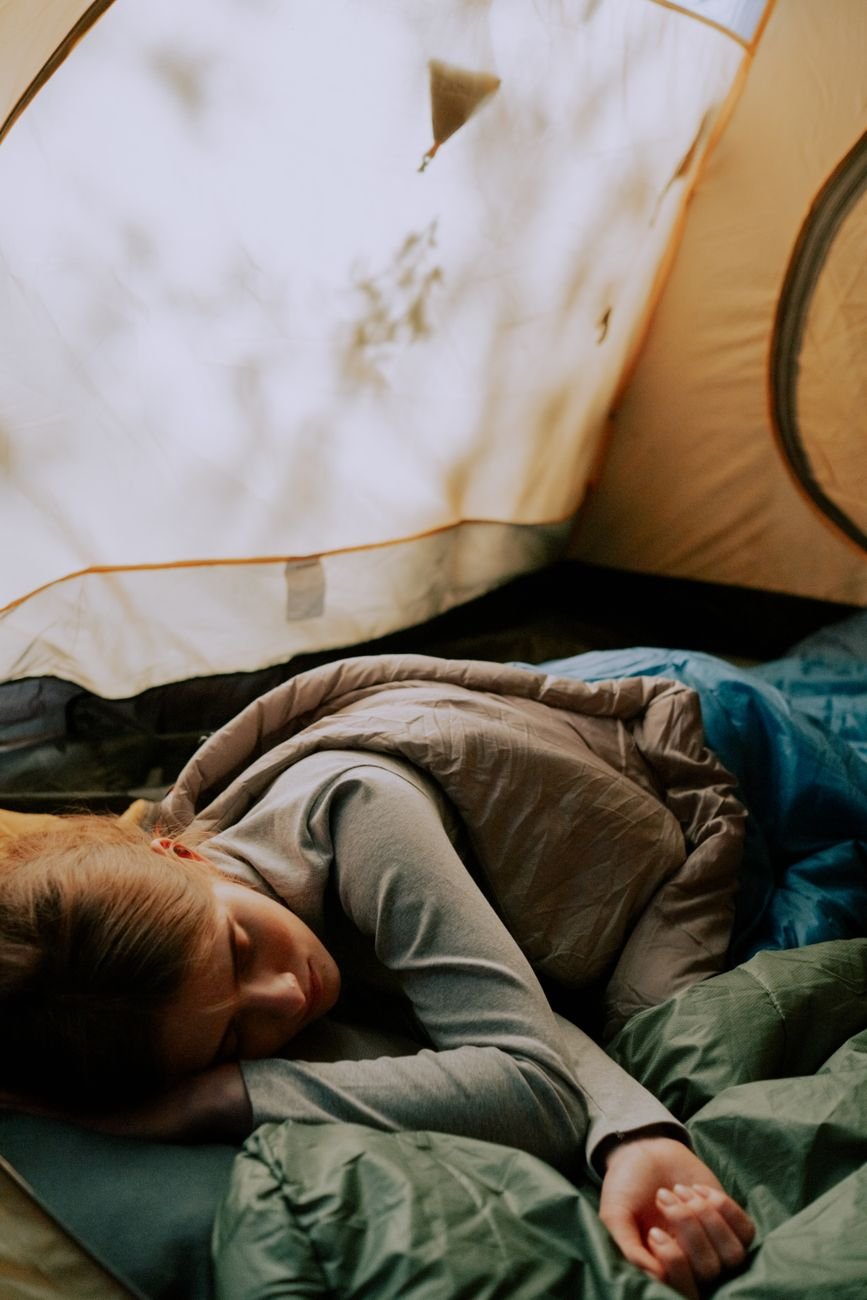
The colder rating may fit the forecast without promising a comfortable night.
A forecast calls for 3°C overnight. A sleeping bag lists 4°C comfort and −2°C limit, with the colder figure splashed across the tag. Both numbers can be valid: they describe different expectations of sleep, not competing guesses about the weather.
Under EN/ISO testing, comfort estimates the temperature at which a standard reference woman can sleep in a relaxed position without feeling cold. Limit estimates the lower temperature at which a standard reference man can sleep curled up without waking from cold. Neither predicts every camper’s experience. The limit is not a survival rating, and it leaves little margin for a cold sleeper, damp insulation or an inadequate sleeping pad. For a night expected to feel restful rather than merely tolerable, the comfort figure is the more useful comparison with the forecast.
Comfort, limit, and extreme ratings
- Comfort temperature
The lowest temperature at which a standardized reference sleeper can sleep comfortably in a relaxed position. It is the more useful starting point when uninterrupted sleep matters.
- Limit temperature
A colder threshold based on a different reference sleeper lying curled up to conserve heat. It describes a boundary for getting through the night, not the same expectation of relaxed, restful sleep.
- Extreme temperature
A survival-oriented threshold, not a promise of sleep or protection from cold injury. It should not be used as a target when choosing a bag for planned overnight conditions.
- Reference sleeper
The standardized model used to translate laboratory heat-loss measurements into ratings. Its assumptions cannot capture an individual’s metabolism, fatigue, clothing, or tolerance for cold.
The numbers help compare bags tested under the same standard; they do not guarantee how warm a person will feel outdoors. A poorly insulated sleeping pad can drain heat into the ground even when the bag’s comfort rating appears adequate. Wind, dampness, an empty stomach, and a cold-sensitive sleeper can narrow the margin further. For a planned night near the forecast low, the comfort figure is usually the safer number to compare—not the colder limit, and never the extreme rating.
What the lab actually measures
Under EN 13537 and its successor ISO 23537, a heated, instrumented manikin lies inside a bag on a specified insulating surface in a climate-controlled chamber. The electrical power required to maintain its prescribed surface temperature reveals the bag’s thermal resistance. Standardized clothing and test conditions make similarly tested bags comparable; the chamber does not simulate a campsite.
Comfort and limit temperatures are calculated from that resistance using conventional female and male reference profiles, each with assumed heat production and sleeping posture. These are physiological test assumptions, not shopping categories: size, metabolism, and cold tolerance vary within either sex. The manikin does not curl up to sleep or judge whether a night was restful.
Outside the lab, a low-R-value pad, damp insulation, wind-driven drafts, or a poorly sealed hood can increase heat loss. Hunger and exhaustion can lower heat production, too. Those differences explain why a sleeping bag can feel cold despite its rating. Even bags with identical ratings may feel different because fit, draft control, and insulation distribution affect the sleeper. Compare bags tested to the same standard, but allow extra warmth for the forecast, the pad, and the person using the bag.
Which rating should guide the purchase?
Compare the comfort rating with the lowest overnight temperature expected at the campsite. If the forecast low is 30°F (-1°C), a bag with a 30°F comfort rating is a more sensible starting point than one with a 30°F limit rating. The latter describes a colder, more constrained night—not equivalent comfort at a lower price.
A camper who routinely sleeps warm might deliberately choose a bag whose limit matches the expected low, accepting that staying warm may require curling up and tolerating interrupted sleep. That is a different choice from assuming the limit promises restful sleep. A cold-sensitive camper, or one arriving hungry or exhausted after a long day, may prefer a comfort rating below the forecast low. At altitude, exertion, reduced appetite, and a less certain mountain forecast can make that extra margin more valuable.
Forecasts also describe an area, not the exact temperature beside a tent. A sheltered valley can run colder than a nearby forecast point, and a bag’s rating assumes suitable insulation underneath. Check the warmth ratings on budget sleeping bags against the same comfort-based benchmark rather than treating a cheaper bag’s limit as a bargain substitute. If a warmer bag costs or weighs too much, the trade-off is worth making explicitly: a shorter or milder trip may justify less margin, while a remote trip with uncertain weather may not.
There is no buffer that fits every sleeper. The useful question is how much cold, poor sleep, and forecast error the particular trip can tolerate.
The pad completes the rating
A sleeping bag’s fill works by trapping air. Under the sleeper’s shoulders and hips, body weight flattens that insulation, leaving much less resistance to heat flowing into the ground. A warmer bag adds loft mostly above the sleeper; it cannot make up for an inadequate pad underneath.
The pad therefore needs its own insulation rating, expressed as R-value: higher numbers indicate greater resistance to heat flow. When choosing a warm sleeping pad, the expected ground conditions matter alongside the forecast low. A bag rated for freezing weather can still feel cold on a low-R pad, especially where the body presses hardest. Adding a closed-cell foam pad beneath an inflatable pad can increase total resistance; the two R-values are approximately additive.
Other breaks in the insulating layer matter, too. A bag that fits tightly can compress loft around the knees or shoulders, while an oversized bag may leave more air to warm and make it harder to seal the hood and collar. Gaps at the zipper, a loose neck opening, or rolling partly off the pad can create cold spots even when the bag’s rating looks adequate.
Moisture and wear can change the picture overnight or over a season. Condensation, perspiration, and a damp campsite can reduce loft; down is particularly vulnerable when wet, though synthetic fill is not immune. Dirt and accumulated compression can also leave an older bag less lofty than it once was. The printed temperature is a useful comparison between bags, not a promise for a particular pad, fit, and campsite.
How to read a temperature label
- Identify the advertised number
A headline “20°F” may be a limit rating rather than a comfort rating. Check the hangtag or full specifications for both named figures; if neither appears, ask which one is being advertised.
Look forComfort and limit listed separately for the exact model.Watch out forAssuming an unlabeled number means comfort. - Check how it was tested
EN 13537 and its successor, ISO 23537, specify standardized sleeping-bag tests. A manufacturer’s “rated to” claim may use another method, so look for a named standard and the resulting figures, not just “lab tested.”
Look forA named EN or ISO standard alongside the ratings.Watch out forTreating an unspecified brand claim as a standardized result. - Compare matching figures
Compare comfort with comfort, or limit with limit, under comparable test standards. Quilts and open-backed designs depend heavily on pad attachment and edge sealing; their advertised temperatures may not be directly comparable with enclosed-bag ratings.
Look forThe same rating type and a comparable bag design.Watch out forRanking a quilt and a tested bag by headline numbers alone. - Keep the number in perspective
Once candidates cover the expected low with appropriate margin, choosing a camping sleeping bag also means weighing fit, packed weight, moisture tolerance, and ventilation. A colder rating cannot compensate for a poor pad or persistent drafts.
Look forA suitable rating in a bag that fits the trip.Watch out forBuying the coldest rating regardless of weight or fit.
Two bags, one 40°F night
Suppose the forecast low is 40°F and two bags carry a prominent “40°F” claim. Bag A has a 40°F comfort rating; Bag B has a 40°F limit rating, with comfort rated around 50°F. Those figures describe different test thresholds, even though the number on the front looks identical.
Bag A is the more defensible comfort match. Its comfort figure corresponds to the reference sleeper lying in a relaxed position at roughly the expected low. Bag B reaches 40°F only at its limit threshold, which assumes a sleeper can remain warm enough while curled up to conserve heat. That may be tolerable for some people, but it is a weaker basis for expecting an uninterrupted night’s sleep.
Bag B could still work if the sleeper runs warm, wears suitable dry layers, and has an adequately insulated pad. It also assumes the site stays near the forecast low rather than dipping below it. These are plausible conditions, not warmth supplied by the bag’s rating. The distinction matters when choosing a bag for 40-degree nights: a 40°F limit does not offer the same expected sleeping comfort as a 40°F comfort rating.
Neither bag has a cushion if its relevant threshold exactly matches the forecast. A colder-than-expected campsite, damp insulation, or drafts can make even Bag A feel cold. The comparison identifies the sounder starting point, not a guarantee.
-
Identify the number on the tag
Check whether the advertised temperature is a tested comfort rating, a limit rating, or an unqualified marketing claim. If only the limit appears, ask for the comfort result before comparing bags.
-
Choose a realistic overnight low
Use the expected temperature at camp, not the nearest town’s daytime forecast. Allow for forecast error and colder terrain, such as a valley where cold air settles.
-
Compare the low with comfort
A comfort rating at or below that low is the starting point; cold sleepers and uncertain conditions warrant more margin. A limit rating is useful context, not a promise of restful sleep.
-
Check the sleeping pad
Confirm that its R-value suits the expected ground conditions. A warm bag cannot make up for substantial heat loss through an underinsulated pad.
Pack for the night, not the headline
If a bag looks unusually light for its advertised temperature, the first question is which rating the number represents. Choosing by the limit can be reasonable for an experienced camper who knows their warmth needs and accepts the trade-off; it should be a deliberate choice, not a surprise at camp.
CampEquipmentPlus relies on reader support. Purchases made via links on our website may earn us an affiliate commission at no extra cost to you, helping keep the site running.