
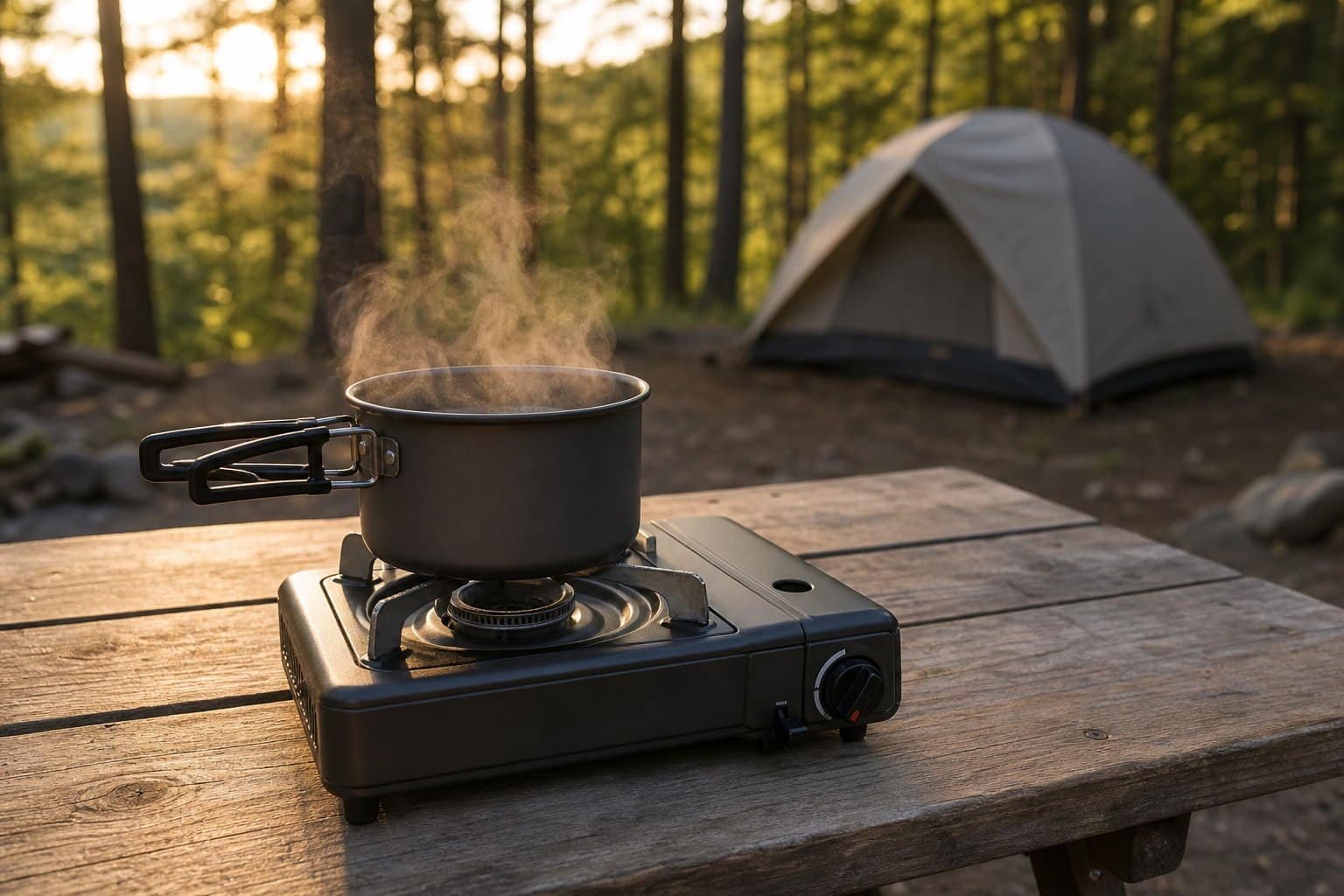
Best Single Burner Camp Stoves
A single burner camp stove is the simplest way to cook at camp: one compact burner for coffee, a pot of pasta or a backup to your main stove. Our top pick is the GasOne 15,000 BTU Dual Fuel Stove, which runs on butane or propane, while the Iwatani 35FW is the best pure butane stove.
People shopping for a single burner want three things: enough heat to boil quickly, a flame that stays lit in a breeze and simmers without going out, and fuel that’s easy to find. The usual complaints are just as consistent: butane that fades on cold mornings, flames that blow out, tippy bottle-top burners and pans that don’t fit.
Below we compare six stoves, from a $37 bottle-top burner to a 30,000 BTU freestanding cooker, and explain when to choose butane and when propane wins.
- Butane is compact but weak near freezing
- Propane works in the cold but cylinders are heavier
- Look for a pressure safety shut-off and wind protection
- Best overall: GasOne Dual Fuel 15,000 BTU on butane or a 1 lb propane cylinder, with pressure-sensor canister ejection.
- Best butane: Iwatani 35FW 15,000 BTU brass burner, double windbreaker and a magnetic canister lock.
- Cold weather? Choose propane Butane struggles around freezing; propane keeps working far below it.
- Big pots: Camp Chef Pro 30 A 30,000 BTU freestanding burner that runs from a propane tank.
A single burner camp stove is the most useful cooking tool many campers own. It boils water for coffee in minutes, cooks a one-pot dinner, fits on any table and packs into a corner of the car. The big decision is fuel: a single burner butane stove is compact, clean and cheap to buy, while a single burner propane stove keeps working on frosty mornings when butane gives up. This guide compares six stoves of both types and explains how to choose, how to use them safely and what to do when things go wrong. If you’re still deciding between stove styles, our guide to choosing a camping stove covers the bigger picture.


Top pick GasOne Dual | Butane Iwatani 35FW | Budget Coleman Butane | Propane PowerPack | |
|---|---|---|---|---|
|
|
|
|
| |
| Fuel | Butane or 1 lb propane | Butane | Butane | 1 lb propane |
| Output | 15,000 BTU | 15,000 BTU | 7,650 BTU | 7,500 BTU |
| Ignition | Piezo | Not quoted | Instastart | Not quoted |
| Wind protection | 4-corner blockers | Double windbreaker | Wind baffle | Not quoted |
| Pan size | Not quoted | Not quoted | 10 in | 12 in |
| Runtime on high | Not quoted | Not quoted | 1.25 h / 8.8 oz | 3 h / 16.4 oz |
| Pressure safety | Ejection + cut-off | Auto safety stop | Not quoted | Regulated propane |
| Warranty | Not quoted | 1 year | 3-year limited | Limited lifetime |
| Check price | Check price | Check price | Check price |
The best single burner camp stoves: our reviews
Each review covers fuel, heat output, wind protection, pan size, runtime, safety features and warranty, plus the trade-offs testers and owners report.
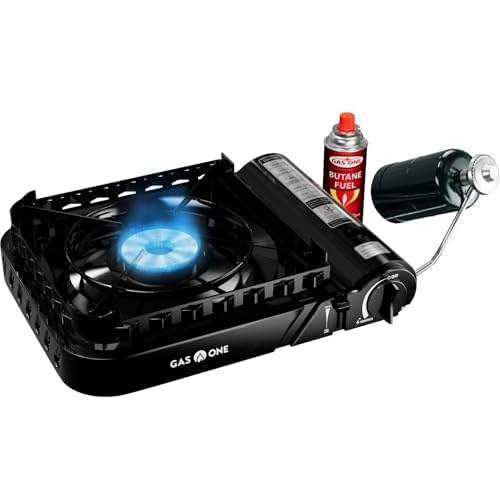
Single burner, runs on an 8 oz butane canister or a 16.4 oz (1 lb) propane cylinder with the included adapter; 15,000 BTU, piezo ignition, pressure-sensor canister ejection and gas cut-off, windblocker on all four corners, carry case; 12.9 x 10.9 x 4.5 in
If you can’t decide between butane and propane, the GasOne GS-3900PB lets you skip the choice. It’s a classic briefcase-style single burner that takes a standard 8 oz butane canister in the side compartment, and the included adapter hose lets it run from a 16.4 oz (1 lb) propane cylinder instead. Use cheap butane on warm summer weekends, then switch to propane when the nights drop toward freezing and butane starts to sputter.
GasOne rates the burner at 15,000 BTU, about double the Coleman stoves in this list, so it brings a pot of pasta water to the boil quickly. Safety features are the ones experts say to look for on a butane stove: a pressure sensor that ejects the canister if it overheats, plus a gas flow cut-off. A windblocker sits on all four corners of the burner head and piezo ignition lights it without matches. The one recurring complaint, shared with GasOne’s smaller stoves, is that the flame can go out if you turn it right down to a whisper, so simmer on medium-low rather than the lowest setting. The listing doesn’t quote a weight or warranty.
- Runs on butane or 1 lb propane
- 15,000 BTU output
- Pressure-sensor canister ejection and gas cut-off
- Wind blockers and carry case included
- Flame can go out on the very lowest setting
- Weight and warranty not quoted
- Butane side still weak in the cold
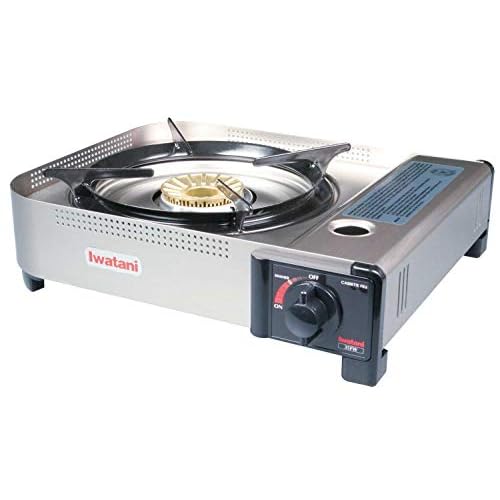
15,000 BTU brass burner, magnetic canister lock (no levers), heat panel that helps use the whole canister, double windbreaker, automatic pressure safety stop; made in Japan, 1-year warranty
The Iwatani 35FW is the single burner butane stove that chefs and serious campers buy when they want a cassette stove that feels like a proper hob. Its brass burner is rated at 15,000 BTU, and the double windbreaker wraps around the flame so a breeze doesn’t knock the heat back. BestReviews named it its top butane stove for exactly that combination of power and wind protection.
Iwatani has also solved two everyday butane annoyances. The canister clicks onto a magnet instead of a fiddly lever, which makes it very hard to fit wrongly, and a heat panel warms the canister slightly so pressure stays up and you use the last of the fuel rather than throwing away a half-empty can. If canister pressure rises to an unsafe level, an automatic safety stop shuts off the gas. The catch is price: it costs several times as much as a basic cassette stove, and like any butane stove it slows down as temperatures approach freezing. Iwatani backs it with a one-year warranty.
- Powerful 15,000 BTU brass burner
- Double windbreaker
- Magnetic canister lock is foolproof
- Automatic pressure safety stop
- Expensive for a single burner
- Butane only, so weak near freezing
- Only a one-year warranty
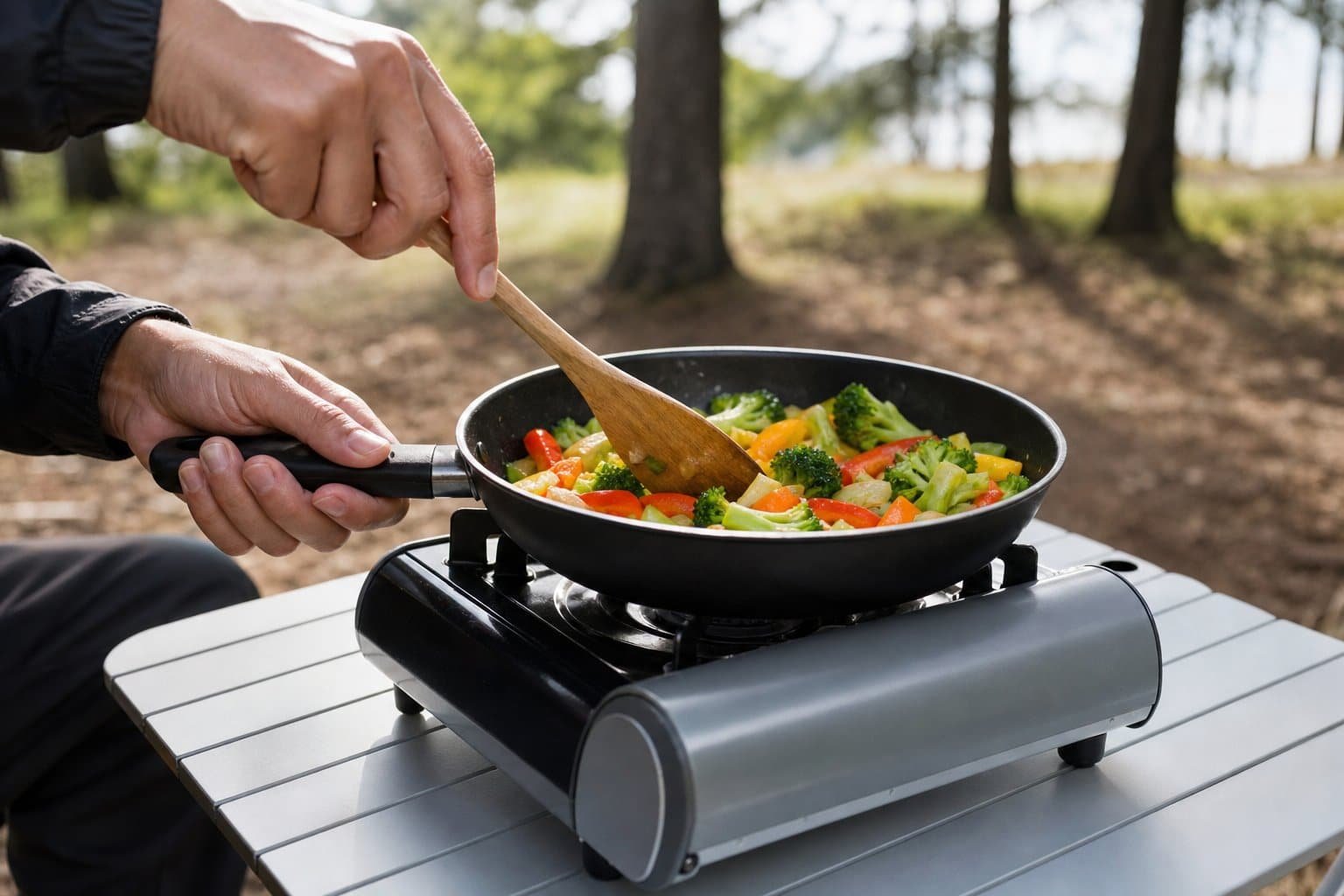
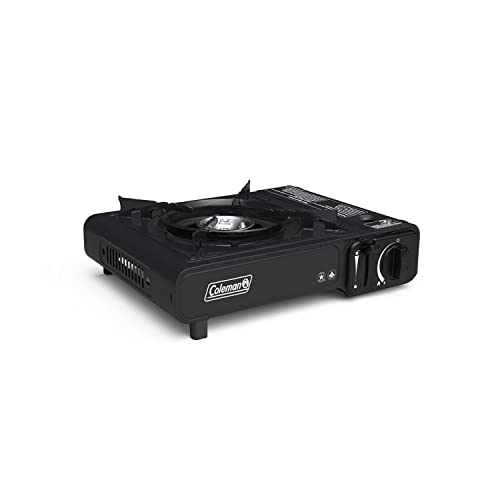
7,650 BTU, Instastart matchless ignition, porcelain-coated removable grate, rust-proof aluminum burner, wind baffle, fits one 10 in pan, up to 1.25 h on high per 8.8 oz canister; 15 x 10 x 6.5 in, carry case, 3-year limited warranty
The Coleman Classic 1-Burner Butane Stove is the safe, simple choice for most campers who want a single burner for summer trips or as a backup to a two-burner. Switchback Travel names it the best single-burner camping stove, praising its compact size, easy cleaning and inset design, which helps keep the wind off the flame. It also works well with a wok.
Coleman rates it at 7,650 BTU, which is modest next to the 15,000 BTU stoves above, so a big pot takes longer to boil. In return, it sips fuel: Coleman quotes up to 1.25 hours on high from one 8.8 oz butane canister. The Instastart ignition lights without matches, the porcelain-coated grate lifts off for cleaning and it fits a single 10 in pan. Testers’ main reservations are the ones that apply to every butane stove: it struggles around and below freezing, and one burner is limiting for families. Coleman’s 3-year limited warranty is longer than most rivals’.
- Matchless Instastart ignition
- Easy-clean porcelain grate
- Up to 1.25 h per canister
- 3-year limited warranty
- 7,650 BTU is slower to boil
- Butane struggles near freezing
- For outdoor use only
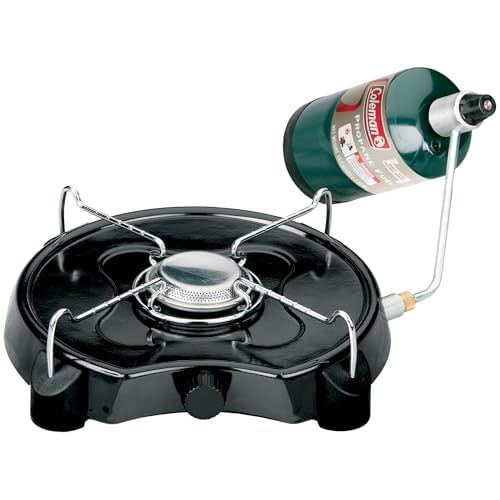
7,500 BTU, PerfectFlow technology for steady heat in extreme weather, adjustable burner, fits a 12 in pan, removable chrome-plated grate, large stable base, up to 3 h on high per 16.4 oz propane cylinder; 4 x 13.38 x 12.5 in, limited lifetime warranty
The Coleman PowerPack is a single burner propane stove with a wide, low base and a 1 lb propane cylinder that lies flat beside it, so it’s much steadier than a stove perched on top of a bottle. Coleman’s PerfectFlow system is designed to keep the heat steady in extreme weather, and propane itself keeps vaporizing at temperatures where butane fizzles out, which makes this the pick for shoulder-season and cold-morning coffee.
The burner is rated at 7,500 BTU, similar to the Coleman butane model, and Coleman quotes up to 3 hours on high from one 16.4 oz cylinder, the longest runtime in this list. The large grate fits a 12 in pan and the chrome-plated grate lifts off for cleaning, while the adjustable burner gives fine control for simmering. The trade-offs are size and fuel: it’s bulkier than a cassette stove at 13.38 x 12.5 in, 1 lb propane cylinders are heavier than butane cans, and there’s no piezo ignition on the listing, so pack a lighter. Coleman backs it with a limited lifetime warranty.
- Propane works in cold weather
- Low, stable base
- Up to 3 h per 1 lb cylinder
- Limited lifetime warranty
- 7,500 BTU is modest
- No matchless ignition listed
- Bulkier than a cassette stove

10,000 BTU chrome-plated anti-clog burner, regulator with on/off control knob, 7.5 in grid, DuraBase with tip-resistant feet holds a 16.4 oz propane cylinder; 7.5 x 7.5 x 12.75 in, 1-year warranty
The Stansport 201 is a bottle-top single burner propane stove: the burner screws straight onto a 1 lb propane cylinder, so the whole setup takes up about the footprint of the bottle. That makes it the most compact option here, and the easiest to throw in a truck, boat or emergency box. The 10,000 BTU burner has an anti-clog design and a regulator with an on/off knob.
Bottle-top stoves are famously tippy, so Stansport includes its DuraBase, a plastic stand with tip-resistant feet that the cylinder sits in. Even so, the 7.5 in grid suits a small pot or kettle better than a wide frying pan, and a tall setup is easier to knock over than a low briefcase stove. There’s no wind baffle or matchless ignition on the listing, so a windscreen around the pot (not the cylinder) and a lighter are worth packing. Stansport gives a one-year warranty.
- Very compact
- 10,000 BTU
- DuraBase steadies the cylinder
- Tall and tippier than a briefcase stove
- Small 7.5 in grid
- No wind protection or igniter listed
30,000 BTU/hr cast-aluminum burner, 231 sq in square-top cooking area for single-burner accessories, folding side shelf, adjustable/removable legs, regulator and 3 ft hose included for a propane tank
The Camp Chef Pro 30 is a different kind of single burner camp stove: a freestanding cooker on removable legs with a 30,000 BTU cast-aluminum burner, roughly double the most powerful tabletop stoves here. It runs from a larger propane tank through the included regulator and 3 ft hose, and it’s the one to choose for boiling a big pot of corn, frying fish or heating a large Dutch oven.
The square top gives 231 sq in of cooking area and takes Camp Chef’s single-burner accessories, such as its griddle and grill boxes, and a folding side shelf holds tools and plates. The legs adjust and come off for transport. You pay for that power in size and fuel use: it’s far bulkier than a tabletop stove, it needs a bulk propane tank rather than a 1 lb canister, and the listing doesn’t quote a weight, igniter or warranty.
- 30,000 BTU for big pots
- 231 sq in cooking area
- Takes Camp Chef accessories
- Folding side shelf
- Bulky and needs a propane tank
- Uses fuel fast on high
- Weight, igniter and warranty not quoted
Single burner butane stove vs single burner propane stove
This is the question most buyers ask, and the honest answer is that both fuels work well in the right conditions. The difference comes down to temperature, canister size and how you camp.
Butane: compact, clean and best in warm weather
A single burner butane stove uses slim 8 oz cassette canisters that slot into the side of a briefcase-style stove. The canisters are light, aluminum and easy to store, and the stoves themselves are low and stable with a wide grate, which makes them pleasant to cook on. Butane stoves are usually the cheapest to buy, and many come with a carry case and matchless ignition.
The weakness is cold. Butane needs to turn from liquid to gas inside the canister, and it does that poorly as temperatures fall toward freezing. CleverHiker notes butane doesn’t perform well below about 31°F, and Switchback Travel says it struggles around and below freezing. Even on a cool 40°F morning, the canister itself chills as you use it, so the flame drops. Butane canisters also generally can’t be refilled.
Propane: works in the cold, heavier to carry
A single burner propane stove runs from a 16.4 oz (1 lb) steel cylinder or, with a hose, from a larger tank. Propane is stored at much higher pressure, so it keeps vaporizing in conditions where butane fizzles. Jetboil says propane works down to around -43°F, while isobutane, the blend in backpacking canisters, doesn’t function well below about 14°F. That’s why a propane stove is the safer bet for fall, spring and high-elevation trips. You can read Jetboil’s own explanation in its butane vs propane guide.
The downsides are weight and bulk: propane cylinders are heavier steel bottles, and bottle-top stoves sit higher and tip more easily than a low cassette stove. Advnture notes propane is generally slightly cheaper than butane for comparable canisters, and the 1 lb cylinders are refillable with the right adapter, though many campers simply recycle them where local rules allow.
Dual fuel: the best of both
Dual fuel stoves such as the GasOne GS-3900PB take a butane canister in the side compartment and come with an adapter hose for a 1 lb propane cylinder. For campers who cook mostly in summer but want a fallback for cold nights, a dual fuel single burner camp stove is the most flexible option, and it usually costs only a little more than a butane-only model.
Types of single burner camp stove
Briefcase cassette stoves like the Iwatani 35FW and Coleman Classic are the most common single burner butane stove design. The canister slots into a side compartment, the burner sits in a low, flat case and the whole thing packs into a carry case. They’re stable, easy to clean and feel like a kitchen hob, which is why restaurants use them for tableside cooking.
Low-profile propane stoves such as the Coleman PowerPack lay the 1 lb cylinder flat beside a wide base. You get propane’s cold-weather performance with much better stability than a bottle-top burner, at the cost of a larger footprint.
Bottle-top burners like the Stansport 201 screw straight onto a propane cylinder. They’re the smallest single burner propane stove option and cost the least, but they stand tall, so use the included base and keep to small pots.
Freestanding high-output burners such as the Camp Chef Pro 30 sit on legs and connect to a bulk propane tank. They’re built for big pots, Dutch ovens and accessories like griddles, and they’re best at a base camp rather than a picnic table.
Dual fuel stoves look like a cassette stove but include a propane adapter, so a single burner camp stove of this type can switch fuel with the seasons. The GasOne GS-3900PB is our top pick for that reason.
How to choose a single burner camp stove
Heat output (BTU)
Single burners range from about 7,500 BTU to 15,000 BTU for tabletop models, and up to 30,000 BTU for freestanding burners like the Camp Chef Pro 30. Around 7,500 BTU is plenty for coffee, eggs and a pot of soup for two. If you regularly boil large pots or cook for four, look for 10,000–15,000 BTU. Remember that more power also means more fuel: a high-output stove empties a canister much faster on full flame.
Simmer control
Plenty of single burners boil well but struggle to hold a low flame. Testers found the flame on GasOne’s smaller stove went out in the first minutes of a low simmer on a cold morning, and BestReviews says the same about the 15,000 BTU model if you turn it right down. The fix is to simmer on medium-low, use a heavier pan that spreads heat, or choose a stove known for fine control, like the Iwatani or the Coleman models.
Wind protection
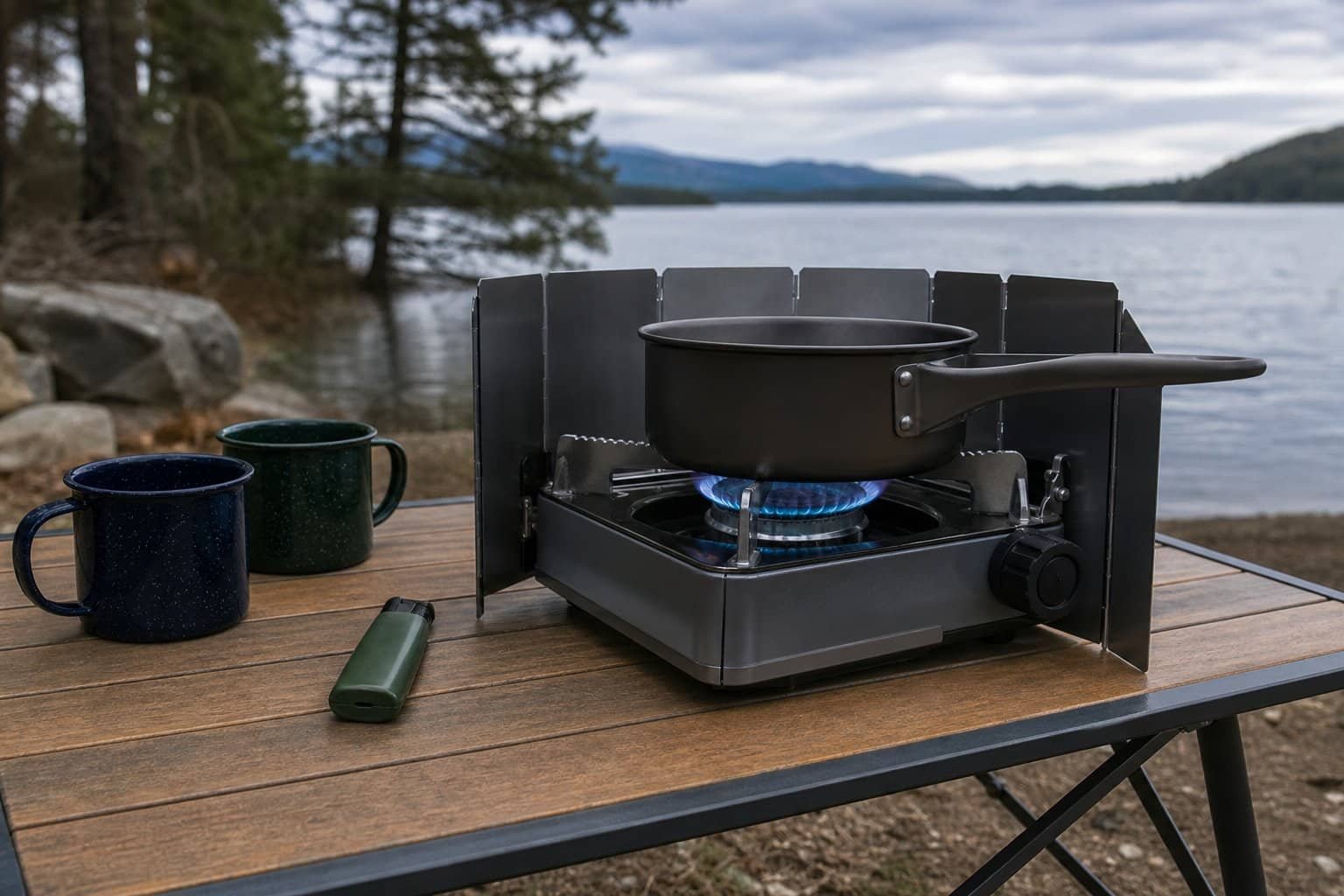
Wind is the biggest thief of heat on any single burner camp stove. Look for built-in baffles or a windbreaker around the burner, like the double windbreaker on the Iwatani 35FW or the four-corner blockers on the GasOne. Never wrap a full windscreen around a butane stove’s canister compartment, because trapped heat can overheat the canister. Place the stove behind your car or a cooler instead.
Pan size and stability
Check the largest pan the grate supports. The Coleman butane stove fits a 10 in pan and the Coleman PowerPack a 12 in pan, while the Stansport’s 7.5 in grid is best for small pots and kettles. On a butane stove, avoid oversize pans or griddles that overhang the canister compartment and reflect heat onto the fuel. Low, wide stoves are steadier for stirring than tall bottle-top burners.
Safety features
On any butane model, the most important feature is a pressure-sensing safety shut-off. BestReviews says the biggest butane risk is a canister overheating, and recommends a stove with an automatic shut-off valve. The GasOne ejects the canister and cuts the gas if pressure rises, and the Iwatani has an automatic safety stop. Propane stoves use a regulator to keep pressure steady.
Ignition and weight
Piezo or matchless ignition is convenient, but igniters can fail, so always pack a lighter or matches. Weight matters less for car camping, but tabletop single burners usually weigh 3–5 lb, while freestanding burners are much heavier and bulkier.
How much fuel does a single burner camp stove use?
Runtime depends on output and how hard you run the stove. Coleman quotes up to 1.25 hours on high for its 7,650 BTU butane stove on one 8.8 oz canister, and up to 3 hours on high for its 7,500 BTU PowerPack on a 16.4 oz propane cylinder. BestReviews says one canister lasts up to about an hour in the 15,000 BTU Iwatani. Most cooking happens on medium, so real-world use stretches further. For a weekend of coffee and two hot meals a day for two people, plan on two or three butane canisters or one to two 1 lb propane cylinders, plus a spare. Our guide to how long camping stove fuel lasts works through the maths in more detail.
Cold, wind and altitude all increase fuel use. Keep butane canisters warm in a jacket pocket or sleeping bag overnight, shield the flame from wind and put a lid on every pot. A lid alone can cut boil times noticeably.
Using a single burner camp stove safely
Cook outdoors, on a level, stable surface, away from tents, awnings and dry grass. Every camp stove produces carbon monoxide, and BestReviews notes most butane stoves are not safe to use indoors because of carbon monoxide poisoning risk, while cooking in a tent is also a fire hazard. A few cassette stoves, including the Iwatani, are sold for indoor and outdoor use, but that means a ventilated kitchen following the maker’s instructions, never a tent, camper shell or car.
Check the canister seal before you fit it, keep spare canisters away from the stove and out of direct sun, and never leave a lit stove unattended. Let the stove cool completely before removing a butane canister, and store canisters in a cool, dry place between trips. If you smell gas, turn the stove off, remove the canister and check the O-ring and connection. First trip with a new stove? Our step-by-step guide to using a camping stove on your first trip walks through setup.
Common single burner stove problems and fixes
The flame fades on cold mornings. This is butane’s classic weakness. Warm the canister in your jacket before cooking, keep a spare canister warm to swap in, or switch to propane. On a dual fuel stove, simply connect a 1 lb propane cylinder.
The flame goes out on low. Turn the knob up to medium-low and use a heavier pan or a heat diffuser. Wind makes this worse, so shield the burner.
The igniter clicks but won’t light. Check the canister is seated properly and that gas is flowing. Clean the igniter tip and light with a lighter if the piezo has failed.
The canister ejects or the gas shuts off. That’s the pressure safety system working. The canister is too hot, usually from an oversize pan, a windscreen trapping heat or direct sun. Let everything cool, remove the cause and try again.
The bottle-top stove wobbles. Use the base or stand that came with it, set it on flat ground and keep to small pots. A low briefcase stove is steadier for frying pans.
Cleaning and storing your single burner camp stove
A little care keeps a single burner camp stove lighting first time for years. After each trip, let it cool, lift off the grate and wipe away spills and grease with warm soapy water, then dry everything before packing. Porcelain-coated grates like the Coleman’s clean up easily; chrome grates benefit from a quick scrub. Check the burner ports for food or debris and clear them gently with a soft brush.
Always remove the canister or cylinder before storage. On a single burner butane stove, close the canister lever or release the magnet, put the cap back on the can and store it upright in a cool, dry place out of direct sun. For a single burner propane stove, unscrew the cylinder, inspect the O-ring on the connection and replace it if it’s cracked. Store the stove in its case so the igniter and burner aren’t knocked about in the car.
Before the first trip of the season, do a quick test at home outdoors: fit fresh fuel, check for the smell of gas, light the burner and run it on high and low for a few minutes. It’s much easier to fix a stuck igniter in the yard than at a dark campsite.
Single burner vs two-burner camp stove
A single burner camp stove is lighter, cheaper and easier to pack, and it’s all a solo camper or couple needs for coffee and one-pot meals. Families who cook full breakfasts, or want to boil water while frying, will be happier with two burners: see our double burner camping stoves guide. Many campers own both and use a single burner as a second hob or a quick coffee station. If you’re setting up a proper cooking area, a portable camping kitchen gives the stove a stable, heat-resistant surface at a comfortable height.
Which single burner camp stove should you buy?
Choose the GasOne 15,000 BTU Dual Fuel Stove if you want one stove for every season, since it runs on butane or propane. Pick the Iwatani 35FW for the best-built single burner butane stove with a strong windbreak, or the Coleman Classic 1-Burner Butane if you want a cheap, reliable summer stove with a 3-year warranty. For cold mornings and hunting camps, the Coleman PowerPack is the steadiest single burner propane stove here. The Stansport 201 is the most compact option for boiling water, and the Camp Chef Pro 30 is the one for big pots and fish fries.
Single burner stove myths
No. Butane struggles around and below freezing, while propane keeps working far colder.
Only around the burner. Enclosing the canister compartment can trap heat and overheat the canister.
No. Camp stoves produce carbon monoxide and can ignite fabric. Cook outdoors in open air.
What to look for in a single burner stove
Butane for warm weather, propane for cold, dual fuel for both.
Essential on butane stoves to protect against canister overheating.
Built-in baffles or a windbreaker around the burner.
7,500 BTU for two people; 10,000–15,000 BTU for bigger pots.
A flame that stays lit on low for sauces and eggs.
Check the largest pan and choose a low, wide base for frying.
How to set up a single burner stove
- Pick a safe spot
Outdoors on a level table or ground, away from tents, awnings and dry grass.
- Fit the fuel
Check the canister seal, then lock a butane canister in place or connect the propane cylinder hand-tight.
- Shield the burner
Turn the stove so its baffles face the wind; never enclose a butane canister.
- Light and adjust
Use the igniter or a lighter, then set medium heat and put a lid on the pot.
- Cool and store
Turn off, let the stove cool, remove the canister and store fuel in a cool, dry place.
How we chose these stoves
We have not tested every stove in this list ourselves. Our picks are based on Amazon listings, published specifications from GasOne, Iwatani, Coleman, Stansport and Camp Chef, and independent reviews from Switchback Travel, CleverHiker and BestReviews. Where a listing didn’t state a spec, we marked it “Not quoted”.
-
Fuel and weather
We weighed butane’s convenience against propane’s cold-weather performance.
-
Power and control
We compared BTU ratings and reports of simmer performance.
-
Safety
We favored pressure shut-offs, stable bases and wind protection.
-
Honest specs
We flagged missing specs rather than guessing them.
What is the best single burner camp stove?
For most campers, the GasOne 15,000 BTU Dual Fuel Stove: it runs on butane or a 1 lb propane cylinder, has pressure-sensor canister ejection and wind blockers, and is powerful enough for quick boils.
Is butane or propane better for a camp stove?
Butane is compact and easy in warm weather; propane works far better in the cold. Butane struggles around and below freezing, so choose propane or dual fuel for fall, spring and high-elevation trips.
How long does a butane canister last on a single burner?
Coleman quotes up to 1.25 hours on high from one 8.8 oz canister in its 7,650 BTU stove; higher-output stoves use fuel faster. Cooking on medium stretches it further.
Can I use a single burner stove inside a tent?
No. Camp stoves produce carbon monoxide and can set fabric alight. Always cook outdoors in open air.
Why does my butane stove lose power?
Usually cold: as the canister chills, butane vaporizes less. Warm the canister in a pocket, shield the stove from wind or switch to propane.
Can a butane stove run on propane?
Only if it’s a dual fuel model with a propane adapter, such as the GasOne GS-3900PB. Never force an adapter onto a butane-only stove.
Final thoughts on choosing a single burner camp stove
A single burner camp stove is small, but choosing the right fuel makes a big difference. Go butane for compact, easy summer cooking, propane for cold mornings, and dual fuel if you want both. Add wind protection, a pressure safety shut-off and a pan that fits, and one burner will handle more camp meals than you might expect. For the rest of your cook kit, see our camping kitchen essentials checklist and our guide to the best kettles for camping.
Which single burner stove should you buy?
- Best overall: GasOne 15,000 BTU Dual Fuel Stove
- Best butane stove: Iwatani 35FW
- Best budget butane: Coleman Classic 1-Burner Butane Stove
- Best propane stove: Coleman PowerPack Propane Stove
- Most compact: Stansport Single Burner Propane Stove
- Most powerful: Camp Chef Pro 30
For most campers, the GasOne 15,000 BTU Dual Fuel Stove is the best single burner camp stove because it runs on butane or propane. Pick the Iwatani 35FW for premium butane cooking, the Coleman Classic for a budget butane stove, the Coleman PowerPack for cold weather, the Stansport 201 for compact boiling and the Camp Chef Pro 30 for big pots.
CampEquipmentPlus relies on reader support. Purchases made via links on our website may earn us an affiliate commission at no extra cost to you, helping keep the site running.