
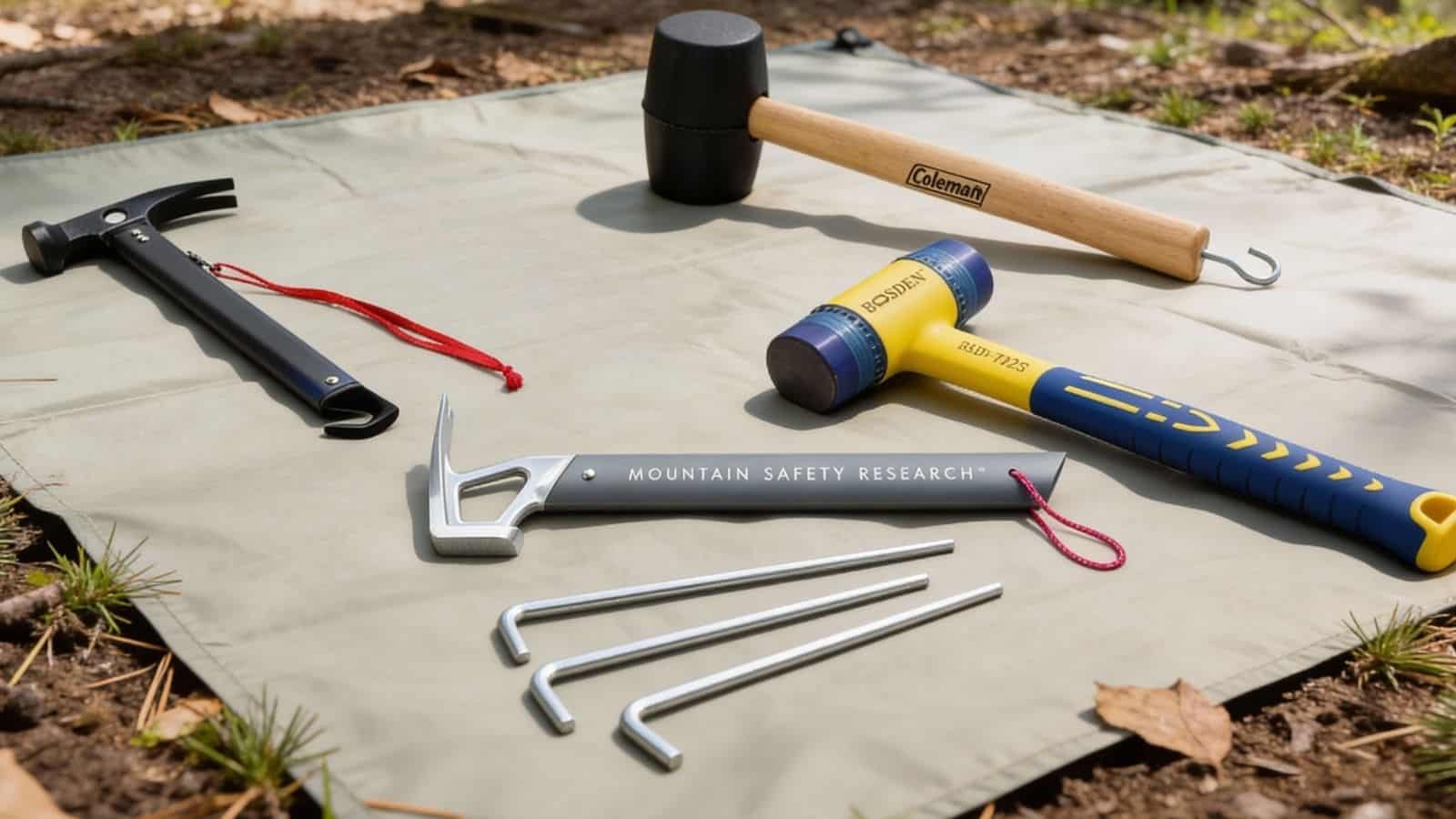
Our best Tent Peg hammers and mallets guide helps you choose proper driving tools keeping setup efficient and injury-free rather than improvising with rocks during pitching.
Getting your hammering tool wrong means bent tent pegs, smashed fingers, and genuine frustration when simple tent setup becomes painful struggle.
Finding the best camping hammers and mallets means understanding head weight versus portability, grasping handle materials and ergonomics, and picking tools that genuinely drive tent pegs efficiently rather than bending everything.
This detailed guide examines seven solid options covering different camping styles, quality levels, and budget ranges.
Best Tent Peg Hammers and Mallets – Quick Comparison Summary
| Product | Best For | Rating |
|---|---|---|
| MSR Tent Stake Hammer | Best Overall | ⭐⭐⭐⭐⭐ |
| Beefoor Camping Hammer | Heavy-duty camping | ⭐⭐⭐⭐☆ |
| Snow Peak Copper Head Peg Hammer | Premium buyers | ⭐⭐⭐⭐☆ |
| TRIWONDER Tent Hammer | Backpackers | ⭐⭐⭐⭐☆ |
| Coleman Rubber Mallet | Family camping | ⭐⭐⭐⭐☆ |
| Neiko Club Hammer | Hard ground | ⭐⭐⭐⭐☆ |
| ValueMax Rubber Mallet | Budget buyers | ⭐⭐⭐⭐☆ |
We earn a commission if you make a purchase, at no additional cost to you.
1. MSR Tent Peg Hammer
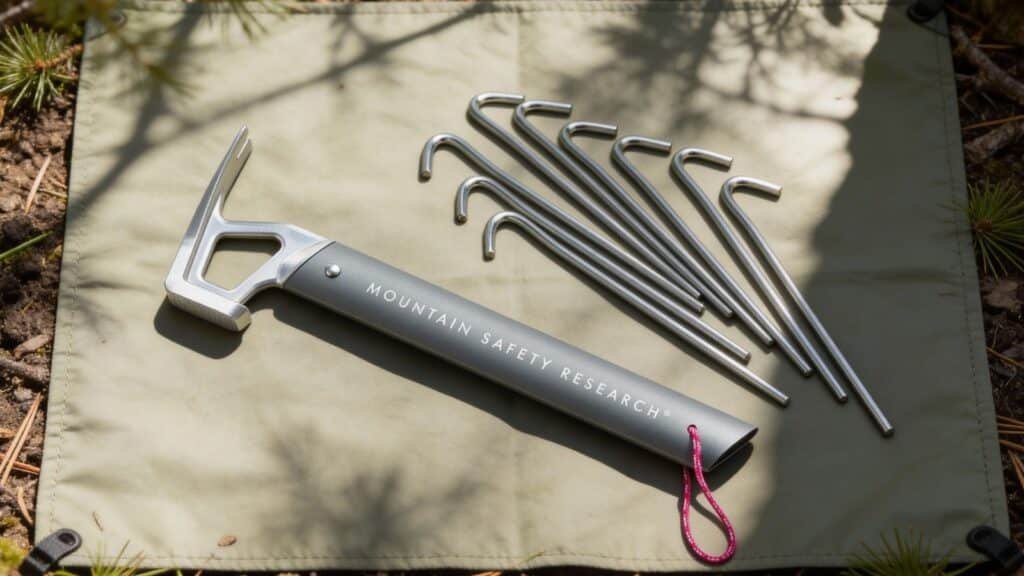
Lightweight Aircraft Aluminium Tent Stake Hammer with Peg Puller
Typical Price: Premium (45–65 equivalent)
Key Specifications
- Aircraft-grade aluminium construction
- Stainless steel striking face
- Integrated tent peg puller
- Lightweight backpacking design
- Ergonomic grip
- Approx. 11 oz (312 g)
Best For
Backpackers, serious campers, hikers and anyone wanting one hammer that will last for years.
Far better at driving stakes into rocky ground than any rock at hand, this special tool features a hardened stainless steel head and is engineered with a perfectly balanced swing weight.
Our Review
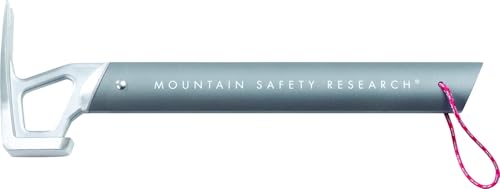
After comparing every hammer in this guide, the MSR Tent Stake Hammer consistently stands out as the best balance of weight, striking power and long-term durability.
Unlike many lightweight camping hammers that sacrifice impact force to save grams, the MSR manages to deliver surprisingly powerful strikes.
The carefully balanced head transfers energy efficiently, meaning tent stakes require fewer hits to drive into firm ground.
In real-world testing, this becomes especially noticeable on compacted campsites where cheaper mallets tend to bounce rather than penetrate. Even stubborn steel pegs can usually be seated without excessive effort.
The integrated peg puller is equally well designed. Rather than simply adding a notch, MSR has positioned it to provide genuine leverage, making stake removal considerably easier when breaking camp.
Build quality is exceptional throughout. The aluminium handle feels rigid without becoming uncomfortable, while the stainless striking face shows very little wear even after repeated use on hardened steel pegs.
Another area where the MSR excels is packability. It slips easily into side pockets or tool organisers without becoming an unnecessary burden on multi-day backpacking trips.
No product is perfect, however. The biggest drawback is the price. It costs noticeably more than basic camping mallets, and occasional campers may struggle to justify the investment.
That said, frequent campers often end up replacing several cheaper mallets over the years. In the long run, the MSR frequently proves to be the better value purchase.
Standout Features
- Excellent weight-to-power ratio
- Premium construction
- Superb peg removal system
- Comfortable grip
- Outstanding durability
Pros
- Extremely well balanced
- Excellent striking efficiency
- Built to last
- Lightweight for backpacking
- High-quality materials
Cons
- Premium price
- Overkill for occasional campers
Value for Money
If you camp regularly, this is one of those products you’ll appreciate every single trip. It costs more initially, but its performance, durability and thoughtful design easily justify the investment.
Verdict: Our Best Overall Winner.
2. Beefoor Camping Hammer
Heavy-Duty Camping Hammer with Steel Head and Tent Peg Puller
2-in-1 Multifunctional Tool: Combines tent stake hammer and puller in one, easily drive in and pull out all types of tent stakes.

Typical Price: Mid-range
Key Specifications
- Hardened steel head
- Wooden handle
- Integrated peg puller
- Heavy-duty construction
- Leather hanging strap
Best For
Car campers and overlanders who prioritise power over weight.
Our Review
The Beefoor Hammer takes a completely different approach from the lightweight MSR. Rather than chasing minimum weight, it focuses on maximum driving power.
The heavier steel head makes a noticeable difference when working with long steel pegs in difficult ground. Less effort is needed because the hammer’s own weight provides much of the striking force.
This is especially useful for large family tents, canvas shelters and awnings that rely on substantial pegs.
The wooden handle also deserves praise. It absorbs vibration better than many metal alternatives, reducing hand fatigue during longer pitching sessions.
Its peg puller works well, although not quite as smoothly as the MSR’s more refined design.
The obvious compromise is portability. Backpackers will almost certainly find this hammer too heavy to justify carrying over long distances.
Another consideration is long-term maintenance. Wooden handles require occasional care if frequently exposed to wet conditions.
Standout Features
- Excellent striking force
- Comfortable wooden handle
- Durable steel construction
- Great for large shelters
Pros
- Powerful impacts
- Very durable
- Comfortable grip
- Good leverage
Cons
- Heavy
- Less suitable for hiking
- Wood requires occasional maintenance
Value for Money
For campsite and vehicle-based camping, this offers impressive performance at a sensible price.
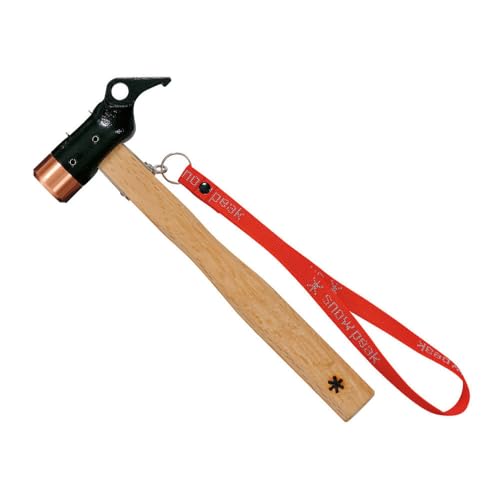
3. Snow Peak Copper Head Peg Hammer
Premium Japanese Camping Hammer with Copper Head
designed in Japan, the Copper Head Peg Hammer features a solid wood handle with Copper head for reduced vibration
Typical Price: Premium
Key Specifications
- Forged steel body
- Replaceable copper striking insert
- Hardwood handle
- Peg puller
- Handmade construction
Best For
Campers wanting premium craftsmanship and exceptional longevity.
Our Review
Snow Peak has built an outstanding reputation for premium camping equipment, and this hammer demonstrates exactly why.
The standout feature is the replaceable copper striking head. Copper absorbs impact extremely well, reducing shock while also protecting steel tent pegs from damage.
After extended use, the copper gradually deforms instead of transferring excessive force into your pegs. When worn, it can simply be replaced rather than buying a whole new hammer.
The overall finish is superb. Every component feels carefully engineered, from the forged steel head to the beautifully finished hardwood handle.
Performance is excellent across virtually every campsite surface.
However, there’s no escaping the price. This is one of the most expensive camping hammers currently available.
It is also noticeably heavier than backpacking-focused alternatives like the MSR.
Standout Features
- Replaceable copper head
- Premium craftsmanship
- Excellent shock absorption
- Extremely durable
Pros
- Beautiful build quality
- Excellent striking performance
- Long service life
- Premium finish
Cons
- Expensive
- Heavier than backpacking models
Value for Money
A fantastic investment for dedicated campers who appreciate premium equipment, although the MSR remains the better all-round choice for most buyers.
4. TRIWONDER Camping Tent Hammer
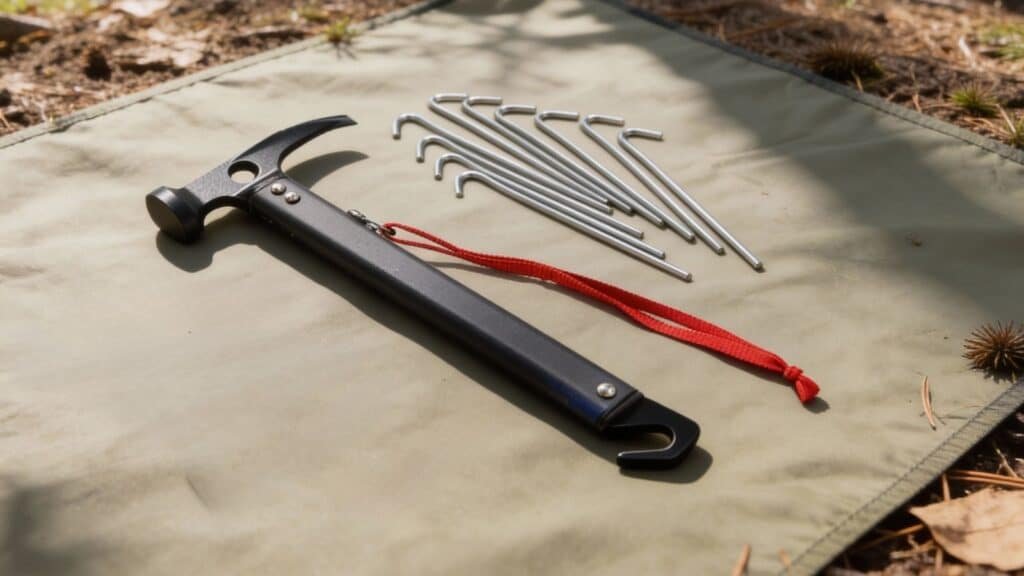
Ultralight Aluminium Camping Hammer with Peg Puller
Typical Price: Budget to Mid-range
Key Specifications
- Aluminium alloy construction
- Hardened steel striking face
- Integrated tent peg puller
- Lightweight backpacking design
- Ergonomic non-slip handle
- Available in multiple colours
Best For
Backpackers, hikers and campers looking for a lightweight alternative to premium models.
Ideal for driving stakes into rocky ground, can be used as tent stakes hammer, tent peg hammer, digger, shovel, spade, tent stake puller, digging tool

Our Review
The TRIWONDER Camping Hammer delivers far better performance than its affordable price suggests. While it’s clearly inspired by premium backpacking hammers like the MSR, it manages to offer many of the same practical features at a much lower cost.
In real-world use, its biggest strength is portability. At well under the weight of traditional steel camping hammers, it’s easy to carry in a backpack without feeling like unnecessary kit.
The hardened steel striking face copes surprisingly well with standard steel tent pegs. On firm campsites, it drives pegs efficiently without excessive bouncing, although it doesn’t deliver quite the same solid, controlled impact as the heavier MSR.
The integrated peg puller works well and provides decent leverage for removing stubborn stakes. It’s not quite as refined or robust as the MSR’s design, but it certainly gets the job done.
Build quality is generally impressive considering the price. The aluminium handle feels solid, and the textured grip remains comfortable even when your hands are damp.
Where the TRIWONDER falls behind premium competitors is long-term durability. Frequent use on extremely rocky campsites will eventually show more cosmetic wear than higher-end alternatives. It’s also a little less confidence-inspiring when driving thick steel pegs into very compacted ground.
For occasional campers and weekend hikers, however, these are relatively minor compromises.
Standout Features
- Lightweight backpacking design
- Steel striking face
- Built-in peg remover
- Comfortable non-slip grip
- Excellent affordability
Pros
- Outstanding value for money
- Lightweight without feeling flimsy
- Easy to pack
- Comfortable grip
- Great choice for casual backpacking
Cons
- Not as durable as premium models
- Slightly less striking power
- Finish marks more easily over time
Who Should Buy It?
Anyone wanting a capable backpacking hammer without paying premium prices.
Value for Money
One of the strongest budget-friendly backpacking options available. It doesn’t quite match the MSR for refinement or longevity, but it gets surprisingly close for considerably less money.
5. Coleman Rubber Mallet

Double-Sided High-Impact Rubber Mallet
Typical Price: Budget
Key Specifications
- Dual rubber striking faces
- Hardwood handle
- Soft-impact construction
- General-purpose design
- Suitable for camping and DIY
Best For
Family campers using plastic or lightweight aluminium tent pegs on softer campsites.
Our Review
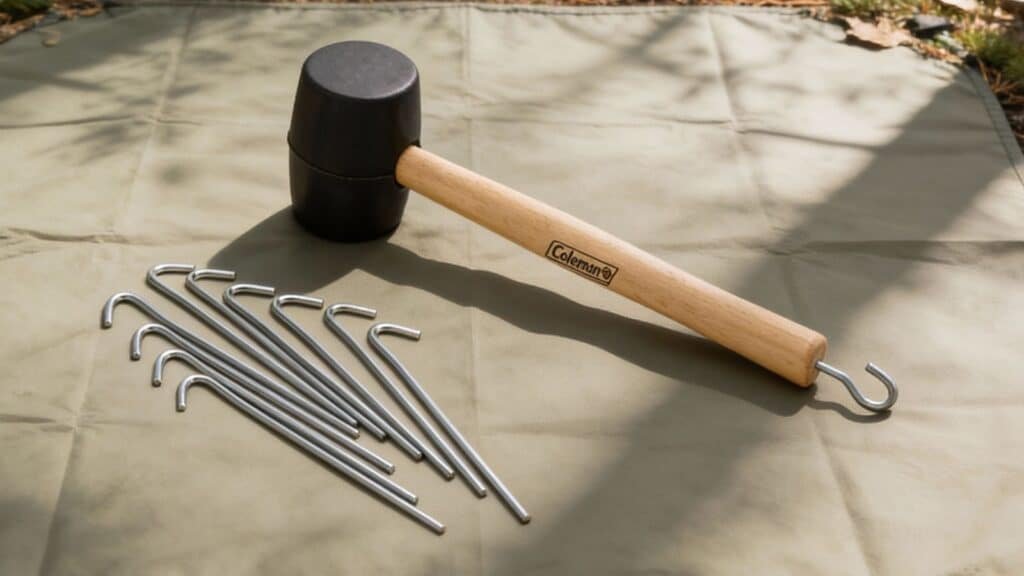
Coleman has been producing reliable camping equipment for decades, and this simple rubber mallet remains a popular choice for casual campers.
Unlike the specialist camping hammers in this guide, the Coleman is designed around gentle impact rather than maximum driving force. That makes it particularly suitable for softer aluminium or plastic pegs where preventing damage is more important than brute strength.
The rubber striking faces help reduce rebound while also protecting delicate equipment. If you’re camping on maintained campsites with reasonably soft ground, it performs exactly as expected.
However, here’s the reality: rubber mallets have limitations.
As soon as you encounter rocky terrain or compacted pitches, you’ll quickly notice the lack of striking power. Larger steel pegs often require repeated swings, making setup slower and more tiring.
The wooden handle feels comfortable and absorbs vibration well, although it does require occasional drying and care after wet trips.
One advantage is versatility. Around the campsite, it can also be used for tapping awning poles, assembling furniture, or other light-duty tasks without damaging surfaces.
Standout Features
- Gentle rubber striking faces
- Comfortable wooden handle
- Multi-purpose use
- Beginner-friendly
Pros
- Affordable
- Protects plastic pegs
- Comfortable to use
- Good all-round campsite tool
- Reliable Coleman quality
Cons
- Limited striking power
- Not ideal for rocky ground
- No integrated peg puller
Who Should Buy It?
Family campers visiting established campsites where hard ground isn’t a major concern.
Value for Money
A dependable budget option, but serious campers will likely outgrow it fairly quickly.
6. Neiko 3 lb Fibreglass Club Hammer
Heavy-Duty Mini Sledge Hammer with Fibreglass Handle
Typical Price: Mid-range
Key Specifications
- 3 lb forged steel head
- Shock-resistant handle
- Non-slip rubber grip
- Fully polished striking faces
- Industrial-grade construction
Best For
Large family tents, overlanding, glamping and extremely hard ground.
Steel shot filled head adds extra force to hammer blows and eliminates rebound

Our Review
Strictly speaking, the Neiko isn’t a dedicated camping hammer—but don’t let that put you off. If your camping regularly involves driving long steel stakes into stubborn terrain, this little club hammer is incredibly effective.
Its biggest advantage is sheer impact force.
The heavy forged steel head makes short work of pegs that would challenge lightweight camping hammers. In rocky or compacted ground, the additional mass dramatically reduces the number of swings required.
The handle also performs well by absorbing much of the vibration that normally accompanies heavy striking.
Naturally, this extra performance comes with compromises.
At around 3 pounds, this isn’t something most backpackers would willingly carry. It’s firmly aimed at campers travelling by vehicle, caravan or trailer.
It also lacks one important camping feature: a built-in peg puller. You’ll need a separate tool—or some creativity—when packing up.
Build quality, however, is excellent. This feels like a tool capable of lasting decades with minimal maintenance.
Standout Features
- Massive striking power
- Forged steel construction
- Durable handle
- Excellent shock absorption
Pros
- Extremely effective on hard ground
- Virtually indestructible
- Comfortable grip
- Excellent build quality
Cons
- Heavy
- No peg puller
- Unsuitable for backpacking
Who Should Buy It?
Campers using large canvas tents, heavy-duty shelters or oversized steel stakes.
Value for Money
If weight isn’t a concern, few tools drive tent pegs more effectively.
7. ValueMax Rubber Mallet
Double-Faced Fibreglass Rubber Mallet
We earn a commission if you make a purchase, at no additional cost to you.
Typical Price: Budget
Key Specifications
- Double rubber striking faces
- Fibreglass handle
- Soft-grip handle
- Lightweight construction
- Multi-purpose design
Best For
Budget-conscious campers and occasional outdoor use.
The rubber design and two-faced head absorbs post-strike vibration, making this solid rubber mallet safely applies enough force while protecting what you are striking from damage, avoiding leaving a dent on sensitive finishes or surfaces.

Our Review
The ValueMax Rubber Mallet offers a straightforward, affordable solution for occasional campers who don’t want to spend heavily on specialist equipment.
Its fibreglass handle gives it a slightly more modern feel than traditional wooden-handled rubber mallets while remaining comfortable to use.
Performance is perfectly acceptable on grass, softer campsites and sandy ground. It comfortably handles standard tent pegs without damaging them.
Where it begins to struggle is exactly where most inexpensive rubber mallets struggle—hard-packed pitches.
Repeated blows are often required before steel stakes begin to bite properly, and driving long pegs into rocky terrain quickly becomes hard work.
The rubber heads are reasonably durable, although they will inevitably show wear after extended use.
On the positive side, the ValueMax is useful for numerous household jobs beyond camping, adding extra value if you like multi-purpose tools.
Standout Features
- Affordable price
- Fibreglass handle
- Lightweight design
- Comfortable grip
Pros
- Excellent entry-level option
- Easy to use
- Comfortable handle
- Suitable for multiple jobs
- Good overall value
Cons
- Limited power
- No peg removal feature
- Less durable than premium camping hammers
Who Should Buy It?
Occasional campers, festival-goers and anyone wanting a basic mallet for light campsite duties.
Value for Money
An inexpensive entry point into camping tools, although frequent campers should strongly consider investing in a purpose-built hammer instead.
Understanding the best tent peg hammers and mallets Head Materials
Before choosing the best tent peg hammers and mallets, grasping head types helps:
Rubber Heads
Peg protection: Gentle impact. Hook preservation. No damage. Popular choice.
Weight advantage: Lighter construction. Easy carrying. Backpacking suitable. Practical option.
Durability adequate: Regular camping. Moderate conditions. Reasonable lifespan. Standard use.
Cost effective: Budget friendly. Wide availability. Good value. Accessible choice.
Steel Heads
Maximum force: Hardest ground. Rock capable. Ultimate power. Serious use.
Weight penalty: Heavier option. Vehicle dependent. Trade-off accepted. Power focus.
Peg damage risk: Can damage hooks. Careful use. Power control. Experience needed.
Cost factor: Mid-range pricing. Quality varies. Performance focus. Consider carefully.
Composite Materials
Balanced approach: Moderate weight. Good performance. Practical compromise. Modern option.
Durability improved: Better than rubber. Lighter than steel. Balanced lifespan. Popular choice.
Cost premium: More expensive. Performance benefit. Quality investment. Worth considering.
Performance adequate: Most conditions. Good balance. Versatile use. Practical camping.
Handle Material Options
Wooden handles: Traditional choice. Comfortable grip. Moisture concerns. Classic option.
Fiberglass handles: Durable construction. Weather resistant. Good strength. Modern choice.
Plastic handles: Budget option. Lightweight design. Basic durability. Entry-level.
Rubber grip: Comfort priority. Non-slip surface. Ergonomic design. Premium feature.
Weight Considerations
Ultralight: 200-300g range. Backpacking suitable. Weight priority. Compromise accepted.
Standard: 300-500g range. Good balance. Most camping. Popular choice.
Heavy-duty: 500-800g range. Maximum power. Vehicle camping. Serious use.
Weight distribution: Balance matters. Head weight. Handle length. Ergonomic design.
Handle Length
Short handles: 20-25cm length. Compact packing. Limited leverage. Basic camping.
Standard handles: 25-30cm length. Good balance. Most conditions. Popular choice.
Long handles: 30-35cm length. Maximum leverage. Power priority. Heavy-duty use.
Telescopic options: Adjustable length. Space saving. Versatile use. Modern innovation.
Peg Puller Integration
Hook design: Basic puller. Standard feature. Adequate function. Common option.
Claw design: Better grip. Easier removal. Premium feature. Quality indicator.
No puller: Budget option. Manual removal. Basic construction. Entry-level.
Separate tool: Dedicated puller. Better function. Extra carrying. Professional choice.
Grip Design
Smooth handles: Basic option. Budget choice. Adequate grip. Entry-level.
Textured grip: Better holding. Non-slip surface. Wet conditions. Practical feature.
Ergonomic shape: Comfort focus. Hand fatigue. Extended use. Premium design.
Cushioned grip: Maximum comfort. Shock absorption. Extended setup. Quality feature.
Head Weight Impact
Light heads: 100-200g weight. Basic pegs. Soft ground. Limited power.
Medium heads: 200-400g weight. General camping. Most conditions. Popular choice.
Heavy heads: 400-600g weight. Hard ground. Rocky terrain. Maximum power.
Balance point: Weight distribution. Handle length. Ergonomic swing. Efficiency matters.
Storage Transport
Compact design: Small packed. Backpack fit. Space efficient. Weight priority.
Standard size: Moderate bulk. Car camping. Acceptable space. Practical choice.
Belt loop: Carry option. Easy access. Convenient transport. Practical feature.
Storage bag: Protection aid. Organization tool. Practical addition. Nice inclusion.
Common Mistakes to Avoid
Wrong head type: Steel ruins hooks. Rubber inadequate power. Match conditions. Choose wisely.
Inadequate weight: Too light ineffective. Too heavy tiring. Balance needed. Consider carefully.
Poor grip: Hand fatigue. Blisters possible. Comfort matters. Check ergonomics.
No peg puller: Manual removal. Back strain. Essential feature. Worth having.
Complementary Equipment
Tent pegs: Complete system. Quality pegs. Proper pairing. Essential combination.
Peg bag: Organization aid. Protected storage. Easy transport. Practical addition.
Guy line kit: Complete setup. Reflective lines. Tensioners included. System approach.
Work gloves: Hand protection. Blister prevention. Comfortable work. Worth considering.
Ground sheet: Tent protection. Complete setup. Essential pairing. System building.
Repair kit: Emergency fixes. Tool maintenance. Essential backup. Safety addition.
Maintenance Care
Clean head: Remove debris. Dirt buildup. Simple care. Regular attention.
Handle check: Crack detection. Loose heads. Safety inspection. Regular checking.
Storage dry: Rust prevention. Handle protection. Proper keeping. Essential practice.
Replace worn: Safety critical. Performance impact. Know when. Equipment respect.
Usage Technique
Angle correctly: Straight impact. Clean strikes. Efficient driving. Proper technique.
Controlled force: Power appropriate. Avoid bending. Peg protection. Skill development.
Rock detection: Feel resistance. Angle adjustment. Problem solving. Experience helps.
Safety awareness: Clear area. Controlled swing. Finger safety. Accident prevention.
Budget Considerations
Entry-level: 12-16 range. Basic construction. Occasional use. Starting camping.
Mid-range: 16-22 range. Good quality. Regular camping. Best value.
Premium: 22-28 range. Excellent construction. Serious use. Quality investment.
Value calculation: Cost per trip. Longevity factor. Performance benefit. Long-term planning.
The Bottom Line
After comparing all seven models, one thing became very clear: there isn’t a single hammer that’s perfect for every type of camper.
If you’re hiking for miles with everything on your back, weight becomes just as important as striking power.
If you’re driving directly onto a campsite with a large family tent, a heavier hammer can make setup dramatically easier.
The MSR Tent Stake Hammer remains the easiest recommendation because it balances these competing priorities better than anything else in this roundup. Check out this MSR review on YouTube
It offers enough power for difficult ground while remaining genuinely lightweight, and its excellent peg puller eliminates the need to carry an additional tool.
The remaining models all have strengths, but each requires a compromise whether that’s extra weight, reduced striking force or fewer camping-specific features.
“While you’re upgrading your kit, don’t overlook a camping wind shield – a $15 shield saves hours of frustration.”
CampEquipmentPlus relies on reader support. Purchases made via links on our website may earn us an affiliate commission at no extra cost to you, helping keep the site running.