
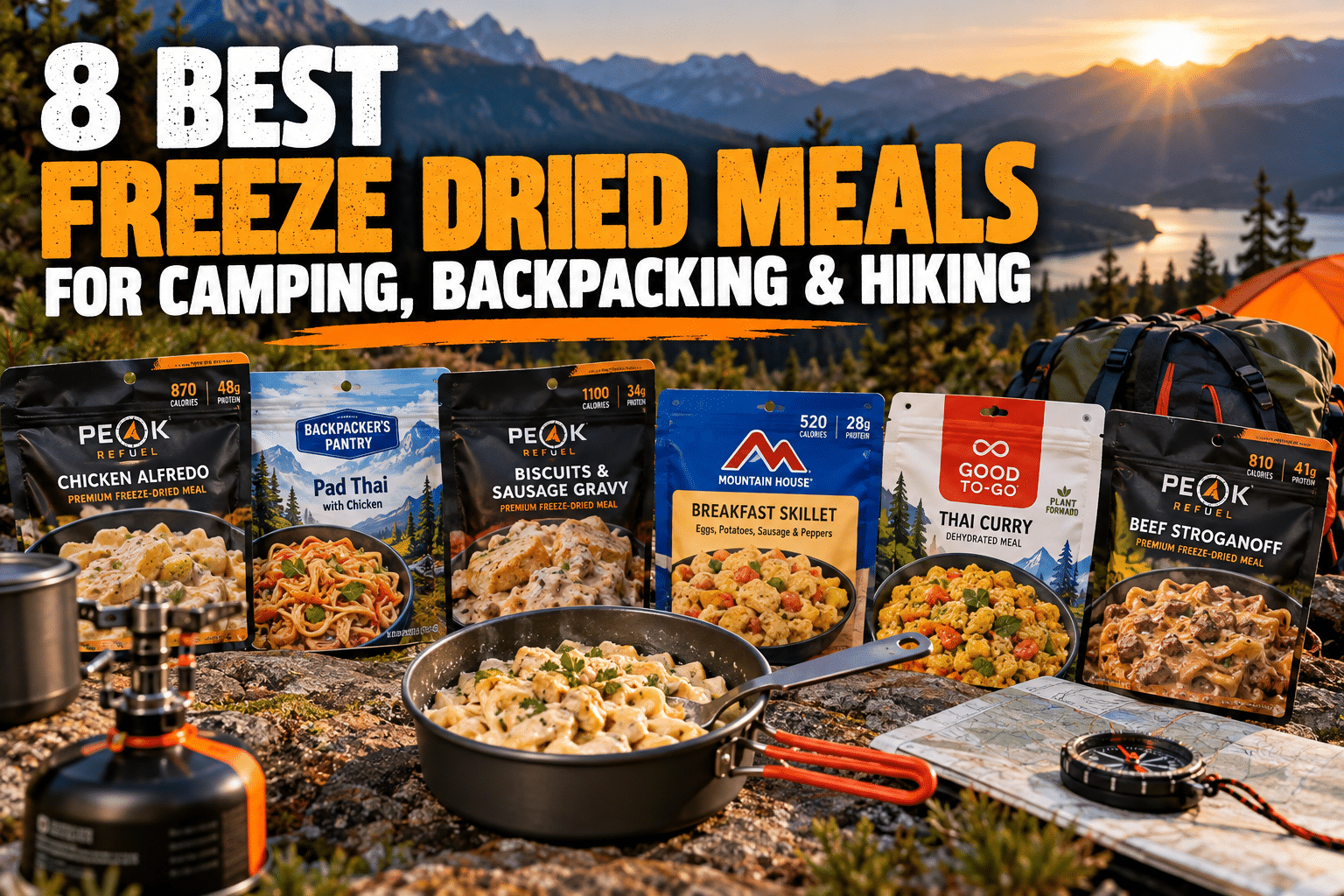
The best freeze dried meals for camping need to do more than taste decent.
A good camping meal should provide enough calories for the weight you carry, require a sensible amount of water, prepare quickly, and leave you feeling like you ate dinner rather than an expensive snack.
That matters even more when backpacking. REI suggests roughly 2,500 to 4,500 calories of food per person per day for backpacking, depending on body size, activity, terrain, trip length, and other factors.
We compared eight freeze dried camping food and dehydrated meal options from Peak Refuel, Backpacker’s Pantry, Mountain House, and GOOD TO-GO. We looked at calories, protein, dry weight, calorie density, preparation, water requirements, dietary considerations, and available taste feedback.
No single meal wins every category. Peak Refuel Chicken Alfredo provides a particularly strong combination of calories, protein, low dry weight, and quick preparation. Backpacker’s Pantry Pad Thai with Chicken offers something quite different if flavor variety matters more. Peak Refuel Biscuits & Sausage Gravy is the calorie heavyweight.
Best Freeze Dried Meals for Camping
| Category | Product | Calories | Protein | Dry Weight | Best For |
|---|---|---|---|---|---|
| Best Overall | Peak Refuel Chicken Alfredo | 870* | 48g | 4.97 oz* | Camping and backpacking |
| Best Tasting | Backpacker's Pantry Pad Thai with Chicken | 850 | 42g | 6.7 oz | Flavor and variety |
| Best High-Calorie | Peak Refuel Biscuits & Sausage Gravy | 1,100 | 34g | 6.77 oz | High-energy trips |
| Best for Hunting | Peak Refuel Beef Stroganoff | 810 | 41g | 5 oz | Hunting and backpacking |
| Best Breakfast | Backpacker's Pantry Granola with Blueberries, Almonds & Milk | 620 | 16g | 4.7 oz | No-stove breakfast |
| Best Hot Breakfast | Mountain House Breakfast Skillet | 520 | 28g | Not compared | Hot breakfast |
| Best Dehydrated Meal | GOOD TO-GO Thai Curry | Varies by pouch size | Varies | Varies | Dehydrated alternative |
*Peak Refuel’s current Chicken Alfredo product page lists 870 calories and 4.97 oz, while a current collection page lists 830 calories and 4.93 oz. Check the current package nutrition information before relying on either figure.
Our quick picks:
- Peak Refuel Chicken Alfredo offers the strongest overall specifications for most backpackers.
- Peak Refuel Biscuits & Sausage Gravy provides about 162 calories per ounce, useful when calorie density matters.
- Backpacker’s Pantry Pad Thai with Chicken combines 850 calories with 42g of protein and offers a break from creamy pasta meals.
- Backpacker’s Pantry Granola needs no stove, making breakfast considerably simpler.
- GOOD TO-GO Thai Curry is dehydrated rather than freeze-dried and takes longer to prepare.
What Are the Best Freeze Dried Meals for Camping?
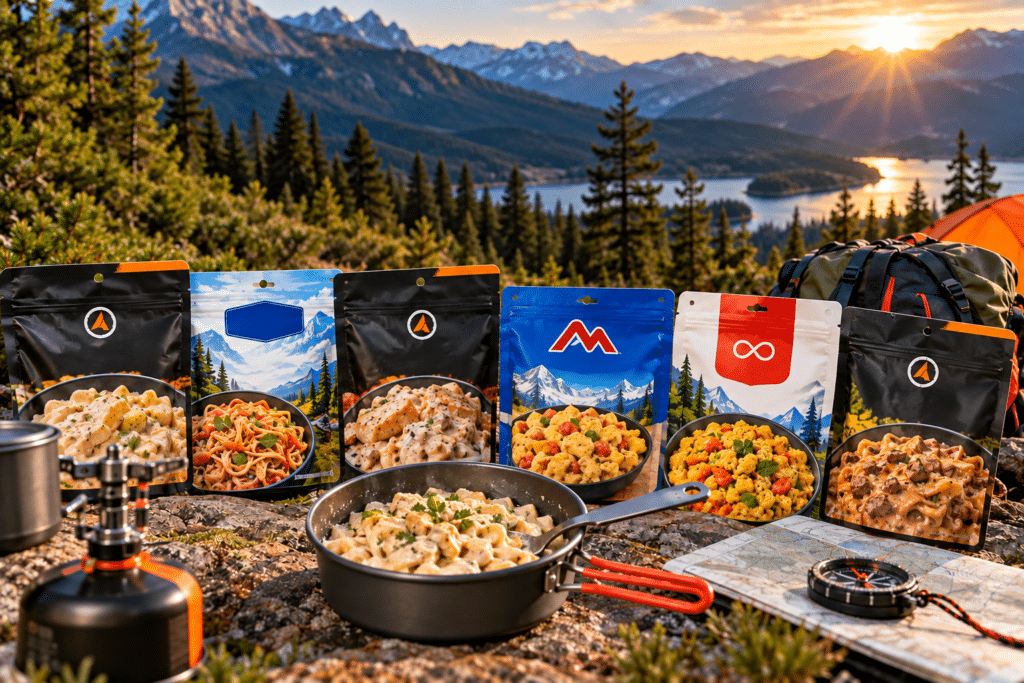
Peak Refuel Chicken Alfredo is our Best Overall choice because its combination of calories, protein, low dry weight, modest water requirement, and 10-minute preparation is difficult to ignore.
That does not make Chicken Alfredo right for everyone.
Car campers can worry less about a few extra ounces. Backpackers have more reason to scrutinize dry weight and calorie density. Hunters may want a compact meal that fits around other equipment. Anyone with food allergies needs to start with the ingredient label rather than our ranking.
That is why our list of the best freeze dried food for camping includes separate recommendations for different trips.
#1 – Peak Refuel Chicken Alfredo: Best Overall
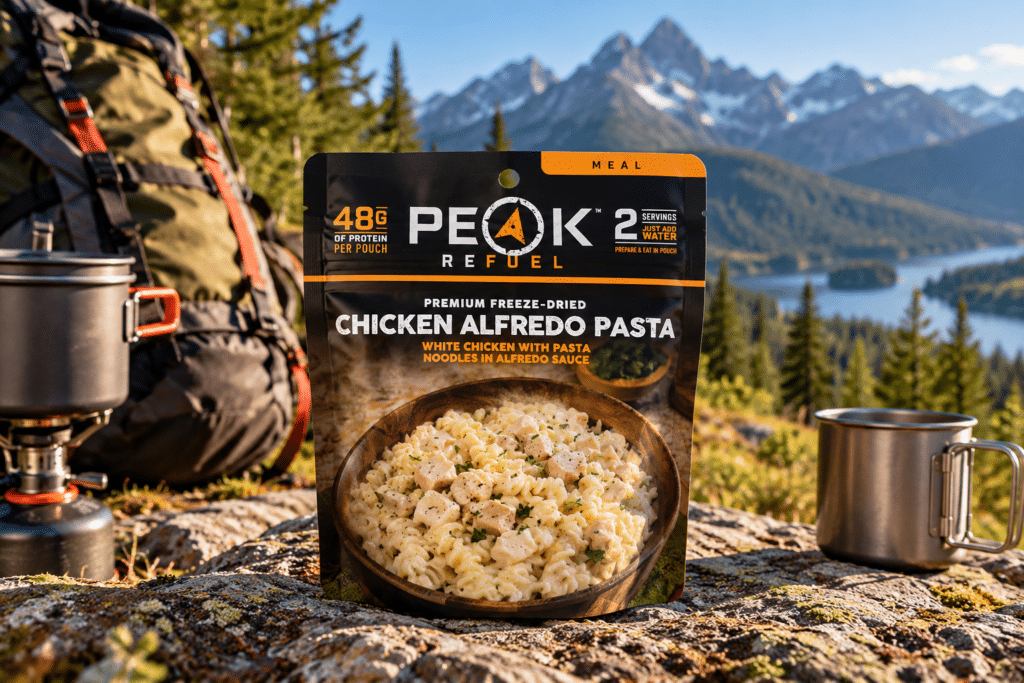
Peak Refuel Chicken Alfredo stands out because you get a substantial amount of food energy and protein from a pouch weighing around 5 oz.
48g protein, 100% real meat, Non-GMO ingredients, No fillers, Freeze-dried, Just add water, 2 servings, Backpacking meal

The manufacturer currently lists 48g of protein, 870 calories, 4.97 oz net weight, 3/4 cup of boiling water, and a 10-minute preparation time. That works out at roughly 175 calories per ounce using those figures. (Peak Refuel)
That calorie density deserves attention.
A freeze dried backpacking meal can look lightweight on the shelf but still provide relatively few calories. Chicken Alfredo performs well on both sides of the calculation.
It also requires only 3/4 cup of boiling water. That is useful when you need to carry water or want to reduce stove time.
The meal contains chicken breast, pasta, cheese, and Alfredo-style sauce. It contains milk and wheat, which rules it out for some dietary requirements.
There is one specification problem worth knowing about. Peak Refuel’s current product page lists 870 calories and 4.97 oz, while its collection page shows 830 calories and 4.93 oz. We would check the nutrition panel on the pouch you receive rather than assuming either online figure will remain current.
Who it suits: Backpackers, campers, hikers, and hunters wanting high calories and protein without carrying a large pouch.
Pros:
- 48g protein per pouch
- Around 5 oz dry weight
- High calorie density
- Only 3/4 cup water required
- 10-minute preparation
Cons:
- Contains milk and wheat
- Creamy pasta will not appeal to everyone
- Conflicting current manufacturer figures for calories and weight
#2 – Backpacker’s Pantry Pad Thai With Chicken: Best Tasting
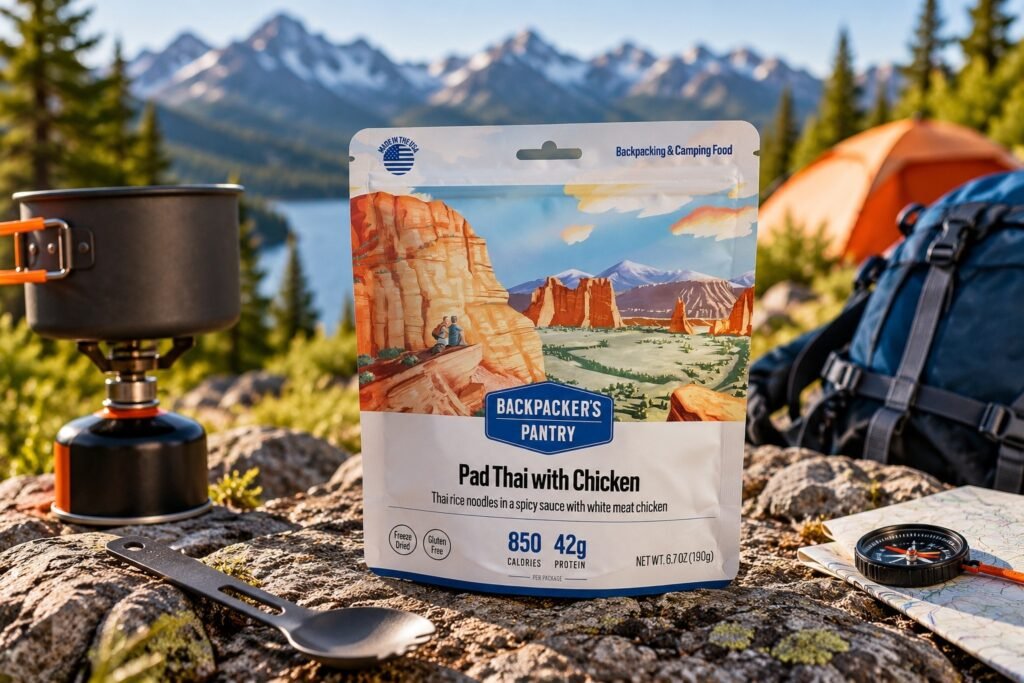
Freeze dried backpacking meals become repetitive surprisingly quickly when every evening seems to involve pasta and cream sauce. Backpacker’s Pantry Pad Thai with Chicken goes in another direction.
42g Protein | 850 Cal | Gluten Free, Dairy Free | Made in the USA | Freeze Dried Meal & Camping Food

The pouch contains rice noodles, peanut butter, roasted peanuts, freeze-dried chicken, peppers, lime, cilantro, jalapeño, and other seasonings.
Backpacker’s Pantry lists 850 calories, 42g protein, and a dry weight of 6.7 oz. The meal is also listed as gluten-free, dairy-free, and soy-free, although it contains peanuts.
Those numbers work out at about 127 calories per ounce.
Preparation is slightly more involved than our Peak Refuel winner. You need to remove the oxygen absorber and separate packets, add the peanut butter, then add 1.5 cups of boiling water.
The extra water and weight make it less attractive if minimizing pack weight is your main concern. The advantage is variety.
For anyone searching for the best tasting freeze dried meals, Pad Thai deserves a place near the top of the shortlist because the flavor profile is so different from the usual stroganoff, mac and cheese, and creamy pasta options.
Taste remains personal, though. Peanut sauce that one hiker looks forward to all afternoon may be precisely what another does not want after 12 miles.
Who it suits: Campers and hikers who prioritize flavor variety while still wanting plenty of calories and protein.
Pros:
- 850 calories
- 42g protein
- Gluten-free, dairy-free, and soy-free
- More distinctive flavor than many camping entrées
- Rice noodles instead of another pasta-and-cream combination
Cons:
- Contains peanuts
- 6.7 oz dry weight
- Requires 1.5 cups of water
- More preparation than some alternatives
#3 – Peak Refuel Biscuits & Sausage Gravy: Best High-Calorie Meal
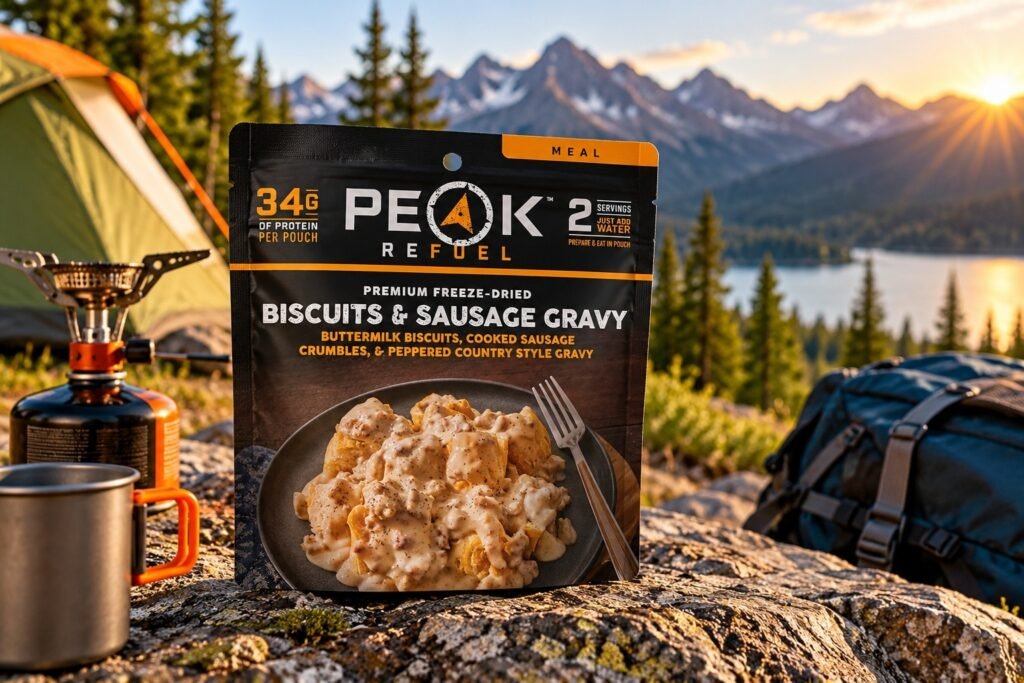
If calories per ounce matter more than keeping breakfast light, Peak Refuel Biscuits & Sausage Gravy has some serious numbers behind it.
34g protein, Real meat, Biscuits and sausage gravy, Freeze-dried meal, Just add water, Ready in 10 minutes, 2-serving pouch
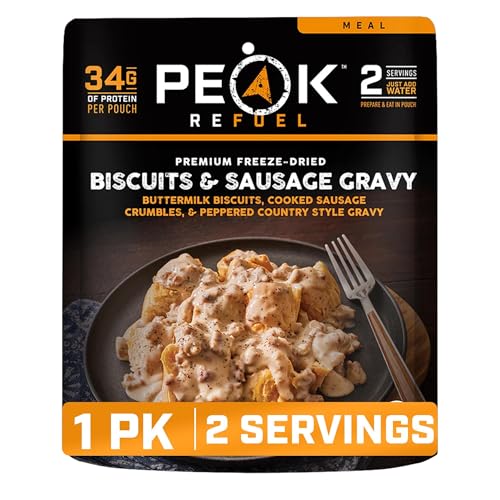
One 6.77 oz pouch contains 1,100 calories and 34g protein. Preparation takes 10 minutes. Peak Refuel instructs you to add 1 cup of boiling water and recommends breaking larger biscuit pieces apart before adding the water.
That gives you about 162 calories per ounce.
For backpacking freeze dried meals, that is useful. Food weight adds up quickly over several days, so comparing calorie density can tell you more than looking at pouch weight alone.
The compromise is nutritional balance. A high calorie count does not automatically make something the right breakfast for every day of a trip. You should consider the rest of your food plan rather than selecting every meal by the biggest calorie number on the packet.
There is another practical consideration. Biscuits are thicker than noodles or rice, so rehydration needs some attention. Peak Refuel itself recommends breaking them apart before adding water.
Who it suits: Backpackers, hunters, and campers looking for a calorie-dense hot breakfast.
Pros:
- 1,100 calories per pouch
- About 162 calories per ounce
- 34g protein
- 10-minute preparation
- Familiar hot breakfast
Cons:
- Contains milk and wheat
- Biscuit pieces require careful rehydration
- Heavy breakfast if you prefer something lighter in the morning
#4 – Peak Refuel Beef Stroganoff: Best for Hunting
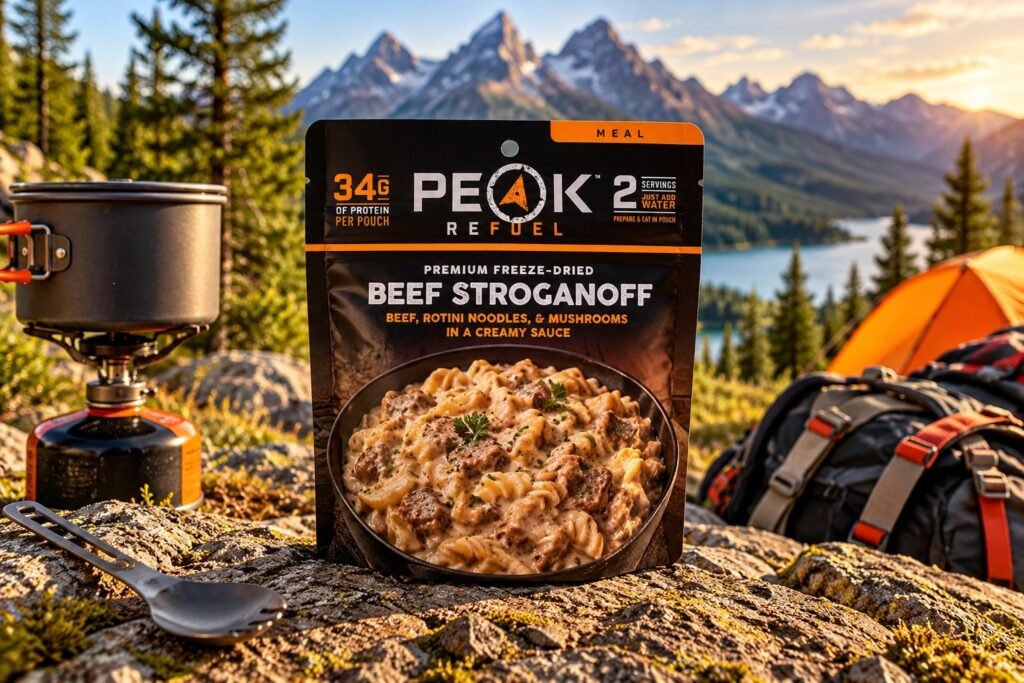
Peak Refuel Beef Stroganoff makes sense for hunting trips where food has to compete for pack space with clothing and other equipment.
Real meat beef stroganoff, High protein, Non GMO ingredients, Lightweight camping meal, Just add water, Ready in 10 minutes
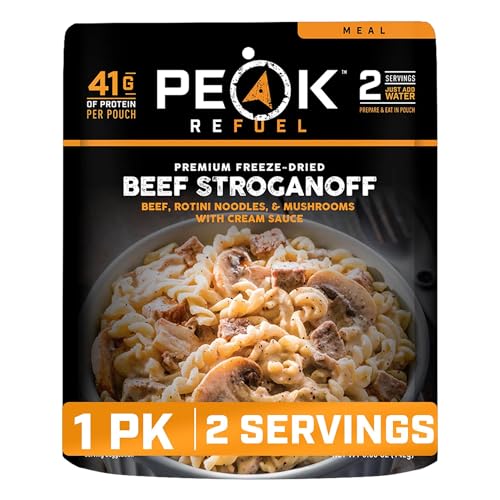
The pouch weighs 5 oz and contains 810 calories and 41g protein. Preparation takes 10 minutes using 1 1/4 cups of boiling water. The meal combines beef, rotini noodles, mushrooms, sour cream, and other ingredients, and contains milk and wheat.
That produces about 162 calories per ounce.
Those figures also make it one of the stronger best dehydrated meals for hunting candidates, although technically this is a freeze-dried meal.
The distinction matters. Searchers often use “dehydrated” as a broad description for dried trail food, but freeze-drying and dehydration are different preservation processes.
The Beef Stroganoff’s biggest advantage is how much energy and protein fit into a 5 oz pouch. That also makes it one of the best backpacking freeze dried meals here for anyone prioritizing calorie density.
The creamy beef-and-pasta combination is less interesting if you prefer lighter meals or want more vegetables.
Who it suits: Hunters, backpackers, and hikers who want a compact hot meal with high calories and protein.
Pros:
- 810 calories
- 41g protein
- 5 oz dry weight
- About 162 calories per ounce
- 10-minute preparation
Cons:
- Contains milk and wheat
- Requires 1 1/4 cups of water
- Creamy pasta style is relatively heavy
#5 – Backpacker’s Pantry Granola With Blueberries, Almonds & Milk: Best Breakfast
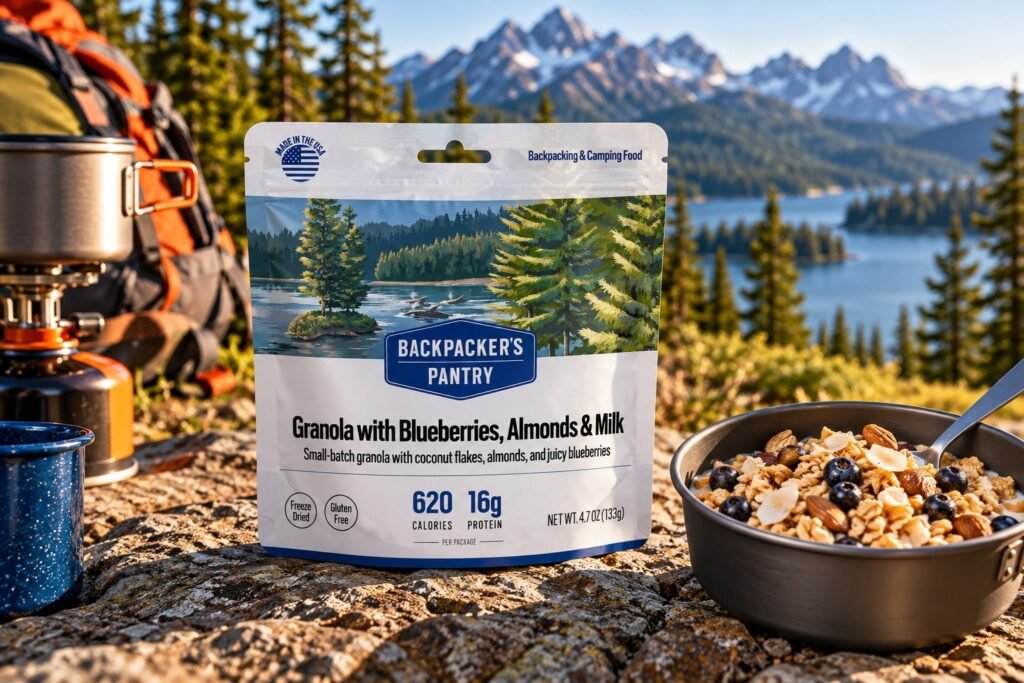
A breakfast that does not require firing up the stove has an obvious advantage. Backpacker’s Pantry Granola with Blueberries, Almonds & Milk only needs cold water.
16g Protein | 620 Cal | Vegetarian, Gluten Free | Made in the USA | Freeze Dried Meal & Camping Food

The 4.7 oz pouch provides 620 calories and 16g protein. Backpacker’s Pantry lists it as gluten-free and vegetarian. It contains almonds and milk.
That is about 132 calories per ounce.
The protein content is lower than several hot meals in this comparison, but that misses part of the appeal. No boiling water means no stove setup, no fuel used for breakfast, and less waiting before you start walking.
That also matches something I have learned from camping trips. I now keep at least one meal available that does not depend on a stove or hot water. Wind, rain, fuel trouble, or equipment problems can make a simple meal much more useful than an elaborate one.
Granola works particularly well in that role.
The main limitation is straightforward. If you want eggs, sausage, potatoes, or another hot breakfast on a cold morning, cold granola is unlikely to win the argument.
Who it suits: Backpackers and hikers wanting a fast breakfast without using a stove.
Pros:
- 620 calories
- 4.7 oz dry weight
- Around 132 calories per ounce
- No stove required
- Gluten-free and vegetarian
Cons:
- Only 16g protein
- Contains almonds and milk
- Cold breakfast will not suit every trip
#6 – Mountain House Breakfast Skillet: Best Hot Breakfast
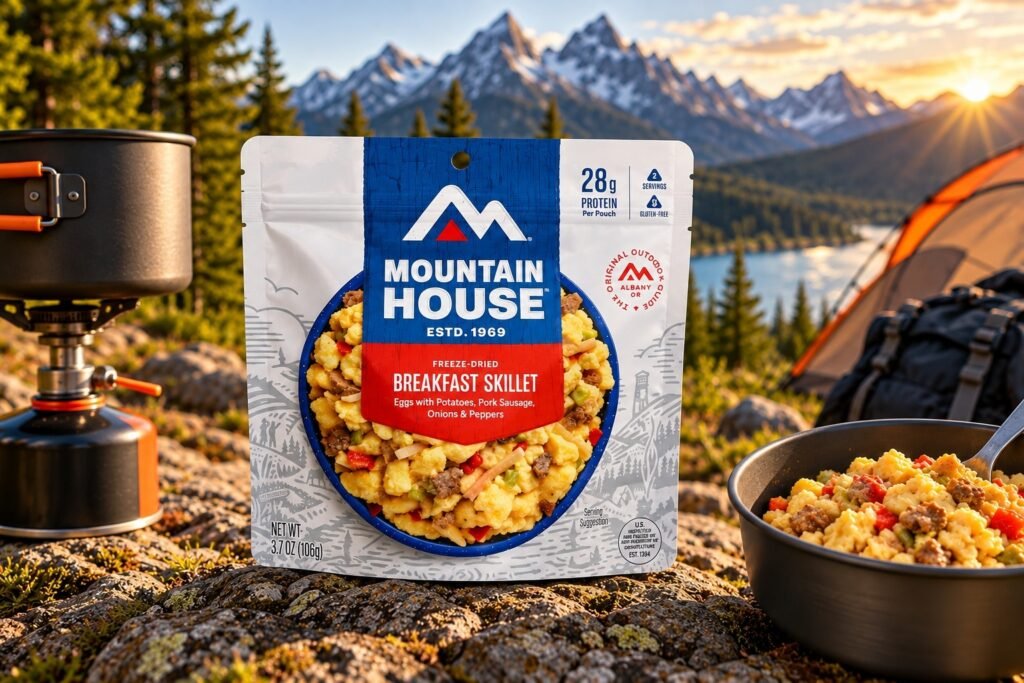
Mountain House Breakfast Skillet is the opposite of the granola above. This is for mornings when you want a recognizable cooked breakfast.
Backpacking Meals for Camping and Hiking, 4 Servings, 30-Year Shelf-Life, 2-Pack

The pouch combines scrambled eggs, hash browns, pork sausage, peppers, and onions. Mountain House lists 520 calories and 28g protein per pouch. It is gluten-free and contains milk and egg.
There is one nutritional figure worth noticing: sodium.
Mountain House currently lists 1,420mg sodium per pouch, equivalent to 62% of the Daily Value shown on its nutrition panel.
That does not automatically make the meal unsuitable. It does mean you should read the entire nutrition panel instead of judging dehydrated hiking meals through calories and protein alone.
Compared with Backpacker’s Pantry Granola, the decision is simple. Choose the granola when speed, simplicity, and avoiding the stove matter most. Choose the Breakfast Skillet when you would rather start with eggs, sausage, and potatoes.
Who it suits: Campers and backpackers who prefer a savory hot breakfast.
Pros:
- 28g protein
- Eggs, sausage, and potatoes
- Gluten-free
- Familiar breakfast rather than granola or oatmeal
Cons:
- 1,420mg sodium per pouch
- Contains milk and egg
- Requires hot water
- Lower calorie total than several alternatives here
#7 – GOOD TO-GO Thai Curry: Best Dehydrated Meal
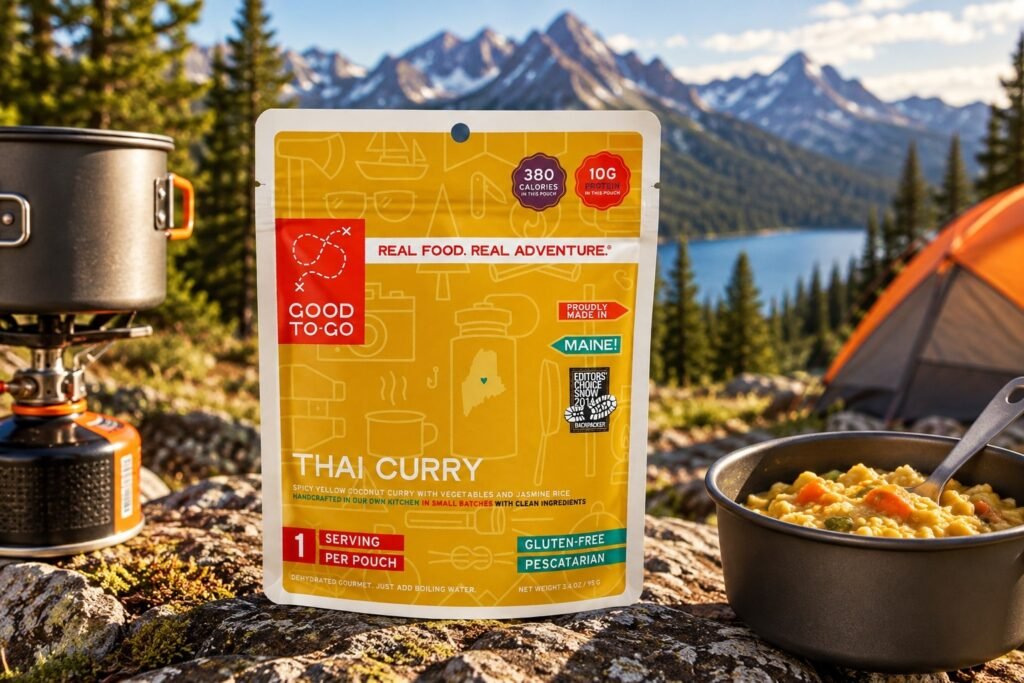
GOOD TO-GO Thai Curry deserves inclusion because it demonstrates an important point. Not every lightweight pouch meal is freeze-dried.
Just Add Water Backpacking Meals | Good To-Go Dehydrated Meals Taste Better Than Freeze Dried Food

GOOD TO-GO describes its Thai Curry as dehydrated. It contains jasmine rice, green beans, broccoli, cauliflower, peas, coconut milk powder, fish sauce, lemongrass, ginger, turmeric, Thai chilies, and other seasonings.
Preparation requires boiling water and a 20-minute wait. GOOD TO-GO also warns that rehydration can take longer at higher elevations.
That 20-minute wait is the main practical disadvantage. Peak Refuel’s Chicken Alfredo, Beef Stroganoff, and Biscuits & Sausage Gravy all specify 10-minute preparation.
Taste feedback on GOOD TO-GO’s own website is strong, with the product currently showing a 4.9/5 rating from 127 reviews. Treat that for what it is: customer feedback hosted by the manufacturer, not controlled independent taste testing.
The meal also contains fish, coconut, and milk, so check the ingredient and allergen information carefully if those are relevant to you.
Who it suits: Campers looking specifically for dehydrated backpacking meals and wanting something different from beef, chicken, and creamy pasta.
Pros:
- Dehydrated rather than freeze-dried
- Vegetable-heavy ingredient list
- Distinctive curry flavor
- Strong manufacturer-hosted customer ratings
Cons:
- 20-minute preparation
- Contains fish, coconut, and milk
- Rehydration can take longer at altitude
- Less convenient than 10-minute alternatives
How Do the Best Freeze Dried Camping Meals Compare?
The biggest differences become clearer when you stop looking at the front of the pouch and compare what you carry against what you actually get.
| Product | Calories | Protein | Dry Weight | Approx. Calories/Oz | Prep |
|---|---|---|---|---|---|
| Peak Refuel Chicken Alfredo | 870* | 48g | 4.97 oz* | 175* | 10 min |
| Backpacker’s Pantry Pad Thai with Chicken | 850 | 42g | 6.7 oz | 127 | 15 min |
| Peak Refuel Biscuits & Sausage Gravy | 1,100 | 34g | 6.77 oz | 162 | 10 min |
| Peak Refuel Beef Stroganoff | 810 | 41g | 5 oz | 162 | 10 min |
| Backpacker’s Pantry Granola | 620 | 16g | 4.7 oz | 132 | No cooking |
| Mountain House Breakfast Skillet | 520 | 28g | Check package | N/A | Hot water |
| GOOD TO-GO Thai Curry | Check package | Check package | Check package | N/A | 20 min |
*Current Peak Refuel pages conflict on Chicken Alfredo’s calorie and weight figures.
This is why there is no universal winner.
Peak Refuel Chicken Alfredo looks particularly strong for backpacking because of its calorie-to-weight ratio. Pad Thai is heavier but offers a very different meal. Granola removes the stove from breakfast entirely.
Pick according to the trip.
Are Freeze-Dried Meals Good for Backpacking?
Freeze-dried meals make sense for backpacking because they remove much of the water weight found in conventional prepared food and usually require little cookware.
That does not automatically make every pouch good backpacking food.
You still need to look at calories, dry weight, preparation time, required water, and whether the serving is enough for you.
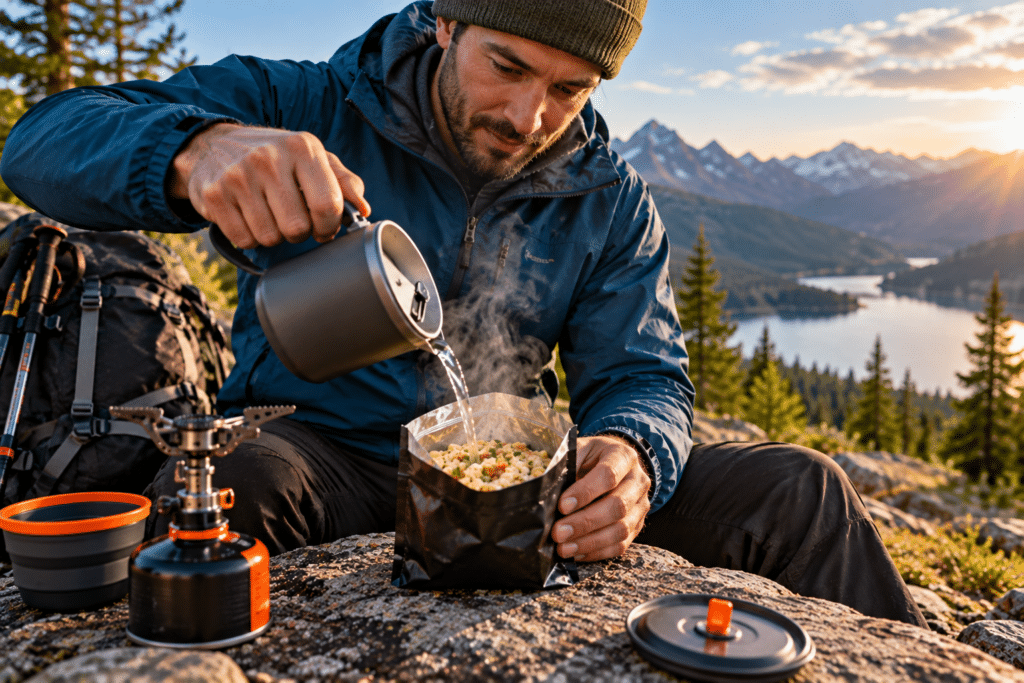
REI recommends lightweight, portable foods and estimates backpackers may need roughly 2,500 to 4,500 calories per person each day depending on factors such as body size and activity level.
For ultralight trips, REI also emphasizes packing foods that provide plenty of calories for each ounce carried while requiring little fuel, preparation, and cleanup. (REI)
That is the better way to judge the best freeze dried backpacking food.
Do not ask only, “How many calories are in the pouch?”
Ask, “How many calories am I carrying per ounce?”
Freeze-Dried vs Dehydrated Camping Food: What’s the Difference?
Freeze-dried and dehydrated food are both dried for storage, but they are not the same thing.
Freeze-drying freezes food and removes moisture under vacuum through sublimation. Conventional dehydration removes moisture using heat and airflow.
The practical differences can include texture, weight, rehydration behavior, preparation time, and cost. The exact result depends on the food and manufacturing process.
The products in this guide show the distinction nicely.
Peak Refuel describes its meals as freeze-dried. GOOD TO-GO specifically describes Thai Curry as dehydrated. (GOOD TO-GO)
Neither method automatically produces better camping food.
A meal still needs to provide suitable nutrition, pack efficiently, rehydrate properly, and taste good enough that you actually want to eat it.
That last part matters more than spreadsheets suggest.
How Many Calories Should a Backpacking Meal Have?
There is no single calorie target that works for every backpacker.
REI gives a broad estimate of 2,500 to 4,500 calories per person per day. Requirements vary according to factors including activity intensity, body size, trip duration, and terrain.
A 500-calorie dinner might fit comfortably into one person’s food plan and leave another looking through the food bag 20 minutes later.
Daily totals matter more than judging one pouch in isolation.
I learned the weight side of this fairly early in my own camping and hiking. I used to carry heavy canned food along with too much other equipment. After one particularly difficult descent with an overloaded backpack, I became much stricter about what earned space in my pack.
Heavy canned food was replaced with calorie-dense dehydrated meals. That was part of a wider reduction in unnecessary pack weight.
The lesson was simple. Food weight counts too.
When comparing the best dehydrated food for backpacking, look at the complete day’s calories against the total food weight rather than trying to make every individual meal enormous.
What Should You Look for in Freeze-Dried Camping Food?
Start with calories, dry weight, and whether you actually want to eat the meal after a long day outside.
Calories Per Ounce
Calorie density tells you how much energy you are carrying for the food’s dry weight.
That matters far more to backpackers than car campers.
Protein
Protein is useful information, but do not turn the article into a protein contest.
A meal with more protein is not automatically a better complete meal. Look at carbohydrates, fat, total calories, sodium, ingredients, and your overall food plan.
Portion Size
Be careful with serving counts.
Several camping meals describe a pouch as containing two servings. That does not necessarily mean it will feed two hungry backpackers after a long day.
Check calories per pouch as well as calories per serving.
Water Requirements
Water requirements matter when you must carry the water you use.
Peak Refuel Chicken Alfredo currently calls for 3/4 cup. Backpacker’s Pantry Pad Thai uses 1.5 cups. (Backpacker’s Pantry)
For car camping next to a water supply, the difference is trivial. On a dry route, you will care more.
Preparation Time
Ten minutes feels fairly quick until the meal beside it takes 20.
GOOD TO-GO Thai Curry needs 20 minutes and can take longer at elevation. Several Peak Refuel meals here specify 10 minutes.
Taste
Taste is the hardest criterion to rank responsibly without conducting controlled tasting.
Customer feedback helps identify patterns, but personal preference remains personal. Treat “best tasting freeze dried meals” as a useful shortlist rather than an objective fact.
Sodium
Read the complete nutrition label.
Mountain House Breakfast Skillet contains 1,420mg sodium per pouch, while its Beef Stroganoff currently lists 1,540mg. (Mountain House)
Those figures deserve consideration alongside calories and protein.
Allergens and Dietary Requirements
Never assume camping food suits your diet because the front of the package looks suitable.
Check the current label for milk, wheat, egg, soy, peanuts, tree nuts, fish, and other allergens.
Recipes can change.
Are Freeze-Dried Meals Worth the Weight for Hiking?
For many hikers, yes. Freeze dried meals for hiking can provide a useful combination of low dry weight, substantial calories, simple preparation, and minimal washing up.
They are not automatically the lightest food available.
Nut butter, nuts, tortillas, oils, dried fruit, bars, and other dry foods can provide excellent calorie density without needing rehydration.
A sensible hiking food bag often mixes both.
Use freeze dried meals where a hot dinner is worth carrying. Use simpler dry foods for snacks, lunches, and situations where stopping to boil water makes little sense.
If your entire day’s food requires boiling water, you also make your menu dependent on your stove and fuel.
I prefer having a backup.
What Are the Best Dry Foods for Camping Without Cooking?
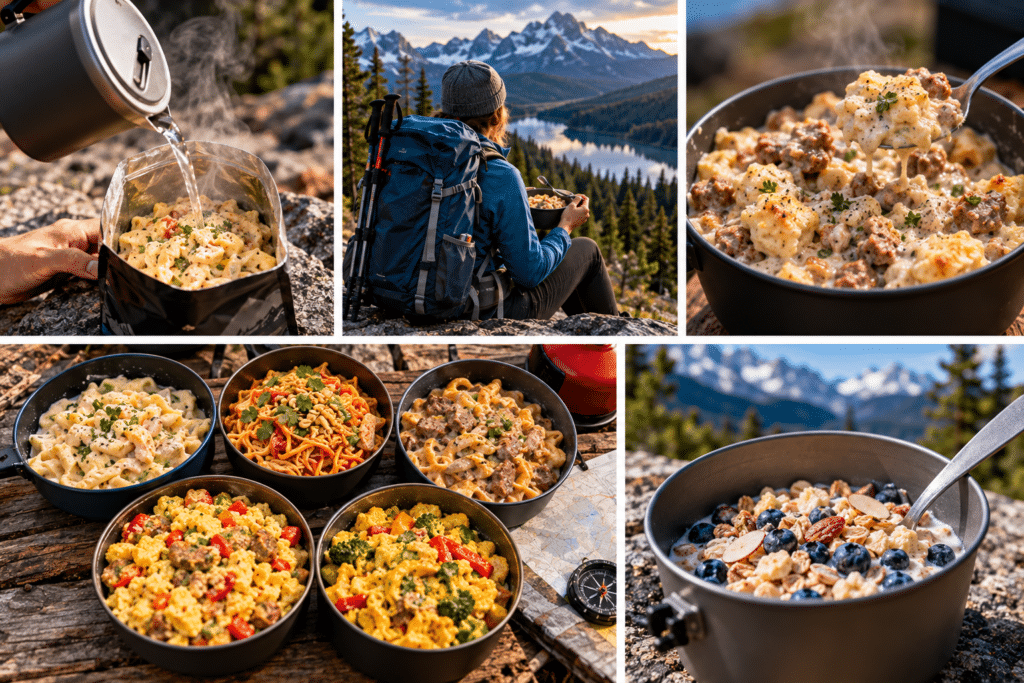
The best dry camping food does not always come in a specialist backpacking pouch.
Useful no-cook foods include granola, tortillas, nut butter, nuts, dried fruit, crackers, bars, and other shelf-stable foods appropriate for your trip.
I now carry at least one meal that does not depend on a stove. I started doing this after dealing with high winds that repeatedly interfered with stove use on a camping trip.
You do not need to copy my food choices. The principle is what matters.
Do not make every meal dependent on one piece of equipment.
For more campsite meal ideas, see the Camp Equipment Plus camp food recipes section.
Do You Need a Camping Stove for Freeze-Dried Meals?
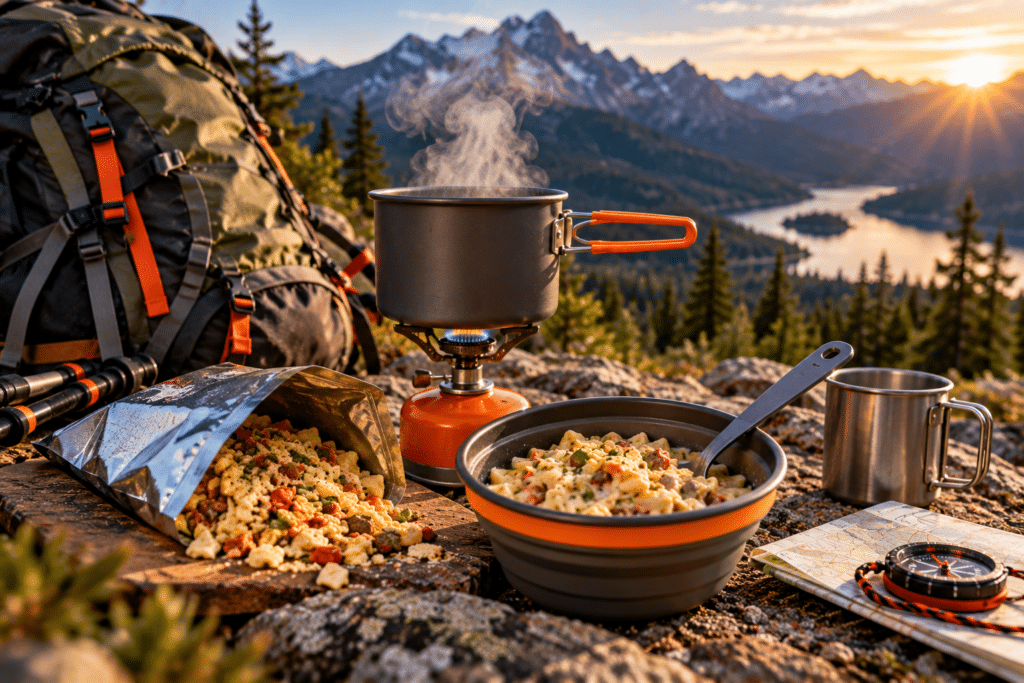
Most freeze dried camping food is designed around adding hot or boiling water, so a small stove is usually the most convenient preparation method when backpacking.
There are exceptions.
Backpacker’s Pantry Granola with Blueberries, Almonds & Milk only needs cold water.
That makes breakfast simpler and provides a useful backup when you do not want to use the stove.
If you are still choosing your cooking setup, our guide to backpacking stoves compares lightweight options for trail cooking.
You can also browse our wider camp cooking equipment guides.
Frequently Asked Questions
What Is the Best Freeze Dried Meal for Camping?
Peak Refuel Chicken Alfredo is our Best Overall choice based on the current balance of calories, protein, dry weight, water requirements, and preparation time.
Its current product page lists 870 calories, 48g protein, 4.97 oz dry weight, 3/4 cup water, and a 10-minute preparation time.
Check the current package before relying on those numbers because another current Peak Refuel page lists slightly different calorie and weight figures.
What Are the Best Tasting Freeze Dried Meals?
Backpacker’s Pantry Pad Thai with Chicken is our taste-focused choice because its peanut, lime, chili, chicken, and rice-noodle combination offers something noticeably different from creamy pasta meals.
Taste cannot be ranked objectively without defining who is tasting and what they prefer.
Are Freeze-Dried Meals Good for Hiking?
Yes, freeze dried meals can work well for hiking because they combine low dry weight with straightforward preparation.
Compare calories per ounce, water requirements, preparation time, and nutrition before choosing. A light pouch with very few calories may be less useful than the headline weight suggests.
How Many Freeze-Dried Meals Do I Need for Backpacking?
Plan your total food by day rather than counting freeze-dried pouches.
REI suggests approximately 2,500 to 4,500 calories per person per day as a broad backpacking range, but individual requirements vary substantially.
Your daily food can include breakfast, snacks, lunch, dinner, drinks, and emergency food rather than three freeze-dried meals.
Can You Eat Freeze-Dried Meals Without Hot Water?
Follow the preparation instructions for the specific product.
Many entrées are designed for boiling water. Some camping foods, such as Backpacker’s Pantry Granola, are specifically intended to work with cold water.
Do not assume every pouch will rehydrate properly using the same method.
Are Dehydrated Meals the Same as Freeze-Dried Meals?
No.
Both processes remove moisture, but conventional dehydration and freeze-drying use different methods. GOOD TO-GO Thai Curry is an example of a dehydrated camping meal, while Peak Refuel describes its range as freeze-dried.
What Are the Best Dehydrated Meals for Hunting?
Peak Refuel Beef Stroganoff is our hunting-focused recommendation even though it is technically freeze-dried rather than conventionally dehydrated.
Its 810 calories, 41g protein, and 5 oz dry weight make it attractive when food needs to share pack space with hunting equipment.
For a genuinely dehydrated option, GOOD TO-GO Thai Curry is worth considering, although its 20-minute preparation time is slower.
Which Freeze-Dried Camping Meal Should You Choose?
Choose according to what matters on your trip.
Peak Refuel Chicken Alfredo provides the strongest overall combination of calories, protein, dry weight, preparation time, and low water requirements in our comparison.
Backpacker’s Pantry Pad Thai with Chicken makes more sense if you want something different from the usual creamy camping meals.
Peak Refuel Biscuits & Sausage Gravy is the calorie-heavy option. Beef Stroganoff works well when packed weight matters on hunting or backpacking trips.
For breakfast, choose Backpacker’s Pantry Granola when you want speed and no stove. Mountain House Breakfast Skillet makes more sense when a hot savory breakfast matters more.
GOOD TO-GO Thai Curry is the option to look at if you specifically want dehydrated food for camping rather than another freeze-dried meal.
Whatever you choose, check the current nutrition panel, dry weight, allergens, required water, and serving size before buying.
A pouch can look small. Your appetite after a long day usually has other ideas.
CampEquipmentPlus relies on reader support. Purchases made via links on our website may earn us an affiliate commission at no extra cost to you, helping keep the site running.