
Best Camping Tents with Standing Room UK
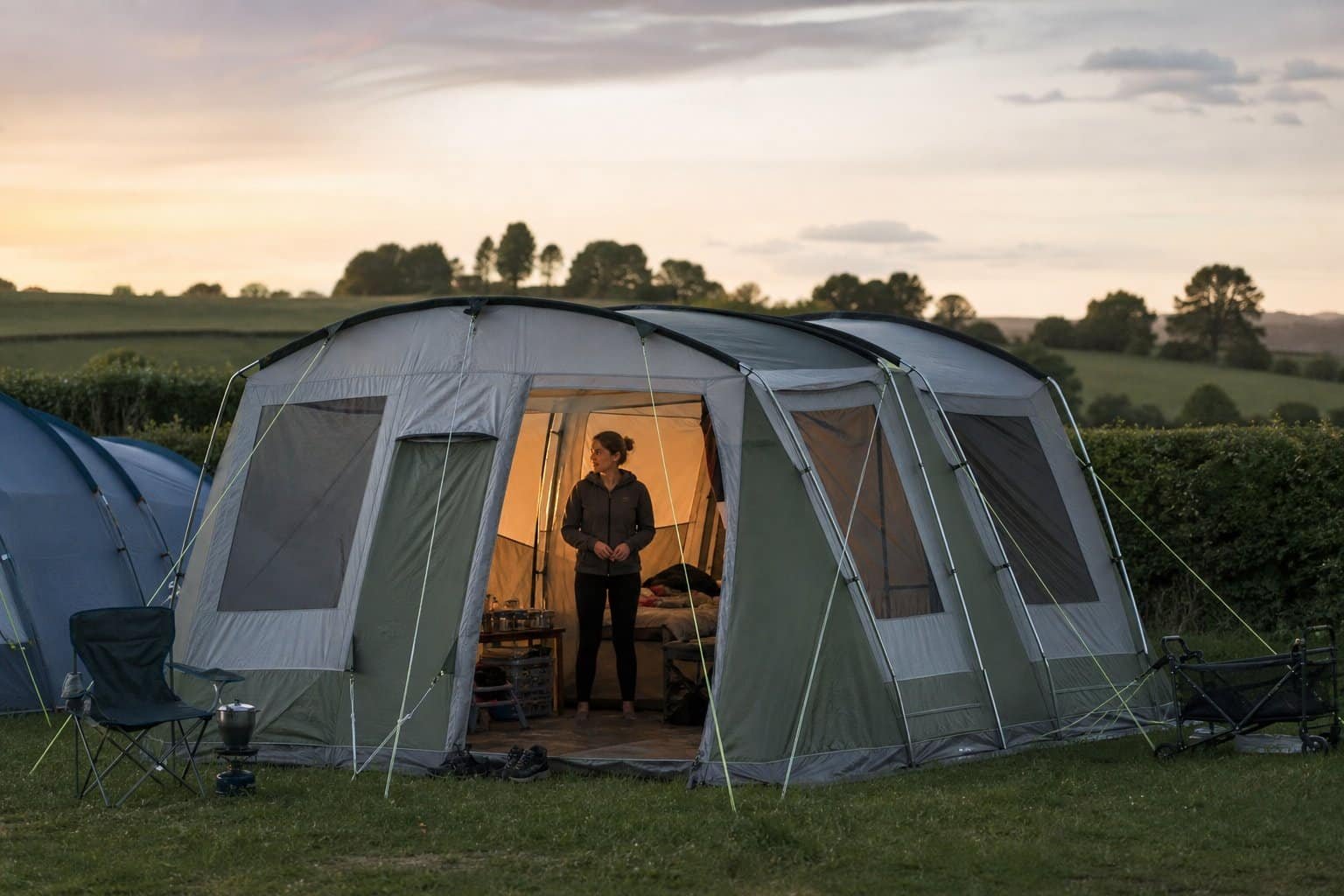
The best camping tents with standing room in the UK give at least 190 cm of headroom, use steep or vertical walls so that height reaches beyond the centre, and still keep you dry when British weather turns.
Being able to stand up in your tent changes everything about a camping trip. You can change out of wet clothes without crawling, dress children easily, and spend a rainy afternoon inside without stooping. Most dome tents only reach 130 to 160 cm, so you need a cabin or tunnel design to stand. The complaints buyers raise most about tall tents are that the height only exists in the very centre, that big tents catch the wind, that they are heavy and slow to pitch, and that condensation builds up with several people inside. We compared five tents with standing room, from a budget Coleman to a premium canvas cabin, on peak height, wall shape, floor space, waterproofing, weight and pitching.
- Our five picks at a glance
- Side-by-side comparison
- Detailed reviews with pros and cons
- What to look for in a stand-up tent
- How to pitch a tall tent in the wind
- Standing room tent FAQs
- Look for 190 cm or more UK retailers suggest at least 190 cm to stand comfortably and about 200 cm to feel airy. Every tent here is 188 cm or taller.
- Wall shape matters as much as height Vertical cabin walls keep headroom near the sides. A dome roof with sloping walls only gives full height in the middle.
- Tall tents need guying Big flat walls catch the wind. Peg every guy line and use longer pegs on exposed or soft ground.
- Aim for 2,000mm or more For UK camping, 2,000 to 3,000mm on the flysheet is a sensible target. Lower ratings suit dry summer weekends.
Choosing between camping tents with standing room UK families can actually live in comes down to more than the headline height. The figure on the listing only tells you the peak, so you also need to think about wall shape, how the tent copes with wind, how much it weighs in the boot and how it handles condensation when several people sleep inside. This guide explains each of those points so the five picks above make sense for your trips.


Best overall Timber Ridge 6 | Most headroom CORE 10 | Quickest to pitch CORE 12 Instant | Best canvas Kodiak 10×10 | Best value Coleman Montana | |
|---|---|---|---|---|---|
|
|
|
|
|
| |
| Sleeps | 6 | 10 | 12 | 6 | 8 |
| Peak height | 206 cm | 218 cm | 203 cm | 198 cm | 188 cm |
| Wall shape | Vertical | Near-straight | Cabin | Vertical lower walls | Sloping dome |
| Floor size | 2.7 x 3.0 m | 4.3 x 3.0 m | 5.5 x 3.0 m | 3.0 x 3.0 m | 4.9 x 2.1 m |
| Rooms | 1 | 2 | Up to 3 | 1 | 1 |
| Waterproofing | 2,000mm PU | 1,200mm | 1,200mm | Cotton canvas | Not quoted |
| Pack weight | Not quoted | 14.5 kg | 21.8 kg | About 31 kg | Not quoted |
| Pitching | Conventional | Conventional | Instant | Flex-Bow frame | About 15 min |
| Check price | Check price | Check price | Check price | Check price |
Best camping tents with standing room UK: our detailed reviews
Each review covers peak height, wall shape, floor space, rooms, waterproofing, weight and pitching. We paid most attention to the problems owners of tall tents report: headroom that only exists in the centre, flapping walls in the wind, heavy pack weights and condensation. If you mainly need space for a family of six, see our guide to the best 6 person family tents, and for stand-up height with better wind shedding, our best tunnel tents for family camping.
Vertical-wall cabin tent with 206 cm height and a big porch
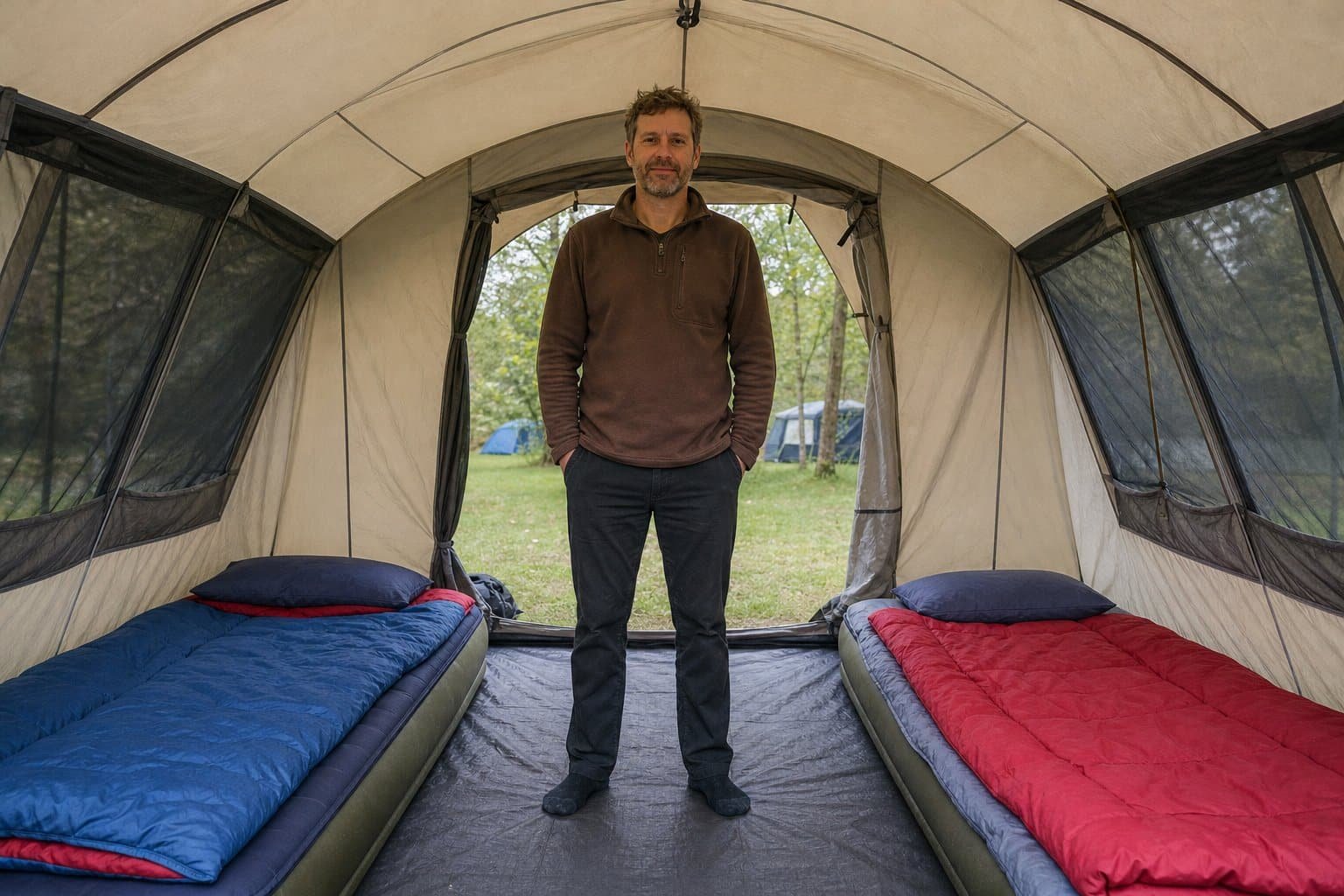
The Timber Ridge 6 Person Cabin Tent is our best camping tent with standing room for most UK families because it pairs genuinely vertical walls with the best weather spec in this list. The 9 x 10 ft (about 2.7 x 3.0 m) floor and 81-inch (206 cm) height mean most adults can stand up straight to change, not just in the centre but close to the walls, and Timber Ridge says it fits three queen-size air beds. The flysheet has a 2,000mm PU coating and fully taped seams, which matches the 2,000 to 3,000mm UK retailers such as Blacks suggest for British campsites, and the brand says the poles are rated for 35 mph winds. An 8 x 6.3 ft (about 2.4 x 1.9 m) porch gives covered space for muddy boots and wet coats, the roof is fully mesh for airflow under the fly, and there is an electric hook-up port and a lantern hook. The weight and packed size are not quoted on the listing, so check it fits your boot, and as with any tall tent, peg out every guy line before the wind picks up.
- Vertical walls keep height near the sides
- 206 cm peak height
- 2,000mm PU fly with taped seams
- Large 2.4 x 1.9 m porch
- E-port for electric hook-up
- Weight not quoted
- Single living space, no divider
- Needs careful guying in wind
Near-straight walls and a 218 cm centre height
The CORE 10 Person Multi Room Cabin Tent has the most headroom of our picks, with an 86-inch (218 cm) centre height and nearly straight walls that keep that height usable across the floor. It measures 14 x 10 ft (about 4.3 x 3.0 m), fits four queen-size air beds and has a room divider, so a family of five with kit can split it into a sleeping area and a living space. Lower vents pull in cool air while the mesh ceiling lets warm, damp air escape, which helps with the condensation that big groups of sleepers create. It also includes a gear loft and pockets, and at 14.5 kg packed to 74 x 33 x 33 cm it is far easier to lift than canvas. The weak point for UK use is the 1,200mm fabric: it is above the 1,000mm legal minimum for calling a tent waterproof, but it is best suited to summer campsites rather than long spells of wind-driven rain.
- Tallest at 218 cm
- Near-straight walls
- Room divider
- Gear loft and pockets
- Light for its size at 14.5 kg
- 1,200mm fabric
- Large footprint needs a big pitch
- Best kept to summer use
Pre-attached poles and three rooms with a 203 cm ceiling
The CORE 12 Person Instant Cabin Tent is the one to pick if pitching a big tent is what puts you off. Its poles are pre-attached and lock into place, and CORE says it goes up in two minutes or less, which avoids the fiddly tall-pole stage that owners of conventional cabin tents complain about most. Inside you get an 18 x 10 ft (about 5.5 x 3.0 m) floor, an 80-inch (203 cm) centre height and two room dividers, so up to three separate spaces for parents, children and gear. Adjustable ground vents and a mesh ceiling help move damp air, and a full rainfly with taped seams is included. It weighs 21.8 kg and packs to 124 x 41 x 30 cm, so it needs a large boot, and like the CORE 10 the fabric is rated at 1,200mm. Instant frames are quick, but they are not as easy to repair as separate poles if one gets damaged.
- Pre-attached poles
- Two-minute pitch claimed
- Three-room layout
- 203 cm centre height
- Adjustable ventilation
- 21.8 kg and long pack
- 1,200mm fabric
- Instant frame harder to repair
Cotton duck canvas cabin with walk-around 198 cm headroom
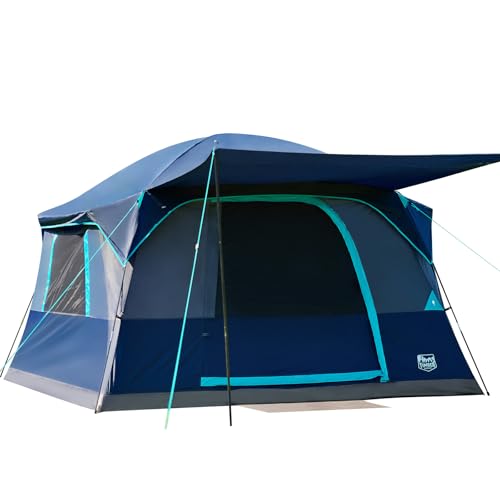
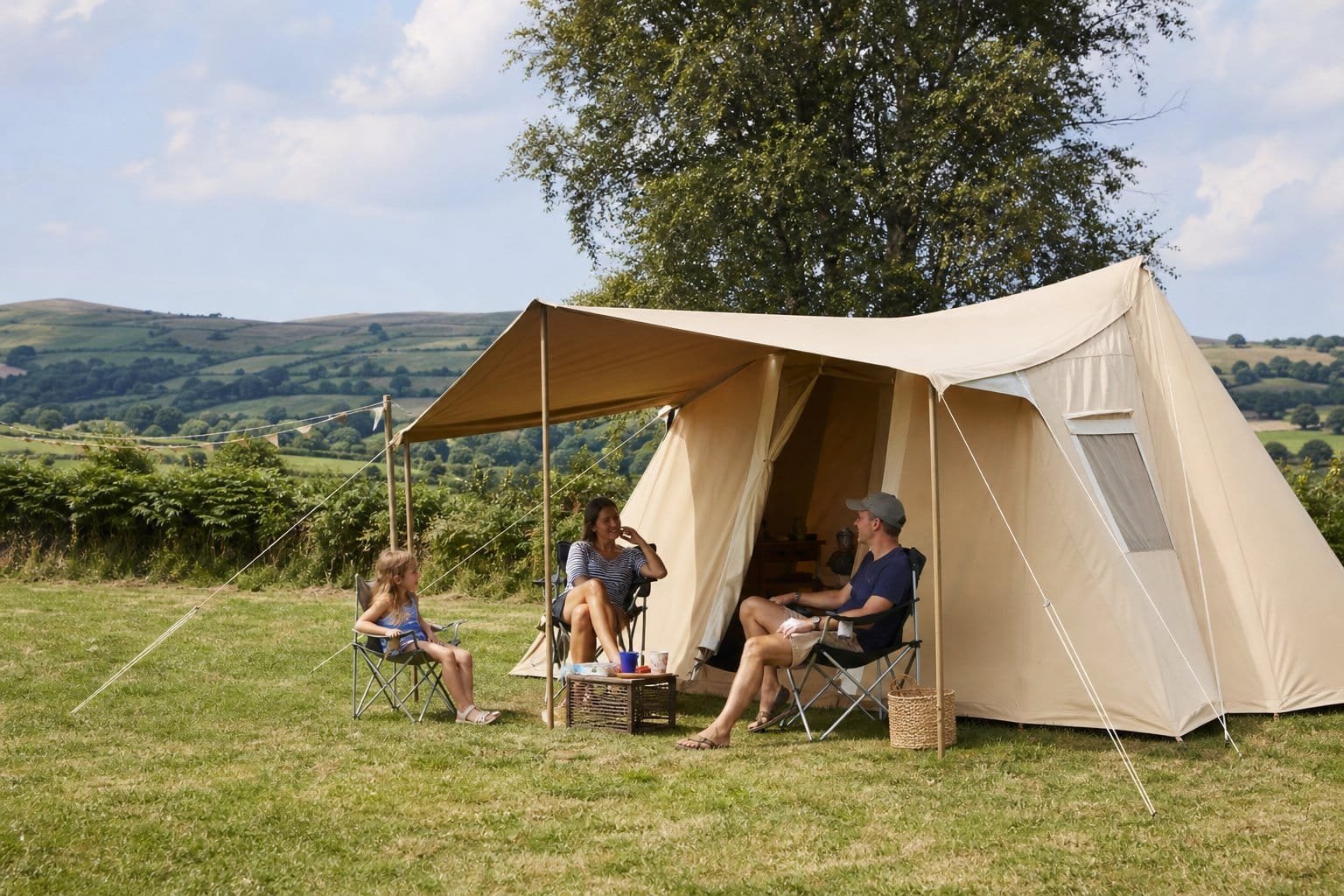
The Kodiak Canvas Flex-Bow Deluxe 10×10 Tent is our premium pick for campers who want standing room that also feels comfortable for a week or more. It is made from Hydra-Shield 100% cotton duck canvas, which Kodiak describes as watertight and breathable, and breathable canvas is far less prone to condensation than polyester. It is also quieter in wind and rain, a point canvas owners mention again and again. The 10 x 10 ft (about 3.0 x 3.0 m) floor has a 6 ft 6 in (198 cm) ceiling, there are two large D-shaped doors with YKK zips, four mesh windows, two funnel-flow vents and a 72 x 78 inch awning for shade at the entrance. The Flex-Bow frame of solid spring-steel rods keeps the canvas taut and is designed for a one-person pitch. The catch is weight: Kodiak quotes a 68 lb (about 31 kg) pack weight, and canvas must be dried fully before storing to avoid mildew.
- Breathable cotton canvas
- Quiet in wind and rain
- 198 cm walk-around height
- Two doors, four windows
- Spring-steel Flex-Bow frame
- About 31 kg packed
- Highest price
- Must dry fully before storage
Long 4.9 m tent with 188 cm centre height
The Coleman Montana 8-Person Family Tent is the best value way to get standing room from a well-known brand. It is long and narrow at 16 x 7 ft (about 4.9 x 2.1 m) with a 6 ft 2 in (188 cm) centre height, and Coleman says it fits three queen-size air beds in a row. Welded corners and inverted seams keep water out of the floor, double-thick Polyguard fabric and a full rainfly add weather protection, and the hinged door is easier to use than a zipped panel when you are going in and out all day. An extended awning gives shade over the doorway. Coleman says it takes about 15 minutes to pitch. Be aware that 188 cm is just below the 190 cm UK retailers suggest for comfortable standing, and the dome-style roof slopes, so only the centre of the tent gives full height. The waterproof rating and weight are not quoted on the listing.
- Lowest price here
- Welded corners, inverted seams
- Hinged door
- Fits three queen air beds
- 15-minute pitch
- 188 cm only in the centre
- Narrow 2.1 m width
- Waterproof rating not quoted
How to choose a camping tent with standing room
The checklist below draws on UK retailer advice, including the Blacks tent buying guide, which suggests at least 190 cm of height to stand comfortably, and on the issues owners of cabin and canvas tents mention most often. For a wider look at tent types, see our guide on how to choose a camping tent, and for help reading waterproof figures, what waterproof rating a tent should have for rain.
Types of camping tents with standing room UK campers can choose
Not every tall tent gives you the same kind of space. The frame design decides where the headroom sits, how the tent behaves in wind and how long it takes to pitch, so it is worth understanding the main styles before you start comparing numbers. Each one suits a different kind of camper, and the five picks in this guide cover most of them.
Cabin tents with vertical walls
A cabin tent uses upright or near-upright walls and a flatter roof, so the height carries most of the way to the edges. That makes it the most practical standing room tent for families who want to dress, move air beds and set up a table without stooping. The Timber Ridge 6 Person Cabin Tent and the CORE 10 Person Multi Room Cabin Tent both work this way. The trade-off is that a big flat wall acts like a sail, so cabins need careful pegging and guying.
Instant cabin tents
Instant cabins, such as the CORE 12 Person Instant Cabin Tent, have their poles pre-attached to the fabric. You unfold the tent, extend the legs and lock them, which removes the awkward stage of lifting tall poles into place. They suit large groups and anyone who dreads pitching, but the frame packs long and heavy, and a damaged joint usually needs a brand-specific part rather than a generic replacement pole.
Tunnel tents
Family tunnel tents use a row of curved hoops, and the living area of a larger model often reaches standing height. Because the hoops curve, full height runs along the centre line rather than out to the walls. In return, a tunnel sheds wind well when its low end faces the weather, which is why many UK families choose one for breezy coastal and upland sites.
Dome-style family tents
Large domes like the Coleman Montana 8-Person Family Tent reach standing height only near the peak, because the roof slopes away on every side. They are usually cheaper and lighter than cabins, which makes them a sensible choice if you mainly need to stand up to change clothes rather than walk around. Taller adults should check the quoted centre height against their own height before buying.
Canvas cabins
Cotton canvas, used on the Kodiak Canvas Flex-Bow Deluxe 10×10 Tent, pairs vertical walls with a breathable fabric. Canvas is heavier, costs more and is slower to dry, but it is quieter in wind and rain and far less prone to condensation. That makes it a comfortable base for a week or more on one pitch, where its weight matters less because you only carry it once.
How much headroom do you really need?
UK retailers suggest at least 190 cm of internal height to stand comfortably, and about 200 cm to feel airy. Treat those figures as a starting point rather than a target. Take the tallest person in your group, add a few centimetres so their head does not brush damp fabric, and remember that the quoted figure is almost always the single highest point inside the tent.
The more useful question is how much of the floor gives you that height. On a cabin with vertical walls, most of the floor is standing space. On a sloping dome, the standing area can shrink to a small patch in the middle, which is fine for one person changing but crowded when two adults are trying to cook or dress children at the same time.
If the listing includes a side-on diagram, look at the wall height as well as the peak. A tall tent with low sides often feels smaller than its numbers suggest, while a slightly lower cabin with straight walls can feel roomier in daily use. When you compare camping tents with standing room UK shops sell, this wall profile is often what separates two similar models.
Planning the layout of a tall tent
Floor size matters as much as height when you shortlist camping tents with standing room UK retailers stock. A tent sold as sleeping six is measured for six people lying shoulder to shoulder, with no space for bags, a table or chairs. Most families are happier with one or two berths more than their headcount, especially if they want a living area where everyone can stand at once.
Room dividers, like those in the CORE 10 and CORE 12, let you split a large floor into sleeping and living spaces. That helps families with young children who go to bed earlier, and it keeps wet kit away from bedding. A single open space, as on the Timber Ridge, is simpler and more flexible but gives less privacy when the weather keeps everyone indoors.
Think about where muddy boots and coats will go. A porch or awning gives you a covered place to take them off, which matters more in a tall tent because the extra space tempts everyone to walk straight in. If you plan to book an electric hook-up pitch, check for a cable entry port so you can run the lead inside without leaving a door unzipped all night.
Tall tents and British weather
Wind
Tall walls catch more wind than a low tent, so a standing room tent needs extra care when you pitch it. Choose a sheltered spot, point the narrowest, lowest end into the wind and peg out every guy line, not just the corners. Longer steel or rock pegs hold far better than thin supplied pegs on soft or stony ground. For very exposed sites, our guide to the best tents for camping in windy weather covers lower designs that shed gusts more easily.
Rain
UK retailers suggest a flysheet rated to 2,000 to 3,000mm for regular camping. Some cabin tents in this guide quote 1,200mm, which is above the 1,000mm legal minimum for calling a tent waterproof but better suited to summer campsites. Taped seams, a well-tensioned flysheet and a pitch away from the bottom of slopes all matter as much as the headline figure on the label.
Condensation
More sleepers means more moisture from breathing, cooking and wet clothes, and a big tent full of people can drip by morning. Polyester tents cope best when high and low vents stay open, even in rain, so damp air can escape. Canvas helps because the fabric itself breathes. If you wake to wet walls, it is usually condensation rather than a leak, as we explain in why your tent is wet inside.
Pitching, packing and storing a standing room tent
Most camping tents with standing room UK families buy are heavy. The polyester cabins in this guide weigh roughly 14 to 22 kg where a weight is quoted, and canvas around 30 kg, so measure your boot before you order and think about how far you will carry the bag from the car park. Pitching is also easier with two adults: one to steady the frame while the other pegs the windward side.
Practise at home before your first trip. A garden pitch shows you how the frame goes together, lets you count the pegs and poles, and means you are not learning a tall tent in the dark or in the rain. Instant frames are quick, but they still need pegging and guying before you can trust them in a breeze.
When you get home, dry the tent fully before storing it, even if it seemed dry when you packed it. Polyester can develop mildew and odours if left damp, and canvas must be completely dry to avoid mould. Store the tent loosely in a cool, dry place rather than squashed into its bag in a damp garage or shed for months.
Final thoughts on camping tents with standing room UK
The right standing room tent is the one whose height lands where you actually need it. For most families, a cabin tent with vertical walls and a sensible waterproof rating is the best all-rounder, while instant frames suit those who dread pitching and canvas suits long stays on a single pitch.
Before you buy any of the camping tents with standing room UK campers rate, check three things against your own trips: the usable headroom across the floor, the weight you can lift into your boot, and how exposed your favourite campsites are. Get those right and a tall tent will make rainy weekends far more comfortable for everyone.
What to look for in a tent with standing room
Check the quoted height against the tallest person in your group. About 190 cm lets most adults stand, and 200 cm or more feels roomy.
Vertical or near-vertical cabin walls keep headroom close to the sides. Dome roofs slope away, so full height covers only a small area.
Tall, flat walls catch the wind. Look for plenty of guy points, strong poles and a stated wind rating, and pitch side-on to the wind.
UK retailers suggest 2,000 to 3,000mm for the flysheet. 1,200mm suits dry summer trips. Canvas has no figure but swells to keep rain out.
More people means more condensation. Mesh ceilings, high and low vents, or breathable canvas keep the inside drier.
Stand-up tents are heavy. Polyester cabins weigh 14 to 22 kg, canvas around 30 kg, so check your boot space and how far you carry it.
Instant frames go up fastest. Conventional poles are easier to replace. Practise a first pitch at home before your trip.
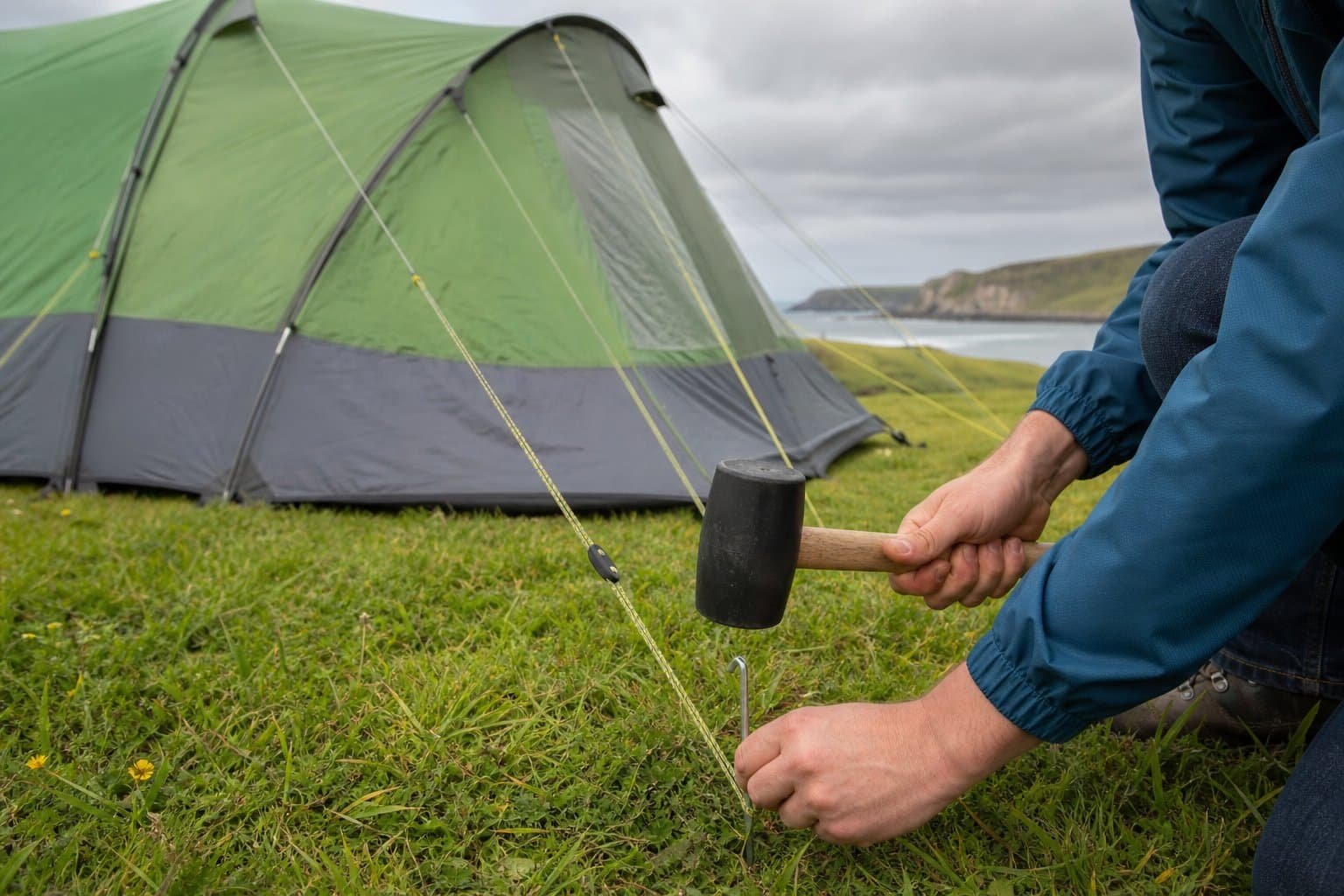
How to pitch a tall tent in the wind
- Choose a sheltered pitch
Use hedges, walls or a windbreak to take the force out of the wind, and avoid hollows where rain collects.
- Face the narrow end to the wind
Point the smallest, lowest side of the tent into the wind so the tall flat walls are not facing it head-on.
- Peg the windward side first
Peg the corners facing the wind before you raise the frame so the tent cannot be lifted.
- Use longer pegs
Swap thin supplied pegs for longer steel or rock pegs on soft or stony ground.
- Peg out every guy line
Tension every guy line evenly and check them again after an hour, as fabric stretches once it is wet.
- Open the vents
Open high and low vents to move damp air and reduce condensation with several people inside.
How we chose these tents
We have not pitched every tent in this list ourselves. Our picks are based on manufacturer specifications, published advice from UK retailers and camping organisations, and recurring themes in owner feedback about cabin and canvas tents. Prices change, so check the current price before you buy.
-
Usable headroom
We compared stated peak heights and how wall shape spreads that height across the floor.
-
Living space
We looked at floor size, number of rooms, doors and porches.
-
Weather protection
We compared fabrics, stated waterproof and wind ratings, seams and vents, and noted where no figure is quoted.
-
Practicality and value
We weighed pack weight, pitching method and features against price.
Tall tents are more exposed to wind than low ones. Check the forecast and take the tent down if strong gusts are expected.
What tent height do I need to stand up?
Most UK retailers suggest at least 190 cm of internal height to stand comfortably, and around 200 cm to feel airy. Add a few centimetres above your own height so your head does not brush damp fabric.
Which type of tent has the most standing room?
Cabin tents with vertical walls give the most usable standing room because the height continues close to the sides. Family tunnel tents also often reach 190 to 210 cm in the living area. Dome tents usually only allow sitting.
Are tall tents OK in windy weather?
They can be, but their large walls catch more wind than low tents. Pitch side-on to the wind, use longer pegs and peg out every guy line. For very exposed pitches, a lower tunnel or geodesic tent is safer.
Is canvas better than polyester for a stand-up tent?
Canvas breathes, so it suffers far less condensation, stays cooler in sun and is quieter in wind and rain. It is much heavier, costs more and must be dried before storage. Polyester is lighter and cheaper.
Which tent here has the most headroom?
The CORE 10 Person Multi Room Cabin Tent has the highest stated centre height at 218 cm, followed by the Timber Ridge 6 Person Cabin Tent at 206 cm.
Which camping tent with standing room should you buy?
- Best overall: Timber Ridge 6 Person Cabin Tent
- Most headroom: CORE 10 Person Multi Room Cabin Tent
- Quickest to pitch: CORE 12 Person Instant Cabin Tent
- Best canvas: Kodiak Canvas Flex-Bow Deluxe 10×10 Tent
- Best value: Coleman Montana 8-Person Family Tent
For most families, the Timber Ridge 6 Person Cabin Tent is the best camping tent with standing room in the UK: its vertical walls and 206 cm height let adults stand across most of the floor, and its 2,000mm fly suits British weather better than most cabin tents. Choose the CORE 10 Person for the most headroom, the CORE 12 Person Instant if quick pitching matters most, the Kodiak Canvas Flex-Bow Deluxe for breathable canvas comfort on long holidays, and the Coleman Montana 8 for stand-up height on a budget.
CampEquipmentPlus relies on reader support. Purchases made via links on our website may earn us an affiliate commission at no extra cost to you, helping keep the site running.