
Caravan Water Pump Not Working?
If your caravan water pump is not working, the cause is usually something simple: no 12 V reaching the pump, dirty contacts, an air-lock or a pressure switch upset by battery voltage.
Owner forums are full of threads about pumps that suddenly stop, keep running after the taps are closed, pulse in the shower or make a racket at night. Most of them end the same way: a blown fuse, corroded plug contacts, a heater drain valve left open or air trapped after a refill, not a dead pump. This guide works through the ten most common caravan water pump faults on Whale and Truma systems, in the order worth checking, with the fix for each and the point at which it really is time to replace the pump.
- First checks in two minutes
- 10 common faults and fixes
- Microswitch vs pressure-switch systems
- Parts that fix common faults
- When to replace the pump
- Troubleshooting FAQs
- Check power first Pump switch on, fuse intact and 12 V at the socket solve a large share of ‘dead pump’ problems.
- Clean the contacts Corroded plug and socket contacts are one of the most common causes, and fine emery paper often fixes them.
- Air-locks are normal After a refill, lift the pump out, hold it upright and reseat it to clear trapped air.
- Voltage upsets pressure switches Low batteries cause run-on, and hook-up voltage causes pulsing.
First checks: a two-minute diagnosis
- Is the pump switch on?
Check the pump or water switch on the control panel. Many caravans have one, and it is easy to leave off.
- Is there water in the carrier?
Make sure the carrier is full and the pump is fully submerged.
- Is the plug fully seated?
Unplug, check the contacts and reconnect firmly.
- Check the fuse
Find the pump fuse and check it. If it has blown, find out why before replacing it.
- Open a cold tap
Try the cold tap nearest the inlet with the hot water drain and FrostControl valves closed.
- Listen to the pump
Silence suggests a power fault; humming with no water suggests an air-lock, blockage or seized pump.
1. The pump does nothing at all
Start with the control panel pump switch, then the fuse. Practical Caravan stresses not to simply replace a blown fuse without finding the cause, because it will probably blow again: a seized impeller or water getting into the plug can both do it. Whale’s exterior pump assemblies use a 5 A fuse, so never fit a larger one. Next, check the leisure battery or hook-up supply: Swift’s handbook gives 10 to 14.5 V as the working range at the pump.
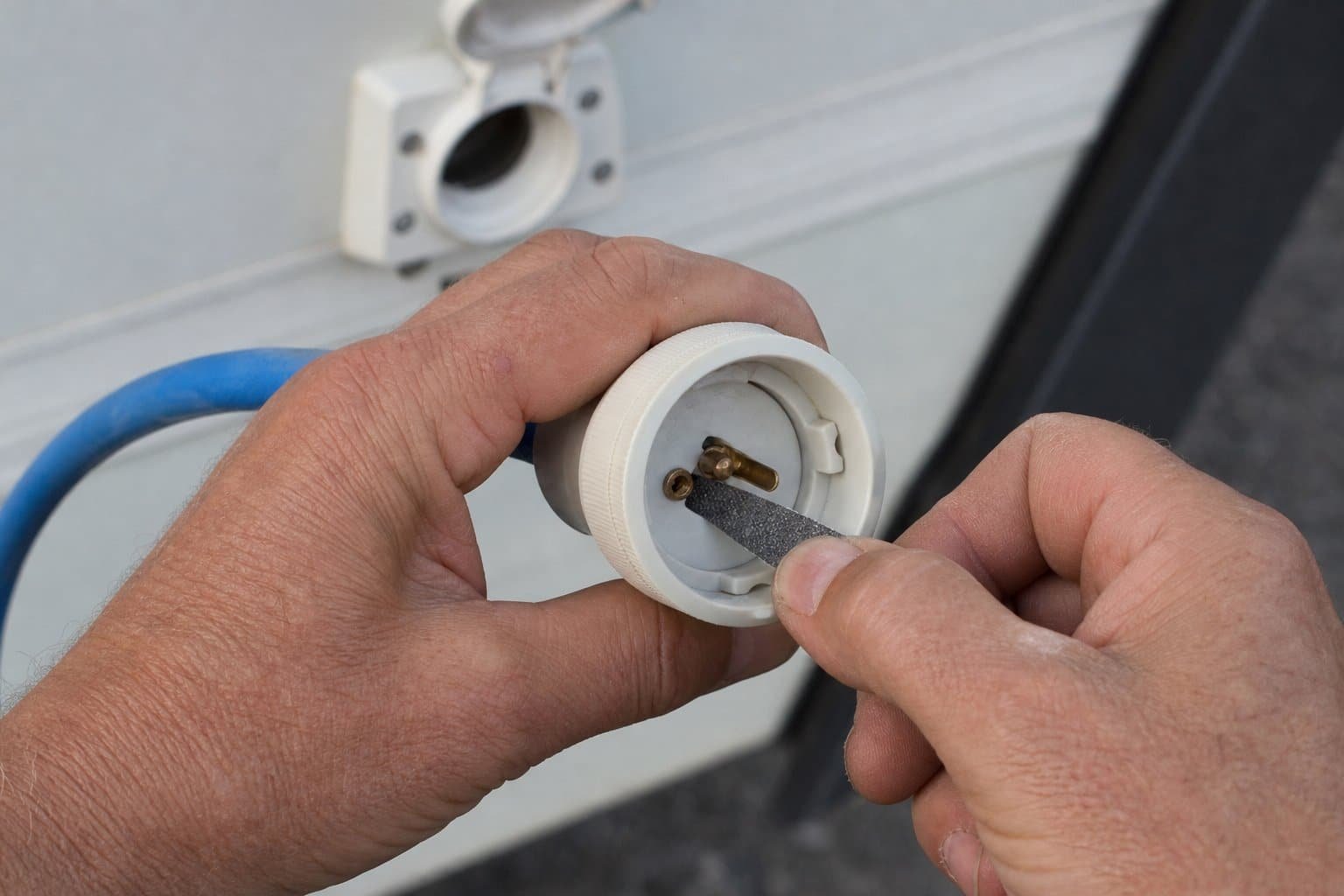
2. Dirty or corroded plug and socket contacts
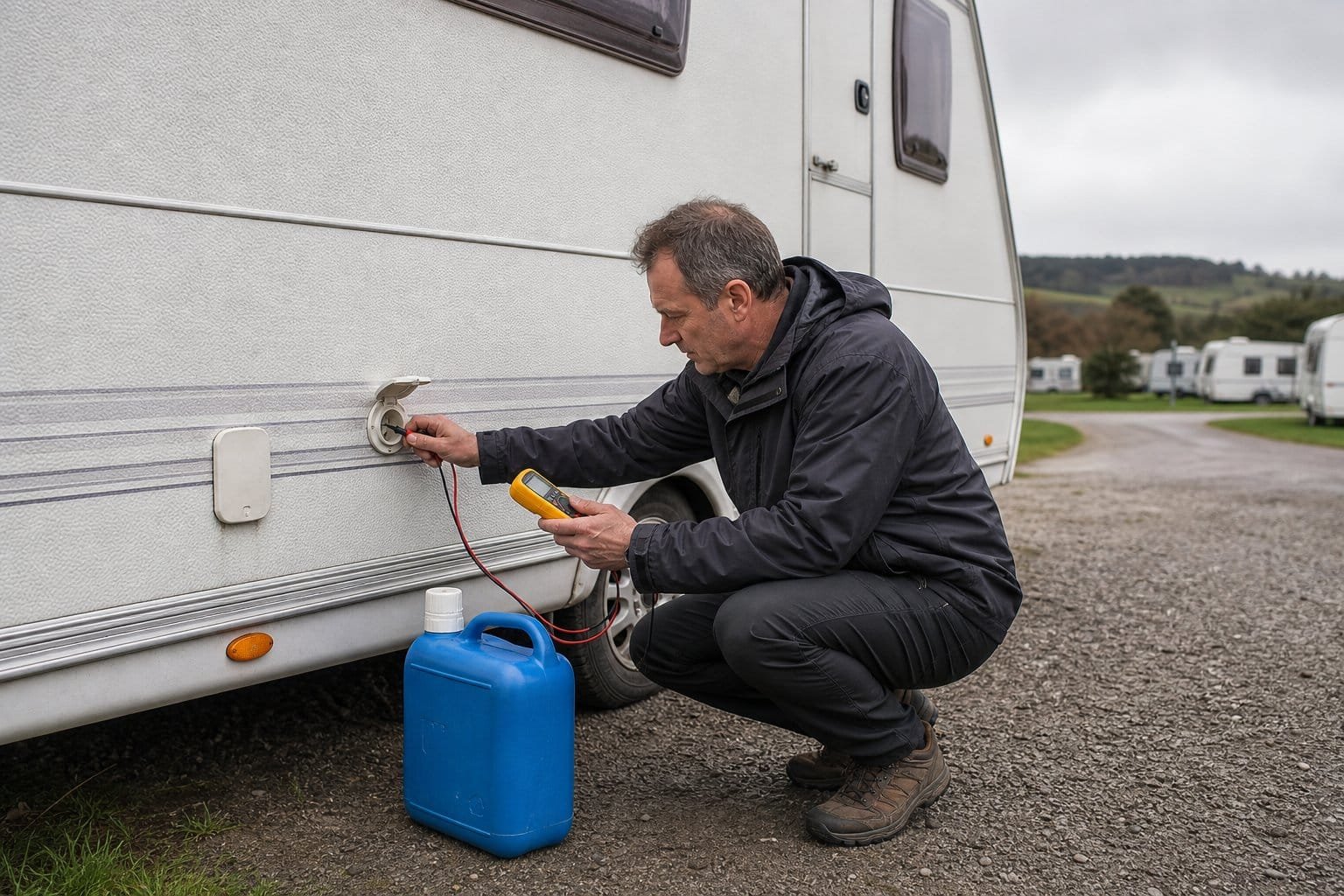
The contacts between the pump plug and the inlet socket live outside and get wet, so they corrode. In one Practical Caravan forum thread an owner measured 13.7 V at the socket but the pump would not run until he cleaned the pump-end contacts with fine emery paper. Clean both sides gently, dry them, and on Truma inlets lubricate the O-rings so the plug seats fully without cracking the housing. If the socket is cracked or the contacts are badly worn, replace the socket.
3. The pump runs but no water comes out
An air-lock between the submersible pump and the inlet is the classic cause, especially after a refill. Lift the pump out, hold it upright, lower it back into the Aquaroll and give it a jiggle. Bailey’s handbook suggests switching the pump off, opening a tap and switching it on again. If that fails, check the carrier is full, the hose is not kinked, the pump strainer is not blocked and, on a Truma system, the filter cartridge is not clogged.
4. Poor flow at just one tap
If one tap is weak and the others are fine, the problem is local. Tap spouts often have a small filter that clogs with scale, a kinked pipe can restrict flow, and on a microswitch system the switch in that tap may have failed. Practical Caravan notes microswitch systems are now increasingly rare, but they are still found in older caravans, and carrying a spare microswitch is sensible.
5. Low pressure everywhere
Low pressure at every tap usually means the water is not getting through: dirty filters are a leading cause. Clean the pump strainer and replace the Truma Ultraflow carbon filter if it is past its date. A tired leisure battery or thin wiring also reduces pump speed, and Bailey recommends supply cable of at least 2.5 mm. If you are still using a standard flow pump, a high flow model rated around 15.8 L/min makes a real difference.
6. The pump keeps running after the tap is closed
On a pressure-switch system the pump should stop a few seconds after you close the tap. If it keeps running, look for a leak on the pressure side (under sinks, at the water heater and at push-fit joints) and a tap that is not fully shut. A low leisure battery is a very common cause: Practical Caravan explains that pressure switches are voltage-sensitive and tend to run on when the battery is low. Adjust the pressure switch, or fit a Whale Watermaster IC on a Whale pressure socket.
7. The pump pulses or the shower runs hot and cold
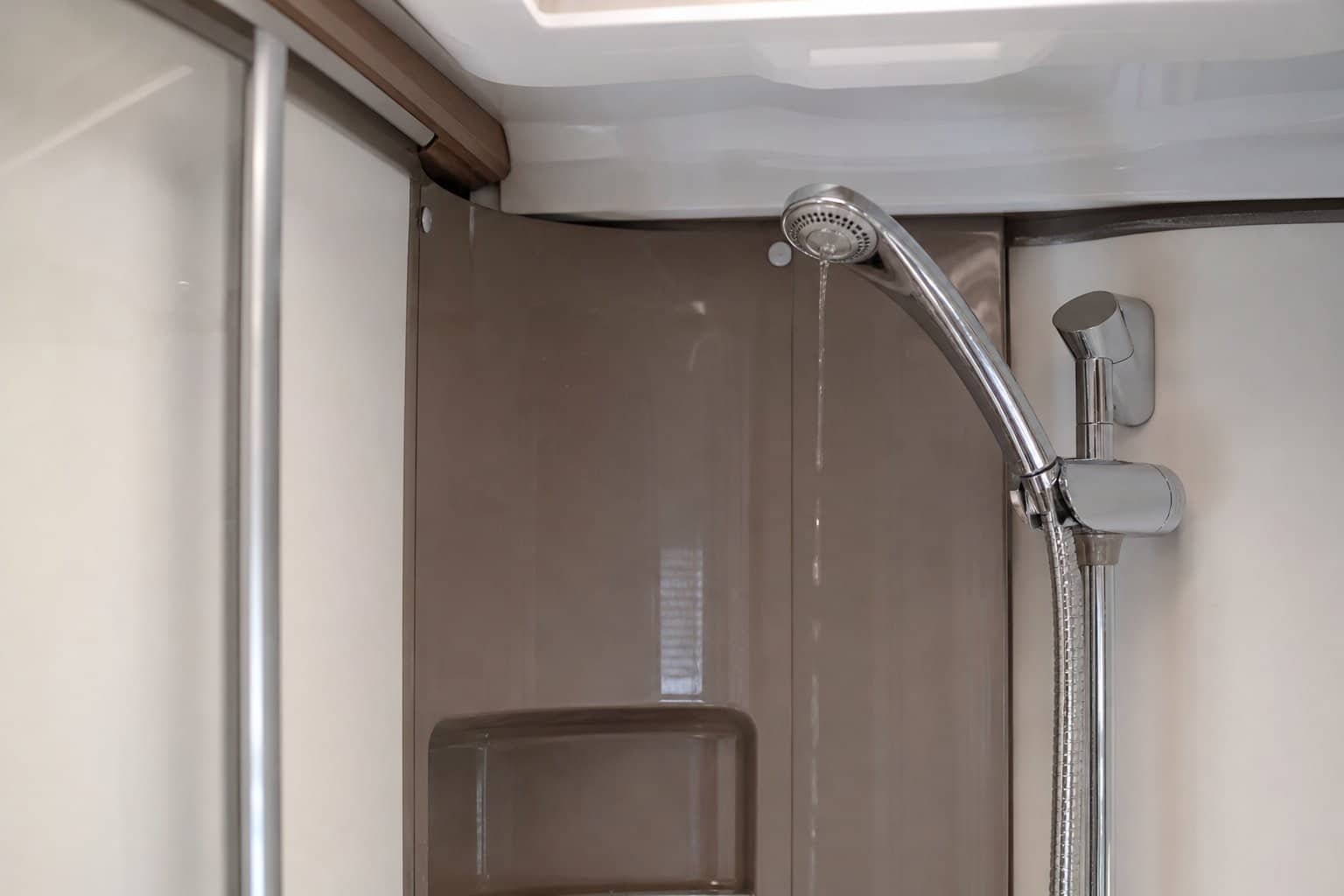
Pulsing with a tap open is common on mains hook-up, where the 12 V supply rises to around 13.7 V. Practical Caravan describes the shower swinging between hot and cold every few seconds. Adjust the pressure switch: on a Whale in-line switch, turn the thumbwheel clockwise until the pump starts, then anticlockwise until it stops. On the Whale Watermaster IC, recalibrate it at the furthest outlet. Pulsing with all taps closed points to a leak or debris in the non-return valve, and owners also report air in the hot circuit, loose clips and worn O-rings as causes.
8. The pump is noisy
Noise is usually caused by a loose mounting, trapped air or internal wear. On on-board pumps, check the rubber feet and mounting screws. Submersible pumps rattling against the carrier can be steadied by repositioning the hose. Clicking after the taps are closed suggests the pressure switch needs adjusting or there is a small leak.
9. Water dumps outside or never reaches the taps
If water pours out under the caravan, the water heater drain valve is probably open. On Truma heaters with FrostControl, the valve opens automatically when the temperature at the valve drops below about 3°C and will only close again once it is above about 7°C. Turn the rotary switch to its operating position and press the button until it locks. UK versions without frost protection use a simple lever.
10. The pump is seized, frozen or burnt out
Remove the strainer and try to turn the impeller with a small screwdriver: if it will not move, Practical Caravan advises replacing the pump. If you have confirmed 12 V at the pump terminals with a tap open and it still does not run, the pump has failed. Freezing can permanently damage pumps, and Truma does not cover frost damage under warranty, so drain down for winter as the Camping and Caravanning Club winter care guide explains. When replacing, match the plug to your inlet: our Whale Watermaster replacement pump guide shows which model fits.
Microswitch vs pressure-switch systems
- Microswitch system
Each tap contains a small switch that turns the pump on when you open it. A single dead tap often means a failed microswitch.
- Pressure-switch system
A switch senses the pressure drop when any tap opens. It is simpler to plumb but sensitive to battery voltage, which causes pulsing and run-on.
- Watermaster IC
Whale’s controller learns the pump’s current draw to stop pulsing and run-on, and switches off when the carrier is empty.
- FrostControl
Truma’s automatic drain valve that empties the heater when it is close to freezing.


Switch the pump off and isolate the 12 V supply before working on wiring. Never test a pump by running it dry for long, and keep electrical joints away from water. If you are not confident, ask a qualified caravan technician.
Need a new pump? Compare Whale and Truma models in our best caravan water pumps guide, see every type on our caravan water pumps page, and if a push-fit joint is leaking, our guide to caravan water pipe and push-fit fittings explains how to remake it.
Why has my caravan water pump stopped working?
The most common causes are the pump switch being off, a blown fuse, corroded plug contacts, an air-lock or an empty water carrier. Check these before replacing the pump.
Why does my caravan water pump keep running?
Usually a leak, a tap not fully closed or a low leisure battery upsetting the pressure switch. Find any leak, charge the battery and adjust the switch.
Why is my caravan water pump pulsing?
Higher voltage on mains hook-up, a badly adjusted pressure switch, air in the hot circuit or a small leak. Adjusting the switch or fitting a Whale IC usually cures it.
How do I get an air-lock out of a caravan water pump?
Lift the pump out of the carrier, hold it upright, lower it back in and jiggle it. Opening a tap with the pump off and then switching on also helps.
How do I test a caravan water pump?
With a tap open, measure the voltage at the pump terminals. If 12 V is present and the pump does not run, the pump has failed. You can also connect it briefly to a 12 V battery to test it.
What fuse does a caravan water pump use?
Whale’s exterior pump assemblies use a 5 A fuse. Check your handbook, and never fit a bigger fuse to stop it blowing.
Getting your caravan water pump working again
- Check the switch, fuse and 12 V supply
- Clean the plug and socket contacts
- Clear air-locks after refilling
- Adjust the pressure switch for pulsing or run-on
- Replace the pump only once it is proven faulty
Work from the simple to the complex: switch, fuse, carrier, contacts and air-locks first, then filters, leaks and pressure-switch settings, and only then the pump itself. Most faults are fixed in minutes, and if the pump really has failed, a replacement that matches your inlet is a quick plug-in swap.
CampEquipmentPlus relies on reader support. Purchases made via links on our website may earn us an affiliate commission at no extra cost to you, helping keep the site running.