
I remember the first time I slept in a rooftop tent during a wet overlanding trip and realized how much easier camp becomes when your bed is already off the ground, level, and protected from mud.
That experience changed how I look at vehicle camping completely. The Best rooftop tents combine weather protection, fast setup, a comfortable sleeping platform, and a shell tough enough to survive repeated highway miles.
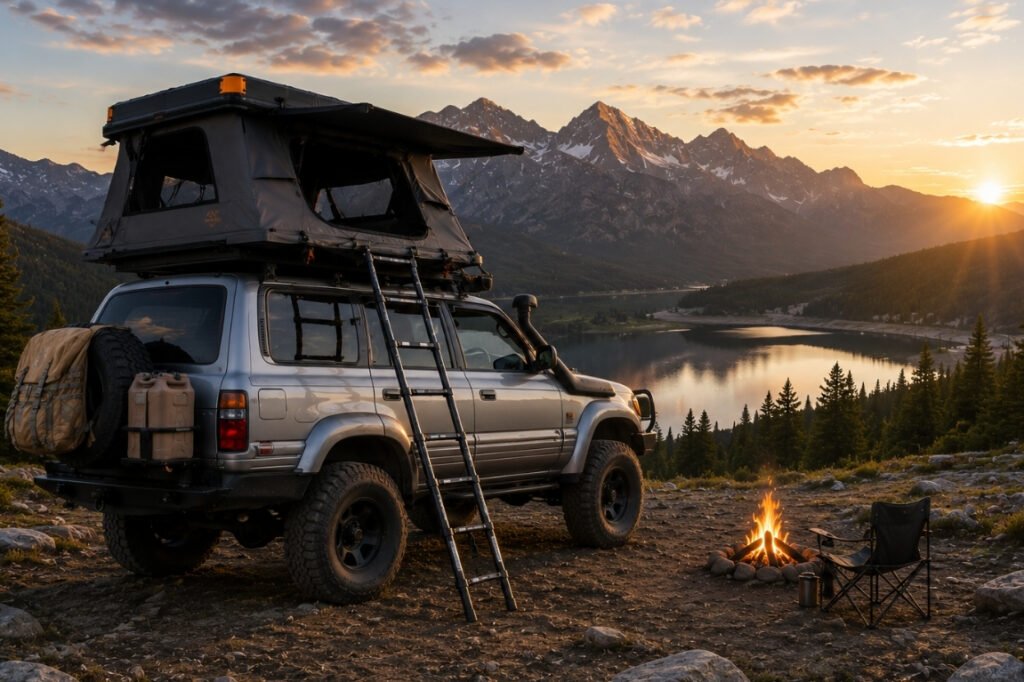
After researching and comparing the models below across hard-shell design, sleeping space, setup speed, weight, insulation, and long-term ownership, these are the rooftop tents I’d actually shortlist for serious camping.
The Best Rooftop Tents: My Top Picks
1. HEYFUN Adventurer Pro Rooftop Tent Hard Shell
HEYFUN 2-3 Person Aluminum Roof Top Tent, direct from the industry-leading manufacturer, are standout options with attachable side awning and built-in LED light strip, perfect choice for camping enthusiasts and seasoned adventurers

The Adventurer Pro is the model I’d pick for most buyers because it gets the fundamentals right without leaning too heavily on gimmicks.
The aircraft-grade aluminum shell, honeycomb aluminum base, 320g polyester fabric, condensation mat, built-in storage, side awning, LED lighting, and quick hydraulic opening system make it unusually complete straight out of the box.
Amazon lists it as a 2–3 person, four-season rooftop tent, with an opened footprint around 83.9 x 51.6 inches and a listed weight of 160 pounds.
Key Features:
- Aircraft-grade aluminum hard shell
- 2–3 person sleeping capacity
- Four-season construction
- Built-in LED lighting
- Side awning included
- Condensation mat and mattress
- Multiple interior storage pockets
- Hydraulic pop-up opening
- Luggage rack compatibility
What I like most is the balance. Some hard-shell tents are beautifully engineered but stripped of useful accessories; others pile on extras while compromising the core structure.
This one feels more thoughtfully rounded. The 13 interior storage pockets are genuinely useful in a rooftop tent, where keeping headlamps, phones, glasses, and clothing organized matters far more than it does in a large ground tent.
The downside is weight. At around 160 pounds, this is not a tent you casually lift onto the roof with one person, and your rack system needs to be properly rated.
HEYFUN specifically states that the supporting crossbars should handle at least 165 pounds before installation.
For couples, overlanders, and small families wanting one of the best roof top tents without immediately moving into boutique-brand pricing, the Adventurer Pro is my overall winner.
2. WildFinder Hard Shell Rooftop Tent
Hard Shell Roof Top Tent for Jeep SUV Truck Van. Includes 7.5 FT Telescoping Ladder, Ladder Organizer, 10 x Organizer Bags, LED Strip, 2 x Shoe Organizers, 3 x Mesh Windows, 2 x Mattress and 1 x Built-in Mattress

WildFinder has become an interesting option for campers who want a fully equipped hard-shell rooftop tent without spending several thousand dollars.
The tent uses an aircraft-grade aluminum shell and a wedge-style hard-shell format designed for Jeeps, SUVs, trucks, and vans.
Amazon and supporting documentation place the net weight at roughly 169 pounds, so this is still very much a heavy-duty vehicle-mounted shelter rather than a lightweight car accessory.
Standout Points:
- Aircraft-grade aluminum shell
- Hard-shell wedge design
- Telescoping ladder
- Anti-condensation mat
- Interior LED strip
- Shoe storage bags
- Accessory crossbars
- Multiple internal storage areas
- Designed for 2–3 campers
What surprised me most is how much equipment is included. Independent overlanding coverage highlights dual shoe bags, a ladder bag, anti-condensation mat, crossbars, LED lighting, and substantial internal storage.
Those extras sound minor until you’ve lived in a rooftop tent for several nights and realize how valuable dry shoe storage and organized gear become.
The trade-off is the same one shared by many value-focused aluminum tents: weight and bulk. You need a properly rated vehicle roof and rack, and installation is realistically a two-person job.
For anyone researching best budget rooftop tents, this is one of the more compelling hard-shell choices because the feature list is unusually generous for the money.
3. JOYINRUTE Aluminum Rooftop Tent with Winter Insulation
The elevated rear design creates significantly more legroom and interior volume, allowing you to move around comfortably inside. This transforms your tent from a simple sleeping pod into a spacious, livable retreat.

This JOYINRUTE model stands out because winter insulation is treated as a core feature rather than an optional add-on.
It’s a 2–3 person aluminum hard-shell rooftop tent designed for four-season camping, with a pop-up structure and insulated interior aimed squarely at colder-weather users.
Available product information lists dimensions of roughly 85.4 x 54.3 x 59.5 inches when deployed and includes the insulation layer, mattress, ladder, shoe storage, and installation tools.
Cold-Weather Features:
- Aluminum hard shell
- Winter insulation included
- Four-season design
- 2–3 person capacity
- Mattress included
- Ladder included
- Luggage rack
- Shoe storage
- Pop-up deployment
The insulation is the reason I’d choose this over many cheaper hard-shell models. Rooftop tents are elevated and exposed to wind on all sides, so cold air strips heat away surprisingly quickly. A proper thermal liner can make far more difference than simply throwing another sleeping bag inside.
The downside is that insulated rooftop tents are usually heavier, bulkier, and more cumbersome to remove between trips. If you camp almost exclusively in warm climates, you may be paying for a feature you rarely need.
For year-round travelers searching for the best overland rooftop tent for colder conditions, this JOYINRUTE is one of the more practical choices in the lineup.
4. JOYINRUTE Winter Insulation Hard Shell Rooftop Tent
With Winter Insulation, Pop Up 2 Person Roof Top Hardshell for Camping Truck Van Suitable for Jeep SUV Car

This second JOYINRUTE configuration focuses even more heavily on winter use. Amazon lists it as a two-person, four-season rooftop tent measuring approximately 83 x 51.8 x 39.4 inches with a listed weight around 178 pounds.
It includes a mattress, ladder, ladder bag, shoe bag, storage bag, installation tools, and winter-oriented weather protection.
Winter Camping Strengths:
- Four-season construction
- Thermal winter liner
- Hard-shell protection
- 2-person sleeping capacity
- 5,000mm-class water-resistance listing
- Rainproof and windproof design
- UV protection
- Included ladder and mattress
In practical terms, this is the rooftop tent I’d choose if cold-weather use matters more than roof weight. The thermal liner improves wind resistance and interior warmth, and supporting product information specifically describes the liner as removable, which makes the tent more flexible outside winter.
The obvious weakness is the 178-pound listed weight. That puts considerably more demand on your roof rack, crossbars, and vehicle roof rating than many lighter alternatives.
If you’re comparing the best hardshell roof top tent options for winter rather than general three-season camping, this one deserves serious consideration.
5. HEYFUN Explorer Pro Rooftop Tent
With USB Outlet, Side Awning, Replaceable Netting Curtain&Luggage Racks for 4 Season Camping, Aluminum Pop Up 2-3 Person Roof Top Tent for Truck Jeep SUV Van

The Explorer Pro is closely related to the Adventurer Pro but has a slightly more lifestyle-oriented setup, combining the aluminum hard shell with a detachable side awning and built-in LED strip. Amazon describes it as a 2–3 person, four-season tent with a 660-pound maximum load and a hydraulic system that can open or close in seconds.
Explorer Pro Highlights:
- 2–3 person sleeping area
- Aircraft-grade aluminum shell
- Detachable side awning
- Interior LED lighting
- 13 storage pockets
- Condensation mat
- Thick sleeping mattress
- Telescoping ladder
- Four-season protection
The awning is more useful than it first appears. Rooftop tents are fantastic sleeping platforms, but they often leave you exposed once you climb down. A detachable side awning gives you somewhere to sort boots, cook in light rain, or stand out of direct sun.
Compared with the Adventurer Pro, I’d choose this if your campsite tends to become a proper living area rather than simply a place to sleep.
The same weight considerations apply, though. Amazon advises using supporting crossbars rated to at least 165 pounds.
For road-trip campers looking for one of the best car top tents with useful built-in accessories, the Explorer Pro is especially appealing.
6. Meedo Apolle A86 M Soft-Shell Rooftop Tent
Fits 2 People, Made with Waterproof Material and a Rainfly-Fold Design, Clamshell Army Green Roof top Tent for Overlanding Hunting, Ladder Included
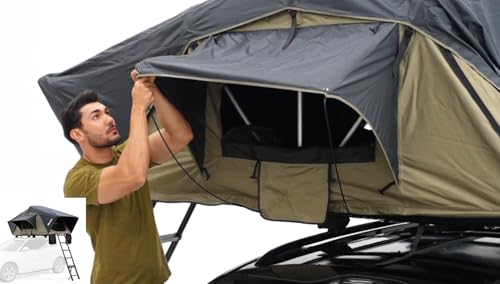
Not everyone needs a heavy aluminum hard shell. The Meedo Apolle A86 M is a two-person soft-shell rooftop tent using a folding rainfly design, and that makes it one of the more traditional choices here. Amazon positions it for overlanding and hunting, with a ladder included and waterproof materials used throughout.
Soft-Shell Advantages:
- Two-person capacity
- Folding soft-shell design
- Waterproof construction
- Rainfly included
- Ladder included
- More traditional rooftop-tent layout
- Suitable for overlanding
- Generally less complex mechanically
Soft-shell tents take longer to deploy and pack away than hydraulic hard shells, but they have one big advantage: simplicity. There are fewer shell mechanisms, struts, and heavy aluminum sections to worry about, and the fold-out design can produce a relatively generous sleeping platform.
The downside is highway convenience. Packing fabric and rainflies neatly takes longer, especially when everything is wet.
For buyers searching for best cartop tents who don’t specifically need a hard shell, the Meedo is a sensible alternative.
7. San Hima Hard Shell Rooftop Tent
One-Touch Setup & Pack up. Aluminium Automatic Roof Top Tent

San Hima has built a strong following around overlanding equipment, and its rooftop-tent designs generally emphasize robust shell construction, blackout fabrics, useful storage, and practical campsite features. The company’s current hard-shell designs use aluminum construction, while comparable San Hima models use heavy Oxford fabrics and folding systems intended to deliver a spacious interior without excessive packed height.
Overlanding Strengths:
- Hard-shell construction
- Overland-focused design
- Heavy-duty outdoor fabric
- Blackout-style interior options
- Telescoping ladder
- Good interior volume
- Strong weather protection
- Practical accessory support
San Hima tents generally feel aimed at people who actually travel off pavement rather than simply wanting a rooftop tent for occasional campground use. The construction and accessory ecosystem reflect that.
The compromise is price. Once you move into more established overland brands, the cost typically rises quickly compared with some Amazon-first alternatives.
For regular overlanders, though, this is the type of tent where spending more can make sense because hinges, shell seals, hardware, fabric quality, and ladder construction all matter after years of vibration and highway miles.
8. Naturnest Sirius 2 Hard Shell Rooftop Tent
Easy Set Up Pop Up Large Tent for 2-3 Person Camping, Waterproof UV-Resistant Blackout Privacy 4 Season Tents for Truck, Jeep, SUV, Van, Trailer - Sirius 2

The Naturnest Sirius 2 is one of the more family-oriented options here. Amazon describes it as a hard-shell, four-season vehicle-mounted tent suitable for up to three campers, with waterproof construction, UV protection, blackout privacy, three windows, and compatibility with SUVs, trucks, Jeeps, vans, and trailers.
Family-Friendly Features:
- Up to 3-person capacity
- Hard-shell design
- Four-season suitability
- Waterproof construction
- UV protection
- Blackout interior
- Three windows
- Aluminum base
- Quick pop-up setup
Blackout material is an underrated feature. If you camp in exposed desert areas or during summer when sunrise arrives painfully early, reducing morning light inside the tent makes sleeping noticeably easier.
I also like the three-window layout. Rooftop tents can become hot quickly, particularly hard-shell designs with dark outer finishes, so cross ventilation matters.
If you’re comparing best car top tents for couples who occasionally bring a child, the Naturnest offers a useful balance between sleeping capacity, privacy, and weather protection.
What Makes the Best Rooftop Tents Actually Good?
After comparing rooftop-tent designs, a few factors matter far more than flashy accessory lists.
A Strong Shell and Base: The Best rooftop tents need a rigid sleeping platform and mounting structure capable of handling years of highway vibration. Aluminum and honeycomb bases generally offer excellent rigidity without excessive flex.
Reliable Weather Sealing: Rain almost always finds the weakest seam eventually. Proper shell seals, taped fabric seams, waterproof coatings, and protected zippers are worth paying for.
Fast Setup: One of the biggest reasons to buy rooftop tents is convenience. Hard-shell hydraulic designs can deploy dramatically faster than traditional ground tents.
Condensation Control: Anti-condensation mats, mesh windows, roof vents, and breathable fabric matter enormously. Moisture trapped beneath the mattress is one of the most common long-term rooftop-tent frustrations.
A Comfortable Mattress: A rooftop tent is effectively a permanent bed on your vehicle. A thin, hard mattress quickly becomes annoying during multi-night trips.
Buying Guide: Choosing the Best Roof Top Tent
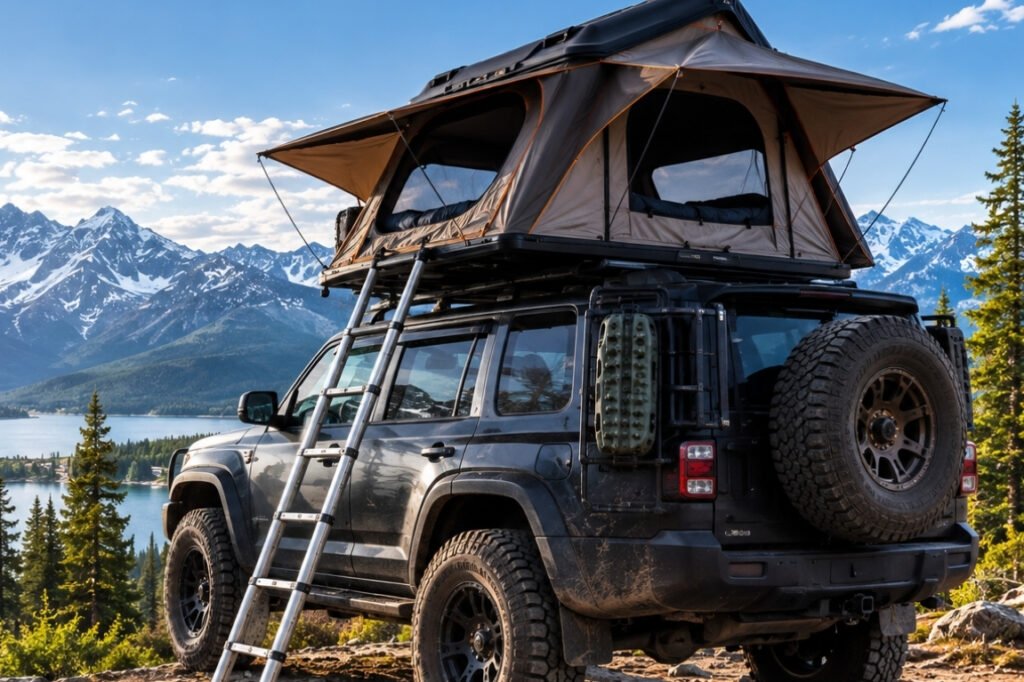
Hard Shell vs Soft Shell
Hard-shell rooftop tents:
- Faster to deploy
- Easier to close
- Better highway aerodynamics
- More weather resistant when packed
- Usually heavier
- Generally more expensive
Soft-shell rooftop tents:
- Often cheaper
- Can offer larger sleeping platforms
- Simpler construction
- Usually slower to pack
- Fabric cover requires more care
For frequent road trips, I generally prefer a hard shell. For occasional camping, soft-shell designs can offer better value.
Vehicle Roof Capacity
This is the first thing I’d check before shopping.
Your vehicle has two important ratings:
Dynamic roof load: The weight your roof can safely carry while driving.
Static roof load: What the roof can support while parked.
A 160–180 pound rooftop tent is pointless if your crossbars only support 120 pounds while driving. HEYFUN explicitly recommends supporting crossbars rated for at least 165 pounds on its Adventurer/Explorer platform.
Sleeping Capacity
Manufacturers are optimistic.
If a rooftop tent says “2–3 people,” I generally interpret that as:
- Comfortable for two adults
- Two adults plus a small child
- Three adults only if everyone is very friendly
For long trips, extra width is worth paying for.
Insulation
Insulation matters more on rooftop tents than ground tents because cold air passes underneath the sleeping platform.
Winter campers should prioritize:
- Thermal liners
- Thick mattresses
- Condensation mats
- Wind-resistant fabric
- Four-season shells
That’s why the JOYINRUTE models stand out for colder climates.
Ladder Quality
People obsess over shell materials but forget the ladder.
You’ll climb it every morning, every night, and occasionally while tired or wet. Look for wide rungs, positive locking sections, and enough length for lifted trucks or taller SUVs.
Packed Height and Aerodynamics
A rooftop tent affects fuel economy.
Lower-profile hard shells generally produce less drag than bulky soft-shell tents. If you leave your tent installed year-round, this becomes considerably more important.
Checkout our post: Hard Shell vs Soft Shell Roof Tent: Which Is Best?
Common Rooftop Tent Mistakes
Ignoring Roof Load Ratings: Never assume because a tent physically fits your rack that the vehicle can safely carry it.
Buying Too Large: Bigger tents increase weight, drag, installation difficulty, and often price.
Underestimating Installation: Most hard-shell tents realistically require at least two people to lift safely.
Ignoring Mattress Comfort: Thin mattresses become uncomfortable surprisingly quickly during extended trips.
Skipping the Condensation Mat: Moisture beneath the mattress can lead to mildew and unpleasant odors.
Leaving Bedding Damp: Always dry the interior before long-term storage.
Buying on Price Alone: The cheapest tent may save money initially but shell hinges, seals, ladders, and zippers take serious abuse over time.
Setup and Maintenance
Before Every Trip:
- Check mounting bolts
- Inspect rack crossbars
- Test gas struts
- Check ladder locks
- Examine shell latches
- Inspect fabric and seals
After Wet Camping:
- Open the tent fully at home
- Allow mattress and liner to dry
- Wipe condensation from the shell
- Clean mud from the ladder
- Check seals for trapped grit
Long-Term Storage:
- Store completely dry
- Avoid leaving wet bedding inside
- Lubricate hinges where recommended
- Recheck mounting hardware regularly
- Treat fabric waterproofing when performance starts declining
Good maintenance makes a huge difference. Rooftop tents live outdoors permanently when mounted, so UV, road salt, vibration, dust, and temperature changes eventually find weak points.
Verdict: Which Rooftop Tent Should You Buy?
After comparing these models, my choices are straightforward.
Best Overall: HEYFUN Adventurer Pro delivers the strongest mix of aluminum construction, sleeping comfort, storage, fast setup, weather protection, and included accessories.
Best Budget Hard Shell: WildFinder Rooftop Tent packs an unusually strong accessory list into a comparatively value-focused package and has attracted attention specifically as a budget overlanding option.
Best Winter Tent: JOYINRUTE Aluminum Rooftop Tent with Winter Insulation makes the most sense for campers who regularly face cold nights.
Best Soft Shell: Meedo Apolle A86 M offers a simpler two-person fold-out design for campers who don’t need a heavy aluminum shell.
Best for Families: Naturnest Sirius 2 combines a three-person layout with blackout privacy and four-season weather protection.
The Best rooftop tents ultimately depend on your vehicle, rack capacity, climate, and camping style. If I were outfitting an SUV for regular weekend overlanding, I’d start with the Adventurer Pro. If winter travel mattered most, I’d lean toward JOYINRUTE. And if budget were the deciding factor, WildFinder would be high on my shortlist.
Frequently Asked Questions
Are rooftop tents worth it?
For frequent road-trippers, overlanders, and campers who move between sites regularly, rooftop tents can absolutely be worth the investment.
Their biggest advantage is convenience: your sleeping platform stays attached to the vehicle, setup is typically much faster than pitching a conventional ground tent, and you stay elevated above mud, standing water, insects, and uneven ground.
The downside is cost. Even some of the best rooftop tents cost considerably more than premium ground tents, and you also need a properly rated roof rack. If you only camp once or twice a year, the extra expense can be difficult to justify.
But for regular vehicle-based camping, the time saved during setup and the improved sleeping platform make a rooftop tent genuinely useful rather than just a novelty.
Do rooftop tents affect gas mileage?
Yes. Rooftop tents can reduce fuel economy because they add both weight and aerodynamic drag to your vehicle.
Hard-shell tents generally perform better in this respect because their closed profile is smoother and lower than most soft-shell designs. Larger soft-shell tents can create noticeably more wind resistance at highway speeds.
The exact impact depends on the tent, your vehicle, driving speed, roof-rack setup, and whether the tent stays mounted permanently. If fuel economy matters, look for a low-profile hard shell and remove the tent between trips if practical.
This is one reason the best hardshell roof top tent isn’t necessarily the largest model—it should balance interior comfort with sensible packed dimensions.
Are rooftop tents safe?
Rooftop tents are generally safe when they are installed correctly on a compatible vehicle and roof rack.
The most important factor is staying within the manufacturer’s dynamic roof-load rating while driving. You also need crossbars or a platform rack specifically rated to support the tent’s weight.
Once parked, the vehicle’s static roof capacity is typically much higher because the load is no longer being subjected to cornering, braking, bumps, and highway forces.
The ladder also needs to be positioned securely on firm ground, and all mounting hardware should be checked periodically. Used correctly, quality best roof top tents provide a stable and secure sleeping platform.
Can rooftop tents damage your car?
They can if the tent is too heavy, fitted to an unsuitable roof rack, or installed incorrectly.
The tent itself should not damage a properly rated vehicle when mounted according to the vehicle, rack, and tent manufacturers’ instructions.
Problems usually occur when owners exceed roof-load limits, mount tents directly to weak factory crossbars, overtighten clamps, or ignore loose mounting hardware.
Long-term use can also put additional wear on suspension components and slightly increase the vehicle’s center of gravity.
Before buying one of the best car top tents, check your vehicle’s dynamic roof capacity, the rack’s load rating, and the rooftop tent’s total weight. Those three figures need to work together safely.
The big lesson is simple: don’t buy the largest or most expensive rooftop tent automatically. Buy the one your vehicle can safely carry, that opens quickly enough to suit how you travel, and that you’ll still enjoy sleeping in after the novelty has worn off.
CampEquipmentPlus relies on reader support. Purchases made via links on our website may earn us an affiliate commission at no extra cost to you, helping keep the site running.