
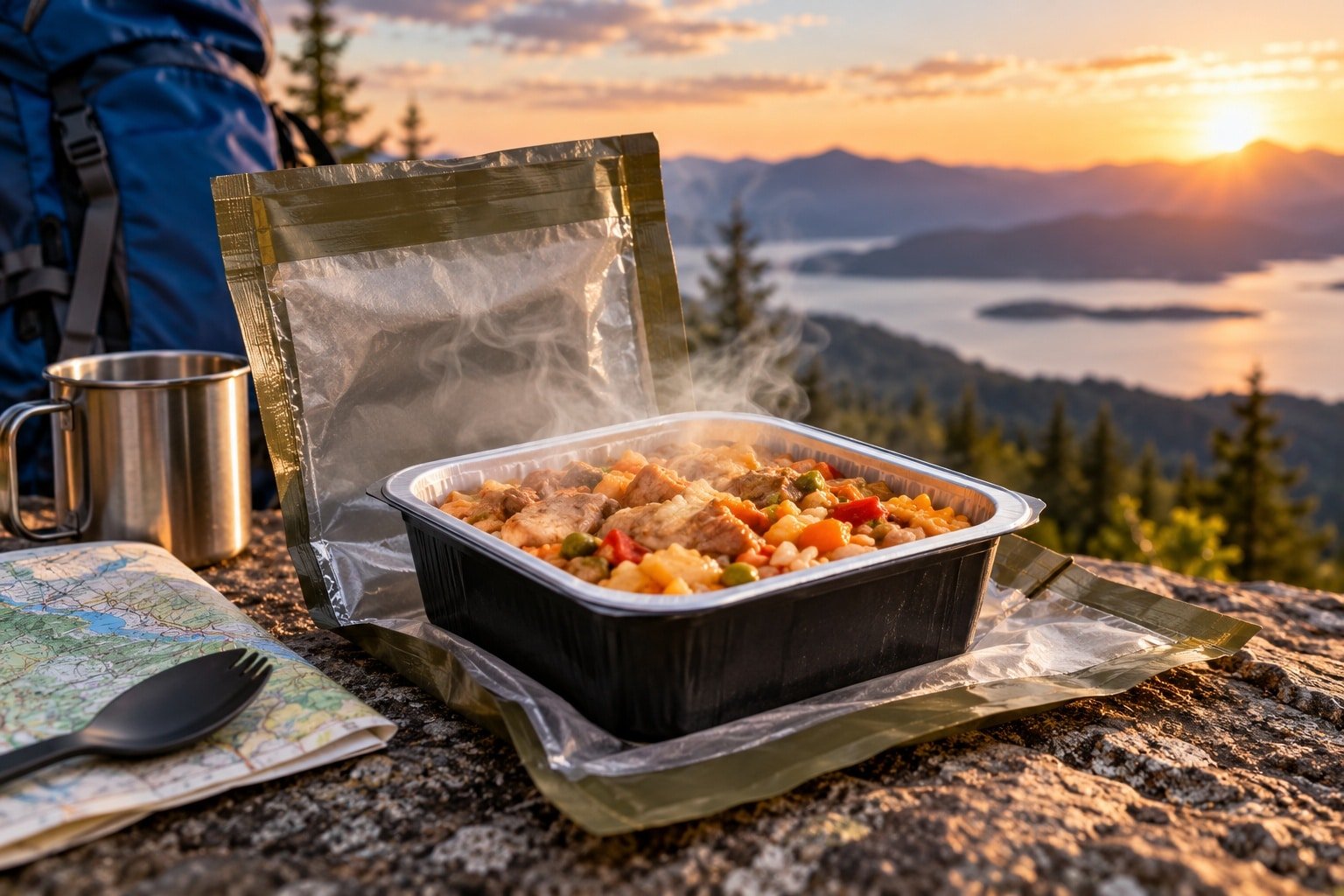
Self-heating meals offer a practical way to enjoy warm food without a stove, electricity, or an open flame.
Whether you’re camping, hiking, preparing for a power outage, or traveling somewhere with limited cooking facilities, these convenient meal packs can provide a hot meal with minimal equipment.
Unlike conventional camping meals that require a gas burner or boiling water, self-heating food packs use a chemical heating system to warm food inside a sealed container or pouch.
But how effective are they?
Are flameless food warming pads safe? And are self-heating meal kits worth buying for emergency preparedness?
This guide explains how self-heating meals work, compares the main types, examines their advantages and disadvantages, and covers the safety precautions you should follow.
What Are Self-Heating Meals?
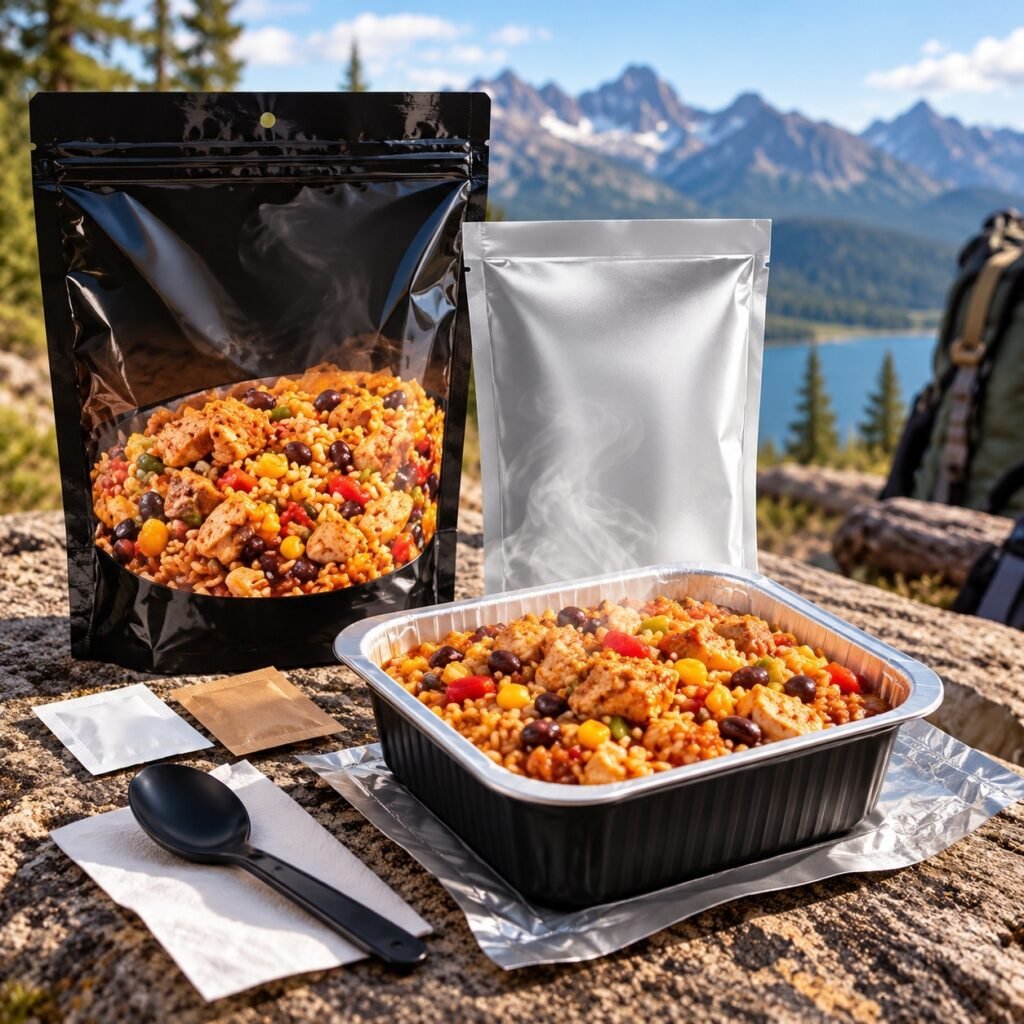
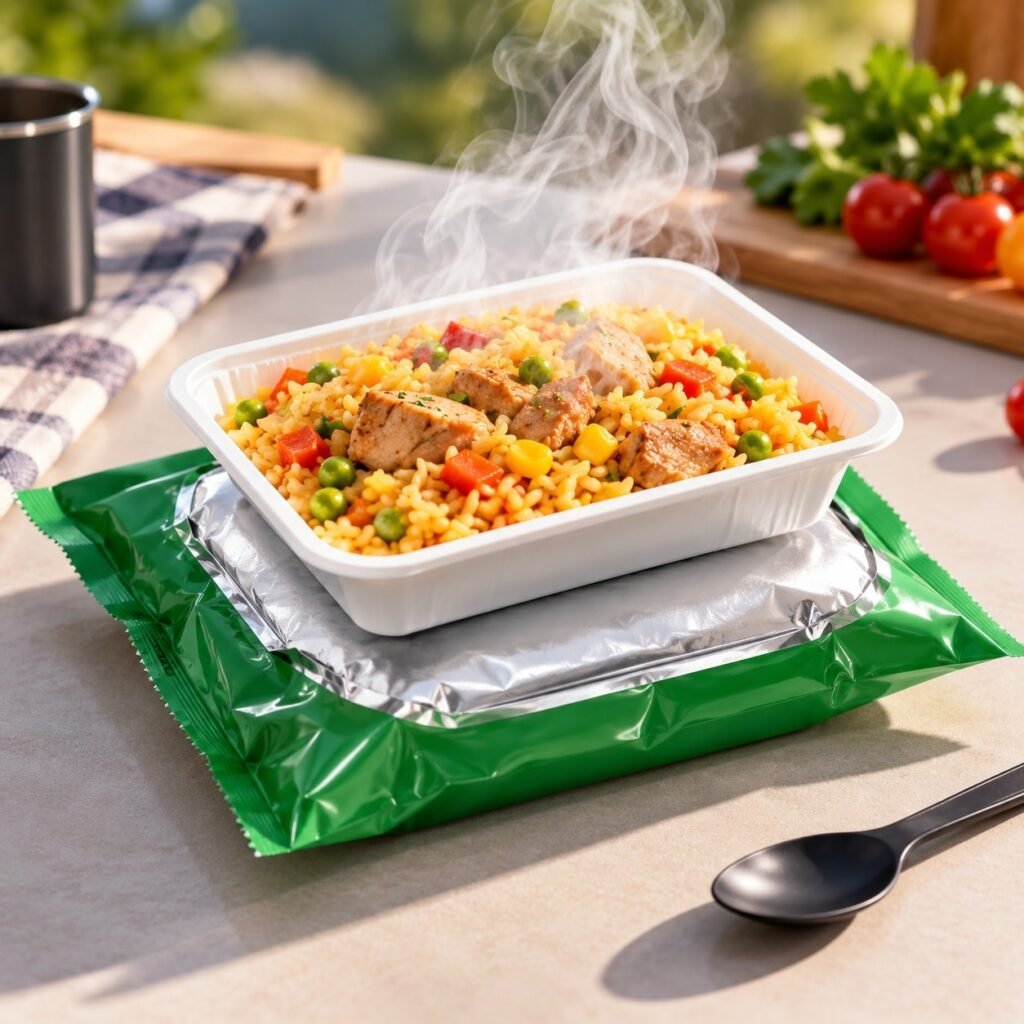
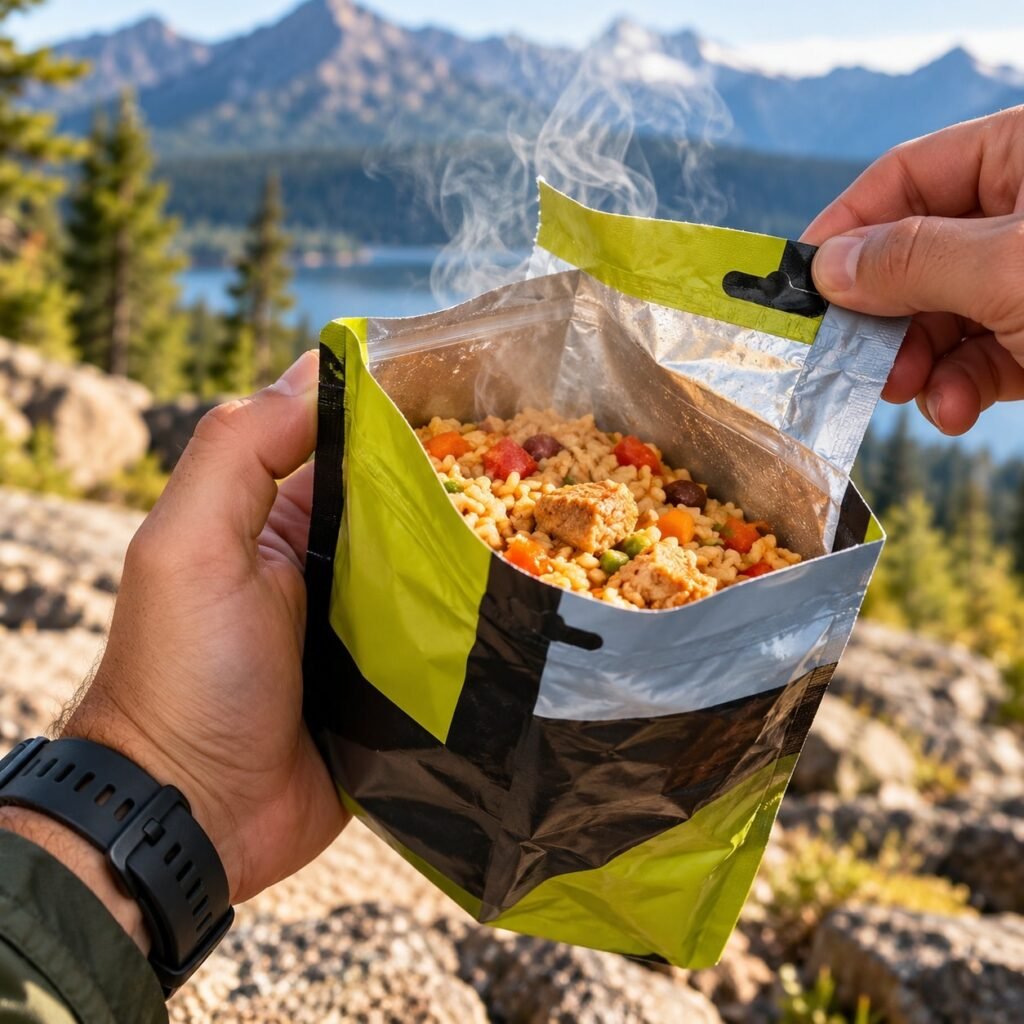
Self-heating meals are packaged foods that use a built-in or separate chemical heating system to warm the contents without conventional cooking equipment.
Most systems use a flameless heating element activated by adding a measured amount of water. Some use a heating pad or sachet that sits beneath or alongside the food container.
Common applications include camping, hiking, military field rations, emergency food supplies, outdoor work, and travel.
Self-heating meals generally fall into three categories:
- Complete self-heating meal kits containing ready-to-eat food and an integrated heater.
- Flameless ration heaters designed to warm compatible sealed food pouches.
- Separate flameless food warming pads intended for specific food containers or meal systems.
The main benefit is convenience. You can warm a prepared meal without carrying a camping stove, gas canister, or electrical appliance.
One important distinction is that most self-heating meals contain food that is already cooked and safe to eat without additional heating, provided the packaging is intact and the product has been stored correctly.
The heater improves eating comfort. It does not necessarily cook raw food or make spoiled food safe.
How Do Self-Heating Meals Work?
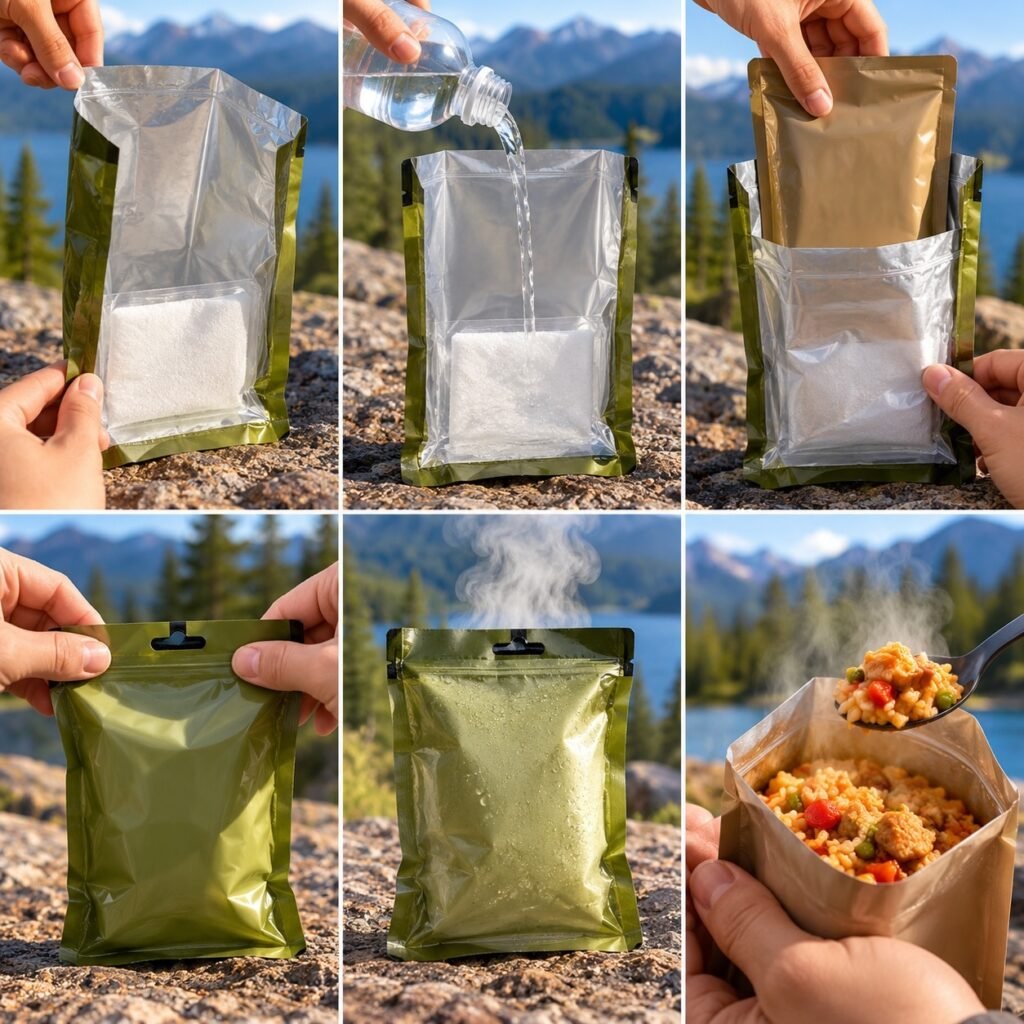
If you’re wondering how do self heating meals work, the answer lies in a controlled chemical reaction that produces heat.
Most flameless heating systems contain reactive materials that generate heat when exposed to water.
Depending on the manufacturer, the heating ingredients may include magnesium-based compounds, iron, salt, or calcium oxide.
The exact chemical process varies between products.
Step 1: Activate the Heating Element
For water-activated products, the user adds a specified amount of water to the heater compartment or pouch.
This starts an exothermic reaction, meaning the chemical reaction releases heat.
Some self-heating meal kits include a separate water sachet, while others require the user to supply water.
Step 2: Heat Transfers to the Food
As the heating element becomes hot, heat passes through the food pouch or container.
The food remains separated from the chemicals by its packaging and the design of the heating system.
Certain systems generate steam, which helps distribute heat around the food container.
Step 3: Allow the Meal to Warm
Heating times depend on the product, food quantity, ambient temperature, and heater design.
Some manufacturers specify heating periods of approximately 10 to 15 minutes, while others require longer.
Follow the exact instructions supplied with your meal kit.
Step 4: Open and Eat
After the recommended heating period, remove or open the food container carefully.
Steam, hot water, and the heater itself can cause burns.
Stir the food where appropriate and check that the temperature is comfortable before eating.
A self-heating system is designed for convenience rather than precise temperature control. The food may contain hot and cool areas.
Types of Self-Heating Meals and Food Heaters
Not all flameless heating systems work in the same way. Choosing the right type depends on whether you want a complete meal or simply need to warm food you already own.
| Type | Best for | Main limitation |
|---|---|---|
| Complete self-heating meal kit | Travel and emergencies | Limited menu choices |
| Flameless ration heater | Compatible military-style meals | Requires suitable packaging |
| Self-heating food container | Work and travel | Container-specific heating system |
| Separate food warming pad | Compatible packaged meals | Compatibility must be checked |
1. Complete Self-Heating Meal Kits
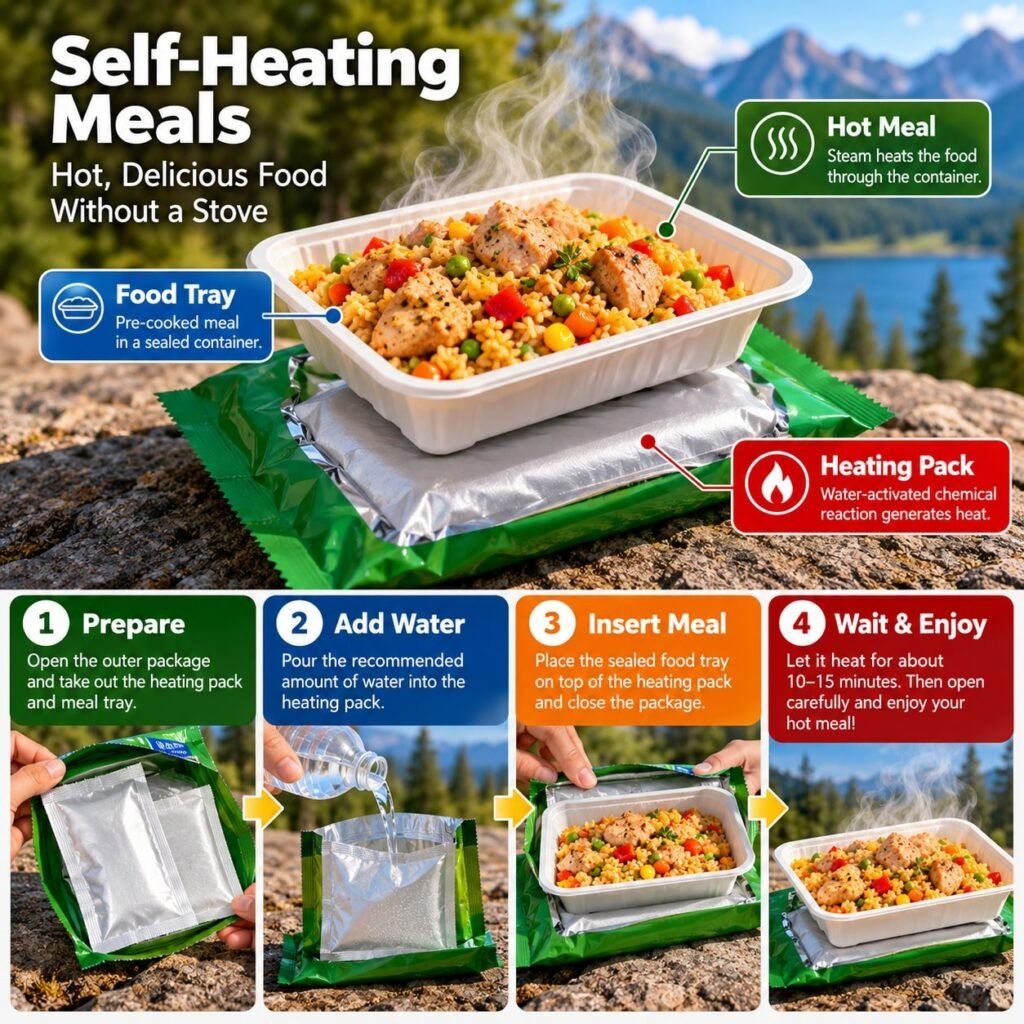
A complete self heating meal kit combines prepared food with a heating system in one package.
To heat: Add 2 oz of water to the heating element, wait 5 minutes, then enjoy your hot meal.

These products are popular among campers, travelers, emergency preparedness enthusiasts, and people working in remote locations.
Meals vary by brand and country. Examples include rice dishes, pasta, curries, noodles, stews, and other prepared foods.
Advantages
- No camping stove or electricity required.
- Convenient for short trips and emergency situations.
- Minimal food preparation.
- Often designed for compact storage.
- Some products have extended unopened shelf lives.
Disadvantages
- More packaging waste than ordinary food.
- Limited control over heating temperature.
- Food choices vary by manufacturer.
- Some meals contain high levels of sodium.
- Shelf life and storage conditions vary.
Best for: People who want a complete, convenient meal without carrying separate cooking equipment.
Before purchasing, check the ingredients, allergens, meal weight, storage instructions, expiration date, and whether the heater requires additional water.
2. Flameless Food Warming Pads
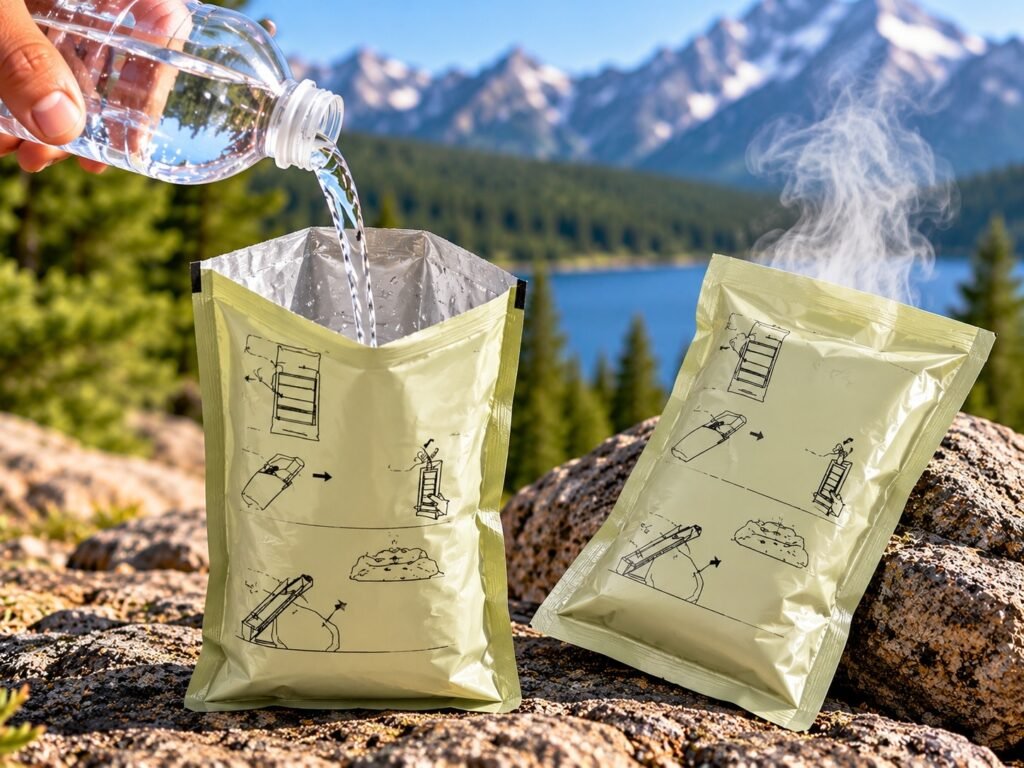
Flameless Food Warming Pads are chemical heating products designed to warm compatible packaged food without an open flame.
Food Warmers for Parties Buffet Disposable - Party Buffet Servers and Warmers for Full Size Pans - Heating Pads for Chafing Dish- Must-Have Catering Supplies

They are commonly associated with military-style meal systems, although commercial versions are available for camping and emergency preparedness.
A typical water-activated heating pad uses reactive materials sealed inside a specially designed pouch.
When water is added according to the manufacturer’s instructions, the heater releases heat that transfers to the food package.
Advantages
- Lightweight and compact.
- No electricity or gas fuel required.
- Suitable for compatible sealed food pouches.
- Useful for emergency food preparation.
- Often supplied as single-use heaters.
Disadvantages
- May require additional water.
- Some chemical formulations release hydrogen gas.
- Not suitable for every food container.
- Typically single-use.
- Can cause burns if mishandled.
Best for: Campers and emergency preparedness users who already have compatible ready-to-eat food pouches.
A flameless warming pad should never be placed directly against unpackaged food unless the manufacturer specifically designs and approves the product for that use.
3. Self-Heating Food Containers
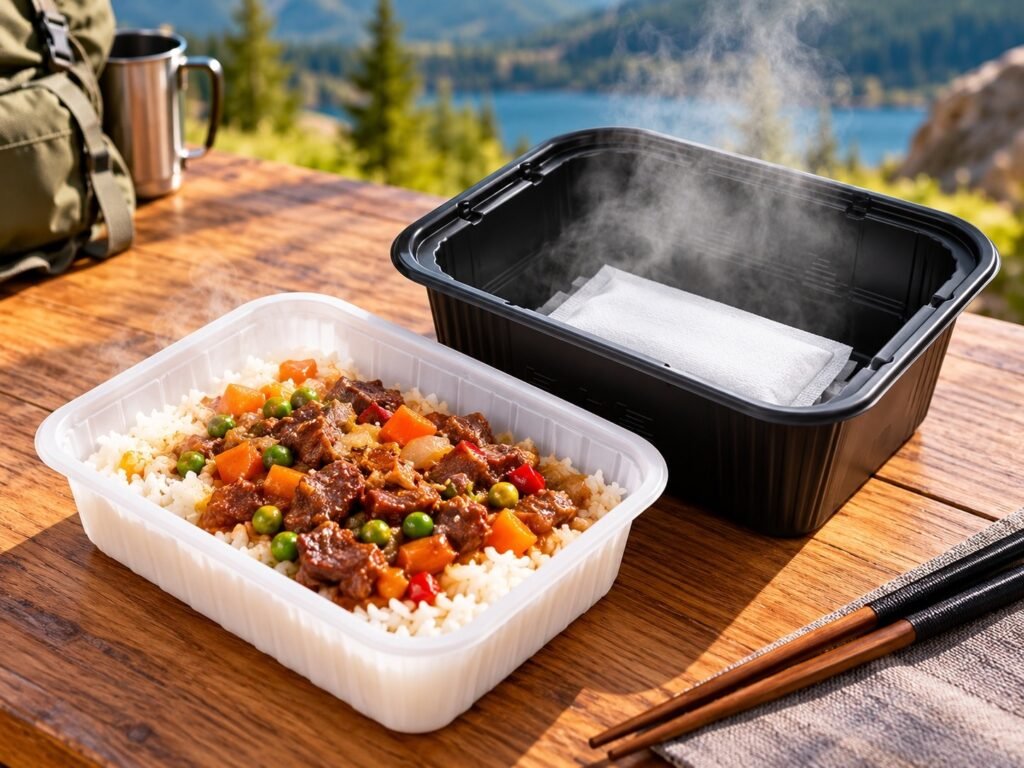
Some manufacturers sell self-heating food containers that use a dedicated heating compartment beneath the meal.
No Fire or Plugs Heats Cans, MREs & Meals in 10 Min Perfect for Camping, Travel, Emergencies & Office

These products may use disposable chemical heater packs or other purpose-designed heating systems.
They are useful for people who want warm meals during travel, outdoor work, or activities where traditional cooking is inconvenient.
Advantages
- Convenient meal-container format.
- No separate cooking stove required for chemical-heating versions.
- Useful for compatible prepared foods.
- Can reduce the need for additional cooking equipment.
Disadvantages
- Replacement heaters may be difficult to obtain.
- Containers and heating elements may be brand-specific.
- Not all containers are reusable.
- Some models are bulkier than simple meal pouches.
Best for: Travelers and outdoor workers who want a dedicated food-warming system.
Check whether the container is reusable, whether replacement heating packs are available, and whether the food compartment is suitable for the intended meal.
4. Military-Style Flameless Ration Heaters
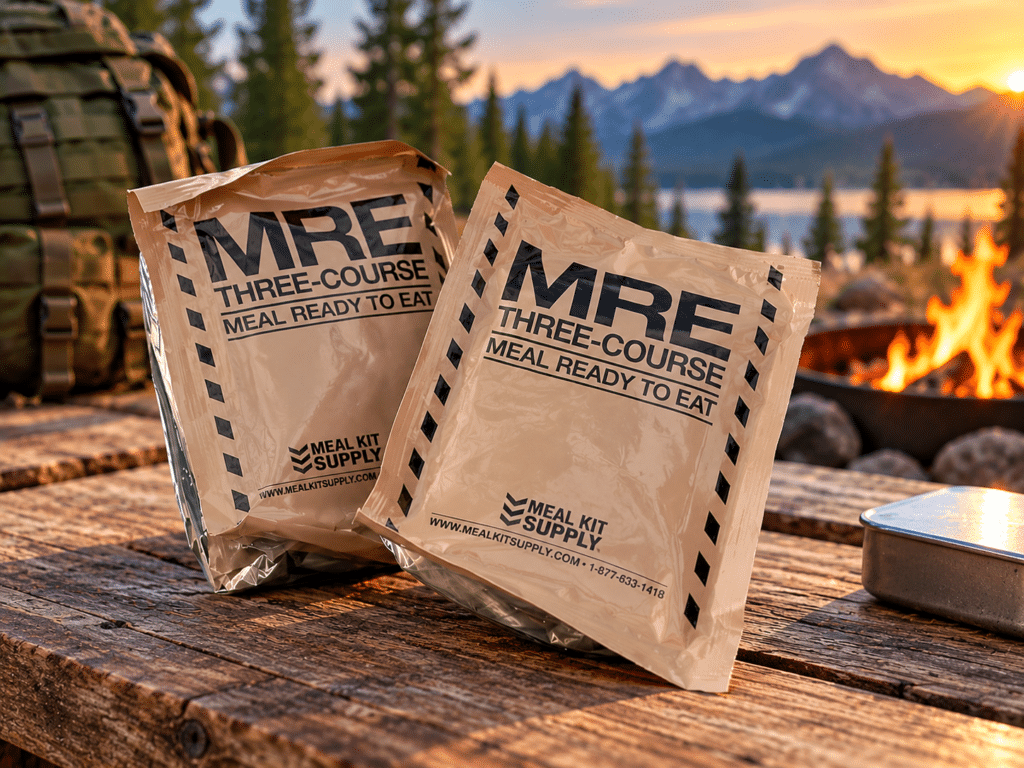
Military-style flameless ration heaters are designed to warm packaged meals in field conditions.
The technology has been used in military food systems for decades. The U.S. Army developed flameless ration heaters for Meals, Ready-to-Eat (MREs), allowing personnel to warm prepared food without a conventional stove.
Military Issued Heaters - Simple and easy to use Lightweight and easily storable - Non-toxic, biodegradable, and disposable with regular household trash

A typical magnesium-based heater requires a small amount of water to activate the chemical reaction.
Advantages
- Compact and relatively lightweight.
- Designed for use with compatible ration pouches.
- No external cooking fuel required.
- Useful for emergency and outdoor situations.
- Established military field-ration technology.
Disadvantages
- Heating performance varies with environmental conditions.
- Some types release flammable hydrogen.
- Restricted transport rules may apply.
- Limited compatibility with ordinary food packaging.
- Usually disposable after one use.
Best for: Hikers, campers, outdoor workers, and emergency preparedness users who want a lightweight heater for compatible packaged rations.
Self-Heating Meals vs Camping Stoves: Which Is Better?
Both systems can provide warm food outdoors, but they serve different purposes.
| Feature | Self-heating meals | Camping stoves |
|---|---|---|
| Open flame | No | Usually yes |
| Electricity | Not required | Not required for most gas stoves |
| Fuel | Chemical heater | Gas, alcohol, or other fuel |
| Cooking raw food | Generally unsuitable | Suitable with correct equipment |
| Meal flexibility | Limited | Wide |
| Reusability | Heater usually single-use | Stove reusable |
| Cleaning | Usually minimal | Cookware may need washing |
| Ventilation | Required for certain heater types | Required for combustion stoves |
| Best application | Prepared meals | Cooking and boiling water |
When Self-Heating Meals Are Better
Self-heating meals are particularly useful when you need a simple, ready-to-eat meal and do not want to carry a stove.
They are convenient for short hiking trips, emergency kits, vehicle emergency supplies, and outdoor activities where conventional cooking equipment is impractical.
When a Camping Stove Is Better
A camping stove is more versatile if you need to boil water, prepare multiple meals, or cook raw ingredients.
For extended camping trips, a reusable stove may generate less disposable heating waste than using a separate chemical heater for every meal.
For emergency preparedness, combining shelf-stable food that can be eaten cold with an appropriate outdoor cooking option provides greater flexibility.
: Best Emergency Camping Stoves for Power Outages
Are Self-Heating Meals Safe? Essential Safety Guidelines
Self-heating meals can be convenient when used correctly, but the heating elements are chemical devices and require careful handling.
The most important risks include burns, hot steam, chemical exposure, accidental activation, and flammable gas generation.
1. Use in a Well-Ventilated Area
Some magnesium-based flameless ration heaters produce hydrogen gas when activated.
Hydrogen is highly flammable, and concentrations can become dangerous in confined spaces.
The U.S. Coast Guard has documented hydrogen accumulation associated with stored flameless ration heaters. The Federal Aviation Administration has also examined fire risks linked to these products.
Never activate a hydrogen-generating heater inside a sealed tent, closed vehicle, poorly ventilated room, or other confined space.
For general safety, use chemical heating packs outdoors in an open, ventilated location unless the manufacturer explicitly approves another environment.
2. Keep Away From Flames and Sparks
Flameless does not mean nonflammable.
Some heating systems release hydrogen during activation. Keep them away from cigarettes, campfires, gas burners, electrical sparks, and other ignition sources.
Never place an activated heater beside a running camping stove.
3. Prevent Burns From Steam and Hot Water

A self heating pad can become extremely hot during operation.
Hot water and steam may escape when the heating compartment is opened.
Always:
- Place the heater on a stable, heat-resistant surface.
- Keep hands and face away from steam outlets.
- Allow the heating cycle to finish before handling.
- Open the package carefully.
- Keep activated heaters away from children and pets.
Do not assume the heater is cool simply because the food has finished warming.
4. Never Eat or Drink the Heating Chemicals
The heating chemicals must remain separate from food.
Do not drink water remaining inside a chemical heating pouch.
Do not reuse the heater residue for cooking or food preparation.
If the heating chemicals leak into the meal, discard the affected food.
5. Never Seal a Heater Inside an Airtight Container
Certain self-heating systems produce gas or steam during operation.
Blocking ventilation openings or placing an active heater inside an airtight container can create dangerous pressure.
Never modify the heater packaging or cover designated vents.
Use only the container or pouch specified by the manufacturer.
6. Use the Correct Amount of Water
Adding too much or too little water may affect heating performance and create additional hazards.
Follow the fill lines or water measurements supplied with the product.
Do not improvise with additional chemicals, salt, fuel, or other substances.
7. Store Heating Pads Properly
Unused water-activated heaters should remain dry and sealed.
Store them away from moisture, heat sources, and direct sunlight according to their packaging instructions.
Check periodically for damaged packaging, corrosion, swelling, or evidence of moisture exposure.
Do not use a heater that appears damaged or has activated accidentally.
8. Dispose of Used Heating Pads Safely
Allow the heater to finish reacting and cool before disposal.
Follow the manufacturer’s disposal instructions and local waste regulations.
Disposal requirements differ between countries and chemical formulations. Unused heaters and bulk quantities may require special handling.
The U.S. Army’s environmental guidance distinguishes between spent ration heaters and larger quantities of unused heating products.
Can You Use Self-Heating Meals Indoors?
This depends on the heating technology and the manufacturer’s instructions.
Some commercial products are designed for specific indoor environments, while magnesium-based ration heaters may release flammable hydrogen gas.
Do not assume a product is safe indoors simply because no flame is visible.
For household emergency planning, choose a heating system specifically approved for your intended location and ventilation conditions.
If you cannot verify indoor suitability, select ready-to-eat food that does not require heating.
[INTERNAL LINK: Safe Indoor Cooking Without Electricity]
Are Self-Heating Meals Good for Emergency Preparedness?

Self-heating meals can be a useful addition to an emergency food supply, particularly when electricity or normal cooking equipment is unavailable.
During power outages, severe weather, flooding, or other disruptions, access to hot food may be limited.
Self-heating meals provide a way to warm prepared food without a conventional cooking appliance.
Their usefulness depends on the type of emergency, storage conditions, and whether a safe location is available to activate the heater.
Benefits for Emergency Food Storage
Convenience: Complete meal kits require little preparation.
Portability: Individual meal packs can fit into emergency bags and vehicle supplies.
No conventional fuel: Chemical heaters do not require camping gas or electricity.
Food variety: Depending on availability, meals may include meat, vegetarian dishes, rice, pasta, or other prepared foods.
Limitations for Emergency Supplies
Shelf life: Not all self-heating meals are designed for long-term storage. Food and heater expiration dates may differ.
Storage temperature: Extreme heat or cold can affect food quality and heater performance.
Water requirements: Some heating systems require water that must be stored separately.
Nutrition: Meals differ in calories, protein, sodium, and dietary suitability.
Safety: Certain heaters require outdoor ventilation and careful disposal.
For household emergency kits, keep a selection of foods that are safe to eat without heating. This provides an alternative if activating a chemical heater is unsafe or impractical.
[INTERNAL LINK: Complete 72-Hour Emergency Food Supply Checklist]
How to Choose the Best Self-Heating Meal Kit
Before purchasing a self-heating meal kit, consider the following factors.
Food Quality and Nutritional Value
Check the ingredients and nutritional information.
Look for meals that provide an appropriate balance of calories, protein, carbohydrates, and fats for your intended activity.
For extended outdoor trips, a single small meal may not provide enough energy.
Also check dietary requirements, including vegetarian options, gluten-free products, and food allergies.
Heating Performance
Manufacturer heating instructions provide a useful starting point.
Some magnesium-based heaters warm compatible meals in approximately 10 to 15 minutes, but actual performance varies.
For example, HeaterMeals describes a system that warms a precooked meal using iron, magnesium, salt, and water, with a stated heating time of approximately 10 to 12 minutes.
How Self Heating Technology Works
Check whether the heater warms the entire meal evenly and whether cold-weather performance is documented.
Packaging and Portability
For hiking and backpacking, weight and packed dimensions matter.
A compact meal pouch may be more practical than a large self-heating container.
For home emergency supplies, storage life and ease of preparation may matter more than weight.
Food and Heater Compatibility
Separate flameless warming pads are not universal.
Check the supported pouch material, food weight, heater capacity, and container design.
Never place an ordinary plastic food container inside a chemical heater unless the manufacturer specifically approves that combination.
Availability Worldwide
Self-heating food products are sold in different forms across North America, Europe, Asia, Australia, and other regions.
Product names, heating technology, food choices, and packaging standards vary.
Check local retailers, outdoor equipment suppliers, and the manufacturer’s website before buying.
Where to Buy Self-Heating Meals
Complete meal kits and separate heating pads are available through camping suppliers, emergency preparedness retailers, military surplus stores, and online marketplaces.
Examples of products and categories worth researching include:
- HeaterMeals: Complete self-heating meal systems. Official HeaterMeals website
- Military-style MRE ration heaters: Water-activated heating pouches for compatible ready-to-eat meals.
- Self-heating hot pot and rice meal kits: Complete prepared meals with integrated chemical heating compartments.
- Standalone flameless heating pads: Replacement heaters for compatible meal systems.
For international shoppers, these marketplace searches provide a starting point:
Amazon US Amazon UK Amazon Germany Amazon Australia
These are marketplace search links rather than verified individual product listings. Check shipping restrictions and local import rules for chemical heaters.
Frequently Asked Questions About Self-Heating Meals
How do self heating meals work without electricity?
Self-heating meals use an exothermic chemical reaction to generate heat. Many systems activate when water contacts a specially formulated heating pad. The resulting heat warms food inside a separate sealed pouch or container.
Are flameless food warming pads reusable?
Most water-activated flameless food warming pads are designed for one use. Once the chemical reaction finishes, the heater cannot be reactivated to provide the same heating performance.
Some self-heating containers are reusable, but their chemical heating packs usually require replacement.
Can you use a self heating pad to cook raw meat?
No. Standard flameless ration heaters are intended to warm compatible prepared foods, not reliably cook raw meat.
They do not provide the temperature control needed to ensure raw meat reaches a safe internal temperature.
Use appropriate cooking equipment for raw ingredients.
Do self-heating meals require drinking water?
Some chemical heaters can be activated using water that is not intended for drinking, provided the manufacturer allows this.
The activation water must remain completely separate from the food.
For emergency preparedness, drinking water should be reserved for consumption wherever possible.
Can you take self-heating meals on an airplane?
Transport restrictions depend on the heater’s chemical composition, packaging, quantity, airline, and national regulations.
Some flameless ration heaters are regulated as dangerous goods because of their water-reactive properties and potential to release flammable gas.
Check with your airline and the relevant aviation authority before packing them in checked or carry-on luggage.
How long do self-heating meals last in storage?
Shelf life varies considerably.
Some prepared meals are intended for relatively short-term storage, while certain emergency ration products have longer manufacturer-stated shelf lives.
The food and chemical heater may have different expiration dates.
Always follow the shortest applicable storage limit and inspect packaging before use.
Final Verdict: Are Self-Heating Meals Worth Buying?
Self-heating meals are a practical option for anyone who wants warm prepared food without relying on a stove or electrical supply.
They are particularly useful for short camping trips, outdoor work, hiking, and emergency preparedness.
For convenience, a complete self-heating meal kit is generally the simplest option because the food and heater are supplied as a compatible system.
For users who already carry suitable ready-to-eat food pouches, separate flameless food warming pads may provide a more flexible alternative.
The main drawbacks are disposable heating waste, limited cooking capability, variable food choices, and the safety precautions required for chemical heating systems.
A camping stove remains the better choice for preparing fresh ingredients, boiling water, and cooking several meals.
For emergency supplies, self-heating meals work best alongside shelf-stable foods that do not require any heating.
Choose a product with clear instructions, documented food compatibility, suitable storage life, and safety guidance for your intended environment.
Above all, remember that flameless does not automatically mean risk-free. Correct ventilation, careful handling, and proper storage are essential.
[INTERNAL LINK: Best Emergency Camping Stoves for Power Outages]
Sources and Further Reading
- HeaterMeals: How Self-Heating Technology Works
- U.S. Army: Development of Flameless Ration Heaters
- FAA: Fire Safety Hazards of Flameless Ration Heaters on Aircraft
- U.S. Coast Guard: Flameless Ration Heater Safety Alert
CampEquipmentPlus relies on reader support. Purchases made via links on our website may earn us an affiliate commission at no extra cost to you, helping keep the site running.