
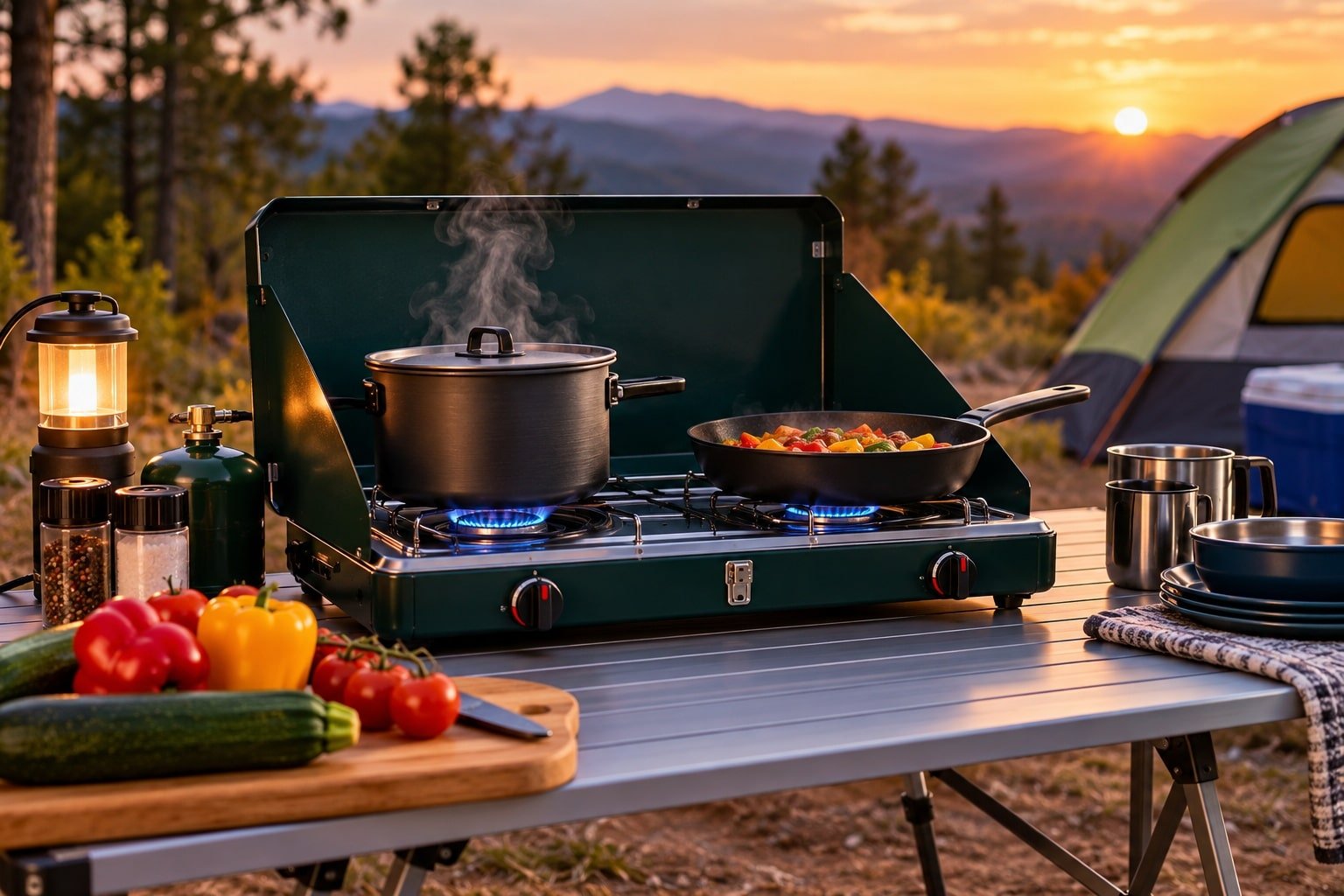


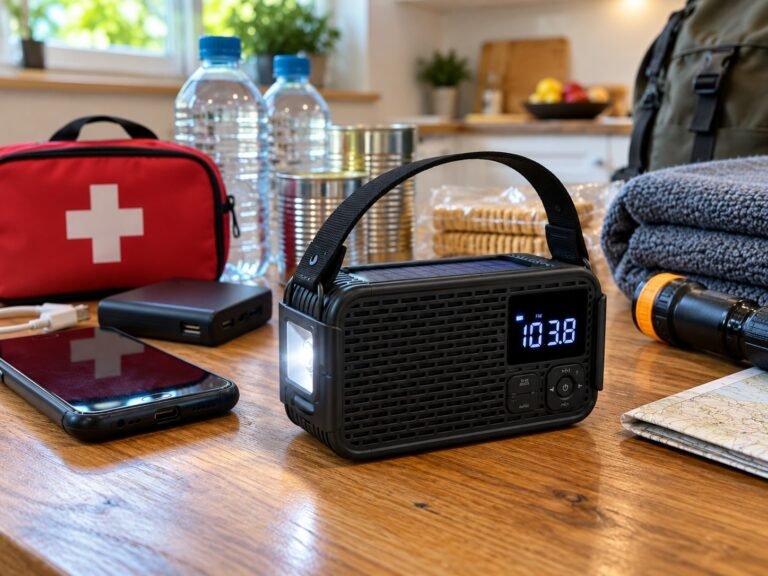
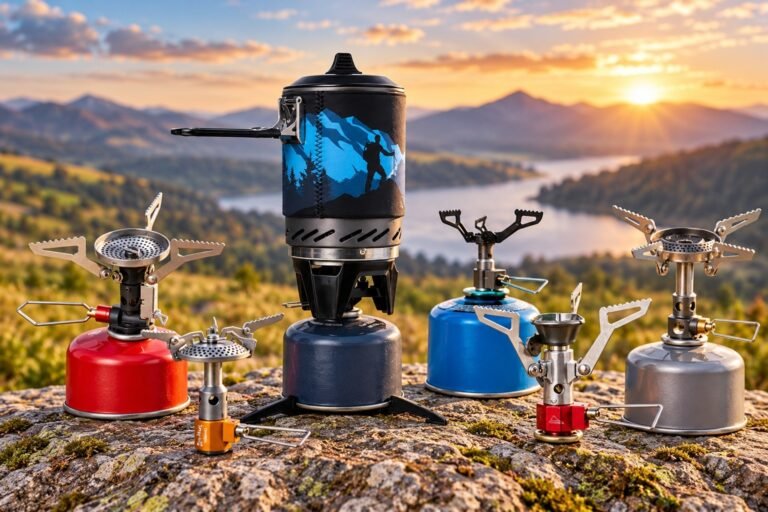
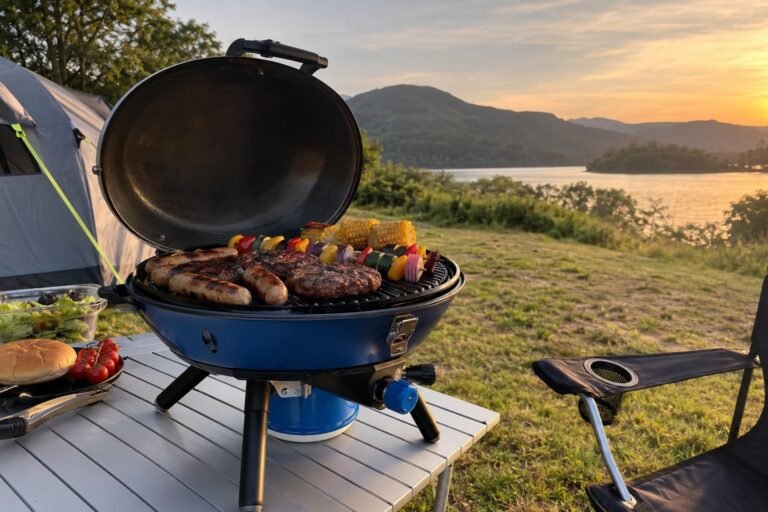
When the electricity goes out, preparing a hot meal becomes difficult, especially if your household relies on an electric stove. Having a reliable emergency cooking stove for a power outage gives you a practical way to boil water, heat canned food, and prepare simple meals without depending on household electricity.
The best emergency camping stoves for power outages include two-burner propane models for families, compact dual-fuel stoves for occasional use, and lightweight systems for heating water.
We’ve compared established camping stove models based on their published specifications, fuel compatibility, portability, cooking capacity, and independent product reviews.
One safety rule applies to every fuel-burning camping stove in this guide: use the stove outdoors, away from doors, windows, vents, and combustible materials. Never use a portable camping stove inside your home, garage, tent, or enclosed porch. Carbon monoxide can accumulate without warning.
Quick Comparison: Best Emergency Camping Stoves
| Camping stove | Best for | Fuel | Burners |
|---|---|---|---|
| Coleman Triton 2-Burner | Overall household use | Propane | 2 |
| Gas One GS-3400P | Flexible fuel options | Butane or propane | 1 |
| Camp Chef Everest 2X | Family meal preparation | Propane | 2 |
| Coleman Classic 2-Burner | Straightforward backup cooking | Propane | 2 |
| Jetboil Flash | Boiling water and rehydrating meals | Isobutane/propane blend | 1 |
These models suit different emergency situations. A two-burner stove makes more sense for regular family cooking, while a compact single-burner model takes up less storage space.
1. Coleman Triton 2-Burner Propane Stove: Best Overall
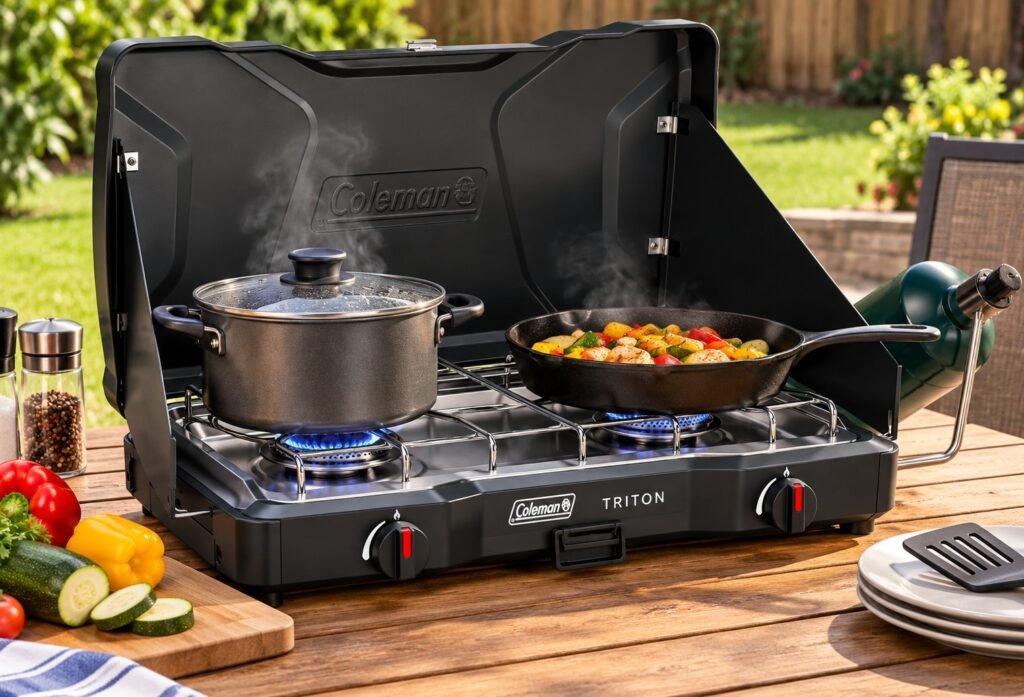
The Coleman Triton is a practical choice for households wanting an emergency cooking stove that feels familiar to use.
22,000 BTU of power, Two Adjustable Burners and Wind Guards for Camping, Tailgating, Outdoor Cooking & Emergencies
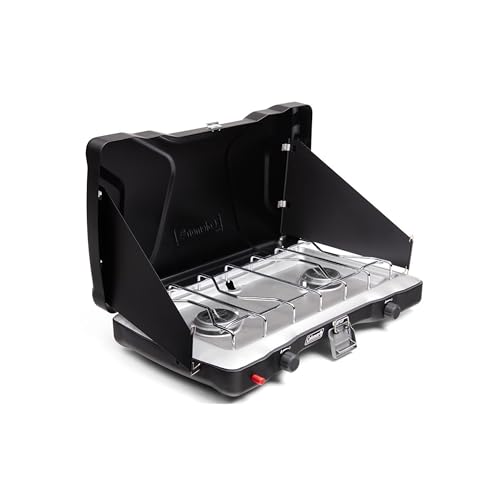
Its two-burner design allows you to heat soup on one side while boiling water or cooking another dish on the other. That flexibility becomes useful during a prolonged electricity outage.
The stove delivers a combined 22,000 BTU of cooking output, with adjustable burners and built-in wind guards.
Key Features
- Two independently adjustable burners.
- 22,000 BTU combined output.
- Uses propane fuel.
- Built-in wind guards.
- Portable folding design.
- Supports cooking with ordinary compatible pots and pans.
Advantages
- Suitable for preparing family meals.
- Two burners reduce waiting between dishes.
- Propane fuel works well for outdoor emergency cooking.
- Wind guards help protect the flames.
- Familiar tabletop cooking arrangement.
Limitations
- Larger than compact single-burner alternatives.
- Requires a suitable outdoor cooking surface.
- Propane cylinders need appropriate storage.
- The standard Triton requires manual lighting.
Who Should Buy It?
The Coleman Triton is a strong option for families preparing for power outages lasting several days.
You can cook pasta, prepare canned meals, heat vegetables, or boil water without relying on your household electricity supply.
For most households, the combination of two burners, straightforward operation, and reasonable portability makes the Triton our overall recommendation.
2. Gas One GS-3400P Dual Fuel Stove: Best for Fuel Flexibility
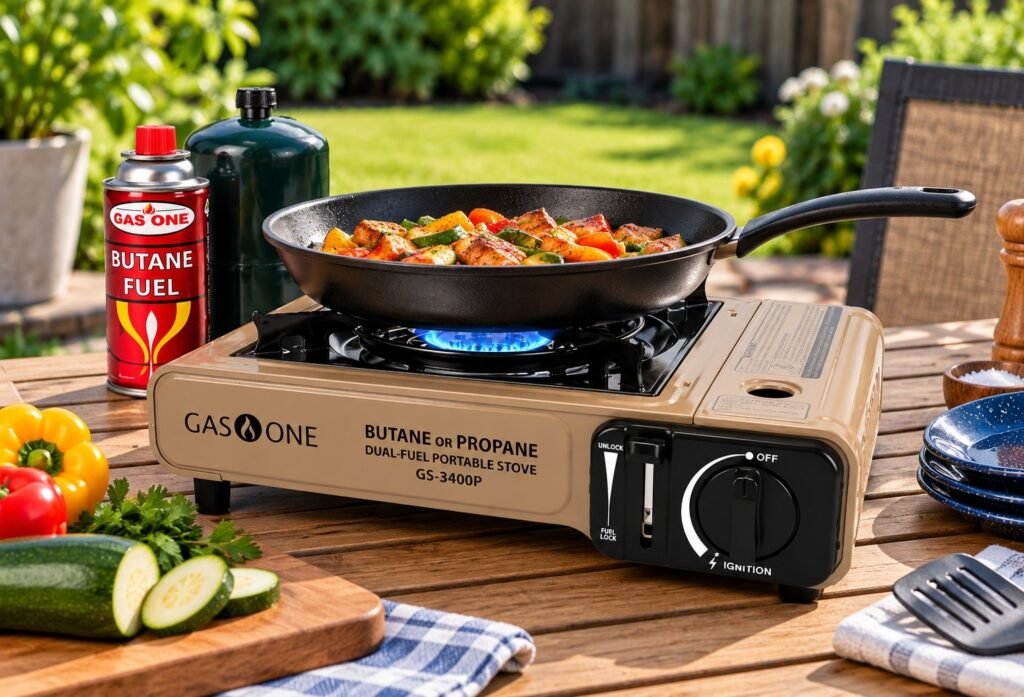
The Gas One GS-3400P stands out because you can operate the stove using either compatible butane cartridges or propane cylinders.
Portable Camping Stove - Patented - with Carrying Case Great for Emergency Preparedness Kit
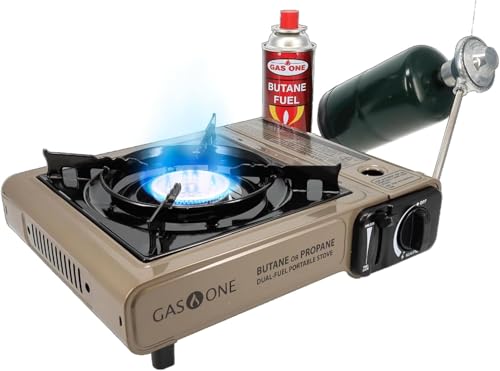
This flexibility is useful during emergencies when one type of fuel becomes difficult to obtain.
The manufacturer specifies 8,000 BTU output, a weight of approximately 3.3 pounds, and dimensions of 13.5 × 11.2 × 4.4 inches. Gas One explicitly designates this model for outdoor use only.
Key Features
- Compatible with butane and propane.
- Single adjustable burner.
- Automatic piezo ignition.
- Compact tabletop design.
- Includes fuel safety features.
- Portable carrying arrangement.
Advantages
- Two fuel options provide flexibility.
- Compact enough for an emergency supply kit.
- Simple cooking controls.
- Useful for boiling water and heating small meals.
- Less storage space than a two-burner stove.
Limitations
- Only one pot can be heated at a time.
- Lower cooking output than larger propane stoves.
- Butane performs poorly in freezing conditions.
- Must remain outdoors during operation.
Who Should Buy It?
The Gas One GS-3400P suits individuals, couples, and households wanting a compact backup cooking system.
Its dual-fuel compatibility is the main selling point. Keeping the appropriate approved fuel available gives you options when preparing for emergencies.
Independent camping stove comparisons also identify this model as a worthwhile compact single-burner choice.
3. Camp Chef Everest 2X: Best for Family Cooking
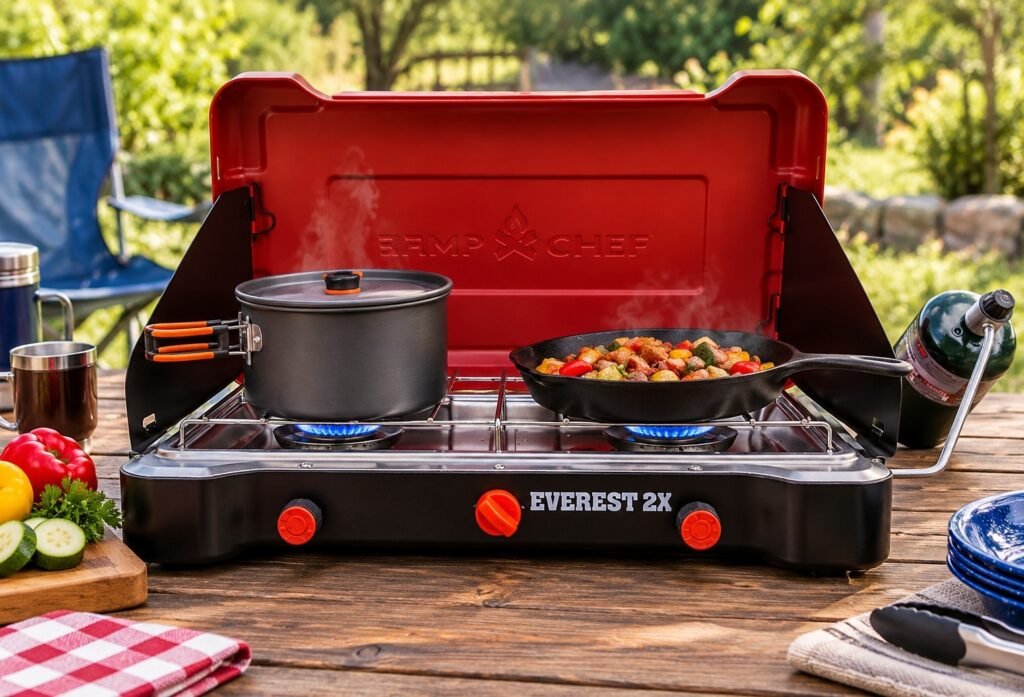
For households expecting to prepare full meals during extended power outages, the Camp Chef Everest 2X offers greater cooking capacity.
40,000 BTUs, Propane | Two 20,000 BTU Cast-Aluminum Burners, Propane, 215 Sq In Cooking Area, Matchless Ignition, 3-Sided Windscreen

This two-burner propane stove produces a combined 40,000 BTU, giving you substantial heat output for boiling water, frying, and preparing meals.
Independent testing from OutdoorGearLab and CleverHiker identifies the Everest 2X as a particularly capable cooking stove, including strong boiling performance.
Key Features
- Two propane burners.
- 40,000 BTU combined output.
- Matchless ignition system.
- Adjustable flame controls.
- Integrated wind protection.
- Folding tabletop design.
Advantages
- High heat output.
- Suitable for larger pots and family cooking.
- Independent burner controls.
- Wind protection helps maintain cooking performance.
- Good option for repeated outdoor meal preparation.
Limitations
- Bulkier than single-burner models.
- Higher fuel consumption is possible when using maximum heat.
- More stove than most people need for occasional hot drinks.
- Requires ample outdoor workspace.
Who Should Buy It?
The Everest 2X suits families who want to prepare regular meals when electricity is unavailable.
You can boil pasta on one burner while cooking vegetables or warming sauce on the other.
The extra cooking output is valuable when preparing several portions, although you should consider fuel consumption and storage space.
4. Coleman Classic 3-Burner Propane Stove: Best Simple Backup Stove
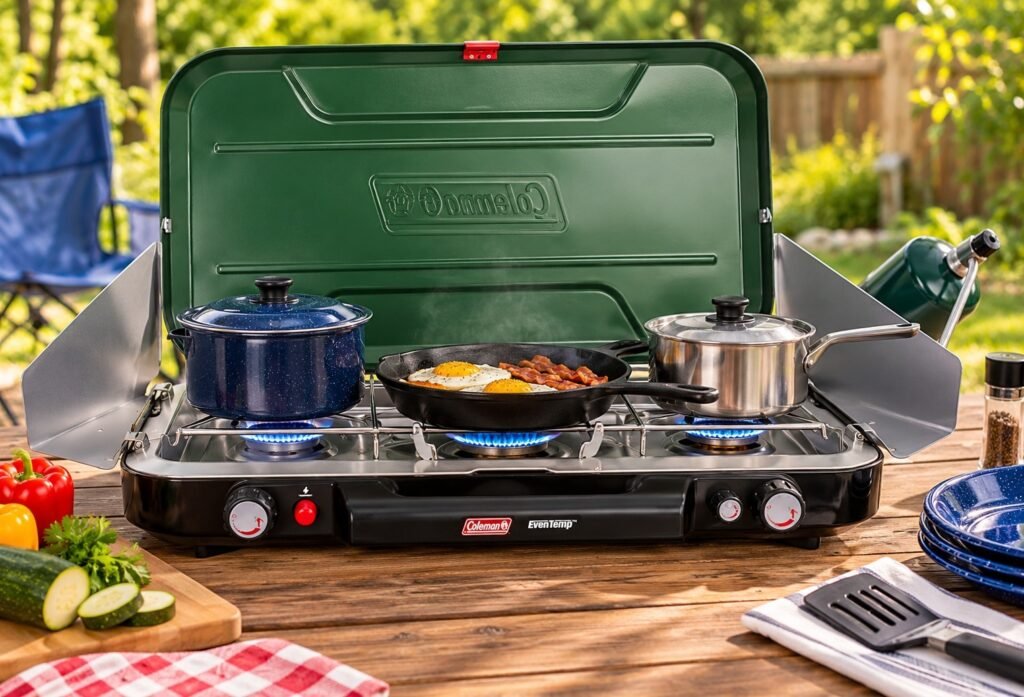
The Coleman Classic 3-Burner is a straightforward alternative for households wanting a traditional camping stove without unnecessary extras.
28,000 BTUs | Instastart Ignition, 28,000 BTUs, 3 Adjustable Burners, Even-Temp Heat Distribution

Its two-burner arrangement supports basic meal preparation, and the folding case makes storage relatively simple.
The stove provides approximately 28,000 BTU of combined cooking power, based on the model specifications compared by independent reviewers.
Key Features
- Two propane burners.
- Approximately 28,000 BTU combined output.
- Adjustable cooking controls.
- Integrated wind protection.
- Folding case design.
- Manual ignition.
Advantages
- Straightforward operation.
- Three cooking positions.
- Practical for basic emergency meals.
- Easy to store between uses.
- Familiar camping stove design.
Limitations
- No built-in automatic ignition on the standard model.
- Requires propane fuel.
- Still requires a suitable outdoor setup.
Who Should Buy It?
This stove suits households that want a dependable backup for occasional outages rather than a high-output outdoor cooking station.
The Coleman Classic is particularly suitable for simple meals such as canned soup, pasta, oatmeal, and hot drinks.
5. Jetboil Flash Cooking System: Best for Boiling Water
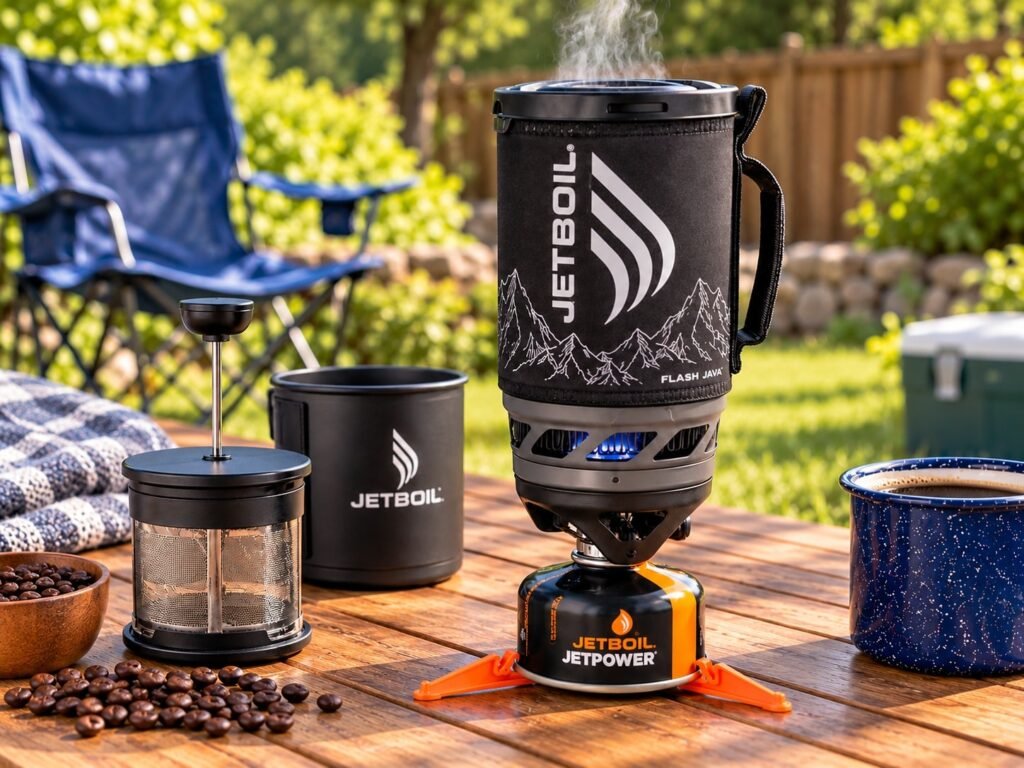
The Jetboil Flash takes a different approach to emergency cooking.
Rather than providing a conventional cooking surface for frying pans and large pots, this compact system focuses on heating water efficiently.
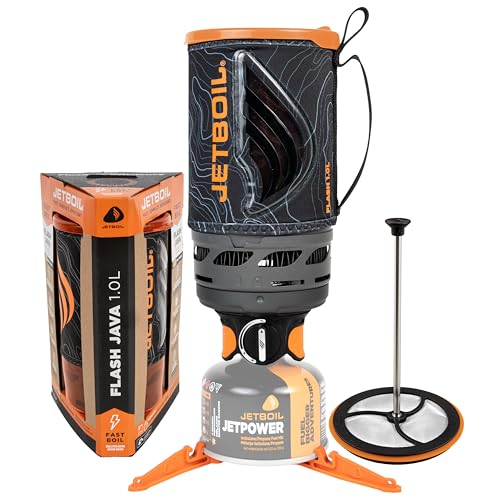
That makes the Jetboil Flash particularly useful for instant noodles, oatmeal, freeze-dried meals, and hot drinks.
Key Features
- Integrated burner and cooking vessel.
- Compact nesting design.
- Compatible with specified isobutane/propane fuel canisters.
- Heat-efficient cooking arrangement.
- Designed primarily for boiling water.
- Lightweight, portable construction.
Advantages
- Compact enough for a grab-and-go emergency kit.
- Useful for dehydrated meals.
- Less equipment to pack.
- Convenient for boiling small quantities of water.
- Suitable for camping and emergency preparedness.
Limitations
- Less versatile for traditional cooking.
- Limited capacity compared with two-burner stoves.
- Requires compatible fuel canisters.
- Poor choice for preparing full family meals.
- Must be operated outdoors.
Who Should Buy It?
The Jetboil Flash makes sense for individuals who rely on dehydrated meals or primarily need hot water during an emergency.
For larger households, a conventional propane stove offers greater cooking flexibility.
What Is the Best Portable Gas Stove for Indoor Use?
If you’re searching for the best portable gas stove for indoor use during a power outage, there is an important distinction between a portable camping stove and an appliance specifically designed and approved for indoor cooking.
Portable camping stoves are not a safe substitute for an indoor kitchen stove.
The CDC explicitly advises against operating portable gas camping stoves inside homes, tents, garages, or campers because of carbon monoxide poisoning risks. Opening windows or doors does not make an outdoor camping stove safe for indoor operation.
Safer Indoor Cooking Options During a Power Outage
- Existing household gas range: Some gas cooktops may permit manual burner ignition during an outage, but only when the manufacturer explicitly allows this. Never attempt to manually light a gas oven.
- Portable electric induction cooktop: Can operate from a properly sized battery power station with sufficient continuous output and energy capacity.
- No-cook emergency meals: Canned foods, crackers, nut butter, and other shelf-stable foods eliminate the need for heating.
- Self-heating meals: Use only products specifically approved for the intended environment and follow their ventilation and handling instructions.
For households without a suitable outdoor cooking area, a battery-powered cooking appliance or a supply of ready-to-eat meals is a better emergency plan than using a camping stove indoors.
[INTERNAL LINK: Safe Indoor Cooking Without Electricity]
Emergency Camping Stove Safety Guidelines

A camping stove provides a practical way to prepare meals during an electricity outage, but safe operation matters more than cooking speed.
1. Prevent Carbon Monoxide Poisoning
Carbon monoxide is an invisible, odorless gas produced when fuels burn.
Exposure can cause headaches, dizziness, nausea, confusion, loss of consciousness, and death.
Follow these precautions:
- Never operate a camping stove inside your home.
- Never cook in a garage, basement, tent, vehicle, or enclosed porch.
- Keep outdoor stoves away from windows, doors, and ventilation intakes.
- Never use a camping stove to heat your home.
- Maintain working carbon monoxide alarms inside your home.
- If you suspect carbon monoxide exposure, move into fresh air immediately and call 911.
The CDC’s carbon monoxide guidance explains the risks associated with portable fuel-burning appliances.
2. Prevent Fires and Burns
Position your camping stove on a stable, level, noncombustible surface suitable for the stove’s weight and operating temperature.
Keep the stove away from dry leaves, curtains, wooden structures, and other flammable materials.
Never leave a burning stove unattended, and keep children and pets away from the cooking area.
Allow the stove to cool completely before packing or storing.
3. Handle Propane and Butane Safely
Only use fuel cylinders and connectors approved for your specific stove.
Never force an incompatible fuel connection or attempt to refill disposable cylinders unless they are explicitly designed for refilling.
Store cylinders according to the manufacturer’s instructions, away from heat, direct sunlight, and ignition sources. Do not store propane cylinders in living spaces.
Before use, inspect the stove, hose, regulator, and fuel connections for damage. Follow the manufacturer’s leak-checking procedure and never use a flame to check for leaks.
4. Never Use Charcoal or Wood-Burning Stoves Indoors
Charcoal grills, wood-burning camping stoves, and solid-fuel burners also generate hazardous combustion gases.
The EPA advises against using unvented fuel-burning cooking appliances inside buildings, even during an emergency.
5. Prepare for Bad Weather
Strong winds, heavy rain, and snow can make outdoor cooking difficult.
Choose a sheltered outdoor location with adequate clearance and airflow. Never move the stove into a tent, garage, or enclosed shelter to escape bad weather.
If outdoor cooking is unsafe, rely on ready-to-eat emergency food until conditions improve.
How to Choose the Best Emergency Cooking Stove for a Power Outage
The right stove depends on your household size, available outdoor space, fuel storage arrangements, and expected cooking needs.
Propane vs. Butane vs. Dual Fuel
| Fuel type | Advantages | Limitations |
|---|---|---|
| Propane | Suitable for cold-weather outdoor cooking | Cylinders require safe storage |
| Butane | Compact and convenient cartridges | Poor performance near freezing |
| Dual fuel | Choice between compatible fuel types | Requires correct adapters and setup |
| Isobutane/propane blend | Compact backpacking systems | Specialized canisters and limited cookware compatibility |
| Solid fuel | Compact backup option | Slower cooking, limited flame control and combustion fumes |
For most households, propane is a sensible fuel choice for an outdoor emergency stove, especially in areas that experience winter power outages.
How Many Burners Do You Need?
A single-burner stove is sufficient for boiling water, heating soup, or preparing simple one-pot meals.
A two-burner stove offers greater flexibility for families. You can prepare rice or pasta while heating a second dish.
For a household of four, I would prioritize a two-burner stove if storage space and the outdoor cooking area allow.
Consider Cooking Output
Manufacturers measure burner heat output in British Thermal Units, or BTU.
A higher BTU rating generally indicates greater potential heat output, but actual cooking performance also depends on wind protection, cookware, burner design, and fuel conditions.
A high-output stove is not automatically the most fuel-efficient choice.
Check Fuel Availability and Storage
A stove is only useful when you have compatible fuel available.
Before purchasing, check the exact fuel type, cylinder connection, regulator requirements, and storage instructions.
Avoid assuming that all propane or butane cylinders fit every stove.
Look for Simple Operation
During a power outage, you want cooking equipment that is familiar and easy to operate.
Useful features include adjustable burners, sturdy pot supports, integrated wind guards, and straightforward fuel connections.
Automatic ignition adds convenience, but keeping a manufacturer-approved backup lighting method available is sensible.
What Food Can You Cook on an Emergency Camping Stove?

An emergency cooking stove works best when paired with foods requiring minimal preparation and fuel.
Good options include:
- Canned soups, beans, and vegetables.
- Instant noodles and couscous.
- Quick-cooking pasta and rice.
- Oatmeal and instant porridge.
- Shelf-stable sauces and ready-to-heat meals.
- Dehydrated camping meals.
- Hot drinks.
Choose foods that require little water and short cooking times.
For example, couscous generally requires less active cooking than dried beans. Instant oatmeal also needs less heating than traditional stovetop oatmeal.
Keep a manual can opener in your emergency food kit.
[INTERNAL LINK: Best Emergency Food for Power Outages]
How Much Fuel Should You Store for a Power Outage?
Fuel requirements depend on the stove, burner setting, weather conditions, cookware, and the meals you prepare.
A household heating canned meals twice a day will use a different amount of fuel from a family cooking pasta, vegetables, and other dishes from scratch.
Rather than relying on a universal number of cylinders, estimate fuel needs using your stove’s published consumption figures.
For a three-day emergency plan:
- Decide which meals require cooking.
- Estimate how long each meal takes.
- Check the stove’s fuel consumption information.
- Calculate the fuel required for your planned cooking time.
- Allow a reasonable reserve for wind, cold weather, and unexpected delays.
Use the manufacturer’s storage and handling guidance when deciding how much fuel you can safely keep.
[INTERNAL LINK: Three-Day Emergency Food Supply Checklist]
Frequently Asked Questions
Can you use a camping stove during a power outage?
Yes. A portable camping stove can prepare meals when household electricity is unavailable, provided you operate the stove outdoors and follow the manufacturer’s instructions.
What is the safest emergency stove for indoor cooking?
A properly installed household cooking appliance approved for indoor use is preferable. A portable induction cooktop powered by a compatible battery power station is another option.
Do not use outdoor camping stoves indoors.
Is propane or butane better for emergency cooking?
Propane generally performs better in cold weather. Butane is convenient for compact cooking systems but loses effectiveness near freezing temperatures.
A dual-fuel stove offers flexibility if you have the correct approved fuel supplies.
Can you use a camping stove in a garage with the door open?
No. A garage is not a safe location for operating a portable camping stove, even with the garage door open.
Carbon monoxide can accumulate or enter nearby living spaces.
What is the best emergency stove for a family of four?
A two-burner propane stove such as the Coleman Triton or Camp Chef Everest 2X is a practical choice.
Two burners allow you to prepare separate dishes and reduce the time spent waiting for a single cooking position.
Are portable camping stoves suitable for long-term emergency preparedness?
Yes, as part of a broader emergency plan. You also need compatible fuel, safe outdoor cooking space, suitable cookware, and a supply of food that does not require cooking.
A camping stove should not be your only emergency food preparation option.
Final Verdict: Which Emergency Camping Stove Should You Buy?

Best overall: Coleman Triton 2-Burner
My recommendation for most households. Two burners, straightforward controls, and enough cooking flexibility for everyday emergency meals.Check on Amazon.com (search)

Best compact option: Gas One GS-3400P
A useful choice for individuals and couples who want a small stove with both butane and propane compatibility.Check on Amazon.com (search)

Best for larger meals: Camp Chef Everest 2X
Worth considering when you need higher cooking output and expect to prepare regular meals for several people.Check on Amazon.com (search)
For most households, the Coleman Triton offers the most useful balance of cooking capacity, portability, and straightforward operation.
Whatever model you choose, test the equipment outdoors before an emergency, keep approved fuel available, and prepare no-cook food as a backup.
A reliable emergency stove can make an extended power outage easier to manage, but safe outdoor operation should always come first.
Additional reading: CDC: What to Do During a Power Outage and EPA: Power Outages and Indoor Air Quality.
CampEquipmentPlus relies on reader support. Purchases made via links on our website may earn us an affiliate commission at no extra cost to you, helping keep the site running.