
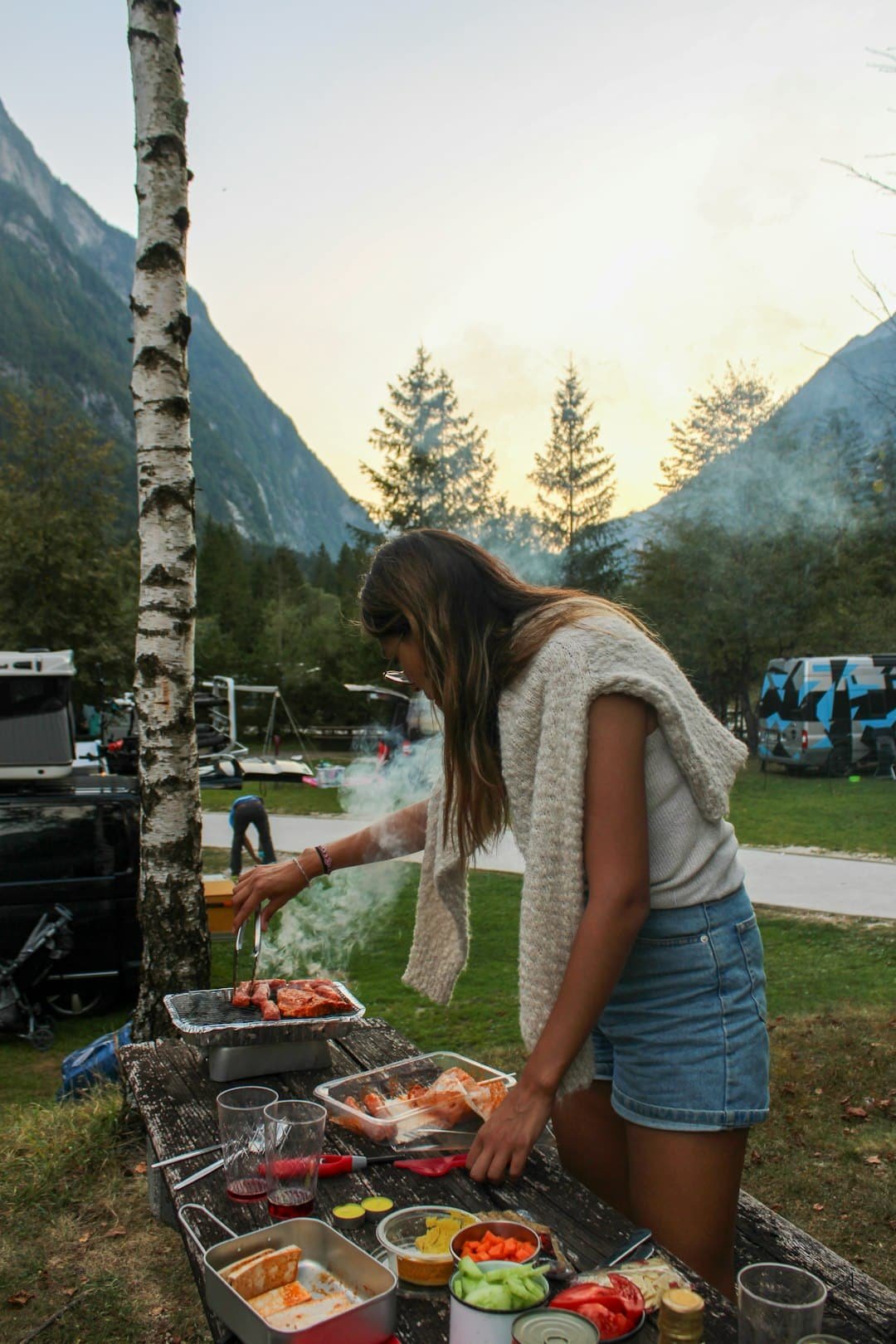
A closed lid is not a storage plan.
By dinnertime, raw chicken may be sitting in cooler meltwater while snack wrappers and toothpaste remain beside the tent. These are different problems: temperature and contamination can make dinner unsafe, while food odors can draw wildlife into camp.
Melted ice does not automatically mean spoiled food. A thermometer is the reliable check: perishables should stay at or below 40°F (4°C). Keep raw meat in leakproof containers, separate from ready-to-eat food. Before turning in, secure food, trash, and scented supplies in the storage required at that campsite, such as a bear-resistant locker or canister. An ordinary cooler—even latched shut—is not a substitute.
Pack by temperature, not by meal
A breakfast bag may contain eggs that need chilling, bread that does not, and jam that needs refrigeration only after opening. Sorting supplies by temperature needs makes it easier to keep each item safe throughout the trip.
- Keep at 40°F (4°C) or below: Meat, poultry, fish, eggs, dairy, cut fruit, and other foods labeled “keep refrigerated” belong in the cooler. Pre-chill them before departure; a cooler maintains cold food more effectively than it cools warm food.
- Keep dry and protected: Bread, crackers, unopened shelf-stable foods, and whole fruit generally do not need ice. Store them out of sun and in campsite-approved wildlife storage, not loose on a picnic table.
Place a thermometer near the food, then check it regularly. A hand against the cooler wall cannot tell whether food near the lid has climbed above the safe temperature for perishables; cold ice at the bottom can give a false sense of security. If the cooler runs warm, add ice or move food to a reliable refrigerator rather than guessing.
Seal raw meat in leakproof packaging and place it in a separate container at the bottom of the cooler, away from ready-to-eat food. Plan when it will be cooked: raw meat’s safe cooler time depends on its temperature, not simply how much ice remains.
Choose a cooler that fits the trip
The right cooler is the one that holds the planned food and enough ice to keep it cold. Ice takes substantial space, so a cooler that looks roomy when empty may be cramped once packed. Before buying, measure the vehicle’s cargo area and check whether a full cooler can be lifted, carried, and opened where it will sit.
An ice cooler works without a battery and is easy to move between vehicles. Its useful cold time depends on insulation, outside temperature, how often the lid opens, and whether replacement ice is available. A thick-walled model may hold ice longer, but its walls reduce interior space and add weight. For short trips with a convenient ice stop, a simpler cooler may be the more practical choice.
A 12V compressor fridge frees up space otherwise occupied by ice and can hold a set temperature when supplied with adequate power. That advantage comes with a power plan: confirm its energy use, battery capacity, charging method, and ventilation clearance before departure. A fridge that drains the vehicle’s starting battery is not a reliable food-storage solution.
For either choice, pack only the perishables the trip needs. Extra capacity encourages warm, loosely packed loads and makes the container harder to handle; premium insulation cannot compensate for leaving the lid open or loading food that has not been chilled.
Start with a cold cooler and cold food
- Chill food before packing
Refrigerate perishables to 40°F (4°C) or below before they enter the cooler. Freeze meals intended for later in the trip; pack them solidly frozen and allow enough time to thaw safely in the cooler.
- Pre-chill the cooler
The night before departure, close the cooler with sacrificial ice or frozen packs inside. Drain it before loading so the trip’s ice is not spent cooling warm walls.
- Leave room for ice
Plan on roughly twice as much ice as food by volume as a starting point, with more for hot weather or a long trip. Block ice lasts longer; cubes fill gaps around containers. Check the loaded cooler with a thermometer rather than relying on how cold it feels.
- Contain raw-food leaks
Seal raw meat and seafood in leakproof containers and place them low in the cooler, away from ready-to-eat food. A bag alone can tear or leak as ice shifts.
- Pack for the order of use
Group ingredients for each meal in closed containers, keeping later meals deeper and first-day food near the top. Fill remaining gaps with ice or frozen packs, but leave frequently needed items reachable without unpacking the cooler.
Keep the cooler cold each day
Move the cooler into shade as the sun shifts, but keep it accessible enough that the lid closes promptly after each use. Before opening it, decide what to take out; repeated searching lets warm air in and speeds ice loss. A separate drinks cooler can spare perishable food those extra openings.
Check a thermometer inside the food cooler morning and evening. Perishable food should stay at 40°F (4°C) or colder. A brief air-temperature rise just after opening the lid is less informative than a sustained warm reading; if there is doubt, check the food itself with a clean probe thermometer. Discard perishables that have been above 40°F for more than two hours.
Look at the ice while checking the temperature, and add more before the last solid pieces disappear. There is no reliable fixed day count for a cooler: ice life changes with heat, cooler size, packing, and how often the lid opens. Plan resupply around thermometer readings and available ice, not a promised number of days.
As ice melts, keep food in sealed containers or bags, with raw meat in its own leakproof container. A rack or shallow bin lifts vulnerable packages above pooled water; keeping food dry as the ice melts also makes leaks easier to spot. Cold meltwater can help preserve ice, so drain it only when needed to prevent overflow, contamination, or soggy packaging.
Keep food safe while cooking and serving
A cold cooler protects food only until it comes out for a meal. Before preparing food, wash hands with soap and clean water; when that is unavailable, use hand sanitizer on hands that are not visibly dirty. Clean cutting boards, knives, and prep surfaces, especially after they touch raw meat.
Keep raw meat and its juices away from fruit, bread, and other ready-to-eat foods. Use separate utensils and boards, or wash them thoroughly with soap and water before switching foods. Set raw-food packaging where it cannot drip onto a table or into the cooler.
Take out perishables just before preparation and return unused portions to a cooler holding 40°F (4°C) or below promptly. Food that remains properly chilled is different from food sitting on a picnic table: perishable food has a two-hour total limit at ambient temperature, shortened to one hour when the air is above 90°F (32°C). Time spent preparing, serving, and clearing up all counts; putting food back on ice does not reset the clock. Serve small portions and refill from the cooler rather than leaving the whole supply out.
Store dry food and secure attractants
Shelf-stable food does not need ice, but it still needs protection from rain, spills, insects, and rodents. Keep it in sealed bags or containers inside a lidded bin, off wet ground. Check opened packages each evening: a folded chip bag or loosely closed cereal box is an easy target for pests.
Wildlife storage rules apply to more than meals. Trash, food scraps, pet food, cooking gear with residue, and scented toiletries—including toothpaste and sunscreen—can all attract animals. Clean cookware promptly, strain food scraps from dishwater where required, and store these items with the food rather than leaving them at the picnic table. Never keep food or scented supplies in a tent.
Follow the rules for the specific campsite. A campground may provide a designated food locker; another area may require an approved bear-resistant canister or prescribe a particular storage method and location. A closed vehicle is an option only where local rules allow it, and an ordinary cooler is not automatically wildlife-resistant. Check park or land-manager guidance before arrival, then make sure every camper knows where attractants go after dinner and overnight.
When the cooler warms up
A cooler reading above 40°F (4°C) calls for a closer check; air temperature alone does not reveal how warm the food has become. Use a clean food thermometer to check the center of perishable items. A reading taken between sealed packages is useful for monitoring the cooler, but it is only an estimate of food temperature.
Discard perishables known to have been above 40°F for more than two hours, or one hour when the surrounding air is above 90°F (32°C). If their temperature history cannot be established, discard them rather than relying on smell or taste. Adding ice cannot reverse time spent at an unsafe temperature.
Move food that remains safe to a working cooler or refrigerator, replenish the ice or frozen packs, and keep checking temperatures. During a longer loss of cooling, using dry ice in a cooler requires equipment and precautions beyond an ordinary ice refill.
Use dry ice only in a cooler rated for it; never seal the cooler airtight. Keep it from touching food or vulnerable cooler surfaces directly, and handle it with insulated gloves. Because it releases carbon dioxide, transport and use it with adequate ventilation—never in a closed vehicle or tent.
A routine from departure to bedtime
-
Separate before loading
Keep raw meat in leakproof containers below ready-to-eat food. Put dry goods and scented supplies in their own sealed containers.
-
Confirm the cold start
Load food already chilled to 40°F (4°C) or below, with enough ice to surround it. Close the cooler promptly.
-
Check during the day
Read the cooler thermometer and check food temperatures if the reading rises. Add ice early; do not rely on a cool-feeling lid or container.
-
Reset after each meal
Return safe leftovers to the cooler promptly. Wash cookware, seal scraps and food packaging, and secure all food and scented items as campsite rules require.
-
Finish with a bedtime check
Remove waste to an approved receptacle or secure it for the night. Confirm that no snacks, pet food, or toiletries remain outside approved storage.
-
Clean the cooler after the trip
Wash it with warm, soapy water, rinse, dry completely, and store it with the lid ajar. For lingering smells, follow a separate cooler odor-removal process.
A consistent check at loading, meals, and bedtime catches warming food and unsecured attractants before either becomes a bigger problem.
CampEquipmentPlus relies on reader support. Purchases made via links on our website may earn us an affiliate commission at no extra cost to you, helping keep the site running.