
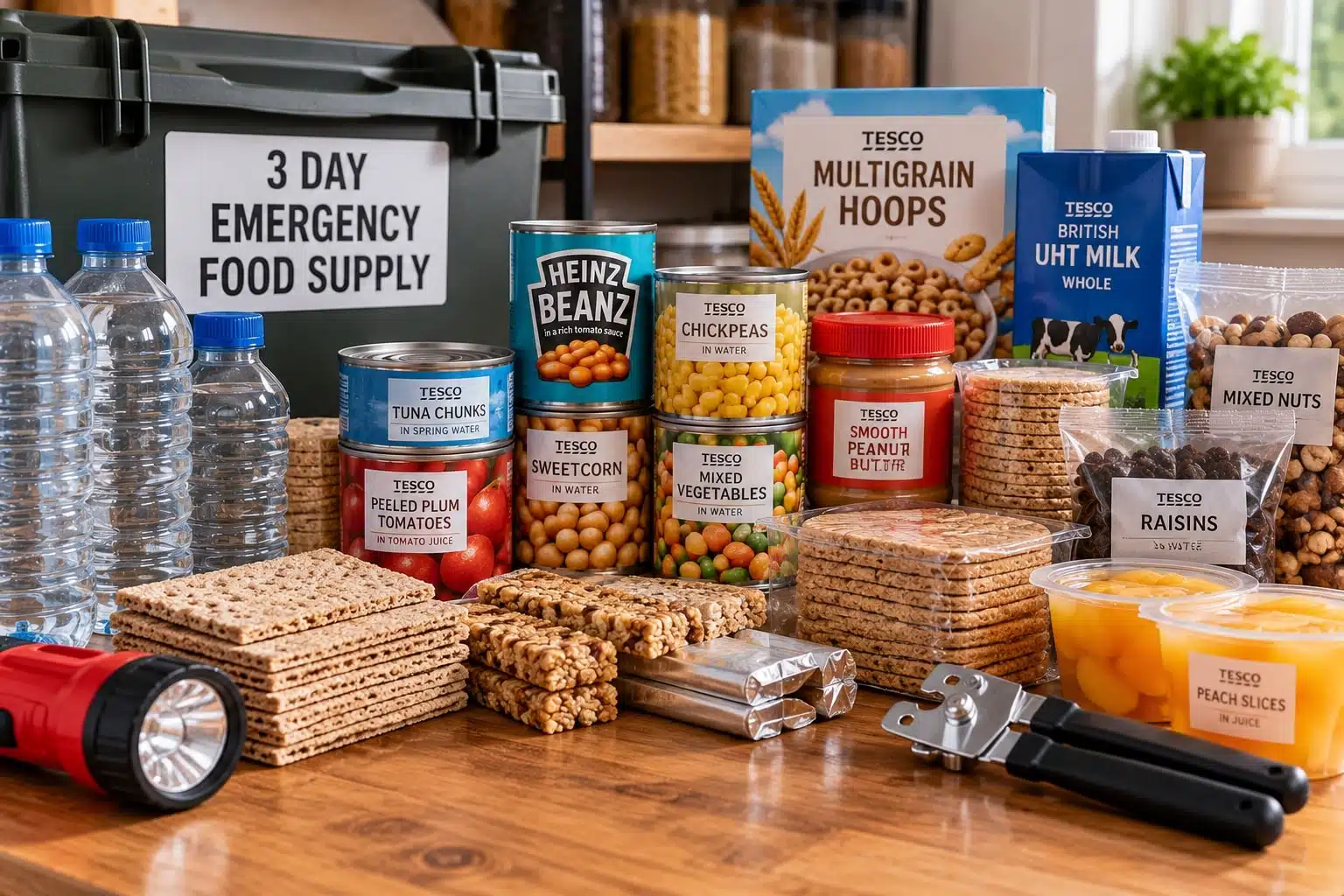
A 3 day emergency food supply UK households can rely on does not need expensive survival rations or specialist camping meals.
Most families can prepare for a short-term emergency using ordinary supermarket foods that store well and can be eaten without cooking.
Power cuts, flooding, severe weather and other disruptions can make shopping or preparing meals difficult.
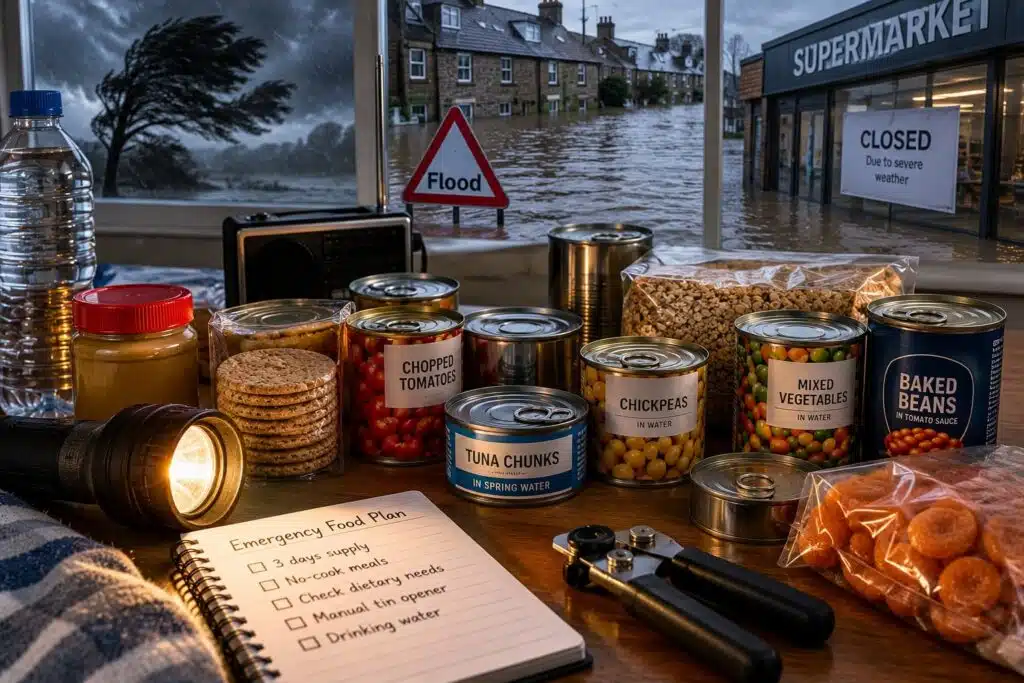
Having enough food for 72 hours means your household has something suitable to eat while normal services are restored.
This guide explains how much food to keep, which non-perishable foods work best and how to put together a realistic three-day meal plan using products available in UK supermarkets.
How Much Food Should You Store for Three Days?
The simplest approach is to plan three days of meals for everyone living in your home.
For each person, allow for:
- Three breakfasts.
- Three lunches.
- Three evening meals.
- Suitable snacks between meals.
- Any specialist food or dietary requirements.
For a family of four, that means planning 12 breakfasts, 12 lunches and 12 evening meals in total, with enough portions for everyone.
You do not need to buy 36 different meals. A few familiar foods can be combined in different ways.
The UK Government’s Be Ready guidance recommends keeping at least three days of suitable non-perishable food at home.
Plan for a Situation Without Electricity
A household emergency food supply should still be useful if your electricity or gas supply is interrupted.
You may be unable to use your cooker, microwave, kettle or fridge.
For that reason, include foods that can be eaten straight from their packaging.
Tinned fish, ready-to-eat beans, crackers, cereal bars and dried fruit are useful examples.
Choose foods that your household already enjoys and that suit everyone’s dietary needs.
Do You Need to Count Calories?
There is no single food quantity that suits every household.
Adults, children and people with particular medical or nutritional requirements have different needs.
Rather than relying on a fixed number of tins per person, plan meals that provide reasonable portions and a mixture of foods.
Include some energy-rich options, such as nut butter, nuts or suitable cereal bars, alongside other familiar foods.
People with medical conditions requiring particular diets should plan their emergency supplies with appropriate professional advice.
Best Non-Perishable Foods for a Household Emergency
Non-perishable foods are products that can be stored safely without refrigeration until opened, provided you follow the packaging instructions.
They are useful for a 72 hour emergency food kit because they can remain in a cupboard and be replaced during your normal shopping.
Ready-to-Eat Tinned Foods
Tinned foods are among the most practical options for emergency storage.
Suitable choices include:
- Baked beans.
- Tinned tuna, salmon or sardines.
- Ready-to-eat tinned chickpeas and other pulses.
- Tinned sweetcorn, peas and carrots.
- Tinned peaches, pears and pineapple.
- Tinned meat products that are ready to eat.
- Tinned soups that are safe to eat without heating, according to the label.
Many tinned foods are already cooked during processing, although you should always check whether a product needs further preparation.
Choose tins with ring pulls where possible.
A manual tin opener is also worth keeping with your emergency supplies.
Avoid relying entirely on products that require heating to become safe or suitable to eat.
Crackers, Cereals and Dried Foods
Dry cupboard foods are convenient because they are relatively easy to store.
Examples include:
- Crackers and crispbreads.
- Breakfast cereals.
- Oatcakes.
- Rice cakes.
- Cereal bars.
- Dried fruit.
- Biscuits.
- Breadsticks.
Some foods, such as dried pasta, rice and porridge oats, require water and cooking before they can be eaten.
These can form part of your normal emergency cupboard, but they should not be your only meal options if a power cut prevents cooking.
Long-life bread products and wraps may also be useful, depending on their storage instructions and best-before dates.
Nuts, Fruit and Energy-Rich Snacks
Snacks can help make a limited emergency menu more practical.
Useful options include:
- Mixed nuts.
- Peanuts.
- Peanut butter.
- Raisins and other dried fruit.
- Suitable snack bars.
- Individually packed biscuits.
- Shelf-stable fruit pots.
- Chocolate stored in suitable conditions.
Nuts and nut butter can provide energy without requiring preparation.
However, they are unsuitable for anyone with a relevant allergy and whole nuts are a choking hazard for young children.
Choose snacks appropriate to the ages and needs of your household.
Example 3-Day Emergency Meal Plan
The following three-day emergency meal plan uses familiar UK supermarket foods.
It assumes that electricity and cooking facilities may be unavailable.
The meals are examples rather than fixed portion recommendations. Adjust quantities for appetite, age and dietary needs.
| Day | Breakfast | Lunch | Evening meal | Snacks |
|---|---|---|---|---|
| Day 1 | Breakfast cereal with suitable UHT milk | Tuna and crackers with tinned sweetcorn | Ready-to-eat baked beans with oatcakes | Dried fruit and cereal bar |
| Day 2 | Cereal bar, fruit pot and suitable UHT milk | Chickpea salad with crackers | Ready-to-eat tinned fish with crispbread and vegetables | Nuts or suitable alternative |
| Day 3 | Oatcakes with peanut butter and fruit | Tinned bean salad with crackers | Ready-to-eat tinned meat or pulses with crispbread | Biscuits and dried fruit |
All tinned products should be checked to confirm they can be eaten without further cooking.
Printable 3-Day Emergency Meal Planner
Plan three days of breakfasts, lunches, evening meals and snacks for your household. Fill in the boxes and print your completed plan.
Day 1
Day 2
Day 3
Emergency Food Checklist
Your entries are not sent to a server. Print your plan before leaving this page, as entries may not be retained.
Day 1: Start With Familiar Cupboard Foods
Breakfast can be a bowl of cereal with UHT milk.
For lunch, combine ready-to-eat tuna with crackers and drained sweetcorn.
An evening meal of baked beans and oatcakes provides a simple option that does not require heating, provided the beans are ready to eat.
Keep snacks available between meals.
Day 2: Include Different Food Groups
For breakfast, choose cereal bars, a fruit pot and a suitable drink.
Lunch could be a chickpea salad using drained, ready-to-eat chickpeas.
For dinner, serve tinned fish with crispbread and ready-to-eat vegetables.
People who do not eat fish can use another suitable protein source.
Day 3: Use Remaining Supplies
Start with oatcakes, peanut butter and fruit.
Lunch could be a cold bean salad with crackers.
For the evening meal, use a ready-to-eat tinned meat or pulse product with crispbread.
If your normal cooking facilities are working, you can prepare more varied meals using the same cupboard ingredients.
The main aim is to avoid depending on cooking equipment that might be unavailable.
Emergency Food Shopping List for a Family of Four
This example shopping list provides a starting point for a family of four preparing for three days.
Quantities are illustrative. Check pack sizes and nutritional information, then adjust for your family’s appetites and dietary requirements.
| Food | Suggested quantity | Main use |
|---|---|---|
| Breakfast cereal | 1 large box | Breakfast |
| UHT milk | 3 litres | Breakfasts and drinks |
| Crackers or crispbreads | 4 packs | Lunches and evening meals |
| Oatcakes | 2 packs | Breakfasts and meals |
| Baked beans | 4 standard tins | Main meals |
| Ready-to-eat tinned fish | 4 tins | Lunches and evening meals |
| Ready-to-eat chickpeas or mixed beans | 6 tins | Salads and main meals |
| Tinned vegetables | 6 tins | Meal accompaniments |
| Tinned fruit or fruit pots | 8 portions | Breakfasts and snacks |
| Peanut butter | 1 jar | Breakfasts and snacks |
| Cereal or snack bars | 12 bars | Breakfasts and snacks |
| Dried fruit | 2 packs | Snacks |
| Nuts or suitable alternatives | 2 packs | Snacks |
| Biscuits | 2 packs | Snacks |
| Additional ready-to-eat meal options | As required | Extra portions and dietary variety |
This is a planning example, not a guarantee that the listed quantities will meet every person’s nutritional needs. In particular, larger appetites may require substantially more food.
Check how many portions each product contains rather than assuming one tin equals one meal.
You may also want additional food in case a disruption lasts longer than expected.
Don’t Forget the Equipment
Alongside the food, keep:
- A working manual tin opener.
- Plates, bowls and cutlery.
- Kitchen roll or suitable cleaning supplies.
- Rubbish bags.
- Drinking water.
- A way to clean hands safely.
Disposable plates may be convenient during a water supply interruption, but ordinary reusable equipment is suitable if you have enough safe water for cleaning.
For drinking water quantities, see our Emergency Water Supply UK Guide.
What Foods Can You Eat Without Cooking?
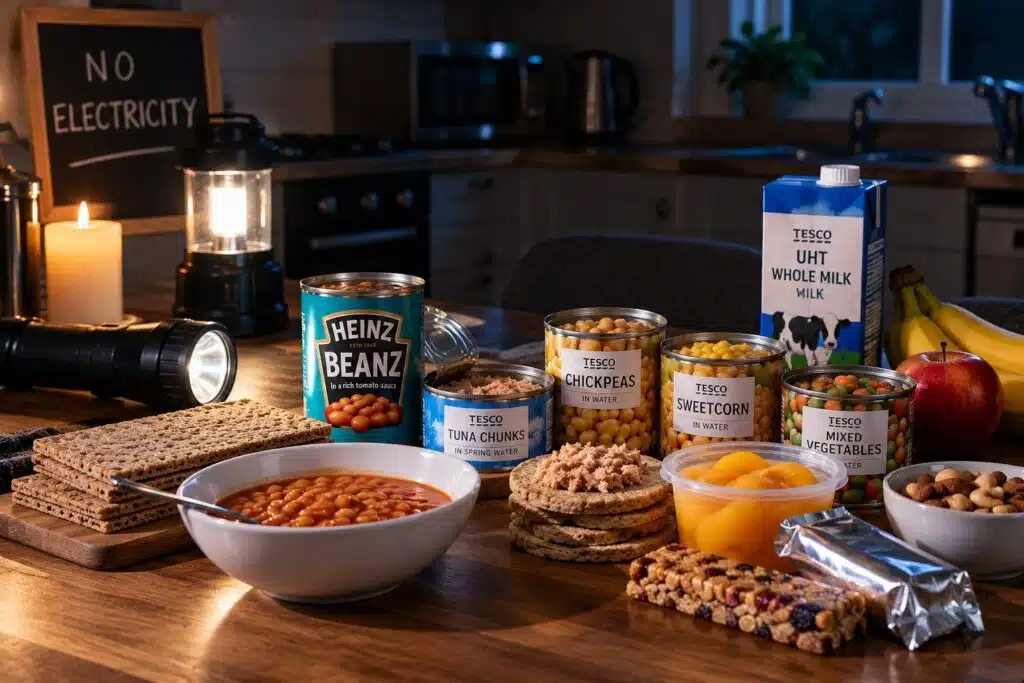
No-cook emergency meals are particularly useful during a prolonged power cut.
You can combine ordinary supermarket products to make simple meals without using a hob or microwave.
Tuna and Cracker Meal

Combine ready-to-eat tinned tuna with crackers and drained sweetcorn.
Add a little suitable seasoning if you have it available.
Choose smaller tins if you cannot refrigerate leftovers.
Cold Bean Salad
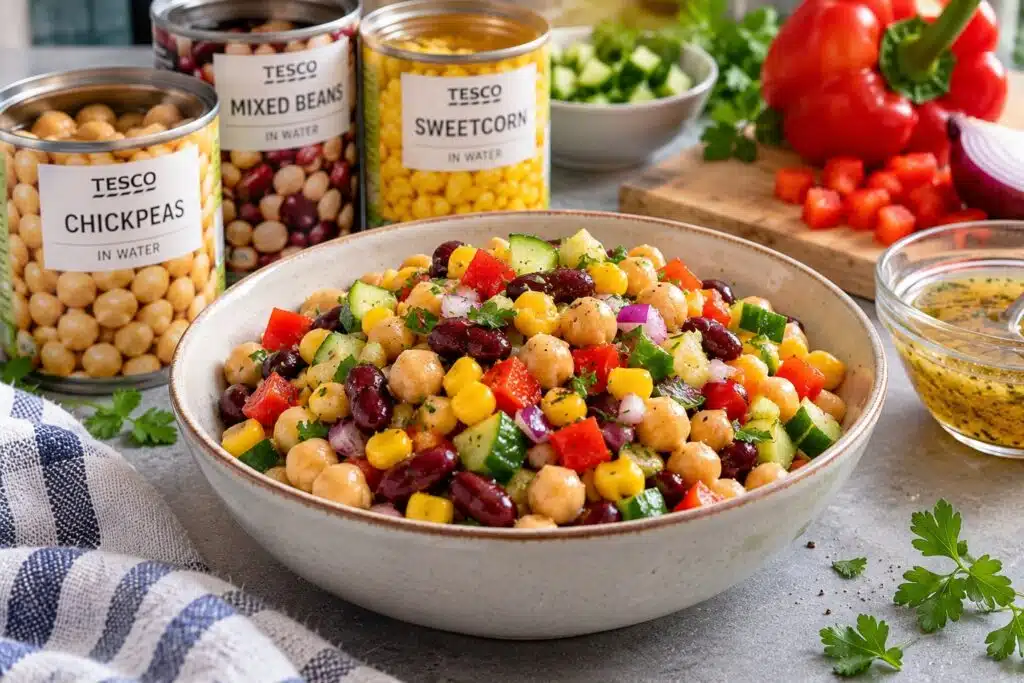
Drain ready-to-eat chickpeas or mixed beans.
Combine them with tinned sweetcorn or other vegetables suitable for eating cold.
You can add a shelf-stable dressing if its storage instructions allow.
Peanut Butter and Oatcakes
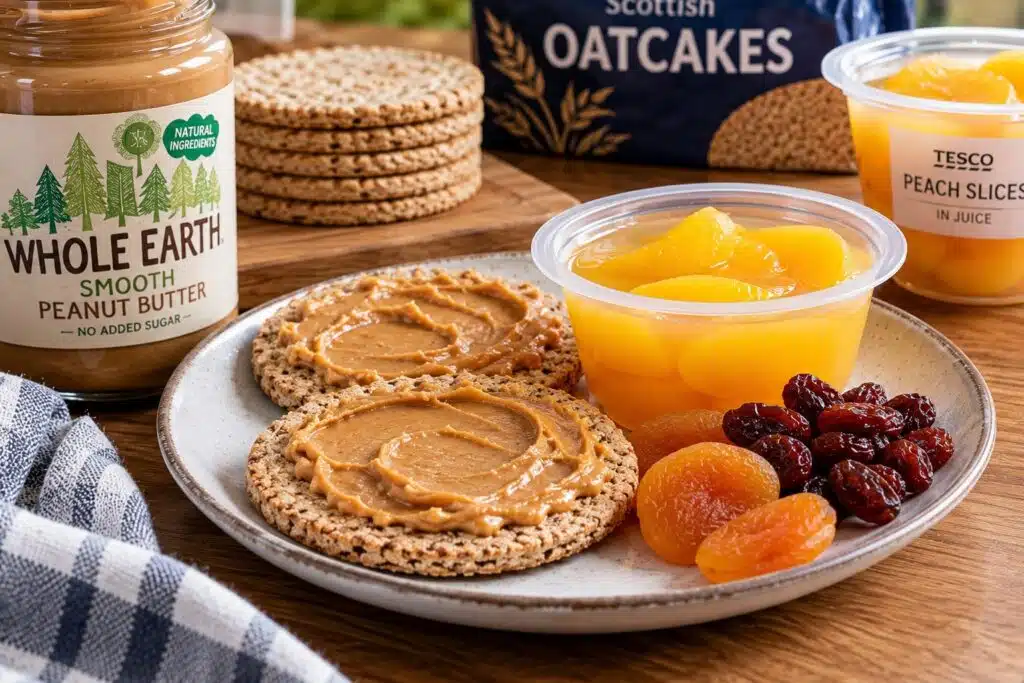
Spread peanut butter on oatcakes or crispbread.
Serve with a suitable fruit pot or dried fruit.
Use an alternative spread where allergies make peanut butter unsuitable.
Cereal With UHT Milk
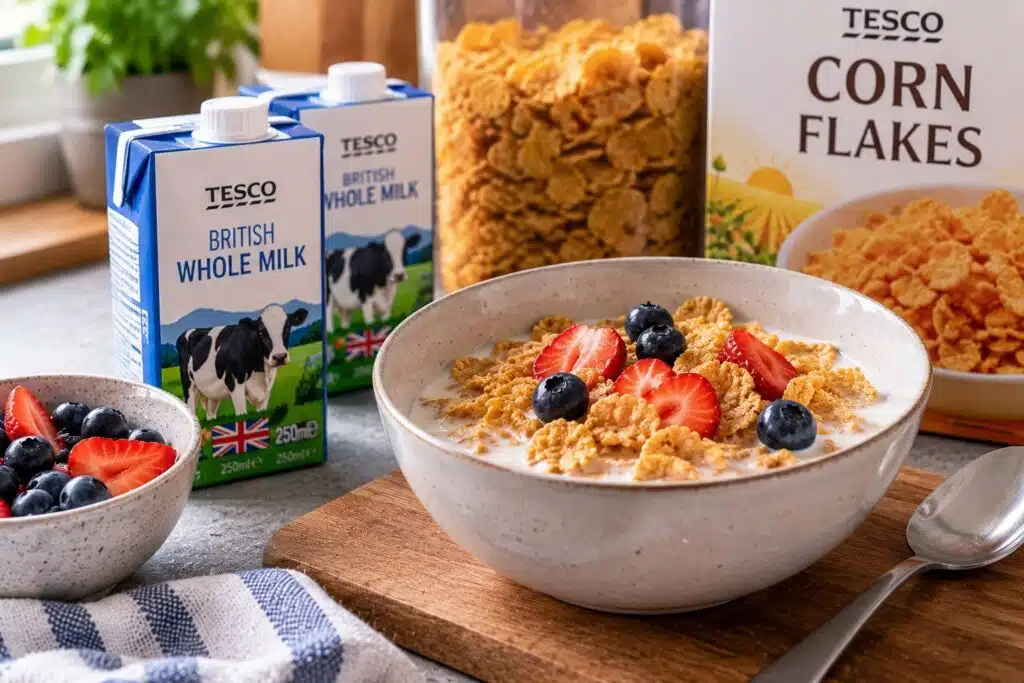
Unopened UHT milk can be stored without refrigeration if the packaging permits.
Once opened, it generally needs refrigeration.
Choose smaller cartons that can be used immediately if your fridge is not working.
Ready-to-Eat Tinned Meals
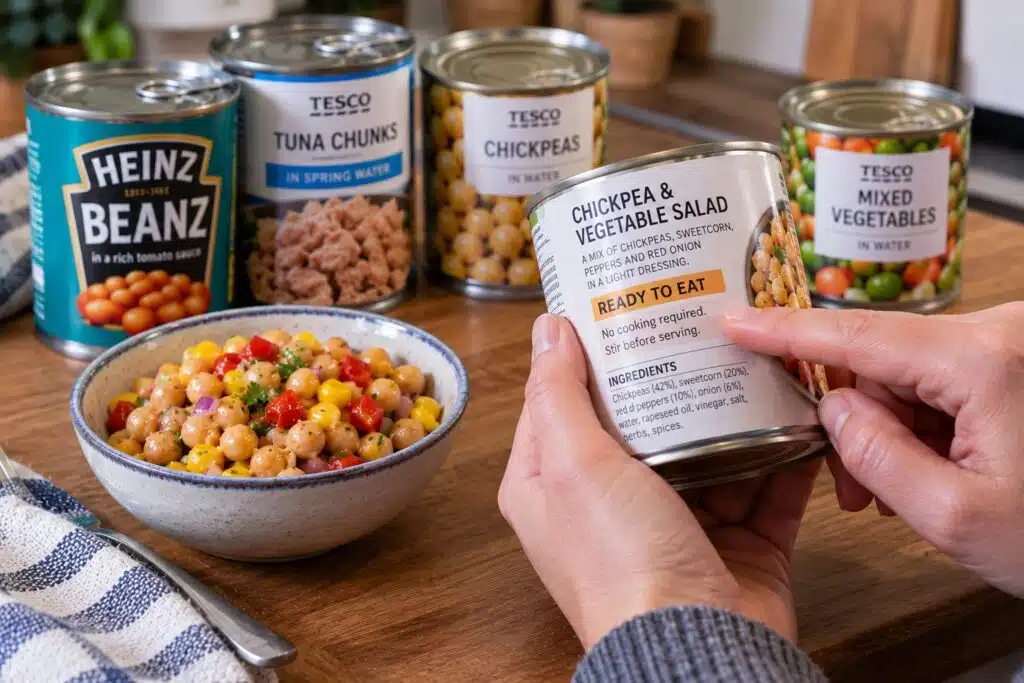
Some tinned meals can be eaten without heating, but others require cooking.
Read the label carefully.
Do not assume every shelf-stable product is ready to eat straight from the tin.
How to Store and Rotate Emergency Food
An emergency food supply is only useful if the food remains safe and suitable to eat.
Store unopened products in a cool, dry cupboard according to their packaging instructions.
Avoid areas affected by damp, pests or excessive heat.
Keep food away from household chemicals and other potential contaminants.
Use Your Normal Cupboard Foods
You do not need a separate collection of expensive survival food.
Many households can build an emergency supply by keeping additional quantities of foods they already buy.
For example, if you regularly use baked beans, buy a few extra tins and replace them as you use them.
This helps reduce waste and keeps the food familiar.
Check Best-Before and Use-By Dates
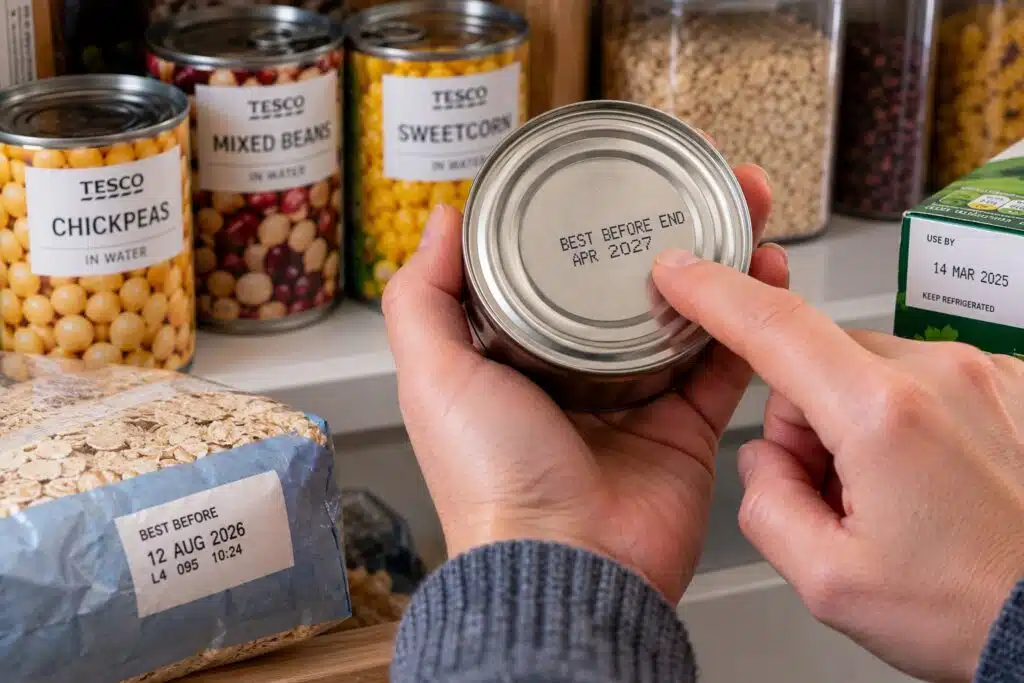
A best-before date generally relates to food quality.
A use-by date concerns food safety and must be followed.
The Food Standards Agency explains the difference.
Always follow storage instructions, check packaging condition and avoid using food that appears damaged or contaminated.
Inspect Tins and Packaging
Check your emergency food during regular household reviews.
Look for damaged seals, leaking containers, swollen tins or signs of contamination.
Do not eat food from bulging, leaking or badly damaged tins.
Replace unsuitable products promptly.
Rotate Supplies Regularly
A simple rotation system is to place newly purchased food behind older products.
Use older items during normal meals and replace them with fresh supplies.
You could review your emergency cupboard every three to six months, while still following individual product dates and storage instructions.
Dietary Needs, Baby Food and Pet Food
A family emergency food supply should reflect the people and animals living in your home.
A generic shopping list may not be suitable for everyone.
Food Allergies and Intolerances
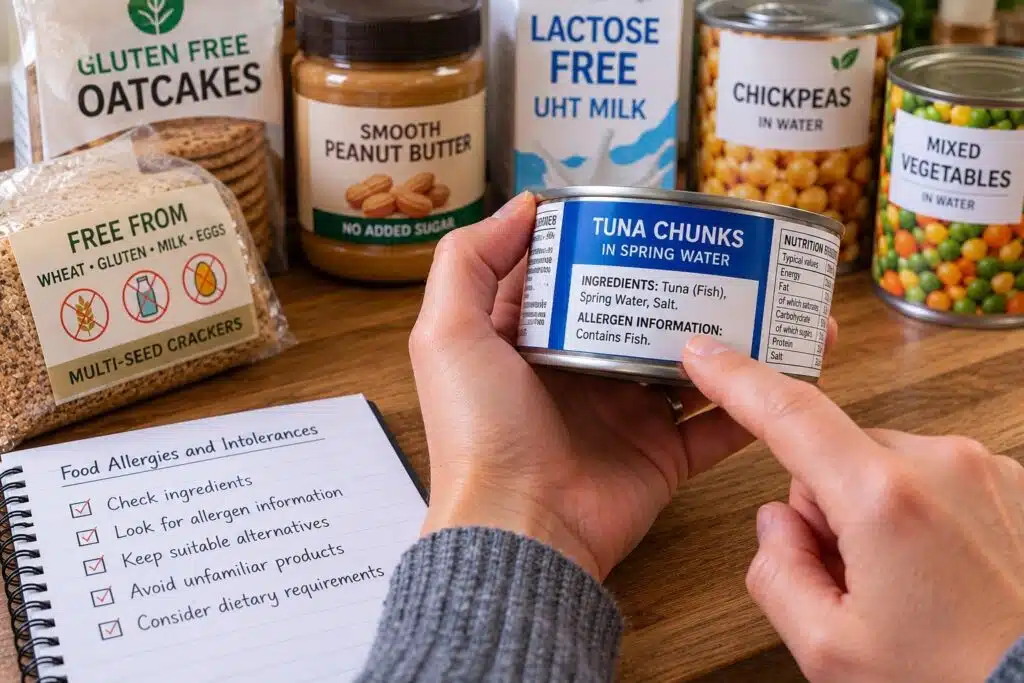
Check ingredients carefully when choosing emergency foods.
Households managing allergies, coeliac disease or other dietary restrictions should keep suitable alternatives.
Do not rely on unfamiliar emergency meal packs without checking their ingredients and allergen information.
Vegetarian and Vegan Households
Ready-to-eat chickpeas, beans and other pulses are useful alternatives to tinned meat and fish.
Nut butters, suitable snack bars and plant-based UHT drinks can also form part of a household supply.
Check that products provide adequate meals rather than relying entirely on snacks.
Baby Food and Formula
Babies may need age-appropriate food, formula or other specialist feeding supplies.
Ready-to-feed infant formula can be useful in some emergency circumstances because it does not require mixing powdered formula with water.
Follow NHS guidance for preparing and storing infant feeds safely.
Keep enough suitable feeding equipment and plan for cleaning or sterilising it.
Do not change a baby’s feeding arrangements without appropriate advice.
Food for Older Adults
Some older adults may need softer foods, specialist diets or assistance with opening packaging.
Choose products that are practical for the individual.
Ring-pull tins, smaller portions and easy-to-open packaging may be helpful.
People with swallowing difficulties or medically prescribed diets should follow their healthcare professional’s guidance.
Emergency Pet Food
Include enough food for your pets for at least three days.
Store their normal food where possible to avoid unnecessary dietary changes.
Allow for any specialist pet food and medication arrangements.
Keep separate drinking water for animals.
Food Safety During a Power Cut
Power cuts can make refrigerated and frozen foods unsafe if temperatures rise.
The Food Standards Agency provides advice on food safety during power cuts.
Keep Fridge and Freezer Doors Closed
Avoid opening fridge and freezer doors unnecessarily.
A closed appliance can retain cold temperatures for a period, but the time depends on its contents, insulation and surrounding conditions.
Use a suitable thermometer where available.
Do not rely on a fixed number of hours as proof that food remains safe.
Check Food Temperatures
The Food Standards Agency recommends keeping chilled food at 5°C or below.
If food requiring refrigeration becomes too warm, it may no longer be safe to eat.
Follow current FSA guidance when deciding whether food can be kept or must be discarded.
Never taste food to determine whether it is safe.
Avoid Unsafe Indoor Cooking
Never use a barbecue or outdoor-only camping stove inside your home, garage or other enclosed space.
Fuel-burning equipment can produce carbon monoxide, which is poisonous and cannot be detected by smell.
If your normal cooking facilities are unavailable, use ready-to-eat food rather than taking unnecessary risks.
For more information, see the UK Government’s advice on power cuts.
Opened Food May Need Refrigeration
Many shelf-stable products require refrigeration once opened.
During a power cut, this may not be possible.
Choose smaller tins and cartons that can be consumed in one sitting.
Follow the product’s storage instructions and discard food when necessary.
Do You Need Specialist Emergency Food Packs?
For most households preparing for a short disruption, ordinary supermarket foods are sufficient.
Specialist emergency food packs may be useful where storage space, dietary requirements or longer-term preparedness plans make them appropriate.
However, some require hot water or cooking before they can be eaten.
Others contain foods that may not suit your household’s preferences or nutritional needs.
Before purchasing specialist products, consider whether the same requirement can be met using familiar cupboard foods.
A manual tin opener and a well-stocked cupboard may be more practical than an expensive collection of freeze-dried meals.
Frequently Asked Questions
How Much Food Should I Store for a 3-Day Emergency?
Plan three days of breakfasts, lunches, evening meals and suitable snacks for each household member.
Adjust quantities to individual needs and include foods that can be eaten without cooking.
What Is the Best Emergency Food to Store in the UK?
Plan three days of breakfasts, lunches, evening meals and suitable snacks for each household member.
Adjust quantities to individual needs and include foods that can be eaten without cooking.
What Is the Best Emergency Food to Store in the UK?
Useful choices include ready-to-eat tinned beans, fish, vegetables, crackers, cereal bars, dried fruit and suitable long-life drinks.
Choose foods your household already eats.
Can You Eat Baked Beans Cold During a Power Cut?
Most commercially canned baked beans are cooked and can be eaten cold, provided the product is ready to eat and the packaging is intact.
Always check the label.
Should I Store Rice and Pasta for Emergencies?
Rice and pasta can be useful cupboard foods, but most types require water and cooking.
Include no-cook alternatives in case your electricity or gas supply is unavailable.
How Long Does Emergency Food Last?
Shelf life varies considerably between products.
Check the packaging, follow storage instructions and rotate your supplies regularly.
Is Freeze-Dried Food Necessary for a 72-Hour Emergency Kit?
No. Most households can prepare for three days using suitable supermarket foods.
Freeze-dried meals are an option, but they are not essential and may require water or heating.
What Food Should I Keep for a Power Cut?
Choose ready-to-eat foods that do not require refrigeration before opening.
Smaller tins, crackers, cereal bars and suitable fruit products are practical choices.
Should I Keep Emergency Food in a Separate Box?
You can, but it is not essential.
A dedicated box can make supplies easier to find, while rotating extra food through your normal cupboards may reduce waste.
The important point is knowing what you have and keeping it safe.
Build a Practical Three-Day Food Supply
Preparing a three-day emergency food supply does not need to be complicated.
Start by checking the non-perishable foods already in your cupboards.
Plan three days of suitable meals, identify any gaps and add the missing items to your normal shopping list.
Make sure some meals can be eaten without cooking and that everyone in your household has suitable food.
Review the supplies regularly so they remain safe and useful.
For a wider preparedness plan, see our 3-Day Emergency Kit UK Checklist.
You can also use our Free Printable Emergency Kit Checklist to organise your supplies.
If you are planning a household preparedness budget, our 3-Day Emergency Kit Cost UK Guide explains the main costs to consider.
CampEquipmentPlus relies on reader support. Purchases made via links on our website may earn us an affiliate commission at no extra cost to you, helping keep the site running.