
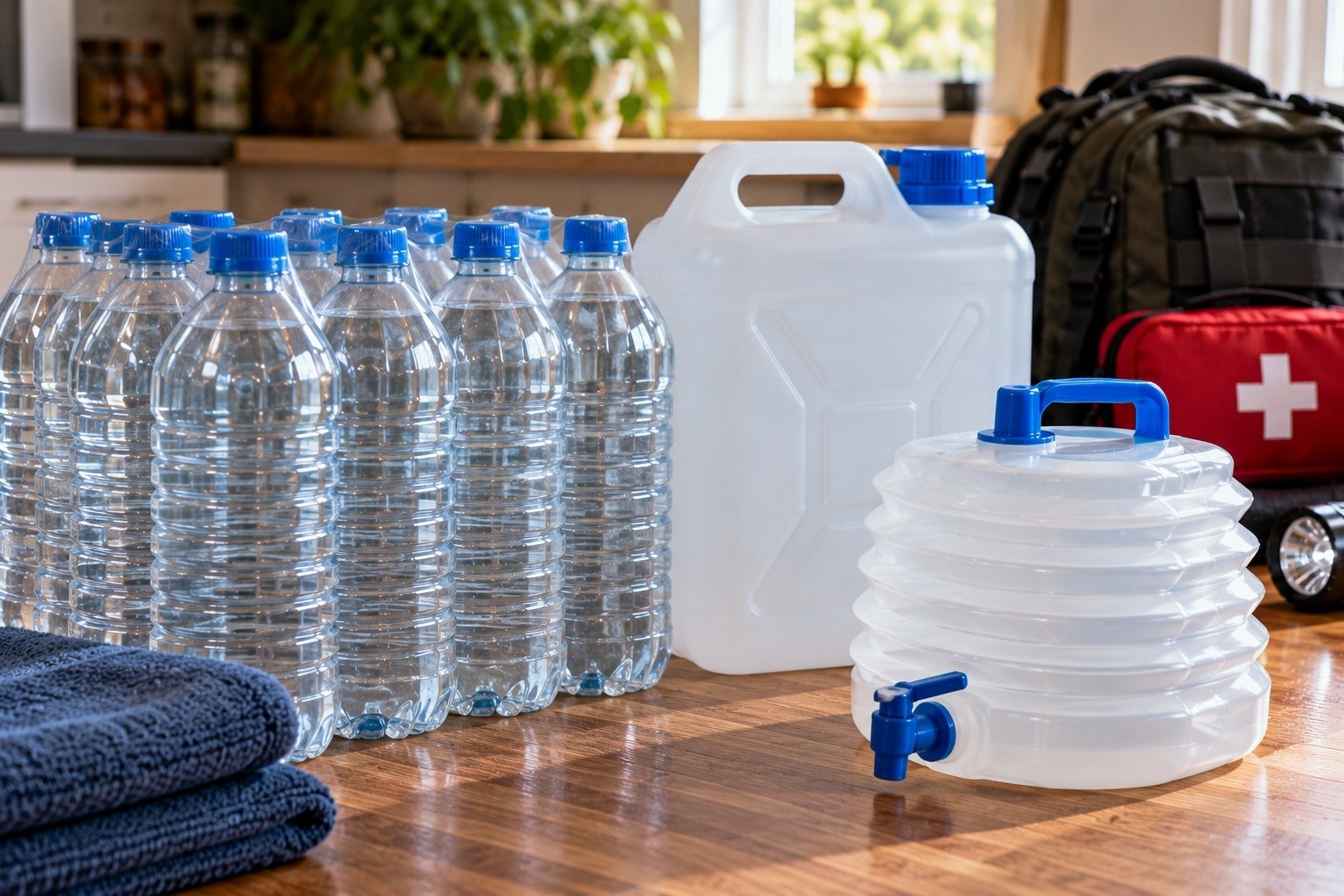
An emergency water supply UK households can rely on should contain at least three days of safe drinking water.
The UK Government recommends storing 3 litres per person per day, which means a family of four needs a minimum of 36 litres for a 72-hour emergency.
Burst water mains, contamination incidents, flooding and infrastructure failures can interrupt household water supplies. Some disruptions last only a few hours, while others may require alternative drinking water arrangements.
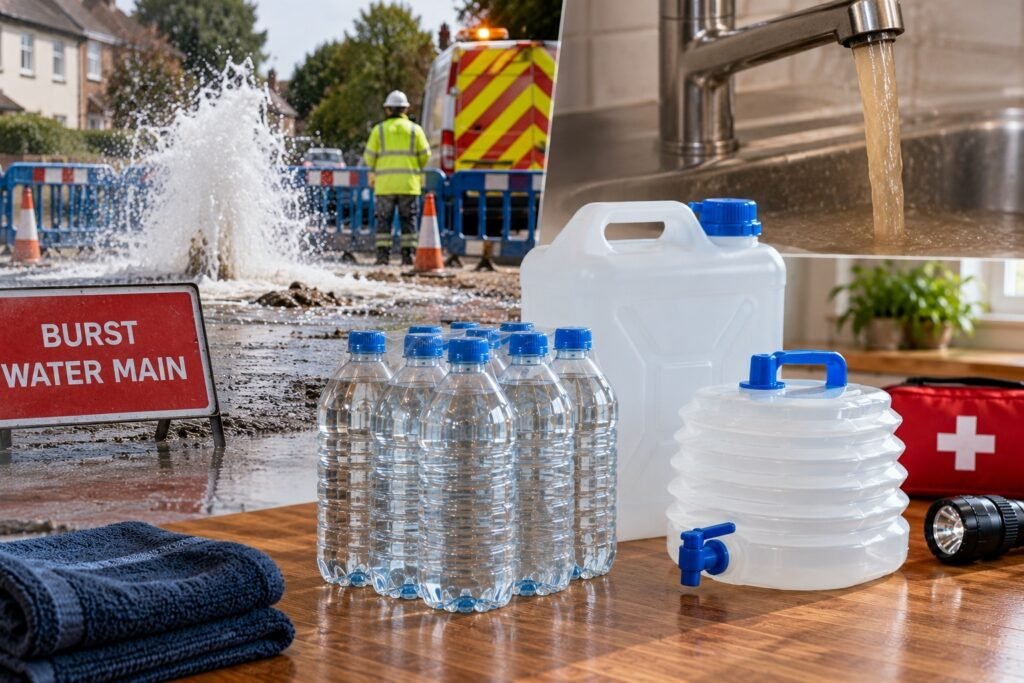
Storing emergency drinking water is straightforward, but choosing the right quantities and containers matters. This guide explains how much water your household needs, where to store it and what to do if your taps stop working.
How Much Emergency Drinking Water Do You Need?
The UK Government’s Be Ready emergency preparedness guidance recommends keeping at least 3 litres of drinking water per person per day for three days.
This provides a starting point for preparing a household emergency water supply.
To calculate your requirements, multiply the number of people living in your home by 3 litres, then multiply the result by three days.
For example, a household containing two adults and two children needs:
4 people × 3 litres × 3 days = 36 litres.
The recommendation covers drinking water. You may need additional supplies for cooking, washing, pets and medical requirements.
Hot weather, illness and other circumstances can increase individual drinking water needs.
Three days is a preparedness baseline rather than a guarantee that every supply interruption will end within 72 hours.
If you have enough suitable storage space, keeping additional drinking water may provide extra reassurance.
Emergency Water Calculator for UK Households
Use our emergency water calculator below to work out how much drinking water your household should store.
Enter the number of people in your home and select how many days you want to prepare for.
The calculator uses the UK Government’s recommendation of 3 litres per person per day.
The result shows your minimum drinking water requirement and the equivalent number of 2-litre bottles.
Remember to allow additional water for pets, cooking, hygiene and any specific household needs.
Emergency Water Calculator
Calculate your minimum emergency drinking water supply.
Minimum drinking water required
36 litres
Equivalent to 18 two-litre bottles.
Based on 3 litres per person per day. Store additional water for cooking, hygiene, pets and medical requirements.
Water Requirements for 1 to 6 People
The table below shows the recommended drinking water quantities for different household sizes.
| Household size | Water per day | Water for 3 days | 2-litre bottles |
|---|---|---|---|
| 1 person | 3 litres | 9 litres | 5 |
| 2 people | 6 litres | 18 litres | 9 |
| 3 people | 9 litres | 27 litres | 14 |
| 4 people | 12 litres | 36 litres | 18 |
| 5 people | 15 litres | 45 litres | 23 |
| 6 people | 18 litres | 54 litres | 27 |
Bottle quantities are rounded up to the nearest whole bottle.
Emergency Water for One Person
A person living alone needs at least 9 litres of drinking water for three days.
Five standard 2-litre bottles provide 10 litres, slightly more than the recommended minimum.
This quantity can usually be stored in a kitchen cupboard or another suitable location.
Emergency Water for Two People
A two-person household needs at least 18 litres for three days.
Nine 2-litre bottles meet this requirement.
If you live in a small flat, consider distributing sealed bottles between suitable storage locations rather than keeping everything in one cupboard.
Emergency Water for a Family of Four
A family of four needs at least 36 litres of drinking water for three days.
That is equivalent to eighteen 2-litre bottles.
Water is heavy. Thirty-six litres weighs approximately 36 kilograms before accounting for the weight of the containers.
Avoid placing large quantities on weak shelving. Store heavy bottles at floor level or on suitably rated shelves.
What About Water for Cooking, Washing and Pets?
The government’s recommended 3 litres per person per day is a drinking water allowance.
Your household may require additional water for everyday activities.
During a supply interruption, you may need to reduce water consumption and prioritise essential uses.
Water for Cooking
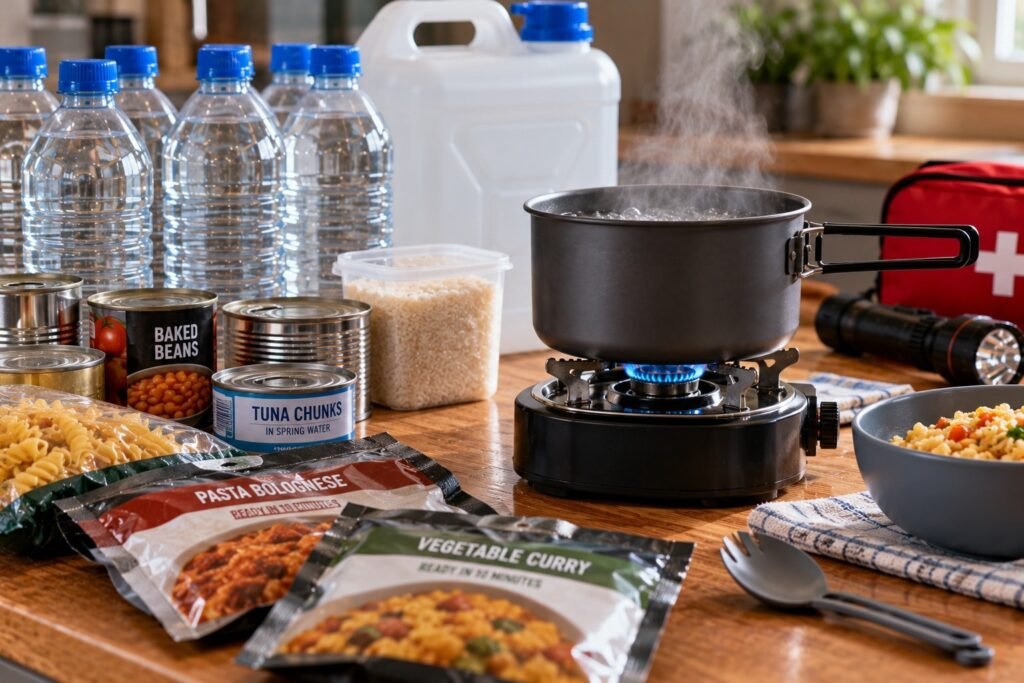
Some emergency foods require water before they can be eaten.
Rice, pasta, dehydrated meals and instant noodles all require additional water for preparation.
If your emergency food supply relies heavily on these products, you will need to store more water.
A practical alternative is to include foods that can be eaten without cooking or adding water.
Examples include tinned beans, ready-to-eat fish, crackers, cereal bars and suitable shelf-stable meals.
For meal ideas, see our 3-Day Emergency Food Supply Guide.
Water for Washing and Hygiene
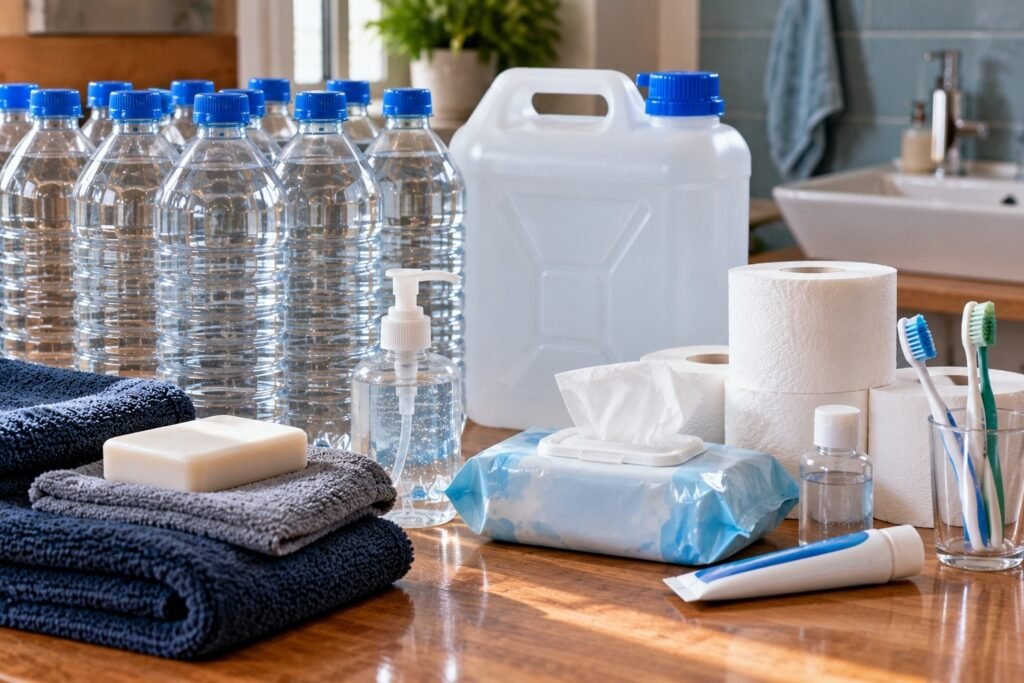
Water supply interruptions can affect handwashing, personal hygiene and toilet flushing.
You may need additional water for essential cleaning, particularly if someone in your household has specific care requirements.
Keep wet wipes, soap, hand sanitiser and other hygiene supplies available.
Hand sanitiser can help in some situations, but does not replace washing with soap and safe water for every hygiene task.
Follow your water supplier’s instructions about using toilets and other plumbing fixtures during an interruption.
Emergency Water for Babies
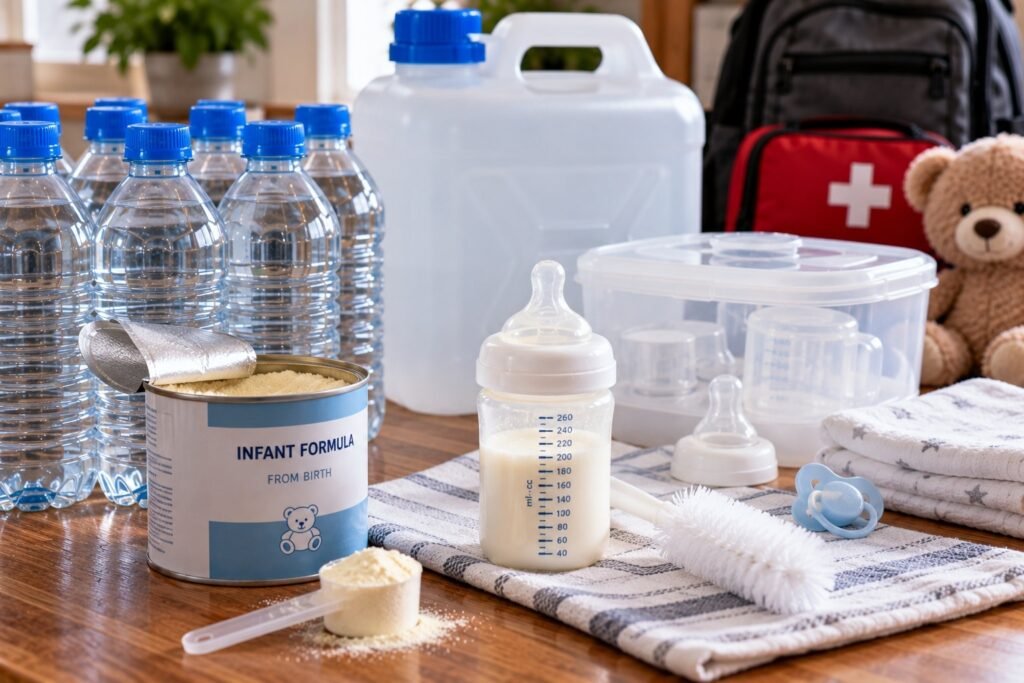
Babies who receive formula feeds may need additional safe water for preparing feeds and cleaning equipment.
Follow NHS guidance on preparing infant formula safely.
If your water supplier issues a contamination notice, do not assume boiling will make the water suitable for infant feeding.
Follow the specific instructions issued by your supplier and seek appropriate professional advice.
Emergency Water for Pets
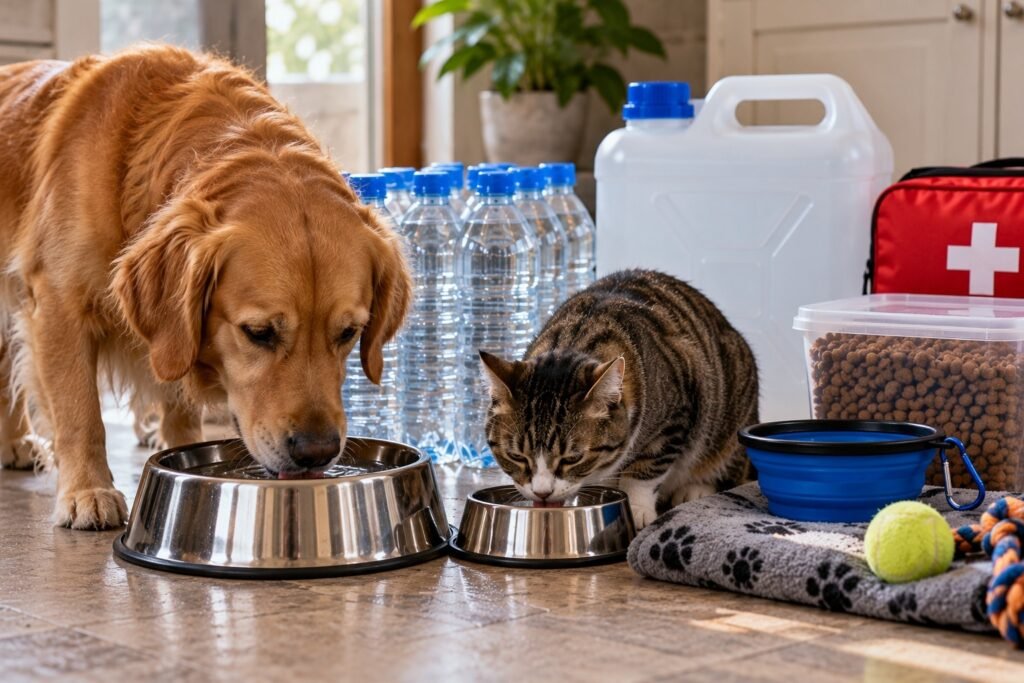
Pets need their own drinking water allowance.
Dogs, cats and other animals have different requirements depending on their size, diet, health and environmental conditions.
Store additional water for your pets rather than including their needs within the human drinking water calculation.
Ask your vet for advice if your animal has specialist requirements.
Water for Medical Requirements
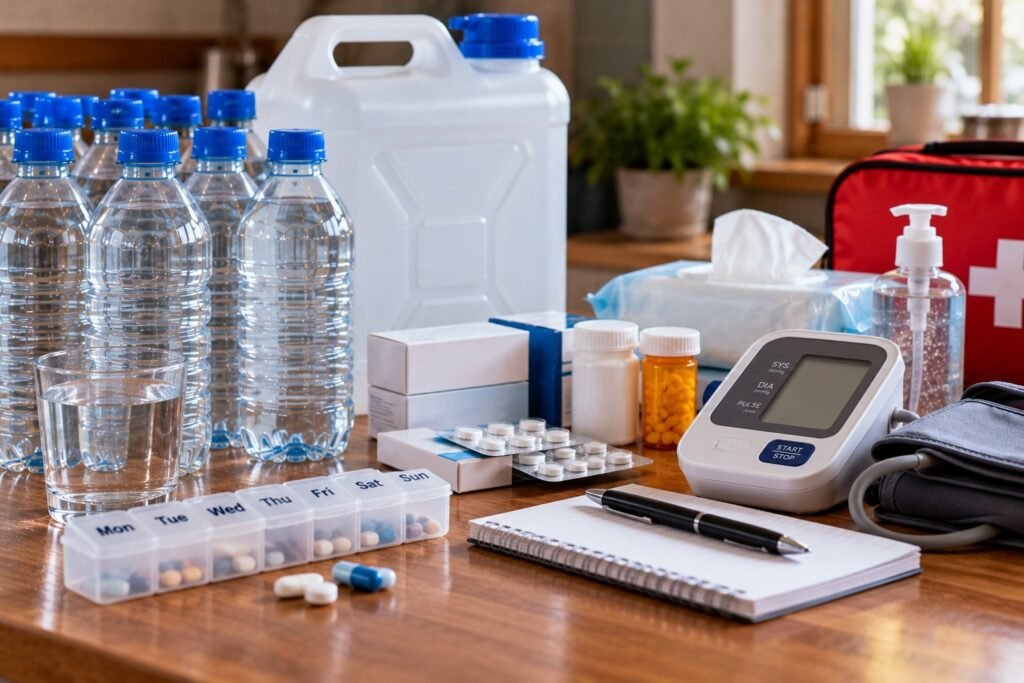
Some medical conditions and treatments require additional water or specific water quality.
If someone in your household uses medical equipment or has specialist requirements, discuss emergency arrangements with their healthcare professional.
Do not rely solely on general household water recommendations for medical needs.
Best Ways to Store Emergency Drinking Water
There are several ways to store drinking water at home.
Your choice should depend on available space, household size and how easily you can maintain your supplies.
Bottled Water
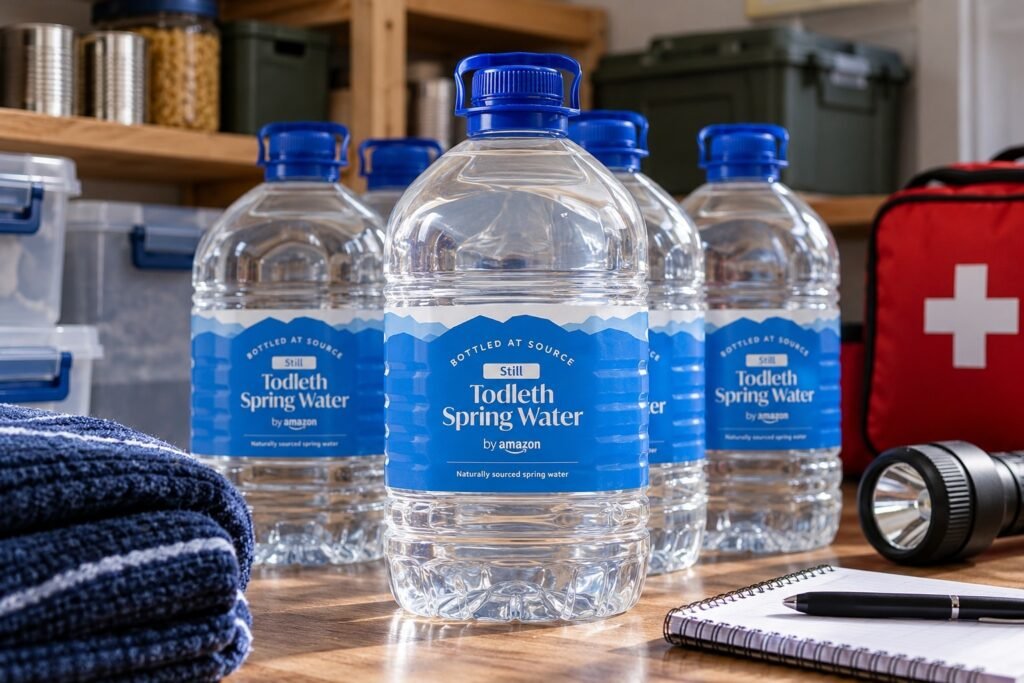
Commercially bottled drinking water is one of the simplest options for emergency storage.
Sealed bottles are widely available from supermarkets and can be stored without specialist equipment.
Smaller bottles are easier to move, while larger bottles may reduce packaging and make storing greater quantities more convenient.
Choose a size that everyone in your household can handle safely.
Keep bottles sealed until needed and follow the manufacturer’s storage instructions.
Avoid storing drinking water in direct sunlight, near household chemicals or in places exposed to excessive heat.
Check packaging regularly for leaks or damage.
Food-Grade Water Containers
Reusable food-grade water containers can be useful if you prefer storing larger quantities.
Choose containers specifically designed for potable drinking water.
Look for products with secure lids, suitable materials and clear cleaning instructions.
Common sizes include 5-litre, 10-litre and 20-litre containers.
A full 20-litre container weighs approximately 20 kilograms before adding the container’s weight.
This may be difficult to lift, particularly for older adults or people with limited mobility.
Several smaller containers may be easier to manage.
Never use containers that previously held cleaning chemicals, fuel or other hazardous substances.
Clean and prepare reusable containers according to the manufacturer’s instructions before filling them.
Collapsible Water Containers
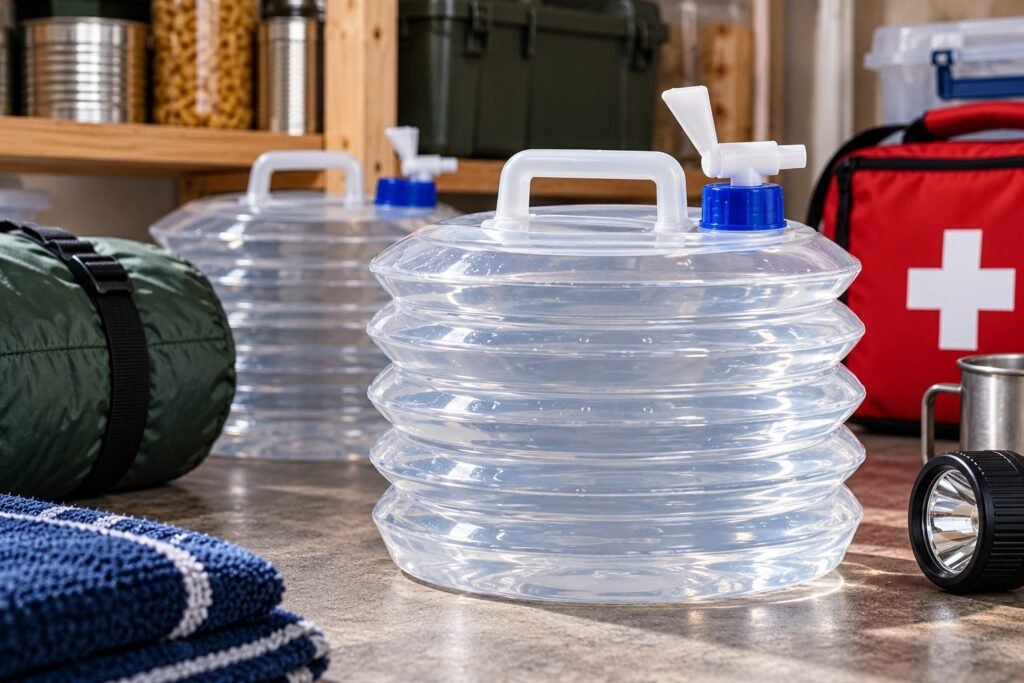
Collapsible water containers are commonly used for camping and outdoor activities.
They fold down when empty, making them useful where storage space is limited.
Some models include taps that make dispensing water easier.
Choose containers specifically approved for drinking water and follow the manufacturer’s cleaning and storage instructions.
A collapsible container is useful for collecting or transporting water, but not every model is designed for long-term filled storage.
Storage Conditions and Rotation
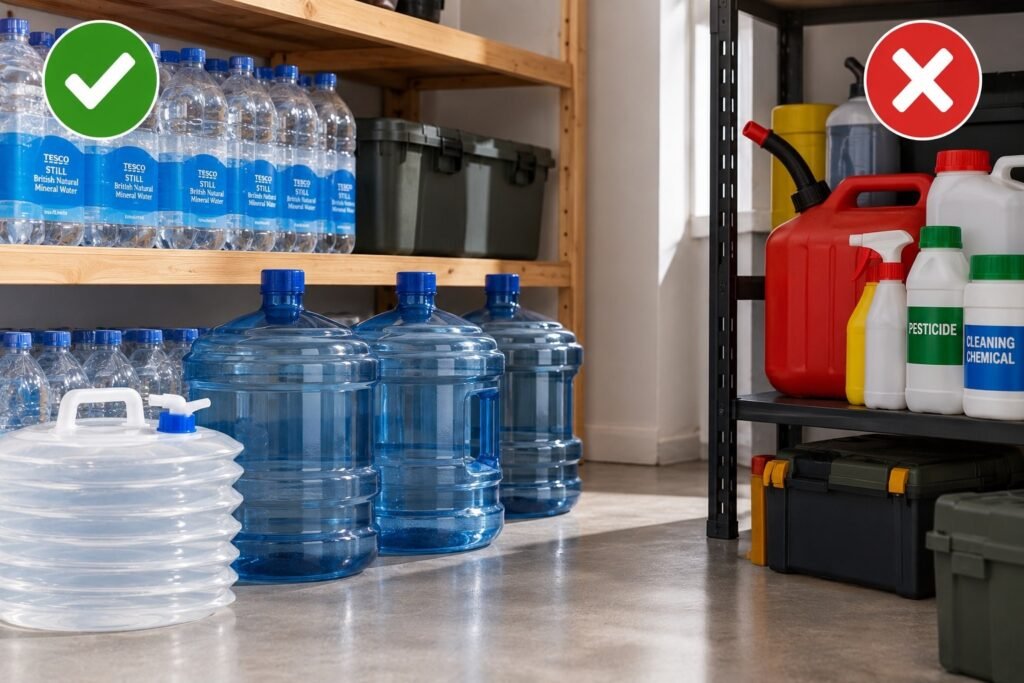
Store drinking water in a clean, cool location away from direct sunlight.
Avoid keeping water near petrol, pesticides, cleaning chemicals or other substances that may contaminate containers.
Commercially bottled water should be stored according to the manufacturer’s instructions and rotated as appropriate.
If you store tap water in reusable containers, follow current official guidance for cleaning, filling and replacement.
Label containers with the date they were filled.
Check your emergency water supply during your regular household preparedness review.
What Should You Do During a Water Supply Interruption?
If your taps stop working or your water supplier announces a problem, check official information before taking further action.
The UK Government’s Be Ready water supply guidance explains how households can prepare for interruptions.
Check Your Water Supplier
Start by checking your water supplier’s official website or customer information channels.
Suppliers may publish details of affected areas, the cause of the disruption and expected restoration arrangements.
If the problem appears limited to your property, check whether neighbouring homes are affected.
Contact your supplier if you cannot find an explanation.
Follow Drinking Water Safety Notices
Water companies may issue different instructions depending on the nature of a problem.
A boil water notice means you must follow the supplier’s instructions for boiling water before specified uses.
A do not drink notice means the water must not be consumed, even after boiling, unless the supplier explicitly states otherwise.
A do not use notice may impose wider restrictions.
These notices are different and should not be treated as interchangeable.
Always follow the specific instructions issued for your area.
Use Stored Drinking Water Carefully
If your normal supply is unavailable or unsafe, use your stored drinking water for essential needs.
Prioritise drinking and necessary food preparation.
Avoid using drinking water for activities that can safely be postponed.
Check Alternative Water Arrangements
During significant interruptions, water companies may provide alternative supplies.
These can include bottled water deliveries or temporary collection points.
Availability depends on the incident and the supplier’s arrangements.
Check official information before travelling to a collection point.
Register for Additional Support
Water companies offer Priority Services Registers for eligible customers who may need additional assistance.
This can include people with disabilities, medical needs or circumstances that make collecting water difficult.
Contact your supplier to ask about eligibility and available support.
Registration does not guarantee uninterrupted water supplies.
Can You Safely Treat Alternative Water Sources?
Water from an unknown source may contain harmful microorganisms, chemicals or other contaminants.
Clear-looking water is not necessarily safe to drink.
Floodwater, untreated rainwater and water collected from unsuitable containers should not be assumed safe.
Does Boiling Make Water Safe?
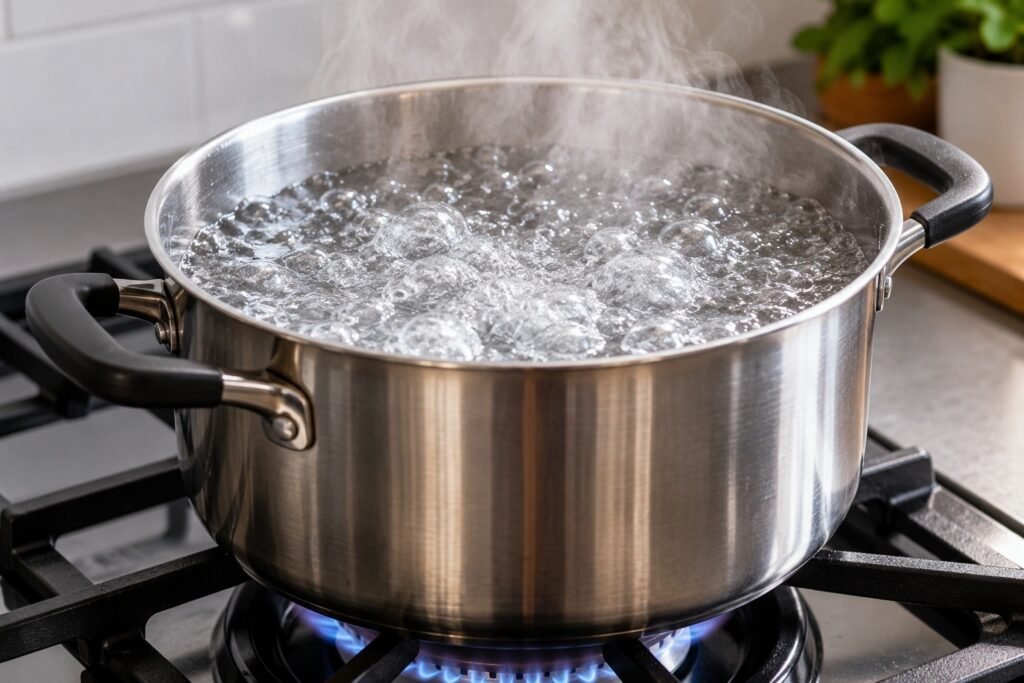
Boiling can kill many harmful microorganisms when carried out correctly.
However, boiling does not reliably remove chemical contaminants, fuels or heavy metals.
In some circumstances, boiling may concentrate certain contaminants as water evaporates.
Never assume boiling makes chemically contaminated water safe.
Follow instructions from your water supplier or public health authorities.
Can Water Filters Make Unsafe Water Drinkable?
Different filters are designed to reduce different contaminants.
Some camping filters can remove certain microorganisms and sediment, but they may not remove viruses or chemical contamination.
A filter suitable for clear stream water is not necessarily suitable for floodwater or water affected by industrial pollution.
Check the manufacturer’s stated treatment capabilities and relevant independent testing.
Are Water Purification Tablets Useful?
Water purification tablets can be useful for treating certain microbiological risks when used correctly.
Their effectiveness depends on the product, water conditions and contaminants present.
They do not reliably remove fuels, heavy metals or other chemical pollutants.
Follow the product instructions and official safety advice.
For household preparedness, storing safe drinking water is generally simpler than relying on emergency treatment of unknown water sources.
Choosing Emergency Water Storage Equipment
You do not need expensive equipment to build a practical emergency water supply.
Commercially bottled water is suitable for many households.
If you want reusable storage, consider food-grade containers designed for drinking water.
Collapsible containers can also be useful for collecting or transporting water during an interruption.
Before purchasing, check the capacity, material, cleaning instructions and whether the container can be safely handled when full.
For more household equipment recommendations, see our Best Emergency Kit Supplies UK Guide.
Frequently Asked Questions
How Much Emergency Water Should I Store in the UK?
The UK Government recommends at least 3 litres of drinking water per person per day for three days.
This means storing a minimum of 9 litres per person, with additional water for other household needs.
How Much Water Does a Family of Four Need for 72 Hours?
A family of four needs at least 36 litres of drinking water for three days.
Eighteen 2-litre bottles meet this requirement.
Is Bottled Water Suitable for Emergency Storage?
Yes. Commercially bottled drinking water is convenient for household emergency supplies.
Keep bottles sealed, follow storage instructions and check the packaging regularly.
Can I Store Tap Water in Plastic Containers?
Yes, provided the containers are suitable for drinking water and are cleaned and maintained correctly.
Follow current official guidance and the manufacturer’s instructions.
Never use containers that previously held hazardous chemicals.
How Long Can Emergency Drinking Water Be Stored?
Storage life depends on the source, container and storage conditions.
Follow the manufacturer’s instructions for bottled water.
For water stored in reusable containers, follow official guidance on safe storage and replacement.
Can I Drink Rainwater During an Emergency?
Do not assume collected rainwater is safe to drink.
Rainwater may contain microorganisms or chemicals collected from roofs, gutters and storage containers.
Use stored safe drinking water and follow official advice.
Can Water Purification Tablets Make Floodwater Safe?
Not necessarily.
Purification tablets do not reliably remove chemical contamination, fuels or heavy metals.
Floodwater should not be treated as safe drinking water simply because purification tablets have been added.
Should I Store More Than Three Days of Water?
Three days is the government’s recommended preparedness starting point.
Some interruptions may last longer, so additional water may be useful if your household has suitable storage space and specific needs.
Prepare Your Emergency Water Supply Before You Need It
Keeping emergency drinking water at home is a practical way to prepare for temporary supply interruptions.
Start with 9 litres per person for three days, then consider additional water for cooking, hygiene, pets and medical requirements.
Choose suitable containers, store them safely and review your supplies regularly.
For a complete list of household emergency supplies, read our 3-Day Emergency Kit UK Checklist.
You can also use our Free Printable Emergency Kit Checklist to organise your supplies.
For the latest official advice, visit the UK Government’s Be Ready guidance on water supply interruptions.
CampEquipmentPlus relies on reader support. Purchases made via links on our website may earn us an affiliate commission at no extra cost to you, helping keep the site running.