
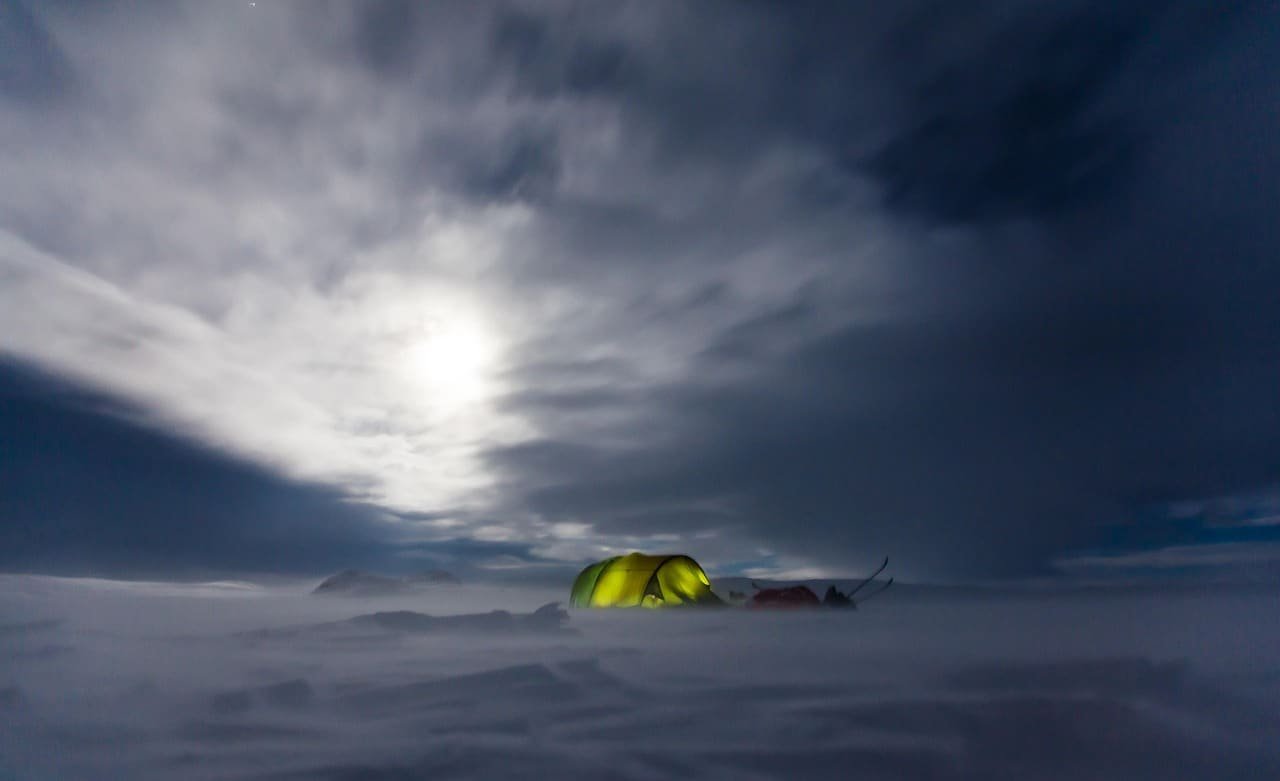
Best Tents for Camping in Windy Weather UK
The best tents for camping in windy weather in the UK are low, freestanding domes with crossing aluminium poles, plenty of guy points and a tough flysheet, because shape and structure matter more than size when a gale blows across the pitch.
Wind is the weather that ruins more UK camping trips than rain. The complaints come up again and again: fibreglass poles that snap, flysheets that flap all night, pegs that pull out of soft wet ground and tall tents that flex until they flatten. The Camping and Caravanning Club says most tents cope with winds of 25 to 30 mph, and that stronger winds can cause damage. We picked five tents built for rough weather, from a 4-person family dome to a premium Swedish expedition tent, and compared their structure, poles, fabrics, waterproof ratings, weight and space.
- Our five picks at a glance
- Side-by-side comparison
- Detailed reviews with pros and cons
- What makes a tent good in wind
- How to pitch a tent in strong wind
- Windy weather tent FAQs
- Low and domed beats tall and boxy A low profile gives the wind less to push against. Crossing-pole domes spread the load in every direction, so they cope better with changing wind than tall cabin tents.
- Aluminium poles flex, fibreglass snaps Every tent here uses aluminium poles, which bend and recover in gusts. Snapped fibreglass poles are one of the most common windy-night complaints.
- Guy lines do the real work Even a freestanding dome needs every guy line pegged out. Strong pegs driven at about 45 degrees hold far better than the thin pins supplied with many tents.
- Know when to stop Most tents handle about 25 to 30 mph. Above that, check the forecast, pick a sheltered pitch or postpone the trip.
The best tents for camping in windy weather UK conditions can throw at you share a few traits: a low, rounded shape, strong poles, plenty of guy points and a flysheet that sits close to the ground. Size, colour and gadgets matter far less when a gust hits the pitch. This guide explains how wind affects a tent, which designs cope best, and the kit and habits that keep you secure through a breezy night.


Best overall GEERTOP 4P | Best for exposed sites Allak 3 | Best for car camping Bastion 4P | Best lightweight Naturehike 2P | Best budget Clostnature 2P | |
|---|---|---|---|---|---|
|
|
|
|
|
| |
| Capacity | 4 person | 3 person | 4 person | 2 person | 2 person |
| Structure | Freestanding dome | Freestanding dome | 4-pole dome | Freestanding dome | Freestanding dome |
| Poles | Aluminium | 9 mm DAC aluminium | Not quoted | Aluminium | Aluminium |
| Flysheet | PU 3,000mm | Kerlon 1200 silnylon | 75D poly 3,000mm | 20D silnylon 3,000mm | PU polyester |
| Floor | PU 5,000mm Oxford | 70D, 15,000mm | Not quoted | Not quoted | PU bathtub |
| Snow skirt | Yes | Not quoted | Not quoted | Not quoted | Snow flaps |
| Inner size | 210 x 238 cm | Not quoted | Not quoted | 135 cm wide | 220 x 150 cm |
| Height | Not quoted | Not quoted | Not quoted | 110 cm | 115 cm |
| Weight | 4.1 kg | Not quoted | Not quoted | 2.0 kg | 2.85 kg |
| Doors | 2 | 2 + 2 porches | 2 | 2 | 2 + 2 porches |
| Check price | Check price | Check price | Check price | Check price |
Best tents for camping in windy weather UK: our detailed reviews
Each review covers structure, poles, fabrics, waterproofing, space and weight. We paid most attention to what campers complain about after a windy night: poles that break, fabric that flaps, pegs that pull out and tents that lean or collapse when the wind changes direction. If rain is your bigger worry, see our guide to the best waterproof tents for heavy rain.
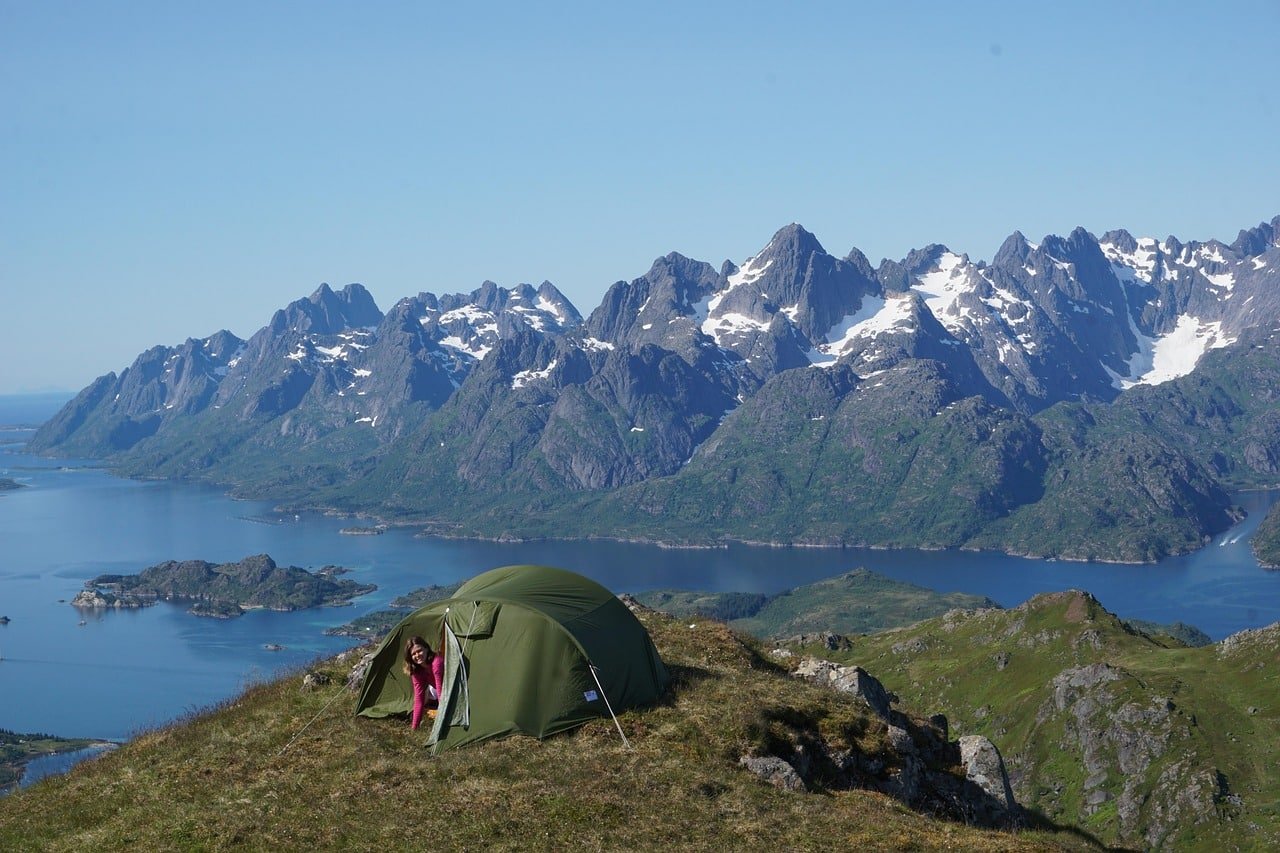
Freestanding aluminium dome with snow skirt and 3,000mm fly
The GEERTOP 4 Person 4 Season Family Tent is our best overall tent for camping in windy weather in the UK because it brings mountain-tent construction to a family-sized floor. It is a freestanding dome on lightweight aluminium poles, so it holds its shape when gusts change direction, and the integrated snow skirt seals the gap between fly and ground, which stops wind blowing under the flysheet and lifting it. GEERTOP quotes a PU 3,000mm flysheet with fully taped seams and a PU 5,000mm Oxford floor, which is well above the 1,500mm many UK retailers treat as a minimum. The 210 x 238 cm inner sleeps four, two doors and dual vents help with condensation, and a front vestibule keeps boots and bags out of the bedroom. At 4.1 kg it is light for a 4-person tent. The height is not quoted on the listing, and four adults will find it snug, so it suits a couple with children or two adults with kit best.
- Freestanding aluminium-pole dome
- Snow skirt blocks wind under the fly
- 3,000mm fly and 5,000mm floor
- Light for a 4-person tent at 4.1 kg
- Two doors and vestibule
- Height not quoted
- Snug for four adults
- Only one vestibule
Swedish-made geodesic-style dome with Kerlon 1200 fly
The Hilleberg Allak 3 is the tent to buy if you camp on exposed coasts, hills or mountains where the wind is a serious threat rather than a nuisance. Hilleberg describes it as an incredibly strong, fully freestanding dome that performs in high winds and heavy snow. The flysheet is Kerlon 1200, a triple silicone-coated 30D ripstop nylon with very high tear strength, and the floor is 70D fabric with a 15,000mm hydrostatic head. Three 9 mm DAC Featherlite aluminium poles cross over the tent, and the guy lines come pre-attached, so it is ready for a blow straight out of the bag. The inner and outer pitch together, keeping the inner dry in rain, and there are two vestibules for kit. It is made in Estonia, comes with 14 aluminium V-pegs and a spare pole section, and carries a lifetime warranty against defects. The drawback is price: it costs several times more than anything else here. The listing does not state weight or floor size.
- Built for high winds and heavy snow
- Kerlon 1200 silicone nylon fly
- 9 mm DAC aluminium poles
- Pre-attached guy lines
- Lifetime warranty against defects
- By far the most expensive
- Weight and size not quoted on listing
- Overkill for sheltered campsites
Four-pole crossing dome with 3,000mm fly
The OneTigris Bastion 4 Person 4 Season Tent is a good choice for car campers who want a family dome that copes better with wind than a typical budget tent. OneTigris uses a four-pole crossing structure, which gives more support points than the two-pole frames of most cheap domes, and a 75D polyester fly with a 3,000mm waterproof rating and UV protection. It is designed to pitch without a tarp or a web of extra lines, which makes it quicker to put up than many 4-season tents, although you should still peg out the guy lines in strong wind. Two large doors and side windows give good views, and double-layer inner doors can be rolled to mesh in summer. OneTigris says it fits three to four people. Weight, floor size and pole material are not quoted on this listing, so check them before buying if you need to carry it any distance.
- Four-pole crossing structure
- 3,000mm 75D polyester fly
- Quick pitch without a tarp
- Two doors and windows
- Roll-to-mesh inner doors
- Weight not quoted
- Floor size not quoted
- Pole material not quoted
20D silicone nylon dome at 2.0 kg
The Naturehike 4 Season 2 Person Tent is the lightest tent in this list at 2.0 kg total, and our pick for backpackers and wild campers who still want a tent that stands up to wind. It is a freestanding dome with aluminium poles that cross at the top and anchor at four corners, and Naturehike uses 20D silicone-coated rip-stop nylon with a 3,000mm waterproof rating. The inner is 135 cm wide and 110 cm high, with two doors and three vents to keep condensation down. Light fabric means it needs more care than the heavier tents here: pitch it out of the strongest wind if you can and peg every guy line. For more light options see our best lightweight tents for backpacking.
- Lightest tent here at 2.0 kg
- Freestanding aluminium-pole dome
- 20D silicone rip-stop nylon
- 3,000mm rating
- Three vents and two doors
- Light fabric needs care
- Low 110 cm height
- Snug for two
Affordable freestanding dome with snow flaps
The Clostnature 4 Season 2 Person Tent is the best budget choice for windy weather. It is a freestanding dome on two aluminium poles with factory-sealed seams, a PU-coated polyester fly and a bathtub-style groundsheet that keeps water and draughts out. Snow flaps around the base help stop wind getting under the fly, and two D-shaped doors with two vestibules give each camper their own entrance and storage. The inner measures 220 x 150 x 115 cm and the tent weighs 2.85 kg packed. It comes with 14 aluminium stakes, four guy ropes and a pole repair kit, which is useful if a pole section is damaged in a gale. The waterproof rating is not quoted as a figure, and only four guy ropes are supplied, so add extra lines for exposed sites.
- Lowest price of our picks
- Aluminium poles and repair kit
- Snow flaps at the base
- Two doors and two vestibules
- 14 aluminium stakes included
- Waterproof figure not quoted
- Only four guy ropes supplied
- Heavier than the Naturehike
How to choose a tent for windy weather
The checklist below draws on the Camping and Caravanning Club’s advice on camping in wind, Met Office camping guidance and the problems campers report most often after a windy night. For a wider look at tent types, see our guide on how to choose a camping tent for different trips, and if you prefer a tunnel design, read our best tunnel tents for family camping.
How wind affects a tent
Wind works on a tent in several ways at once. It pushes against the walls facing it, sucks at the sheltered side and tries to get under the flysheet to lift it. Steady wind bends the poles and stretches the fabric, while gusts load and unload the whole structure many times a minute. Over a long night that repeated movement is what breaks poles and tears seams.
Pegs and guy lines carry much of that load into the ground. If a peg pulls out, the force shifts to the next point, which can then fail in turn. That is why a tent that seems secure at teatime can start to lean or flap at 2am, when the ground has softened with rain or the wind has swung round to hit a weaker side.
Noise is a problem in its own right. A slack flysheet that cracks and flaps all night makes sleep almost impossible, even when the tent is in no danger. A tight pitch, well-tensioned guy lines and a design where the fly is held firmly by the poles all reduce that noise, which is one reason campers rate stable tents so highly after a stormy trip.
Tent shapes compared in windy weather
Shape has a bigger effect than almost anything else on how a tent copes with wind. Low, rounded tents present less surface to push against and shed wind from many directions, while tall, flat-sided tents act more like sails. Ask experienced hill campers which tents for camping in windy weather UK trips suit best and most will point to low domes, for the reasons below.
Domes and geodesic designs
Domes with crossing poles, like every tent in our list, spread the load across the whole frame and have no single flat side for the wind to catch. Geodesic-style designs add more crossing points for even more strength, which is why the Hilleberg Allak 3 and similar mountain tents use them. Because they are freestanding, they also keep their shape if the wind changes direction overnight.
Tunnel tents
Tunnels are very strong end-on to the wind and much weaker side-on. That is fine on a campsite where you can orientate the tent to the forecast, but less forgiving if the wind swings round. Low tunnels pitched carefully are common on UK hills, while tall family tunnels need sheltered pitches and every guy line pegged out.
Cabin and air tents
Cabin tents give standing height but their tall, flat walls catch a lot of wind, so they suit sheltered summer pitches best. Air tents behave differently: their beams flex and recover rather than snapping, which many owners find reassuring. Large air tents still need full guying, and our guide to the best inflatable air tents UK covers how they compare.
What to compare in tents for camping in windy weather UK
Once you have chosen a shape, the details decide how well a tent copes. Start with the poles. Aluminium bends and recovers in gusts where fibreglass is more likely to snap, and more crossing poles mean more support points. The four-pole frame on the OneTigris Bastion and the 9 mm DAC poles on the Hilleberg are good examples of strength built into the frame.
Next, look at how the fly attaches. Tents where the fly is fixed firmly to the poles flap less than those where it simply drapes over the frame. Snow skirts and snow flaps, as on the GEERTOP 4P and Clostnature 2P, close the gap at the base so wind cannot get under the flysheet. Pre-attached guy lines save time when you pitch in a rising wind.
Fabric matters for both tear strength and noise. Silicone-coated nylon, such as the Kerlon 1200 on the Allak or the 20D silnylon on the Naturehike, is strong for its weight but tends to stretch when wet, so it needs re-tensioning. Heavier polyester, like the 75D fly on the Bastion, holds its shape well and is tougher against abrasion, at the cost of extra weight.
Finally, check the guy points and how many lines come in the box. Among the tents for camping in windy weather UK shops list, several supply only four guy ropes, which is not enough for an exposed pitch. Carry extra cord and a few spare pegs so you can use every guy point, and add lines on the windward side when a stronger wind is forecast.
Kit and habits for a calmer night in wind
Good pegs are the most useful upgrade. UK ground varies from soft peat to stony moorland and thin soil over rock, so carry a mix if you can: longer pegs for soft ground and V-shaped or stronger pegs for firmer pitches. Where pegs will not hold, large rocks placed on top of a peg or used to anchor a guy line are a common fallback.
Pitch with a plan. Lay out the tent, pegs and poles before you start, keep everything weighted down or clipped on, and work so that the tent is always secured at the windward end. Two people make pitching in wind far easier, with one holding the fabric while the other feeds poles. Practise this at home before your first breezy trip.
Inside the tent, pack sensibly. Keep heavy kit along the windward wall to add weight, store loose items in bags so nothing blows away when you open the door, and keep the door on the sheltered side. Earplugs help a lot on noisy nights. A warm sleeping bag matters too, as wind-chill makes nights feel colder, so see our guide to sleeping bags for cold weather camping UK.
Cooking in wind needs extra care. Flames are harder to control and stoves burn more fuel, so a windshield and a sheltered spot help. Never cook inside the inner tent, and be very cautious in a porch, where a gust can push the flysheet against a flame. Many campers simply eat cold food or cook behind a wall or the car when it is very windy.
UK conditions: coasts, hills and forecasts
Wind in Britain is often strongest on west-facing coasts, open moorland and high ground, and it can rise quickly as weather fronts arrive. That is why the tents for camping in windy weather UK campers rely on tend to be low and rounded, and why the forecast is still your best tool. Check the gust speed as well as the average wind speed, because it is the gusts that break poles and pull pegs.
Campsites offer more options than wild pitches. Hedges, walls and the lee of a building all cut the wind, and many sites have sheltered corners that are worth asking for when booking. Windbreaks help with cooking and sitting out, but make sure they are pegged firmly too. On the hills, a slight dip or the far side of a boulder can make a big difference.
Know when not to go. As the Camping and Caravanning Club notes, most tents cope with winds of about 25 to 30 mph. If the forecast is well above that, choose a more sheltered site, take your strongest tent or postpone. Packing up early is far better than nursing a damaged tent through a stormy night far from the car.
Final thoughts on tents for camping in windy weather UK
A tent that copes with wind is mostly about shape, poles and pegging. The GEERTOP 4 Person 4 Season is the best all-rounder here for families and couples, the Hilleberg Allak 3 is the choice for truly exposed sites, and the OneTigris Bastion, Naturehike 4 Season and Clostnature 4 Season cover car camping, light backpacking and tight budgets.
Whichever tent you choose, the habits matter as much as the kit. Pitch low and end-on to the wind, use every guy line, carry stronger pegs and re-tension as the night goes on. Combine that with a careful look at the forecast and a willingness to change plans, and windy weather becomes a manageable part of British camping rather than a reason to stay at home.
What to look for in a tent for windy weather
Low, rounded domes and geodesic designs shed wind from any direction. Tall cabin tents and long tunnels catch more wind and must be pitched carefully.
Aluminium poles bend and recover; fibreglass is cheaper but snaps more easily. More crossing poles means more support points. Air-beam tents flex rather than snap.
Look for plenty of guy points, ideally pre-attached, around the whole tent. A tent with only four lines needs extra cord for exposed pitches.
Silicone-coated nylon and heavier polyester resist tearing. Aim for at least 3,000mm waterproofing, because wind drives rain hard against the fly.
A skirt or a fly that reaches the ground stops wind getting underneath and lifting the tent, and cuts cold draughts.
Supplied pegs are often thin. Stronger aluminium, steel or V-shaped pegs hold better in soft, wet ground.
You will keep doors shut in wind, so high vents matter for reducing condensation.
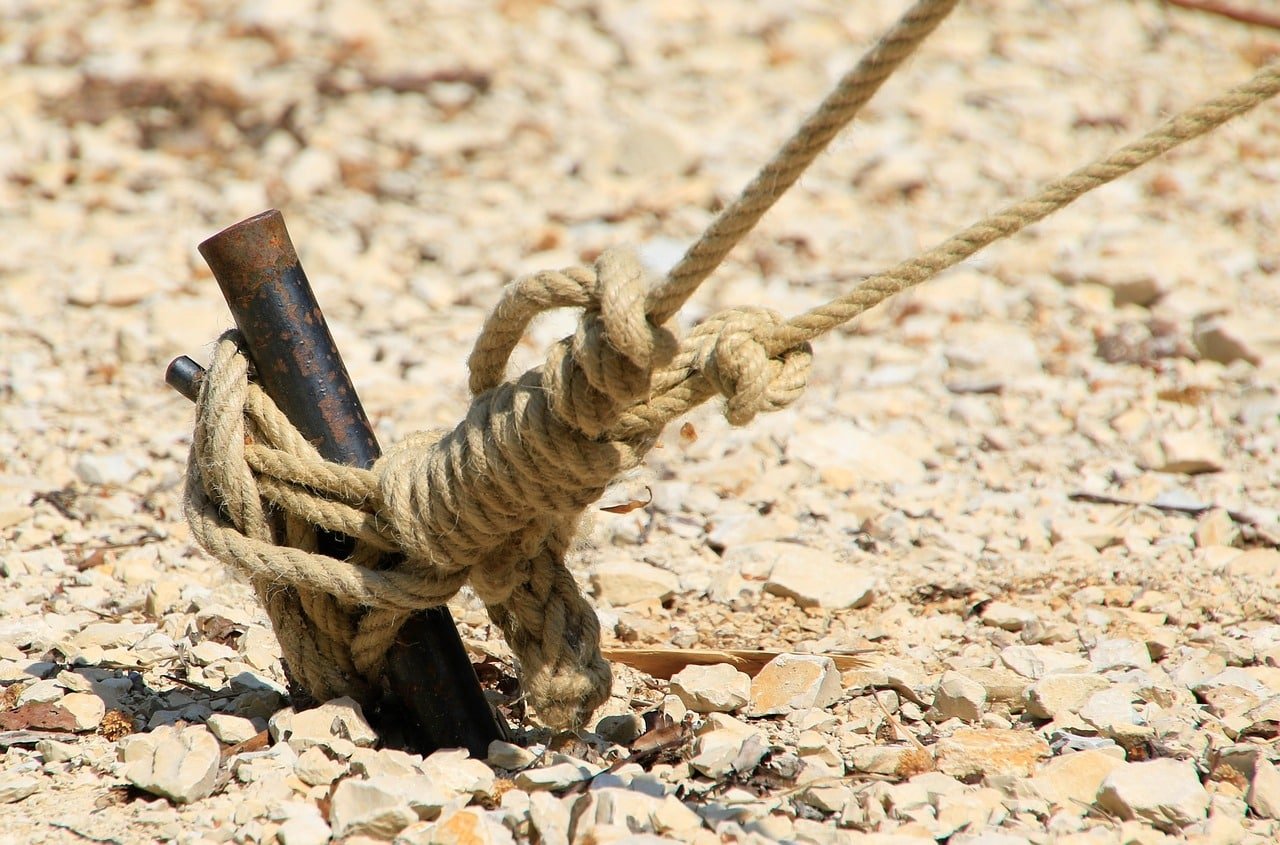
How to pitch a tent in strong wind
- Choose a sheltered pitch
Use a hedge, wall, vehicle or windbreak as shelter. Avoid ridges, hilltops and pitches under trees that could drop branches.
- Face the narrow, low end into the wind
Point the smallest, lowest side of the tent into the wind and keep the door on the sheltered side.
- Peg the windward side first
Peg the corners facing the wind before you insert the poles, so the tent cannot blow away while you work.
- Drive pegs at 45 degrees
Angle pegs away from the tent at about 45 degrees and use stronger pegs on soft or wet ground.
- Use every guy line
Peg out all guy lines, add extra lines on the windward side if you can, and keep them taut.
- Check and re-tension
Re-tighten lines and check pegs before bed and after rain, as fabric stretches and wet ground loosens pegs.
How we chose these tents
We have not pitched every tent in this list ourselves. Our picks are based on manufacturer specifications, published advice from UK camping organisations and the Met Office, and recurring themes in owner feedback about tents in wind. Prices change, so check the current price before you buy.
-
Structure
We favoured freestanding domes and crossing-pole designs that resist wind from any direction.
-
Poles and fabrics
We compared pole materials, flysheet fabrics and stated waterproof ratings, and noted where no figure is quoted.
-
Wind features
We looked for snow skirts, guy points, pegs and repair kits.
-
Practicality
We weighed space, weight, doors and price.
No tent is safe in every storm. If winds above about 30 mph are forecast, consider a more sheltered site or postponing your trip.
What is the best tent shape for windy weather?
A low dome or geodesic tent with several crossing poles copes best, because it spreads the wind load and has no flat side for the wind to push against. Tunnel tents are fine if pitched end-on to the wind and fully guyed.
How windy is too windy to camp in a tent?
The Camping and Caravanning Club says most tents cope with winds of 25 to 30 mph and that stronger winds can cause damage. Above that, choose a sheltered site, take a stronger tent or postpone.
Are 4 season tents better in wind?
Usually, yes. They tend to have stronger aluminium poles, more guy points, tougher fabric and snow skirts that stop wind getting under the fly. They can feel warmer in summer, so look for good vents.
Are air tents good in wind?
Air beams flex in gusts rather than snapping like rigid poles, and a deflated beam can be reinflated. Large air tents still need every guy line pegged out.
How do I stop my tent flapping in the wind?
Pitch it tight, peg out every guy line and re-tension them as the fabric stretches. A taut flysheet flaps much less and is far less likely to tear.
What pegs should I use in wind?
Use strong aluminium, steel or V-shaped pegs that suit the ground, and drive them at about 45 degrees away from the tent. The Hilleberg Allak 3 comes with aluminium V-pegs as standard.
Which tent should you buy for windy weather?
- Best overall: GEERTOP 4 Person 4 Season Family Tent
- Best for exposed sites: Hilleberg Allak 3 All-Weather Tent
- Best for car camping: OneTigris Bastion 4 Person 4 Season Tent
- Best lightweight: Naturehike 4 Season 2 Person Tent
- Best budget: Clostnature 4 Season 2 Person Tent
For most campers, the GEERTOP 4 Person 4 Season Family Tent is the best tent for camping in windy weather in the UK: it is a freestanding aluminium-pole dome with a snow skirt, a 3,000mm fly and a 5,000mm floor at just 4.1 kg. Choose the Hilleberg Allak 3 for exposed coasts and hills, the OneTigris Bastion for a sturdy car-camping family dome, the Naturehike 4 Season for light backpacking, and the Clostnature 4 Season if you want wind-ready basics on a budget.
CampEquipmentPlus relies on reader support. Purchases made via links on our website may earn us an affiliate commission at no extra cost to you, helping keep the site running.