

Best Lightweight Tents for Backpacking UK
The best lightweight tents for backpacking in the UK keep your pack light without leaving you wet, cramped or flattened by the first windy night on the hill.
Choosing a backpacking tent is a balancing act. UK outdoor writers often sum it up as weight, liveability and cost: you can usually have two of the three. Owners’ most common complaints are condensation on still, damp nights, flimsy supplied pegs, small porches for wet kit and tents that lose their shape in side winds. We picked five two-skin, freestanding tents with aluminium poles, from a premium MSR to budget options under £100, comparing stated weight, packed size, waterproof rating, floor space, doors and ventilation.
- Our five picks at a glance
- Side-by-side comparison
- Detailed reviews with pros and cons
- How to choose a backpacking tent
- How to cut condensation
- Backpacking tent FAQs
- Aim for under 2 kg For most UK backpacking, 1.2 to 2 kg is a sensible target for a one- or two-person tent. Under 1.2 kg is ultralight territory and usually means compromises in space or toughness.
- Check how weight is quoted Brands quote minimum trail weight (fly, inner and poles) or packed weight (everything). The difference can be several hundred grams, so compare like with like.
- Two skins suit UK weather A double-wall tent with a mesh or hybrid inner handles condensation and rain better for most people, and is easier for beginners than a single-skin shelter.
- Upgrade the pegs Supplied pegs are the most common weak point on cheaper tents. A set of stronger pegs is a small, worthwhile upgrade for hard or rocky ground.
Choosing between lightweight tents for backpacking UK walkers can trust comes down to more than the number on the scales. Packed size, a fly that stays taut in wind, porch space for a wet rucksack and enough ventilation to stop drips on a damp night all decide whether a backpacking tent feels like a good buy on day three of a trip. This guide explains the trade-offs so you can match a tent to your walking.


Best overall Hubba LT 2 | Best value Cloud-Up 2 | Best for beginners Grand Mesa 2 | Best budget Clostnature 2P | Best for solo Cloud-Up 1 | |
|---|---|---|---|---|---|
|
|
|
|
|
| |
| Capacity | 2 person | 2 person | 2 person | 2 person | 1 person |
| Stated weight | 1.36 kg (min trail) | 1.8 kg | 2.0 kg (packed) | 2.05 kg (min trail) | 1.66 kg |
| Packed size | 51 x 14 cm | 40 x 13 x 13 cm | 41 x 18 x 18 cm | 42 x 15 x 15 cm | 39 x 13 x 13 cm |
| Waterproof rating | Not quoted | PU4000mm | Not quoted | Not quoted | PU3000mm+ |
| Taped seams | Not quoted | Yes | Yes | Yes | Not quoted |
| Floor size | 224 x 132 cm | 210 x 125 cm | 216 x 145 cm | 220 x 150 cm | Not quoted |
| Peak height | 102 cm | 105 cm | 112 cm | 115 cm | Not quoted |
| Doors | 2 | 1 | 1 | 2 | 1 |
| Footprint included | No | Yes | No | No | Yes |
| Check price | Check price | Check price | Check price | Check price |
Best lightweight tents for backpacking UK: our detailed reviews
Each review covers weight and packed size, how the tent copes with wind and rain, liveable space and who it suits. We paid most attention to the issues UK backpackers raise most often: condensation on damp nights, porch space for wet kit, peg quality and stability on exposed pitches.

Light, roomy and quick to pitch
The MSR Hubba Hubba LT 2 is our top pick because it gets the balance between weight and liveability right. Its minimum trail weight is 1.36 kg and it packs down to 51 x 14 cm, so it sits comfortably in the lightweight bracket without feeling like a compromise once you are inside. MSR gives it a true rectangular floor of 224 x 132 cm with nearly vertical walls, so two modern rectangular sleeping pads fit side by side, even ones over 10 cm thick, and the 102 cm peak lets you sit up. The mostly mesh inner is designed to keep air moving and limit overnight condensation, helped by two large kickstand vents at the ends of the fly. Two doors and two large vestibules mean neither person climbs over the other, and the StayDry doors have built-in rain gutters so water runs off rather than into the tent when you open them. A symmetrical hubbed pole set with DAC aluminium poles makes pitching quick and hard to get wrong. MSR does not quote a waterproof rating on the listing, and the mesh inner can feel cool on windy, cold nights, but for three-season UK backpacking this is the most complete tent here. It is also by far the most expensive, and MSR backs it with a three-year warranty.
- 1.36 kg minimum trail weight
- Two doors and two large vestibules
- Rectangular floor fits thick pads
- Kickstand vents and mesh inner for airflow
- Quick symmetrical hub pole system
- Most expensive tent here
- Waterproof rating not quoted
- Mesh inner can feel draughty in cold wind
A PU4000mm fly and a footprint included
The Naturehike Cloud-Up 2 has become one of the most popular budget backpacking tents because it offers a lot for the money. The listed version weighs 1.8 kg and packs to 40 x 13 x 13 cm, small enough to strap to or slide inside most rucksacks. Its 20D nylon fly carries a PU4000mm silicone coating with taped seams, the highest stated rating in this list, and the 7001 aluminium poles are a step up from the fibreglass found on many cheap tents. This upgraded version adds a vent above the front door and a larger, higher door, which helps with condensation and getting in and out. A footprint comes in the box, along with 14 stakes and five guy ropes. The floor measures 210 x 125 cm with a 105 cm peak: owners say it suits two people who are happy to be cosy, or one person with plenty of room for kit. There is a single door and a fairly small vestibule, so space for wet boots and packs is limited, and one long-term owner found the tent was pushed around in strong side winds, so pitch with the narrow end into the wind and use every guy line. The supplied pegs are basic and are worth upgrading.
- Highest stated rating here at PU4000mm
- Light 1.8 kg and packs small
- Footprint included
- Aluminium poles and taped seams
- Upgraded door vent for airflow
- Snug for two adults
- Single door and small porch
- Basic pegs; moves in side winds
Simple, tough and easy to pitch
If you are new to backpacking, the Kelty Grand Mesa 2P is an easy tent to live with. Kelty’s Quick Corners hold the pole ends in place while you clip up the inner, and colour-coded clips and fly attachments make it hard to pitch the wrong way round, which helps after a long day or in fading light. It is freestanding with two aluminium press-fit poles, so you can pitch it and then move it to the best spot. The trade-off is weight: its packed weight is 2.0 kg and it packs to 41 x 18 x 18 cm, a little heavier and bulkier than the lightest tents here. That weight goes into tougher 68D polyester for the floor and fly, with fully taped seams, which should cope better with rough ground and repeated use than thin 20D fabric. The 216 x 145 cm floor gives 30 sq ft of space and the 112 cm peak is generous for a backpacking tent. There is one door with a zipped vestibule, and Kelty’s Shark Mouth carry bag opens wide so the tent is easier to pack away. Kelty does not quote a waterproof rating on the listing.
- Very simple colour-coded pitch
- Tougher 68D polyester floor and fly
- Fully taped seams
- Roomy 216 x 145 cm floor and 112 cm peak
- Wide-mouth carry bag
- Heavier at 2.0 kg packed
- Bulkier packed size
- Single door; rating not quoted
Two doors and two porches for less
The Clostnature 2 Person tent brings features usually seen on pricier tents down to a budget price. Its minimum trail weight is 2.05 kg (fly, inner and poles) or 2.4 kg with everything, and it packs to 42 x 15 x 15 cm. Most importantly for two people, it has two D-shaped doors and two side vestibules, so each person has their own way in and somewhere to store a pack and boots. The full mesh inner keeps air flowing, and the polyester fly and bathtub-style groundsheet are PU coated with factory-sealed seams, although no waterproof rating is quoted. At 220 x 150 cm with a 115 cm peak, it is the roomiest two-person tent here. The freestanding two-pole aluminium frame is simple to pitch on your own, and Clostnature includes 14 aluminium stakes, four guy ropes and a pole repair sleeve, with a one-year guarantee. It is not the lightest choice, and polyester fabrics are heavier than the nylon on premium tents, but for occasional backpackers or anyone starting out it is hard to argue with the value.
- Two doors and two vestibules
- Roomiest floor here at 220 x 150 cm
- Sealed seams and bathtub groundsheet
- Pole repair sleeve included
- Low price
- Waterproof rating not quoted
- Heavier polyester fabrics
- Full mesh inner can feel cold
A 1.66 kg tent for one
Solo hikers who want a light, inexpensive tent should consider the Naturehike Cloud-Up 1. It weighs 1.66 kg and packs to 39 x 13 x 13 cm, so it takes up little room in a rucksack. The fly is 210T polyester with a PU3000mm+ coating, and the 7075 aluminium poles are strong for their weight. Like the two-person version, this upgraded model adds a vent above the front door to cut condensation and a larger, higher door for easier access and gear storage. It is a double-wall tent with a B3 mesh inner, and the fly can be pitched on its own as a sun shelter. A footprint is included, so you do not need to buy one separately. Naturehike does not state the floor dimensions or peak height on this listing, so check the retailer page if you are tall. As with the Cloud-Up 2, the supplied pegs are basic, and the single small vestibule leaves limited room for a wet pack.
- Light 1.66 kg and very compact
- PU3000mm+ fly and 7075 aluminium poles
- Door vent to reduce condensation
- Footprint included
- Affordable
- Floor size and height not quoted
- Small vestibule
- Basic supplied pegs
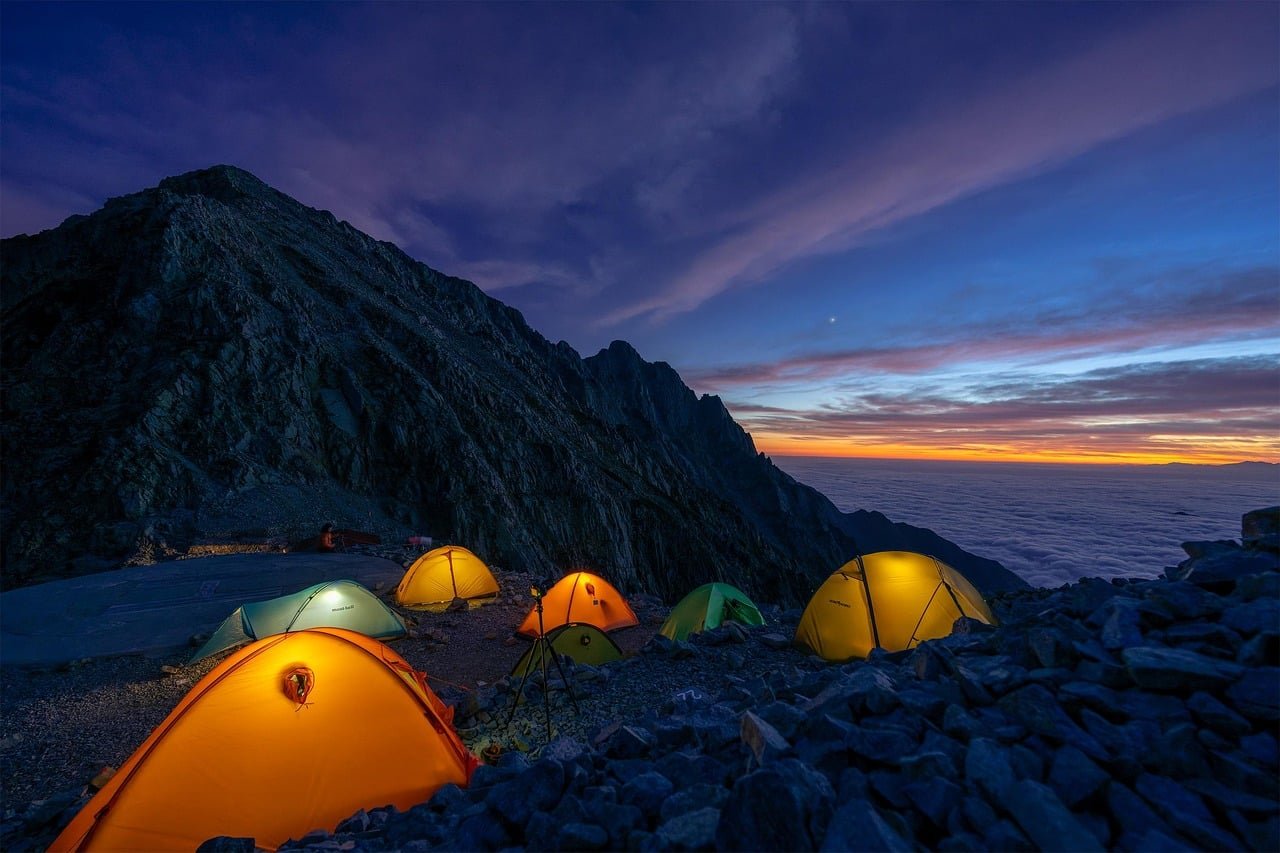
How to choose the best lightweight tent for backpacking
The checklist below draws on Live For The Outdoors’ guide to choosing a backpacking tent and the problems owners raise most often. For general advice see our guide on how to choose a camping tent for different trips, and if rain is your main worry read what waterproof rating a tent should have for rain and our picks for the best waterproof tents for heavy rain UK.
Types of lightweight tents for backpacking UK hikers choose
Most backpacking tents fall into a few broad designs, and each suits a different kind of walker. Knowing which family a tent belongs to tells you how it will pitch, how it handles wind and how much fuss it needs at the end of a long day.
Freestanding domes
All five tents in our list are freestanding: the poles hold the tent up before a single peg goes in. That makes them easy to pitch on hard, stony or thin ground, and you can lift the whole tent to shift it off a lump or out of a puddle. The trade-off is that crossing poles add some weight, although designs like the hubbed frame on the MSR Hubba Hubba LT 2 keep that penalty small.
Tunnel and semi-freestanding tents
Tunnel tents and semi-freestanding designs use fewer or shorter poles and lean on pegs and guy lines for their shape. They can be very light and roomy for their weight, and a low tunnel pitched end-on to the wind is a common sight on UK hills. They are less forgiving on rocky ground or when you cannot get pegs in, and a poor pitch shows quickly.
Trekking-pole shelters
Trekking-pole tents replace dedicated poles with the walking poles you already carry. They are popular with long-distance hikers chasing the lowest pack weight, but they take practice to pitch tautly and usually need good ground. For most people starting out, a freestanding double-wall lightweight tent is the easier and more forgiving choice in British weather.
One person or two? Sizing a backpacking tent
When sizing lightweight tents for backpacking UK trips, remember that berth numbers assume people lying shoulder to shoulder with very little kit inside. A two-person tent such as the Naturehike Cloud-Up 2 suits two people who are happy to be cosy, or one person who wants room to spread out. If you regularly walk as a pair with full packs, floor width and a second door matter more than saving a few hundred grams.
Solo walkers have a genuine choice. A one-person tent like the Naturehike Cloud-Up 1 is lighter and packs smaller, while a two-person tent gives space to bring a wet rucksack inside on a stormy night. If you mostly walk alone and want more options, our guide to the best small tents for solo camping UK compares tents built purely for one.
Couples can share the load. Splitting a two-person tent so one carries the inner and fly while the other carries the poles and pegs means the carried weight per person can end up lower than two separate solo tents. Agree before the trip who carries what.
Height matters too. Check the floor length against your height plus room for your sleeping bag to stay off the end walls, and look at peak height if you like to sit up to cook in the porch or change clothes. A tent that is technically long enough but tapers sharply at the foot can still leave a tall walker brushing damp fabric all night.
Fabrics, poles and weight explained
The fabric figures on lightweight tents for backpacking UK shops list are a quick guide to how each one balances weight and toughness. Denier, shown as a number followed by D, describes the thickness of the yarn. The 20D nylon fly on the Cloud-Up 2 saves weight, while the 68D polyester on the Kelty Grand Mesa 2P is heavier but more resistant to abrasion from rough ground and repeated pitching.
Nylon and polyester behave differently in the wet. Nylon is strong for its weight but tends to stretch and sag slightly when damp, so a nylon fly often needs re-tensioning after rain or as the evening cools. Polyester holds its shape better when wet and is often used on cheaper tents.
Aluminium poles are the norm on serious backpacking tents because they flex and recover in gusts rather than snapping, which is a common failure with fibreglass. Grades such as 7001 and 7075 aluminium and DAC poles appear on the tents in this guide. Whatever the material, a pole repair sleeve like the one Clostnature supplies is worth carrying on longer trips.
When comparing trail weight, remember that brands measure differently. A minimum trail weight usually covers the fly, inner and poles only, while a packed weight includes pegs, guy lines, stuff sacks and sometimes a footprint. The Clostnature 2 Person, for example, is 2.05 kg at minimum and 2.4 kg with everything. Compare like with like before deciding one tent is lighter.
Pitching, packing and caring for a lightweight tent
Practise pitching at home until you can do it quickly, because the first time you pitch on a trip is often in rain, wind or fading light. Learn which end to peg first, how the inner clips or hangs, and where every guy line goes. With an inner-first tent, keep the fly at the top of your pack so it covers the inner within a minute or two of getting the poles up.
Packing well saves weight and space. Many walkers carry the poles separately down the side of the rucksack and stuff the fly and inner loose into the pack to fill gaps, rather than rolling them into the supplied bag. Keep a wet fly in a separate dry bag or outside pocket so the rest of your kit, especially your sleeping bag, stays dry until you camp.
Light fabrics need a little care. Clear sharp stones and sticks before pitching, consider a footprint for thin groundsheets, and avoid dragging the tent over rough ground. Never pack a tent away wet for longer than you have to: dry it fully at home within a day or two, then store it loosely in a cool, dry place to protect the coatings and seam tape.
Pegs are worth a second look. The supplied pegs on budget tents are often thin, and a small set of stronger pegs suited to UK ground is a cheap upgrade that makes a light tent far more secure. Carry a couple of spares, as pegs are easily lost in long grass.
Backpacking in the UK: weather, wild camping and campsites
British hills throw everything at a lightweight tent in a single weekend: driving rain, low cloud, sudden gusts and still, damp nights that leave the inside of the fly dripping. That is why the lightweight tents for backpacking UK walkers rely on tend to be double-wall designs with good ventilation, a full-coverage fly and plenty of guy points, rather than the barest ultralight shelters.
Wild camping rules shape your choice too. In much of Scotland responsible wild camping is generally permitted under the Scottish Outdoor Access Code, while in most of England and Wales you need the landowner’s permission. A low, muted green tent that pitches quickly and leaves no trace is easier to use discreetly and fits the leave-no-trace approach expected in the hills.
Midges are a real consideration in parts of Scotland from late spring through summer. Fine mesh inners and doors that zip closed quickly make evenings far more bearable, and a porch big enough to cook in lets you stay inside the bug barrier. Cooking inside the inner tent itself is best avoided, both for safety and because it adds a lot of moisture.
Many people also use a backpacking tent on campsites and cycle tours between bigger trips, though if you mostly camp beside the car, a heavier tent with more space may be more comfortable. Pair your tent with a packable bag too; our guide to the best compact sleeping bags for backpacking UK covers that side of the load.
Final thoughts on lightweight tents for backpacking UK trips
There is no single perfect tent, only the right compromise for how you walk. If you backpack often as a pair, a roomy two-door tent like the MSR Hubba Hubba LT 2 makes every evening easier. If budget matters most, the Naturehike Cloud-Up 2 and Clostnature 2 Person bring useful features down to a low price, and the Kelty Grand Mesa 2P is a durable first tent.
Before you buy any of these lightweight tents for backpacking UK conditions will test, check how the weight is quoted, how much porch space you get and whether you will want stronger pegs. Then pitch it at home, take it on a short overnight close to the car, and learn its quirks before you rely on it on a long walk far from shelter.
What to look for in a lightweight backpacking tent
Around 1.2 to 2 kg suits most backpackers. Check whether the figure is minimum trail weight or packed weight, and remember a two-person tent can be split between two packs.
A pole length of 40 to 50 cm fits across or inside most rucksacks. Bulky tents can end up strapped outside, where they catch on branches and get wet.
A flysheet rated around 1,500 to 3,000mm is adequate for most conditions, with higher ratings for the groundsheet. Taped seams and a full-coverage fly matter as much as the number.
Vents in the fly, mesh panels and two doors all help. Condensation is the most common complaint on still, damp UK nights, especially in single-skin shelters.
Freestanding tents stand up without pegs and are easier on hard or rocky ground. Tunnel and trekking-pole tents can be lighter but depend more on a good pitch.
Look for aluminium poles, plenty of guy points and a low profile. Pitch the narrow end into the wind and use every guy line on exposed sites.
Check floor length if you are tall and floor width if you use wide pads. Two doors and two porches make life easier for two people with wet kit.
Green or muted colours blend in when wild camping. Supplied pegs are often flimsy, so budget for a stronger set.
How to reduce condensation in a backpacking tent
- Choose your pitch
Avoid hollows and the lowest ground near streams, where cold, damp air collects. A slight breeze helps, so a little height or a gap in the trees is better than a sheltered dip.
- Pitch the fly taut
Tension the fly and guy lines so there is a clear gap between the fly and the inner. A slack fly touches the inner and drips through.
- Open the vents
Keep the roof or end vents open overnight, even in rain. Leave a door partly unzipped on the sheltered side if the weather allows.
- Keep wet kit outside the inner
Store wet waterproofs and boots in the porch and avoid cooking inside the inner, which adds a lot of moisture.
- Wipe and dry
Carry a small cloth to wipe the inside of the fly in the morning, and dry the tent fully at home before storing it.
How we chose these tents
We have not pitched every tent in this list ourselves. Our picks are based on manufacturer specifications, published advice from UK outdoor retailers and publications, and recurring themes in owner feedback about lightweight backpacking tents.
-
Weight and packed size
We compared stated weights, noting whether they are minimum trail or packed figures, and packed dimensions.
-
Weather protection
We looked at stated waterproof ratings, seam taping, fly coverage and pole materials.
-
Liveability
We weighed up floor size, peak height, doors, porches and ventilation.
-
Value
We considered what is included, such as footprints and repair kits, and warranty length.
Pitch any new tent at home or in a park before your first trip, so you know the method and can check all the parts are there.
What is a good weight for a backpacking tent?
For most UK backpacking, aim for under 2 kg for a one- or two-person tent. Experienced hikers chasing low pack weights often go under 1.2 kg, but ultralight tents usually give up some space, durability or ease of pitching.
What waterproof rating do I need for UK backpacking?
A flysheet rated around 1,500 to 3,000mm is adequate for most three-season conditions, provided the seams are taped and the fly is pitched taut. Groundsheets should be rated higher because kneeling and lying on them forces water through.
Is a one-person or two-person tent better for solo backpacking?
A one-person tent is lighter and packs smaller. A two-person tent gives room for your pack and wet kit inside, which many solo hikers prefer in wet weather, at the cost of a few hundred grams.
Do I need a footprint for a backpacking tent?
Not always, but a footprint protects a thin groundsheet from sharp stones and wear, and helps keep the floor dry. Some tents, such as the Naturehike Cloud-Up models here, include one.
Can I wild camp in the UK with a backpacking tent?
Rules vary. Wild camping is generally permitted in much of Scotland under the Scottish Outdoor Access Code, and in some areas of Dartmoor. Elsewhere in England and Wales you usually need the landowner’s permission. Always check local rules and leave no trace.
How do I stop my tent blowing around in the wind?
Pitch with the narrow or lowest end facing the wind, use every guy line and peg point, and swap flimsy supplied pegs for stronger ones. Choosing a sheltered spot behind a wall or bank also helps.
Which lightweight backpacking tent should you buy?
- Best overall: MSR Hubba Hubba LT 2-Person Tent
- Best value: Naturehike Cloud-Up 2 Person Tent
- Best for beginners: Kelty Grand Mesa 2P Backpacking Tent
- Best budget: Clostnature 2 Person Backpacking Tent
- Best for solo: Naturehike Cloud-Up 1 Person Tent
For most people, the MSR Hubba Hubba LT 2 is the best lightweight tent for backpacking here: it weighs 1.36 kg on the trail, has two doors and two porches and fits thick pads with room to spare. Choose the Naturehike Cloud-Up 2 for the best value, the Kelty Grand Mesa 2P for an easy, durable first tent, the Clostnature 2 Person for two doors on a budget and the Naturehike Cloud-Up 1 for light solo trips.
CampEquipmentPlus relies on reader support. Purchases made via links on our website may earn us an affiliate commission at no extra cost to you, helping keep the site running.