
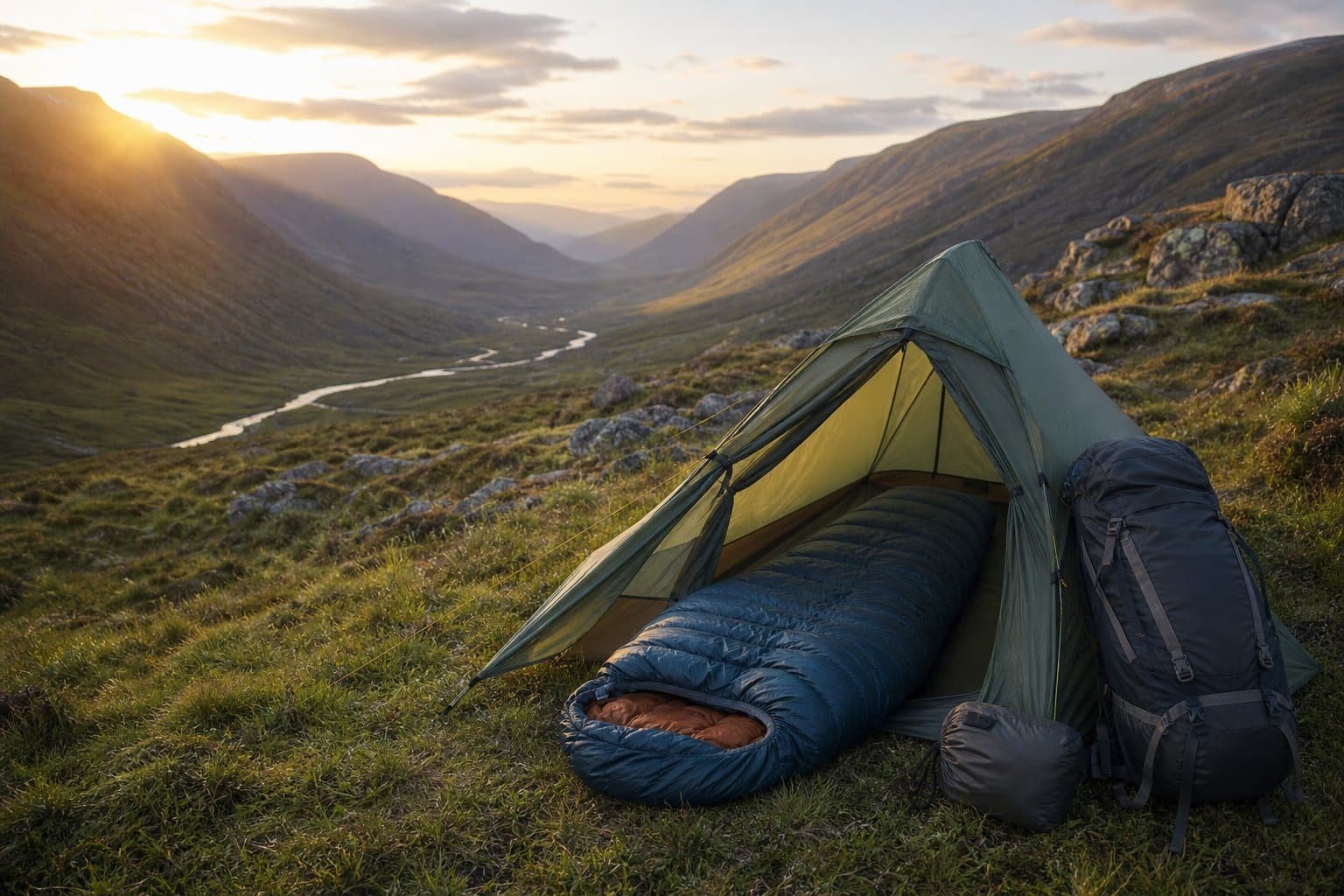
Best Compact Sleeping Bags for Backpacking UK
The best compact sleeping bags for backpacking in the UK pack small enough to leave room in your rucksack and weigh little enough to carry all day, yet still keep you warm on a damp, breezy night on the hill.
Backpackers raise the same complaints again and again: bags that take up half the rucksack, temperature ratings that feel optimistic once the wind picks up, down that goes flat in a condensation-soaked tent, cold feet, and mummy cuts that feel like a straitjacket for side sleepers. We have picked five compact sleeping bags that tackle those problems in different ways, from a premium 900-fill Therm-a-Rest and a featherweight Sea to Summit to two damp-proof synthetic bags and a budget down option from Naturehike.
- Check the comfort rating, not just the limit
- Down packs smallest; synthetic copes better with damp
- Your sleeping mat matters as much as the bag
- Down packs smallest The down bags here weigh 500 to 910 g and pack far smaller than the synthetic ones.
- Synthetic copes with damp Synthetic fill keeps insulating when wet, a real advantage in a British autumn.
- Read ratings carefully Choose a comfort rating a few degrees below the coldest night you expect; US ratings are often limit figures.
- Insulate from below Pair any bag with a mat of R 3 or more; the ground steals more heat than the air.
The compact sleeping bags for backpacking UK hikers rate most highly balance three things: how small they pack, how much they weigh and how warm they stay on a damp, breezy night. Fill type, temperature rating, shape and the mat underneath you then decide which backpacking sleeping bag is right. This guide explains the thinking behind our five picks, from 900-fill down to damp-proof synthetic, so you can choose with confidence.


Best overall Parsec 20 | Lightest Spark 30 | Best synthetic Anthracite | Warmest Softie 3 | Best budget Naturehike | |
|---|---|---|---|---|---|
|
|
|
|
|
| |
| Fill | 900-fill down | 850+ fill down | Synthetic | Synthetic | 650-fill down |
| Weight | 820 g | About 500 g (retailer) | 1.25 kg | 1.4 kg (retailer) | About 910 g |
| Packed size | 18 x 27 cm | About 8 L (retailer) | 25 x 20 cm | 25 x 23 cm | 35 x 18 cm |
| Comfort | Not quoted | 4C (retailer) | Not quoted | -5C | 4.7C |
| Rating / limit | 20F / -6C | -1C (retailer) | 20F / about -7C | -10C low | Not quoted |
| Fits up to | Not quoted | 185 cm (retailer) | 183 cm | Not quoted | Bag 220 cm long |
| Check price | Check price | Check price | Check price | Check price |
Best compact sleeping bags for backpacking: our detailed reviews
Each review covers weight, packed size, warmth, how the bag copes with damp and the complaints owners raise most. If you are still deciding what kind of bag you need, our guide to choosing a camping sleeping bag explains fill types, shapes and ratings, and our best lightweight tents for backpacking roundup will help you match the bag to a shelter.
900-fill hydrophobic down bag that weighs 820 g and packs to 18 x 27 cm
The Therm-a-Rest Parsec 20 is the compact sleeping bag we would choose for most UK backpacking trips from spring to autumn. It is filled with RDS-certified, PFAS-free 900-fill hydrophobic down, the highest fill power in this guide, so a small amount of insulation lofts up to give a lot of warmth. The Regular weighs 820 g (1 lb 13 oz) and packs into its compression sack at 18 x 27 cm, small enough to leave room in a 40 to 50 litre rucksack for food and a stove. Therm-a-Rest rates it at 20F (-6C); treat that as the lower-limit figure, so it is comfortable on typical frosty-edged three-season nights rather than in deep winter. Zoned baffles put the down on top where it does the most work, the YKK anti-snag zip is designed for one-handed use, and a Toe-asis foot-warmer pocket takes a chemical heat pad on cold nights, a nice touch given that cold feet are one of the most common complaints about light mummy bags. The hydrophobic treatment helps the down cope with tent condensation, but it is still down: keep it in a dry bag in damp British weather. The catches are price and a close mummy cut that restless sleepers may find snug.
- Only 820 g for a -6C-rated bag
- Packs to 18 x 27 cm
- 900-fill hydrophobic, PFAS-free down
- Zoned baffles and anti-snag YKK zip
- Foot-warmer pocket for cold feet
- Very expensive
- Close mummy fit
- Down still needs keeping dry
850+ fill Ultra-Dry down bag of about 500 g for summer and early autumn
The Sea to Summit Spark 30F is the lightest and smallest bag in this list, built for fast-and-light trips where every gram counts. It uses RDS-certified 850+ fill goose down with Sea to Summit’s non-PFC Ultra-Dry treatment, which the brand says helps the down hold its loft in moisture, inside an ultralight 10D shell with a water-resistant hood and footbox, the parts most likely to brush a damp tent wall. The Amazon listing does not quote a weight, but UK retailers list the Regular at about 493 to 498 g with a compressed volume of around 8 litres, and give a comfort rating of 4C with a -1C limit, fitting people up to about 185 cm. That makes it a bag for late spring to early autumn in the UK, or for colder nights when paired with warm clothing and a well-insulated mat. Hybrid box baffles on the torso keep the down in place, while sewn-through baffles on the legs save weight. The trade-off for all that lightness is fragility and warmth: 10D fabric needs care around sharp kit and zips, and anyone who sleeps cold will want more than a 4C comfort figure. Sea to Summit backs it with a lifetime guarantee against defects.
- About 500 g, the lightest here
- Tiny packed size (about 8 litres)
- 850+ fill down with Ultra-Dry treatment
- Water-resistant hood and footbox
- Lifetime guarantee against defects
- Comfort only 4C, so not for cold nights
- Delicate 10D fabric
- Weight not quoted on the Amazon listing
Recycled synthetic mummy bag that stays warm when damp and packs to 25 x 20 cm
Synthetic insulation is often the smarter choice for wet British trips, and the Big Agnes Anthracite 20 is one of the most compact synthetic bags we found. Its FireLine Pro Eco fill uses 100% recycled short-staple fibres that, unlike down, keep insulating when they get damp from condensation, a soggy pitch or a leaky tent, which is the scenario UK testers and owners worry about most. The Regular fits people up to 183 cm (6 ft), weighs 1.25 kg (2 lb 12 oz) and compresses to about 25 x 20 cm, heavier and bulkier than the down bags above but much cheaper and less fussy. Big Agnes rates it at 20F (about -7C); as with most US ratings, expect to be comfortable a few degrees above that. A contoured hood, an oversized draft collar and a no-draft zip baffle seal in heat, the two-way anti-snag zip lets you vent your feet on mild nights, and it can zip to a compatible Big Agnes women’s bag for a double. The recycled shell and lining have a PFAS-free water-repellent finish. Synthetic fill does lose loft faster than down over years of compression, so store it uncompressed at home.
- Stays warm when damp
- Compact for a synthetic at 25 x 20 cm
- Draft collar and zip baffle
- Recycled fill and PFAS-free finish
- Two-way anti-snag zip
- Heavier than down at 1.25 kg
- US-style rating, not EN/ISO
- Synthetic loses loft sooner than down
British-brand synthetic bag rated -5C comfort, with an Expanda Panel for extra room
The Snugpak Softie Elite 3 comes from British brand Snugpak and is the warmest bag here, with a comfort rating of -5C and a low rating of -10C on both Amazon and Decathlon UK’s listing. That makes it the pick for spring and autumn nights in the hills when frost is likely, or for anyone who sleeps cold. Its Softie synthetic fill keeps insulating when damp, a Reflectatherm metallised layer reflects heat back towards you, and a draft collar seals the shoulders. The Paratex shell is windproof and water-repellent, and the foot is reinforced. Snugpak’s Expanda Panel System is the standout feature: unzip it and the bag gains 13 to 25 cm (5 to 10 inches) of extra width, which answers the classic complaint that mummy bags feel like a straitjacket for side sleepers. Close it and it acts as a thick draft baffle. For that warmth it is heavier, at 1,400 g on Decathlon UK, and it packs to about 25 x 23 cm (Amazon) or 19 x 21 cm compressed (Decathlon), so it suits hikers with a bigger rucksack. Hanging tabs make it easy to air out after a damp night.
- Comfort -5C, the warmest here
- Synthetic fill copes with damp
- Expanda Panel adds 13 to 25 cm width
- Windproof, water-repellent Paratex shell
- Compression sack included
- Heaviest here at 1.4 kg
- Bulkier than down bags
- Maximum user height not quoted
Low-cost 650-fill down bag of about 910 g that packs to 35 x 18 cm
The Naturehike Ultralight is the cheapest way into a compact down sleeping bag. It uses RDS-certified 650-fill duck down in a 400T 20D ripstop nylon shell with YKK zips, and the listing quotes a weight of about 910 g and a packed size of 35 x 18 cm (13.8 x 7.1 inches) in the supplied compression sack, comparable to bags at twice the price. The shape is a hybrid: a mummy-style hood and shoulders for warmth, with a rectangular lower half so you can move your legs or stick your feet out on warm nights, a welcome change for anyone who finds a tight mummy claustrophobic. The Large size is generous at 220 x 85 cm (86.6 x 33.5 inches). The comfort rating is 4.7C, so in the UK it is a summer and early-autumn bag unless you add a liner and warm layers. Owners like the value and pack size, and the usual caveats apply to budget down: expect some feathers to work through the shell and give it time to loft after unpacking. Naturehike offers a one-year warranty.
- Low price for real down
- About 910 g and packs to 35 x 18 cm
- Roomy hybrid mummy-rectangular shape
- RDS-certified 650-fill down
- YKK zips
- Comfort 4.7C, so summer-focused
- Untreated down dislikes damp
- Only a one-year warranty
Down or synthetic: which compact sleeping bag suits UK backpacking?
Down bags such as the Therm-a-Rest Parsec, Sea to Summit Spark and Naturehike Ultralight give the most warmth for their weight and pack the smallest, which is why most backpackers prefer them. Their weakness is moisture: down clumps and loses loft when it gets wet, and in a British tent that often means condensation rather than rain. Hydrophobic treatments help, but you still need to keep the bag in a dry bag and air it whenever you can. Synthetic bags such as the Big Agnes Anthracite and Snugpak Softie Elite 3 are heavier and bulkier, but keep insulating when damp and cost less. As Trekitt’s guide to lightweight backpacking sleeping bags puts it, down is the usual choice only if you can keep it dry, and UK humidity and wind make nights feel colder than the rating suggests. For more on staying warm from below, see what R-value sleeping pad you need.
What makes compact sleeping bags for backpacking UK trips work
A bag earns the word compact through a handful of design choices, and knowing them helps you judge any model, not just the five in this guide. The same warmth can come in a bag the size of a large water bottle or one that fills the bottom of your rucksack, and the difference usually comes down to fill, fabric and cut.
Fill power and fill type
Down is the key to the smallest packed sizes. Higher fill power means each gram of down lofts further, so less is needed for the same warmth. The Therm-a-Rest Parsec uses 900-fill down and the Sea to Summit Spark 850+ fill, which is why they pack so small. The Naturehike uses 650-fill, still compact for the price but a little bulkier for its warmth.
Shell fabric and construction
Thin shell fabrics save weight and squash down further. The Spark’s 10D shell is part of why it is so light, but very fine fabrics need more care around zips, stoves and sharp kit. Baffle design matters too: box and zoned baffles keep down where it is needed, while sewn-through sections, used on the Spark’s legs, save weight where warmth matters less.
Shape and cut
A close mummy cut uses less fabric and fill than a roomy rectangular bag, so it packs smaller and has less air to warm. The catch is comfort for restless or side sleepers. The Naturehike’s hybrid shape and the Snugpak Softie Elite 3’s Expanda Panel are two ways round that, giving more room without abandoning a warm hood.
Understanding temperature ratings before you buy
Temperature ratings are the most misread figures on a sleeping bag label. EN and ISO tests usually give a comfort figure, the temperature at which a typical sleeper stays comfortable, and a limit figure, the point at which a sleeper curled up is just about warm enough. Many US ratings, such as 20F or 30F, sit closer to the limit than the comfort figure.
That difference matters in the UK, where humidity and wind make nights feel colder than the thermometer suggests. When you compare compact sleeping bags for backpacking UK conditions should push you towards the comfort figure, not the headline number. Our guide to sleeping bag comfort vs limit temperatures explains the ratings in more detail.
Your own metabolism counts too. If you tend to sleep cold, choose a bag rated a few degrees warmer than you think you need, or plan to wear a base layer, hat and socks inside it. Warm sleepers can often get away with a lighter bag. Eating a decent meal before bed also helps the body produce heat through the night.
Season decides a lot. The Spark 30F and Naturehike are summer and early-autumn bags in the UK, the Parsec and Anthracite suit three-season trips, and the Snugpak Softie Elite 3 handles frosty spring and autumn nights. If you want one bag for most of the year, a three-season bag paired with a liner on colder trips is a flexible approach.
Down vs synthetic for damp British trips
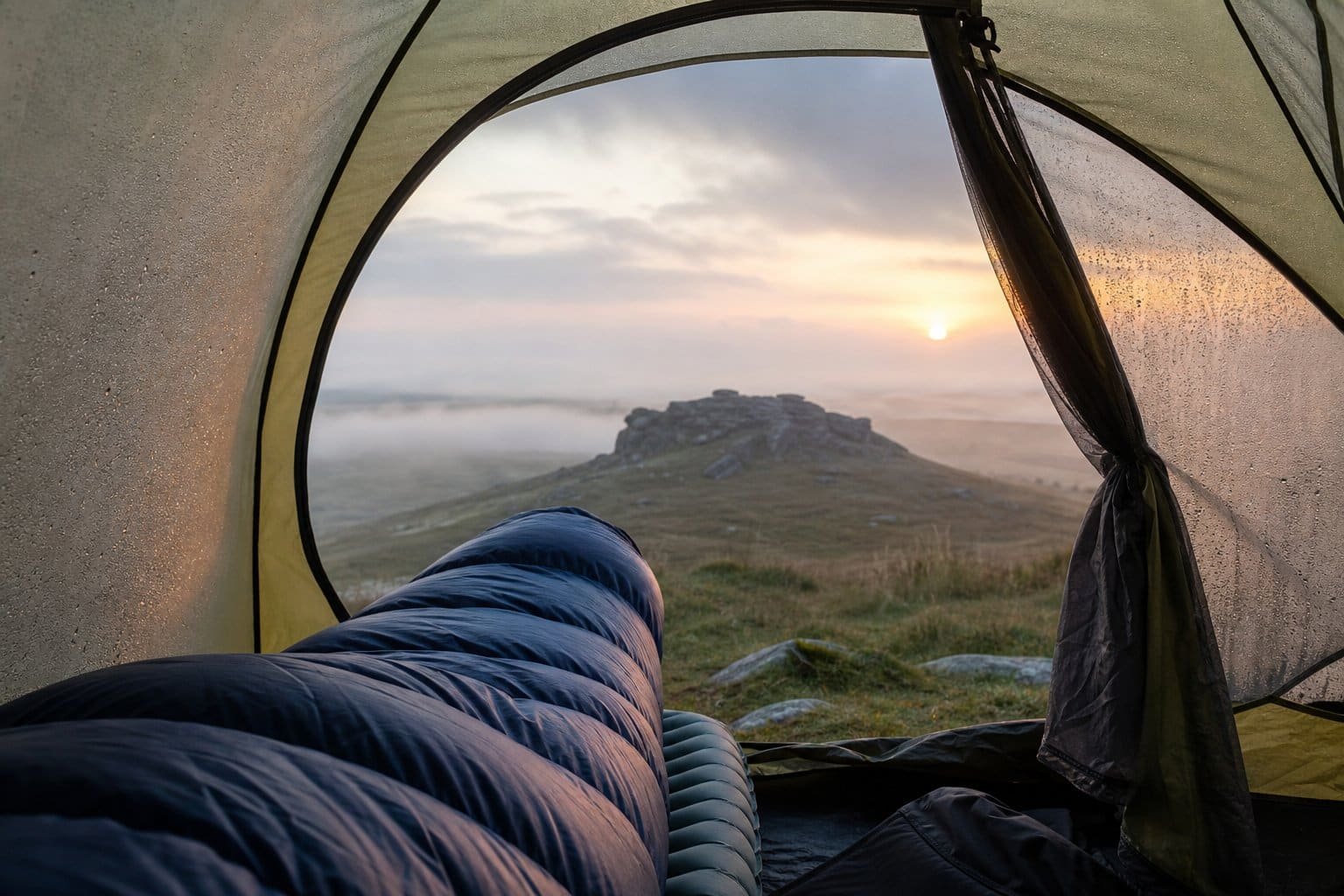
Damp is the deciding factor for many UK backpackers. Down loses much of its loft when it gets wet, and in a British tent that moisture often comes from condensation rather than rain. Hydrophobic treatments, used by Therm-a-Rest and Sea to Summit, help the down resist moisture, but they do not make it waterproof.
Synthetic fill keeps working when damp, which is why the Big Agnes Anthracite and Snugpak Softie Elite 3 suit wet-weather trips, kayak touring and long spells in the hills when kit never fully dries. The cost is weight and bulk: a synthetic bag of similar warmth usually takes up more room in the pack. Many campers own one of each and pick by forecast.
If you choose a down bag, build habits that protect it. Pack it in a dry bag inside your rucksack, keep it away from wet tent walls and air it whenever the sun appears. If you choose a synthetic bag, you can be a little less careful, but compression still wears the fibres over time, so the same storage habits extend its life.
Price is the other factor. High fill-power down is expensive, which is why the Parsec and Spark sit at the top of the range, while the Naturehike shows that 650-fill down can still be affordable. When you weigh up compact sleeping bags for backpacking UK budgets often come down to a cheaper synthetic bag that copes with damp or a pricier down bag that packs smaller.
Building a lightweight sleep system around your bag
A sleeping bag is only one part of staying warm. The insulation beneath you is compressed by your body weight, so it does very little against cold ground, and that is where your mat takes over. Pairing a compact bag with a well-insulated mat is often warmer than buying a heavier bag and using a thin pad.
Your shelter matters as well. A small, well-pitched tent with good ventilation keeps out wind and cuts condensation, both of which affect how warm your bag feels. If you camp alone, our guide to the best small tents for solo camping covers shelters that pair well with a light sleep system.
Clothing and accessories fill the gaps. A warm hat, dry socks and a base layer reserved for sleeping make a noticeable difference, and a silk or fleece liner adds warmth while keeping the bag cleaner. These extras weigh little and let a lighter bag stretch further into the shoulder seasons, which is often smarter than carrying more fill all year.
Look at weight across the whole pack, too. Saving a few hundred grams on a down bag means little if your tent, stove and food are heavy, so treat the sleep system as a set. Among the compact sleeping bags for backpacking UK walkers carry, the lighter models leave room in both the rucksack and the weight budget for a warmer mat, which usually pays off more on a cold night.
Packing, airing and storing a compact bag
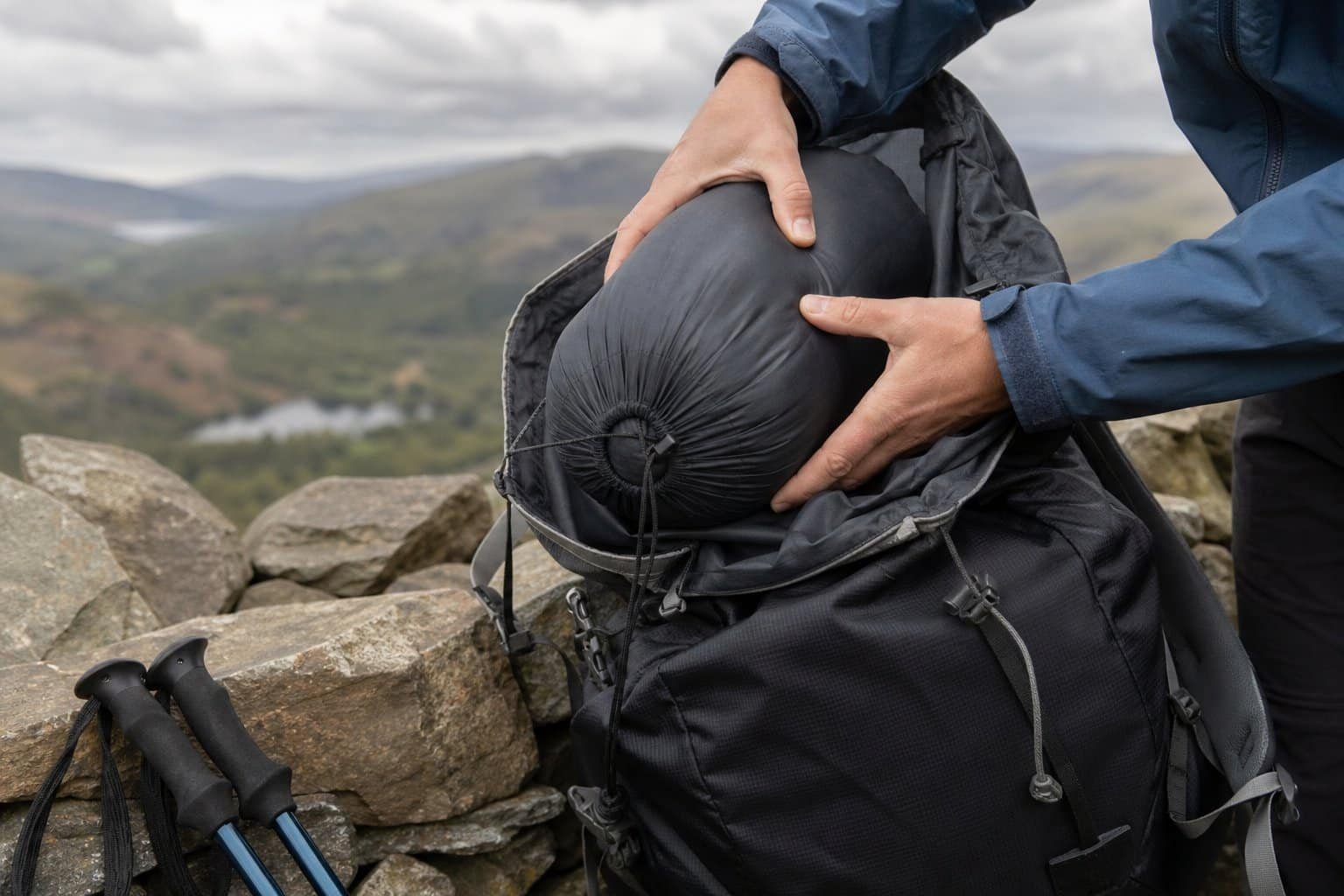
How you pack the bag affects both your rucksack and its warmth. Stuff a sleeping bag rather than rolling it, because random folds spread wear across the fill. Put it at the bottom of the pack inside a dry bag, so it fills awkward spaces and stays protected from a leaking water bottle or a wet tent.
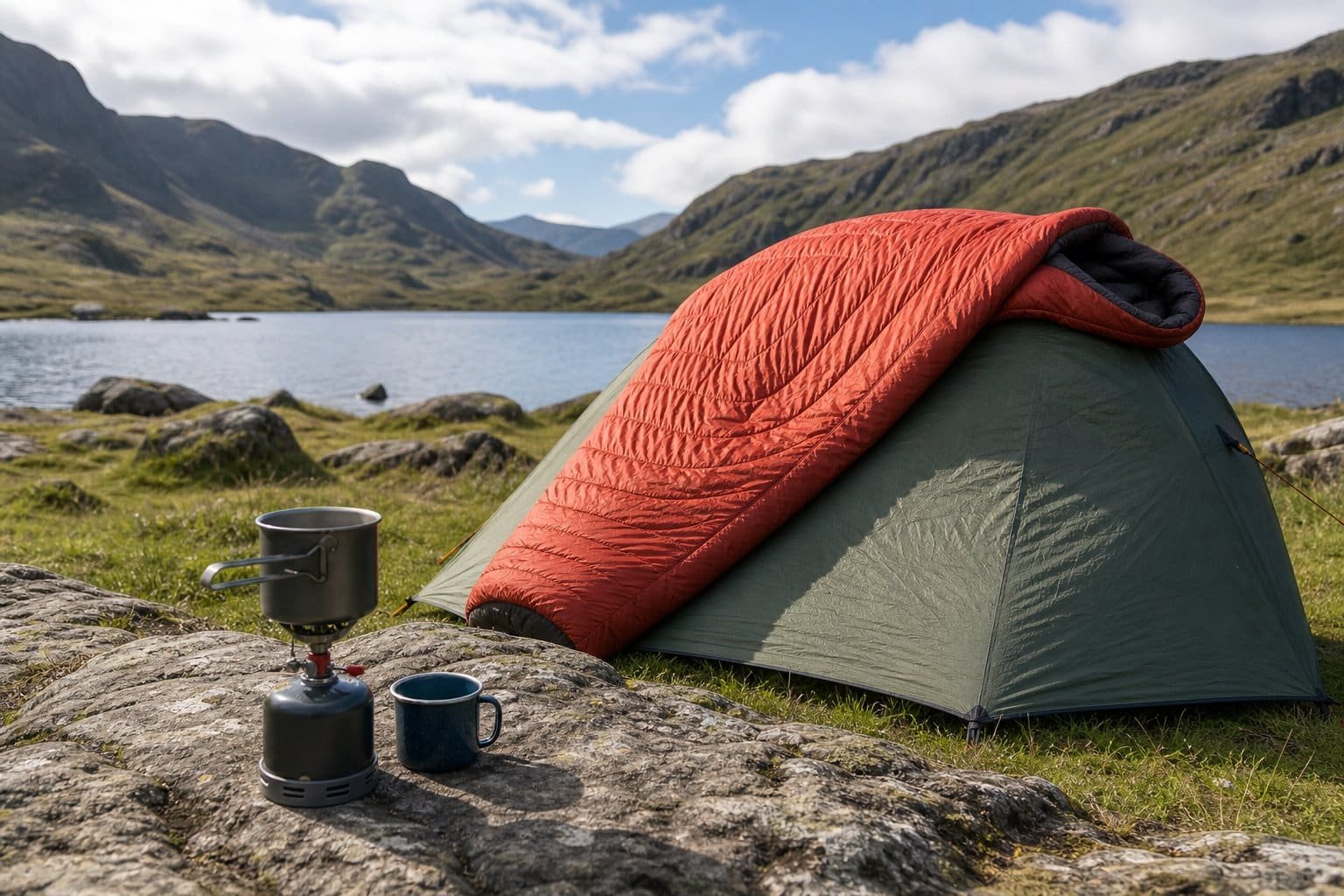
At camp, unpack the bag as soon as you can so the fill has time to loft. In the morning, turn it inside out and air it while you have breakfast, ideally in a breeze or sun, to drive off moisture from the night. On multi-day trips this simple routine helps both down and synthetic bags keep their warmth.
At home, never store a bag in its compression sack. Hang it in a wardrobe or keep it in a large, breathable storage sack. Wash it only when needed, using a cleaner designed for down or synthetic fill, and dry it thoroughly. Down needs a long, low tumble dry with dryer balls to break up clumps and restore its loft.
Final thoughts on choosing a backpacking sleeping bag
For most UK backpackers the Therm-a-Rest Parsec 20 strikes the best balance of weight, pack size and warmth. The Sea to Summit Spark is the lightest option for summer, the Big Agnes Anthracite is a compact synthetic for wet trips, the Snugpak Softie Elite 3 is the warmest and roomiest, and the Naturehike Ultralight is the budget way into down.
Whichever of these compact sleeping bags for backpacking UK hikers choose, read the comfort rating, plan for damp and pair the bag with a warm mat. Get those three right and a small, light backpacking sleeping bag will keep you comfortable from the first spring trip to the last autumn night.
What to look for in a compact sleeping bag for backpacking
Choose a comfort rating a few degrees below the coldest night you expect. EN/ISO ratings give comfort and limit figures; many US ratings such as 20F are closer to the limit.
Under about 1 kg counts as light for a three-season bag. The down bags here weigh 500 to 910 g; the synthetic ones 1.25 to 1.4 kg.
Check the compressed size against your rucksack. A bag that packs to 18 x 27 cm leaves far more room for food and a stove than one that fills the bottom of the pack.
Down is lighter and smaller; synthetic keeps working when damp and costs less. Hydrophobic down sits in between.
Close mummy cuts are warmest for their weight but can feel tight. Side sleepers should look at roomier cuts or the Snugpak Expanda Panel.
Anti-snag zips, a shaped hood and a draft collar make a bigger difference to warmth than the headline rating suggests.
How to get the most from a compact sleeping bag
- Pack it in a dry bag
Line the stuff sack or rucksack with a dry bag so rain and wet kit cannot reach the insulation.
- Let it loft before bed
Unpack the bag as soon as the tent is up so the fill has time to expand and trap warm air.
- Use a warm mat
Pair the bag with a mat of R 3 or more in spring and autumn; compressed fill beneath you does little against cold ground.
- Vent the tent
Open the vents to cut condensation, and keep the bag off damp tent walls, especially at the hood and foot.
- Store it loose at home
Never store a bag in its compression sack. Hang it or use a large storage sack so the fill keeps its loft for years.
How we chose these compact sleeping bags
We have not slept in every bag in this list ourselves. Our picks are based on manufacturer specifications, UK retailer data, UK and US reviews and buying guides, and recurring themes in owner feedback. Prices change, so check the current price before you buy.
-
Weight and packed size
We compared stated weights and compressed sizes, since bulk in the rucksack was the most common reason people replace a bag.
-
Warmth for UK conditions
We compared comfort and limit ratings, noting US-style ratings, and favoured bags suited to damp, windy British nights.
-
Damp performance and features
We weighed fill type, water-resistant treatments, hoods, collars and zips against price and warranty.
Not every Amazon listing quotes weight, packed size or EN/ISO ratings. Where a figure comes from a UK retailer we say so, and where it is missing we say “Not quoted” rather than guess.
What is the best compact sleeping bag for backpacking in the UK?
For most UK backpackers the Therm-a-Rest Parsec 20 is the best all-rounder: 820 g, packs to 18 x 27 cm and is warm enough for three-season trips. On a budget, the Naturehike Ultralight gives compact down warmth for summer.
Is down or synthetic better for UK wild camping?
Down is lighter and packs smaller; synthetic keeps you warm when damp. If you camp a lot in wet weather or cannot keep your kit dry, a synthetic bag such as the Big Agnes Anthracite or Snugpak Softie Elite 3 is the safer choice.
What temperature rating do I need for backpacking in the UK?
For summer, a comfort rating of around 5C is usually enough. For spring and autumn in the hills, look for a comfort rating of 0C or below, and remember wind and humidity make nights feel colder.
How small should a backpacking sleeping bag pack?
A good three-season down bag packs to roughly the size of a large water bottle or a bit more, such as the Parsec’s 18 x 27 cm. Synthetic bags of similar warmth are usually about twice the volume.
Why am I cold in a sleeping bag rated for the temperature?
Usually the mat: compressed insulation underneath you does little, so a thin mat lets the ground steal heat. Damp fill, an empty stomach and a limit rating mistaken for a comfort rating are the other common causes.
Which compact sleeping bag for backpacking should you buy?
- Best overall: Therm-a-Rest Parsec 20F/-6C Down Sleeping Bag (Regular)
- Lightest: Sea to Summit Spark Ultralight Down Sleeping Bag, 30F/-1C (Regular)
- Best synthetic: Big Agnes Anthracite 20 Synthetic Sleeping Bag (Regular)
- Warmest: Snugpak Softie Elite 3 Synthetic Sleeping Bag
- Best budget: Naturehike Ultralight 650FP Down Sleeping Bag (Large)
For most UK backpackers, the Therm-a-Rest Parsec 20 is the best compact sleeping bag: 820 g, 18 x 27 cm packed and warm enough for three seasons. Choose the Sea to Summit Spark 30F if weight matters most and you camp in warmer months, the Big Agnes Anthracite 20 for a compact synthetic that shrugs off damp, the Snugpak Softie Elite 3 for cold nights and extra room, and the Naturehike Ultralight for down on a budget. For warm-weather trips, see our lightweight summer sleeping bags, and for frosty nights our cold-weather sleeping bags.
CampEquipmentPlus relies on reader support. Purchases made via links on our website may earn us an affiliate commission at no extra cost to you, helping keep the site running.