

Best Lightweight Sleeping Bags for Summer UK
The best lightweight sleeping bags for summer in the UK keep you comfortable on mild British nights without the weight, bulk and sweaty overheating of a three-season bag.
Summer camping in Britain is rarely tropical. Days can be warm, but clear nights still drop into single figures, dew soaks everything by morning and a tent can turn clammy fast. That is why the most common complaints about summer bags are so predictable: a bag rated for a heatwave that leaves you shivering at 3am, down that goes limp in a damp tent, a cheap bag that packs as big as a pillow, and a zip that will not let you vent when it is muggy. The right summer bag is light and small enough to carry, has a realistic rating for British nights of around 5 to 10°C, and lets you open it up when it is warm. We have picked five that cover the options, from an easy-care synthetic all-rounder to a 363 g down bag for ultralight trips.
- Aim for a comfort rating around 5 to 10°C for UK summer nights
- Synthetic fill copes best with damp and condensation
- A two-way or full-length zip lets you vent on warm nights
- Summer nights are cooler than you think Even in July, clear UK nights can fall below 10°C. A 7°C comfort bag, or a lighter bag plus a liner, is a safer choice than a 15°C bag.
- Synthetic beats down in damp tents Synthetic fill keeps insulating when condensation gets in. Down is lighter and packs smaller but needs keeping dry.
- Venting matters as much as warmth Two-way zips, full-length zips and bags that open into quilts stop you overheating on muggy nights.
- Check which rating you are reading Many bags sold online quote US or limit ratings. Treat those as the coldest you will tolerate, not the temperature you will sleep well at.
Picking between lightweight sleeping bags for summer UK campers can buy comes down to matching warmth, weight and fill to nights that are cooler and damper than the daytime forecast suggests. Go too thin and you wake cold before dawn; go too warm and you carry a heavy, sweaty bag all July. This guide explains the ratings, fills, shapes and care habits that matter, so you can choose confidently from the five bags above.


Best overall Cosmic 40 | Best ultralight Spark 45 | Best with insect net Travelpak 1 | Best budget down Naturehike | Most versatile Jungle Bag | |
|---|---|---|---|---|---|
|
|
|
|
|
| |
| Rating | 40°F / 4°C (US) | 45°F / 7°C (ISO lower) | 7°C comfort / 2°C low | 51°F / 11°C | 7°C comfort (retailer) |
| Weight | 1.02 kg | 363 g (maker) | 850 g | 495 g (L) | 900 g |
| Insulation | Synthetic | 850+ down | Synthetic | 750 down | Synthetic |
| Packed size | 20 x 43 cm | About 2 L | Not quoted | 15 x 28 cm | 15 x 18 cm |
| Fits / length | Up to 183 cm | Up to 185 cm | 221 cm long | Not quoted | Not quoted |
| Warranty | Ltd lifetime | Lifetime | Not quoted | 1 year | Not quoted |
| Check price | Check price | Check price | Check price | Check price |
Best lightweight sleeping bags for summer: our detailed reviews
Each review covers weight, packed size, realistic warmth for British summer nights and the trade-offs owners mention most. For the basics of temperature ratings and fill types, see our guide on how to choose a camping sleeping bag, and if you need a warmer bag for spring and autumn too, our roundup of the best sleeping bags for UK camping covers three-season options.
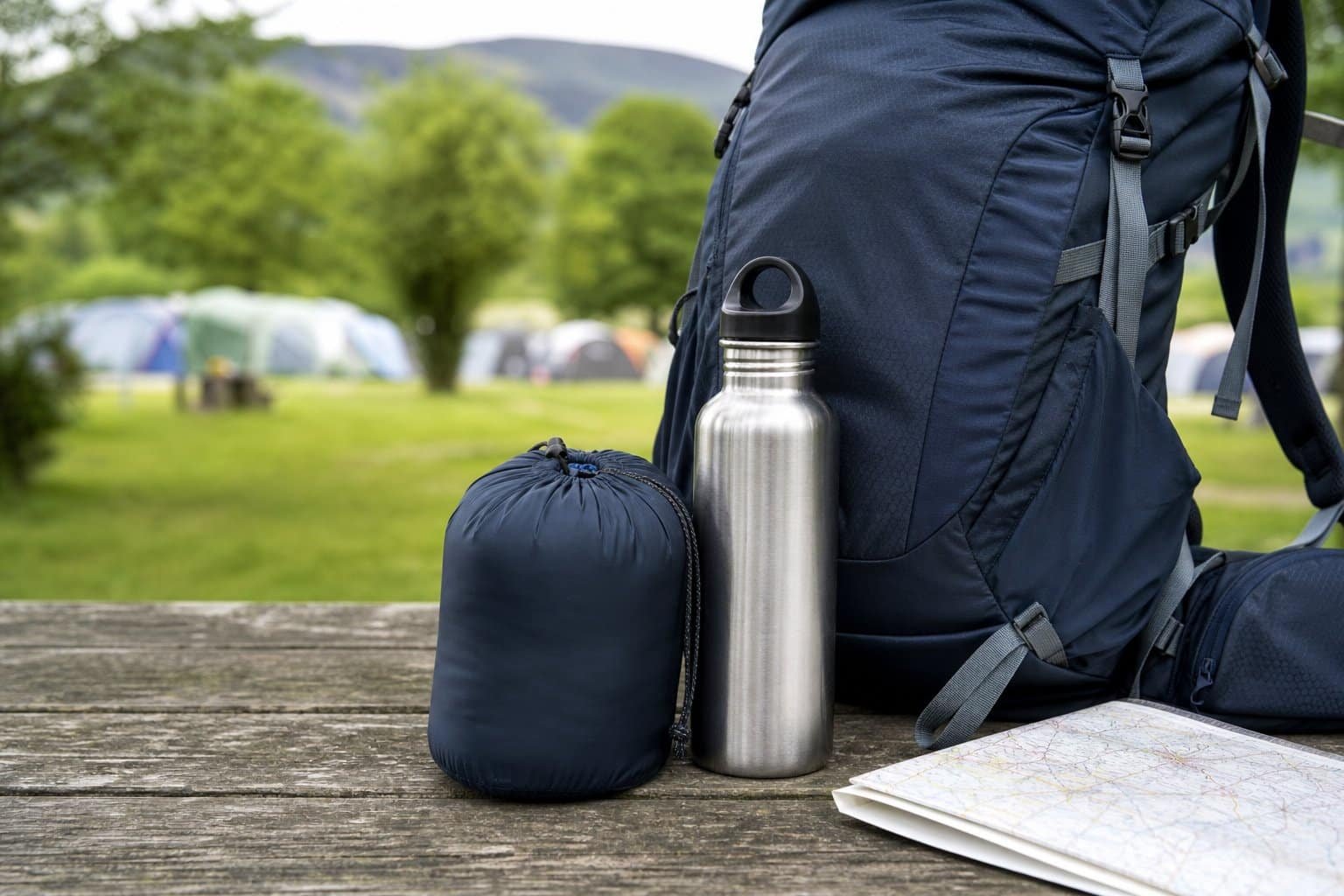
Recycled synthetic mummy bag that shrugs off damp and weighs about 1 kg
The Kelty Cosmic Synthetic 40°F Sleeping Bag is our top pick because it suits the way most people actually camp in a British summer: nights that are mild rather than hot, dew on the tent by morning and the odd soggy pitch. Its recycled CirroLoft ECO synthetic insulation keeps working if condensation dampens it and dries far faster than down, which matters more in the UK than shaving off a few grams. Kelty quotes 2 lb 4 oz (about 1.02 kg) for the regular size, with 21.1 oz of insulation, a 76 in (193 cm) length that fits sleepers up to 6 ft (183 cm), and a packed size of 8 x 17 in (20 x 43 cm) in the supplied compression sack. The updated mummy cut is a little roomier than before, with a natural-fit footbox, and dual locking zip sliders let you open the bottom to vent your feet on a warm night, which is the single most useful feature in a summer bag. A full-length draft tube and contoured hood keep the chill out when the temperature drops before dawn. Kelty rates it to 40°F, about 4°C. That is a US figure rather than an EN/ISO comfort rating, so treat it as a lower limit and think June to August campsites and low-level wild camps. It is not the smallest pack here: the down bags squash to half the size. Kelty backs it with a limited lifetime warranty.
- Synthetic fill keeps insulating when damp
- About 1.02 kg with a compression sack
- Two-way zip for venting your feet
- Full draft tube and shaped hood
- Very good value for the weight
- Packs larger than the down bags
- US rating, not an EN/ISO comfort figure
- Fits sleepers only up to 183 cm in regular
850+ fill-power down bag that weighs well under half a kilo
If weight and pack size are what you care about most, the Sea to Summit Spark 45°F Ultralight Down Sleeping Bag is in a different league. It uses RDS-certified 850+ fill-power goose down with Sea to Summit’s non-PFC Ultra-Dry treatment, inside a 10D shell with a PFC-free water-repellent finish on the hood and footbox, which is where tent condensation usually gets to a down bag. The Amazon listing does not quote a weight, but Sea to Summit’s own specification gives 363 g for the regular size, with 150 g of down and a compressed volume of about 2 litres, roughly the size of a large water bottle. It fits sleepers up to 185 cm. The rating is 45°F, or 7°C, which Sea to Summit lists as the ISO lower limit; its comfort figure for women is 11°C. In plain terms, this is a true summer bag for warm nights, and most UK campers will want to wear a base layer or add a liner if the temperature drops. The contoured mummy shape is cut for a natural sleeping position, the YKK zip runs smoothly, and the baffles are sewn through to save weight, which saves grams but can leave slightly cooler lines along the stitching. Sea to Summit backs it for the lifetime of the product. It is easily the most expensive bag in this list.
- Lightest and smallest bag in this list
- 850+ fill-power RDS down
- Water-resistant hood and footbox
- Lifetime guarantee
- ISO-tested rating
- Most expensive bag here
- 7°C is a lower limit, so summer only
- Down still needs care in a wet tent
British-brand synthetic bag with a built-in roll-away mosquito net
The Snugpak Travelpak 1 Sleeping Bag with Mosquito Net comes from a British brand and has the most useful extra in this list for UK summers: a built-in roll-away mosquito net that zips over your face. If you have ever been eaten alive by midges at a Highland pitch, you will understand why. Snugpak quotes a comfort rating of 45°F (7°C) and a low rating of 36°F (2°C). Unusually for a bag on Amazon US, that gives you a comfort figure rather than just a limit, which makes it easier to judge for a British summer night. It weighs 1.88 lb (about 850 g) and measures 87 x 31 in (221 x 79 cm), so it is long and roomy for a summer bag, with a full-length zip so you can open it out on warm nights. The fill is Snugpak’s Travel Soft synthetic insulation, which compresses well and copes with damp, and the shell is a water-repellent Hex ripstop. There is a zipped internal chest pocket for your phone and a compression stuff sack is included. The trade-offs: there is no shaped hood like a mummy bag, so it is less snug when the temperature dips, and the left-hand zip shown here needs a right-hand partner if you want to zip two together.
- Built-in roll-away mosquito net
- Real 7°C comfort rating quoted
- Long 221 cm size
- Synthetic fill copes with damp
- Internal chest pocket
- No shaped mummy hood
- Less warm than the Kelty on cool nights
- Zip side matters if pairing two bags
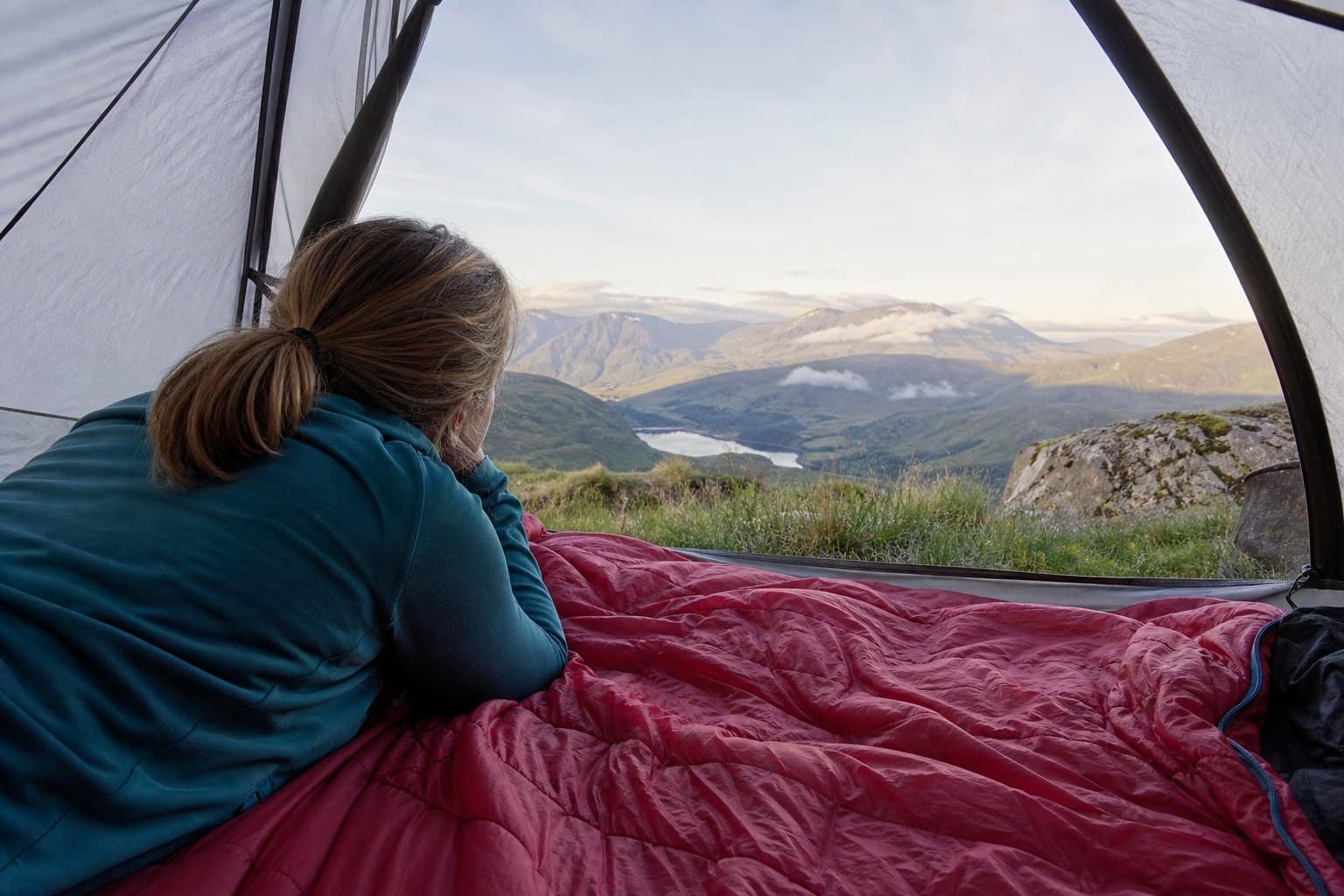
Sub-500 g goose-down bag that doubles as a blanket or liner
The Naturehike CW-EXT 750FP Ultralight Down Sleeping Bag is the cheapest route into a proper down summer bag. It is filled with RDS-certified 90% goose down at 750 fill power, inside a 10D nylon shell with a PFAS-free water-repellent treatment. Naturehike quotes just 495 g for the large size, including the stuff sack, and 425 g for the medium, with a packed size of about 15 x 28 cm for the large. The catch is warmth: Naturehike rates it for 51°F, about 11°C, so on its own this is a bag for genuinely warm nights, such as a July heatwave, a hut or a hostel. Where it shines is versatility. It unzips into a down blanket, works as a liner inside a warmer bag to add a few degrees in spring and autumn, and has openings for your hands and feet so you can wear it around camp. That makes it a smart buy if you already own a three-season bag and want a light summer layer. Down loses loft if it gets wet, so keep it away from the tent walls and air it each morning. The warranty is one year, shorter than the others here.
- Very light at 495 g with sack (L)
- 750 fill-power RDS goose down
- Unzips into a blanket or works as a liner
- Hand and foot openings to wear around camp
- Low price for down
- 11°C rating suits warm nights only
- Down needs keeping dry
- One-year warranty
Packable synthetic bag that zips together or opens into a quilt
The Snugpak Jungle Bag Lightweight Sleeping Bag was designed for hot climates, and it is a long-standing favourite with British campers and bushcrafters who want one simple bag for warm weather. The listing quotes 32 oz (900 g) and a compressed size of just 6 x 7 in (15 x 18 cm) in the stuff sack, making it the most compact synthetic bag here. UK retailer Heinnie lists a comfort rating of 7°C and an extreme rating of 2°C, which matches the Travelpak, so it is a summer bag for mild nights. Its party trick is flexibility: left and right-zip versions can be zipped together into a double, or you can open it fully and use it as a quilt on a muggy night, which is exactly what many owners do in a British heatwave. The lining is breathable and soft against the skin, and the synthetic fill keeps working if your tent is damp. It is a rectangular bag rather than a mummy, so it is not as warm as the Kelty when the temperature drops, and it is a touch heavier than the Travelpak. Check which zip side you are buying if you want to pair two bags.
- Packs to just 15 x 18 cm
- Zips together with a partner’s bag
- Opens out into a quilt
- Breathable lining
- Synthetic fill copes with damp
- Rectangular cut is less warm
- Temperature rating not on the Amazon listing
- Heavier than the Travelpak
Do you need a lightweight sleeping bag for summer in the UK?
If you camp from June to August, a dedicated summer bag is lighter, smaller and far less sweaty than a three-season bag. The trap is buying too thin. British summer nights are often mild rather than warm, and a one-season bag is, as The Star’s summer sleeping bag guide puts it, only really suitable for the warmest nights. For most campers a bag with a comfort rating around 5 to 10°C is the sweet spot, and a liner or a warm base layer covers the odd chilly night. If you are carrying everything on your back, pair a light bag with a light shelter from our guide to the best lightweight tents for backpacking, and remember that the mat matters too: see what sleeping pad you need for camping.
Choosing lightweight sleeping bags for summer UK nights
A British summer is changeable rather than hot. A warm afternoon on the coast can still give way to a clear, still night where the temperature slides into single figures, and higher ground is cooler again. That is why the number on the label matters more than the word summer on the packaging. Before comparing weights or prices, work out which kind of rating each bag quotes, then decide how much margin you want for the coldest night of your trip.
Comfort, limit and US ratings
Under the EN/ISO system, the comfort figure is the temperature at which a typical sleeper stays comfortable lying relaxed, while the lower limit is the point where a typical sleeper is curled up but not shivering. Many US brands quote a single number that sits closer to a limit. In this roundup the Snugpak Travelpak 1 gives a true comfort figure, the Sea to Summit Spark quotes an ISO lower limit and the Kelty Cosmic uses a US rating. Our guide to sleeping bag comfort vs limit temperature explains the difference in more detail.
Building in a margin
A sensible rule is to choose a bag whose comfort figure sits a few degrees below the coldest night you expect, not right on it. If you know you sleep cold, widen that gap further. If you are on the borderline between two bags, the lighter one can still work when you add a base layer, a hat and dry socks. That flexible approach is often smarter than buying a heavier bag that will be too warm on most summer nights.
Down vs synthetic: which summer bag suits British weather?
Three of the five bags here, the Kelty Cosmic, the Snugpak Travelpak 1 and the Snugpak Jungle Bag, use synthetic fill. Synthetic insulation keeps working when it picks up moisture from condensation or a damp pitch, it dries faster on a guyline in the morning, and it is generally cheaper and easier to wash at home. The trade-off is bulk: synthetic bags rarely pack as small as down, so they take up more room in a rucksack or car boot.
The Sea to Summit Spark and the Naturehike CW-EXT use goose down, which gives far more warmth for its weight and compresses much smaller. That is why down dominates among lightweight sleeping bags for summer UK backpackers carry over hills and long trails. Down does lose loft when it gets wet, and water-repellent treatments only slow that down rather than stop it. If you choose down, plan to keep it away from damp tent walls and give it time to air.
As a simple guide to lightweight sleeping bags for summer UK trips, campsite, festival and family campers who pitch on wet grass and rarely walk far are usually happier with synthetic. Walkers, cyclists and anyone counting grams will notice the weight and pack-size savings of down. If you want both, a light down bag used as a liner inside a synthetic one is a flexible option for shoulder-season trips.
Mummy, rectangular or quilt: picking the right shape
A mummy shape, like the Kelty Cosmic and Sea to Summit Spark, tapers towards the feet and has a hood. There is less air inside to heat, so a mummy bag is warmer for its weight and works well for a lightweight sleeping bag on a walking trip. The downside is less room to move. Restless sleepers and people who like to bend their knees can find a close mummy cut confining on a warm, muggy night.
Rectangular bags such as the Snugpak Travelpak 1 and Jungle Bag give you more space and usually a full-length zip, so you can open them wide to vent or lie on top of them. Rectangular designs are also the easiest to pair: buy left-hand and right-hand zip versions and you can join two into a double. The cost is a little extra weight and a less snug fit when the temperature drops before dawn.
Quilt-style use is the third option. The Naturehike unzips into a blanket, and many campers simply open a rectangular summer bag fully and sleep under it like a duvet on a hot night. This is comfortable and cool, but you lose the draught protection of a closed bag, so keep a warmer layer within reach in case the weather changes overnight.
Matching a summer sleeping bag to the rest of your kit
Your sleeping bag is only one part of a sleep system. The fill underneath you is squashed flat by your body weight, so it insulates very little, and the ground does most of the cooling. A summer sleeping bag on an uninsulated air bed can feel surprisingly chilly, while the same bag on a foam or insulated mat feels warm. If a bag is right on the edge of its rating, upgrading the mat is often cheaper than buying a warmer bag.
Think about the tent too. Small backpacking tents gather condensation quickly on still nights, which matters more for a down bag than a synthetic one. Good ventilation, an open door when the weather allows and a bag that does not touch the inner walls all help. Larger family tents with separate bedrooms stay drier, which makes them a forgiving place for a lighter, less weather-resistant bag.
Pack size matters most if you are carrying everything. Among lightweight sleeping bags for summer UK walkers carry, down designs like the Spark compress to roughly the size of a water bottle, while synthetic bags take up a noticeable chunk of a rucksack. If you want to explore that side of the market further, our roundup of the best compact sleeping bags for backpacking focuses on bags that save space for multi-day walks.
Care tips for lightweight sleeping bags for summer UK trips
Clean bags stay warmer for longer, because body oils and dirt slowly flatten the fill. A liner does most of the work, but every bag needs a proper wash eventually. Always follow the maker’s label. As a general rule, use a front-loading machine on a gentle cycle with a specialist wash, as ordinary detergent can strip down of its natural oils and leave residue in synthetic fibres.
Drying is where many bags are ruined. Down needs a long, low-heat tumble with a couple of clean tennis or dryer balls to break up clumps, and it can take several cycles before it is fully lofted again. Synthetic bags dry faster but still dislike high heat. Never put a damp bag back in its stuff sack, and check that it is completely dry before storing it at home.
Zips deserve a little attention too. Ease the slider around the corners rather than forcing it, and hold the draught tube or fabric away from the teeth to stop snags. On bags with a two-way zip, practise opening the lower slider at home so you can vent your feet in the dark without fumbling. A small amount of zip lubricant before the season helps keep things running smoothly.
If you camp in the Scottish Highlands or on the west coast in summer, midges are part of the plan. A built-in net like the one on the Snugpak Travelpak 1 is useful as a backup, but keep tent doors zipped at dawn and dusk, when midges are most active, and pitch where there is a breeze if you can.
Final thoughts
The best lightweight sleeping bags for summer UK campers can buy are the ones that suit the nights you actually camp in, not the warmest day of the year. Read the rating type, leave yourself a margin, and choose synthetic for damp campsites or down when weight and pack size come first. Add a decent mat, keep the bag dry and air it often, and any of the five summer bags above should give you many seasons of comfortable sleep.
What to look for in a lightweight summer sleeping bag
Look for a comfort rating around 5 to 10°C for UK summer nights. US and limit ratings are the coldest you will tolerate, not the temperature you will sleep well at.
Synthetic fill copes with damp and dries fast. Down is lighter and packs smaller, but loses warmth if it gets wet.
Under about 1 kg is light for a summer bag. Ultralight down bags can be under 500 g, which matters if you are walking in.
A compression sack helps. Down bags pack to the size of a water bottle; synthetic bags are bigger.
Two-way zips, full-length zips and bags that open into quilts stop you overheating on muggy nights.
A mummy cut is warmer and lighter; a rectangular bag is roomier. Check the fit height if you are tall.
An insect net, an internal pocket or the option to zip two bags together can be worth having.
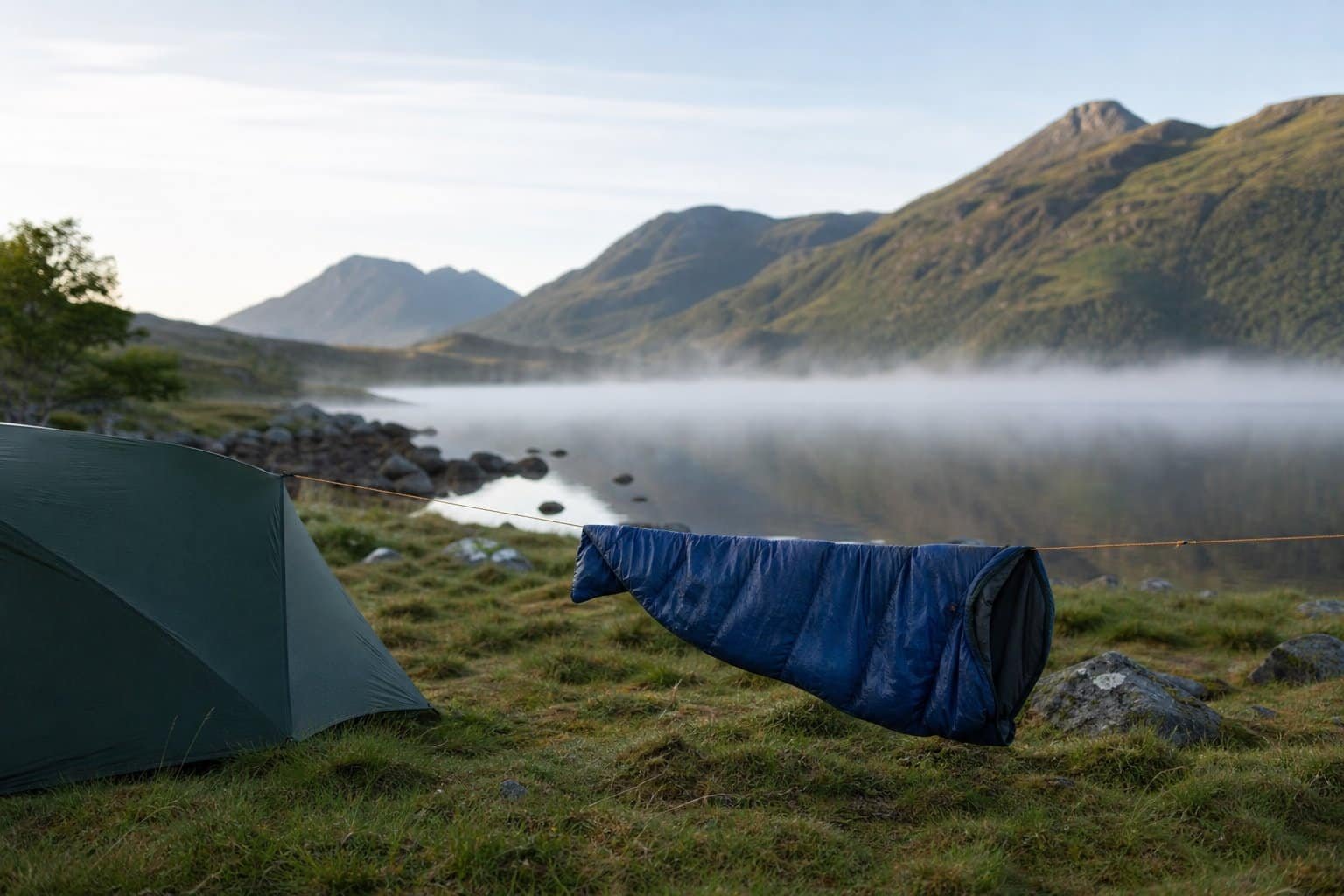
How to stay comfortable in a summer sleeping bag
- Use a decent mat
The ground steals heat even in summer. A mat with some insulation keeps a light bag warm enough on cool nights.
- Vent before you overheat
Open the foot zip or unzip the side as soon as you feel warm. Sweating dampens the fill and leaves you cold later.
- Carry a liner
A silk or fleece liner adds a few degrees for a chilly night and keeps the bag clean.
- Keep it off the tent walls
Condensation collects on the inner tent. Keep your bag, especially a down one, away from the walls.
- Air it every morning
Hang it in the breeze or sun for half an hour to drive out moisture before you pack it away.
- Store it loose at home
Keep it uncompressed in a large storage sack so the fill keeps its loft.
How we chose these lightweight summer sleeping bags
We have not slept in every bag in this list ourselves. Our picks are based on manufacturer specifications, published UK and US reviews, and recurring themes in owner feedback. Prices change, so check the current price before you buy.
-
Weight and pack size
We favoured bags around 1 kg or less that pack small enough to carry.
-
Warmth for UK summers
We compared stated ratings and noted where they are US, limit or comfort figures.
-
Damp tolerance
We weighed synthetic fill and water-resistant shells for condensation-prone British tents.
-
Value
We balanced features, versatility and warranty against price.
Not every listing quotes weight, packed size or a temperature rating. Where a figure comes from the maker or a retailer rather than the listing we say so, and where it is missing we say so rather than guess.
What temperature sleeping bag do I need for summer camping in the UK?
For most summer campsites, a comfort rating of around 5 to 10°C is right. Clear nights can fall below 10°C even in July, so a bag rated only for 15°C is best kept for heatwaves or hostels.
Is down or synthetic better for a summer sleeping bag?
Down is lighter and packs smaller, which suits backpackers. Synthetic is cheaper and keeps insulating if it gets damp, which suits British campsites and condensation-prone tents.
How much should a lightweight summer sleeping bag weigh?
Around 1 kg or less is light for a synthetic summer bag. Down bags such as the Sea to Summit Spark can weigh under 400 g.
Can I use a summer sleeping bag in spring or autumn?
Only with help. Add a liner, wear warm layers and use an insulated mat, or use a light down bag such as the Naturehike as a liner inside a warmer bag.
How do I stop overheating in a sleeping bag on a warm night?
Choose a bag with a two-way or full-length zip and vent early, or open it fully and use it as a quilt. Wearing less and keeping the tent doors open also helps.
Do lightweight sleeping bags work for midge season in Scotland?
A bag with a built-in insect net, such as the Snugpak Travelpak 1, helps if midges get into the tent, but a tent with a fine mesh inner is the first line of defence.
Which lightweight summer sleeping bag should you buy?
- Best overall: Kelty Cosmic Synthetic 40°F Sleeping Bag
- Best ultralight: Sea to Summit Spark 45°F Ultralight Down Sleeping Bag
- Best with insect net: Snugpak Travelpak 1 Sleeping Bag with Mosquito Net
- Best budget down: Naturehike CW-EXT 750FP Ultralight Down Sleeping Bag
- Most versatile: Snugpak Jungle Bag Lightweight Sleeping Bag
For most UK campers, the Kelty Cosmic Synthetic 40°F is the best lightweight sleeping bag for summer: it weighs about 1 kg, vents easily and copes with damp British tents. Choose the Sea to Summit Spark 45°F if you want the lightest, smallest bag for backpacking, the Snugpak Travelpak 1 for a built-in mosquito net and a realistic comfort rating, the Naturehike CW-EXT for budget down that doubles as a liner, and the Snugpak Jungle Bag if you want a tiny-packing bag that zips together or opens into a quilt.
CampEquipmentPlus relies on reader support. Purchases made via links on our website may earn us an affiliate commission at no extra cost to you, helping keep the site running.