

Best Camping Toilets for Families UK
One toilet for the whole family needs a big tank, an easy flush and a seat that suits children and adults. Our top pick is the Thetford Porta Potti 565E, while the Porta Potti 365 is the best manual-flush choice.
We compare six family-sized portable flush toilets and explain how big a tank you need, where to put the toilet, which chemicals campsites accept and how to empty it without fuss.
- Choose a waste tank of about 20 litres for a family
- Empty at about three-quarters full
- Check the site's chemical rules before you go
- Best overall: Thetford Porta Potti 565E 21 L waste tank, 15 L flush tank, electric flush and level indicators on both tanks.
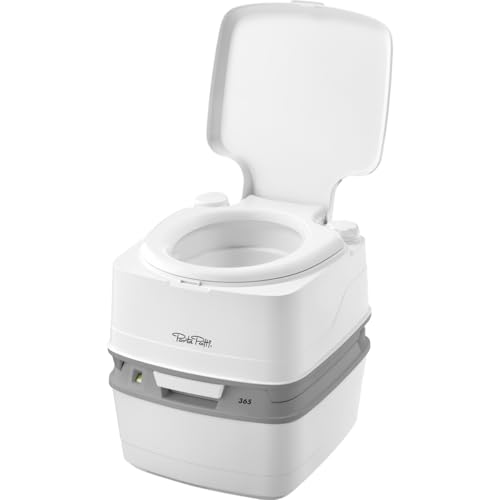
- Best manual flush: Thetford Porta Potti 365 Same big tanks with a piston pump, so no batteries to run flat.
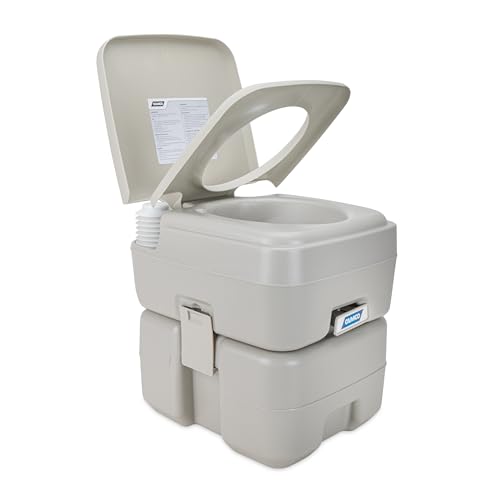
- Best value: Camco 41541 A 5.3 gallon (about 20 L) waste tank for less money.
- Tank size rule UK Camping and Leisure suggests at least 20 litres for family use.
A family camping toilet is the bit of kit most parents swear they’ll never need, right up until a four-year-old wakes at 2am on a wet field 200 metres from the shower block. A good portable flush toilet in the porch or a toilet tent turns that into a two-minute job. This guide is about choosing one for a whole family rather than a solo camper: bigger tanks, easier flushes, a comfortable seat and a sensible plan for emptying it. If you want our wider look at portable loos, see our guide to the best portable toilet for camping; this page focuses on camping toilets for families, with six different picks.
All six toilets are listed on Amazon US, where prices change often, so we haven’t quoted them. Where a listing doesn’t give a spec, we say so rather than guess, and we’ve converted gallons and inches to litres and centimetres.



Overall Thetford 565E | Manual flush Thetford 365 | Full seat Dometic 976 | Value Camco 41541 | |
|---|---|---|---|---|
|
|
|
|
| |
| Flush | Electric (battery) | Piston pump | Push-button | Bellows pump |
| Waste tank | 21 L | 21 L | 5 gal (~19 L) | 5.3 gal (~20 L) |
| Flush tank | 15 L | 15 L | Not quoted | 2.5 gal (~9.5 L) |
| Seat height | 443 mm | 408 mm | Not quoted | Not quoted |
| Warranty | Limited | Not quoted | 2 years | 1-year limited |
| Check price | Check price | Check price | Check price |
Our family camping toilet reviews
Each review covers the toilet’s tank sizes, flush, seat and warranty, plus what it’s like to live with on a family trip and what to watch out for.
Electric-flush portable toilet with a 21 L waste-holding tank and a 15 L flush-water tank, both with level indicators. Listing dimensions 448 x 388 x 450 mm (H x W x D), net weight 5 kg, limited warranty. Thetford’s technical sheet gives a seat height of 443 mm, the highest in its portable range; the flush is battery-powered.
If one toilet has to serve two adults and two or three children for a long weekend, the 565E is the one we’d buy. The 21 litre waste tank is as big as portable toilets get before they become too heavy to carry, the 15 litre flush tank lasts well, and both tanks have a level indicator, so nobody gets caught out by an empty flush or a nearly full cassette. The electric flush is a single button, which is easier for small children than a piston or bellows pump.
Thetford quotes a 443 mm seat height for the 565, close to a normal toilet, which suits adults and grandparents. Small children may need a step stool. The catches are price and power: it costs more than a manual-flush model, and the Camping and Caravanning Club notes that an electric flush stops working when its power runs out, so pack spare batteries and a jug of water.
- Big 21 L waste tank and 15 L flush tank
- Level indicators on both tanks
- One-button electric flush that children can use
- Near-household seat height (443 mm)
- More expensive than manual models
- Flush stops when the batteries run out
- About 20 kg to carry when full
Piston-pump flush portable toilet with a sealed valve to stop odours escaping the holding tank, removable seat and cover for cleaning and a rotating pour-out spout. Thetford’s technical sheet gives a 21 L waste tank with level indicator, 15 L flush tank, 414 x 383 x 427 mm and 4.0 kg, with a 408 mm seat height. Warranty isn’t stated clearly on the listing.
The Porta Potti 365 is the toilet many UK family campers already own, and for good reason. It has the same 21 litre waste tank and 15 litre flush tank as the 565E, but a manual piston pump instead of an electric flush, so there are no batteries to run flat. It’s also a kilo lighter, which helps when you’re carrying it to the disposal point.
UK Camping and Leisure suggests a 365 gives a family two to three days of full use. The seat is lower than the 565E’s at 408 mm, which suits children better but is less comfortable for tall adults. The flush-tank has no level indicator, so check it each morning, and younger children may need to be shown how to use the piston.
- Big tanks without batteries
- Sealed valve keeps smells in
- Rotating spout for tidy emptying
- Lighter than the 565E
- No level indicator on the flush tank
- Piston pump takes a little effort for small children
- Warranty not clear on the listing
5-gallon (about 19 L) portable toilet in high-strength ABS with a smooth, easy-to-clean finish. Prismatic tank level indicator, push-button flush and a full-size seat with a latching lid. 2-year warranty. Flush-tank size, dimensions and weight aren’t quoted on the listing.
Dometic’s 976 is a sturdy ABS toilet built for vans and boats, but its full-size seat makes it a good family camping toilet too. Adults who find the small oval seats on cheaper models uncomfortable will notice the difference straight away, and the push-button flush is easy for children. A prismatic level indicator shows how full the waste tank is.
The 5 gallon (about 19 litre) tank is a little smaller than the Thetford tanks, so a family of four may need to empty it a little sooner. The listing doesn’t give the flush-tank size, dimensions or weight, so check the space in your car before buying. The 2-year warranty is the clearest of any toilet here.
- Full-size seat with latching lid
- Push-button flush
- Tough, easy-clean ABS
- Clear 2-year warranty
- Slightly smaller tank than the Thetfords
- Dimensions and weight not on the listing
- Usually one of the pricier options
Portable toilet with a detachable 5.3-gallon (about 20 L) holding tank and sealing slide valve, plus a 2.5-gallon (about 9.5 L) top tank with a bellows-pump flush. 16 7/8 x 14 x 16 1/4 in (about 43 x 36 x 41 cm), 11.5 lb (about 5.2 kg), supports up to 330 lb (150 kg). Includes three drop-in toilet treatments. Limited 1-year warranty.
The Camco 41541 gives you a family-sized 5.3 gallon (about 20 litre) waste tank for noticeably less money than the Thetford or Dometic toilets. The sealing slide valve keeps smells in, it is rated to 330 lb (150 kg), and it comes with three drop-in treatments, so you can use it on the first night.
The compromise is the flush. The 2.5 gallon (about 9.5 litre) top tank is smaller than the Thetfords’ 15 litres, so you’ll refill it more often with a busy family, and the bellows pump takes a few presses. There’s no level indicator mentioned on the listing, so keep an eye on the tank. Still, for a family doing a few weekends a year, it’s a sensible way to save money.
- Family-sized waste tank at a lower price
- Sealing slide valve
- 330 lb (150 kg) rating
- Treatments included
- Smaller 9.5 L flush tank
- No level indicator mentioned
- Bellows flush needs a few presses
Large-capacity portable toilet with a 5.8-gallon (22 L) waste tank and 3.2-gallon (12 L) fresh-water tank, which the listing says gives about 110–120 flushes. Waste level indicator, rotating splash-free spout, odour-sealing valve and an air-pressure flush. 14.4 x 16.3 x 16.3 in (about 37 x 41 x 41 cm), holds up to 440 lb (200 kg). Warranty not quoted.
At 5.8 gallons (22 litres), the Kohree has the biggest waste tank here, and the 440 lb (200 kg) rating is the highest too. A level indicator, a rotating spout and a 360° rinse outlet cover the basics, and the listing claims 110–120 flushes from the 12 litre fresh tank.
Remember that a bigger tank is also a heavier tank: full, it will weigh over 20 kg. The listing doesn’t quote a warranty or seat height, and it describes this flush toilet as a composting toilet in one place, which it isn’t. We’d treat it as a good-value big-tank option rather than a first choice.
- Biggest waste tank here
- Highest weight rating (440 lb)
- Level indicator and rotating spout
- Heavy to carry when full
- No warranty quoted
- Listing wording is confusing in places
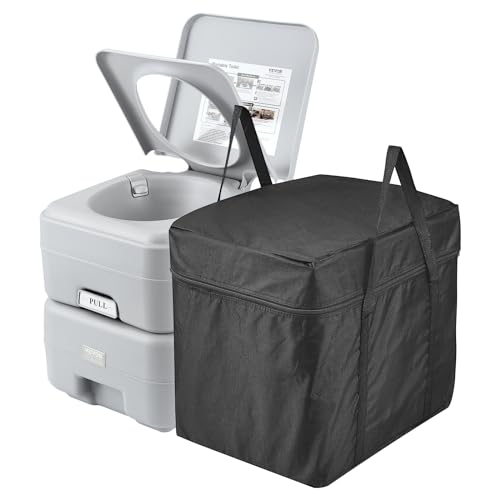
Budget portable toilet with a 5.3-gallon (20 L) waste tank and a 3.2-gallon (12 L) flush tank. Manual piston pump with up to 200 flushes per fill (listing claim), T-shaped rinse outlet, sliding seal valve and a seat height of 15.7 in (400 mm). Supports up to 330 lb (150 kg). Detachable seat and lid, storage bag included. Warranty not quoted.
The VEVOR copies the classic two-tank layout for much less money. You get a 20 litre waste tank, a 12 litre flush tank, a piston pump and a sliding seal valve, plus a storage bag that keeps the toilet clean in the car boot. VEVOR says its 400 mm seat height suits children and older people.
We’d take the 200-flush claim with caution; it depends on how hard you pump. There’s no warranty on the listing, and the brand doesn’t have the long track record of Thetford or Dometic. For occasional family trips on a tight budget, though, it does the job.
- Low price for a 20 L family tank
- Storage bag included
- Seat height suits children
- Removable seat for cleaning
- No warranty quoted
- Flush count claim depends on use
- Less proven brand
What makes a good family camping toilet?
Three things matter more than anything else when one toilet serves a whole family: waste-tank size, how easy the flush is, and how comfortable the seat is for both children and adults. Everything else, from colour to cup holders on the box art, comes a long way behind.
Start with the waste tank. UK Camping and Leisure says portable tanks run from about 10 to 21 litres, and recommends at least a 20 litre tank for family use, steering families away from 10–12 litre models. Its rough estimates for a 21 litre tank are seven days or more for one person, three to four days for two people and about two days for a family of four in full use. If the toilet is only used overnight, the same tank lasts much longer. Every family camping toilet in our list has a waste tank of roughly 19–22 litres for this reason.
Next is the flush. Piston pumps, bellows pumps and electric buttons all work, but children find a single button easiest. A bigger flush tank matters too: with five people using it, a small top tank needs refilling every day, while a 15 litre tank on a Thetford lasts much longer. Finally, look at the seat height. Lower seats help small children put their feet on the floor; higher seats are kinder to adults’ knees. A family camping toilet that sits around 40–44 cm is a fair compromise, and a small step stool fixes the rest.
How big a tank does a family camping toilet need?
For two adults and two children, aim for a 20–21 litre waste tank and empty it every day or two in busy use. That doesn’t mean you should wait until it is brim full. Most advice, including UK Camping and Leisure’s, is to empty at around three-quarters full: the flush gets weaker as waste reaches the valve, and a full 21 litre tank weighs over 20 kg.
Bigger families face a trade-off when choosing a family camping toilet. A 22 litre tank like the Kohree’s lets five or six people go a little longer between trips to the disposal point, but it is heavier to carry. In practice, many families with three or more children find it easier to empty a 20 litre tank daily, as part of the morning routine, than to haul a heavier tank every other day. If one parent will always do the emptying, think honestly about how far and how much they can carry.
The flush tank has its own capacity. Thetford’s 365 and 565E hold 15 litres of flush water; the Kohree and VEVOR hold 12 litres; the Camco holds about 9.5 litres. Fill the flush tank with fresh water and the recommended pink rinse additive, and top it up when you empty the waste tank so both jobs happen together.

Camping toilets for families: types compared
Two-tank flush toilets
This is what most people mean by a family camping toilet, and it’s the only type in our list. It is also the most common chemical toilet for camping in the UK. A flush-water tank sits on top of a waste tank with a sliding blade valve between them. You open the valve, use the toilet, flush and close it again. The two halves unclip so you can carry the waste tank to a chemical disposal point. They are tidy, contain smells well when the valve is shut and feel close to a normal toilet.
Bucket and bag toilets
Bucket loos with a snap-on seat and folding bag toilets are cheaper and lighter, but they suit occasional emergency use more than a week with children. The Alan Rogers guide to camping toilets warns that a bucket loo must be scrupulously maintained, and the lids on cheaper bucket models don’t always seal out smells. They are fine as a backup in the car, but not as the main chemical toilet for camping with a family.
Electric flush versus manual flush
An electric flush, like the Thetford 565E’s, is one button and very easy for children. The downside is power: if the batteries die, the flush stops, so carry spares. Manual piston and bellows pumps never run flat, but small children may need help and some pumps feel stiff at first. For most camping toilets for families either works; pick electric if you have young children or older relatives, and manual if you’d rather not think about batteries.
Choosing a chemical toilet for camping with children
Children change the requirements of a chemical toilet for camping in a few simple ways. The seat height matters most: a toilet around 40 cm high, like the VEVOR or the Porta Potti 365, lets most school-age children sit comfortably, and a folding step stool helps younger ones. Teach children before the trip how to open the valve, flush and close it again; UK Camping and Leisure suggests letting them press the button or pump the flush so they feel confident.
A simple routine stops most family camping toilet problems. Keep the toilet roll on a hook rather than on the floor, keep a small bin bag for wipes and nappies (they must never go in the tank), and keep hand sanitiser next to the toilet. A dim lantern with a red or warm setting above the toilet means nobody has to switch on a bright light in the middle of the night; our guide to the best camping lantern for large tents covers small lights that work well in a toilet corner.
Potty-training toddlers are a special case. Some families bring a potty as well and empty it into the family camping toilet, which saves lifting a small child onto a high seat at night. Whatever you choose, practise at home first; a toilet that feels strange in the garden will feel stranger on a dark campsite.

Family camping toilet or the campsite toilet block?
Plenty of families manage without their own toilet, so it’s fair to ask whether a family camping toilet is worth the space in the car. On a small site with a toilet block next to your pitch, maybe not. On a big site, at a festival, on a pitch at the far end of a field, or with toddlers and potty-training children, it quickly earns its place.
The real benefit is at night. Getting two children dressed, finding torches and walking across a wet field at 2am wakes everyone up, and some children simply won’t go. A family camping toilet in a toilet tent or a curtained porch corner means a short walk in slippers. It also helps older relatives, anyone recovering from illness or injury, and pregnant campers who need the toilet more often.
There are downsides. A chemical toilet for camping takes up boot space, needs chemicals and has to be emptied, usually every day for a family. If your trips are mostly short weekends on sites with good facilities, a cheaper model kept for night-time use only may be enough, and its tank will last much longer when nobody uses it during the day.
Where to put a family camping toilet
The Camping and Caravanning Club suggests keeping the toilet and washing area separate from the living space, using a compact toilet tent or a larger utility tent. A pop-up toilet tent a few metres from the main tent gives privacy and keeps smells away from where you eat; our guide to the best pop up toilet and shower tents compares the options.
If your tent has a large porch, putting the toilet in a corner behind a curtain works well at night, especially with small children who don’t want to go outside alone. Keep it well away from the cooking area, stand it on a flat, firm patch so it doesn’t rock, and check the path from the bedrooms is clear of guy ropes and shoes. Don’t put it so far from the sleeping area that children won’t use it; that’s the most common mistake.
Check the campsite’s rules before you pack a family camping toilet. Most UK sites with a chemical disposal point are happy for families to use a portable toilet, but some small or eco sites ask you to use the site toilets only, or to use green chemicals. If you’re choosing a site for your first trip, our guides to the best family camping tents and best 6 person family tents include tents with porches big enough for a toilet corner.
Toilet chemicals for family camping
Most two-tank toilets use two chemicals. According to the Camping and Caravanning Club, the flush-tank chemical is usually pink and goes into the fresh water, while the waste-tank chemical is usually blue or green, with green products marketed as the more environmentally friendly option. Blue chemicals used to contain formaldehyde, but the Club says this is now rare.
The rule that matters for families is to check the site’s rules before you go. Some campsites only allow particular chemicals in their disposal points, and sites on a septic tank may have strict limits; the Alan Rogers guide notes that more sites now only permit biodegradable, formaldehyde-free products. If in doubt, buy a green, formaldehyde-free waste chemical and you’ll be welcome almost everywhere. Our guide to the best camping toilet chemicals covers the main brands.
With any chemical toilet for camping, use the dose on the bottle rather than guessing, and add it with a little water after every empty so the tank never starts dry. Household bleach is not recommended for camping toilets, because it can damage seals. For toilet paper, the Camping and Caravanning Club recommends quick-dissolve paper for families, though Alan Rogers says ordinary paper is fine with careful use. Either way, nappies, wipes and sanitary products must go in a bin.
How to empty a family camping toilet
Only empty a portable toilet at a designated chemical disposal point, sometimes called an Elsan point; the Camping and Caravanning Club is clear that you should never use a fresh water or grey water point. The job takes about five minutes once you’ve done it a couple of times.
Close the blade valve, unclip the waste tank and carry it to the disposal point. Wear disposable gloves. Turn the spout to point down into the drain, take off the cap, then press the air-release button while you pour, tipping slowly so it doesn’t splash back. Rinse the tank with a little clean water from the rinse hose, swirl and pour again. Add a fresh dose of waste chemical and some water, top up the flush tank, and clip it back together.
Emptying a family camping toilet is easier when it’s someone’s job. In most families one adult empties the toilet first thing each morning, before the site gets busy. A small folding trolley helps if the disposal point is a long walk away, and a dedicated bucket or bag for gloves and wipes keeps everything tidy in the car. Never let children empty the tank: a full one is heavy and awkward.

Cleaning and storing your camping toilet
At home after each trip with your family camping toilet, empty and rinse both tanks, wipe the seat and bowl with a mild cleaner, and let everything dry with the lids open. Leave the sliding valve slightly open in storage, as the Camping and Caravanning Club suggests, so the seals can relax. A seal lubricant every so often keeps the valve moving freely, and Thetford sells a tank cleaner meant for a deeper clean two or three times a year.
Store the toilet in a bag or box so it doesn’t scuff the car boot, and keep the chemicals, gloves and paper with it so you never forget them. A dedicated crate also stops a family camping toilet ending up at the bottom of the pile; our camping cupboard guide has ideas for organising the pitch.
Common family camping toilet problems and fixes
It smells. Usually the valve was left open, the chemical dose was too low, or the tank wasn’t rinsed last time. Close the valve after each use, dose correctly and rinse thoroughly when you empty it. In hot weather, empty a little more often.
The flush is weak. The flush tank may be nearly empty, or the waste tank nearly full. Check both levels. On electric models, weak or no flush usually means flat batteries; on manual models, pump a few more times.
The valve sticks. Dried waste or dry seals cause this. Rinse well, use seal lubricant and don’t force it. Leaving it slightly open in storage helps.
The tank is too heavy. Empty at three-quarters full rather than completely full, or empty daily. A small trolley helps on big campsites.
Children won’t use it. Practise at home, add a step stool and a dim light, and put it somewhere that feels private but not too far away.
Buying a camping toilet for families in the UK
The camping toilets for families in this guide are listed on Amazon US, so listings use gallons, inches and pounds. One US gallon is about 3.8 litres, so a 5 gallon tank is roughly 19 litres. Thetford and Dometic toilets are widely sold in the UK too, often under the same model names, and Thetford, Dometic and most UK brands use the same basic layout, so replacement chemicals and parts are easy to find at caravan and camping shops.
Think about the rest of your setup at the same time. A toilet tent, toilet paper, gloves, chemicals and a lantern all belong on the packing list; our camping essentials list and our guide to what accessories are needed for camping cover the rest. If you also travel in a campervan or motorhome, our guide to the best toilets for RVs looks at cassette and composting options.
Which family camping toilet should you buy?
For most families, the Thetford Porta Potti 565E is the best family camping toilet: big tanks, level indicators on both, a one-button flush and a near-household seat height. If you’d rather avoid batteries, the Porta Potti 365 has the same tanks with a piston flush and is a kilo lighter.
Choose the Dometic 976 if a full-size seat and a clear 2-year warranty matter most. The Camco 41541 is the best value family-sized tank, the Kohree has the biggest tank for larger families, and the VEVOR is the cheapest way to get a 20 litre flush toilet for occasional trips.
Final thoughts
The best camping toilet for families is the one everyone will actually use, from the smallest child to the oldest grandparent. Get a tank of about 20 litres, a flush children can operate, a seat that suits your family and a plan for who empties it each morning. Add a toilet tent or a curtained porch corner, a dim light and the right chemicals, and night-time trips become a non-event.
Family camping toilet myths
UK Camping and Leisure recommends at least a 20 litre waste tank for family use.
Empty at about three-quarters full: the flush weakens near the top and a full 21 litre tank weighs over 20 kg.
The Camping and Caravanning Club says some sites only allow specific chemicals, especially on septic tanks. Check first.
They used to, but the Camping and Caravanning Club says this is now rare. Read the label.
What to look for in a family camping toilet
Big enough for a family without being impossible to carry.
A button or smooth pump that children can use alone.
Around 40–44 cm suits most families; add a step stool for toddlers.
Shows when to empty before the tank gets too full.
Keeps smells in and stops leaks in the car.
A stated warranty is a good sign of build quality.
How to empty a family camping toilet
- Close the valve
Shut the blade valve and unclip the waste tank.
- Go to the disposal point
Use the chemical disposal (Elsan) point, never a water point.
- Pour slowly
Wear gloves, point the spout down and press the air-release button as you tip.
- Rinse
Add a little clean water, swirl and pour again.
- Re-dose
Add the waste chemical with some water and top up the flush tank.
- Reassemble
Clip the tanks together and put the toilet back in place.
How we chose these camping toilets for families
We have not tested every toilet in this list ourselves. Our picks are based on the Amazon listings, Thetford’s technical specifications, and advice from the Camping and Caravanning Club, UK Camping and Leisure and Alan Rogers. Where a listing didn’t state a spec, we said so rather than guessing.
-
Family-sized tanks
Every pick has a waste tank of roughly 19–22 litres.
-
Ease of use
We favoured flushes and seats that suit children and adults.
-
Smell and leaks
We looked for sealed valves and level indicators.
-
Honest specs
Metric figures are our conversions of the listing figures.
What is the best camping toilet for a family?
For most families, the Thetford Porta Potti 565E, thanks to its 21 litre waste tank, electric flush and level indicators. The Porta Potti 365 is the best manual-flush alternative.
How often do you empty a camping toilet with a family?
UK Camping and Leisure estimates about two days for a family of four using a 21 litre tank full time. Most families empty it every morning or every other morning, at about three-quarters full.
What size camping toilet does a family need?
Aim for a waste tank of at least 20 litres. Smaller 10–12 litre toilets fill too quickly for a family.
Where do you empty a chemical toilet on a campsite?
Only at the chemical disposal point, sometimes called an Elsan point. Never use fresh water or grey water points.
Which toilet chemicals can I use on UK campsites?
Pink rinse goes in the flush tank and blue or green chemical in the waste tank. Some sites only allow green or formaldehyde-free products, so check before you go.
Can children use a portable camping toilet?
Yes. Choose a seat around 40 cm high, add a step stool for toddlers and show children how to use the valve and flush before the trip. Adults should do the emptying.
More camping hygiene guides
Sorting out the rest of your campsite bathroom? See our guides to the best camping shower, the best camping toiletry bag and the best pop up toilet and shower tents.
Which camping toilet for families should you buy?
- Best overall: Thetford Porta Potti 565E Curve Electric Flush Portable Toilet
- Best manual flush: Thetford Porta Potti 365 Portable Toilet (Piston Flush)
- Best full-size seat: Dometic 976 Portable Toilet 5.0 Gallon
- Best value: Camco Portable Toilet with Detachable Tank, 5.3 Gallon (41541)
- Biggest tank: Kohree Portable Toilet 5.8 Gallon
- Best budget: VEVOR Portable Toilet 5.3 Gal Waste and 3.2 Gal Flush Tank
For most families, the Thetford Porta Potti 565E is the best family camping toilet, with big tanks, gauges on both and a one-button flush. Choose the Porta Potti 365 for the same tanks without batteries, the Dometic 976 for a full-size seat, the Camco 41541 for value, the Kohree for the biggest tank and the VEVOR on a tight budget.
CampEquipmentPlus relies on reader support. Purchases made via links on our website may earn us an affiliate commission at no extra cost to you, helping keep the site running.