

Camping Essentials List: 50 Must-Haves
This camping essentials list covers the 50 things most campers actually need for a night or a weekend at a campground: shelter, sleep, light, water, food, clothing, safety and hygiene. Print it, tick each item as it goes in the car, and you won't be the camper borrowing a lighter at dusk.
Most packing fails are small and predictable. Explore Magazine’s reader poll put ice, batteries and chargers at the top of the most-forgotten list, and Scout leaders’ top fails were sleeping bags, flashlights, utensils, water bottles and socks. A written checklist fixes nearly all of them.
Below you’ll find the full list by category, a free printable PDF, six essentials worth buying well, and advice on adapting the list to the weather, your group and your campsite.
- 50 items in 8 categories
- Free printable PDF checklist
- Six essentials worth upgrading
- Start with the Ten Essentials Light, first aid, water, insulation, sun protection, navigation, fire, tools, food and shelter.
- Sleep warm Pick a sleeping bag comfort rating at or below the forecast low, and an insulated pad.
- Check fuel and batteries They top the list of things campers forget.
- Pitch the tent at home Missing stakes and poles are found in the backyard, not at the campsite.
A good camping essentials list is short enough to use and complete enough that nothing important gets left behind. The 50 items below are the core of a comfortable car camping trip; you will add a few personal extras and drop a few items depending on your campsite. If you only want the printable version, here it is: Download the free printable camping essentials list (PDF). Everything on it is explained below, with tips from REI, the National Park Service and campers who learned the hard way.
The complete camping essentials list (50 items)
We grouped the list the way you pack: shelter first, then light, kitchen, water, clothes, safety, hygiene and the campsite extras. Items are numbered so you can tick them off on the printable camping checklist. Each line has a one-sentence note on why it matters or what to check.
Shelter and sleep
- 1. Tent with poles, stakes and rainfly: Pitch it at home first and count the stakes.
- 2. Footprint or groundsheet: Protects the floor; keep it tucked inside the tent edges so rain doesn’t pool on it.
- 3. Spare stakes and a mallet: Hard or rocky ground bends stakes; a mallet saves your hands.
- 4. Sleeping bag rated for the overnight low: Choose a comfort rating at or below the forecast low.
- 5. Sleeping pad or cot pad: Insulates you from cold ground as much as it cushions you.
- 6. Pillow: A packable pillow, or a stuff sack filled with clothes.
- 7. Tarp and 50 ft of cord: Shade, a dry cooking area or an extra rain layer.
- 8. Tent repair kit: Patches, seam tape and a pole splint.
Lighting and power
- 9. Headlamp for every camper: Hands-free light; a red mode protects night vision.
- 10. Lantern: Lights the table or tent so you don’t blind each other with headlamps.
- 11. Spare batteries and charging cables: The item campers forget most often, after ice.
- 12. Power bank: Keeps phones and headlamps topped up without a hookup.

Camp kitchen
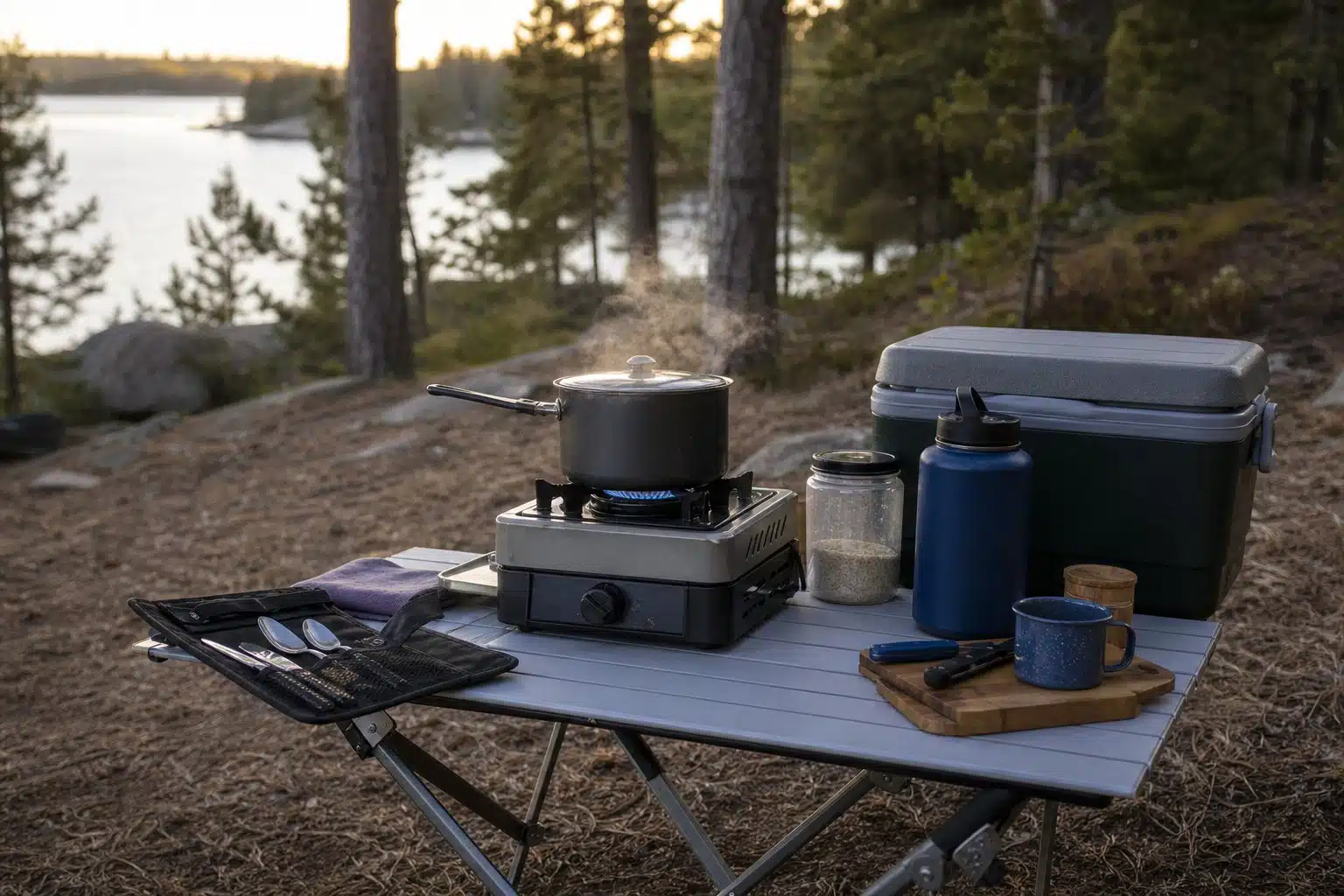
- 13. Stove: A one- or two-burner stove for boiling water and cooking.
- 14. Fuel, plus a spare canister: Check it fits your stove before you leave.
- 15. Lighter and waterproof matches: Back up the stove’s igniter.
- 16. Pot and frying pan: One of each covers most camp meals.
- 17. Cooking utensils: Spatula, tongs, serving spoon and a sharp knife.
- 18. Plates, bowls and mugs: Reusable sets cut down on trash.
- 19. Forks, spoons and knives: One set per person, plus a spare.
- 20. Cooler with ice or ice packs: Pre-chill it and pack about twice as much ice as food.
- 21. Cutting board: A small, flexible board packs flat.
- 22. Wash basin, biodegradable soap and sponge: Wash up well away from lakes and streams.
- 23. Trash and recycling bags: Pack it in, pack it out.
- 24. Food storage containers or bear canister: Follow local wildlife rules.
Water
- 25. Water bottles or a hydration bladder: At least one per person.
- 26. Large water jug: Filled at home if the campsite has no tap.
- 27. Water filter or purification tablets: For any water that isn’t from a treated tap.
Clothing and footwear
- 28. Rain jacket: Fully waterproof, not just water-resistant.
- 29. Warm insulating layer: Fleece or puffy jacket; nights cool fast.
- 30. Base layers: Synthetic or merino, never cotton, for cold nights.
- 31. Hiking shoes or boots: Broken in before the trip.
- 32. Camp shoes or sandals: Give your feet a rest and keep the tent cleaner.
- 33. Extra socks: One pair per day plus a dry pair kept only for sleeping.
- 34. Sun hat and warm beanie: Sun by day, warmth at night.
- 35. Sleepwear: Dry clothes you only wear in the sleeping bag.
Safety and navigation
- 36. First aid kit: Stocked, checked and sized for your group and trip length.
- 37. Multi-tool or knife: Fixes gear, cuts cord, opens cans.
- 38. Map, compass or offline maps: Don’t rely on cell service.
- 39. Whistle: Three blasts is the universal call for help.
- 40. Sunscreen and lip balm: SPF 30 or higher, reapplied through the day.
- 41. Insect repellent: And a head net in buggy seasons.
- 42. Emergency blanket: Weighs almost nothing; a backup if someone gets cold or wet.
Hygiene
- 43. Toilet paper and trowel: For sites without restrooms; dig catholes 6 to 8 in deep.
- 44. Hand sanitizer: Before cooking and after the toilet.
- 45. Toothbrush, toothpaste and toiletries: Store scented items with your food in bear country.
- 46. Quick-dry towel: Dries far faster than a cotton bath towel.
- 47. Personal medications: Plus a few spare days’ worth.
Campsite and paperwork
- 48. Camp chairs: One per person; the campfire is better seated.
- 49. Camp table: If your site has no picnic table.
- 50. Reservation, permits, ID and some cash: Screenshot confirmations in case there’s no signal.
Want it on paper? Download the free printable camping essentials list (PDF). It fits on one page, with blank lines at the bottom for your own extras, such as kids’ comfort items, a dog’s bowl and leash, or fishing licenses.
Six camping essentials worth buying well
Most of this camping essentials list can come from your kitchen and closet. These six items can’t, and they are the ones where a cheap version lets you down at the worst moment. We picked one proven option for each; all are on Amazon US.



400 lumens, built-in 1,500 mAh rechargeable battery (micro-USB per the listing), IP67 waterproof (30 minutes submerged), red night vision, dimming, strobe and lock mode.
A headlamp for every camper is the single best fix for the most common campsite problem: nobody can find anything after dark. The Spot 400-R puts out up to 400 lumens, which is plenty for cooking, pitching a tent late or walking to the restroom, and it runs on a built-in rechargeable battery so you are not hunting for AAAs on day two.
The IP67 rating means it survives a downpour or a drop in a creek, and the red mode keeps your night vision for stargazing, which REI specifically recommends. The lock mode stops it switching on in your bag. The listing says it charges by micro-USB, so pack the right cable. If you prefer replaceable batteries, Black Diamond sells an AAA version, the Spot 400.
- Bright enough for every camp job
- Rechargeable, no disposable batteries
- IP67 waterproof
- Red light and lock mode
- Micro-USB per the listing, not USB-C
- Built-in battery can’t be swapped in the field
Up to 1,000 lumens, 360-degree light, 4,400 mAh battery, warm (3100K), daylight (6000K) and combined modes, IPX4, USB-C charging, works as a power bank; 1-year warranty.
A lantern lights the picnic table or the inside of the tent so nobody blinds each other with headlamps. Lepro’s rechargeable lantern gives up to 1,000 lumens of 360-degree light, with a warm 3100K mode that is kinder at night and a cooler daylight mode for cooking and packing up.
The listing quotes up to 12 hours on warm white (300 lumens), 8 hours on daylight (700 lumens) and 6.5 hours on the combined 1,000-lumen setting, so a weekend is realistic if you use the lower settings. It has hooks top and bottom for hanging upside down from a tent loop, charges by USB-C and can top up a phone in a pinch. It is only IPX4, so treat it as splash-resistant, not waterproof.
- Bright 360-degree light
- Warm light mode
- Hangs from top or bottom
- Charges a phone
- IPX4 only
- Needs a 5V charger; no adapter included
96 pieces for up to 2 people for up to 4 days, trauma pad and elastic bandage, wilderness first aid guide book, labeled pockets in a water-resistant bag.
A first aid kit is on every essentials list, including the National Park Service’s Ten Essentials, but many cheap kits are mostly small bandages. The Mountain Series Backpacker kit is built for outdoor injuries, with a trauma pad and elastic bandage for serious cuts and sprains, and it comes with a wilderness first aid guide so you know what to do with them.
The listing sizes it for up to 2 people for up to 4 days. A family of four on a long weekend should add extra bandages, blister care, children’s medicines and any personal prescriptions. The labeled pockets make it quick to find things when someone is bleeding and everyone is looking at you.
- Contents chosen for outdoor injuries
- Wilderness first aid guide included
- Clearly labeled pockets
- Water-resistant bag
- Sized for 2 people; families should add supplies
- Warranty not quoted on the listing
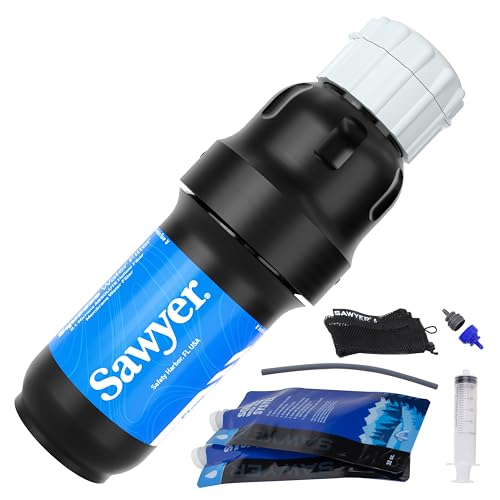
0.1-micron hollow-fiber filter, about 2 oz, removes bacteria, protozoa, cysts, sediment and microplastics per the listing; two 32 oz pouches, straw, hydration adapters; fits 28 mm bottle threads; lifetime filter warranty.
If your campsite has no treated tap, or you hike to lakes and streams from camp, a filter turns any clear water source into drinking water. The Sawyer Squeeze is a long-running favorite because it is small, light and simple: fill the pouch, screw on the filter and squeeze into a bottle or pot, or set it up as a gravity filter for a group.
Sawyer lists bacteria, protozoa, cysts, sediment and microplastics. It does not claim to remove viruses or chemicals, so where those are a concern, add purification tablets or bring water from home. Backflush it after trips, and keep it from freezing, because a frozen hollow-fiber filter can crack without any sign. The filter carries a lifetime warranty against defects.
- Tiny and about 2 oz
- Fits standard 28 mm bottles
- Works as a gravity filter
- Lifetime filter warranty
- Not rated for viruses
- Must be protected from freezing
- Pouches are the weak point
14 tools including knife, spring-action pliers, scissors, wire cutters, screwdrivers, bottle and can openers, file and ruler; one-hand opening, locking blade, pocket clip; 25-year warranty.
A knife or multi-tool fixes more camp problems than anything else on this list: cutting cord for a tarp, tightening a loose screw on a chair, opening cans, trimming a split tent pole repair sleeve. The Wingman is an affordable, full-size Leatherman with 14 tools, spring-action pliers and scissors, and a locking blade.
All the tools open with one hand, and the pocket clip keeps it on you rather than lost in a bin. The 25-year warranty is the main reason to choose it over a no-name multi-tool. It does not have a saw, so it won’t help with firewood; buy firewood locally and cut kindling with a hatchet or folding saw if you need it.
- Spring-action pliers and scissors
- One-hand opening, locking blade
- Pocket clip
- 25-year warranty
- No saw
- Heavier than a simple pocket knife
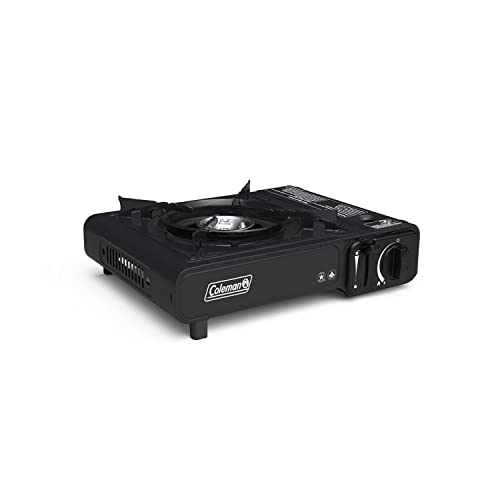
7,650 BTU, Instastart matchless ignition, fits one 10 in pan, up to 1.25 hours on high per 8.8 oz butane canister, wind baffle, carry case, 15 x 10 x 6.5 in; 3-year limited warranty.
A stove means hot coffee and real meals even when there is a fire ban. Coleman’s Classic 1-Burner Butane stove is a simple tabletop model with push-button Instastart ignition, a porcelain-coated grate that lifts out for cleaning and a wind baffle around the burner. It takes one 10 in pan.
Coleman rates it at up to 1.25 hours on high per 8.8 oz canister, so a weekend of breakfasts and dinners for two usually needs two or three canisters. Butane loses pressure in cold weather; below freezing, a propane stove works better (see our guide to single burner camp stoves). It comes with a carry case and a 3-year limited warranty.
- Push-button ignition
- Easy-clean removable grate
- Carry case included
- 3-year warranty
- Butane struggles in cold weather
- One burner only
How to use this camping essentials list
REI’s own family camping checklist warns that a comprehensive list is not a list of things you must bring, and the same is true here. Read the camping essentials list once a week or so before the trip, cross out what your campsite already provides and circle what you still need to buy or borrow. Then use the printable list on packing day as a final check, ticking items as they actually go into the car rather than as you remember owning them.
Keep a box or two of camp-only kitchen gear packed between trips, so your camping packing list gets shorter every time: a stove, a pot, utensils, a lighter, a sponge and trash bags. It turns the kitchen section into one line on the list, and it is the single best way to stop forgetting the small things. After every trip, restock the box and write down anything you wished you had brought.
Start with the Ten Essentials
The National Park Service Ten Essentials were written for hikers, but they are a sensible backbone for any camping packing list or camping checklist: navigation, sun protection, insulation, illumination, first aid, fire, a repair kit and tools, nutrition, hydration and emergency shelter. Every one of them appears in the 50 items above. If you are short on space or money, make sure those ten categories are covered before you buy anything for comfort.
The reason is simple. A forgotten camp chair is an inconvenience. A forgotten headlamp, rain jacket or water filter can turn a pleasant night into a cold, dark or unsafe one, especially if you hike away from the car.
The essentials campers forget most often
Explore Magazine polled its readers on the gear they forget most, and the top ten were ice, batteries and chargers, extra shoes, plastic bags, paper towels, a pillow, a hat, tent pegs, firewood and fire starters. Scouting magazine’s 2026 roundup of packing fails from Scout parents and leaders was dominated by sleeping bags, flashlights and batteries, mess kits and utensils, water bottles, and underwear and socks. One Scout forgot his entire bag and spent a weekend without spare clothes.
Notice the pattern: almost none of these are expensive, and almost all are things you own at home. They get forgotten because they live in different drawers. That is exactly what a written camping checklist is for, and why a printed camping essentials list beats a mental one. Scouting’s advice is worth stealing: always double-check before the car leaves the driveway.

Shelter and sleep: the part of the camping essentials list that matters most
A bad night’s sleep ruins more camping trips than bad weather does, and it usually comes down to three items: the tent, the sleeping bag and the sleeping pad. Pitch your tent at home before the first trip of the season and count the stakes and poles; missing tent pegs made Explore Magazine’s top-ten list. If you are still choosing a tent, our guide on how to choose a camping tent covers size, seasons and waterproofing.
For the sleeping bag, REI’s advice is to choose one with a comfort temperature rating at or below the expected overnight low. Budget bags often quote a lower limit rather than a comfort figure, so add a margin; our guides to cheap sleeping bags that stay warm and cold weather sleeping bags explain how to read the ratings.
The pad matters as much as the bag, because the ground pulls heat from you all night. An insulated pad or a closed-cell foam pad under an air mattress makes a big difference on cool nights. See what sleeping pad you need for camping and our picks for the best foam sleeping pads.
Lighting and power
Give every camper their own headlamp. Shared flashlights always end up in the wrong tent, and a headlamp leaves both hands free for cooking and pitching. REI recommends one with a red light, which preserves night vision for stargazing and is more polite around a shared fire. Add one lantern for the table or tent, and you have covered the lighting section of the camping essentials list. Lighting is also the section of any camping checklist where quality pays off most. Our guide to what lights you need for camping goes into more detail.
Batteries and chargers were the second most forgotten item in Explore Magazine’s poll. Put them near the top of your camping essentials list. Pack spare batteries for anything that uses them, the right charging cables for anything rechargeable, and a power bank. A fully charged 10,000 mAh power bank can recharge a typical phone a couple of times. If you need more, read how to power devices while camping.
Camp kitchen essentials
The kitchen is where most small items go missing: the lighter, the can opener, the spatula, the sponge. That is why a permanent camp kitchen box is so useful, and why the kitchen is the longest section of our camping packing list. Check that your fuel actually fits your stove, pack a spare canister, and bring a lighter and waterproof matches as a backup to any push-button igniter. Our camping kitchen essentials guide covers the full cooking setup, and if your site has no picnic table, a portable camping kitchen gives you a stable surface for the stove.
Coolers deserve their own note, because ice is the most forgotten item of all. Switchback Travel notes that most cooler brands recommend roughly a 2:1 ratio of ice to food. Pre-chill the cooler for a few hours before packing, freeze water bottles to use as ice that you can drink later, and keep the cooler in the shade with the lid closed. A separate drinks cooler stops the food cooler being opened every ten minutes.
Always cook outdoors. Never run a stove, grill or fuel-burning heater inside a tent or a closed vehicle, because carbon monoxide builds up quickly in small spaces. Store food, trash and scented toiletries according to the campground’s wildlife rules; in bear country that may mean a bear box or a bear-resistant canister.
Water: how much to bring
If your campground has treated water taps, a couple of bottles per person and a large jug are enough. If it doesn’t, bring water from home or a filter, and plan generously. A common rule of thumb for emergencies is about a gallon per person per day for drinking and basic cooking, and you’ll want more in hot weather or for washing up.
Water from lakes and streams should always be treated. A hollow-fiber filter handles bacteria and protozoa; chemical tablets or boiling also deal with viruses. A filter is lighter to carry than a day’s worth of water if you hike or paddle away from camp.
Clothing: dress for the coldest hour
Pack for the coldest, wettest part of the trip, not the afternoon forecast; that is the golden rule of any camping packing list. Nights in the mountains and deserts can be far colder than the daytime high suggests. A real rain jacket is non-negotiable; REI suggests a waterproof rating of at least 15,000 to 20,000 for rainwear. Bring a warm insulating layer, synthetic or merino base layers for sleeping, and a dry pair of socks kept only for the sleeping bag. If your tent ends up damp inside, see why your tent is wet inside for the usual causes.
Extra shoes were third on Explore Magazine’s forgotten list. A pair of camp shoes or sandals gives your feet a rest after a hike, and keeps muddy boots out of the tent. A sun hat for the day and a beanie for the evening cover both ends of the temperature range.
Safety, navigation and hygiene
A first aid kit, a knife or multi-tool, sunscreen, insect repellent and a way to navigate without cell service belong on every camping packing list and every camping checklist. REI recommends sunscreen of SPF 30 or higher, reapplied through the day. Download offline maps before you lose signal, and carry a paper map if you will hike. A whistle and an emergency blanket weigh almost nothing and are useful if someone gets lost, hurt or chilled.
For hygiene, the essentials are toilet paper, hand sanitizer, toiletries, a quick-dry towel and any personal medications, with a few spare days of prescriptions. Where there are no restrooms, use a trowel to dig a cathole 6 to 8 in deep, at least 200 ft from water, camp and trails, and pack out used toilet paper where local rules require it.
How to adapt the camping essentials list
For cold or wet weather
For cold-weather trips, your camping checklist should grow. Add a warmer sleeping bag or a liner, a second insulated pad, extra base layers, gloves, a tarp for a dry cooking area and plenty of spare socks. Butane stoves lose pressure near freezing, so switch to propane, and pack more fuel than you think you need because cooking takes longer in the cold.
For families with kids
Add a headlamp for each child, extra clothes (kids get wet and muddy fast), children’s medicines, a familiar pillow or soft toy, and simple games for downtime. A sit-upon or small tarp for the tent entrance keeps the inside cleaner. Let older kids tick items off the printable camping checklist; it gets them invested in the trip.
For backpacking
A backpacking version of the camping essentials list is much shorter. Strip it back to the Ten Essentials, the big three of tent, sleeping bag and pad, a light stove, water treatment and one set of extra clothing. Leave the cooler, chairs, table, lantern and most kitchen items behind. Our guide to hammock straps is a good start if you prefer to sleep off the ground.
For RV and cabin trips
Your camping essentials list shrinks for RV and cabin trips: many items are already on board or provided, so cross out shelter and most kitchen gear. Keep the safety, lighting, clothing and hygiene sections, and add leveling blocks, a water hose and an electrical adapter for the hookup.
Packing tips that save the trip
Once everything on the camping checklist is gathered, pack the car in the order you will unpack it: tent and tarp last in, so they come out first. Keep the first aid kit, headlamps, rain jackets and a snack bag where you can reach them without unloading everything. Clear plastic bins with labels make it obvious what is missing, and a dry bag or trash-bag liner keeps the sleeping bags dry if it rains during setup.
Finally, arrive with daylight to spare. Pitching a tent in the dark is where forgotten items reveal themselves, and it’s much easier to borrow a mallet from a neighbor at 5 p.m. than at 10. Our article on what accessories you need for camping covers useful extras beyond this camping essentials list.
Final thoughts
A camping essentials list only works if you use it every time. Print the PDF, keep it with your camp boxes, and add your own lessons after each trip. Get the shelter, sleep, light, water and safety items right, and the rest of the list is about comfort. Download the free printable camping essentials list (PDF).
Camping packing myths
Clear summer nights can be cold, especially at altitude or in the desert. Always pack an insulating layer and a hat.
Uninsulated air mattresses let cold air circulate under you. Add a foam or insulated pad on cool nights.
It can help, but batteries die and signal disappears. Carry a headlamp and download maps offline or carry paper.
How to pack using the checklist
- Print the list a week ahead
Cross out what your campsite provides and circle what you need to buy or borrow.
- Check the forecast and campsite rules
Overnight lows, rain, fire bans, water taps and wildlife storage rules all change what you pack.
- Test the key gear
Pitch the tent, light the stove and charge every headlamp, lantern and power bank.
- Pack by category
Use labeled bins: kitchen, sleep, clothes, safety and hygiene.
- Tick items as they go in the car
Not as you remember owning them. Do one last check before you leave the driveway.
How we built this list
We combined the National Park Service Ten Essentials, REI’s family camping checklist and Switchback Travel’s camping checklist with reader polls of the most-forgotten camping items from Explore Magazine and Scouting magazine. Product picks are based on Amazon listings and manufacturers’ specifications; we have not tested every product ourselves.
-
Essentials first
Every item had to cover safety, shelter, sleep, food, water or hygiene for a typical campground trip.
-
Real-world fails
We added the items campers most often report forgetting.
-
Proven products
Gear picks come from established brands with clear specifications and warranties where stated.
What are the essentials for camping?
A tent, a sleeping bag rated for the overnight low, a sleeping pad, a headlamp, water, food and a way to cook it, weather-appropriate clothing including a rain jacket, a first aid kit, a knife or multi-tool, and sun and bug protection.
What are the Ten Essentials?
The National Park Service lists navigation, sun protection, insulation, illumination, first aid, fire, a repair kit and tools, nutrition, hydration and emergency shelter.
What do first-time campers forget most?
Reader polls and Scout leaders point to ice, batteries and chargers, sleeping bags, flashlights, utensils, water bottles, socks and extra shoes.
How much water should I bring camping?
If there is no treated tap, plan on at least a gallon per person per day for drinking and cooking, more in hot weather, or bring a filter or purification tablets.
Is there a printable camping checklist?
Yes. Download our free printable camping essentials list as a one-page PDF.
What should I not bring camping?
Cotton clothing for sleeping in the cold, glass bottles, valuables you don’t need, and firewood from far away, which can spread pests; buy it locally.
More camping guides
Building your kit? See our picks for headlamps, single burner camp stoves, cheap sleeping bags and foam sleeping pads, plus our guide to tent waterproof ratings. REI’s family camping checklist is another good reference.
Ready to pack?
- Best headlamp: Black Diamond Spot 400-R
- Best lantern: Lepro 1000LM
- Best first aid kit: AMK Mountain Series Backpacker
- Best water filter: Sawyer Squeeze
- Best multi-tool: Leatherman Wingman
- Best simple stove: Coleman Classic 1-Burner Butane
Print the camping essentials list, check it against your campsite and the forecast, and tick items as they go in the car. Spend your money on the essentials that matter after dark and in bad weather: a headlamp, a lantern, a real first aid kit, water treatment, a multi-tool and a reliable stove. Download the free printable PDF.
CampEquipmentPlus relies on reader support. Purchases made via links on our website may earn us an affiliate commission at no extra cost to you, helping keep the site running.