

Best Cold Weather Sleeping Bags
The best cold weather sleeping bags publish a comfort rating, not just a temperature in the name, because a bag sold as "0°F" is often only comfortable in the 20s, and choosing by the wrong number is the main reason campers sleep cold.
Buyers looking for a 0°F or 20°F sleeping bag usually care about three things: whether the rating is honest, whether it fits (length, shoulder room, side sleeping) and how much it weighs and packs. The most common complaints are cold feet, ratings that feel optimistic and tight mummy shapes. Just as often, the real culprit is the sleeping pad: cold ground steals heat through the compressed insulation under you.
Below we compare seven bags rated from 0°F to 20°F, explain how ISO comfort and lower limit ratings work, and show how to pair a bag with the right pad so its rating actually means something.
- Plan around the comfort rating, not the bag's name
- Use a pad of R 5 or more for nights below freezing
- Down saves weight; synthetic copes better with damp
- Read the comfort number ISO comfort is where an average cold sleeper stays warm; the lower limit is for an average warm sleeper. Many “0°F” bags are comfortable only in the 20s.
- Pad matters as much as bag ISO bag tests use a pad around R 5.4. Below freezing, use R 5 or higher, or stack a foam pad under an air pad.
- Down vs synthetic Down is lighter and packs smaller; synthetic is cheaper and keeps insulating when damp.
- Fit affects warmth Too short squashes the insulation; too roomy leaves air to heat. Match length and girth to your body.
Choosing between cold weather sleeping bags is easier once you know which numbers to trust and which details keep the heat in. The temperature in a bag’s name is only a starting point: the comfort rating, the fill, the shape, the fit and the pad underneath you decide how warm you actually sleep. Here is what to consider before you compare the seven picks below, rated from 0°F to 20°F.

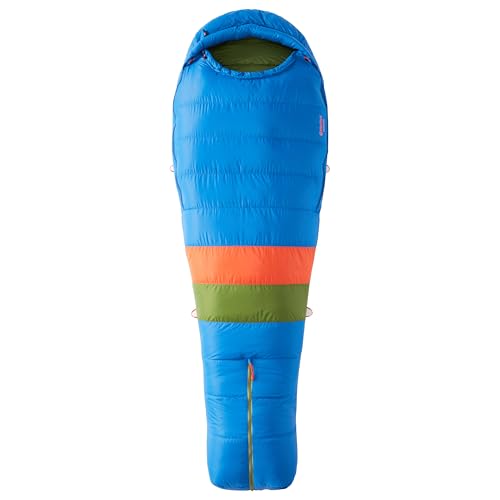
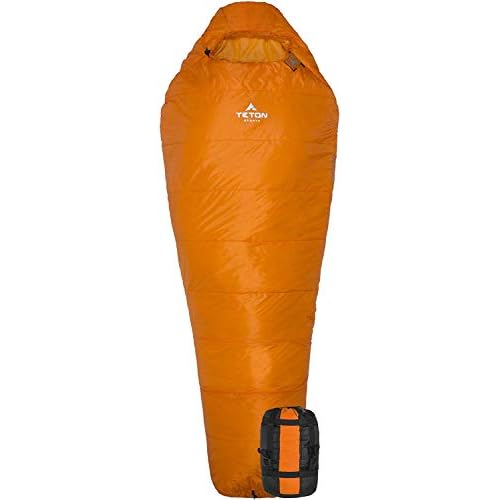


Top pick Kelty 0°F | Down Sawtooth 15 | Value Altos-S 0 | Damp cold Trestles 15 | |
|---|---|---|---|---|
|
|
|
|
| |
| Rated to | 0°F | 15°F (ISO limit) | 0°F | 15°F |
| Comfort figure | Not quoted | 27°F (ISO) | 25–30°F (maker) | 23.7°F (EN) |
| Fill | Synthetic | 650-fill down | Synthetic | Synthetic |
| Weight | 5 lb 3 oz (Long) | Not quoted (Regular) | 3.5 lb | 4.4 lb |
| Fits up to | 6 ft 6 in | Not quoted | 6 ft | 6 ft |
| Packed size | 11.5 x 19 in | Not quoted | 12.75 x 9.5 x 9.5 in | 9.5 x 19 in |
| Warranty | Limited lifetime | Limited lifetime | Limited lifetime | Limited lifetime |
| Check price | Check price | Check price | Check price |
Best cold weather sleeping bags: our detailed reviews
Each review covers the rating and what it really means, fill type, weight, fit and the complaints owners raise most. Camping in the UK? See our UK cold weather sleeping bag picks, converted to °C.
0°F rating, 67.8 oz recycled CirroLoft ECO synthetic fill, fits to 6 ft 6 in, 5 lb 3 oz, 11.5 x 19 in stuffed, limited lifetime warranty
Kelty’s Cosmic Synthetic 0 is the bag we’d hand most people heading into their first sub-freezing camping season. The Long size packs 67.8 oz of recycled CirroLoft ECO insulation into an 84.3 in bag that fits sleepers up to 6 ft 6 in, and Kelty lists it at 5 lb 3 oz with an 11.5 x 19 in stuffed size. That is heavy for backpacking but perfectly reasonable for car camping, hunting camps and winter overnights close to the trailhead.
The details are the ones that matter in real cold: a contoured hood, a full draft collar around the neck, a full-length draft tube behind the zipper and offset quilting to avoid cold spots along the stitching. The footbox is expanded so feet aren’t compressed against the shell, a common cause of cold toes. Dual locking sliders let you vent from the bottom on milder nights, and there’s a zippered stash pocket for a phone or headlamp. Synthetic fill keeps insulating when the bag gets damp from condensation, which helps on multi-night trips. Kelty doesn’t state on the listing whether 0°F is an ISO comfort or limit figure, so treat it as a limit-style rating and pair it with a warm pad.
- Genuine 0°F rating
- Synthetic fill copes with damp
- Fits sleepers to 6 ft 6 in
- Draft collar and draft tube
- Limited lifetime warranty
- 5 lb 3 oz is heavy for backpacking
- Bulky when packed
- Rating type not stated on listing
ISO-tested, 650-fill down with Down Defender water resistance, dual side zips, footbox zip, PFAS-free, limited lifetime warranty
The Sawtooth is the pick for campers who carry their bag any distance. It uses certified 650-fill-power down treated with Marmot’s Down Defender to resist moisture, recycled shell and lining fabrics, and it is PFAS-free. Crucially, it is ISO tested: REI lists a 27°F comfort rating and a 15°F lower limit, which tells you exactly what to expect. A warm sleeper should be fine around 15–20°F; a cold sleeper should plan on the high 20s unless they add layers.
Two side zippers make it easy to get in and out and to vent, and extended zipper flaps let it open into a blanket on mild nights. A separate footbox zipper lets hot feet breathe without opening the whole bag. REI lists the Long X-Wide version at 3 lb 5.6 oz with an 11.6 L compressed volume; the listing doesn’t quote the Regular’s weight. Reviewers’ main complaints are a snug footbox and a rating that some cold sleepers find optimistic, which is why we’d use the 27°F comfort figure, not the 15°F name, when planning.
- ISO comfort and limit ratings published
- 650-fill water-resistant down
- Dual side zips plus footbox zip
- Lighter and more packable than synthetic
- PFAS-free
- Most expensive pick
- Footbox can feel snug
- Down needs care if it gets wet
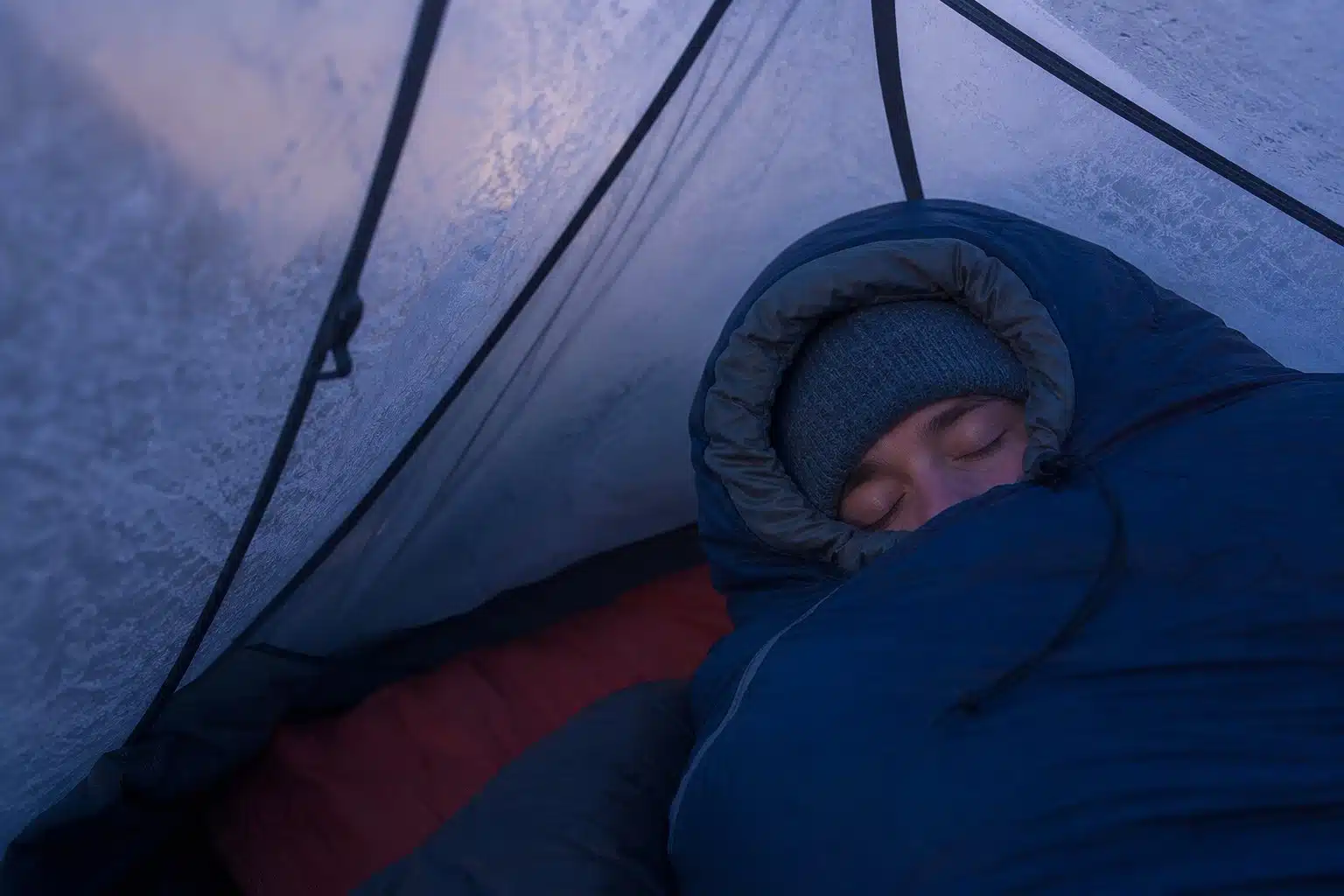
0°F rating with a stated 25–30°F comfort range, 3.5 lb, roomy cut, fits to 6 ft, 12.75 x 9.5 x 9.5 in packed, limited lifetime warranty
TETON is refreshingly upfront about the Altos-S. It carries a 0°F rating, but TETON’s own spec sheet gives a comfort rating of 25–30°F, which is the number most campers should plan around. At 3.5 lb with a 12.75 x 9.5 x 9.5 in compressed size, it is far lighter and smaller than budget car-camping bags with similar labels, and it uses TETON’s plant-based Spectrum S synthetic fill, so it keeps working if it gets damp.
The cut is deliberately roomier than a race-fit mummy, with more shoulder and leg room and a built-out footbox (TETON lists 66 in shoulder girth and 38 in at the feet), which side sleepers and broad-shouldered campers will appreciate. It fits people up to 6 ft and is 84 x 32 in. The compression sack is included and the bag is backed by TETON’s limited lifetime warranty. Expect it to be comfortable into the high 20s on its own, and lower with a good pad, a hat and warm layers.
- Comfort range stated honestly (25–30°F)
- Light for a synthetic winter bag
- Roomy shoulders and footbox
- Compression sack included
- Limited lifetime warranty
- 0°F label is a survival-style figure
- Fits only up to 6 ft
- Hand wash only
SpiraFil high-loft synthetic, EN comfort 23.7°F and lower limit 11.8°F (retailer data), 3D footbox, two-way YKK zip, 4.4 lb, fits to 6 ft
The Trestles 15 has been one of Marmot’s best-selling synthetic bags for years, and for good reason. SpiraFil high-loft insulation stays warm when wet, so it suits wet snow, coastal cold, river trips and multi-night camps where a down bag would slowly lose loft to condensation. Retailer CampSaver lists EN test results of 23.7°F comfort and 11.8°F lower limit, so the 15°F name sits sensibly between the two.
Marmot gives it an anatomical 3D footbox, wave construction on top to stop insulation shifting, and a locking two-way YKK zipper so you can vent from the feet. The Regular fits up to 6 ft (Long and XL sizes go to 6 ft 6 in and 7 ft), and CampSaver lists it at 4.4 lb with a 9.5 x 19 in packed size. It is heavier and bulkier than the Sawtooth, but it costs far less and shrugs off moisture. This listing is the men’s left-zip version.
- Published EN comfort and limit figures
- Synthetic stays warm when damp
- 3D footbox for warm feet
- Two-way locking YKK zip
- Limited lifetime warranty
- Bulkier than down
- 4.4 lb is middleweight
- Left-zip only on this listing
20°F synthetic mummy with flexible stretch baffles, adjustable length locks, draft collar, anti-snag two-way YKK zip, 2-year warranty
Mummy bags are the warmest shape, but side sleepers often hate them. Klymit’s Sojourn Stretch 20 tackles that with flexible stretch baffles that hug your body but give as you roll over, so you don’t twist the whole bag or open cold gaps. Length Locks let you shorten the bag to your height, which removes dead air space at the feet that your body would otherwise have to heat.
It has a mummy hood with an integrated draft collar and drawcord, and an anti-snag two-way YKK zipper so you can vent from the bottom. REI lists it at 4 lb 10 oz with 2 lb 14 oz of synthetic fill, a 78 in fit and a 20.6 L compressed volume, so it is a car-camping or short-hike bag rather than an ultralight one. Klymit describes it as a three-season bag rated as low as 20°F and doesn’t publish ISO figures, so we’d use it for nights down to the low 30s on its own and colder only with a warm pad and layers. Warranty is 2 years.
- Stretch baffles move with you
- Length locks reduce dead space
- Draft collar and hood
- Anti-snag two-way zip
- No ISO rating published
- Bulky packed size
- Only a 2-year warranty
20°F survival rating (TETON says comfort is 20–30 degrees higher), microfiber insulation, draft tube, vaulted footbox, compression sack, lifetime warranty
The Trailhead is here because it is cheap and honest. TETON states plainly that it is survival rated to +20°F and that its comfort rating is 20–30 degrees higher, which means it is really a 40–50°F comfort bag that will keep you safe, if not cosy, on a surprise frost. That candour is rare at this price, and it makes the Trailhead a smart choice for fall camping, scouts and spare-bag duty.
It has a proper mummy hood, a zipper draft tube, a vaulted footbox and a soft double-brushed liner, and the microfiber insulation compresses well into the included compression sack. TETON’s lifetime warranty covers defects in materials and workmanship. The listing doesn’t quote a weight or packed size. For real winter nights, step up to a 0°F bag; for fall, pair the Trailhead with a fleece liner and an insulated pad and it punches well above its price.
- Very low price
- Honest survival vs comfort rating
- Hood, draft tube and vaulted footbox
- Lifetime warranty
- Comfort is roughly 40–50°F
- Weight and size not quoted
- Not a true winter bag
20°F rectangular bag, ThermoLock draft tube, no-snag zipper, zips together with a second bag, machine washable, 75 x 33 in, fits to 5 ft 11 in, 5-year warranty
The Brazos is a classic Coleman rectangular bag: roomy, washable and cheap. Coleman rates it to 20°F, adds a ThermoLock draft tube along the zipper and Fiberlock construction to stop the insulation shifting, and uses a no-snag zipper. Two Brazos bags zip together into a double, and the roll-up fasteners make packing easier than with most rectangular bags. It is machine washable, a real plus for kids and dogs, and Coleman backs it with a 5-year limited warranty.
The catches are size and shape. At 75 x 33 in it fits campers only up to 5 ft 11 in, and a rectangular bag with no hood loses far more heat around the shoulders and head than a mummy. Coleman doesn’t publish an ISO comfort figure, so we’d treat 20°F as a lower-limit-style number and plan for nights in the mid-30s or warmer unless you add a blanket, liner or warm hat. For that kind of car camping, it is excellent value.
- Very affordable
- Machine washable
- Zips together for couples
- No-snag zipper
- 5-year warranty
- No hood, so heat escapes at the shoulders
- Fits only up to 5 ft 11 in
- No ISO comfort figure
How cold weather sleeping bag temperature ratings work
Bags tested to ISO 23537 (formerly EN 13537) get a comfort rating, the temperature at which an average cold sleeper stays warm, and a lower limit, the lowest temperature at which an average warm sleeper can sleep for eight hours curled up. REI explains that many brands name men’s bags after the lower limit and women’s bags after the comfort rating, and that the lab figures are best for comparing bags rather than predicting your own night. We explain the difference in more detail in sleeping bag comfort vs limit temperature.
Bags without ISO testing, common among budget brands, often print a survival-style number in the name. TETON is unusually candid: it says the Trailhead’s 20°F is a survival figure and comfort is 20–30 degrees higher. As a rule of thumb, if you run cold, choose a bag whose comfort rating is at or below the coldest night you expect, and add a liner, hat and dry base layers for margin.
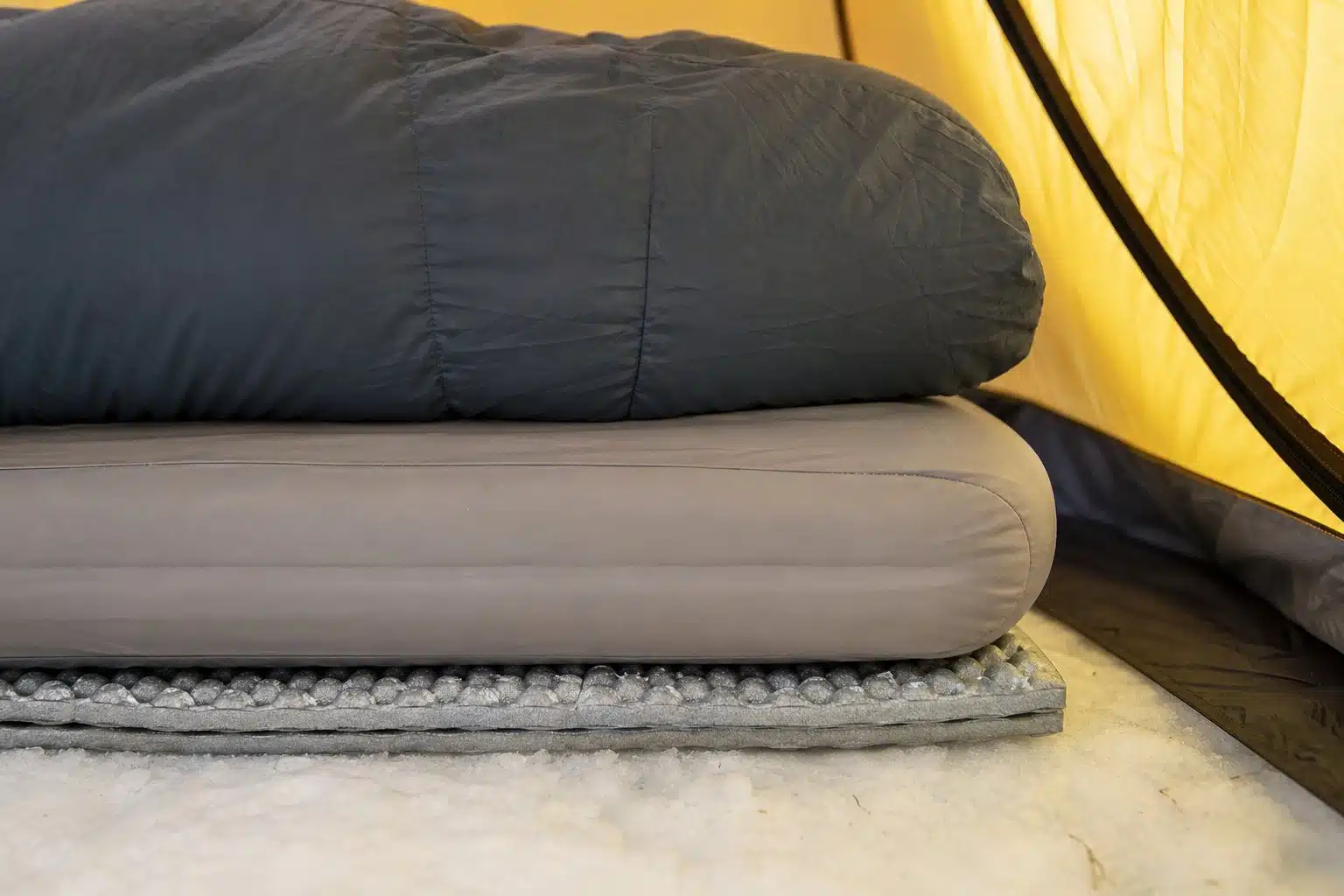
Which sleeping pad R-value do you need with a cold weather sleeping bag?
ISO bag ratings are measured on a pad of about R 5.4, so on a thinner pad you’ll sleep colder than the label suggests. For nights from about 20°F down to 0°F, use a pad rated R 5 or higher under the ASTM F3340 standard, and R 6–7 if you sleep cold or camp on snow or frozen ground. R-values add up, so a closed-cell foam pad under an air pad is a cheap way to get there. See what R-value a sleeping pad needs for winter and whether stacking sleeping pads helps.
Mummy, rectangular or something in between?
Shape has a big effect on warmth. A mummy bag tapers toward the feet and closes around your head with a hood, so there is less air inside for your body to heat and fewer gaps for warmth to escape. That is why most serious winter bags, including the Kelty Cosmic 0, the Marmot Sawtooth 15 and the Marmot Trestles 15, use a mummy cut.
Rectangular bags, like the Coleman Brazos 20, give you room to move and can often zip together into a double, which families and couples on car-camping trips appreciate. The trade-off is warmth: with no hood and more space inside, they lose more heat around the shoulders and head. Rectangular bags suit mild cold, cabins and campgrounds where you can add a blanket.
In between sit roomier mummies and stretch designs. The TETON Altos-S has a more generous cut through the shoulders and footbox, while the Klymit Sojourn Stretch 20 uses stretch baffles that give as you roll over. Both are good options for side sleepers and broad-shouldered campers who feel trapped in a close-fitting mummy.
How to choose cold weather sleeping bags for your trips
The best cold weather sleeping bags for you depend on where you camp, how you get there and how warm you naturally sleep. Start by estimating the coldest night you are likely to face, then decide how much weight and bulk you can carry. A bag that is perfect for a winter car camp can be far too heavy for a hike-in site.
Car camping or backpacking?
If your car is parked next to your tent, weight and packed size hardly matter, and a heavier synthetic bag like the Kelty Cosmic Synthetic 0 makes sense. If you carry your gear any distance, down or a lighter synthetic becomes more attractive, which is where the Marmot Sawtooth 15 and the TETON Altos-S come in. Think about the trips you take most often, not the one adventure you might plan.
Plan around how you sleep
Two people in the same bag on the same night can feel very differently. If you tend to sleep cold, choose a bag whose comfort rating, not its name, sits at or below the coldest temperature you expect. Warm sleepers can lean closer to the lower limit. If you do not know which you are, assume you sleep cold on your first winter trip and adjust from there.
Get the length and girth right
A bag that is too short compresses the insulation at your feet and head, while one that is far too long leaves extra air to warm. Check the maximum height each bag fits; the Kelty Long goes to 6 ft 6 in, while the Coleman Brazos fits campers up to 5 ft 11 in. Girth matters too, especially for side sleepers, so look at shoulder measurements or stretch features if you like room to move.
Weigh up weight and packed size
Winter bags are bigger than summer bags, and the differences between them add up. The Kelty Cosmic Synthetic 0 Long weighs 5 lb 3 oz, the Marmot Trestles 15 about 4.4 lb and the TETON Altos-S 3.5 lb, with packed sizes to match. A compression sack helps on the trail, but check that the packed bag still fits your pack or car alongside a winter tent, pads and extra clothing.
Think about venting for milder nights
Most cold weather sleeping bags will also be used on nights that turn out warmer than forecast, so venting matters. Two-way zips let you open the bottom to cool your feet, and the Marmot Sawtooth adds dual side zips plus a separate footbox zip. A bag you can vent easily covers a wider range of nights, which makes a warmer rating less of a gamble.
Down vs synthetic for winter camping
Down insulation is warmer for its weight and compresses smaller, so it is the natural choice when every pound in your pack counts. Treated down, such as the Down Defender fill in the Marmot Sawtooth, resists moisture better than untreated down. On the other hand, down bags usually cost more and need careful drying if they get properly wet.
Synthetic fill is cheaper, easier to wash and keeps insulating when damp, which matters more in winter than many campers expect. Your breath and body give off moisture all night, and in freezing weather some of it ends up in the bag. On a single night that rarely matters, but over several nights a synthetic bag like the Marmot Trestles 15 copes with that slow build-up better.
Many campers end up owning both: a light down bag for backpacking and a tougher synthetic winter sleeping bag for car camping, wet snow and long trips. If you can only buy one, choose based on the trips you take most and how damp your winters usually are.
Liners, layers and pads that add warmth
You can stretch the range of any bag with a few additions. A fleece or insulated liner adds warmth and keeps the inside of the bag clean, which is a cheap upgrade for a budget bag such as the TETON Trailhead. Dry base layers, warm socks and a beanie all help, and stuffing tomorrow’s clothes into the footbox fills dead air and keeps them warm for the morning.
The pad matters as much as the bag. Insulation underneath you gets squashed flat by your body weight, so the ground pulls heat straight through it. A warm sleeping pad, or a foam pad stacked under an air pad, gives your bag a fair chance to reach its rating. Our guide on what sleeping pad you need for camping explains the options in more detail.
If you want a little extra warmth without combustion, a 12V heated blanket or USB heated pad can sit on top of your sleep system; our round-up of the best battery powered heaters for camping covers those. Treat them as a bonus, not a replacement for a bag and pad that are warm enough on their own.
Caring for cold weather sleeping bags
Looking after cold weather sleeping bags keeps them lofty and warm for many seasons. At camp, open the bag and air it each morning, ideally in the sun or a dry breeze, so the moisture from the night can escape. Use a stuff sack only for travel, and store the bag loose at home in a large cotton or mesh sack, or hang it in a closet, so the insulation does not stay compressed.
Wash bags only when they need it, following the maker’s label. The Coleman Brazos is machine washable, while the TETON Altos-S is hand wash only, and down bags need a down-specific wash and long, gentle drying to restore their loft. Spot-clean the hood and collar between washes, since body oils collect there first. A liner reduces how often you need to wash the bag itself.
Check zippers, draft tubes and baffles before the cold season starts. A snagging zipper or a gap along the draft tube can make an otherwise warm bag feel drafty. Most of the picks here come with long warranties, including limited lifetime cover from Kelty, Marmot and TETON, so contact the maker if you find a defect rather than putting up with it.
Final thoughts on staying warm in winter
The best cold weather sleeping bags are the ones that match your trips, your body and your pad. Plan around comfort ratings, choose a shape you can sleep in, pick down or synthetic for your usual conditions and always pair the bag with a warm pad. For most campers the Kelty Cosmic Synthetic 0 is the easy starting point, with the Marmot Sawtooth 15 for backpackers.
Before your first cold trip, try the bag at home or in the backyard on a chilly night to check the fit and warmth. Pack a liner, dry layers and a hat for extra margin, and know the signs of hypothermia. With the right winter sleeping bag and a little preparation, a frosty night can be one of the best parts of camping.
Cold weather sleeping bag myths
Often not. Many 0°F labels are a lower limit or survival figure; comfort may be 20–30°F, as TETON states for the Altos-S.
Dry base layers, socks and a hat add warmth and keep body oils off the insulation. The key is that they are dry, not damp from the day.
Wet down loses loft, but treated down like Marmot’s Down Defender resists moisture, and a night or two of condensation rarely matters. Synthetic is still safer for long, wet trips.
What to look for in a cold weather sleeping bag
Look for ISO/EN comfort and lower limit figures, or a maker that states the comfort range. Plan around comfort if you sleep cold.
Most heat escapes at the neck, head and zipper. A cinchable hood, a draft collar and a full-length draft tube make a big difference below freezing.
Down is warmer for its weight and packs smaller; synthetic is cheaper, easier to wash and keeps insulating when damp.
Pick a length that fits without your feet pressing the footbox. Side sleepers and broad shoulders benefit from roomier cuts or stretch baffles.
Car campers can accept 5 lb+ synthetic bags; backpackers should look at down or light synthetic under about 3.5 lb.
Anti-snag two-way zips and footbox vents let one bag cover a wider range of nights.
How to sleep warm in a cold weather sleeping bag
- Insulate from the ground
Use an R 5+ pad, or stack a foam pad under an air pad. Cold ground is the most common reason people sleep cold.
- Change into dry layers
Swap sweaty clothes for dry base layers, socks and a beanie before you get in.
- Eat and warm up first
A fatty, filling dinner and a short walk or a few squats before bed give your body heat to work with.
- Cinch the hood, don't bury your face
Close the hood and draft collar, but keep your mouth and nose out so breath moisture doesn’t dampen the insulation.
- Fill dead space
Stuff tomorrow’s clothes into the footbox, or use a liner, so there’s less air to heat.
- Add a hot water bottle
A sealed bottle of hot water in a sock near your core or feet is a safe heat source for the first hours of the night.
How we chose these cold weather sleeping bags
We have not tested every bag in this list ourselves. Our picks are based on the Amazon listings, maker and retailer specifications (TETON, REI and CampSaver, including ISO/EN results where published), expert guidance on temperature ratings and pad R-values from REI and SectionHiker, and recurring owner complaints about cold feet, optimistic ratings, tight mummy shapes and zipper snags.
-
Rating honesty
We favoured bags with ISO/EN figures or a stated comfort range, and say clearly where none is given.
-
Warmth features
We checked for hoods, draft collars, draft tubes and footbox design.
-
Fit and weight
We compared length, girth, weight and packed size for car camping and backpacking.
-
Value and warranty
We weighed price against fill type, build and stated warranty.
Temperature ratings are a guide only. Everyone sleeps differently; in very cold conditions carry extra insulation and know the signs of hypothermia.
What is the best cold weather sleeping bag?
For most campers, the Kelty Cosmic Synthetic 0°F: real winter warmth, a draft collar, room for tall sleepers and a limited lifetime warranty. Backpackers who want less weight should look at the ISO-tested Marmot Sawtooth 15 down bag.
Is a 20°F sleeping bag warm enough for winter camping?
Only for mild winter nights. Check the comfort rating: many 20°F bags are comfortable around 30–35°F. For nights near or below 20°F, choose a 0°F bag or add a liner and warm layers.
Should I buy a 0°F or a 20°F sleeping bag?
If your coldest nights are below about 25°F, or you sleep cold, a 0°F bag is the safer choice; you can vent it on milder nights. A 20°F bag is lighter and cheaper for spring and fall.
Is down or synthetic better for cold weather?
Down is warmer for its weight and packs smaller, so it suits backpacking. Synthetic is cheaper and keeps insulating when damp, so it suits car camping, wet snow and long trips.
What R-value pad do I need for a 0°F sleeping bag?
At least R 5, and R 6–7 on snow or if you sleep cold. ISO bag ratings assume a pad of about R 5.4.
Why are my feet cold in my sleeping bag?
Usually a bag that’s too short (compressing the footbox insulation), a thin pad, or damp socks. Size up in length, wear dry socks and add a hot water bottle.
For more ways to stay warm in camp, read how to choose a camping sleeping bag, our tent-heater guides to the best propane heaters for camping and battery powered heaters for camping, and our compact backpacking sleeping bags.
Which cold weather sleeping bag should you buy?
- Best overall 0°F bag: Kelty Cosmic Synthetic 0°F Sleeping Bag (Long)
- Best down bag: Marmot Sawtooth 15° Down Sleeping Bag
- Best value 0°F bag: TETON Sports Altos-S 0°F Mummy Sleeping Bag
- Best for damp cold: Marmot Trestles 15° Synthetic Sleeping Bag
- Best for restless sleepers: Klymit Sojourn Stretch 20 Sleeping Bag
- Best budget mummy: TETON Sports Trailhead 20°F Sleeping Bag
- Best for car camping: Coleman Brazos 20°F Sleeping Bag
For most campers, the Kelty Cosmic Synthetic 0°F is the best cold weather sleeping bag: genuine winter warmth, a draft collar, a long fit and a lifetime warranty. Backpackers should choose the ISO-tested Marmot Sawtooth 15 down bag, budget buyers the light TETON Altos-S 0°F (planning around its 25–30°F comfort range), and campers in wet snow the Marmot Trestles 15. The Klymit Sojourn Stretch 20 suits restless sleepers, while the TETON Trailhead and Coleman Brazos are budget bags for fall and car camping. Whatever you buy, pair it with an R 5+ pad.
CampEquipmentPlus relies on reader support. Purchases made via links on our website may earn us an affiliate commission at no extra cost to you, helping keep the site running.