
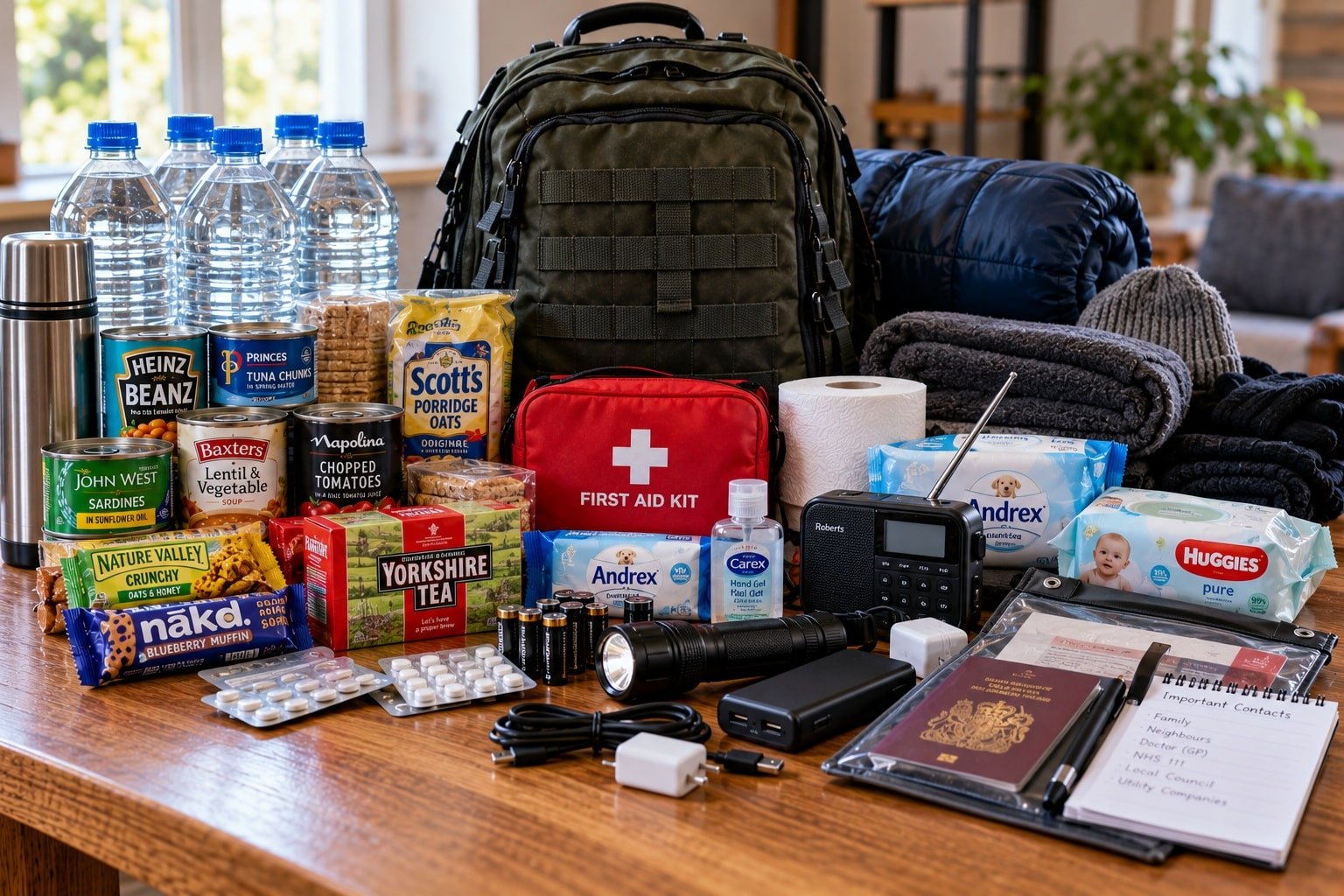
Knowing what to put in a 72 hour emergency kit helps UK households prepare for power cuts, water supply interruptions and other situations where essential services become unavailable.
The UK Government recommends keeping enough basic supplies at home to manage for at least three days.
You don’t need expensive survival equipment or a large collection of specialist products. Most households already own several useful emergency items.
The important part is knowing which supplies are essential, which are optional and what you should buy first.
This guide explains the contents of a practical 72-hour emergency kit, how to prioritise your purchases and which common mistakes to avoid.
For a complete household planning guide, see our 3-Day Emergency Kit UK Checklist.
What Are the Essential Items in a 72-Hour Emergency Kit?
A 72-hour emergency kit should help your household manage basic needs during a temporary disruption to electricity, drinking water, food supplies or communications.
The UK Government’s Be Ready guidance recommends keeping essential supplies available, including drinking water, non-perishable food, lighting, a battery-powered or wind-up radio and important household information.
The following table separates essential supplies from useful extras and optional equipment.
| Emergency supply | Priority | Why you need it |
|---|---|---|
| Drinking water | Essential | Provides safe drinking water during supply interruptions |
| Non-perishable food | Essential | Allows you to eat without relying on shops or refrigeration |
| Essential medication | Essential where required | Maintains access to prescribed treatment |
| LED torch | Essential | Provides lighting during power cuts |
| Battery-powered or wind-up radio | Essential | Helps you receive emergency information |
| First aid kit | Essential | Provides supplies for minor injuries |
| Hygiene products | Essential | Supports basic cleanliness and sanitation |
| Warm clothing and blankets | Essential | Helps you stay warm if heating stops |
| Emergency contact information | Essential | Keeps important numbers available offline |
| Phone charging cables | Essential where applicable | Allows compatible devices to be charged |
| Portable power bank | Useful | Provides backup charging for phones |
| Battery-powered lantern | Useful | Provides wider room lighting |
| Waterproof document pouch | Useful | Protects important paperwork from moisture |
| Water storage containers | Useful | Provides additional drinking water storage |
| Emergency foil blankets | Optional | Provides compact supplementary insulation |
| Portable power station | Optional | Supplies backup electricity for compatible devices |
These priorities are practical recommendations rather than an official government classification.
A household with medical equipment, young children or specific accessibility needs may need to treat some additional supplies as essential.
Which Supplies Should You Prioritise?
The easiest way to prepare is to work through your household’s basic needs before considering additional equipment.
Essential Supplies for Every Household
Drinking water
Water should be one of your first priorities.
The UK Government recommends storing at least 3 litres of drinking water per person per day for three days.
That means:
- One person needs 9 litres.
- Two people need 18 litres.
- Four people need 36 litres.
These quantities cover drinking water. Additional supplies may be needed for cooking, hygiene, pets or medical requirements.
Bottled water is a convenient option because you can store sealed containers without purchasing specialist equipment.
Non-perishable food
Keep three days of suitable food for everyone in your household.
Choose foods that can be eaten without electricity or extensive preparation.
Useful examples include tinned beans, ready-to-eat fish, crackers, oatcakes, cereal bars, dried fruit and long-life milk.
Remember to include a manual tin opener if your emergency food contains tins without ring pulls.
Lighting
A working torch is one of the most useful emergency items you can own.
LED torches are widely available and generally provide efficient lighting.
Choose a model with a reliable power source. If your torch uses replaceable batteries, keep suitable spares.
Consider keeping additional torches near bedrooms and other accessible locations.
Emergency radio
A battery-powered or wind-up radio allows you to receive information when mobile networks, internet services or household electricity are unavailable.
A basic FM radio is suitable for this purpose.
Some wind-up models include rechargeable batteries, solar panels and built-in torches. These features may be useful, although charging performance varies between products.
First aid and hygiene supplies
Keep a basic first aid kit containing suitable dressings, plasters, bandages and disposable gloves.
You should also have toilet paper, soap, hand sanitiser, wet wipes and other essential hygiene products.
For first aid advice, consult the NHS or a recognised first aid training provider.
Warm clothing and blankets
If your heating stops during cold weather, warm clothing and suitable blankets can help reduce heat loss.
Keep enough for everyone in your household.
Ordinary household blankets and sleeping bags are often sufficient. You do not need to buy specialist emergency blankets if your existing supplies meet your needs.
Supplies for Specific Household Needs
A standard emergency kit will not suit every household.
Consider the people and animals living in your home before deciding what to include.
Babies and young children
You may need nappies, baby wipes, formula, appropriate feeding supplies, spare clothing and familiar comfort items.
Plan how you would safely prepare feeds if electricity or clean running water became unavailable.
Older adults
Some older people may require medication, spare hearing aid batteries, accessible lighting or mobility equipment.
Keep essential aids in locations where they can be reached safely.
People with medical requirements
Maintain an up-to-date medication list and discuss suitable emergency arrangements with a pharmacist or healthcare professional.
If someone relies on electrically powered medical equipment, obtain professional advice about appropriate backup power.
Pets
Store enough suitable food and drinking water for your animals.
Keep leads, carriers, waste bags and essential veterinary information available.
Optional Emergency Equipment
Once you have covered essential supplies, consider equipment that makes an emergency easier to manage.
A portable power bank can keep your phone charged during a power cut.
A battery-powered lantern can illuminate a room more effectively than a handheld torch.
Food-grade water containers may help if you have sufficient storage space.
A waterproof pouch can protect documents from moisture.
Some households may benefit from a portable power station, particularly where several compatible electronic devices need charging.
These products can be useful, but they should not take priority over drinking water, food, medication and basic safety equipment.
What Emergency Supplies Do You Already Own?
Before spending money, check your cupboards, kitchen drawers and existing camping equipment.
You may already have much of what you need.
A camping torch can serve as an emergency household torch if it works reliably and you have a suitable power supply.
Your existing sleeping bags can provide additional warmth.
Tinned food, crackers and long-life products from your kitchen cupboards may form part of your emergency food supply.
A first aid kit from your car or camping equipment may contain useful supplies, although you should check its contents and expiry dates.
Look for the following items:
- Working torches and spare batteries.
- Blankets and sleeping bags.
- Non-perishable food.
- Bottled drinking water.
- First aid supplies.
- Portable phone chargers.
- Suitable storage containers.
- Manual tin opener.
- Battery-powered radio.
- Essential hygiene products.
Check that everything works and is in suitable condition.
A torch without batteries or a power bank that has not been charged for two years is not a reliable emergency supply.
Make a list of missing essentials before purchasing anything.
This simple check may save you money and prevent duplicate purchases.
What Should You Buy First on a Limited Budget?
You don’t need to build your entire emergency kit in one shopping trip.
If money is limited, prioritise supplies that directly support your household’s basic needs.
First Priority: Water and Food
Start by checking your drinking water supply.
For a household of two people, aim for at least 18 litres of drinking water for three days.
Then check your food cupboards.
If you already have enough suitable non-perishable food, you may only need to add a few items.
Buying familiar supermarket products is often more practical than purchasing specialist survival rations.
Second Priority: Lighting and Communication
Make sure you have a working torch and a reliable way to receive emergency information.
A basic battery-powered radio can be sufficient.
You don’t need a radio with every additional feature, particularly if you already own suitable charging equipment.
Third Priority: First Aid and Hygiene
Check your existing first aid kit.
Replace missing or expired supplies and ensure you have enough hygiene products for your household.
Include any essential medication arrangements.
Fourth Priority: Backup Charging and Additional Equipment
Once the basics are covered, consider a power bank, lantern or other equipment that meets your needs.
You may already own a portable charger for travel or camping.
Check its capacity, charging connections and condition before buying another.
For equipment comparisons, see our Best Emergency Kit Supplies for UK Households.
You can also use our 3-Day Emergency Kit Cost Guide to plan your purchases.
Useful Equipment Worth Considering
Some items are particularly useful for households preparing for electricity or communication disruptions.
LED emergency torch
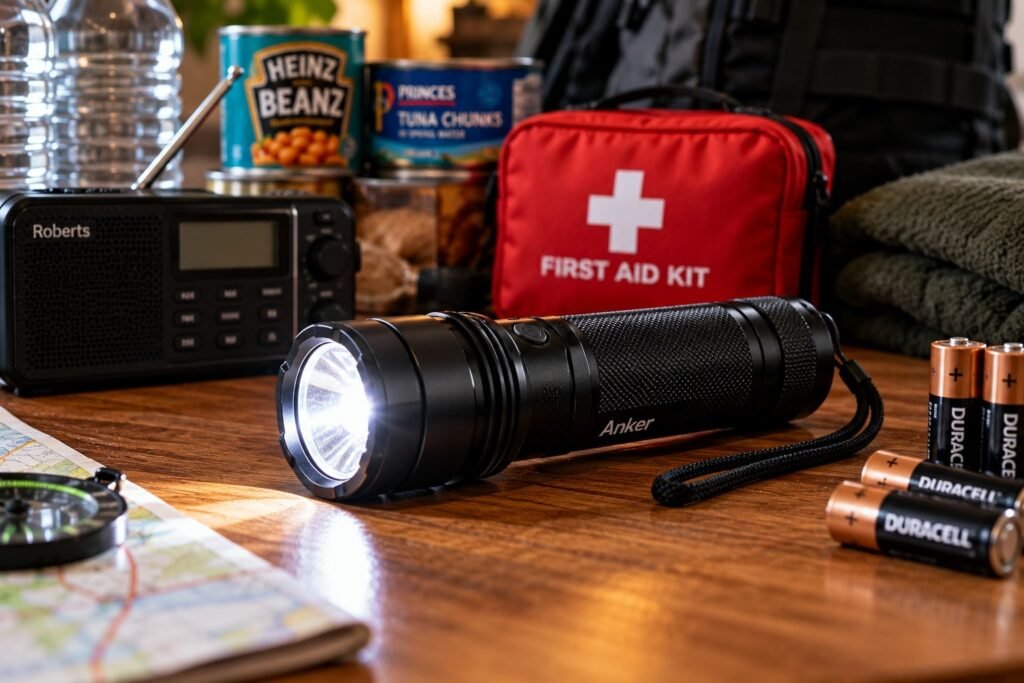
Choose a torch that is easy to operate, provides adequate light and uses a dependable power source.
Models with replaceable batteries are practical if you keep suitable spares.
Battery-powered or wind-up radio
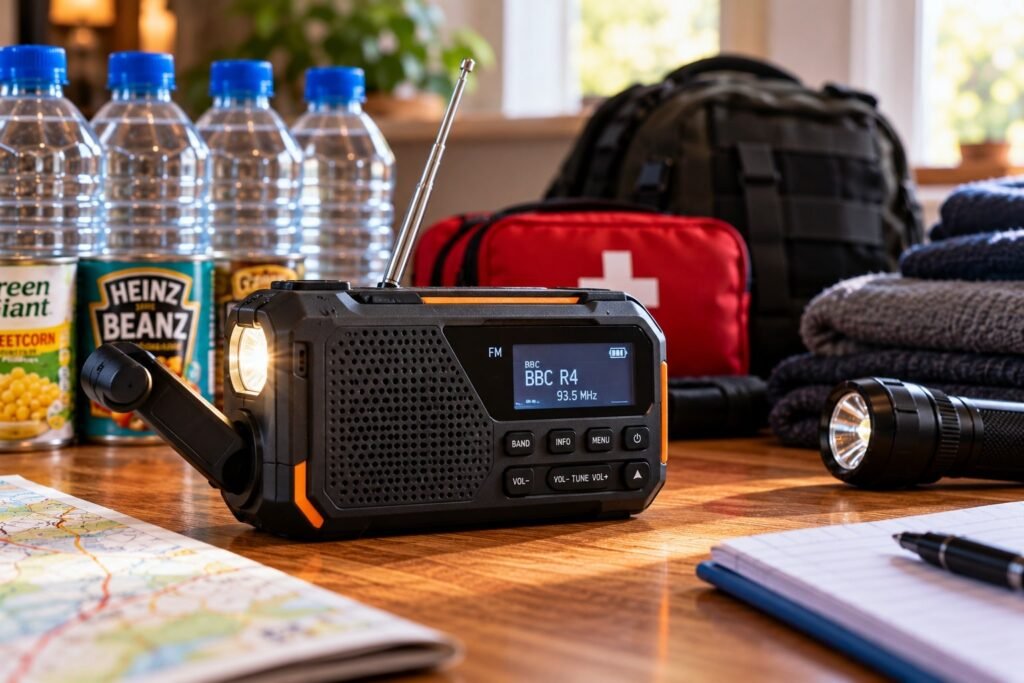
Look for reliable FM reception, straightforward controls and a power source that you can maintain.
If you choose a wind-up model, check the manufacturer’s stated charging and operating characteristics.
Portable power bank
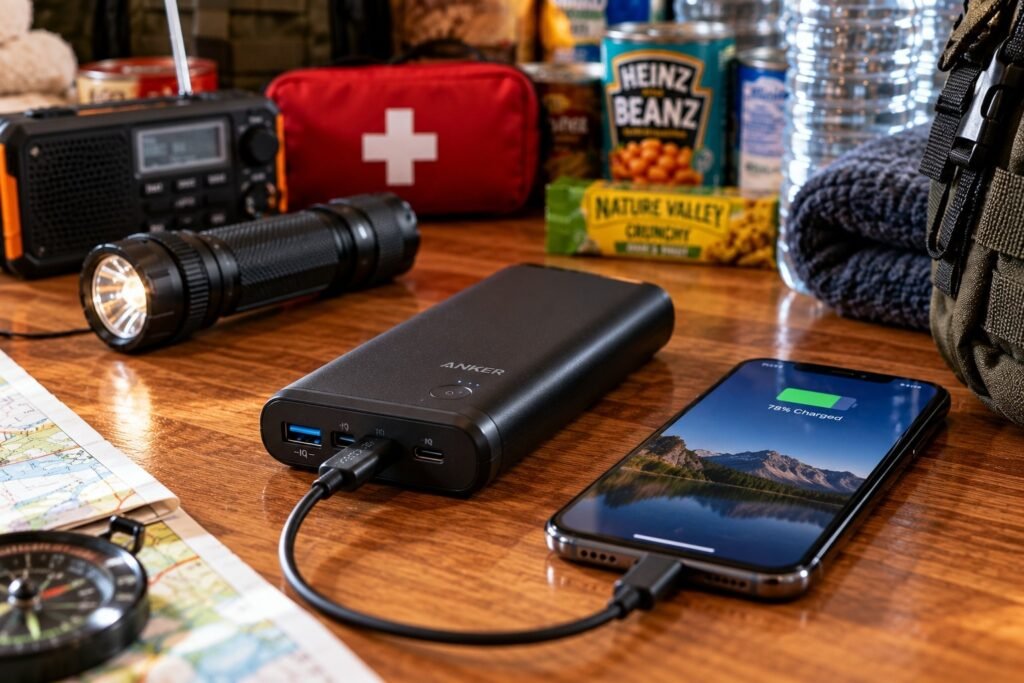
A power bank can provide backup charging for a smartphone.
Choose a capacity that suits your devices and check that the charging connections are compatible.
Household first aid kit
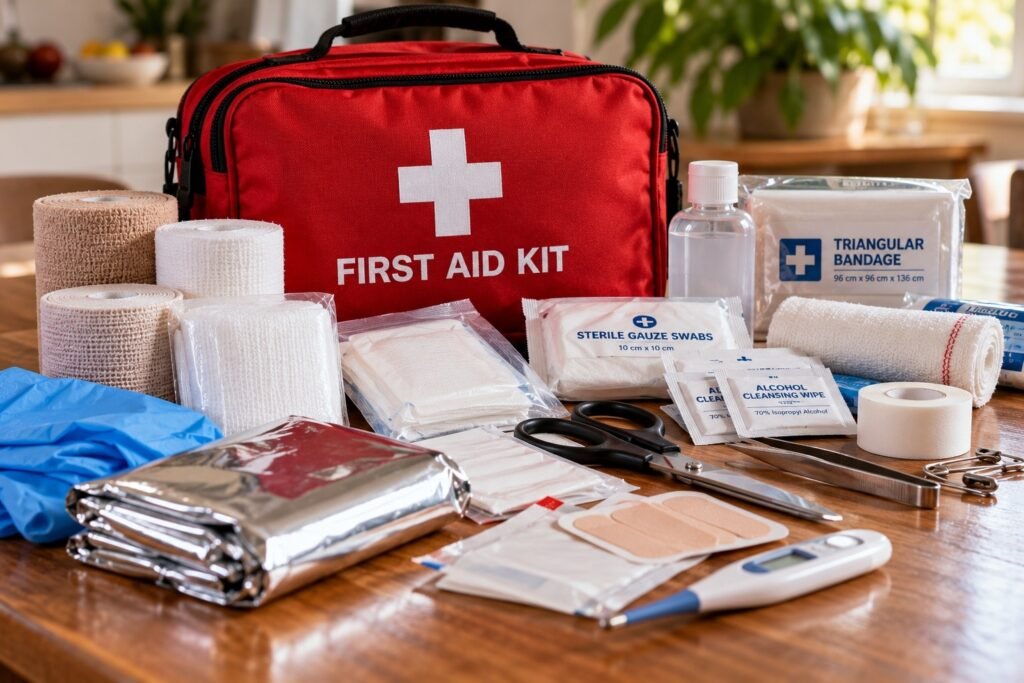
Choose a kit with clearly listed contents and enough basic supplies for your household.
Avoid assuming a larger kit is automatically better. The contents matter more than the number of items advertised.
These products are commonly available through Amazon.co.uk, outdoor retailers and high-street shops.
What Should You Avoid Putting in Your Emergency Kit?
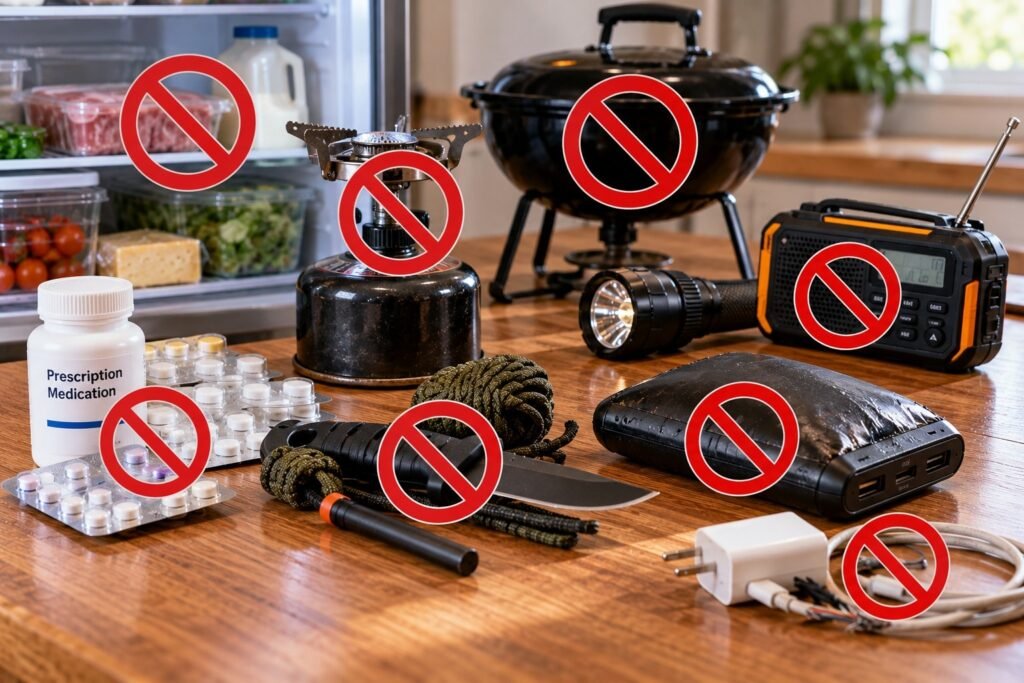
A useful emergency kit should be practical, safe and easy to maintain.
Some items create unnecessary expense or introduce avoidable risks.
Food That Requires Refrigeration
Avoid relying on refrigerated food for your emergency supply.
A prolonged power cut may make refrigeration unavailable.
Choose suitable shelf-stable foods and follow their storage instructions.
Equipment You Have Never Checked
Don’t assume a new radio, torch or charger will work when needed.
Check the instructions and test equipment before storing it.
Unnecessary Specialist Survival Gear
A household emergency kit is different from equipment intended for wilderness survival.
Most households do not need specialist knives, fire-starting equipment or expensive outdoor cooking systems to manage a temporary disruption at home.
Focus on the risks relevant to your property and household.
Indoor Use of Unsafe Cooking Equipment
Never use a barbecue or an outdoor-only camping stove indoors.
Fuel-burning appliances can produce dangerous carbon monoxide, even where there is no obvious smoke.
Follow the manufacturer’s instructions and official safety guidance.
Excess Medication
Do not stockpile prescription medication without advice.
Discuss suitable emergency arrangements with a pharmacist or healthcare professional.
Damaged Batteries and Unreliable Chargers
Avoid keeping swollen, damaged or overheating lithium-ion batteries.
Use compatible charging equipment and follow manufacturer storage guidance.
How Often Should You Check Your Supplies?
Review your emergency kit at least every six months.
Choose two dates each year that are easy to remember.
During each inspection:
- Check food packaging and expiry dates.
- Inspect stored drinking water.
- Test torches and radios.
- Check spare batteries.
- Recharge power banks.
- Review first aid supplies.
- Update medication and emergency contact information.
- Replace missing or damaged items.
- Check that supplies still meet your household’s needs.
If you use an item from your emergency kit, replace it promptly.
Keep your supplies in a dry, accessible location and make sure everyone in your household knows where to find them.
For a ready-to-use list, visit our Free Printable 72-Hour Emergency Kit Checklist.
Frequently Asked Questions
What Are the Most Important Items in a 72-Hour Emergency Kit?
Drinking water, suitable non-perishable food, essential medication, lighting, a battery-powered or wind-up radio, first aid supplies and basic hygiene products should be your first priorities.
Additional items depend on your household’s circumstances.
Is a 72-Hour Emergency Kit the Same as a Survival Kit?
The terms are sometimes used interchangeably.
A household emergency kit focuses on managing temporary disruptions at home.
A wilderness survival kit is usually designed for outdoor situations and may contain equipment that is unnecessary for household emergencies.
Do I Need to Buy a Ready-Made Emergency Kit?
No. You can assemble a suitable emergency kit using items you already own and purchasing any missing essentials.
Check the contents of ready-made kits carefully, particularly food, water and medical supplies.
How Much Water Should I Keep for Three Days?
The UK Government recommends at least 3 litres of drinking water per person per day.
That means 9 litres per person for three days, with additional water for other needs.
Do I Need an Emergency Radio if I Have a Smartphone?
A smartphone is useful, but battery life and network access may be limited during an emergency.
A battery-powered or wind-up radio provides an additional way to receive information.
Where Should I Store My Emergency Kit?
Choose a dry, accessible location protected from excessive heat and moisture.
Keep frequently needed items, such as torches and essential medication, within easy reach.
Start With What You Already Have
Preparing a 72-hour emergency kit is easier when you focus on essential supplies before optional equipment.
Check your drinking water, food, lighting and medication arrangements first. Then review your communication equipment and other household needs.
You may find that only a few purchases are necessary.
Keep your kit organised, check it regularly and follow the latest UK Government emergency preparedness guidance.
For the full household checklist and planning advice, read our 3-Day Emergency Kit UK Guide.
CampEquipmentPlus relies on reader support. Purchases made via links on our website may earn us an affiliate commission at no extra cost to you, helping keep the site running.