
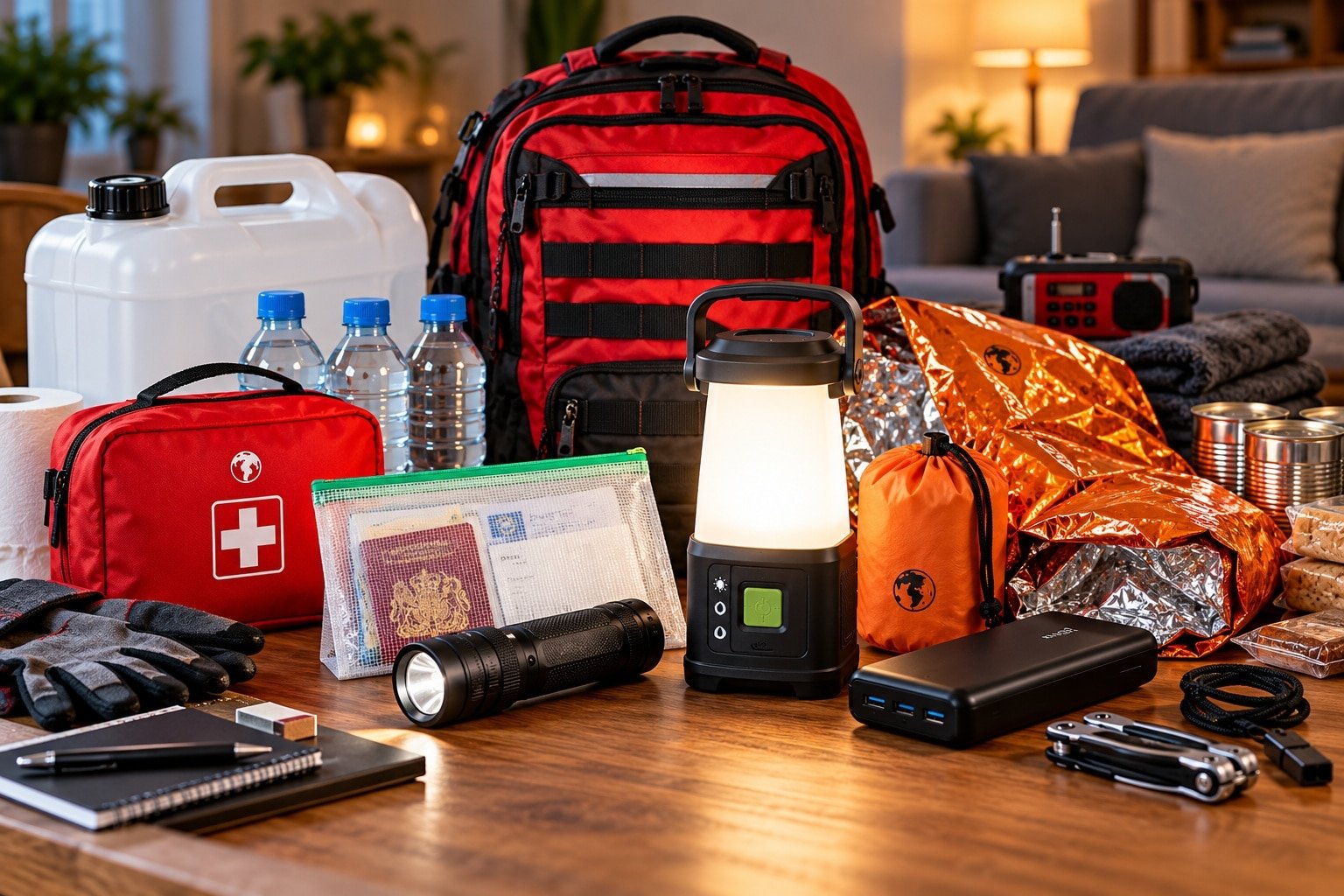
The best emergency kit UK households can put together is one that covers the basics during a power cut, water outage or other temporary disruption.
You do not need an expensive survival kit packed with equipment you are unlikely to use.
A practical household emergency kit should help you stay informed, keep essential devices charged, manage minor injuries and cope without normal services for up to three days.
The UK Government’s Be Ready checklist recommends preparing gradually, starting with supplies you already own.
This guide compares eight useful types of emergency equipment, with examples of products worth considering. The focus is on everyday household emergencies rather than wilderness survival.
Affiliate disclosure: This article contains shopping links to Amazon.co.uk. If qualifying purchases are made through eligible affiliate links, we may earn a commission at no additional cost to you. Product recommendations are based on published specifications and research, not personal testing.
Best Emergency Kit UK: Quick Comparison
| Emergency supply | Product example | Best for | Main consideration |
|---|---|---|---|
| Wind-up radio | Midland ER300 | Receiving FM updates | Hand-crank backup and battery options |
| LED torch | Ledlenser P7 Core | Portable emergency lighting | Replaceable AAA batteries |
| Power bank | Anker 325 PowerCore 20K | Charging mobile phones | 20,000mAh rated capacity |
| First aid kit | Lifesystems Explorer | Basic household first aid | Contents and replacement supplies |
| Water container | Food-grade 10-litre water carrier | Additional drinking water storage | Safe materials and filled weight |
| Thermal blanket | Lifesystems Thermal Blanket | Compact emergency insulation | Supplementary warmth only |
| Battery lantern | Energizer LED Camping Lantern | Lighting a room | Battery type and runtime |
| Document pouch | Waterproof A4 document pouch | Protecting important paperwork | Closure and water-resistance rating |
The best choice depends on what you already have at home.
If you own a working torch, a suitable first aid kit and a charged power bank, you may only need a few additional supplies.
What Makes a Good Household Emergency Kit?
A useful home emergency kit should cover the problems most likely to affect daily life during a temporary disruption.
A power cut can leave you without lighting, internet access or a working phone charger. A water supply interruption may make drinking water and hygiene more difficult. Severe weather could prevent you from visiting the shops.
Your supplies should help you manage these situations without relying entirely on electricity or immediate access to outside services.
Focus on Essential Equipment
The most useful categories are:
- Lighting that works without mains electricity.
- A radio for receiving information.
- Backup power for essential electronic devices.
- Basic first aid supplies.
- Safe drinking water and suitable storage.
- Warm clothing and blankets.
- Non-perishable food that does not require cooking.
- Important documents and emergency contact information.
You should also account for medication, baby supplies, mobility equipment and pets where necessary.
The government’s guidance recommends keeping enough bottled drinking water and suitable food for three days, alongside basic emergency equipment.
Choose Equipment You Can Maintain
Emergency supplies are only useful if they work when needed.
A torch with flat batteries or a discharged power bank offers little help during a power cut.
Before buying, consider how each product is powered, how often it needs checking and whether replacement parts are easy to obtain.
A simple battery-powered device may be more practical than an expensive rechargeable product if you are unlikely to maintain its charge.
Consider Storage Space
Households living in flats or smaller properties may have limited room for emergency equipment.
Compact supplies are useful, but avoid buying miniature products that are difficult to operate or unsuitable for the task.
Keep frequently needed items in an accessible location.
A torch should be easy to find in the dark, while heavier water containers are generally better stored at floor level.
Recommended Emergency Supplies
The following products represent eight different categories of household emergency equipment.
Each recommendation explains the practical purpose of the item, the specifications worth checking and the limitations to consider.
Best Wind-Up Emergency Radio: Midland ER300
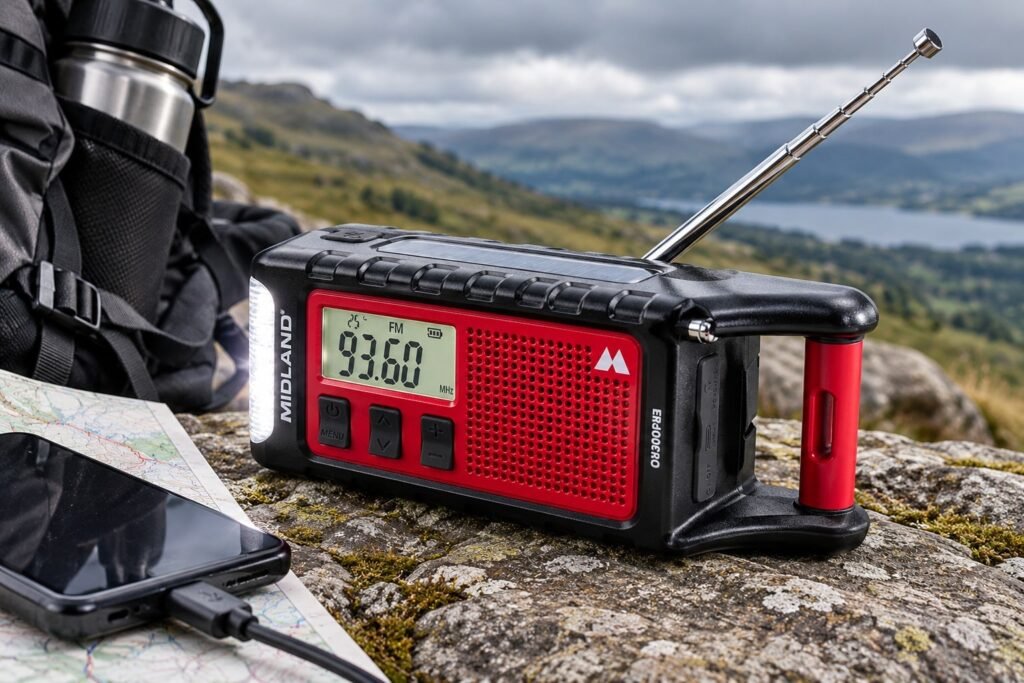
A wind-up emergency radio allows you to listen for information when television, broadband or mobile services are unavailable.
The Midland ER300 is a multi-power-source radio designed for emergency situations and outdoor use.
It includes AM/FM reception, a hand crank, a solar panel and an internal rechargeable battery.
It also has a built-in LED torch.
Key specifications
- Radio reception: AM/FM.
- Power options: rechargeable battery, hand crank, solar panel and compatible backup batteries.
- Additional features: LED torch and USB charging output.
- Design: portable radio with telescopic antenna.
Short review
The Midland ER300 is worth considering because it provides several ways to power the radio.
The hand crank offers a backup when the internal battery is depleted, although it is less convenient than starting with a fully charged battery.
Its built-in torch is useful as a secondary light source.
The USB charging function should be treated as an emergency backup rather than a replacement for a dedicated power bank.
Pros
- Multiple power options reduce dependence on a single battery.
- AM/FM reception is useful for general radio broadcasts.
- Includes a built-in torch.
Cons
- More expensive and complicated than a basic battery radio.
- Hand-crank charging requires effort.
- USB charging capacity is limited compared with a dedicated power bank.
Best for: Households wanting a radio with more than one power source.
Check Latest Price on Amazon.co.uk: Midland ER300 emergency radio
Before buying, check the exact UK model, its included battery and its supported radio bands.
For more options, see our Best Wind-Up Emergency Radios UK guide.
Best LED Emergency Torch: Ledlenser P7 Core
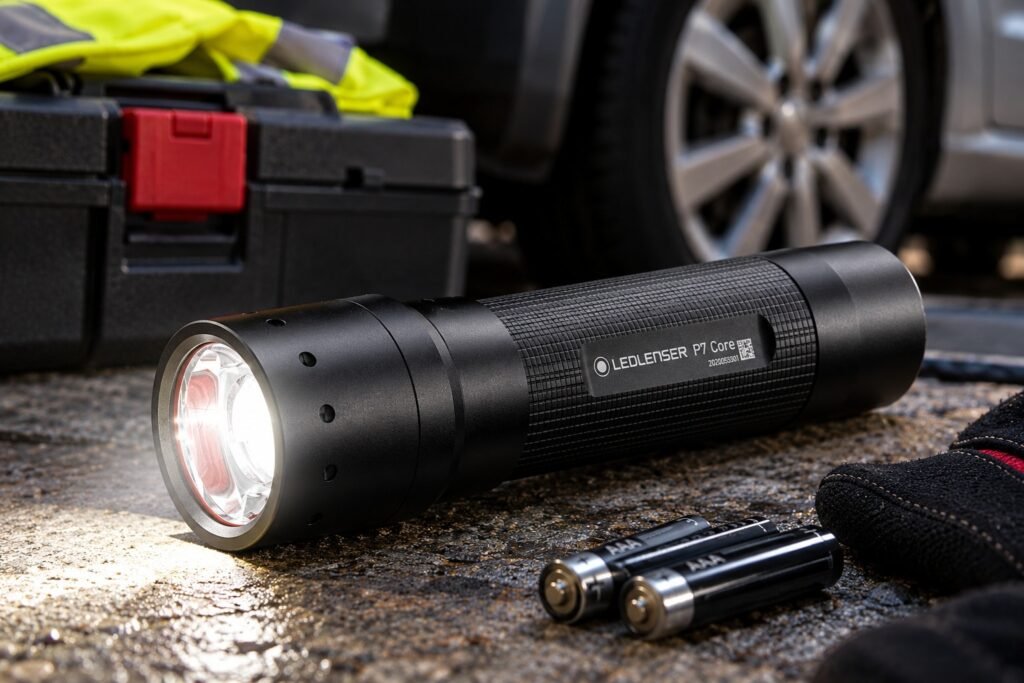
A dependable torch is one of the first items to include in a household emergency kit.
The Ledlenser P7 Core is a battery-powered LED torch with adjustable brightness and beam focus.
It uses four AAA batteries, which can be replaced without access to mains electricity.
Key specifications
- Maximum light output: 450 lumens.
- Power source: four AAA batteries.
- Brightness settings: 40, 250 and 450 lumens.
- Manufacturer-stated runtime: up to 25 hours on its lowest setting.
- Water and dust resistance: IP54.
- Weight: approximately 175g.
Short review
The P7 Core offers a useful balance between brightness and replaceable-battery convenience.
Its adjustable beam can provide broader lighting for moving around the home or a focused beam for checking a fuse box or outdoor area.
The highest brightness setting uses batteries much faster than the lower setting.
For emergency preparedness, runtime at a practical low setting is often more useful than maximum brightness.
Pros
- Runs on widely available AAA batteries.
- Adjustable beam and several brightness settings.
- Useful for indoor and outdoor tasks.
Cons
- High brightness reduces runtime considerably.
- Costs more than a basic household torch.
- IP54 does not mean the torch can be submerged.
Best for: Households wanting a general-purpose torch with replaceable batteries.
Check Latest Price on Amazon.co.uk: Ledlenser P7 Core
Keep spare batteries nearby and test the torch regularly.
Best Power Bank: Anker Power Bank, 20K
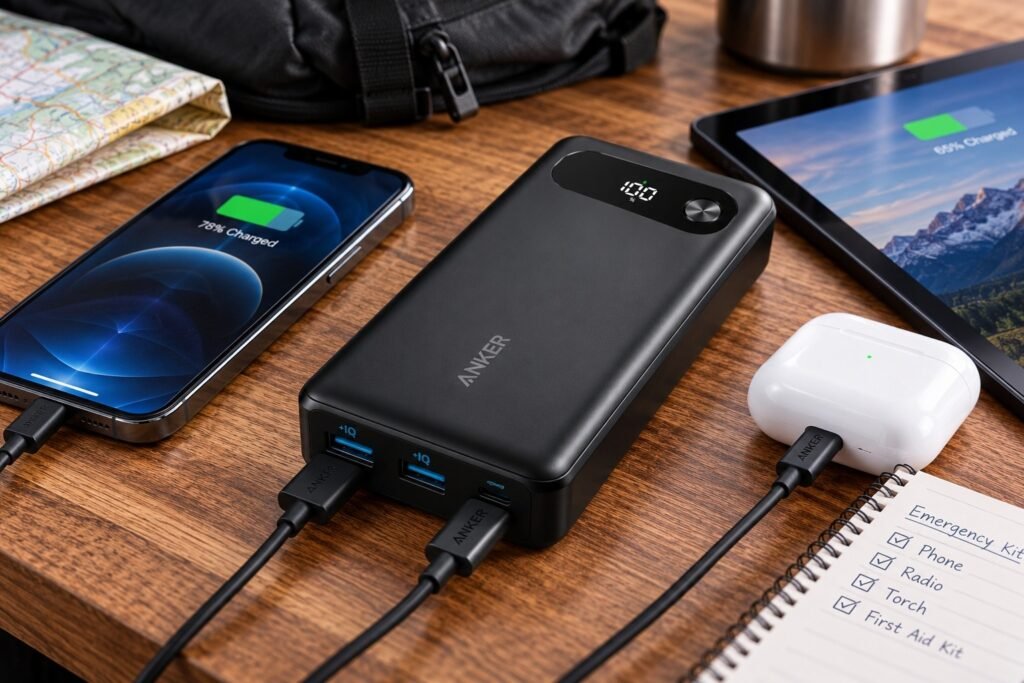
A power bank can keep your phone working when you cannot use a mains charger.
The Anker Power Bank 20K is a portable charger with a rated battery capacity of 20,000mAh.
It is intended primarily for charging phones and smaller USB-powered devices.
Key specifications
- Rated battery capacity: 20,000mAh.
- Charging: USB connections, depending on model version.
- Intended use: phones and compatible smaller devices.
- Rechargeable internal lithium-ion battery.
Short review
A 20,000mAh power bank is a reasonable starting point for a household emergency kit because it offers more stored energy than many smaller everyday chargers.
However, rated battery capacity is not the same as the amount of energy delivered to a phone.
Charging losses, battery condition and device requirements affect how many charges you receive.
The Anker Power Bank is not a substitute for a power station and should not be assumed capable of powering laptops or medical equipment.
Pros
- Useful capacity for emergency phone charging.
- Can be charged before an expected disruption.
- Suitable for keeping with everyday household supplies.
Cons
- Must be recharged periodically.
- Cannot supply mains electricity.
- Charging outputs vary between product versions.
Best for: Households wanting backup power for mobile phones and other compatible USB devices.
Amazon.co.uk: Anker Power Bank 20K
Check the exact model number, charging ports and output specifications before purchasing.
Read our Best Power Banks for Power Cuts UK guide for a more detailed comparison.
Best First Aid Kit: Lifesystems Camping First Aid Kit
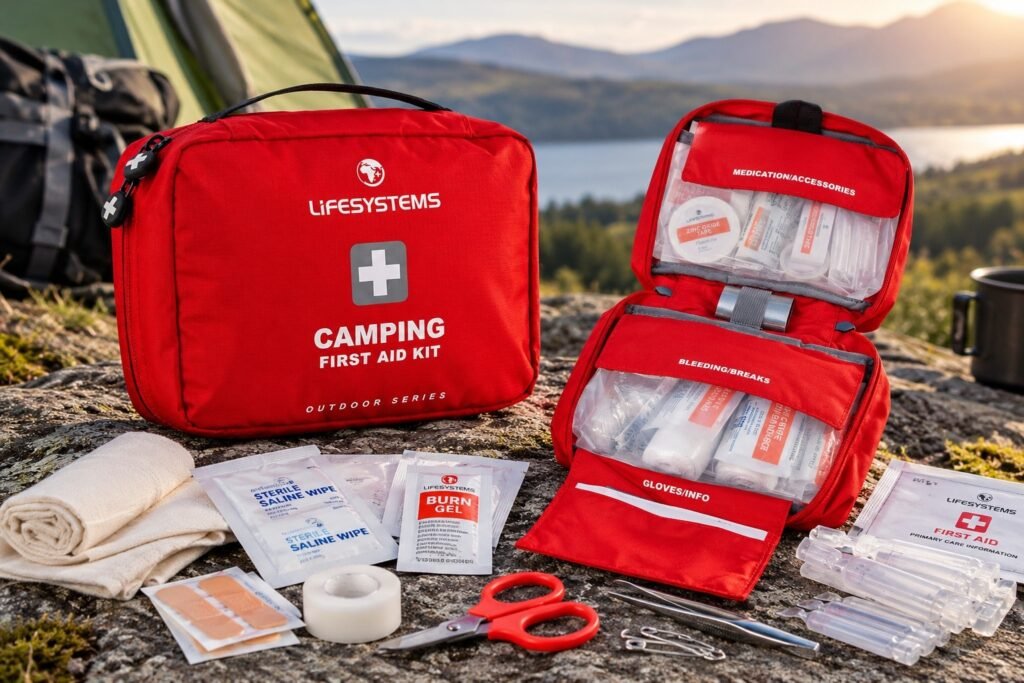
The Lifesystems Camping First Aid Kit is a practical choice for UK households preparing for emergencies, power cuts or temporary disruptions.
Designed for camping and outdoor activities, it contains supplies for dealing with minor cuts, grazes, burns and other common injuries. Its organised storage pouch also makes it suitable for keeping inside a household emergency box.
Key specifications
- Brand: Lifesystems
- Model: Camping First Aid Kit 20210
- Contents: Approximately 40 items, depending on product version
- Weight: 452g
- Dimensions: 170 × 130 × 60mm
- Storage: Compact zipped first aid pouch
- Recommended by: Duke of Edinburgh’s Award Product Team
What’s included?
The manufacturer’s published contents include:
- Assorted plasters and sterile wound dressings.
- Crepe, triangular and open woven bandages.
- Sterile saline wipes and gauze swabs.
- Three burn gel sachets.
- Two sterile eyewash containers.
- Nitrile gloves.
- Scissors, tweezers and safety pins.
- A spot-check thermometer.
- Medical tape and wound closure strips.
- A primary care information leaflet.
Contents can vary between versions, so check the current product listing before purchasing.
Short review
The Lifesystems Camping First Aid Kit offers a useful selection of first aid supplies for households wanting to prepare for minor injuries.
One advantage over simpler first aid kits is the inclusion of burn gel sachets and sterile eyewash, which may be useful for dealing with certain minor accidents.
The combination of dressings, bandages and basic first aid tools also makes it suitable for general household use.
Its compact pouch can be stored alongside emergency torches, bottled water and other essential supplies without taking up much room.
However, the quantities of some items are limited. Larger households may want to keep additional plasters, sterile dressings and other frequently used supplies.
The kit should also be supplemented with any personal medication or specialist medical supplies required by household members.
Pros
- Includes burn care supplies and sterile eyewash.
- Contains several types of bandages and wound dressings.
- Compact pouch keeps supplies organised.
- Useful for household emergencies and camping trips.
Cons
- Limited quantities of some dressings and consumables.
- Does not cover every household’s medical requirements.
- Contents and expiry dates require regular checking.
Best for: UK households wanting a ready-made first aid kit that can also be used for camping, travel and other outdoor activities.
Amazon.co.uk: Lifesystems Camping First Aid Kit
A first aid kit is only useful if you know how to use its contents. Consider completing a basic first aid course and check the kit regularly to replace used or expired supplies.
Best Water Storage Container: 10-Litre Food-Grade Water Carrier
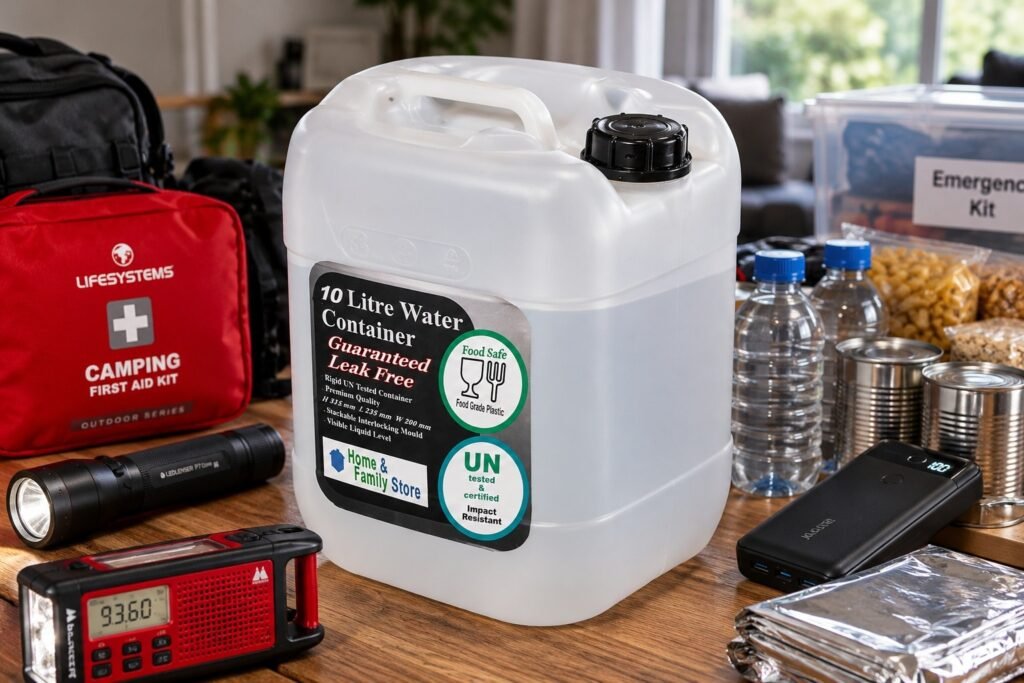
Safe drinking water is one of the most important household emergency supplies.
The UK Government recommends storing at least 3 litres of drinking water per person per day for three days.
That means a household of four needs a minimum of 36 litres for drinking alone.
Commercially bottled water is often the simplest option. Reusable containers can be useful if you need additional capacity.
Key specifications to look for
- Capacity: around 10 litres.
- Material: suitable for potable drinking water.
- Closure: secure, leak-resistant cap.
- Design: stable base and comfortable carrying handle.
- Cleaning: manufacturer instructions for safe cleaning and storage.
Short review
A 10-litre food-grade water carrier is a practical size for many households.
It provides useful storage capacity without the weight of a larger 20-litre container.
A full 10-litre container weighs approximately 10 kilograms before including the container itself.
Choose a model specifically intended for drinking water.
Avoid containers previously used for fuel, cleaning products or other chemicals.
Pros
- Can supplement bottled water supplies.
- Reusable when cleaned and maintained correctly.
- Smaller capacity may be easier to handle than a 20-litre carrier.
Cons
- Requires suitable cleaning and storage.
- Heavy when full.
- Not every camping container is designed for long-term filled storage.
Best for: Households wanting additional reusable drinking water storage.
Amazon.co.uk: 10-litre food-grade water containers
See our Emergency Water Supply UK guide for a household water calculator and storage advice.
Best Thermal Blanket: Lifesystems Thermal Blanket
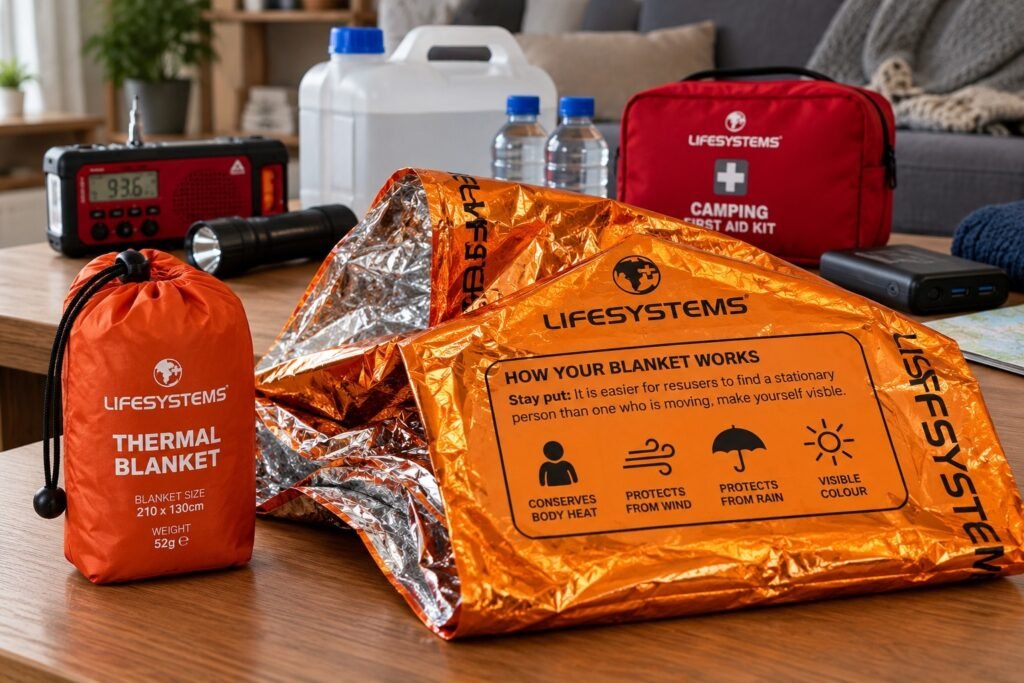
A compact emergency thermal blanket can be a useful addition to a first aid kit or grab bag.
The Lifesystems Thermal Blanket uses reflective material intended to help reduce heat loss.
It folds into a small package and requires no batteries.
Key specifications
- Type: reflective emergency blanket.
- Material: lightweight metallised film.
- Power requirement: none.
- Storage: compact folded package.
Short review
The main advantage of a foil thermal blanket is its small packed size.
It can provide an additional layer of protection against heat loss in suitable circumstances.
However, it should not be treated as a replacement for proper blankets, sleeping bags, warm clothing or a safely heated room.
For a household power cut, ordinary warm bedding is usually more comfortable for prolonged use.
Pros
- Compact and lightweight.
- No batteries or charging required.
- Useful as supplementary emergency insulation.
Cons
- Less comfortable than ordinary bedding.
- Can tear or puncture.
- Does not generate heat or replace adequate shelter.
Best for: Grab bags, first aid kits and supplementary emergency warmth.
Amazon.co.uk: Lifesystems Thermal Blanket
Best Battery-Powered Lantern: Energizer LED Camping Lantern
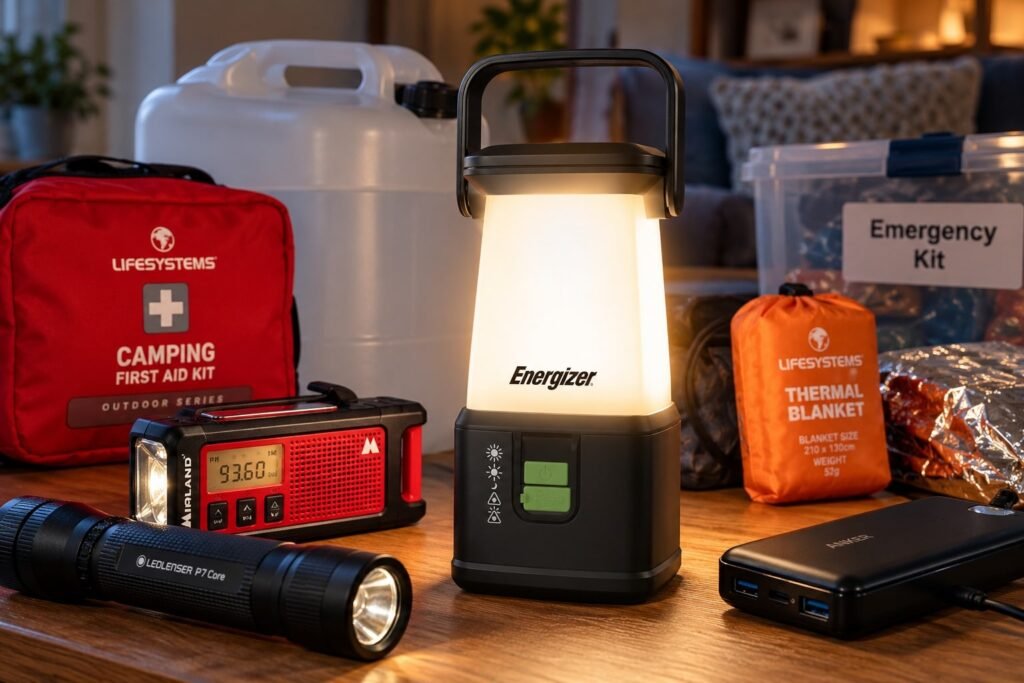
A torch is useful for moving around the house, but a lantern is often better for lighting a room.
The Energizer LED Camping Lantern range includes battery-powered models intended to provide broader illumination.
The exact brightness, battery type and runtime depend on the model.
Key specifications to check
- Light source: LED.
- Power: replaceable batteries on the selected model.
- Lighting: broad room illumination.
- Controls: accessible on/off switch.
- Runtime: manufacturer-stated hours at different brightness settings.
Short review
A battery-powered lantern is useful during an evening power cut because it can illuminate a table or small room without needing to be held.
Choose a model with a stable base and manageable brightness.
Battery availability matters. A lantern that uses an uncommon battery size may be inconvenient if you have no spares.
Avoid assuming that a rechargeable-only lantern will remain useful throughout a prolonged outage unless you have a way to recharge it.
Pros
- Provides broader lighting than a handheld torch.
- Can stand on a table.
- Replaceable-battery versions are useful during extended outages.
Cons
- Some models require larger batteries.
- Brightness and runtime vary substantially.
- Larger lanterns take up more storage space.
Best for: Households wanting general room lighting during a power cut.
Amazon.co.uk: Energizer battery-powered LED lanterns
Best Waterproof Document Pouch: A4 Waterproof Document Wallet
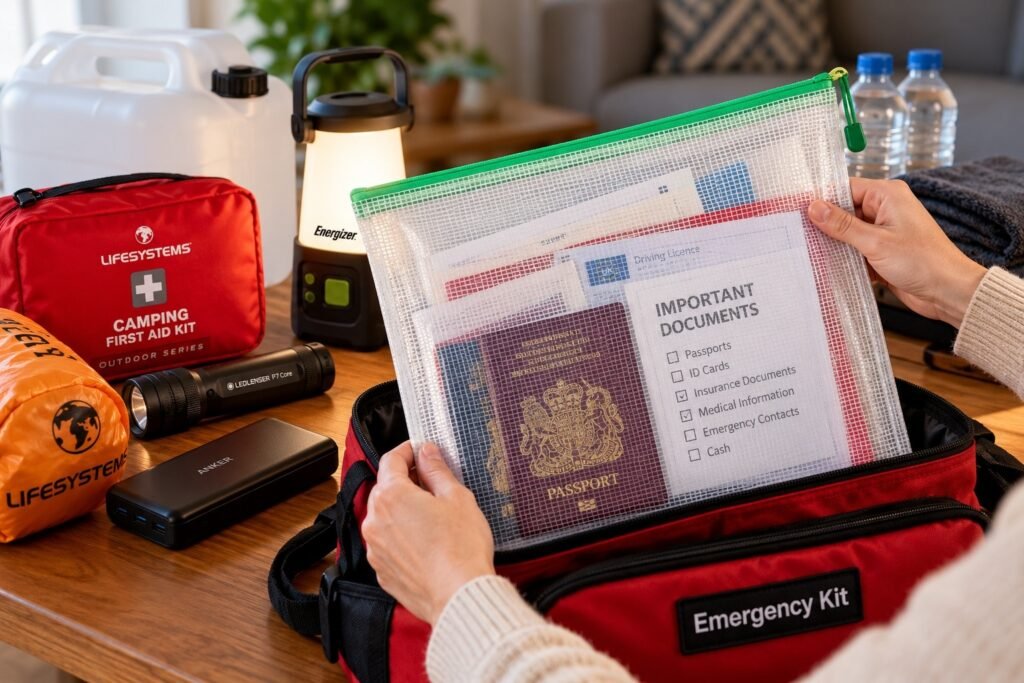
Important paperwork can be difficult to replace after flooding or other household damage.
A waterproof document pouch can help protect copies of passports, insurance documents and other important records.
For household use, an A4-sized pouch is generally more practical than a small travel wallet.
Key specifications to look for
- Size: A4 or large enough for folded documents.
- Closure: secure sealing system.
- Material: water-resistant or waterproof construction.
- Visibility: transparent material can make documents easier to identify.
- Storage: suitable for keeping inside a household emergency box.
Short review
A document pouch is a relatively simple purchase, but the closure is important.
Some products are splash-resistant rather than suitable for immersion.
Do not assume a zip-lock style bag is completely waterproof.
Keep originals in an appropriate secure location and consider storing copies separately.
Digital backups can also be useful, provided sensitive information is protected.
Pros
- Keeps essential paperwork together.
- May provide protection against splashes and moisture.
- Easy to include in an emergency box.
Cons
- Waterproof performance varies.
- Does not protect against every type of damage.
- Some pouches are too small for A4 documents.
Best for: Households organising emergency contact information and document copies.
Amazon.co.uk: A4 waterproof document pouches
Pre-Packed Emergency Kit vs Building Your Own
Pre-packed emergency kits are convenient because several items arrive together.
However, convenience does not guarantee that the contents are suitable for your household.
A kit advertised as containing 100 pieces may include numerous small accessories while omitting a useful torch, suitable radio or enough first aid supplies.
Advantages of a Pre-Packed Kit
A pre-packed kit may be useful if you are starting with no equipment.
It can provide a storage bag and several basic items in one purchase.
You still need to check the contents and add food, drinking water, medication and household-specific supplies.
Advantages of Building Your Own Kit
Building your own kit gives you more control over the quality and suitability of each item.
You can choose a torch with batteries you already keep at home, a power bank compatible with your phone and a first aid kit containing the dressings you need.
It also allows you to spread purchases over several shopping trips.
Which Option Is Better?
For most households, building a kit from individual supplies is a sensible approach.
Start with items you already own, then buy what is missing.
A pre-packed kit may save time, but check every component before relying on it.
What Should You Buy First?
If you are preparing on a limited budget, prioritise equipment that addresses the most immediate problems.
First Priority: Water, Food and Lighting
Start with enough drinking water and suitable non-perishable food for three days.
Add a working torch and spare batteries.
These supplies address basic needs without requiring expensive equipment.
Second Priority: Communication and Charging
A charged power bank helps keep your mobile phone available.
A battery-powered or wind-up FM radio provides another way to receive information if internet access is unavailable.
Keep written emergency contact numbers with your supplies.
Third Priority: First Aid and Warmth
Check whether you already have suitable first aid supplies.
Keep warm clothing and blankets accessible.
Buy a compact thermal blanket only if it fills a genuine gap in your kit.
Fourth Priority: Additional Storage and Organisation
Water containers, document pouches and storage boxes can make an emergency kit easier to manage.
However, these should not take priority over drinking water, food or essential equipment.
For a full household checklist, read our 3-Day Emergency Kit UK guide.
How We Selected These Products
The recommendations in this guide are based on published manufacturer specifications, intended use and relevance to UK household preparedness.
We considered:
- Whether the item addresses a practical emergency need.
- Power sources and battery requirements.
- Capacity, size and ease of storage.
- Relevant safety considerations.
- Whether simpler alternatives could meet the same need.
- Suitability for use during a temporary household disruption.
We have not carried out hands-on testing of these products.
Manufacturer specifications are useful for comparing equipment, but actual performance can vary depending on conditions and usage.
Product versions can also change, so check the current listing before buying.
The UK Government’s Be Ready guidance and its power cut advice informed the choice of equipment categories.
Frequently Asked Questions
What Is the Best Emergency Kit for UK Households?
A practical emergency kit should include drinking water, non-perishable food, a torch, a charged power bank, a battery-powered or wind-up radio, first aid supplies and warm clothing.
Additional items depend on household circumstances.
Is a 72-Hour Emergency Kit Necessary in the UK?
The UK Government recommends being prepared for three days of disruption.
You may already own many of the required items.
Are Pre-Packed Emergency Kits Worth Buying?
They can be convenient, but check the contents carefully.
Building your own kit may provide better control over equipment quality and household suitability.
Do I Need a Wind-Up Radio?
A wind-up radio is one option for receiving information without mains electricity.
A basic battery-powered FM radio with spare batteries may also be suitable.
What Size Power Bank Is Best for Emergencies?
A 20,000mAh power bank is a useful starting point for many households.
The best capacity depends on how many devices you need to charge and their power requirements.
Should I Buy a Camping Stove for Power Cuts?
Most households can prepare suitable no-cook meals without buying specialist cooking equipment.
Never use barbecues or outdoor-only camping stoves indoors because of carbon monoxide risks.
How Often Should I Check My Emergency Kit?
The UK Government recommends reviewing supplies approximately every six months.
Check batteries, charge rechargeable equipment and replace expired or damaged items.
How Much Does a Household Emergency Kit Cost?
Costs depend on what you already own and the equipment you choose.
You can reduce spending by starting with existing household supplies and adding missing items gradually.
See our How Much Does a 3-Day Emergency Kit Cost UK? guide for a more detailed breakdown.
Build an Emergency Kit That Suits Your Home
The best household emergency kit is one you can find quickly and use confidently.
Start with drinking water, suitable food, lighting and a way to receive information. Add backup charging and first aid supplies, then consider equipment that meets your household’s particular needs.
You do not need to buy everything at once.
Check what you already have, choose reliable equipment and review your supplies regularly.
For help planning the rest of your kit, read our What Should Be in a 72-Hour Emergency Kit? guide.
You can also use our Free Printable Emergency Kit Checklist to keep track of what you have prepared.
CampEquipmentPlus relies on reader support. Purchases made via links on our website may earn us an affiliate commission at no extra cost to you, helping keep the site running.