

Best Self Inflating Camping Mats UK
The best self inflating camping mats in the UK combine foam comfort with built-in insulation, so you sleep warm and supported on cold, lumpy British pitches without spending the evening blowing up an air bed.
A self inflating mat is open-cell foam inside an airtight shell. Open the valve and the foam expands and draws in air, then a few breaths or a pump sack set the firmness. That foam is what makes them popular in Britain: it insulates you from cold, damp ground far better than an uninsulated air bed and it still gives some protection if you get a puncture. The trade-offs buyers mention most are bulk and weight compared with air mats, thin mats that leave side sleepers’ hips on the ground, slow inflation, valves that fail on cheap mats and foam that stops self-inflating after being stored rolled up. We have picked five mats, from a light 680 g pad for backpacking to a 10 cm foam mattress for car camping, with an honest look at each one’s warmth, thickness and size.
- Thickness decides comfort: 5 cm or more for side sleepers
- R-value decides warmth: aim for 4+ outside summer
- Store it unrolled with the valve open so the foam keeps its spring
- Foam means warmth The foam core insulates you from the ground, which is why self inflating mats are warmer than most air beds of the same thickness.
- Check the R-value An R-value of 2 to 3 suits summer, 4 or more suits spring, autumn and most UK winters. Higher is warmer.
- Thicker is comfier, but bulkier A 2.5 cm mat packs small for walking; a 7 to 10 cm mat feels like a bed but needs car space.
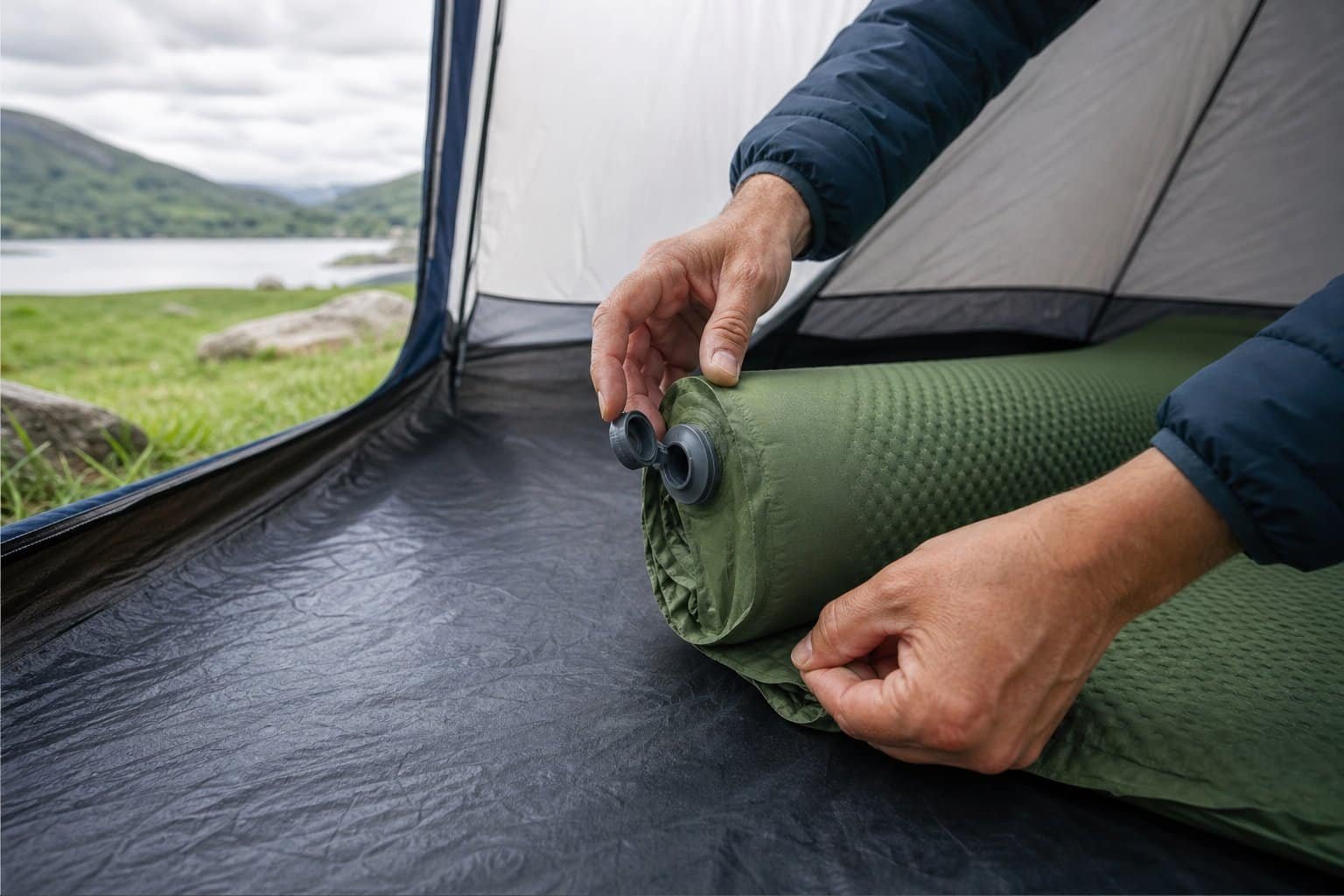
- First use matters Unroll it at home, open the valve and leave it inflated for a few hours before your first trip.
Choosing between self inflating camping mats UK campers can buy is mostly a balance of thickness, warmth and pack size against the way you travel and sleep. A thin mat that suits a backpacker can leave a side sleeper aching, while a thick foam mattress is wonderful in a car but impossible to carry far. This guide explains how these mats work, which type suits you, and how to fix the problems owners meet most often.


Best overall Camp Plus SI | Most comfortable MegaMat | Warmest for its weight BaseCamp | Best lightweight Trail Scout | Best budget Silver Springs | |
|---|---|---|---|---|---|
|
|
|
|
|
| |
| Thickness | 6.6 cm | 10 cm | 5 cm | 2.5 cm | 7.6 cm |
| R-value | 4.3 | 8.1 (Exped) | 6 | Not quoted | 5+ |
| Size | 183 x 64 cm | 183 x 65 cm | 183 x 51 cm | 183 x 51 cm | 183 x 51 cm |
| Weight | 1.45 kg | 2.07 kg | 1.13 kg | 680 g | Under 1.8 kg |
| Packed size | 33 x 19 cm | 67 x 20 cm | 53 x 18 cm | 28 x 20 cm | Not quoted |
| Warranty | Lifetime | Not quoted | Ltd lifetime | Ltd lifetime | Limited |
| Check price | Check price | Check price | Check price | Check price |
Best self inflating camping mats: our detailed reviews
Each review covers comfort, warmth, size and the complaints owners raise most often. If you are still deciding between mat types, read our guide to choosing a sleeping pad for camping, and remember that your mat and bag work as a system: see our best sleeping bags for UK camping to match one to your mat.
Extra-thick 6.6 cm four-season self-inflating mat with an R-value of 4.3
The Sea to Summit Camp Plus SI gets the balance right for the way most people camp in Britain. At 2.6 inches (about 6.6 cm) thick it is deep enough that side sleepers are not grinding a hip into the ground, which is the most common complaint we found about thinner self-inflating mats, and its 4.3 R-value means it insulates well on cold spring and autumn ground and copes with most winter campsite nights too. Sea to Summit cores the foam in a body-mapped pattern, keeping more foam where your shoulders and hips press down and less elsewhere, which keeps weight to 3.2 lb (about 1.45 kg) for a mat this thick. The rectangular regular size is 72 x 25.2 inches, roughly 183 x 64 cm, so there is room to roll over without sliding off the edge. The updated multi-function valve inflates, deflates one way for quick packing and lets you fine-tune firmness, which addresses another frequent grumble: mats that are slow to roll back down in the morning. A durable 75D polyester face fabric, a stuff sack, a field repair kit and PillowLock patches are included, and Sea to Summit guarantees it against defects for the lifetime of the product. It packs to about 33 x 19 cm, so it is a car-camping and short-walk-in mat rather than an ultralight backpacking one.
- Warm 4.3 R-value for four-season use
- 6.6 cm thick, comfortable for side sleepers
- Wide 64 cm rectangular shape
- Fast multi-function valve
- Lifetime guarantee against defects
- Too bulky for lightweight backpacking
- Heavier than air mats of similar warmth
10 cm thick foam mattress with vertical sidewalls and a top-up pump
If comfort matters more than pack size, the Exped MegaMat is the self inflating mat most experienced car campers recommend. It is 4 inches, about 10 cm, of open-cell foam with vertical 3D sidewalls, so the whole surface is usable right to the edge and there is no bottoming out, even when you sleep on your side or sit on it in the morning. Air-core channels inside the foam help it inflate and keep the weight down, and a 4-way stretch recycled tricot top fabric feels soft rather than plasticky, a contrast with the slippery, noisy surfaces many owners dislike on cheaper mats. The Amazon listing does not give technical specs, but Exped’s own figures for the Medium Wide size are 72 x 25.6 inches (about 183 x 65 cm), 4 lb 9 oz (about 2.07 kg), an R-value of 8.1 and a packed size of about 67 x 20 cm. That R-value makes it one of the warmest mats you can buy, enough for frosty campsites in midwinter. A mini Top-Up Pump is included so you can set it anywhere from plush to firm without blowing moisture into the foam. The trade-offs are price, weight and bulk: it is one of the most expensive mats here and rolls up to the size of a small sleeping bag, so it suits car camping, campervans and SUVs rather than walking in.
- 10 cm of foam, very comfortable
- Very warm R-value of 8.1 (Exped figure)
- Vertical sidewalls use the full width
- Soft stretch top fabric
- Top-up pump included
- Most expensive mat here
- Heavy at about 2.07 kg
- Large when packed

R6 year-round foam pad from the brand that invented the self-inflating mat
Therm-a-Rest made the first self-inflating mat in the 1970s, and the BaseCamp is its classic campsite pad. Its headline is warmth: an R-value of 6 means it insulates against frozen ground, so it suits campers who go out from October to April as well as in summer. It does that at 2 lb 8 oz, about 1.13 kg, noticeably lighter than the other winter-capable mats here. The regular size is 72 x 20 x 2 inches, about 183 x 51 x 5 cm, and it rolls to about 53 x 18 cm. The WingLock valve inflates around three times faster than Therm-a-Rest’s classic valve and deflates quickly, and a pump sack is included, which matters because topping up by mouth puts moisture inside the foam over time. Therm-a-Rest’s own advice, which applies to any self inflating mat, is to inflate it and leave it fully inflated for 2 to 4 hours before the first trip so the foam can expand. The compromise is width and thickness: at 51 cm wide and 5 cm thick it is narrower and firmer than the Sea to Summit or Exped, so broad-shouldered or side sleepers may prefer the large size. It is made in the USA and has a limited lifetime warranty.
- Warm R-value of 6
- Light for a winter mat at 1.13 kg
- Fast WingLock valve
- Pump sack included
- Limited lifetime warranty
- Narrow 51 cm width
- Firmer than thicker mats
- Long 53 cm roll
680 g three-season self-inflating pad that packs small for backpacking
Most self inflating mats are too heavy to carry far, which is why backpackers often switch to air mats. The Trail Scout is the exception for walkers who want a mat that will not leave them on the ground after one thorn. It weighs 24 oz, about 680 g, packs to around 28 x 20 cm and uses Therm-a-Rest’s woven fabric and premium foam core, so even if it does get a small puncture the foam still gives you some cushioning and insulation, unlike an air mat that goes flat. Puncture anxiety is one of the main reasons UK walkers told reviewers they stick with self-inflating designs. At 72 x 20 x 1 inch, about 183 x 51 x 2.5 cm, it is thin, so it is comfortable for back sleepers but side sleepers may find their hip touches the ground; the open-cell foam can be topped up with a few breaths for a firmer feel. The WingLock valve has three times the airflow of the classic valve, and the stuff sack has a PFAS-free water-repellent coating. Therm-a-Rest rates it for three seasons and the listing does not quote an R-value, so pair it with a foam pad underneath for cold nights. It is made in the USA with a limited lifetime warranty.
- Light at about 680 g
- Packs small for a self inflating mat
- Still insulates if punctured
- Fast WingLock valve
- Limited lifetime warranty
- Only 2.5 cm thick
- Three-season only, no R-value quoted
- Narrow 51 cm width
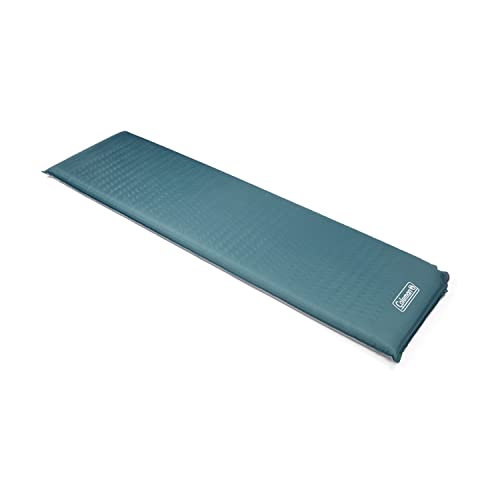
7.6 cm insulated foam pad with a tough PVC-coated base at a low price
You do not have to spend premium-brand money for a comfortable night. The Coleman Silver Springs is one of the cheapest mats in this roundup yet one of the thickest, at 72 x 20 x 3 inches, about 183 x 51 x 7.6 cm, and Coleman quotes an R-value of 5 or more for its insulated foam, which is plenty for spring-to-autumn UK camping and many colder nights too. The top is a soft 75D polyester layer, and the underside has a PVC coating for abrasion resistance, a sensible choice for family camping where mats get dragged over rough groundsheets and gravel pitches. The valve is simple and the pad inflates largely by itself. Coleman says it weighs under 4 lb, roughly 1.8 kg, so it is a car-camping mat rather than one to carry, and the listing does not quote a packed size. Budget mats are where we found the most complaints about slow inflation and valves failing over time, so open it at home and leave it inflated before your first trip, store it unrolled with the valve open, and check the valve before each season. Coleman backs it with a limited warranty.
- Low price for a 7.6 cm mat
- R-value 5+ insulation
- PVC-coated base resists abrasion
- Simple valve
- Good for family camping
- Heavy at up to about 1.8 kg
- Packed size not quoted
- Narrow 51 cm width
Self inflating camping mat or air mat: which is better for UK camping?
Self inflating mats and air mats solve the same problem in different ways. Air mats are lighter and pack smaller, and big air beds feel bouncier, but without insulated chambers they let the cold ground drain heat from you and a single puncture leaves you on the floor. Self inflating mats are warmer for their thickness, quieter and more forgiving of thorns and stones, at the cost of weight and pack size. As Cotswold Outdoor’s sleeping mat guide points out, R-values are not perfectly standardised between brands, so use them as a rough guide and add a closed-cell foam pad underneath on very cold nights. For winter warmth figures see what R-value a sleeping pad needs for winter, and for doubling up, our guide to stacking sleeping pads for warmth.
How to choose self inflating camping mats UK campers can rely on
Every self inflating mat works the same way. Open-cell foam is bonded inside an airtight shell, and when you open the valve the compressed foam springs back and draws in air. Close the valve and you have a cushion that combines foam support with an air layer. A few breaths or a pump sack then set the firmness. Understanding that simple design makes it easier to see why thickness, foam quality and valve design matter so much.
The foam is also why these mats are popular in Britain. It slows the movement of air inside the mat, so less heat is carried away to the cold ground, and it keeps giving some cushioning and insulation even if a thorn finds its way through the shell. For campers who pitch on damp grass from spring to autumn, that combination of warmth and reliability is hard to beat.
Thickness and sleeping position
The five mats in this list span a wide range: 2.5 cm for the Therm-a-Rest Trail Scout, 5 cm for the BaseCamp, 6.6 cm for the Sea to Summit Camp Plus SI, 7.6 cm for the Coleman Silver Springs and 10 cm for the Exped MegaMat. Back sleepers spread their weight and can get away with thinner mats. Side sleepers put more pressure through the hip and shoulder, so they usually need more depth. Our roundup of the best camping sleeping mats for side sleepers goes further into that.
R-value and the seasons
R-value measures how well a mat resists heat flowing from your body into the ground. Higher numbers mean more insulation. Because ratings are not perfectly consistent between brands, treat them as a guide rather than a guarantee. A useful point to remember is that R-values roughly add together, so putting a closed-cell foam pad under a three-season sleeping mat is an easy way to make it warmer for a frosty night without buying another mat.
Types of self inflating mat and who each suits
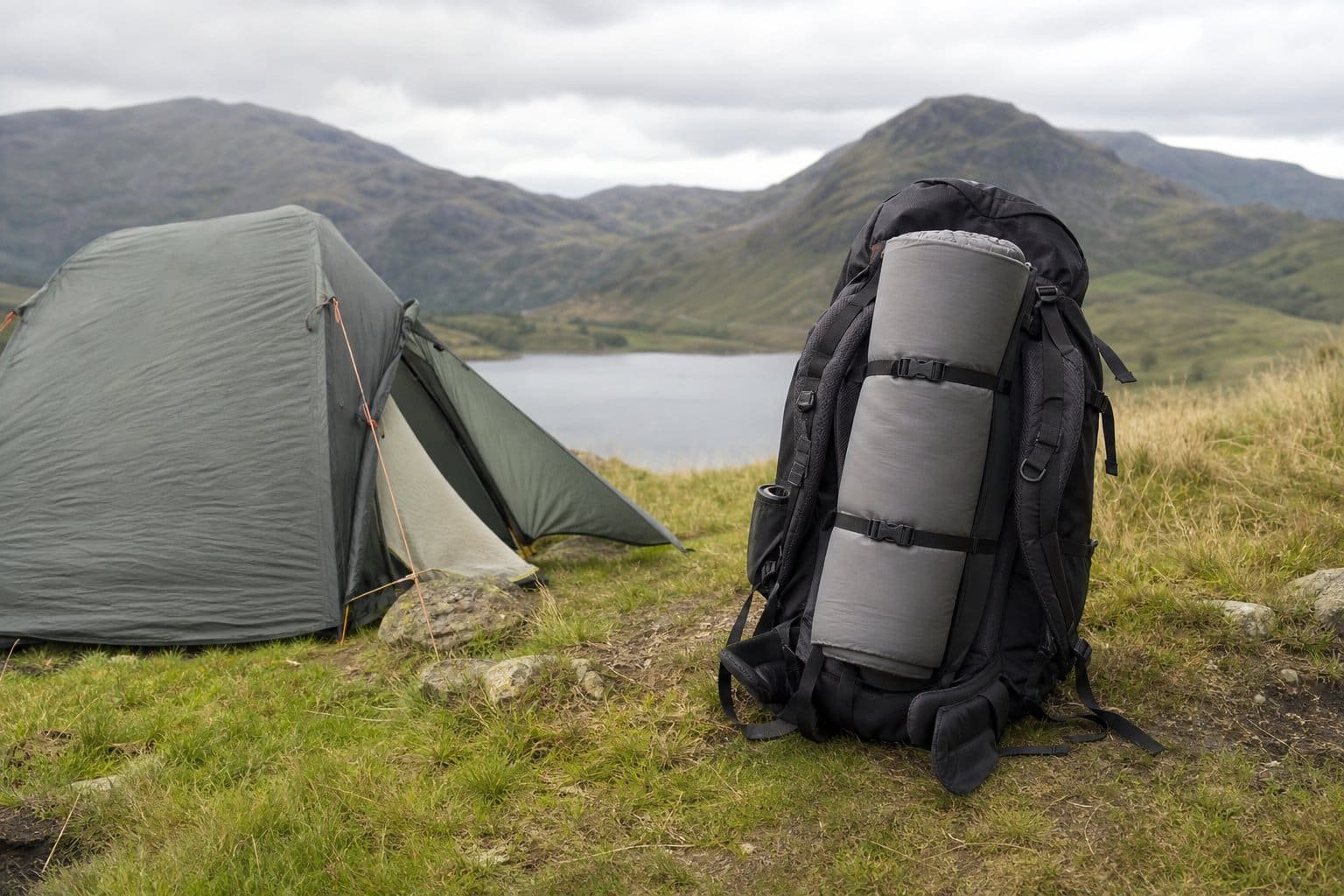
Lightweight trekking mats such as the Therm-a-Rest Trail Scout are thin, narrow and light enough to strap to a rucksack. They suit backpackers, Duke of Edinburgh groups and scouts who want a mat that will not leave them on the ground after a puncture. The trade-off is comfort and warmth, so pair one with a foam pad if you camp outside the warmer months.
Campsite all-rounders like the Sea to Summit Camp Plus SI and Therm-a-Rest BaseCamp sit in the middle. They are thick enough for most sleepers, warm enough for spring and autumn, and light enough to carry from the car to a walk-in pitch. If you want one mat that covers most trips, this is the group to look at first among self inflating camping mats UK retailers stock.
Foam mattresses such as the Exped MegaMat and Coleman Silver Springs prioritise comfort. They are deep and bed-like, which is why they appeal to family and car campers, people with stiff joints and anyone who sits on their mat in the morning. They are also heavy and bulky, so check your boot space and remember you will be carrying them back to the car after a wet weekend.
Size, shape and fitting a sleeping mat into your tent
Width is the measurement most buyers overlook. Many standard mats are about 51 cm wide, which is narrow enough that your elbows and knees can slide off during the night. Wider versions of around 64 cm, like the Camp Plus SI, give you room to turn over. If you are broad-shouldered or restless, it is worth paying a little more for the wider or large size of the mat you like.
Length needs checking too. A typical regular mat is about 183 cm, which suits most people, but taller campers may find their feet or head hanging off the end. A rectangular shape gives the most usable area, while tapered mummy shapes save weight for backpackers at the expense of space for your feet.
Finally, think about the tent. Two wide self inflating camping mats UK couples push together can easily fill a small bedroom pod, and mats that press against the inner tent can pick up condensation. If you share, a single double mat avoids the gap that opens between two singles overnight. Our guide to the best double camping mattresses compares that option.
Matching a mat to British seasons and trips
Summer festivals and campsite weekends are the easiest conditions, because the ground is at its warmest. Comfort, price and toughness matter most here. Among self inflating camping mats UK festival-goers take along, a thick, durable budget option like the Coleman Silver Springs makes sense, as its PVC-coated base copes with being dragged across rough groundsheets and gravel, and a lost or damaged mat is less painful to replace.
Spring and autumn catch many campers out. The air may feel mild in the evening, but the ground stays cold and damp long after the weather warms up, and that is where an uninsulated air mat or air bed leaves you chilly. A mat with an R-value of 4 or more, such as the Sea to Summit Camp Plus SI at 4.3, is a sensible target for these shoulder-season trips.
Winter campsites need the warmest options, such as the Therm-a-Rest BaseCamp at R6 or the Exped MegaMat at 8.1 on Exped’s figures, or a lighter mat stacked on a foam pad. On frosty nights moisture can also gather under a mat on a cold groundsheet, so lift your self inflating camping mats UK winter trips rely on during the day and let both the mat and the floor air out.
Common self inflating mat problems and how to fix them
The mat goes soft by morning. Before assuming a puncture, remember that air cools and contracts overnight, so any mat feels slightly softer at dawn. Check that the valve is fully closed and free of grit, because a speck of dirt under the seal can cause a slow leak. If it keeps going flat, inflate it at home, submerge sections in a bath or brush on soapy water, and look for a stream of bubbles.
A bubble or bulge appears on the surface. This usually means the foam has separated from the shell in one area, often after a mat has been left in a hot car or over-inflated. It cannot usually be repaired at home. Stop using the mat at high pressure and contact the maker, as several brands in this list offer long warranties against defects.
You still feel cold. If the ground is very cold or wet, even a good mat can struggle. Add a foam pad underneath, use a tent carpet or footprint, and make sure your sleeping bag is not squashed flat under your body. Rolling a spare jacket under your hips can also help on a borderline night.
The mat will not fit back in its bag. Roll it once with the valve open to push most of the air out, close the valve, unroll it slightly, then open the valve and roll again more tightly. Kneeling on the mat as you roll makes a big difference, and some campers simply use a slightly larger stuff sack rather than fighting with the original.
Final thoughts
The best self inflating camping mats UK campers can buy are the ones that match how you travel and how you sleep. Choose a light, thin mat if you carry your kit, a mid-weight all-rounder for most campsite trips, or a deep foam mattress if you drive to the pitch and value comfort above all. Check the width, length and R-value, look after the valve, and any self inflating mat in this guide should give you warm, comfortable nights for many seasons, with fewer worries than a basic air mat.
What to look for in a self inflating camping mat
2.5 cm suits back sleepers and backpackers. Side sleepers and anyone with a bad back should look for 5 cm or more; 7 to 10 cm feels closest to a bed.
R 2 to 3 for summer, R 4 or more for spring, autumn and most UK winters, R 6+ for frosty nights. Higher numbers insulate better from cold ground.
51 cm is standard but narrow; 64 cm or wider stops arms and knees sliding off. Check the length suits your height.
Self inflating mats are heavier and bulkier than air mats. Under about 1 kg suits walking in; over 1.5 kg is for car camping.
A large one-way or multi-function valve inflates and deflates faster and makes rolling up easier, a common frustration with cheap mats.
Tougher base fabrics resist abrasion and punctures. Soft stretch tops are quieter and more comfortable.
Premium brands offer lifetime warranties. A repair kit in the bag saves a trip.
How to get the best from a self inflating mat
- Inflate it before the first trip
New mats have been compressed for months. Unroll it at home, open the valve and leave it for a few hours, or overnight, so the foam can fully expand.
- Give it time on site
Unroll it as soon as the tent is up and open the valve. It can take 5 to 15 minutes to self-inflate, longer in the cold.
- Top up with a pump sack
A few breaths are fine, but regular mouth inflation puts moisture into the foam. A pump sack or top-up pump is better.
- Use a groundsheet or footprint
Keep the mat on the tent floor, away from stones and thorns, and check the pitch before you lay it down.
- Roll from the far end
Open the valve, kneel on the mat and roll towards the valve, closing it as you go to squeeze the air out.
- Store it unrolled, valve open
At home, keep it flat or loosely rolled with the valve open, such as under a bed. Long-term compression stops the foam self-inflating.
How we chose these self inflating camping mats
We have not slept on every mat in this list ourselves. Our picks are based on manufacturer specifications, UK and US reviews and buying guides, and recurring themes in owner feedback. Prices change, so check the current price before you buy.
-
Comfort
We compared thickness, width and surface fabric, since thin and narrow mats were the most common complaint.
-
Warmth
We compared stated R-values and noted where a listing leaves them out.
-
Portability
We weighed weight and packed size against the type of camping each mat suits.
-
Value and durability
We balanced price against valve design, fabrics and warranty.
Not every Amazon listing quotes R-value, weight or packed size. Where a figure comes from the maker’s own website we say so, and where it is missing we say “Not quoted” rather than guess.
Are self inflating mats better than air beds for camping?
For warmth and reliability, usually yes. The foam insulates you from cold ground and still cushions you if punctured. Air beds are softer and pack smaller, so many family campers use both: a self inflating mat on top of or under an air bed in colder months.
How long does a self inflating mat take to inflate?
Typically 5 to 15 minutes once the valve is open, and longer when it is new or cold. Leave a new mat inflated at home for a few hours before its first trip.
What thickness of self inflating mat do I need?
Around 2.5 to 3.8 cm is fine for back sleepers and backpacking. Side sleepers usually need 5 cm or more, and 7.5 to 10 cm mats suit car campers who want a bed-like feel.
What R-value do I need for camping in the UK?
An R-value of 2 to 3 is enough for summer. For spring, autumn and most UK winter campsites choose R 4 or more, and R 6 or above for hard frosts.
Why has my self inflating mat stopped inflating?
Usually because it has been stored rolled up for a long time, which compresses the foam. Unroll it, open the valve and leave it for a day. If it still goes flat overnight, check for a puncture or a faulty valve.
Can you repair a punctured self inflating mat?
Yes. Find the hole by inflating the mat and listening, or by brushing soapy water over it, then patch it with the repair kit. The foam means you still have some cushioning until you fix it.
Which self inflating camping mat should you buy?
- Best overall: Sea to Summit Camp Plus SI Sleeping Mat (Rectangular Regular)
- Most comfortable: Exped MegaMat Self-Inflating Sleeping Pad (Medium Wide)
- Warmest for its weight: Therm-a-Rest BaseCamp Self-Inflating Sleeping Pad (Regular)
- Best lightweight: Therm-a-Rest Trail Scout Self-Inflating Sleeping Pad (Regular)
- Best budget: Coleman Silver Springs Self-Inflating Camping Sleep Pad
For most UK campers, the Sea to Summit Camp Plus SI is the best self inflating camping mat: 6.6 cm thick, warm enough for four-season use at R 4.3 and wide enough to roll over on. Choose the Exped MegaMat for bed-like comfort in a car or campervan, the Therm-a-Rest BaseCamp for winter warmth at just over a kilo, the Therm-a-Rest Trail Scout for backpacking, and the Coleman Silver Springs if you want a thick, warm mat on a budget.
CampEquipmentPlus relies on reader support. Purchases made via links on our website may earn us an affiliate commission at no extra cost to you, helping keep the site running.