
Best Camping Sleeping Mats for Side Sleepers UK
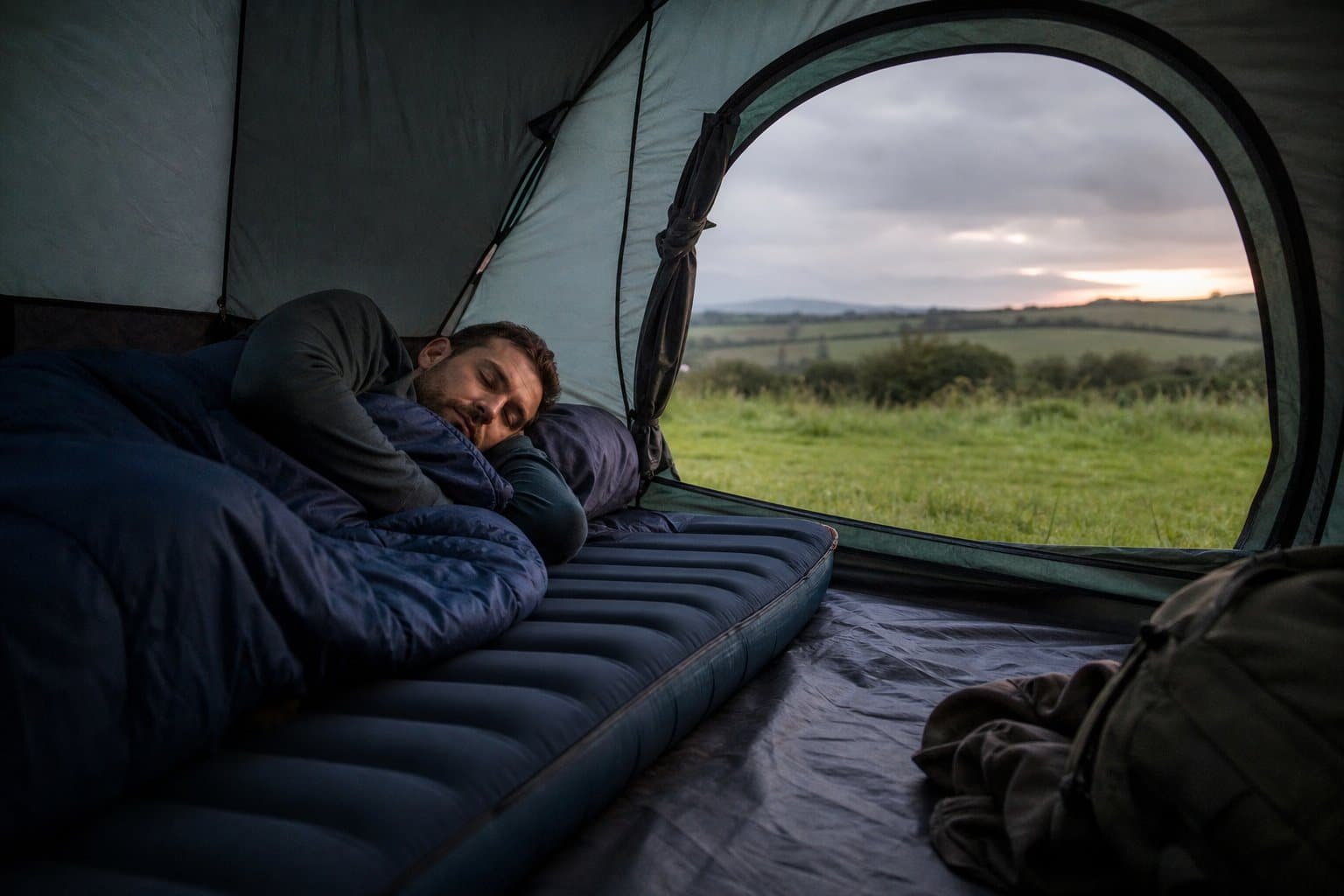
The best camping sleeping mats for side sleepers in the UK are thick enough to keep your hip and shoulder off the ground, wide enough to curl up on, warm enough for cold British nights and stable rather than bouncy when you roll over.
Side sleepers put their whole weight through a small area of hip and shoulder, so a mat that is fine for back sleepers can leave you with a numb arm and an aching hip by 3am. Owners raise the same complaints again and again: thin pads that bottom out, narrow mats you keep rolling off, crinkly air mats that wake the whole tent, bouncy tubes that wobble every time you turn, and slow leaks that leave you on the ground by morning. We compared air, dual-layer and self-inflating mats on thickness, width, stability, noise, insulation and packed size to find the best options for UK camping.
- Aim for at least 6 cm of thickness; 8 to 10 cm is better
- A wide (64 cm) mat makes curled-up sleeping easier
- Stable baffles or foam reduce bounce and noise
- Look for R4 or more for spring and autumn in the UK
- Thickness Side sleepers need more depth than back sleepers. Around 2.5 inches (6 cm) is a minimum; 8 to 10 cm stops most people bottoming out.
- Width Standard mats are about 51 to 55 cm wide. A 64 cm wide version gives room for bent knees and elbows.
- Stability and noise Spaceframe, I-beam or quilted constructions and foam-filled mats wobble and crinkle less than simple tubes.
- Warmth R4 or more suits most UK camping from spring to autumn. Thicker air mats need insulation to stay warm.
Picking between the camping sleeping mats for side sleepers UK retailers stock is mostly about pressure: your hip and shoulder carry your weight on a small area, so the mat has to be deep, stable and wide enough to cushion them. Warmth, noise and packed size then decide which side sleeper mat suits your trips. This guide explains the thinking behind our five picks so you can choose with confidence.


Best overall NEMO Tensor | Best adjustable firmness StS Comfort+ | Best for car camping LuxuryMap | Best lightweight Rapide SL | Best budget Trekology R7 | |
|---|---|---|---|---|---|
|
|
|
|
|
| |
| Type | Insulated air | Dual-layer air | Self-inflating foam | Insulated air | Insulated air |
| Thickness | 9 cm | 6.4 cm | 7.6 cm | 9 cm (11 cm edges) | 10 cm |
| Size | Regular wide | 183 x 55 cm | 196 x 64 cm | 183 x 64 cm | 180 x 60 cm |
| R-value | Not quoted | 4 | 6 | Up to 4.8 | 7.2 (claim) |
| Weight | Not quoted | 862 g | 1.9 kg | 676 g | 900 g |
| Packed | Not quoted | 13 x 23 cm | 66 x 24 cm | 10 x 20 cm | Bottle size |
| Pump sack | Not quoted | Yes | Yes | Yes | No |
| Warranty | Lifetime | Lifetime | Limited lifetime | Limited | 1 year |
| Check price | Check price | Check price | Check price | Check price |
Best camping sleeping mats for side sleepers: our detailed reviews
Each review covers thickness, width, stability, noise, warmth, packed size and the complaints owners raise most. If you are new to mats, start with our guide to choosing a sleeping pad for camping, and see our best self-inflating camping mats for more foam-filled options.
9 cm of Spaceframe-baffled air in a regular wide size, quiet Thermal Mirror insulation and a lifetime warranty
The two complaints side sleepers raise most about air mats are bounce and noise: a springy mat that wobbles every time you roll over, and a crinkly surface that wakes you (and your tent mate) all night. The NEMO Tensor All-Season tackles both. Its Spaceframe baffles use low-stretch die-cut trusses that NEMO says eliminate springiness, and the two layers of floating Thermal Mirror film are designed to insulate quietly. Outdoor reviewers regularly single out the Tensor range as one of the quietest air mats they have tried.
The listing quotes 3.5 inches (about 9 cm) of loft, which is enough to keep a hip and shoulder off the ground when the mat is properly inflated, and we picked the Regular Wide size because the extra width over a standard regular mat matters when you lie on your side with your knees bent. The fabrics are bluesign-approved nylon, and NEMO backs every product with a lifetime warranty against defects.
The Amazon listing does not quote an R-value, weight or packed size, so check NEMO’s own page if you need those figures for winter trips. It is also one of the pricier mats here. For side sleepers who want a stable, quiet air mat for everything from wild camping to the family campsite, it is our top pick.
- Spaceframe baffles reduce bounce
- Very quiet insulated construction
- 9 cm loft keeps hips off the ground
- Wide 64 cm size for curled-up sleeping
- Lifetime warranty
- R-value, weight and packed size not on the listing
- Premium price
- Air mat, so a puncture needs a field repair
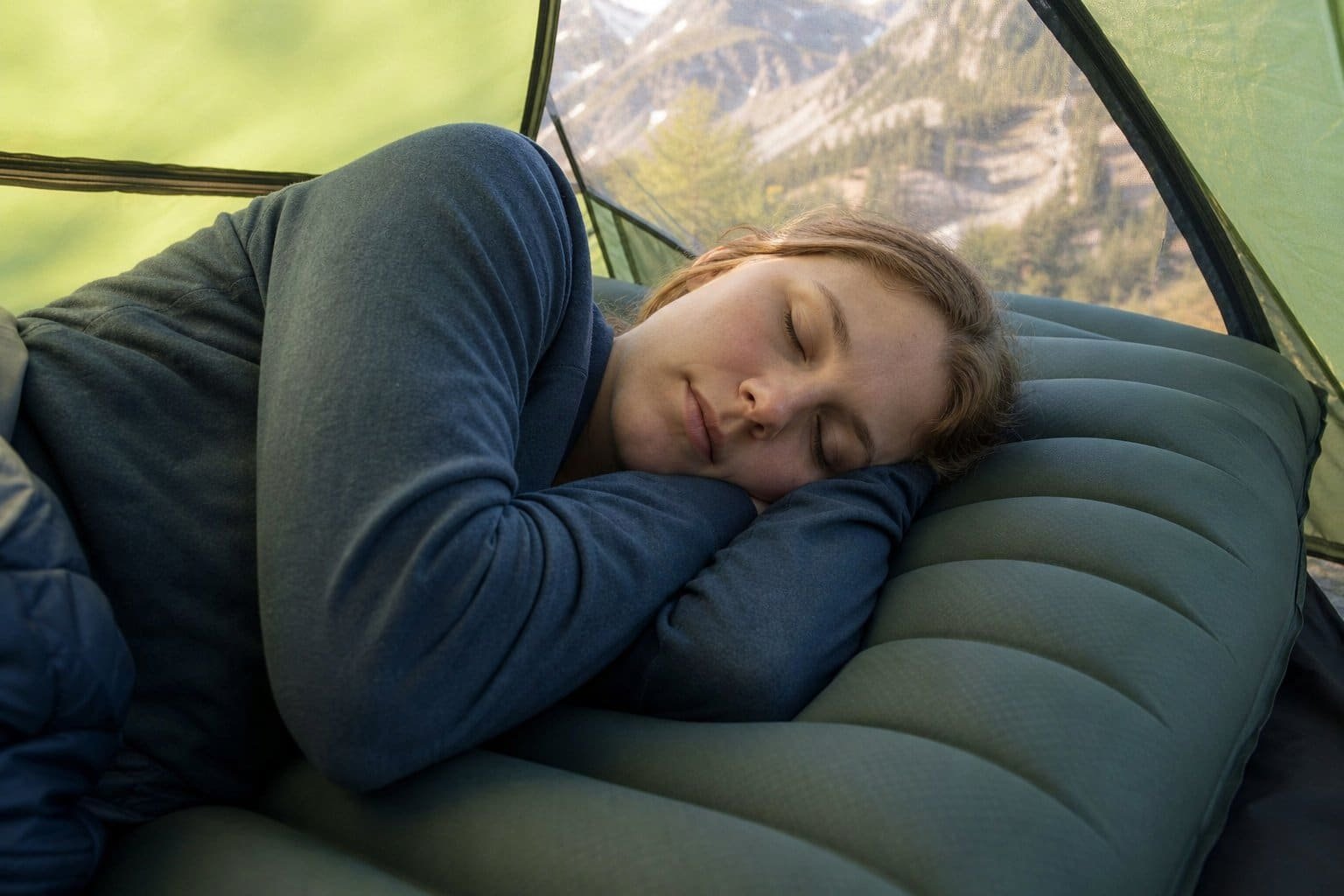
Dual-layer air mat, 183 x 55 x 6.4 cm, R4, 862 g, packs to 13 x 23 cm, with a pump sack and repair kit
Most air mats give you one setting: firm enough to stop you bottoming out, which often feels too hard on a side sleeper’s hip and shoulder. The Sea to Summit Comfort Plus Insulated solves that with two separate air layers. You can run the bottom layer firm for support and the top layer softer so your shoulder sinks in, and if one layer punctures the other still inflates, so you are not left on the ground in the middle of the night.
The listing quotes 72 x 21.5 x 2.5 inches (183 x 55 x 6.4 cm), an R-value of 4 for four-season use, 1.9 lb (about 862 g) and a packed size of 5 x 9 inches (13 x 23 cm). Air Sprung Cells are designed to behave more like a sprung mattress than a row of tubes, the face fabric is non-slip nylon chosen to be quiet, and the multi-function valve inflates with the included Airstream pump sack, deflates one way and allows fine-tuning. A field repair kit and PillowLock patches are included, and Sea to Summit backs it for the lifetime of the product.
At 6.4 cm it is thinner than the deepest mats here, and at 55 cm the regular size is fairly narrow for sprawling side sleepers, so broad-shouldered campers may prefer a wider model. If you have struggled to find a firmness that suits your hips, though, nothing else here is as adjustable.
- Two layers to tune firmness separately
- Backup layer if one punctures
- R4 four-season insulation
- Pump sack, repair kit and PillowLock included
- Lifetime guarantee
- 6.4 cm, thinner than the deepest mats
- 55 cm wide is narrow for some
- Two valves to manage
Pressure-mapped foam self-inflating mat, 196 x 64 x 7.6 cm, R6, 1.9 kg, rolls to 66 x 24 cm, made in the USA
If air mats feel too bouncy or noisy, a thick self-inflating mat is the natural alternative, and the Therm-a-Rest LuxuryMap is built with side sleepers in mind. Therm-a-Rest uses pressure-mapping technology to make the foam plusher in some areas and more supportive in others, so the hip and shoulder zones can sink in while the rest of your body stays level. Because it is foam-filled, it is quiet when you turn over and it will still give some cushioning and insulation if it springs a leak.
The Large size we picked measures 77 x 25 x 3 inches inflated (196 x 64 x 7.6 cm), so it suits taller campers and gives room to curl up. It has an R-value of 6 for year-round use, and the TwinLock system uses two dedicated valves for fast inflation and deflation, with a pump sack in the box. Therm-a-Rest recommends inflating it and leaving it out for two to four hours before the first use so the foam expands fully. It is made in the USA and covered by a limited lifetime warranty.
The trade-off is bulk: it weighs 4 lb 3 oz (about 1.9 kg) and rolls to 26 x 9.5 inches (66 x 24 cm), so it belongs in the car boot rather than a rucksack. For campsite trips, festivals and campervans, it is the most home-like side-sleeper mat in this list.
- Pressure-mapped foam softer at hips and shoulders
- Quiet, no air-mat bounce
- R6 year-round warmth
- Large 196 x 64 cm size
- Made in the USA, limited lifetime warranty
- 1.9 kg and bulky when rolled
- 7.6 cm, so very heavy sleepers may feel the ground
- Needs time to self-inflate on first use
Quilted-top insulated air mat, 183 x 64 cm, about 9 cm thick with taller outer chambers, R4.8, 676 g, packs to 10 x 20 cm
Backpacking side sleepers usually have to choose between a thick mat and a light one. The Big Agnes Rapide SL Insulated gets close to both. The listing describes a 3.5 inch (about 9 cm) mat with taller 4.25 inch outer chambers that help cradle you and stop you rolling off the edge, plus a quilted top that Big Agnes says reduces the typical air-mattress bounce. The offset I-beam construction keeps weight down while keeping the surface stable.
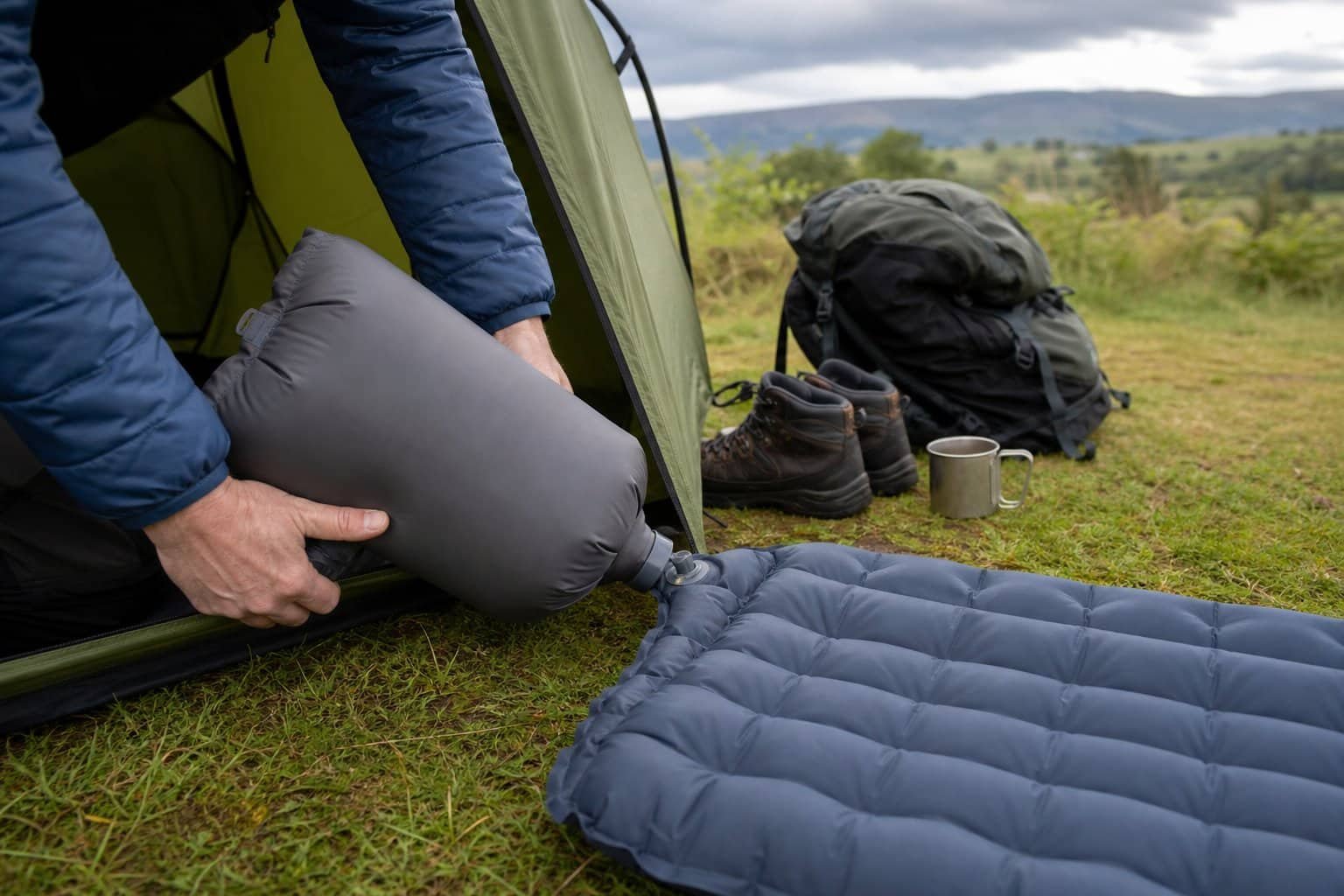
We chose the Wide Regular size (25 x 72 inches, about 64 x 183 cm) because the extra width makes side sleeping with bent knees far more comfortable. Big Agnes rates the Rapide SL series up to R4.8, and retailer specifications for this size list 676 g and a packed size of about 10 x 20 cm. Two layers of heat-reflective film provide the insulation, the high-volume valves allow micro-adjustment of firmness, and a Pumphouse inflation sack is included so you are not blowing it up by mouth on a cold night.
Like most insulated air mats it can rustle a little when new, and it carries a limited rather than lifetime warranty. For lightweight camping and backpacking side sleepers who need width, depth and warmth in a small package, it is the pick.
- Only about 676 g for a wide mat
- Taller outer chambers help stop you rolling off
- Quilted top reduces bounce
- R4.8 three-season-plus warmth
- Pumphouse inflation sack included
- Limited warranty
- Insulated air mats can rustle
- Listing only quotes R4.8 as the series maximum
10 cm thick insulated air mat, 180 x 60 cm, R7.2 (maker claim), 900 g, supports up to 150 kg, packs to water-bottle size
Budget mats are where side sleepers most often complain about bottoming out: a thin, cheap air pad lets the hip sink straight through to the ground. The TREKOLOGY UL R7 avoids that with a full 4 inches (10 cm) of thickness, and the listing explicitly says side and back sleepers benefit most from its wide, supportive surface.
It inflates to 70.8 x 24 inches (180 x 60 cm), weighs 2 lb (900 g) and packs to roughly the size of a water bottle. TREKOLOGY quotes an SGS-certified R-value of 7.2, which is a maker claim at this price, so treat it as a guide rather than a guarantee. The fabric is 40D ripstop nylon with a TPU coating, the anti-leak valve is designed for quick inflation and deflation, and the mat supports up to 150 kg.
There are compromises. No pump sack is included, so you inflate it by mouth or buy a pump separately, it is best suited to sleepers up to about 180 cm, and the warranty is one year. If you want deep cushioning for your hips and shoulders without spending premium money, it is the best value here.
- Full 10 cm thickness to stop bottoming out
- Low price
- 60 cm wide surface
- Supports up to 150 kg
- Packs to water-bottle size
- No pump sack included
- Best for sleepers up to about 180 cm
- One-year warranty; R7.2 is a maker claim
Camping sleeping mats for side sleepers: air, self-inflating or foam?
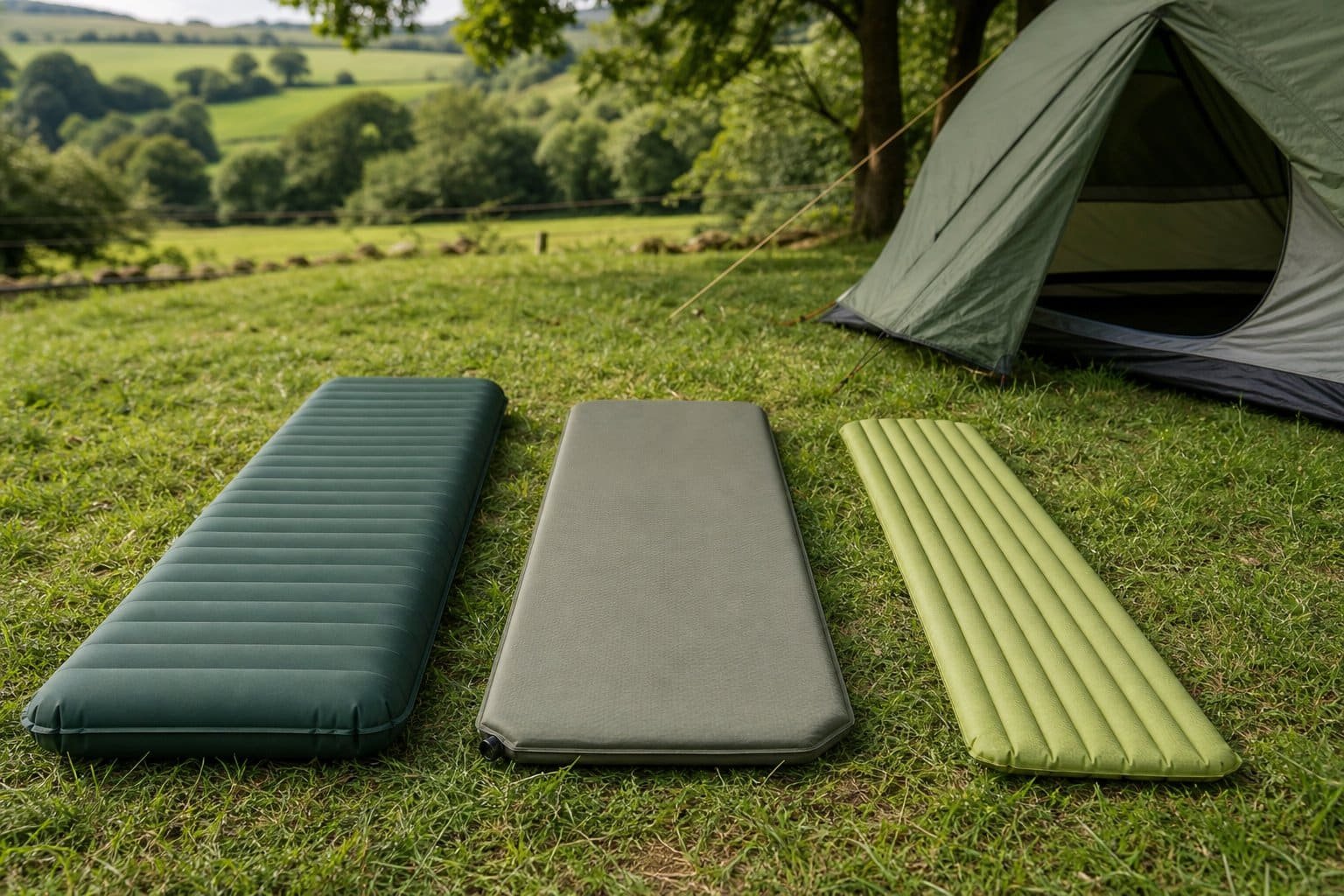
Camping mats come in three main types. Air mats such as the NEMO Tensor, Big Agnes Rapide SL and TREKOLOGY are the thickest and lightest for their size, which is why many side sleepers prefer them, but cheaper ones can bounce, crinkle and lose air overnight. Self-inflating mats such as the Therm-a-Rest LuxuryMap combine open-cell foam with air, so they feel quieter and more like a mattress and still give some protection if punctured, but they are heavier and bulkier. Closed-cell foam pads are cheap and puncture-proof but far too thin for most side sleepers on their own, although they make a useful extra layer under an air mat.
As Trekitt's guide to choosing a sleeping mat points out, side sleepers put more pressure on their hips and shoulders, so a mat of around 2.5 inches or more is a sensible starting point, with long and wide versions available if you need extra room. Pair your mat with the right bag and pillow too: our best sleeping bags for side sleepers and camping pillows for neck support are built for the same sleeping position.
Camping sleeping mats for side sleepers UK campers can choose: the main types
Side sleepers have more to gain, and more to lose, from the type of mat they choose than any other sleeper. A back sleeper spreads their weight across the whole body, while a side sleeper concentrates it through two points. The mats in this guide cover the main construction types, and each handles that concentrated load in a slightly different way.
Single-layer air mats
Air mats such as the NEMO Tensor All-Season, the Big Agnes Rapide SL and the TREKOLOGY UL R7 offer the most depth for their weight and packed size, which is why so many side sleepers favour them. The internal baffles decide how stable they feel: simple tubes can rock as you roll, while trusses, I-beams and quilted tops keep the surface steadier under a hip.
Dual-layer air mats
The Sea to Summit Comfort Plus Insulated stacks two independent air layers. That lets you run a firm base with a softer top so your shoulder can sink in without your hip touching the ground, and it gives you a backup if one layer is punctured. It is a clever answer to the classic side sleeper problem of a mat that is either too hard or too soft.
Self-inflating foam mats
Self-inflating mats such as the Therm-a-Rest LuxuryMap combine open-cell foam with air. They feel more like a mattress, stay quiet when you turn over and still give some cushioning if they lose pressure. The trade-off is bulk and weight, so they suit car camping, festivals and campervans better than carrying a pack across the hills.
How to choose: depth, width, length and shape
Depth is the starting point when you compare camping sleeping mats for side sleepers UK shops sell, but it is not the whole story. A thick mat that is under-inflated, or built from wobbly tubes, can still let a hip press through to the ground. Look at how the mat is constructed as well as its headline thickness, and remember that a firm self-inflating mat can feel as supportive as a deeper air mat.
Width matters more to side sleepers than most people realise. When you lie on your side with your knees drawn up, your knees and elbows often sit outside the edge of a standard mat. A wide version of the same model, such as the NEMO Tensor or Big Agnes Rapide SL in their wide sizes, keeps your whole body on the mat and makes rolling over far less of an adventure.
Length and shape come next. Tapered, mummy-style mats save weight but narrow at the feet, which can leave a side sleeper’s bent legs hanging over the edge. Rectangular mats give more room for the same width at the shoulders. If you are tall, check the length as well, because a mat that ends at your ankles pushes you into a curled position all night.
Finally, be honest about how you camp. The camping sleeping mats for side sleepers UK car campers prefer are often thicker, heavier and wider than the ones backpackers carry, and that is fine. A mat that lives in the boot can afford to be bulky, while one that rides in a rucksack has to earn its place by weight and packed size.
Getting the firmness right on the night
Most side sleepers run their mats too hard. A rock-solid air mat stops you bottoming out but pushes back hard against the hip and shoulder, which can leave you shifting position all night. The sweet spot is usually just firm enough that your hip floats clear of the ground while your shoulder settles into the surface.
Valves make a big difference here. The Big Agnes Rapide SL and Sea to Summit Comfort Plus both have valves that let you release small amounts of air, so you can adjust the feel while lying in position. With a self-inflating mat, open the valve briefly while lying on it, then close it once the shoulder feels right.
Temperature affects firmness too. Air cools as the night goes on, so a mat that felt perfect at bedtime can feel noticeably softer in the small hours, especially on chilly nights. If that happens, a couple of breaths or a quick squeeze of a pump sack is usually enough. Self-inflating foam is less affected, which is one reason many car campers prefer it.
Your pillow completes the picture. A deeper mat lets your shoulder sink further, which changes how much pillow height you need to keep your neck straight. If you upgrade to a thicker sleeping mat, expect to adjust your pillow as well, and consider an adjustable one that you can set to suit both mat and sleeping position.
Warmth and UK conditions for side sleepers
British nights are cool for much of the year, and side sleepers have an extra warmth challenge: as you turn, the part of your body pressing on the mat keeps changing, so the whole surface needs to insulate well. Thick air mats without insulation feel cold quickly because air circulates inside them, which is why every pick in this guide is insulated, whether with reflective film or foam.
Damp ground adds to the chill on UK campsites. A footprint under the tent, or a tent carpet inside it, helps, and on colder trips a closed-cell foam pad under your air mat adds warmth while protecting it from thorns and stones. Our guide to stacking sleeping pads for warmth explains how two layers work together.
Condensation is a quieter problem. Inflating an air mat by mouth adds moist breath inside, which can reduce insulation over time and encourage mould in the chambers. Pump sacks, which come with most of the mats here, avoid that. At home, dry your mat with the valve open before storing it, ideally unrolled or loosely rolled under a bed.
Hook-up pitches can tempt you to use an electric pump, and that is fine, but keep a pump sack or mouth valve as a backup for wild or basic pitches. When you weigh up camping sleeping mats for side sleepers UK weather should push you towards a mat with real insulation rather than the cheapest deep air pad you can find.
Common side sleeper problems and simple fixes
A numb arm is one of the most common complaints. It usually means the shoulder is not sinking in enough, so the arm is trapped under your weight. Let a little air out, move the pillow so it supports your head rather than your shoulder, and try lying slightly forward with your lower arm in front of you rather than under your body.
Waking with an aching hip points the other way: the sleeping mat is not giving enough support. Add air, check that the mat is not slowly leaking, and make sure there is no stone or tree root beneath your hip. A folded fleece placed between your knees keeps your hips level and takes pressure off the lower back, which many side sleepers find helps.
Rolling off the mat suggests it is too narrow or too slippery. A wider size helps most, but a sleeping bag with a grippy base, or a fitted sheet over a self-inflating sleeping mat can stop you sliding. If you share a tent, our guide to the best double camping mattresses gives you room to spread out.
Final thoughts on choosing a side sleeper mat
For most campers, the NEMO Tensor All-Season in a wide size balances depth, stability and quiet best. The Sea to Summit Comfort Plus Insulated is the one to choose if you want adjustable firmness, the Therm-a-Rest LuxuryMap suits car campers, the Big Agnes Rapide SL is the lightweight choice, and the TREKOLOGY UL R7 brings deep cushioning at a budget price.
Whichever of these camping sleeping mats for side sleepers UK campers choose, the same habits help: set the firmness lying down, insulate from the ground, and match your pillow to your new mat. This is general buying advice, not medical guidance, so if hip or shoulder pain lasts beyond your trip, speak to a GP or physio.
What to look for in a camping sleeping mat for side sleepers
At least 6 cm, ideally 8 to 10 cm, so your hip and shoulder do not press through to the ground.
Wide (around 64 cm) mats leave room for bent knees and elbows and stop you rolling off in the night.
Baffled, I-beam, quilted or foam-filled designs reduce the bounce of simple tube mats when you turn over.
Thick air mats lose heat without insulation. R4 or more suits most UK camping; R6 and above for winter.
Side sleepers turn more often, so a quiet surface matters. Foam mats and some insulated air mats are much quieter.
Fine-tune valves or dual layers let you soften the mat for your shoulder without bottoming out.
Check weight if you carry it, whether a pump sack is included, and how long the warranty covers leaks.
How to sleep more comfortably on your side when camping
- Inflate firm, then release a little air
Lie on your side and let air out in small bursts until your shoulder sinks in but your hip does not touch the ground.
- Use a pump sack, not your breath
Breath adds moisture inside the mat; a pump sack is quicker and kinder to the insulation.
- Top up before you sleep
Air cools and contracts as the night gets colder, so a mat that felt firm at 8pm can feel soft at 2am.
- Fill the gaps
A pillow tall enough for your shoulder and a fleece between your knees keep your spine straight.
- Pitch on level ground
Clear stones and sticks and sleep with your head uphill so you do not slide off the mat.
- Add a foam pad in cold weather
A closed-cell pad under your mat adds warmth and protects it from punctures.
How we chose these sleeping mats
We have not slept on every mat in this list ourselves. Our picks are based on manufacturer specifications, UK camping buying guides and recurring themes in owner and reviewer feedback about bottoming out, width, noise, bounce, warmth and leaks. Where a listing does not quote a figure we say so rather than guess. This is general buying advice, not medical advice: if you have ongoing hip or shoulder pain, speak to your GP or a physiotherapist.
-
Pressure relief
We prioritised thickness and designs that let hips and shoulders sink without touching the ground.
-
Space and stability
We favoured wide sizes and constructions that reduce bounce and rolling off.
-
Warmth and noise
We compared stated R-values and owner reports of rustle and crinkle.
-
Practicality
We looked at weight, packed size, pump sacks, repair kits and warranties.
What is the best camping sleeping mat for side sleepers?
For most campers, the NEMO Tensor All-Season in Regular Wide: it is about 9 cm thick, wide enough to curl up on, quiet and stable. If you mainly car camp, the Therm-a-Rest LuxuryMap gives a quieter, foam-filled feel.
How thick should a sleeping mat be for a side sleeper?
Around 6 cm is a sensible minimum, and 8 to 10 cm is better for heavier or broad-shouldered sleepers so the hip does not bottom out. Self-inflating foam mats can feel supportive at a slightly lower thickness than air mats.
Are air mats or self-inflating mats better for side sleepers?
Air mats are thicker and lighter, so they suit backpacking side sleepers. Self-inflating mats are quieter, less bouncy and feel more like a mattress, which suits car camping.
Why do I keep waking up with a sore hip when camping?
Usually your mat is too thin or under-inflated, so your hip presses through to the ground. A thicker mat, slightly more air, or a foam pad underneath normally helps.
What R-value do I need for camping in the UK?
R4 or more covers most UK camping from spring to autumn. For winter or high ground, look for R6 or above. Our guide to sleeping pad R-values for winter explains more.
Do I need a wide sleeping mat as a side sleeper?
Not always, but many side sleepers find a wide (around 64 cm) mat far more comfortable because knees and elbows stay on the mat instead of hanging off the edge.
Which camping sleeping mat for side sleepers should you buy?
- Best overall: NEMO Tensor All-Season Insulated Sleeping Pad, Regular Wide
- Best adjustable firmness: Sea to Summit Comfort Plus Insulated Air Mat, Regular
- Best for car camping: Therm-a-Rest LuxuryMap Self-Inflating Sleeping Pad, Large
- Best lightweight: Big Agnes Rapide SL Insulated Sleeping Pad, Wide Regular
- Best budget: TREKOLOGY UL R7 Insulated Sleeping Pad
For most UK campers, the NEMO Tensor All-Season Regular Wide is the best camping sleeping mat for side sleepers: it is about 9 cm thick, wide, quiet and stable, with a lifetime warranty. The Sea to Summit Comfort Plus Insulated is the one to choose if you need adjustable firmness, the Therm-a-Rest LuxuryMap is the most comfortable car-camping option, the Big Agnes Rapide SL Wide is the best lightweight pick and the TREKOLOGY UL R7 is the best budget buy. Complete your sleep system with our side-sleeper sleeping bags and camping pillows.
CampEquipmentPlus relies on reader support. Purchases made via links on our website may earn us an affiliate commission at no extra cost to you, helping keep the site running.