
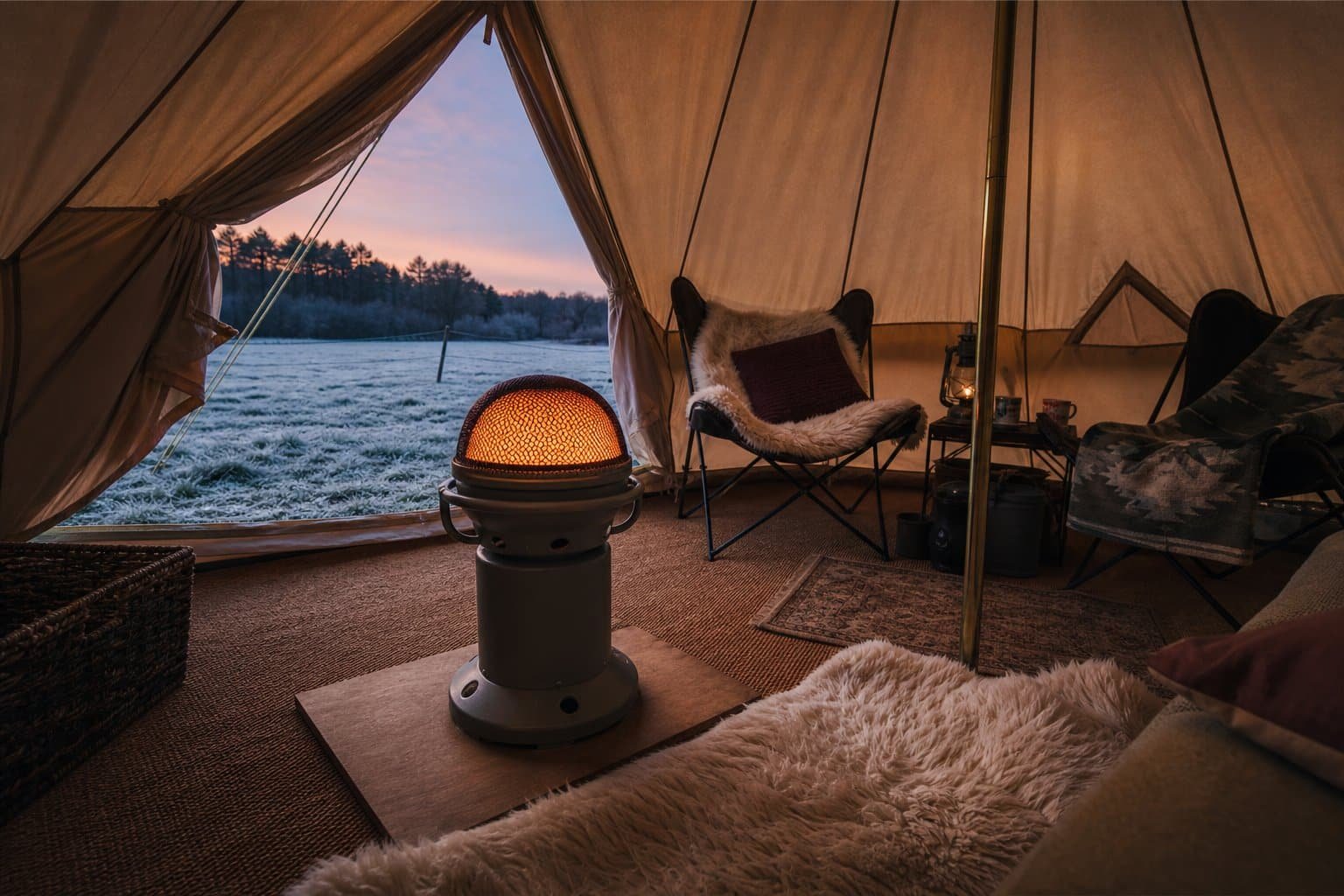
Best Propane Heaters for Camping
The best propane heater for camping gives you quick, quiet radiant warmth on cold evenings, runs from small 1 lb cylinders with no power needed, and shuts itself off if it tips over or the oxygen level falls.
A portable propane heater can turn a frosty spring or autumn trip into a comfortable one, but it is also the camping gadget most likely to hurt you if it is used carelessly. Every heater in this guide has an oxygen depletion sensor (ODS) and a tip-over switch. Even so, the US Forest Service warns that unvented propane heaters should never be used inside a small personal tent, and no maker says it is safe to leave one running while you sleep.
Campers’ most common complaints are short run times on 1 lb cylinders, heaters that won’t light or cut out at altitude, and heat that disappears through thin tent walls. Below we compare seven heaters, explain what the BTU and square-foot figures really mean in a tent, and set out the safety rules that matter most.
- Every pick has low-oxygen and tip-over shut-off
- Sized from 95 to 450 sq ft
- Ventilate, use a CO alarm and switch off before sleeping
- Size it to the tent About 3,800 BTU suits a small tent, 9,000 BTU a large family tent, and 18,000 BTU a big wall tent or cabin.
- Two cut-offs as a minimum Only buy a heater with both an oxygen depletion sensor and a tip-over switch, and treat them as a backup, not a licence.
- Ventilate and alarm Keep vents or a door open while it runs and use a battery CO alarm. Never run it while you sleep.
- Plan your fuel A 1 lb cylinder lasts about 2–6 hours. For long evenings, use a hose and filter to a bigger tank outside.
A propane heater for camping can make a cold evening in a big tent or under an awning far more comfortable, but the right one depends on more than raw BTU. Tent size, heat settings, run time per cylinder, altitude limits and, above all, safety features decide whether a heater is a good fit. Here is what to weigh up before you compare the seven picks below, all of which have low-oxygen and tip-over shut-off.


Top pick Portable | Even heat FLEX | Big tents Big Buddy | Small tents Little | Rugged Hunting | |
|---|---|---|---|---|---|
|
|
|
|
|
| |
| Heat output | 4,000–9,000 BTU | 8,000–11,000 BTU | 4,000–18,000 BTU | 3,800 BTU | 6,000–12,000 BTU |
| Heats up to | 225 sq ft | 275 sq ft | 450 sq ft | 95 sq ft | 300 sq ft |
| Run time (1 lb) | 3 h high / 6 h low | 2 h high / 3.5 h low | Up to 11 h on two | 5.6 h | Not quoted |
| Low-oxygen shut-off | Yes | Yes | Yes | Yes | Yes |
| Tip-over shut-off | Yes | Yes | Yes | Yes | Yes |
| Ignition | Piezo | Electronic | Piezo | Push-button | Electronic |
| Weight | 10.6 lb | 11 lb | 17.1 lb | 5.85 lb | Not quoted |
| Max altitude | 7,000 ft | 7,000 ft | 7,000 ft | 7,000 ft | 7,000 ft |
| Indoor-rated by maker | Yes | Yes | Yes | Yes | Yes |
| Big-tank hookup | Optional hose | Optional hose | Optional hose | No | Optional hose |
| Warranty | 3 yr (maker) | 3 yr | 3 yr | 3 yr | 1 yr (maker) |
| Check price | Check price | Check price | Check price | Check price |
Best propane heaters for camping: our detailed reviews
Each review covers heat output, coverage, run time, safety shut-offs, ignition, weight, altitude limit and warranty, plus the complaints owners raise most. For a broader look at all heater types, see our camping heaters buying guide, and if you camp with mains hook-up, our best electric heaters for RVs avoid combustion altogether.
4,000 or 9,000 BTU radiant heat for up to 225 sq ft, with low-oxygen and tip-over shut-off
The Portable Buddy is the heater most campers mean when they talk about a propane tent heater, and for good reason. It gives 4,000 BTU on low or 9,000 BTU on high, which Mr. Heater says warms up to about 225 sq ft, enough for a large family tent or a wall tent with the door vented. It has an automatic low-oxygen shut-off (ODS) and a tip-over switch, piezo ignition and a fold-down handle, and Mr. Heater rates it for indoor and outdoor use up to 7,000 ft.
On a 1 lb cylinder Mr. Heater quotes about 3 hours on high and 6 hours on low, and you can run it from a larger 20 lb tank with an optional hose and fuel filter. Bob Vila’s tester warmed a 180 sq ft room by 8°F in 30 minutes, but noted that drafts and uninsulated walls, such as tent fabric, reduce its effect. Common complaints are a fiddly first light (hold the knob on pilot for around 30 seconds), noise on high and a cut-out at altitude. Mr. Heater lists a 3-year warranty on its site; the Amazon listing says 1 year.
- Low-oxygen and tip-over shut-off
- Two heat settings
- Runs on 1 lb or 20 lb tanks (hose sold separately)
- Fold-down handle, easy to carry
- Huge user base and spare parts
- Fiddly to light at first
- Heat drops off fast in draughty tents
- Shuts off above about 7,000 ft
8,000–11,000 BTU with an omni-directional burner for up to 275 sq ft
The Buddy FLEX takes the Portable Buddy formula and adds a bit more power and a different burner. Its omni-directional fibre mesh burner throws heat in a wider arc rather than straight ahead, which suits a group sitting around it in a large tent or under an awning. Output runs from 8,000 to 11,000 BTU, and Mr. Heater says it heats about 275 sq ft.
Mr. Heater lists ODS and a tip-over switch, electronic ignition, indoor use (outside Canada and Massachusetts), a 7,000 ft limit and a 3-year warranty. The trade-off is fuel: a 1 lb cylinder lasts about 2 hours on high and 3.5 hours on low, so carry spares or use a hose to a bigger tank. It weighs about 11 lb. Because its minimum setting is 8,000 BTU, it can be too much for a small two-person tent.
- Wider, more even heat
- Low-oxygen and tip-over shut-off
- Electronic ignition
- 3-year warranty
- Good for groups
- Shorter run time per cylinder
- 8,000 BTU minimum is a lot for small tents
- Shuts off above about 7,000 ft
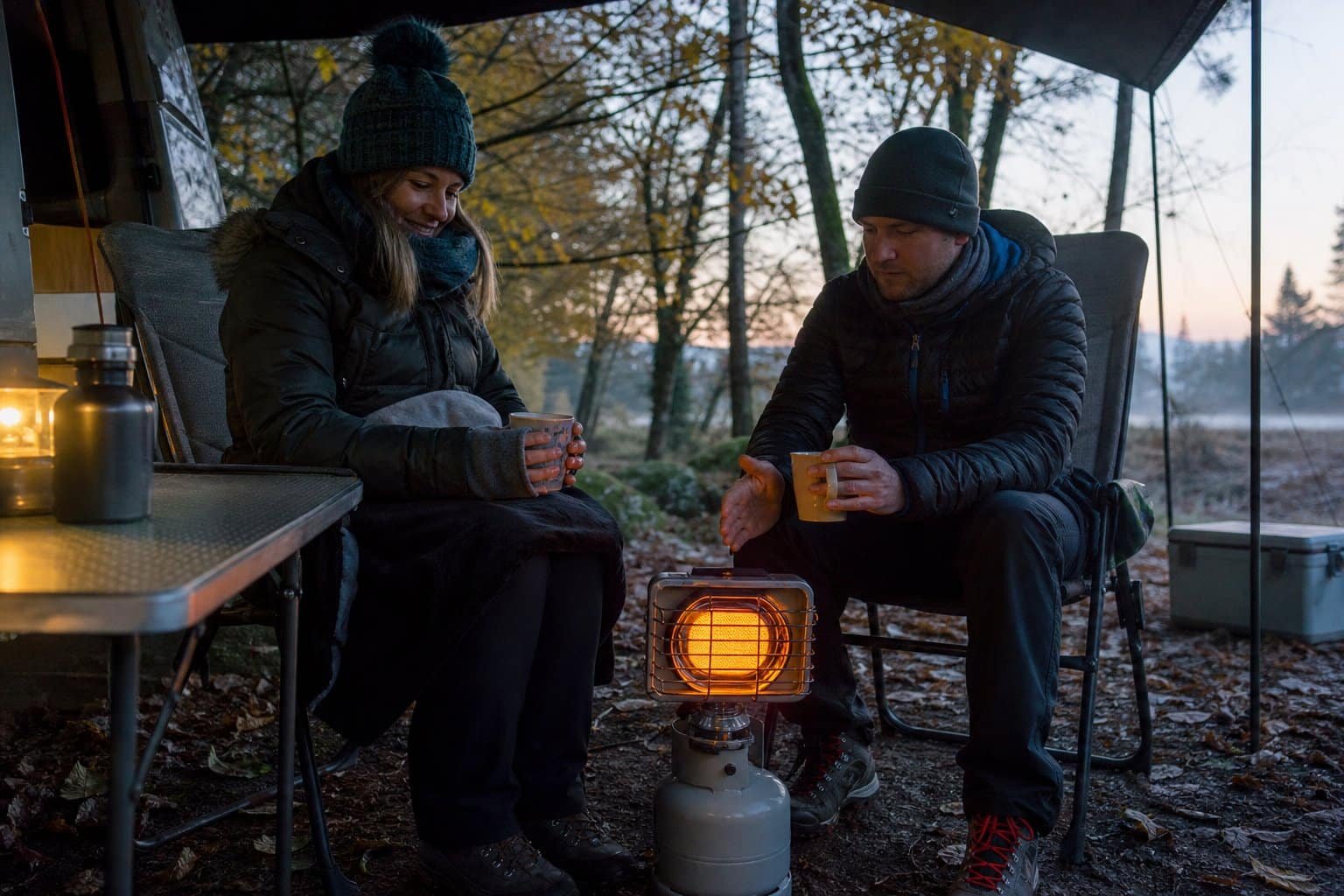
Three settings from 4,000 to 18,000 BTU, up to 450 sq ft, takes two 1 lb cylinders
If you camp in a big canvas wall tent, a large cabin tent or a hunting camp, the Big Buddy has the headroom a smaller heater lacks. It has low, medium and high settings of 4,000, 9,000 and 18,000 BTU, and Mr. Heater says it heats up to about 450 sq ft. It runs from two 1 lb cylinders at once, which Mr. Heater says gives up to 11 hours, or from a large tank with a hose.
Mr. Heater lists ODS and tip-over shut-off, piezo ignition, indoor use, a 7,000 ft limit and a 3-year warranty. At 17.1 lb it is heavy and bulky. Some older versions had a battery fan; Mr. Heater says the fan has been removed from some current models, so do not count on one. In a US Forest Service test in a sealed space with no air exchange, the Big Buddy’s ODS shut it down after about 30 minutes on high, which shows how quickly a closed space can run short of oxygen.
- Most heat in this list
- Three heat settings
- Runs from two 1 lb cylinders or a big tank
- Low-oxygen and tip-over shut-off
- 3-year warranty
- Heavy and bulky at 17.1 lb
- Overkill for normal family tents
- Fan not included on current versions
3,800 BTU for up to 95 sq ft, sits on a single 1 lb cylinder, 5.85 lb
The Little Buddy is a compact heater that sits on top of one 1 lb cylinder on an 8 in round stand, so it uses little floor space. It puts out 3,800 BTU, which Mr. Heater says heats up to 95 sq ft, about right for a two- to four-person dome tent. Mr. Heater quotes 5.6 hours per cylinder and describes it as suited to small enclosed spaces like tents.
It has ODS and tip-over shut-off, push-button ignition, indoor approval, a 7,000 ft limit and a 3-year warranty, and weighs 5.85 lb. The downsides are a single fixed setting, so you can’t turn it down, and a tall, narrow shape that needs firm, level ground. Owners also mention that the top of the cylinder area gets hot, so keep it well clear of sleeping bags and tent fabric.
- Small, light and simple
- Low-oxygen and tip-over shut-off
- Long run time per cylinder
- Push-button ignition
- 3-year warranty
- One heat setting only
- Needs firm, level ground
- Too little heat for big tents
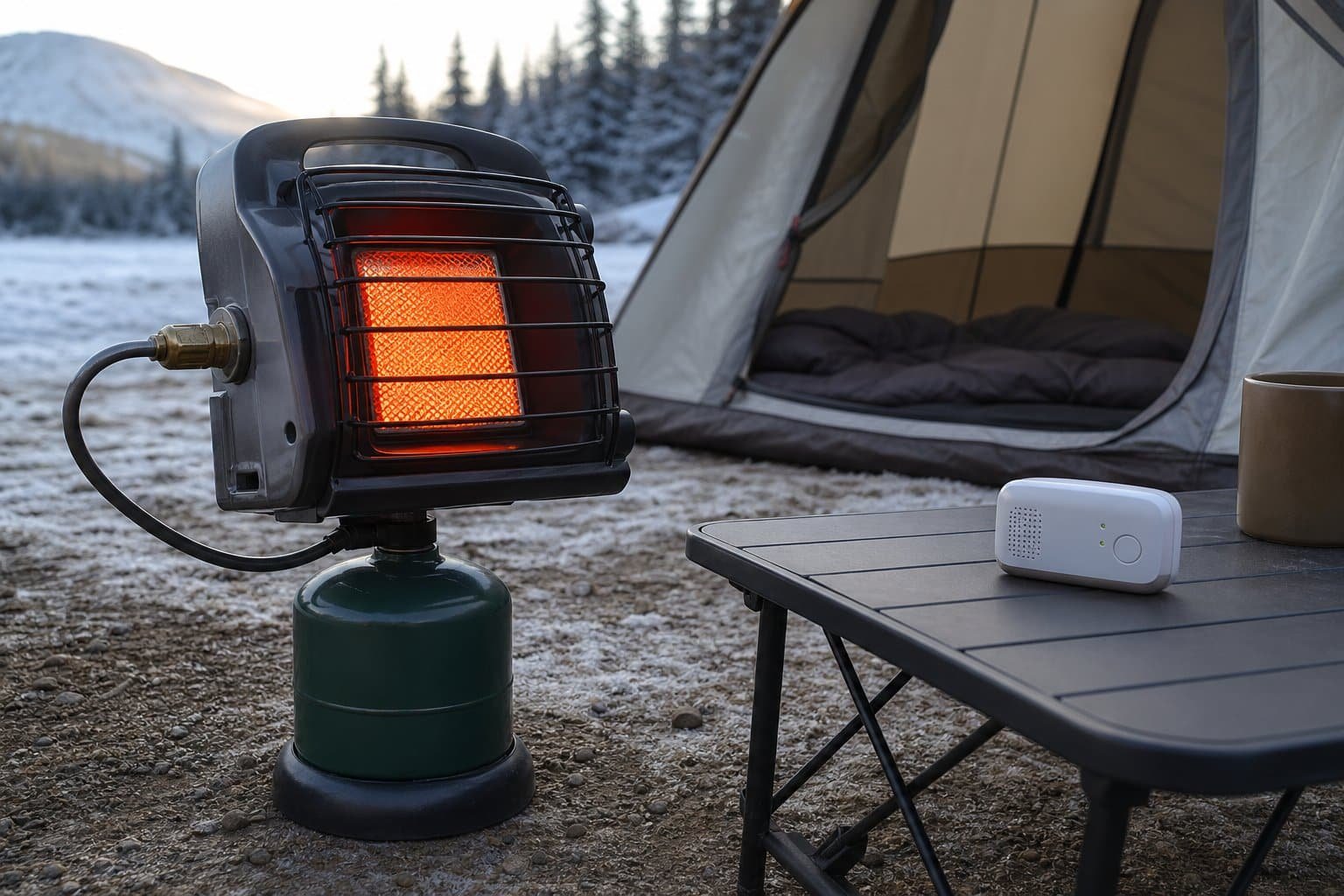
6,000 or 12,000 BTU for up to 300 sq ft, electronic ignition, camo housing
The Hunting Buddy is built for blinds and cold camps, but works well for campers who want more heat than a Portable Buddy without going to a Big Buddy. It has 6,000 and 12,000 BTU settings, and Mr. Heater says it heats up to 300 sq ft. It uses silent electronic ignition: you push and turn one knob, with no pilot routine.
Mr. Heater lists ODS, a tip-over switch, indoor use and a 7,000 ft limit, and it runs from a 1 lb cylinder or from a 20 lb tank with an optional hose. Mr. Heater quotes a 1-year warranty on its own site; the Amazon listing says 3 years, so check before you buy. Reviewers call it heavy and bulky, and neither the maker nor the listing quotes a run time.
- 12,000 BTU high setting
- Low-oxygen and tip-over shut-off
- Simple one-knob electronic ignition
- Runs on 1 lb or 20 lb tanks
- Tough housing
- Heavy and bulky
- Run time not quoted
- Warranty differs between maker and listing
6,000–9,000 BTU, up to 225 sq ft, ODS and tip-over shut-off, piezo ignition
The Fitfirst GH021 is a Portable Buddy-style radiant heater from a newer brand. The listing quotes 6,000 to 9,000 BTU, heating up to 225 sq ft, with up to 3.5 hours from a 1 lb cylinder. It has an oxygen depletion sensor, tip-over protection and a top-mounted piezo button, and it can run from a 20 lb tank with an optional hose.
We rank it below the Mr. Heater models because the listing doesn’t quote a safety certification, maximum altitude, weight or warranty, and the brand has a short track record. The listing also describes it for well-ventilated spaces such as workshops and ice-fishing shelters. If you buy it, treat it as you would any unvented gas heater: use it while awake, with ventilation and a CO alarm.
- ODS and tip-over shut-off
- Two heat settings
- Top-mounted piezo ignition
- Optional 20 lb tank hookup
- No certification, altitude limit or warranty quoted
- Newer brand, little track record
- Shorter quoted run time than the Portable Buddy
Up to 9,000 BTU for 225 sq ft, ODS and tip-over shut-off, swivel regulator
The AgiiMan heater is another 9,000 BTU radiant unit aimed at campers and hunters. The listing says it heats up to 225 sq ft and has an oxygen depletion sensor and tip-over protection that shut off the gas if it falls over or oxygen runs low. A swivel regulator lets you angle the cylinder, which makes changing cylinders easier in a cramped space.
As with the Fitfirst, the listing gives few details: no run time, ignition type, certification, weight, altitude limit or warranty are quoted. It is a reasonable alternative if the Mr. Heater models are out of stock, but for most buyers the better-documented Portable Buddy is the safer bet.
- ODS and tip-over shut-off
- Swivel regulator
- Carry handle
- 9,000 BTU output
- Very few specs quoted
- No certification or warranty quoted
- Unknown long-term reliability
Is a propane heater for camping safe in a tent?
This is the question buyers ask most, and the honest answer is: only with care, and never while you sleep. Mr. Heater rates its Buddy heaters as indoor-safe and lists tents among their uses, and every heater here has an oxygen depletion sensor that shuts it off when oxygen falls to about 18 percent. But an ODS is a backup, not a ventilation system. The US Forest Service report on portable propane heaters in enclosed spaces found that in a space with no air exchange, a Big Buddy’s ODS cut it off after about 30 minutes on high, and it concluded that people should never use unvented propane heaters inside a small personal tent.
In practice that means using a propane heater in a large tent, wall tent or open-sided awning, with a door or vents open, while you are awake. Use a battery carbon monoxide alarm, keep the heater on firm level ground at least 3 ft from fabric and bedding, and switch it off before you go to sleep. Warmth through the night should come from your sleep system: a well-rated bag and an insulated mat. Our guides to the best sleeping bags for cold weather camping and what R-value sleeping pad you need for winter explain how to stay warm without a heater. We also cover lower-output options in our best camping heaters for tents guide.
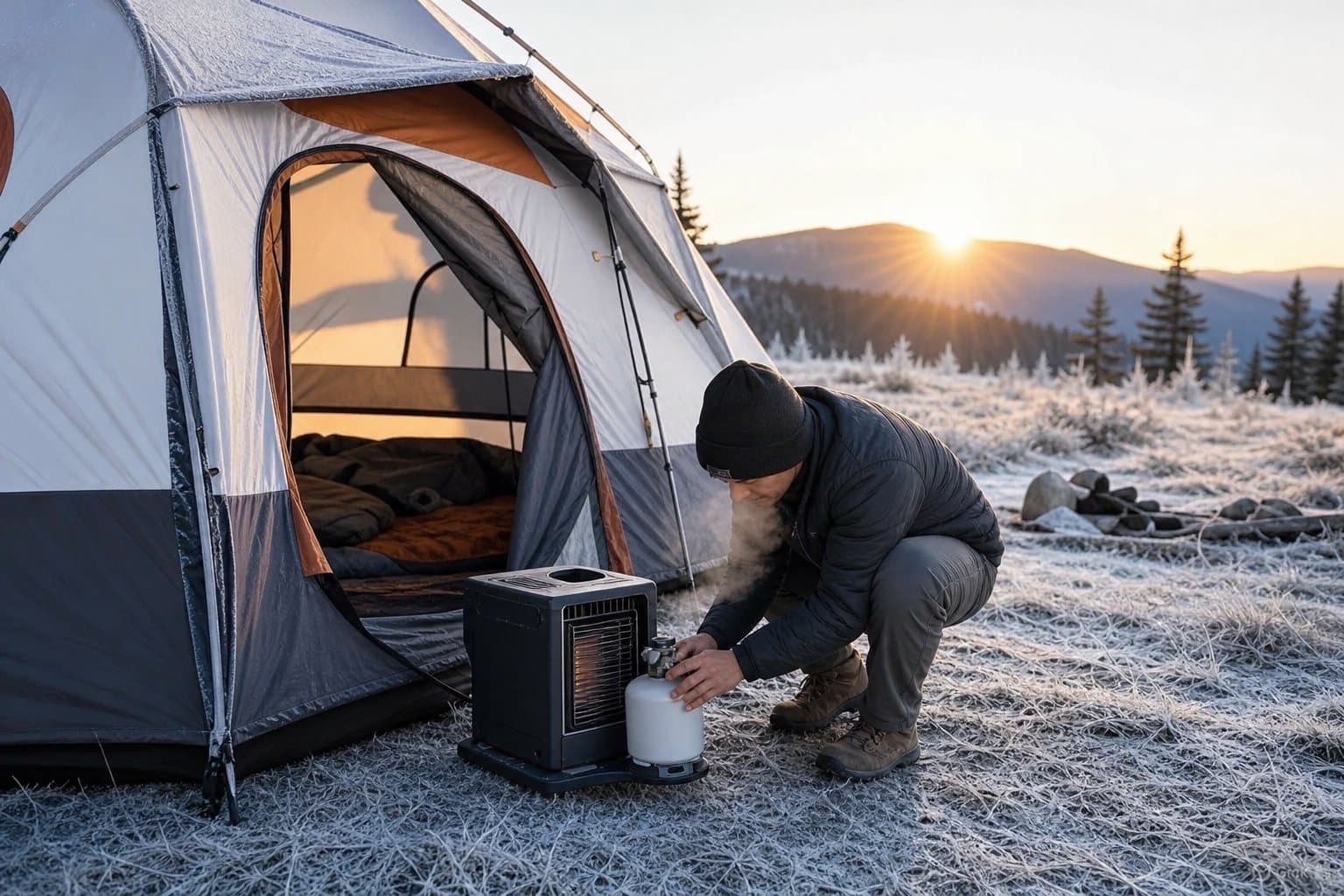
How a radiant propane heater works in a tent
Most portable propane heaters, including the Mr. Heater Buddy range, are radiant heaters. A ceramic or mesh burner glows and throws heat forward, warming the people and objects in front of it rather than heating all the air in the space. That is why you feel warm quickly when you sit facing a Buddy heater, and why the far corners of a large tent can still feel cool.
Tent fabric is a poor insulator, and warm air escapes through vents, doors and the walls themselves. A heater that would make a small cabin cozy may only take the edge off in a tent on a windy night. Think of a portable propane heater as a way to warm yourself and your group while you are awake, not as central heating, and you will choose one that matches your expectations.
Burning propane also produces water vapor and carbon dioxide. In a closed tent that vapor condenses on the cold walls, which is one more reason to keep a door or vents open while the heater runs. Ventilation keeps fresh air coming in, helps the oxygen depletion sensor as a backup rather than your only protection, and reduces the damp you wake up to.
How to choose a propane heater for camping
Start with the space you want to warm, then work through settings, fuel and practical details. A propane heater for camping that is too small will run flat out all evening and still leave you cold, while one that is too big for a small tent wastes fuel and is harder to keep a safe distance from fabric and bedding.
Match heat output to the space
The makers’ square-foot figures assume a reasonably sealed room, so allow a margin for tent walls. The Little Buddy’s 3,800 BTU suits a small two- to four-person tent or an ice-fishing shelter, the Portable Buddy and FLEX suit larger family tents, and the Hunting Buddy and Big Buddy have the headroom for canvas wall tents and hunting camps. If you are between two sizes, the one with a low setting gives you more flexibility.
Look for adjustable settings
Two or three heat settings let you warm up a space quickly, then turn down to save fuel and avoid overheating. The Portable Buddy runs at 4,000 or 9,000 BTU, and the Big Buddy adds a middle setting. Single-setting heaters such as the Little Buddy are simple and light, but you cannot turn them down when the tent gets warm, so you end up switching them on and off.
Check ignition, altitude and warranty
Electronic or push-button ignition is easier with cold hands than a piezo that needs the pilot held for half a minute. If you camp in the mountains, note that the Buddy heaters are rated to about 7,000 ft and may not light or stay lit above that. A clear warranty and a maker that publishes its safety ratings are good signs, which is why the Mr. Heater models rank above the lesser-known brands here.
Consider weight and footprint
Heaters in this guide range from the 5.85 lb Little Buddy to the 17.1 lb Big Buddy, so think about how far you will carry one and where it will sit. A wide, stable base matters on soft or sloping ground; the Little Buddy’s tall, narrow shape on its 8 in stand needs firm, level footing. Bring a small flat board to set any heater on if your pitch is sandy, muddy or uneven.
Fuel: 1 lb cylinders or a bigger tank?
Disposable 1 lb cylinders are the easy option. They screw straight onto the heater, are sold at most camping and hardware stores, and keep the setup compact. The catch is run time: depending on the heater and setting, one cylinder lasts roughly two to six hours, so a long weekend of cold evenings can get through a lot of them. Pack more than you think you need, and keep them upright and outside the tent.
For long evenings or a base camp, a hose and fuel filter to a refillable 20 lb tank kept outside the tent is cheaper per hour and means fewer cylinder changes. Most of the Buddy heaters accept an optional hose, but the Little Buddy does not. Use only hoses and filters designed for your heater, connect everything outdoors and check the joints with soapy water before you light it.
Propane also behaves differently in deep cold. As the temperature drops, cylinder pressure falls, so a small cylinder may struggle to deliver full output on a frosty night, and heaters can be harder to light. Storing spare cylinders somewhere sheltered, such as a vehicle, rather than on frozen ground helps them perform when you need them.
Where a propane heater for camping makes sense
A propane heater for camping works best in large tents, canvas wall tents, ice-fishing shelters and open-sided awnings, where there is room to keep at least 3 ft of clearance and plenty of air. It is a great way to warm a group playing cards after dark, dry damp gloves near (not on) the heater, or take the chill off before everyone climbs into their sleeping bags.
It makes much less sense in a small backpacking tent, where there is little room to keep the heater clear of fabric and bedding and the air runs short quickly. Some campgrounds and parks also have their own rules about heaters and open flames, so check before you go. For overnight warmth, a good sleep system is the safer answer; our guide to the best cold weather sleeping bags is a good place to start.
If you would rather avoid combustion altogether, a 12V heated blanket or a USB heated pad puts warmth straight onto your body with no fumes. Our round-up of the best battery powered heaters for camping explains how far those options go on a power station or power bank.
Care, storage and common problems
A propane tent heater needs very little maintenance, but a few habits keep it reliable. Before each trip, check the regulator connection and any hose for cracks, kinks or damaged threads, and make sure the burner face and pilot area are free of dust, insects and cobwebs, which are a common cause of a heater refusing to light or cutting out. Clean only as the manual describes.
If the heater keeps shutting off, the oxygen depletion sensor may be reacting to poor ventilation or thin air at altitude, the tip-over switch may be tripping on uneven ground, or the cylinder may be cold or nearly empty. Open a door, move the heater to firm, level ground and try a fresh cylinder. If it still will not stay lit, stop using it and contact the maker rather than tinkering.
Between trips, remove the cylinder, let the heater cool fully and store it in a dry place, ideally in its box or a bag to keep dust out of the burner. Store cylinders outdoors or in a ventilated shed, never in the house. Test your battery carbon monoxide alarm before every trip, and replace its batteries at the start of each cold-weather season.
Final thoughts on staying warm with propane
The best propane heater for camping is the one sized for your tent, with both safety shut-offs and settings that let you turn it down. For most campers that is the Mr. Heater Portable Buddy, with the Little Buddy for small tents and the Big Buddy for wall tents. Whatever you choose, ventilate, keep a CO alarm close, give it plenty of clearance and switch it off before you go to sleep.
Treat a propane heater for camping as one part of a warm camp rather than the whole plan. Pair it with a sleeping bag rated for the coldest night you expect, an insulated pad, warm layers and a hot drink before bed. That way the heater makes your evenings more comfortable, and your sleep system keeps you warm safely once it is switched off.
What to look for in a propane heater for camping
An oxygen depletion sensor and a tip-over switch should be non-negotiable. Look for a maker that publishes an indoor rating and certification.
Tent walls lose heat fast, so match output to floor area with a margin: about 3,800 BTU for a small tent, 9,000 BTU for a big family tent, and more for wall tents.
Low and high settings let you warm up quickly and then save fuel. A single fixed output can be too much or too little.
1 lb cylinders last about 2–6 hours. A hose and fuel filter to a 20 lb tank kept outside gives much longer evenings.
Most radiant propane heaters are rated to about 7,000 ft and may cut out or fail to light above that because the ODS senses lower oxygen.
Electronic or push-button ignition is easier with cold hands. Piezo models often need the pilot held for 30 seconds before lighting.
Heaters here run from under 6 lb to over 17 lb. A 3-year warranty is a good sign of maker confidence.
How to use a propane heater safely when camping
- Check the heater and cylinder
Inspect the hose, regulator and cylinder thread for damage, and connect cylinders outside the tent.
- Set it on firm, level ground
Use a flat board on soft ground and keep at least 3 ft clear of tent walls, sleeping bags and clothing.
- Ventilate
Open a door or vents before lighting and keep them open while the heater runs.
- Use a CO alarm
Place a battery carbon monoxide alarm nearby and test it before every trip.
- Stay awake and supervise
Keep children and pets away, and never leave the heater running unattended.
- Switch off before sleeping
Turn the heater off, let it cool and store cylinders outside the tent overnight.
How we chose these propane heaters
We have not tested every heater in this list ourselves. Our picks are based on manufacturer specifications from Mr. Heater, the Amazon listings, the US Forest Service report on portable propane heaters, independent reviews from Bob Vila and specialist camping sites, and recurring themes in owners’ feedback about lighting, run time, altitude and heat loss in tents.
-
Safety features
Every pick has an oxygen depletion sensor and a tip-over switch; we ranked published indoor ratings above unverified claims.
-
Heat and coverage
We compared BTU output, quoted coverage and heat settings against typical tent sizes.
-
Running costs
We compared quoted run times per 1 lb cylinder and big-tank options.
-
Practicality
We looked at ignition, weight, altitude limits and warranty.
This guide is general information, not professional safety advice. Always follow the heater’s manual and local campground rules. Where maker and listing figures differ, we say which we used.
What is the best propane heater for camping?
For most campers, the Mr. Heater Portable Buddy: 4,000 or 9,000 BTU for up to 225 sq ft, low-oxygen and tip-over shut-off, and it runs on a single 1 lb cylinder. For big wall tents, choose the Big Buddy; for small tents, the Little Buddy.
Can you sleep with a propane heater on in a tent?
No. No heater maker says it is safe to run one while you sleep, and the US Forest Service advises against using unvented propane heaters in small personal tents. Warm the tent before bed, then switch the heater off and rely on your sleeping bag and mat.
How long does a 1 lb propane cylinder last in a camping heater?
It depends on the setting. Mr. Heater quotes about 3 hours on high and 6 hours on low for the Portable Buddy, about 2 to 3.5 hours for the Buddy FLEX and 5.6 hours for the Little Buddy.
What size propane heater do I need for my tent?
As a rough guide, 3,800 BTU suits a small two- to four-person tent, 9,000 BTU a large family tent and 12,000 to 18,000 BTU a big wall tent or cabin. Tent fabric loses heat quickly, so allow some extra.
Why does my propane heater keep shutting off?
The usual causes are the oxygen depletion sensor tripping because of poor ventilation or high altitude, the heater being tipped or on uneven ground, a cold or nearly empty cylinder, or a blocked pilot. Ventilate, move to level ground and check the cylinder first.
Do propane heaters work at high altitude?
Most radiant propane heaters, including the Mr. Heater Buddy range, are rated to about 7,000 ft. Above that they may not light or may shut off, because the low-oxygen sensor reacts to thinner air.
If fumes and gas cylinders put you off, our best battery powered heaters for camping avoid combustion altogether, and the best camping heaters for tents guide compares other ways to keep a tent warm. On a hook-up pitch, our best electric heaters for campers and RVs compares six low-amp options.
Which propane heater for camping should you buy?
- Best overall: Mr. Heater Portable Buddy MH9BX
- Best heat spread: Mr. Heater Buddy FLEX MH11BFLEX
- Best for large tents: Mr. Heater Big Buddy MH18B
- Best for small tents: Mr. Heater Little Buddy MH4B
- Most rugged: Mr. Heater Hunting Buddy MH12HB
- Alternative pick: Fitfirst GH021 9,000 BTU Portable Propane Heater
- Swivel regulator: AgiiMan 9,000 BTU Portable Propane Heater
For most campers, the Mr. Heater Portable Buddy is the best propane heater for camping: enough heat for a big tent, two settings and both key safety shut-offs. The Buddy FLEX spreads heat more evenly for groups, the Big Buddy is the one for wall tents and hunting camps, the Little Buddy suits small tents, and the Hunting Buddy adds power and easy ignition in a tougher body. The Fitfirst and AgiiMan heaters are usable alternatives with fewer published details. Whichever you choose, ventilate, use a CO alarm and switch it off before you sleep.
CampEquipmentPlus relies on reader support. Purchases made via links on our website may earn us an affiliate commission at no extra cost to you, helping keep the site running.