

Best Camping Toilets Without Chemicals UK
Urine-separating, bag and dry-flush toilets give you a private loo with no blue or pink fluids. Our top pick is the compact Trelino Evo S, while the OGO Origin suits busy campervans.
We compare six chemical-free camping toilets and explain how each type works, where you can empty them in the UK, what they cost to run and how to stop them smelling.
- Separating toilets keep solids dry instead of using chemicals
- Always check a campsite's rules on bagged waste
- Dry solids must never go down an Elsan point
- Best overall: Trelino Evo S Compact, power-free urine separator with a 2-year warranty.
- Best for vans: OGO Origin 12V agitator, fan and a 9 litre urine bottle in a small footprint.
- Best folding: Cleanwaste GO Anywhere Flat-folding bag toilet rated to 500 lb for wild camps and festivals.
- Disposal Urine can usually go in the Elsan; bagged solids go in the bin only where the site allows.
A camping toilet without chemicals keeps the convenience of a loo in your tent porch or van, but swaps blue and pink fluids for urine separation, cover material, gel bags or a sealed dry-flush film. If you want a general chemical cassette instead, see our best portable toilets for camping and our family camping toilet picks. This guide is only about the chemical-free options, and none of the six products below repeats those posts.
All six toilets are listed on Amazon US, where prices change often, so we haven’t quoted them. Capacities and claims come from the listings or makers’ pages, and we say so where a spec isn’t stated.


Overall Trelino Evo S | Vanlife OGO Origin | Bag toilet Cleanwaste GO | Dry flush MODIWELL | |
|---|---|---|---|---|
|
|
|
|
| |
| Type | Urine separating | Separating + agitator | Folding bag toilet | Dry flush |
| Waste handling | Bottle + dry bin | Bottle + stirred bin | Gel bag per use | Sealed film roll |
| Capacity | 4.5 L urine / 6 L solids | 9 L urine / 25–30 uses | Bag kit (refills extra) | 2 rolls x 30 uses |
| Power | None (fan optional) | 12V fan + agitator | None | 5200 mAh battery |
| Max load | 150 kg | Not quoted | 227 kg | 150 kg |
| Warranty | 2 years | Not quoted | Limited | Not quoted |
| Check price | Check price | Check price | Check price |
Our camping toilet without chemicals reviews
Each review covers how the toilet handles waste, capacity, power needs, seat height, what comes in the box and the warranty, plus who it suits best.
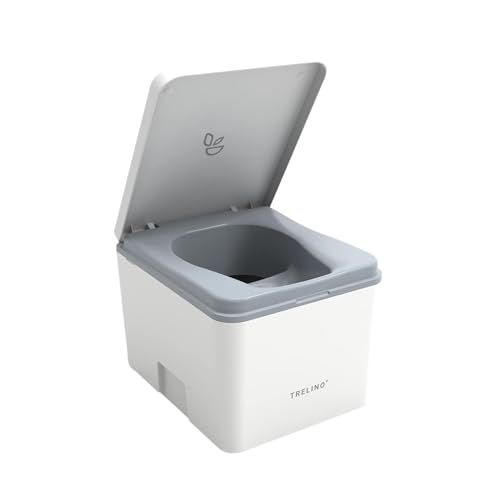
Compact urine-separating dry toilet made in Germany from recyclable ABS. 1.2 gal (about 4.5 L) urine container and 1.6 gal (about 6 L) solids container, good for 9–11 wees and 6–8 poos per the listing. 13 x 15.4 x 11.7 in (33 x 39 x 30 cm), rated to 330 lb (150 kg), no water or chemicals. Model T1-01202, 2-year manufacturer warranty.
The Trelino Evo S is the best camping toilet without chemicals for most people because it is small enough for a tent porch or a car boot and needs nothing but a little cover material. Urine is diverted into a front container, solids fall into a separate bin where they dry, and each part empties on its own. There is no fluid to buy and no dump station needed.
The compact size is also its limit. The listing quotes 9 to 11 wees and 6 to 8 poos, so a couple will empty the urine container every day or so. Trelino’s own advice is to keep the solids dry, because that is what stops the smell. The 2-year warranty and German build give some reassurance at this price.
- Compact enough for tents and small vans
- No power, water or chemicals
- Empties in two light parts
- 2-year manufacturer warranty
- Small containers need frequent emptying
- Fan not included on this model
- Needs cover material and liners
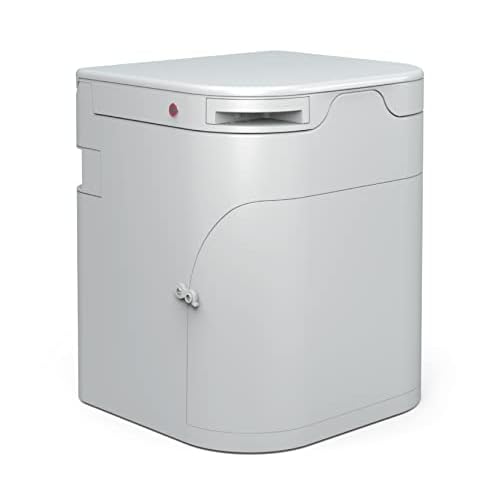
Urine-diverting dry toilet with a 15 x 16 in footprint and a push-button 12V electric agitator that mixes solids with cover material. 2.4 gal (about 9 L) urine bottle, solids bin good for about 25–30 uses, quiet ventilation fan, polypropylene body built in the USA. Model OGO White 2021. Warranty not quoted on the listing.
The OGO is a composting camping toilet built for van conversions. Instead of a side crank handle, a 12V motor stirs the solids at the press of a button, and a fan dries the bin and vents smells outside. OGO’s spec sheet lists a 20 mA fan that runs all the time and an agitator that draws about 0.6 Ah a day, which is small enough for most leisure batteries.
The 2.4 gallon urine bottle is about twice the size of the Trelino’s, and the solids bin lasts about 25 to 30 uses, so a couple can go several days between empties. It is heavier (about 28 lb on the spec sheet), needs a vent hole and power, and costs a lot more, so it makes most sense in a van you use often.
- Electric agitator, no crank handle
- Larger urine bottle
- Fan vents smell outside
- Small 15 x 16 in footprint
- Needs 12V power and a vent
- Expensive
- Too heavy to carry far
Folding bag toilet with three locking legs and a full-size seat at 14 in (about 36 cm). Rated to 500 lb (227 kg); the removable lid can go under the legs on soft ground. Includes a WAG Bag disposable kit with gelling powder. Folds flat with a carry handle. Model D119PET, made in the USA, limited warranty.
The Cleanwaste GO Anywhere is the most portable chemical free camping toilet here. It unfolds in seconds, locks on three legs, and holds a WAG Bag that contains a gelling powder. When you’re finished you seal the bag and put it in a bin where the site allows it. UK retailers say each WAG bag’s powder treats up to 900 g of waste.
MyOpenCountry calls it “surprisingly sturdy for such a compact toilet”, and the 500 lb rating backs that up. The catch is ongoing cost, because every few uses means a new bag, and some assembly is needed. It’s ideal for wild camping, festivals, boats and as an emergency toilet at home.
- Folds flat for easy storage
- Very high 500 lb rating
- Full-size seat
- Works anywhere, no emptying
- Ongoing cost of WAG bags
- Seat is fairly low
- Needs bin access or bag storage
Waterless dry-flush toilet that heat-seals waste into a bag at the press of a button. Built-in 5200 mAh battery good for 70–100 uses per charge, stainless steel legs rated to 330 lb (150 kg), 17 x 16 x 11 in and 17 lb. Includes 2 bag rolls (30 uses each), 60 coagulant pouches and a 14V/2A charger. Warranty not quoted on the listing.
The MODIWELL LE-310 is a dry flush toilet: after each use you press Start and it seals the waste in a film bag, with a coagulant pouch to turn liquids solid. You never empty a bottle or bin, you simply remove the sealed roll when it’s full. The 5200 mAh battery is claimed to last 70 to 100 uses per charge.
It’s the closest thing to a normal toilet in a van, and the 330 lb stainless legs feel solid. The downsides are price and running cost, because every use takes film and a pouch, and you depend on the maker’s refills. Check that the charger suits UK sockets before buying.
- No handling of waste at all
- Battery lasts 70–100 uses
- Includes 60 uses of refills
- Folds for storage
- Expensive to buy and run
- Relies on branded refills
- Warranty not stated
Simple non-separating waterless toilet: liquid and solid waste collect together in a lined 9.5 gallon container. No fan, motor, water or electricity. Separett recommends coco coir or similar cover material to control moisture and odour. 3 lb 8 oz, 17 in (about 43 cm) seat height, users up to 330 lb. Airtight lid included. Warranty not quoted.
The Separett Uno is the cheapest way into a camping toilet without chemicals from a well-known Swedish brand. It’s essentially a lined bucket with a comfortable seat at 17 inches and an airtight lid, and at 3 lb 8 oz it’s easy to carry. Separett is upfront that, with no fan or separation, odours can occur, so you need to add cover material each time.
Because everything goes into one bag, it gets heavy and wet faster than a separator. Treat it as a toilet for occasional use, a spare for guests or an emergency backup rather than a week-long solution.
- Light and inexpensive
- Good 17 in seat height
- No power or installation
- Airtight lid for storage
- No urine separation
- Can smell without enough cover material
- Bags get heavy
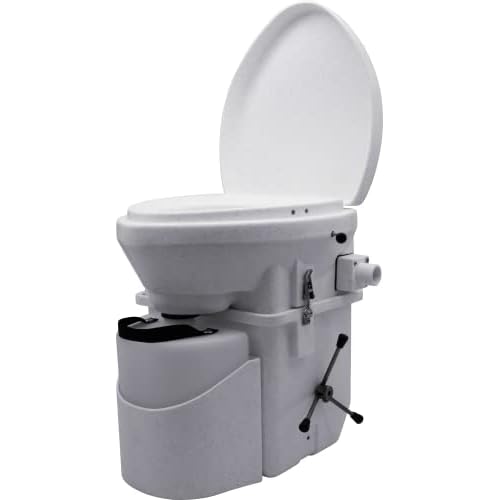
Self-contained urine-separating composting toilet with a crank-agitated solids tank and continuous vent fan. About 20 in high. The listing claims two people using it full time empty it every 4–6 weeks, and quotes a 5-year warranty. Model NH001. Needs installation and 12V for the fan.
The Nature’s Head is the long-standing favourite for full-time vans and boats. A spider handle on the side stirs the solids tank, and a small fan runs continuously; the maker says it draws less than 1.8 amp-hours in 24 hours. The listing’s claim of 4 to 6 weeks between solids empties for two people is far beyond anything else here.
It’s big, heavy and the most expensive toilet in this guide, and it needs fitting. For a weekend tent trip it’s overkill, but if you live in your van it’s the toilet many owners stick with, backed by a 5-year warranty.
- Very long time between empties
- 5-year warranty
- Proven design
- Most expensive here
- Bulky and heavy
- Needs fitting and power
How a camping toilet without chemicals works
Traditional cassette toilets rely on a chemical in the waste tank to break down solids and mask smell. A camping toilet without chemicals tackles the same two problems in a different way. It either keeps liquids and solids apart so the solids can dry, seals each use away in a bag, or uses a gelling powder that turns waste into a solid lump you can bin.
Separating, or so-called composting, toilets send urine forward into a bottle and drop solids into a rear bin lined with cover material such as coco coir or sawdust. The Camping and Caravanning Club describes solids being “covered with an absorbent material like sawdust” so they “dry out”. Dry waste smells far less than wet waste, which is why these toilets can work with no fluid at all.
Bag toilets are simpler. A folding frame or bucket holds a liner bag, often with a gel or powder that absorbs liquid. When you’re done, you tie the bag off and dispose of it. Dry-flush toilets automate that: press a button and the machine twists and heat-seals the waste into a continuous film, so you never see or smell it again until the cartridge or roll is full.
Types of chemical free camping toilet
Urine-separating toilets. These are the most popular camping toilet without chemicals for vans and long stays. The Trelino and OGO in this list are separators. They cost more up front but have almost no running costs beyond cover material and compostable bin liners.
Non-separating dry toilets. The Separett Uno is a simple box with a seat and a big lined container. Everything goes in together, so you need plenty of cover material and you empty more often. It’s light and cheap, and good for occasional use.
Folding bag toilets. The Cleanwaste GO Anywhere folds flat and uses single-use WAG bags with a gelling powder. It’s the easiest camping toilet without chemicals to store, but you keep buying bags.
Dry-flush toilets. The MODIWELL LE-310 seals every use in a film bag at the push of a button. It’s the most hands-off option and the most expensive to run per use.
Composting camping toilet vs chemical cassette
The name “composting camping toilet” is a little misleading. On a weekend trip nothing really composts. Nature’s Head itself says composting “is both time and temperature dependent”, and a few days in a van is not long enough. What you get is dried, deodorised solids in a liner bag and a separate bottle of urine.
Compared with a chemical cassette, a separating toilet is lighter to empty, because the heavy liquid half goes in a small bottle. There’s no fluid to buy, and no worries about which chemicals a campsite allows. The downsides are a higher price, a slightly unfamiliar routine and a bulkier body than the slimmest cassettes.
Cassettes still win for big families on sites with good chemical disposal points, because you can empty a whole tank in one go. If you’d like to stick with fluid but use greener products, our camping toilet chemicals guide covers formaldehyde-free options.
Where to empty a chemical free toilet in the UK
Disposal is the biggest question with any camping toilet without chemicals, and the honest answer is: ask the site first. The Camping and Caravanning Club says “some campsites allow bagged waste to be placed in general rubbish bins, while others may ask you to take it home”, and advises checking with staff when you use a bag toilet.
Urine from a separating toilet is the easy part. You can usually pour it into the Elsan or chemical disposal point and rinse the bottle. The Canal & River Trust says urine “can then be taken to the Elsan”, but warns that dry solids “would block it”. Never tip separated solids down a disposal point.
Solids normally go into a tied compostable or biodegradable bag in the general waste, where the site allows it. Some sites prefer you take them home. WAG-style gel bags are designed for the bin: UK retailer listings describe them as approved for landfill. Dry-flush cartridges and rolls also go in the rubbish.
Sites on septic tanks may still have strict rules, and some only accept green chemicals in cassettes. The Caravan and Motorhome Club asks members not to use products that contain formaldehyde. A chemical free camping toilet avoids that worry entirely, as long as you follow the site’s rules on bagged waste.
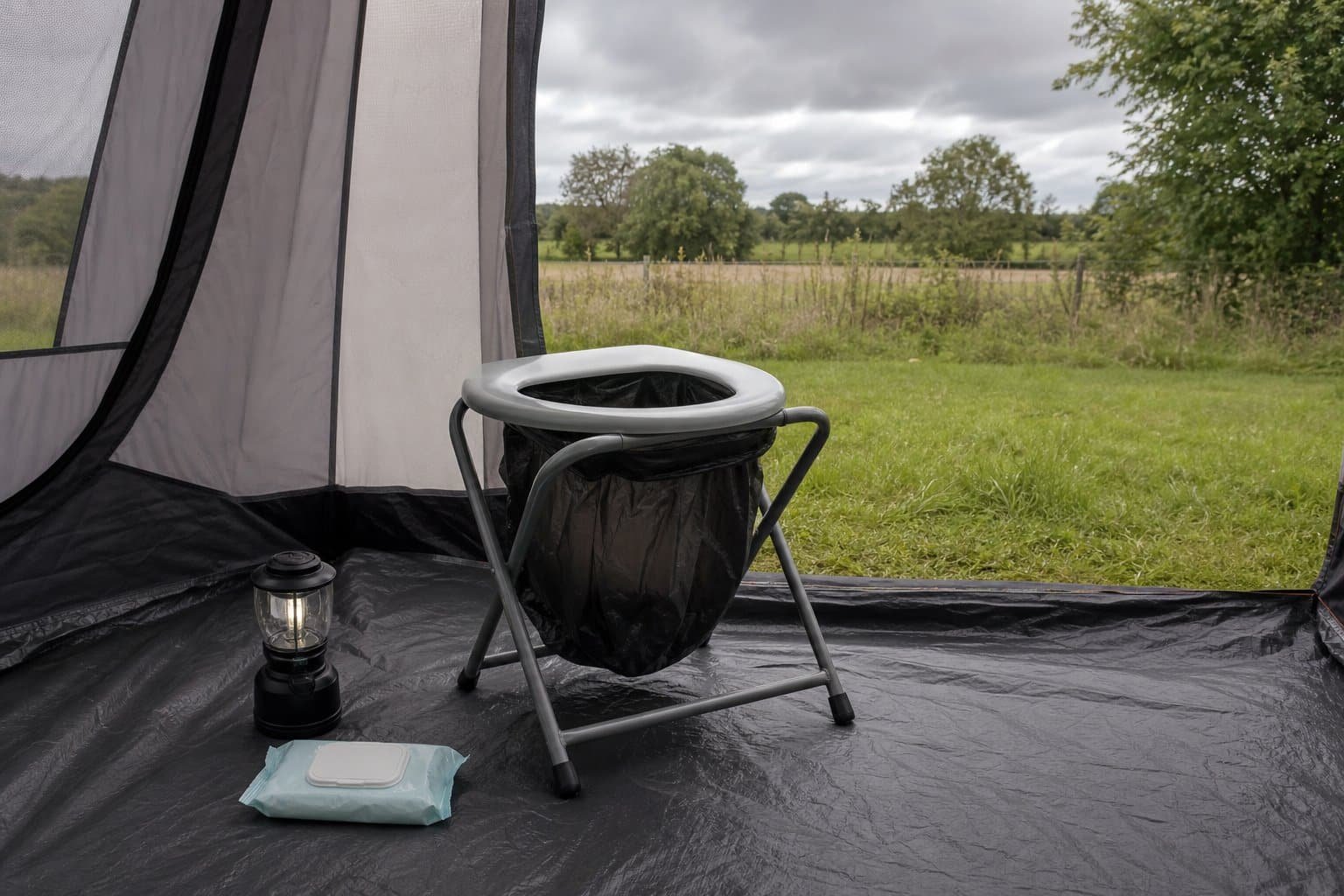
How to choose a camping toilet without chemicals
Capacity and how often you’ll empty it
Small separators need emptying more often. Trelino quotes 9 to 11 wees and 6 to 8 poos for the compact Evo S, which suits one or two people for a weekend. The OGO’s 2.4 gallon (about 9 litre) urine bottle and 25 to 30 solids uses suit a couple living in a van for days at a time.
Bag toilets are limited only by how many bags you pack, and dry-flush toilets by the roll or cartridge. Count uses per day for your group and add a few spare.
Power
Many separators use a small 12V fan to dry the solids bin and vent smell outside. OGO’s spec sheet lists a 20 mA fan that runs all the time, plus an agitator motor. That’s tiny, but it needs a leisure battery or a power bank. Our guide to powering devices while camping explains the options.
The Trelino and Separett Uno need no power at all, which makes them better for tents. The MODIWELL runs on its own rechargeable battery, so charge it before each trip.
Seat height, weight and stability
Seat height matters more than most buyers expect, especially for older campers. The Separett Uno quotes 17 inches (about 43 cm), and the Cleanwaste 14 inches (about 36 cm), close to a low household toilet. Compact separators can feel low, so try a step stool for children rather than lowering the seat for adults.
Check the weight rating too. Every pick here is rated to about 150 kg or more, and the Cleanwaste claims 227 kg (500 lb). On soft ground, Cleanwaste suggests putting the removable lid under the legs to stop them sinking.
Running costs
A separating camping toilet without chemicals costs the most up front and the least to run. Coco coir and compostable liners are cheap. Bag toilets are cheap to buy, but each gel bag costs money, so the bill rises on long trips. Dry-flush toilets need branded rolls or cartridges, and those are the dearest per use.
Cover materials: coco coir, sawdust and peat
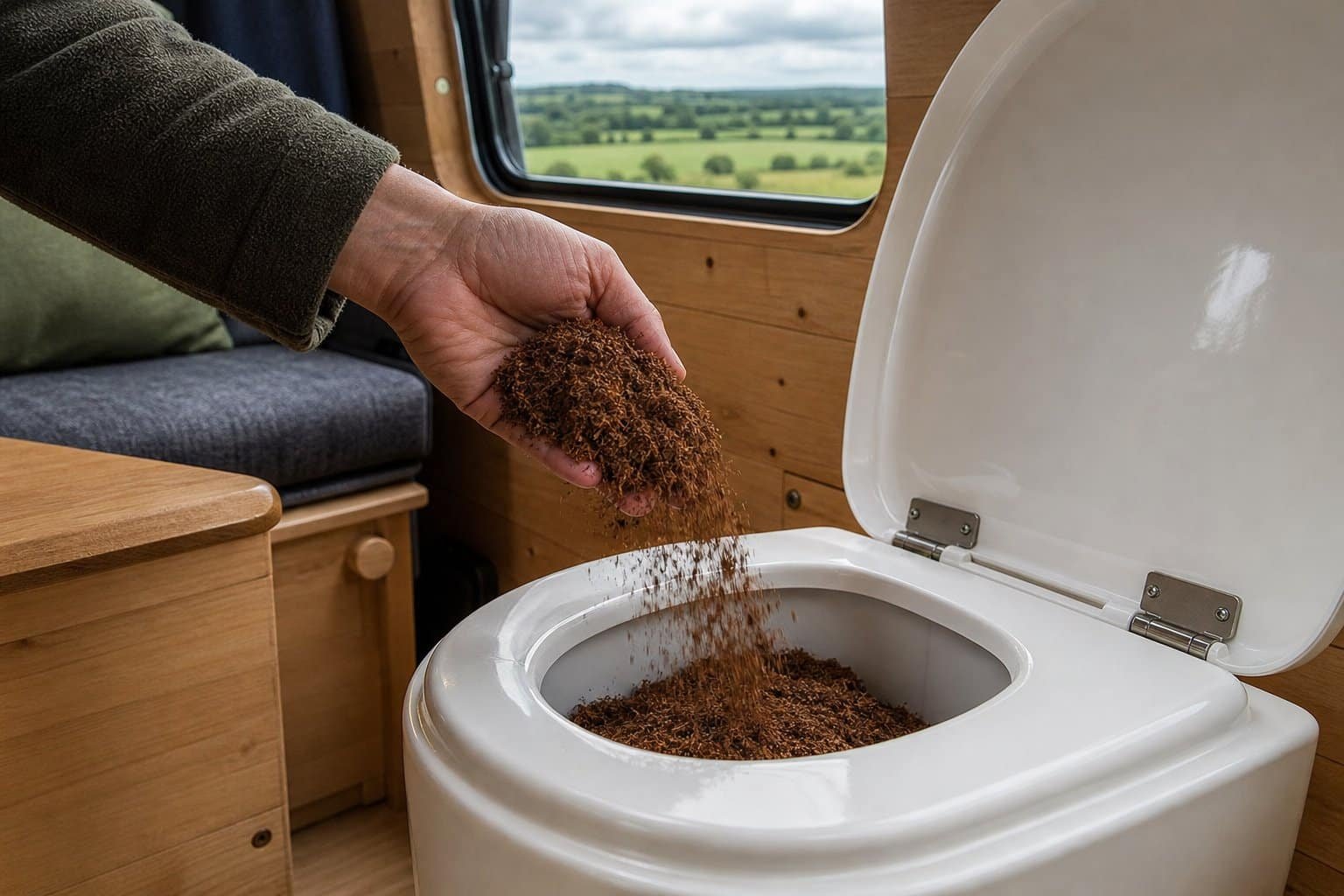
Cover material is what makes a separating camping toilet without chemicals work. It soaks up moisture, blocks smell and keeps flies away. Nature’s Head recommends peat moss or coco coir, and the Camping and Caravanning Club mentions sawdust. Any of them will do the job on a camping trip.
Coco coir is the favourite for campers because it comes as a compressed brick that is light to carry. Soak it in a little water, let it dry until crumbly, and keep it in a lidded tub next to the toilet. A cup or scoop after each solid use is plenty. Fine pet-bedding sawdust also works, but avoid treated wood shavings.
On a non-separating toilet like the Separett Uno you’ll need more cover material, because urine wets the bin. Add a scoop after every use, not just after solids, or the bag will soon get soggy and smelly.
Dry flush toilet explained
A dry flush toilet doesn’t use water or chemicals at all. Instead of flushing, it wraps waste in a continuous plastic film and heat-seals it. The MODIWELL LE-310 does this automatically after you press a button, and adds a coagulant pouch so liquids turn into a gel before sealing.
The well-known Laveo works on a similar principle. Its brochure quotes approximately 15 flushes per cartridge, and the full cartridge is simply thrown in the bin. That gives you an idea of how often a dry flush toilet needs refilling, and why running costs are the main downside.
Where a dry flush toilet shines is hygiene. Nobody touches a bottle, a bin or a bag of loose waste, which suits older campers, guests and anyone squeamish. It also smells less than any other camping toilet without chemicals, because each use is sealed straight away.
A camping toilet without chemicals for families
Families make a camping toilet without chemicals work harder. Four people can fill a small urine bottle in a day, so either choose a larger separator or plan on emptying it every morning and evening. Children also need to learn to sit right back on a separating seat, so a quick practice at home helps.
For a family tent, many parents pair a compact separator for night-time wees with the campsite toilet block during the day. That keeps emptying manageable and avoids a long walk in the dark. If you’d rather have one big tank, a chemical cassette with green fluid is still the simplest option, as covered in our family camping toilets guide.
Setting up a chemical free toilet in a tent or van
In a tent, put the toilet in a separate porch or a pop-up toilet tent rather than your sleeping area. Our pop-up toilet and shower tents guide has good options. Stand it on a board or groundsheet so it can’t tip, and keep a lidded box with cover material, liners, wipes and hand gel next to it.
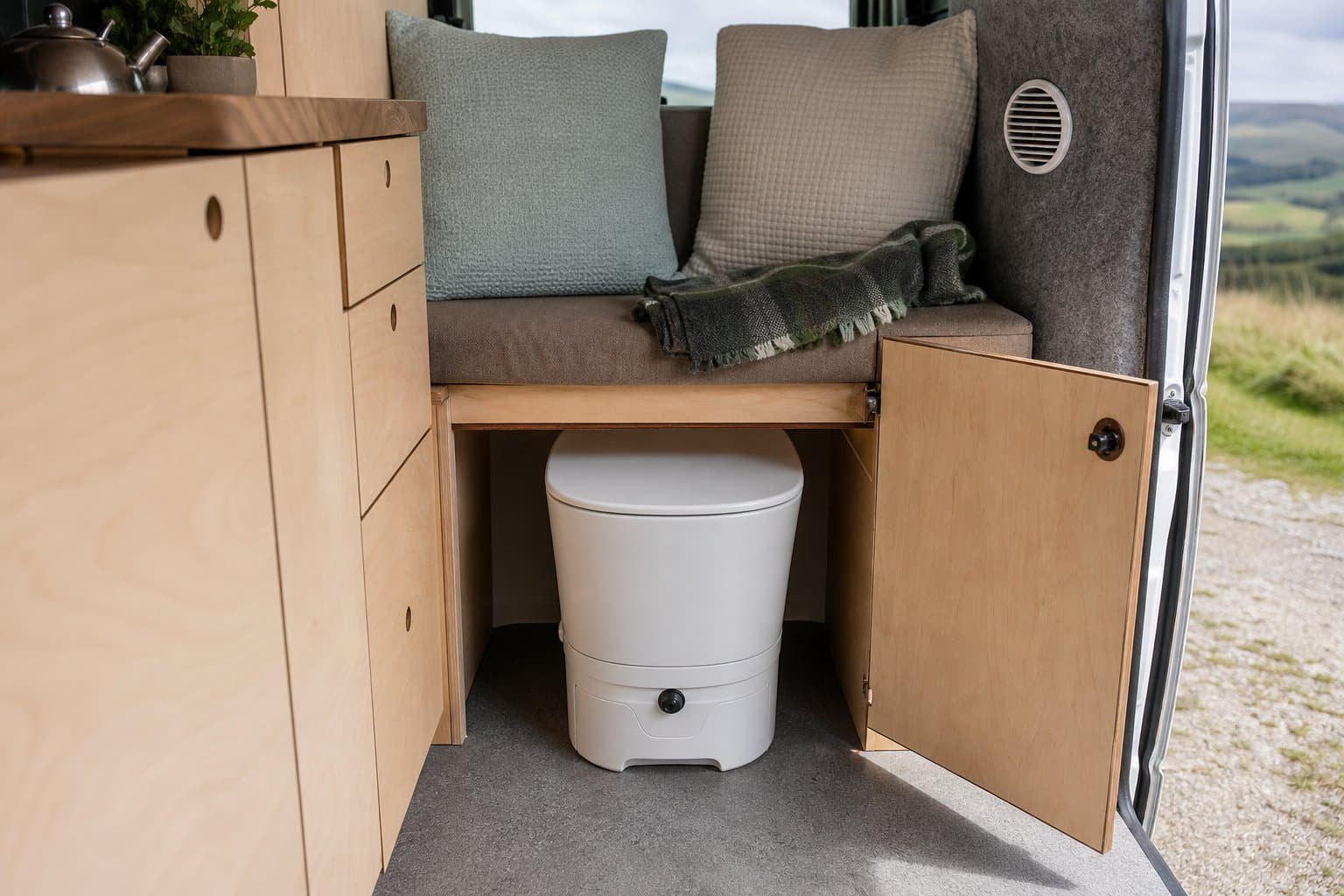
In a van, a composting camping toilet usually sits in a cupboard or under a bench. If it has a fan, run the vent hose to the outside and keep the toilet level so the urine diverter drains properly. Fixing it down stops it sliding on the move. If you’re planning a full fit-out, our campervan fridge guide covers wiring a leisure battery for small 12V loads like a toilet fan.
Is a camping toilet without chemicals worth it?
If you camp more than a few nights a year on sites that are strict about chemicals, or you wild camp and stay off-grid in a van, a camping toilet without chemicals quickly earns its place. You stop buying fluids, the urine bottle is light to carry, and you’re never caught out by a site that only allows green products.
It’s less worthwhile if you only camp a couple of weekends on big sites with good facilities. In that case a cheap folding bag toilet for night-time emergencies is enough. Think of a chemical free camping toilet as a long-term swap: the higher price of a good separator is spread over years of fluid you no longer buy.
Whichever you choose, budget for consumables from day one. A separator needs liners and coir, a bag toilet needs gel bags, and a dry flush toilet needs its own refills, so check that the ones for your chemical free camping toilet are easy to buy in the UK before you commit.
Common problems and how to fix them
It smells. Trelino’s FAQ says the solids bin “will smell if the waste cannot dry well”, so add more cover material after every use and keep liquids out of the rear bin. A smelly urine bottle usually means scale has built up: rinse it with water and a splash of vinegar.
Urine ends up in the solids bin. Sit fully back on the seat, and ask men to sit down. Children may need a little help at first.
The gel didn’t set. Owners of some gel bag systems report gel that “did not gel”. Add an extra scoop of powder, use bags from the same maker as the toilet, and don’t overload one bag.
Bags leak or split. Tie the bag tightly, then put it in a second bag before it goes in the bin. Carry a small lidded tub for transporting bags to the bins.
The fan hums at night. Most fans are very quiet, but a vent hose that rattles against a panel can be noisy. Clip it in place with foam tape.
Wild camping without a toilet
If you wild camp in Scotland without a portable toilet, the Scottish Outdoor Access Code asks you to urinate at least 30 metres from water, go as far as possible from buildings, water and farm animals, and bury faeces in a shallow hole before replacing the turf.
Loch Lomond and The Trossachs National Park goes further and suggests carrying dog poo bags or food waste bags and a sealed container so you can bin waste later. A folding bag toilet like the Cleanwaste makes that far more pleasant, and it’s the most practical camping toilet without chemicals for remote pitches.
Caring for your toilet
After every trip, empty everything, rinse the urine bottle and wipe the seat and diverter with mild soap. Leave the bins open to dry fully before storing. Don’t use bleach on the plastic parts, and check rubber seals for cracks once a season.
Keep a refill kit in the car: liners, a bag of coco coir, gloves, wipes and spare gel bags. A tidy camping toiletry bag keeps the personal side of your camp bathroom together.
Buying a camping toilet without chemicals in the UK
The picks in this guide are listed on Amazon US, so the listings use gallons, inches and pounds. As a rough guide, 1 US gallon is 3.8 litres, 1 inch is 2.5 cm and 1 lb is 0.45 kg. Trelino and Separett are European brands sold widely in the UK, so you may find them closer to home too.
Check what’s in the box. Some toilets include a starter supply of liners, gel or rolls, while others need you to buy them separately. Also check that any charger suits UK sockets, because US listings often ship with US plugs.
Which camping toilet without chemicals should you buy?
For most campers, the Trelino Evo S is the best camping toilet without chemicals: compact, power-free, made in Germany and backed by a 2-year warranty. Choose the OGO if you live in a van and want a bigger urine bottle and an electric agitator.
The Cleanwaste GO Anywhere is the pick for wild camping and emergencies, and the MODIWELL LE-310 suits anyone who never wants to handle waste. The Separett Uno is the cheapest way in for occasional use, and the Nature’s Head is the long-term choice for full-time vans.
Final thoughts
A camping toilet without chemicals is greener and often easier to live with than a cassette, but it asks for a new routine. Pick the type that suits how you camp, pack plenty of cover material or bags, and always check the campsite’s rules on bagged waste before you arrive.
Sorting out the rest of your camp bathroom? See our rechargeable camping showers, the best RV toilets and our camping essentials list.
Chemical-free camping toilet myths
Composting takes time and heat. On a short trip the solids simply dry out in their liner bag.
Separating toilets smell little when the solids stay dry and you add cover material after each use.
Urine, yes. Dry solids from a separating toilet can block it, so bag them for the bin where allowed.
Pack bags out and bin them. Burying them, even when labelled biodegradable, isn’t recommended.
What to look for in a camping toilet without chemicals
Separating for longer stays, bags for wild camps, dry flush for zero handling.
Count daily uses for your group; small bottles need emptying daily.
Check that campsites accept bagged waste in general bins.
Fans and agitators need 12V; tents suit power-free models.
Around 43 cm is comfortable; look for 150 kg or more.
Coir is cheap; gel bags and dry-flush refills add up.
How to use a separating camping toilet
- Line the solids bin
Fit a compostable liner and add a handful of coco coir.
- Sit fully back
Everyone sits, so urine reaches the front diverter.
- Cover after each use
Add a scoop of coir or sawdust to keep solids dry.
- Empty the urine bottle
Pour it into the Elsan point and rinse the bottle.
- Bag the solids
Tie off the liner and bin it where the site allows.
- Clean and dry
Wipe with mild soap and leave the bins open to dry.
How we chose these camping toilets without chemicals
We have not tested every toilet in this list ourselves. Our picks are based on the Amazon listings, makers’ specifications and advice from the Camping and Caravanning Club, the Canal & River Trust and independent reviewers. Where a listing didn’t state a spec, we said so rather than guessing.
-
No chemicals
Every pick works without cassette fluids.
-
Range of types
Separating, bag, dry-flush and simple dry toilets.
-
UK disposal
We checked how each type is emptied on UK sites.
-
Honest specs
Capacities and runtimes are makers’ claims.
What is the best camping toilet without chemicals?
For most campers, the Trelino Evo S: a compact, power-free urine separator with a 2-year warranty. The OGO Origin suits campervans that need more capacity.
Do chemical-free camping toilets smell?
Not much, if solids stay dry. Add cover material after each use, keep urine out of the solids bin and rinse the urine bottle regularly.
Where do I empty a separating toilet on a UK campsite?
Urine can usually go into the Elsan or chemical disposal point. Bag the dry solids and put them in general waste only if the site allows it; otherwise take them home.
Can I put bagged toilet waste in a campsite bin?
Some campsites allow it and others ask you to take it home, so check with staff first.
What cover material should I use?
Coco coir, sawdust or peat moss all work. Coco coir is light, cheap and easy to store in a lidded tub.
Is a dry flush toilet worth it?
If you never want to handle waste and don’t mind the cost of refills, yes. For tight budgets a separating or bag toilet is cheaper to run.
More camping toilet and hygiene guides
See also our camping toilet chemicals guide, the best pop-up toilet tents and our best camping showers of every type.
Which camping toilet without chemicals should you buy?
- Best overall: TRELINO Evo S Composting Toilet, Portable Toilet for Camping
- Best for vans: OGO Origin Compact Composting Toilet for Van, RV and Boat
- Best folding: Cleanwaste GO Anywhere Portable Folding Toilet with WAG Bag Kit
- Most hands-off: MODIWELL LE-310 Compact Dry Flush Toilet for Van Life and Off-Grid
- Best budget: Separett Uno Portable Waterless Toilet with Airtight Lid
- Best long term: Nature's Head Self Contained Composting Toilet, Spider Handle
For most campers, the Trelino Evo S is the best camping toilet without chemicals: small, power-free and well made. Choose the OGO Origin for a campervan, the Cleanwaste GO Anywhere for wild camping, the MODIWELL LE-310 for a hands-off dry flush, the Separett Uno on a budget and the Nature’s Head for full-time vanlife.
CampEquipmentPlus relies on reader support. Purchases made via links on our website may earn us an affiliate commission at no extra cost to you, helping keep the site running.