
Best Knife Sharpeners
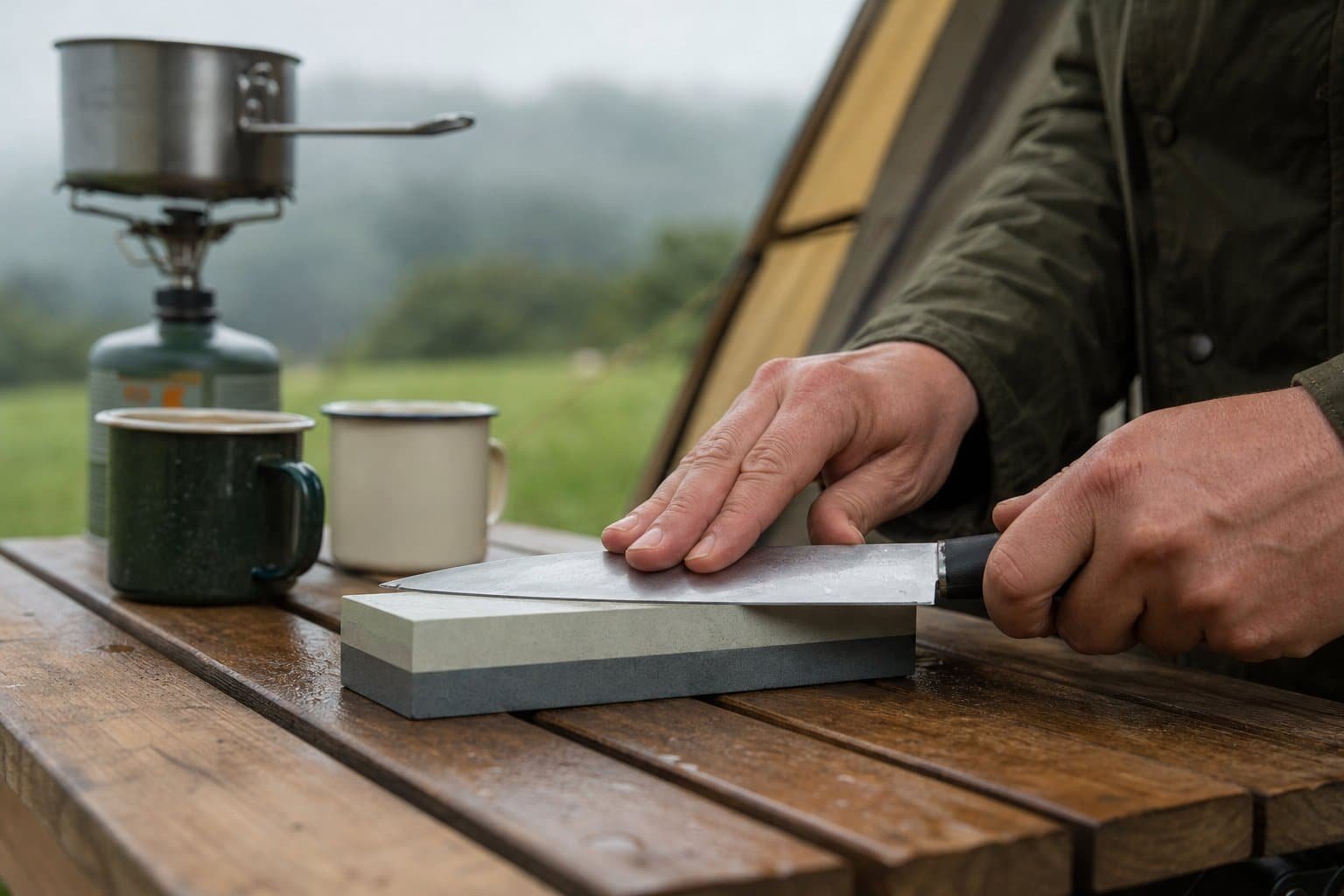
The best knife sharpeners bring a dull blade back in minutes, at home or at camp. Our top pick is the Work Sharp Precision Adjust for its repeatable guided angle, while the Work Sharp Guided Field Sharpener is the one to pack for camping.
Testers judge knife sharpeners on edge quality, how easy it is to hold the angle, which knives they handle and how much steel they waste. The common complaints are fixed angles that don’t suit every knife, pull-throughs that chew good blades, and whetstones that take practice.
Below we compare six sharpeners, from a $12 pull-through to an electric unit, and explain which type suits which knives.
- Match the sharpener's angle to your knife
- Guided systems beat freehand for beginners
- Keep pull-throughs for cheap or rough-use blades
- Best overall: Work Sharp Precision Adjust Guided, adjustable 15–30 degree sharpening for almost any knife.
- Best electric: Chef'sChoice 15XV Three diamond stages; sharp kitchen knives in about a minute.
- Best for camping: Work Sharp Guided Field Sharpener Diamond, ceramic and strop in a 4.6 oz tool.
- Best whetstone: Sharp Pebble 1000/6000 Polished edges for little money, with an angle guide.
Good knife sharpeners turn a blade that squashes tomatoes and skids off onion skin back into one that slices cleanly, and they make cooking safer as well as quicker. This guide compares six knife sharpeners for home cooks and campers: a guided clamp system, an electric sharpener, a pocket field sharpener, a whetstone, a rolling sharpener and a budget pull-through. We explain which type suits which knives, what angles and grits mean and how to keep an edge at camp. If you are still putting your camp kitchen together, see our guide to the best camping utensil sets as well.
We looked at sharpeners for straight kitchen knives, pocket knives and hunting or bushcraft blades. Specs come from the Amazon listings and published tests; where a listing doesn’t state something, we say so.


Best overall Precision Adj. | Electric Chef'sChoice | Camping Field Sharpener | Whetstone Sharp Pebble | |
|---|---|---|---|---|
|
|
|
|
| |
| Type | Guided clamp system | Electric, 3-stage | Pocket field sharpener | Water whetstone |
| Angles | 15–30° adjustable | 15° fixed | 20° and 25° guides | Freehand (guide included) |
| Abrasives | Diamond plates, ceramic hone | Diamond wheels, strop discs | 220/600 diamond, ceramic, leather | 1000/6000 grit stone |
| Serrated | Yes | Yes | Yes (ceramic rod) | No |
| Power | None | Mains (US plug) | None | None (water) |
| Warranty | 3 years | 3-year limited | See listing | Not quoted |
| Check price | Check price | Check price | Check price |
Our knife sharpener reviews
Each review covers the sharpening method, the angles and abrasives, what it can and can’t sharpen, and the main complaints from testers and owners.
Guided clamp sharpening system with an adjustable 15 to 30 degree angle, coarse and fine diamond plates and a ceramic hone; folds into its own storage; no power needed; 3-year warranty.
The Work Sharp Precision Adjust is the knife sharpener we would recommend to most people. It clamps the knife in a V-block and runs a three-sided abrasive rod along a fixed arm, so every stroke hits the same angle. You set that angle anywhere from 15 to 30 degrees, which covers thin Japanese kitchen knives as well as tougher hunting and camp blades. GearJunkie lists 320 and 600 grit diamond plates and a ceramic hone, and the Amazon listing says the kit also handles serrated edges and comes with a 3-year warranty.
GearJunkie named it best overall in its 2026 tests, praising the compact size, rubberised swivelling clamp and sensible grit progression. Its downsides are real but minor: the printed angles aren’t always exact, the clamp flexes on big or thick blades unless you support them, and it is slow at reprofiling a badly damaged edge. If you want more grits and a strop, the Precision Adjust Elite adds them for about twice the price.
- Repeatable angle on every stroke
- Adjusts from 15 to 30 degrees
- Diamond plates and ceramic hone included
- Compact, no power needed, 3-year warranty
- Printed angles can be slightly off
- Clamp flexes on large, thick blades
- Slow for heavy reprofiling
3-stage electric knife sharpener with 100% diamond abrasives in stages 1 and 2 and a flexible stropping stage 3; converts 20 degree edges to 15 degrees; straight and serrated knives; about 10 x 4.25 x 4.25 in; 3-year limited warranty.
The Chef’sChoice 15XV is the electric knife sharpener that keeps topping kitchen tests. America’s Test Kitchen and GearJunkie both rate it highly, and it is simple: spring guides hold each side of the blade at the right angle as you draw it through. Stages 1 and 2 use diamond wheels to sharpen and hone, and stage 3 uses flexible stropping discs to polish the edge and sharpen serrations. Chef’sChoice says the first sharpening takes about a minute and a resharpen around 10 seconds.
The key thing to understand is that it converts every knife to a 15 degree edge. That makes most Western kitchen knives noticeably sharper, but it is not what you want on a heavy outdoor knife or an axe. GearJunkie also notes the abrasives aren’t replaceable and it can’t do ceramic knives, and some owners worry about how much metal stage 1 removes from good knives, so use that stage only for very dull blades. The model linked here is a US-plug version, so UK buyers should look for the UK model.
- Very fast and easy to use
- Diamond abrasives plus a stropping stage
- Handles straight and serrated knives
- 3-year limited warranty
- Fixed 15 degree angle only
- Abrasives not replaceable
- US plug on this listing; needs mains power
5-stage pocket field sharpener: coarse 220 and fine 600 grit diamond plates, ceramic rods with a fish hook groove, and a leather strop; built-in 20 and 25 degree angle guides; broadhead wrench and lanyard hole; 4.6 oz (130 g).
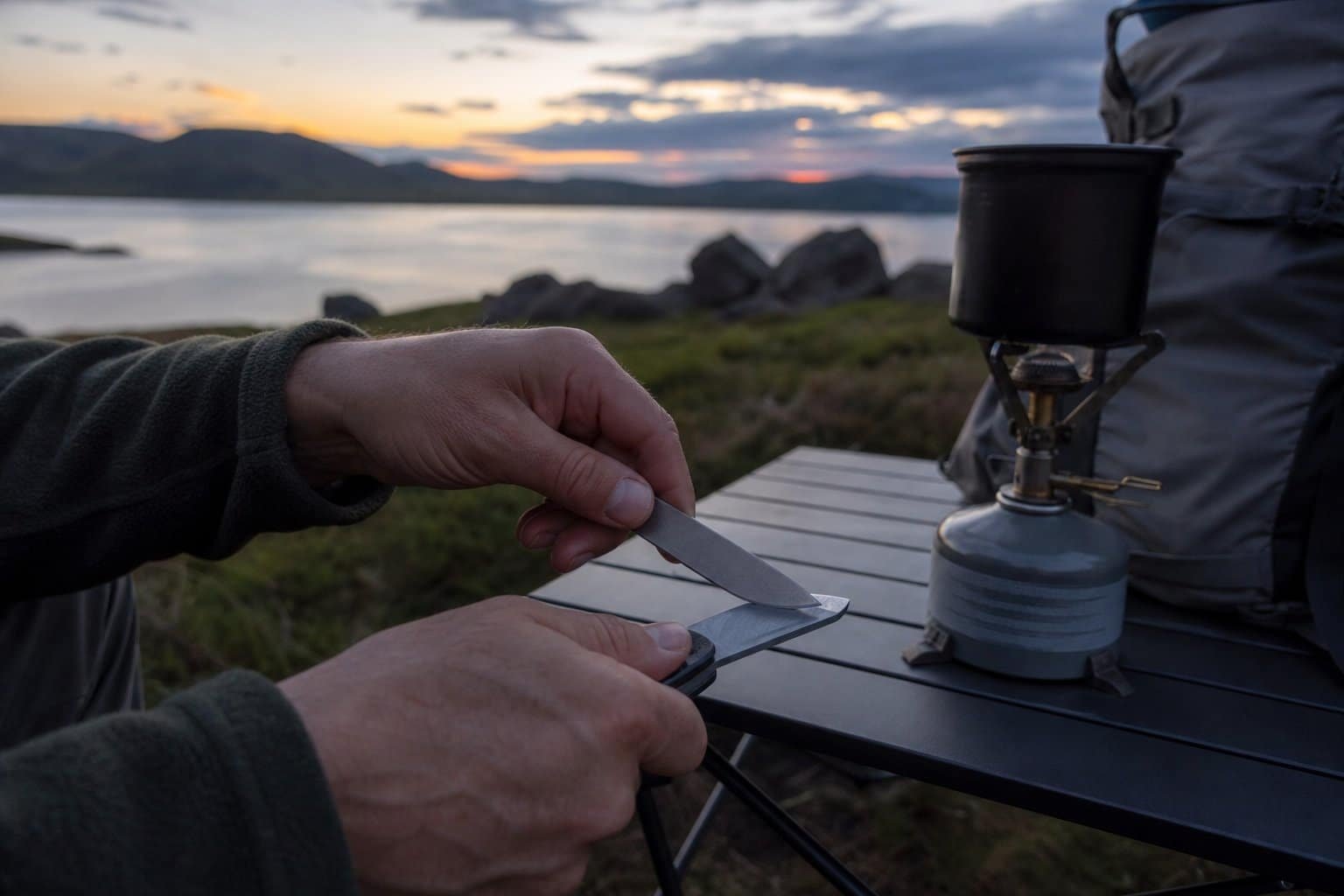
The Work Sharp Guided Field Sharpener is the knife sharpener we would put in every camping kit. In one 4.6 oz body it packs coarse 220 and fine 600 grit diamond plates for repairing and refining an edge, ceramic rods for honing and serrations, a groove for fish hooks and a leather strop for polishing. Built-in 20 and 25 degree guides sit beside the plates, so you can keep a consistent bevel without a clamp, and it needs no water, oil or power.
Field reviewers like how quickly it brings back a dull trail knife, and owners on Walmart and Public Lands report sharp fillet and EDC blades after a little practice. It is slower than a bench system on big kitchen knives, and the guides are a visual reference rather than a clamp, so the angle still depends on your hand. The listing mentions both a 3-year warranty and a limited lifetime warranty covering workmanship (abrasives excluded), so check the terms when you buy.
- Diamond, ceramic and strop in one tool
- Light at 4.6 oz, no water or power
- Handles serrations and fish hooks
- Angle guides for 20 and 25 degrees
- Slow on large kitchen knives
- Guides need a steady hand
- Warranty terms differ within the listing
Dual-sided water stone with 1000 grit for sharpening and 6000 grit for polishing; non-slip bamboo base, angle guide and instructions; water only, no oil needed. Weight and warranty not stated on the listing.
The Sharp Pebble is a classic two-sided water stone and the cheapest way to get truly polished edges. The 1000 grit side does the real sharpening, and the 6000 grit side refines the edge until it glides through ripe tomatoes. It sits in a non-slip bamboo base and comes with a clip-on angle guide and instructions, which takes some of the fear out of a first whetstone. It uses water rather than oil.
GearJunkie named it best budget sharpener in 2026, praising the stone quality and silicone base on smooth worktops. The catches are the same as for any whetstone: you need to soak it, it takes practice to hold a steady angle, and the base can slide on wooden butcher block. It is also no good for serrated blades and too delicate and wet for most camping trips. The listing doesn’t give a weight or warranty.
- Polished, very sharp edges
- Low price for two grits
- Angle guide for beginners
- Works on most straight blades
- Takes practice to master
- Needs soaking; messy
- Base can slide on butcher block
- No serrated blades
Rolling sharpener with a magnetic angle block and four preset angles, diamond abrasive discs and a ceramic honing disc; 3.75 x 2.6 x 2.6 in; replacement abrasives available.
The Work Sharp Rolling Knife Sharpener is the easiest sharpener here for nervous beginners. The knife sticks to a magnetic block set at one of four angles (GearJunkie lists 15, 17, 20 and 25 degrees), and you simply roll the abrasive wheel along the edge, so your fingers stay well away from the blade. GearJunkie lists 320 and 600 grit diamond and a ceramic hone, and Work Sharp sells replacement abrasives, which many cheaper rolling sharpeners don’t.
Outdoor Life rated it the best rolling sharpener in its tests, and GearJunkie found it solid and easy to use on a wide range of knives. The downsides: it costs more than a whetstone, the discs aren’t very aggressive on badly worn edges, and it can’t sharpen serrated blades. It is a kitchen tool rather than a camp tool. The listing doesn’t quote a warranty.
- Very easy and finger-safe
- Four preset angles
- Diamond and ceramic discs
- Replacement abrasives available
- Pricier than a whetstone
- Slow on very dull knives
- No serrated blades
Hand-held pull-through sharpener with diamond-honed tungsten carbide blades that reverse for longer life; straight and serrated knives and tools; full-length finger guard; ambidextrous handle; dishwasher-safe.
The AccuSharp Knife & Tool Sharpener is about as simple and cheap as knife sharpeners get. You hold the handle, rest it on the blade and draw it along a few times; the V of diamond-honed tungsten carbide shaves a new edge in seconds. The carbide blades can be reversed when they wear, the handle suits left and right hands, and a full-length guard protects your fingers. AccuSharp says it handles straight and serrated knives, and it cleans in the dishwasher.
BestReviews picks it as one of the best value sharpeners, and it is genuinely useful for cheap kitchen knives, garden tools and a knife that lives in the car or camping box. But it is a pull-through, and carbide removes steel aggressively and leaves a coarser edge. Outdoor Life warns that pull-throughs can do more harm than good on good knives, so keep this away from your best blades.
- Very cheap and very quick
- Reversible carbide blades
- Finger guard, ambidextrous
- Works on tools and serrations
- Removes metal aggressively
- Coarser edge than stones
- Not for good kitchen knives
What do knife sharpeners actually do?
Every edge dulls the same way. With use, the very thin apex of the blade rolls over, chips or wears into a rounded line, so it pushes into food instead of cutting it. Knife sharpeners fix this by grinding away a small amount of steel on each side until the two bevels meet in a clean, sharp line again.
It helps to separate three jobs. Sharpening removes metal to form a new edge. Honing realigns an edge that has rolled but isn’t yet worn out. Stropping polishes the edge and removes the fine burr left behind after sharpening. Outdoor Life’s knife sharpener tests put it simply: honing is maintenance, but sooner or later every knife needs sharpening. The best knife sharpeners let you do at least two of these jobs, and several of our picks do all three.
Types of knife sharpeners
Pull-through sharpeners
Pull-through sharpeners have a fixed V-shaped slot of carbide or ceramic, and you draw the blade through a few times. They are cheap, small and fast, which is why the AccuSharp sells so well. The trade-off is control: carbide slots scrape steel off aggressively and leave a rougher edge. Outdoor Life warns that pull-throughs can do more harm than good on good knives, so we treat them as a quick fix for cheap or rough-use blades.
Electric knife sharpeners
Electric knife sharpeners such as the Chef’sChoice 15XV use spinning abrasive wheels and spring guides that hold the angle for you. They are the quickest way to sharpen a drawer full of kitchen knives, and they can repair chips. They also remove metal fast, so careless use shortens a knife’s life, and most only offer one or two fixed angles.
Whetstones and diamond plates
A whetstone is a flat block of abrasive that you move the blade across by hand. It gives the most control and the best edges for the money, and it works on almost any straight blade. The catch is skill: you have to hold a steady angle yourself. Diamond plates do the same job faster, need no soaking and never need flattening, which makes them popular for harder steels.
Guided and clamp systems
Guided systems, such as the Work Sharp Precision Adjust, clamp the knife and run the abrasive along a fixed arm, so every stroke hits the same angle. They give whetstone-quality results without years of practice, but they take longer to set up and are bulkier to store.
Rolling sharpeners
Rolling knife sharpeners pair a magnetic angle block with a wheel of abrasive discs that you roll along the edge. They are easy to learn and kind to fingers, and they suit kitchen knives well. Most can’t sharpen serrated blades. They are a good middle ground for cooks who find whetstones fiddly but don’t want an electric knife sharpener on the worktop.
Pocket and field sharpeners
Field sharpeners are small diamond, ceramic and leather tools that fit in a pack, a tackle box or a glove box. They are built for touch-ups away from home rather than full reprofiling, and the better ones include angle guides.
Sharpening angles explained
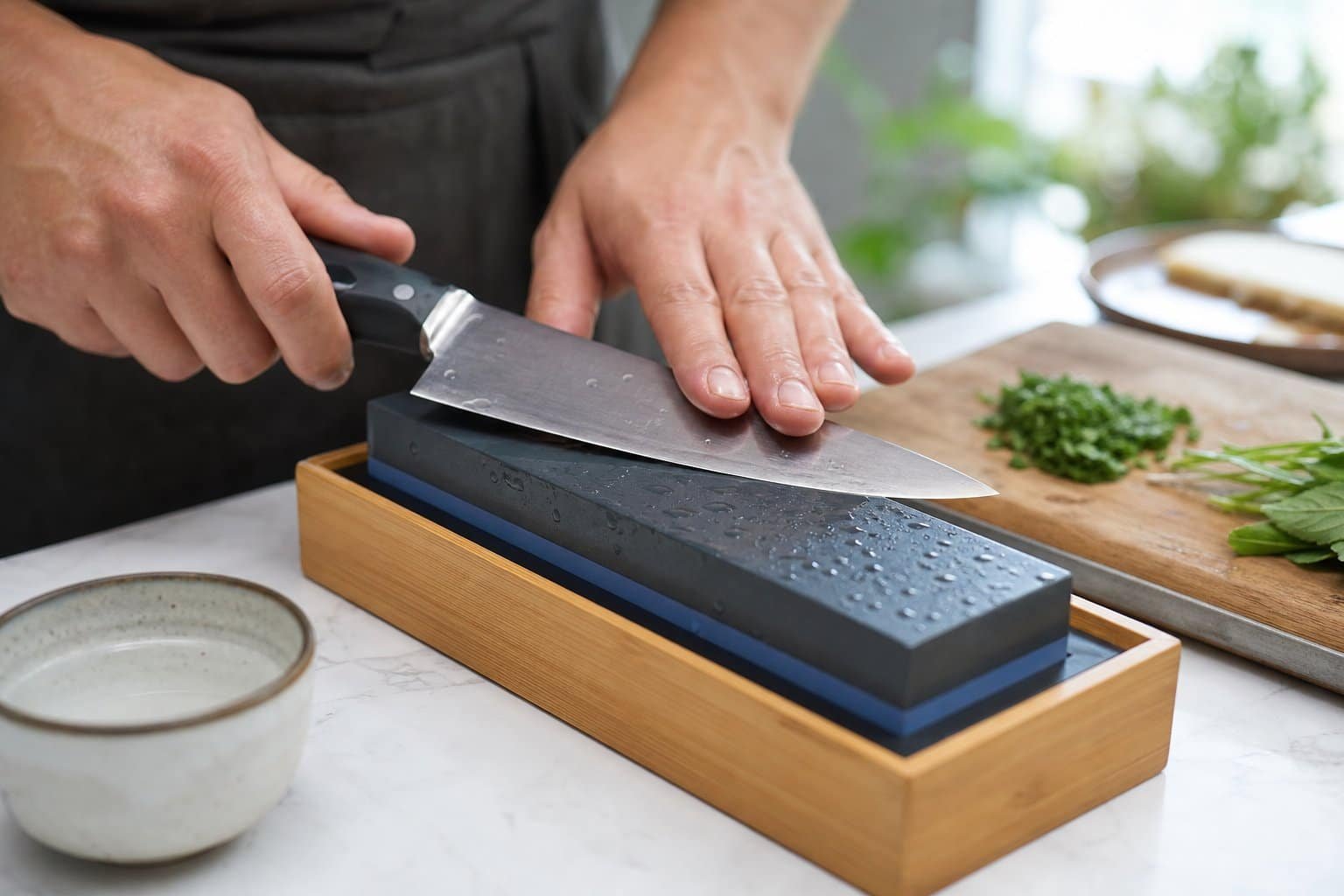
The angle is measured from the centre of the blade to each bevel. Many Western kitchen knives leave the factory at around 20 degrees per side, while Japanese-style knives are often closer to 15 degrees. A lower angle feels sharper but is weaker and more likely to chip or roll. A higher angle, such as 25 degrees, is tougher and suits hunting knives, axes and camp knives that hit bone, wood or a camp table.
The simplest rule is to follow the angle your knife already has. If you don’t know it, colour the bevel with a marker pen, make one light pass and see where the ink comes off. Adjustable knife sharpeners like the Precision Adjust (15 to 30 degrees) and the Work Sharp Rolling sharpener (four preset angles) let you match each knife. Fixed-angle tools such as the Chef’sChoice 15XV convert every knife to their own angle, which is fine for most kitchen knives but not ideal for a heavy outdoor blade.
Coarse, medium and fine grit
Grit numbers describe how coarse the abrasive is: the lower the number, the faster it removes steel. Coarse grits around 220 to 400 repair chips and reshape a very dull edge. Medium grits around 600 to 1000 do most ordinary sharpening. Fine grits from about 3000 up to 6000 polish the edge so it glides through soft tomatoes and fish. Grit scales vary between brands, so GearJunkie suggests comparing micron ratings where they are given.
For most kitchens, a 1000 grit stone for sharpening and a 6000 grit side for polishing, as on the Sharp Pebble, covers everyday needs. For trail and hunting knives, a coarse and a fine diamond plate plus a hone and a strop, as on the Guided Field Sharpener, is the more useful mix.
How to choose knife sharpeners for your knives
Start with the knives you own
Cheap stainless kitchen knives forgive almost anything. Expensive Japanese knives, hard powder steels and single-bevel blades deserve a whetstone, a diamond plate or a guided system, not a carbide pull-through. Hunting and bushcraft knives need a tougher angle and a tool that copes with thicker blades.
Be honest about time and skill
If you want sharp knives in a minute and will never practise, an electric sharpener or a rolling sharpener is the realistic choice. If you enjoy the process, a whetstone gives the best edges for the money and lasts for years. Guided systems sit in between: slower to set up, but very repeatable.
Kitchen, camp or both
A countertop electric unit is no use in a tent, and a pocket field sharpener is slow on a big chef’s knife. Many households end up with two: one main knife sharpener at home and a small field sharpener in the camping box. That way the good kitchen knives get the careful treatment, and the camp knife gets a quick, practical touch-up wherever you pitch.
Serrated blades
Bread knives and serrated camp knives need a tapered ceramic rod or a stage made for serrations. The Field Sharpener’s ceramic rod, the 15XV’s stropping stage, the Precision Adjust kit and the AccuSharp all handle serrations; the Work Sharp Rolling sharpener and a flat whetstone don’t.
Budget
You don’t need to spend much. A good whetstone or field sharpener costs about the same as two professional sharpening visits. Spend more only for speed (electric) or precision (guided systems). The cheapest knife sharpeners, the carbide pull-throughs, are tempting at under $15, but they are best kept for knives you don’t mind wearing down. Mid-priced knife sharpeners such as the Field Sharpener and the Sharp Pebble give the best value for most households.
Knife sharpeners for camping and the outdoors
Camp knives work harder than kitchen knives. They cut on plates and rocks, slice rope, open packets and baton kindling, so they dull quickly. A small field sharpener is one of the most useful things you can add to a camp kitchen, and it weighs less than a mug. Keep it with your knife, your camping multi-tool and your folding saw, so every blade gets a touch-up before a trip.
For camp use, look for a sharpener that needs no water or power, has built-in angle guides and includes a ceramic rod for serrations. Diamond plates are ideal outdoors because they don’t need soaking and won’t crack if dropped. Work on a flat, stable surface such as a camp table, never on your knee, and wipe the blade clean before you cook with it again.
How to sharpen a knife on a whetstone
Soak a water stone such as the Sharp Pebble as the maker’s instructions say, usually until it stops releasing air bubbles, and set it on its non-slip base on a damp tea towel. Start on the 1000 grit side. Hold the blade at your chosen angle, using the angle guide at first, and push it across the stone from heel to tip with light, even pressure. Work one side until you can feel a slight burr along the opposite edge, then do the same on the other side.
Switch to the 6000 grit side and repeat with lighter strokes to polish the edge. Finish with a few alternating passes on each side, or on a strop, to remove the burr. Test on a sheet of paper: a sharp knife slices cleanly without snagging. Rinse and dry the stone and leave it to air-dry before storing it.
Using knife sharpeners safely
Most sharpening accidents happen when a hand slips or a sharpener moves. Keep the sharpener on a flat, non-slip surface, keep your fingers behind the edge and work slowly. Pull-through tools like the AccuSharp have a finger guard, so use it. Never test sharpness by running a finger along the edge, and wipe away metal filings before cooking. Store sharpened knives in a block, a sheath or an edge guard; at camp, a sheathed knife in the utensil roll is far safer than a loose blade in a crate.
How often should you sharpen your knives?
It depends on how often you cook and what you cut on. A home cook who hones regularly might only need to sharpen every few months, while a camp knife used on plates and wooden boards may need a touch-up every trip. A quick test is the tomato or paper test: if the knife slides off the skin or tears the paper, it needs work. Honing or stropping between sharpenings keeps the edge going for longer and means your knife sharpeners remove less metal over the years. Before a camping trip, give every blade in the kit a quick check, including the bread knife, the pocket knife and any hatchet, so nothing reaches the campsite blunt. It takes five minutes at home and saves a frustrating evening at the camp table.
Do you need a honing rod or strop as well?
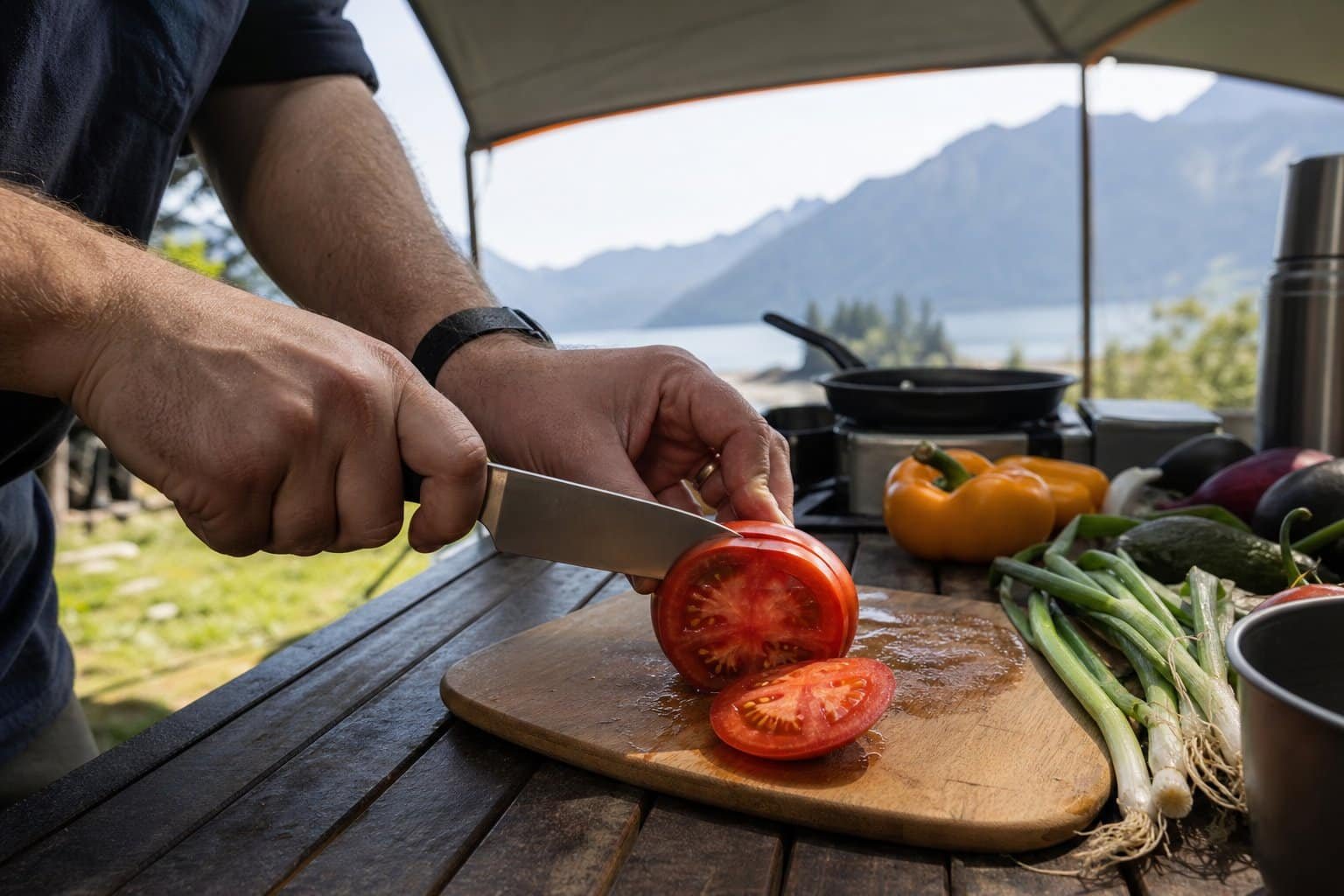
A honing rod or leather strop isn’t essential, but it is the cheapest way to make any knife sharpener last longer. A few light strokes on a ceramic rod before cooking straighten a rolled edge, so you sharpen less often and remove less steel. Rest the tip of the rod on a board and draw the blade down it at the same angle on each side; waving the rod in the air is the classic mistake. A strop does a similar job outdoors: the leather strip on the Guided Field Sharpener polishes away the burr and brings a dull-feeling camp knife back for another day.
Knife sharpeners vs a professional sharpening service
A professional sharpener can restore a badly damaged or very expensive knife, and it is worth paying for if a blade has a broken tip or deep chips. For everyday dullness, though, home knife sharpeners pay for themselves quickly. A whetstone or a field sharpener costs about the same as one or two professional visits, and it is there whenever a knife starts to drag. The bigger benefit is frequency: little and often keeps an edge in far better condition than an occasional heavy regrind.
Caring for your knife sharpener
Wipe metal filings off diamond plates, ceramic rods and carbide slots after each session, and rinse water stones and let them air-dry before you put them away. Store diamond plates dry, because some can rust if packed wet. Flatten whetstones every so often so they stay true, and clean ceramic rods with a little water and a scouring pad when they turn grey with metal. Replace worn abrasives rather than pressing harder: Work Sharp sells replacement plates and belts, and AccuSharp blades can be reversed and then replaced. A well-kept knife sharpener should last for many years.
Common problems and fixes
The knife still feels dull after sharpening. You probably didn’t reach the edge. Keep working the coarser grit until you can feel a burr along the whole length, then move to the finer grit.
Only part of the edge is sharp. The angle drifted or the tip and heel were skipped. Use the marker trick and make full strokes from heel to tip.
The edge chips quickly. The angle is too low for the job. Raise it to 20 or 25 degrees for outdoor knives.
There are scratches on the blade. The blade touched the abrasive above the bevel. Slow down and use guides or a lower-grit stone carefully; a guided clamp with rubber jaws helps.
The whetstone has dished in the middle. Flatten it with a flattening plate or coarse sandpaper on glass, and use the whole surface of the stone.
The pull-through sharpener leaves a ragged edge. Use lighter strokes, then hone on a ceramic rod. For good knives, move to a whetstone or guided system.
Buying knife sharpeners in the UK
The products in this guide link to Amazon listings, and price, stock and delivery can change. Electric knife sharpeners are the one area to check carefully: the Chef’sChoice 15XV listed here is a US-plug model, so UK buyers should look for the UK version rather than relying on a travel adapter. Manual knife sharpeners, stones and field sharpeners work the same anywhere. Replacement abrasives are easy to find for Work Sharp and AccuSharp tools.
Final thoughts on choosing knife sharpeners
For most people, the Work Sharp Precision Adjust is the best of these knife sharpeners: it handles kitchen, pocket and camp knives at the right angle and is easy to learn. If speed matters most, choose the Chef’sChoice 15XV for the kitchen. Campers should pack the Work Sharp Guided Field Sharpener, whetstone fans should start with the Sharp Pebble, kitchen cooks who want simple, safe sharpening should look at the Work Sharp Rolling sharpener, and the AccuSharp is a cheap fix for rough-use blades. Pair whichever you choose with a little regular honing and your knives will stay sharp for years, at home and at camp. For more camp kitchen ideas, see what cookware campers need and our portable camping kitchens.
Knife sharpening myths
It realigns a rolled edge but removes little or no metal. A worn edge still needs sharpening.
Good ones work well, but they remove metal fast. Use the coarse stage only when a knife is really dull.
It cuts more easily but chips sooner. Outdoor knives need 20–25 degrees.
A sharp blade needs less force, so it is less likely to slip.
What to look for in knife sharpeners
About 15° for Japanese, 20° for Western, 20–25° for outdoor knives.
Guides, clamps or magnets make results repeatable.
A coarse grit to repair and a fine grit to polish.
A ceramic rod or serration stage for bread knives.
No power or water needed for camp use.
Extends the sharpener’s life.
How to sharpen a knife with a guided sharpener
- Check the angle
Mark the bevel with a marker pen and match the guide to it.
- Coarse grit
Sharpen one side until you feel a burr along the whole edge.
- Second side
Repeat on the other side with the same number of strokes.
- Fine grit
Refine both sides with lighter strokes.
- Hone or strop
Remove the burr with a ceramic hone or leather strop.
- Test and clean
Slice paper, then wipe the blade and sharpener clean.
How we chose these knife sharpeners
We have not tested every sharpener in this list ourselves. Our picks are based on the Amazon listings, maker information and published tests and owner feedback from Outdoor Life, GearJunkie, America’s Test Kitchen, BestReviews and field reviewers. Where a listing didn’t state a spec we said so rather than guessing.
-
Edge quality
We looked at how sharp and consistent an edge each type produces.
-
Ease of use
We compared how easy it is to hold the angle and learn.
-
Versatility and value
We checked which knives each handles, portability, warranty and price.
What is the best knife sharpener?
For most people, the Work Sharp Precision Adjust: it holds a repeatable 15–30 degree angle and handles kitchen, pocket and hunting knives. For pure speed in the kitchen, choose the Chef’sChoice 15XV.
What is the best knife sharpener for camping?
The Work Sharp Guided Field Sharpener. It weighs 4.6 oz, needs no water or power and includes diamond plates, ceramic rods and a strop.
Are pull-through knife sharpeners bad for knives?
Carbide pull-throughs remove metal aggressively and leave a rougher edge. They are fine for cheap knives and tools, but use a stone or guided system on good knives.
What angle should I sharpen my knife at?
Follow the existing angle: often about 15 degrees for Japanese knives and 20 for Western ones. Outdoor knives suit 20–25 degrees.
What grit whetstone do I need?
A 1000 grit side for sharpening and a 3000–6000 grit side for polishing covers most kitchen knives. Add a coarse stone for chips.
Can I sharpen serrated knives?
Yes, with a tapered ceramic rod or a serration stage, as on the Field Sharpener, the 15XV or the AccuSharp. Flat whetstones and the Work Sharp Rolling sharpener can’t.
How often should I sharpen my knives?
Every few months for a home knife you hone regularly; a camp knife may need a touch-up every trip.
More camp kitchen guides
Building a camp kitchen? See our guides to the best camping utensil sets, the best camping kitchen units, our camping essentials list and easy camping meals to put those sharp knives to work.
Which knife sharpener should you buy?
- Best overall: Work Sharp Precision Adjust Knife Sharpener
- Best electric: Chef'sChoice 15XV EdgeSelect Electric Knife Sharpener
- Best for camping: Work Sharp Guided Field Sharpener
- Best whetstone: Sharp Pebble 1000/6000 Grit Whetstone
- Best rolling sharpener: Work Sharp Rolling Knife Sharpener
- Best budget: AccuSharp Knife & Tool Sharpener
For most people, the Work Sharp Precision Adjust is the best of these knife sharpeners. Choose the Chef’sChoice 15XV for fast kitchen sharpening, the Guided Field Sharpener for camping, the Sharp Pebble to learn on a whetstone, the Work Sharp Rolling for easy kitchen sharpening and the AccuSharp for cheap, rough-use blades.
CampEquipmentPlus relies on reader support. Purchases made via links on our website may earn us an affiliate commission at no extra cost to you, helping keep the site running.