
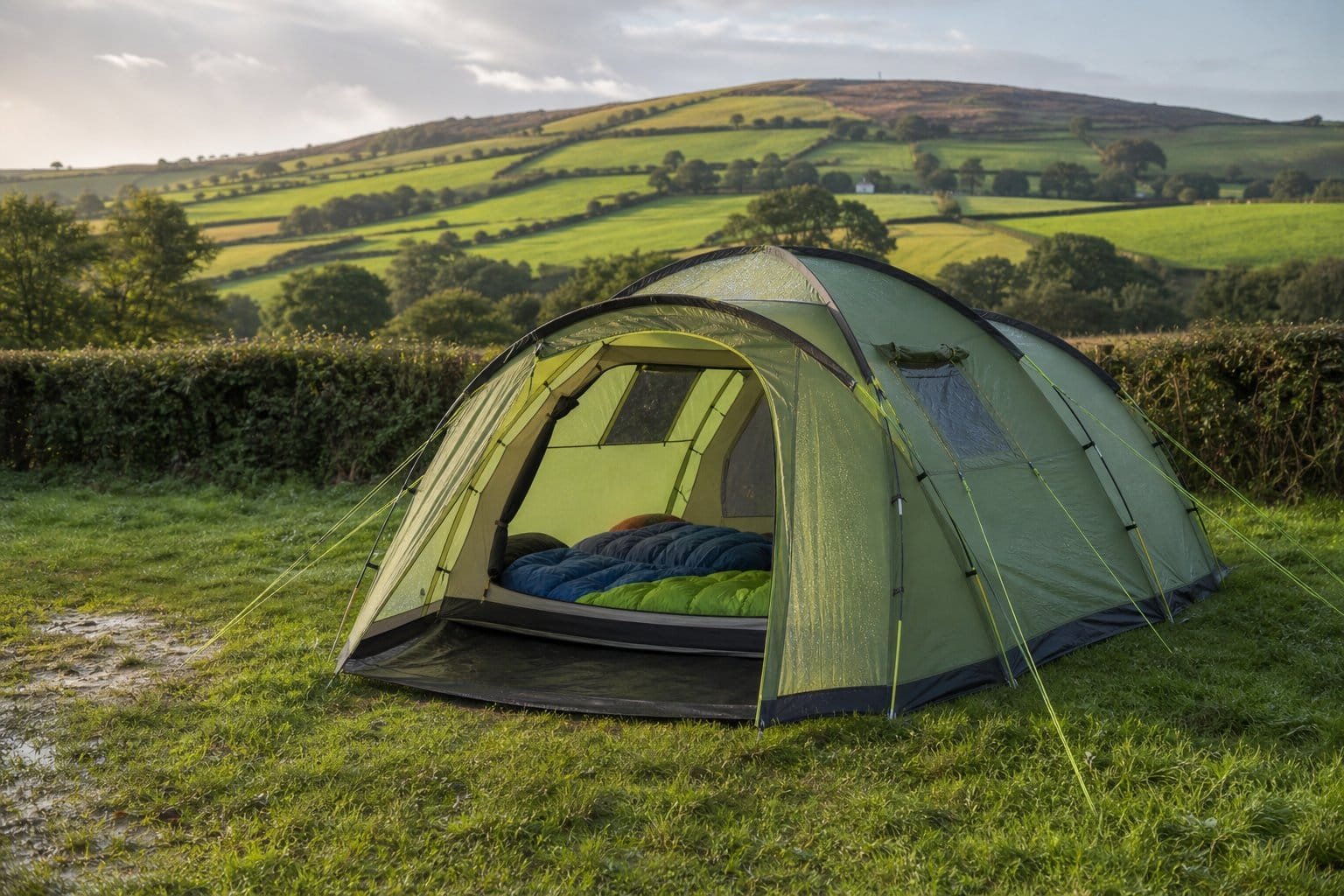
Best Tents with Sewn In Groundsheets UK
The best tents with sewn in groundsheets keep out draughts, ground water and creepy-crawlies because the floor is stitched or welded to the walls, so there is no gap for rain, slugs or midges to get through.
A sewn-in groundsheet (often called a SIG, or a bathtub or tub floor) joins the floor to the tent walls in one piece. UK buyers like them because they make pitching quicker, stop cold air blowing under the walls, and keep insects and wet grass out of the sleeping area. The trade-offs come up again and again in owner reviews: the floor is harder to clean and dry after a muddy weekend, water that does get in has nowhere to go, condensation can build up without good ventilation, and a damaged floor is harder to replace than a loose sheet. We compared five tents with sealed floors, from a lightweight backpacking tent to a heavy-duty canvas cabin, on floor construction, space, ventilation, weather protection and pitching.
- Our five picks at a glance
- Side-by-side comparison
- Detailed reviews with pros and cons
- Sewn-in vs linked-in groundsheets
- How to look after a sewn-in groundsheet
- Sewn-in groundsheet FAQs
- Sealed against bugs and draughts Floor and walls are joined, so insects, slugs and cold air cannot get under the edges. Most UK family and backpacking tents now use one.
- Look for a bathtub profile A floor that rises a few centimetres up the walls keeps splashback and surface water out. Welded corners and taped seams help further.
- Ventilation matters more A sealed tent traps damp air. Choose high and low vents, mesh panels or breathable poly-cotton to limit condensation.
- Protect the floor A damaged sewn-in floor is hard to replace, so use a footprint or carpet and keep sharp chair legs off it.
When you compare tents with sewn in groundsheets UK campers will be happy with, it pays to look past the phrase on the listing and check how the floor is actually built. A good sealed floor rises up the walls, joins them with welded or taped seams and sits inside a tent with enough ventilation to handle the moisture it traps. This guide explains the floor types, the trade-offs and the care that keeps a sewn in groundsheet working for years.


Best overall Skydome 6 | Best budget Sundome 4 | Best bell tent Trend 4M Bell | Toughest floor Kodiak Lodge | Best lightweight Clostnature 2P | |
|---|---|---|---|---|---|
|
|
|
|
|
| |
| Sleeps | 6 | 4 | 4-6 | 6 | 2 |
| Floor type | Tub-like, sewn in | Tub-style, sewn in | Zip-in, removable | 13.5 oz vinyl, welded | PU bathtub, sewn in |
| Fabric | Polyester | Polyester | Poly-cotton | Cotton canvas | Polyester |
| Floor size | 3.0 x 2.4 m | Not quoted | 4 m diameter | 3.0 x 3.0 m | 2.2 x 1.5 m |
| Peak height | 183 cm | Not quoted | Not quoted | 229 cm | 115 cm |
| Weight | Not quoted | Not quoted | Not quoted | Not quoted | 2.4 kg |
| Stove jack | No | No | Yes | Yes | No |
| Pitching | Pre-attached, 5 min | About 10 min | About 15 min | Steel frame | Freestanding |
| Check price | Check price | Check price | Check price | Check price |
Best tents with sewn in groundsheets: our detailed reviews
Each review covers how the floor is built, living space, ventilation, weather protection and pitching. We paid most attention to the problems owners of sealed-floor tents report: mud and grass that is hard to clean out, floors that take a long time to dry, condensation in a closed-up tent, and floors damaged by furniture or stony ground. If you are mainly worried about rain, see our guide to what waterproof rating a tent should have and our pick of the best waterproof tents for heavy rain.
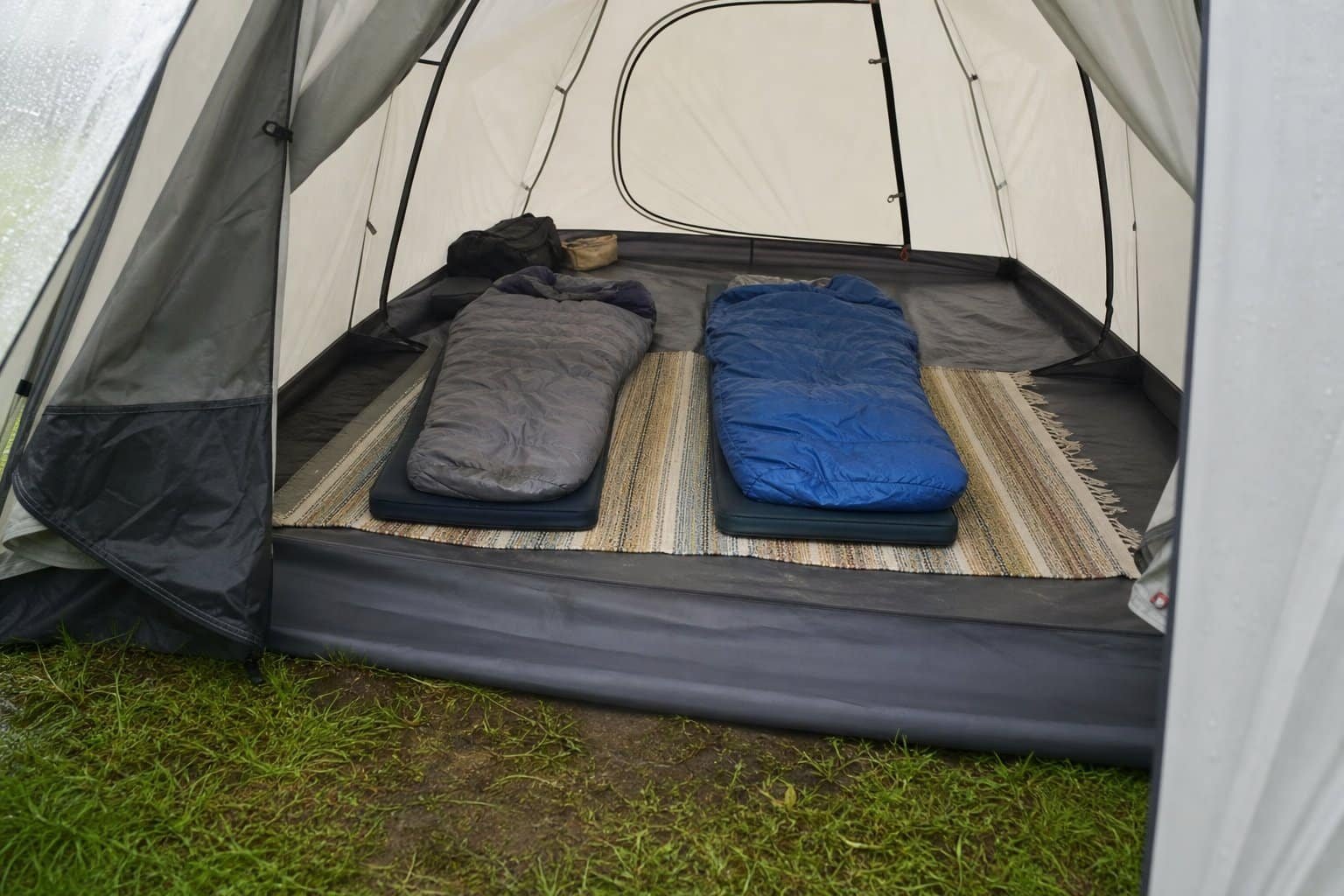
Pre-attached poles, near-vertical walls and a tub-like sewn-in floor
The Coleman Skydome 6-Person Camping Tent is our best tent with a sewn-in groundsheet for most UK families because it combines a fully sealed floor with the quickest pitch in this list. Coleman’s WeatherTec system uses a tub-like floor whose edges rise up the walls, plus welded corners and inverted seams, so rain running across the pitch has no low seam to get through, and slugs, earwigs and draughts stay outside. The poles come pre-attached, so Coleman says it goes up in under five minutes, and the nearly vertical walls give about 20% more headroom than its older domes, with a 6 ft (183 cm) centre height on a 10 x 8 ft (about 3.0 x 2.4 m) floor. A wide door makes it easy to carry air beds in and out, and there is a gear loft and mesh pockets. The waterproof rating and pack weight are not quoted on the listing, and there is no porch, so plan where muddy boots will go: with a sewn-in floor, dirt tracked inside stays inside until you sweep it out.
- Tub-like sewn-in floor
- Pre-attached poles, 5-minute pitch
- 183 cm centre height
- Near-vertical walls
- Wide door for air beds
- Waterproof rating not quoted
- No porch for muddy boots
- Weight not quoted
Classic dome with a tub-style floor and welded corners
The Coleman Sundome 4-Person Camping Tent is the cheapest way into a tent with a sewn-in groundsheet from a well-known brand. Its tub-style floor, welded corners, inverted seams and taped rainfly are designed to work together, so the floor and walls form one sealed shell that keeps out ground water and insects. Coleman says the frame has been tested in winds up to 35 mph and that it pitches in about 10 minutes using snag-free continuous pole sleeves. Two large windows and a low ground vent help with airflow, which matters because condensation is the most common complaint about fully sealed tents. An E-port lets you run an electric hook-up cable inside, and there are pockets for torches and phones. The listing does not quote floor size, height, waterproof rating or weight for this variant, so check the size chart on the product page. As with any dome, the sloping walls mean you sit rather than stand inside.
- Lowest price here
- Tub-style floor and welded corners
- Tested to 35 mph winds
- Ground vent for airflow
- E-port for hook-up
- Size and height not quoted for this variant
- Sitting headroom only
- Waterproof rating not quoted
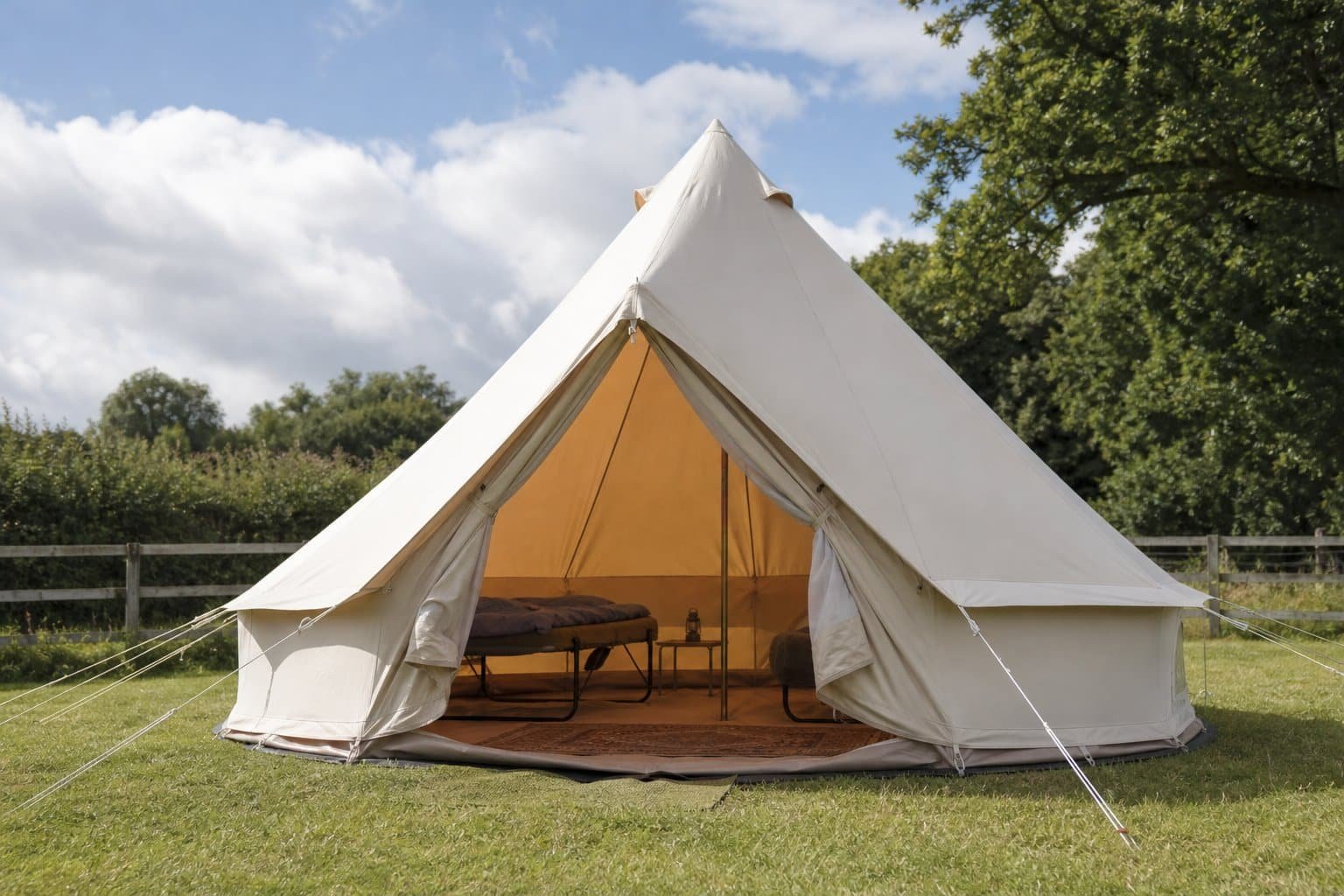
Poly-cotton bell tent with a zip-in groundsheet and stove jack
The Trend Tents 4M Canvas Bell Tent suits campers who want a breathable bell tent but still like a sealed floor. Bell tents usually use a zip-in groundsheet rather than one stitched in for good, and this one is described by the brand as a removable sewn-in groundsheet: zipped in, it seals the living space against damp, insects and cold ground air, and on a hot day you can unzip it to roll the walls up or take the floor out to scrub it. That answers the biggest complaint about permanent sewn-in floors, which are hard to clean and dry after a muddy weekend. The 200gsm poly-cotton canvas breathes, so it should suffer far less condensation than polyester, and it has four mesh windows, a roof vent and a stove jack for colder trips. The 4 m diameter fits four to six people, galvanised steel poles add stability, and Trend says two people can pitch it in about 15 minutes. No waterproof figure or weight is quoted, and poly-cotton must be fully dried before storage to avoid mildew.
- Zip-in floor can be removed to clean
- Breathable 200gsm poly-cotton
- Stove jack for cold trips
- Four mesh windows and roof vent
- Galvanised steel poles
- Heavier and slower to dry than polyester
- Waterproof rating not quoted
- Must be dried before storage
Cotton canvas cabin with a 13.5 oz vinyl floor and welded seams
The Kodiak Canvas 10×10 Cabin Lodge Tent has the toughest groundsheet in this list. Its floor is a 13.5 oz vinyl sheet with welded seams, sewn in to the Hydra-Shield cotton duck canvas walls, so it shrugs off chairs, table legs and children far better than the thin polyester floors on budget tents. The 10 x 10 ft (about 3.0 x 3.0 m) floor, vertical walls and 7.5 ft (229 cm) peak give walk-around headroom for up to six people. A 1-inch galvanised steel frame, stainless steel stake loops and 12-inch steel rod stakes are built for windy pitches, six large no-see-um mesh windows and two vents keep the air moving, and a stove jack makes it usable in cold weather (Kodiak says two people with a stove). It has YKK zips and a limited lifetime warranty. It is the most expensive tent here and canvas cabins are heavy, so it is best for long stays where you pitch once and leave it up.
- 13.5 oz vinyl floor with welded seams
- 229 cm peak height
- Vertical walls
- Steel frame and heavy stakes
- Limited lifetime warranty
- Highest price
- Heavy canvas pack
- Must be dried before storage
2.4 kg backpacking tent with a PU-coated bathtub groundsheet
The Clostnature 2 Person Backpacking Tent shows that sewn-in groundsheets are not just for family tents. Almost every backpacking tent uses one, because a bathtub floor that curves up at the edges is lighter than a separate sheet and keeps splashback out. Clostnature uses a PU-coated polyester groundsheet and bathtub with factory-sealed seams on a 220 x 150 cm floor with 115 cm of height. The whole tent weighs 2.4 kg, or 2.05 kg at minimum trail weight, and packs to 42 x 15 x 15 cm. It is freestanding on two aluminium poles, has full mesh inner walls for airflow, and two D-shaped doors with two porches so you are not climbing over each other or your boots. A pole repair sleeve is included. The waterproof rating is not quoted, and thin lightweight floors wear faster on stony ground, so a footprint underneath is a good idea.
- 2.4 kg total weight
- PU-coated bathtub groundsheet
- Two doors and two porches
- Freestanding aluminium poles
- Small 42 cm pack
- Waterproof rating not quoted
- Thin floor benefits from a footprint
- 115 cm height, sit-up only
Sewn in groundsheets vs linked-in groundsheets: which is better?
Most UK family tunnel tents use a sewn-in groundsheet in the bedrooms and either a sewn-in or a linked-in (toggled or zipped) sheet in the living area and porch. Vango’s own advice is that sewn-in floors are fully sealed against bugs and draughts and quicker to pitch, while linked-in sheets give more ventilation, let you roll the floor back to air the grass and make it easier to sweep water out. The Camping and Caravanning Club tent buying guide agrees that sewn-in groundsheets are great for keeping draughts and insects out, but warns they need good ventilation so the tent does not get stuffy. Owners on UK forums add that sealed floors get grubby with grass and crumbs and are slow to dry, so a porch with its own floor helps keep the mess out of the living space. For help with the wider choice, read how to choose a camping tent for different trips.
Tents with sewn in groundsheets UK: the main floor types
The phrase sewn in groundsheet covers several different constructions, and the differences matter once you are on a wet pitch. Some floors are stitched and taped to the walls, some are welded, and some are zipped in so they can come out. Knowing which type you are looking at tells you how the tent will cope with mud, wear and drying, and who it suits best.
Stitched bathtub floors
Most polyester family and backpacking tents use a bathtub floor: a coated groundsheet whose edges curve several centimetres up the walls before meeting the fabric. The Coleman Skydome, the Coleman Sundome and the Clostnature 2 Person all work this way. Because the seam sits above ground level, surface water and splashback cannot reach it, and the welded or taped corners close the gaps where slugs and draughts would otherwise get in.
Heavy vinyl floors
A few canvas cabins, including the Kodiak Canvas 10×10 Cabin Lodge Tent, use a thick vinyl floor joined to the walls. Vinyl is far tougher than thin coated polyester, so it copes better with chair legs, children and stony pitches. The cost is weight and bulk, which is why this style suits long stays where you pitch once and leave the tent standing.
Zip-in groundsheets
Bell tents such as the Trend Tents 4M Canvas Bell Tent usually have a groundsheet that zips to the walls. Zipped up, it seals the tent much like a stitched floor. Unzipped, you can roll the walls up on a hot day or lift the floor out to scrub it at home. It is the most flexible option, though every zip is one more thing to keep clean and check before a trip.
Mixed floors in large family tents
Many big tunnel tents combine floor types. The bedrooms get a fully sealed floor to keep insects and draughts away from sleeping bags, while the living area or porch uses a linked-in groundsheet toggled or zipped in place. That gives you a sealed sleeping space plus a section you can roll back to sweep out water or let the grass breathe.
Sewn in groundsheet or linked-in groundsheet: who each suits
A fully sealed floor suits most UK campers, especially families with young children, anyone camping near midge-prone lochs and woods, and festival-goers who pitch in a hurry. Pitching is quicker because there is no separate sheet to line up, and nothing crawls under the walls at night. If keeping bugs and draughts out matters more than easy cleaning, start your search with tents with sewn in groundsheets UK brands make.
A linked-in groundsheet suits campers who stay on one pitch for a week or more and want to air the floor, or who often cook and eat in a living area that gets grubby. It is also easier to sweep standing water out of a section that unclips. That is why many owners of large family tents are happy with a linked-in sheet at the front and a sealed floor in the bedrooms.
Backpackers have little choice, and rarely need one. Almost every small trekking tent uses a bathtub floor because it is lighter than carrying a loose sheet and keeps splashback out on exposed pitches. If you are looking at smaller shelters, our guide to the best lightweight tents for backpacking covers sealed-floor tents built to be carried.
Ventilation and condensation in a sealed tent
The same seal that keeps slugs and cold air out of tents with sewn in groundsheets UK campers favour also keeps damp air in. Breath, wet coats and warm bodies release moisture overnight, and with no gap under the walls it has to leave through vents and mesh. On a cold, still night that moisture condenses on the cooler flysheet and inner walls, then runs down onto the floor, where a sealed floor holds it in.
Keep high and low vents open even when it rains, and leave a door partly open at the top if the weather allows. Wet clothes and boots belong in the porch, and cooking inside the bedroom area adds a lot of steam. Breathable poly-cotton, as on the Trend bell tent, helps further because the fabric itself lets vapour through.
If you find a damp patch in the morning, check where it is before blaming the floor. Drips along the walls usually point to condensation, while a wet patch in a corner can mean a puddle under the tent. Our explainer on why a tent is wet inside walks through the most common causes and how to tell them apart.
Common problems with sewn in floors and how to fix them
Water pooling inside or underneath
A sealed floor will not let water in through the sides, but if you pitch in a hollow, rain can collect beneath you and press through worn patches or seams. Pitch on level ground with a slight fall away from the door. If you use a footprint, make sure no edge sticks out past the tent, or it will catch rain and channel it underneath the floor.
Grass, mud and crumbs
Because the floor never lifts away, dirt that comes in stays in until you remove it. A small dustpan and brush kept near the door makes a big difference, as does a doormat in the porch. On the last morning, sweep the floor before you start striking the tent, so you are not rolling grit and grass into the fabric.
The raised door sill
Most bathtub floors carry a raised sill across the doorway to keep water out. It is easy to trip over in the dark, and it slows you down when carrying air beds and cool boxes in and out. A head torch by the door helps at night, and it is worth reminding children about the step until they get used to it.
Wear and small holes
Even the toughest tents with sewn in groundsheets UK campers own wear fastest where people kneel and where furniture stands. Check the floor against the light at the start of each season, and patch any pinholes with a tent repair kit on a clean, dry surface. For larger tears, contact the manufacturer before attempting a fix, because replacing a stitched floor is a much bigger job than swapping a loose sheet.
Cleaning and drying a sewn in groundsheet at home
After a muddy trip, pitch the tent in the garden or hang it over a line so the floor faces upwards. Brush off dried mud first, then wipe the floor with lukewarm water and a soft sponge. Avoid harsh household detergents and washing machines, which can strip waterproof coatings, and use a specialist tent cleaner if you need more than water.
Dry both sides of the floor before you pack the tent away. Turning the tent on its side, or draping the floor over a washing line, lets air reach the underside, which is often the last part to dry. Canvas and poly-cotton tents need extra time, because any damp left in the fabric can lead to mildew in storage.
Final thoughts on tents with sewn in groundsheets UK
For most British campers, a sealed floor is the right default. It keeps out the slugs, earwigs, midges and draughts that make a night in a tent miserable, and it saves time every time you pitch. The trade-offs are cleaning, drying and condensation, and all three are easy to manage once you know to expect them.
When you compare tents with sewn in groundsheets UK retailers stock, look first at how high the bathtub rises, how the corners are sealed and how much ventilation the tent has. Then match the floor material to how hard you will be on it: thin coated polyester for light trips, thick vinyl or a removable zip-in floor for long stays and busy family camping.
What to look for in a tent with a sewn in groundsheet
Choose a floor that rises several centimetres up the walls with welded or taped corners, so surface water and splashback cannot reach a seam.
Thicker polyethylene or vinyl floors resist chair legs and stones better than thin coated polyester. Check for a hydrostatic head figure where one is quoted.
A sealed tent traps moisture. Look for low and high vents, mesh doors and windows, or breathable poly-cotton to cut condensation.
A porch, or a zip-in floor in the living area, gives you somewhere to leave muddy boots and makes cleaning and drying far easier.
Sewn-in floors usually have a raised sill at the door. That keeps water out but can trip children and makes carrying gear in slower.
The floor stays attached, so the whole tent must be dried together. Canvas and vinyl floors add weight, so check your boot space.
A fitted footprint protects the floor. Pick one slightly smaller than the tent base so rain cannot collect on it and run underneath.
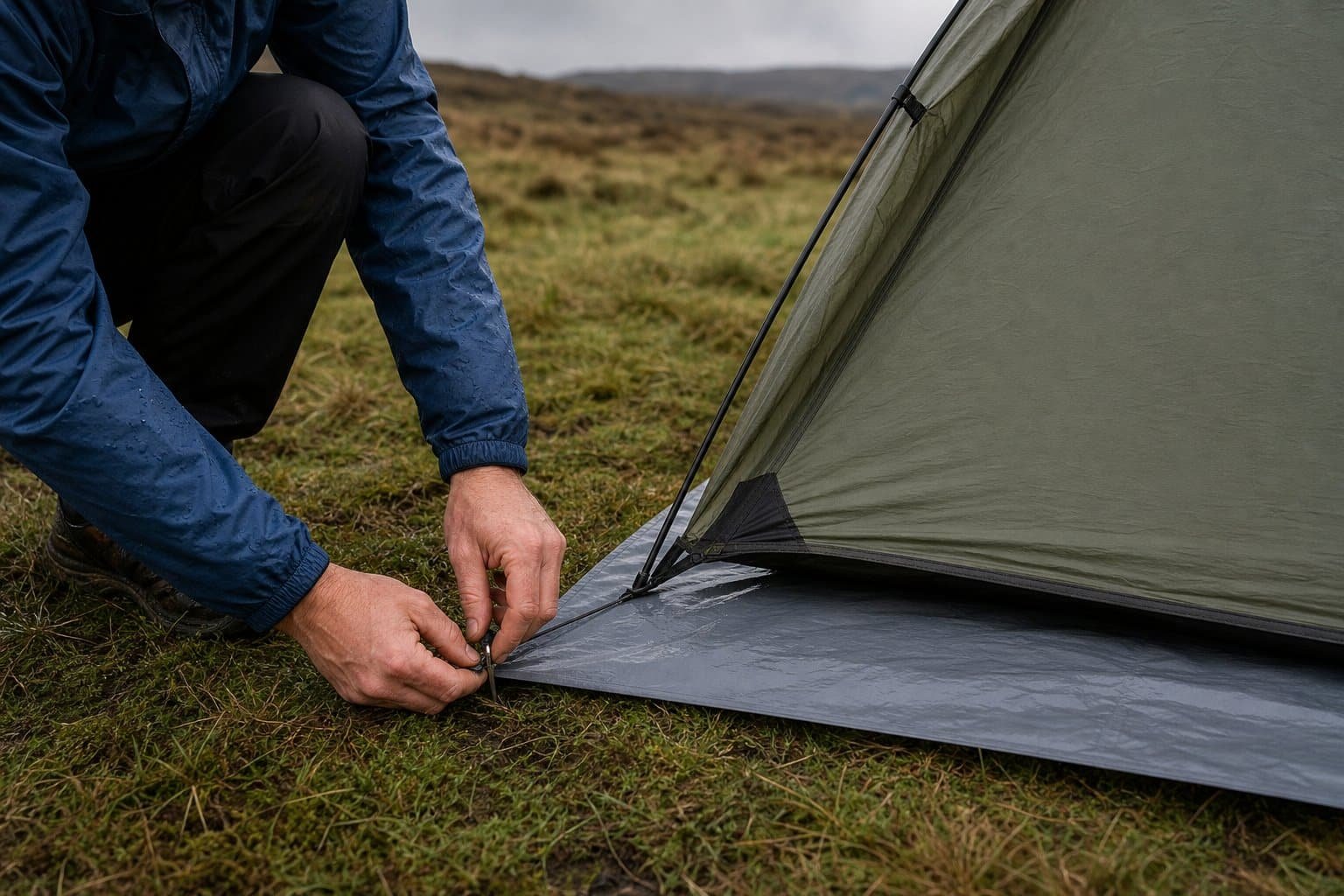
How to look after a sewn in groundsheet
- Clear the pitch
Remove stones, sticks and thistles before you lay the tent out, and avoid hollows where rain will pool under the floor.
- Use a footprint
Lay a footprint or tarp slightly smaller than the tent base underneath to protect against abrasion and help the floor stay clean.
- Protect the inside
Use a tent carpet or rugs, and put caps or mats under chair and table legs so they do not puncture the floor.
- Keep mud in the porch
Leave wet boots and coats in the porch, and keep a brush and cloth handy to sweep out grass and sand each day.
- Ventilate overnight
Open high and low vents even when it rains to reduce condensation running down the walls onto the floor.
- Dry it fully at home
If you pack away wet, pitch or hang the tent within a day or two with the floor turned up so it dries completely and does not grow mildew.
How we chose these tents
We have not pitched every tent in this list ourselves. Our picks are based on manufacturer specifications, published advice from UK camping organisations and tent brands, and recurring themes in owner feedback about sewn-in groundsheets. Prices change, so check the current price before you buy.
-
Floor construction
We compared how each floor joins the walls, its material and whether it has a bathtub profile, welded corners or taped seams.
-
Living space
We looked at floor size, height, doors and porches.
-
Condensation and comfort
We weighed vents, mesh panels and fabric breathability, since sealed tents trap more moisture.
-
Practicality and value
We compared pitching method, weight and features against price, and noted where specifications are not quoted.
Specifications such as waterproof ratings and weights are not quoted for every tent. Where a figure is missing we say so rather than guess.
What is a sewn in groundsheet?
It is a tent floor that is stitched, welded or permanently zipped to the walls, so floor and walls form one sealed unit. In the US it is often called a bathtub or tub floor.
Are sewn in groundsheets better?
For most UK campers, yes. They keep draughts, insects and surface water out and make pitching quicker. Linked-in groundsheets are easier to clean and ventilate, so some campers prefer them for the living area of a large family tent.
Do tents with sewn in groundsheets get more condensation?
They can, because damp air from breathing, cooking and wet clothes cannot escape under the walls. Open the vents, avoid cooking inside and consider a poly-cotton tent if condensation bothers you.
Do I need a footprint under a sewn in groundsheet?
It is not essential, but it is a good idea. A footprint protects the floor from stones and wear and keeps it cleaner, and a damaged sewn-in floor is much harder to replace than a loose groundsheet.
Can you repair a sewn in groundsheet?
Small holes and tears can be patched with a tent repair kit or seam sealer on a clean, dry floor. Large damage is harder, so contact the manufacturer, as some offer repair services.
Is a bell tent zip-in groundsheet the same as sewn in?
Not quite. A zip-in groundsheet seals like a sewn-in one when it is zipped up, but you can unzip and remove it to clean it or roll the walls up. The Trend Tents 4M Canvas Bell Tent in this list works this way.
Which tent with a sewn in groundsheet should you buy?
- Best overall: Coleman Skydome 6-Person Camping Tent
- Best budget: Coleman Sundome 4-Person Camping Tent
- Best bell tent: Trend Tents 4M Canvas Bell Tent
- Toughest floor: Kodiak Canvas 10×10 Cabin Lodge Tent
- Best lightweight: Clostnature 2 Person Backpacking Tent
For most families, the Coleman Skydome 6-Person Camping Tent is the best tent with a sewn in groundsheet in the UK: its tub-like floor and welded corners keep water, draughts and insects out, and pre-attached poles get it up in about five minutes. Choose the Coleman Sundome 4 if budget matters most, the Trend Tents 4M Canvas Bell Tent for a breathable tent with a floor you can remove to clean, the Kodiak Canvas 10×10 Cabin Lodge Tent for the toughest floor and real standing room, and the Clostnature 2 Person tent if you need a light, sealed shelter for backpacking.
CampEquipmentPlus relies on reader support. Purchases made via links on our website may earn us an affiliate commission at no extra cost to you, helping keep the site running.