
Best Foam Sleeping Pads
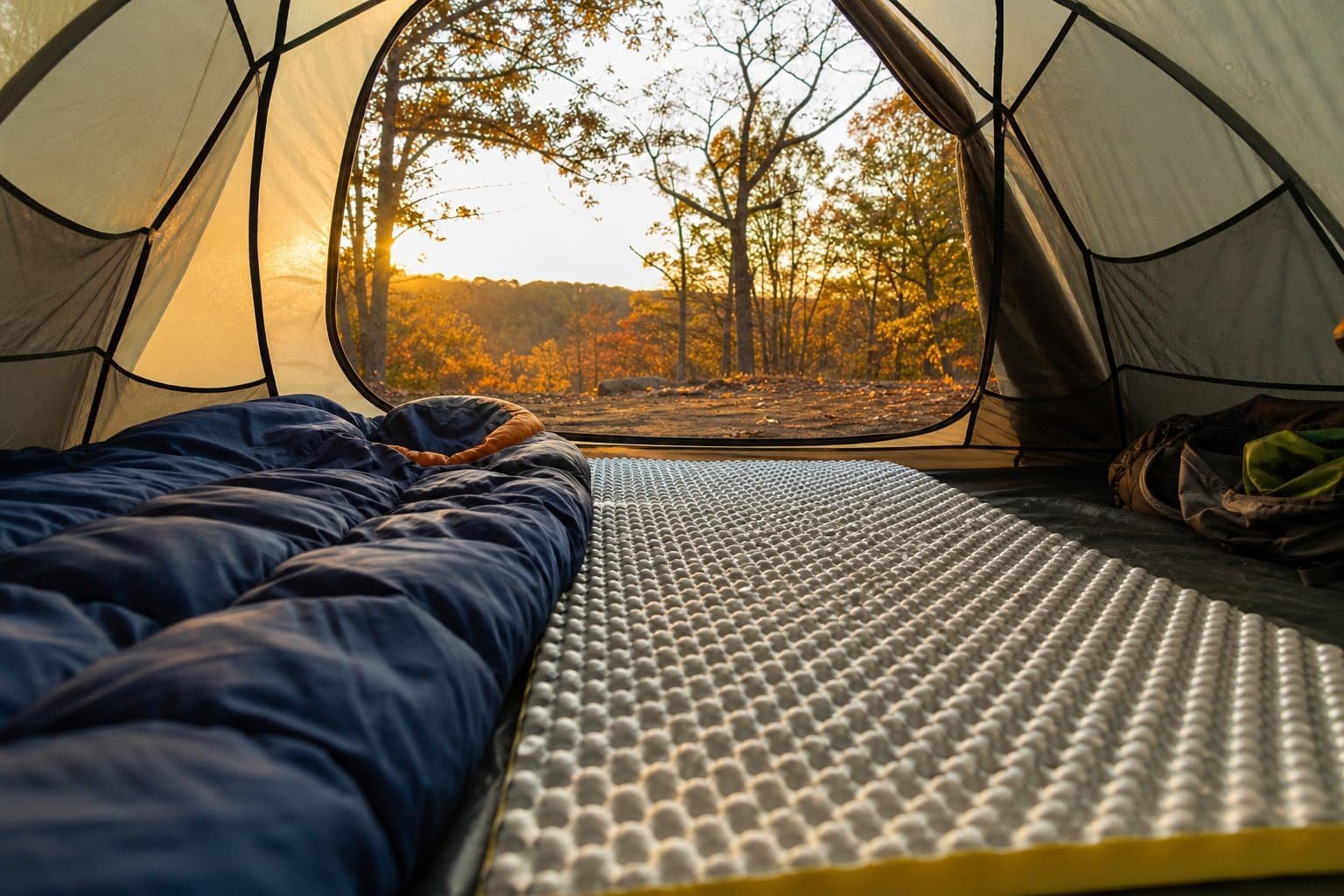
The best foam sleeping pad depends on how you camp: a closed-cell foam pad such as the Therm-a-Rest Z Lite SOL is light, puncture-proof and ideal for backpacking, while a 3–4 in memory foam pad gives car campers something much closer to a real bed.
Campers choose foam because it can’t go flat at 2 a.m., needs no pump and costs less than most air pads. The common complaints are just as consistent: closed-cell pads feel thin and firm, especially for side sleepers, and an R-value around 2 isn’t enough for winter on its own; memory foam pads are comfortable but bulky, heavy and slow to expand.
Below we compare four closed-cell pads and two memory foam pads, explain R-values and the folding vs rolling choice, and show how to use a foam pad as a winter base layer.
- Closed-cell: light, tough, R-value around 2
- Memory foam: 3–4 in of cushioning for car camping
- Stack foam under an air pad for winter warmth
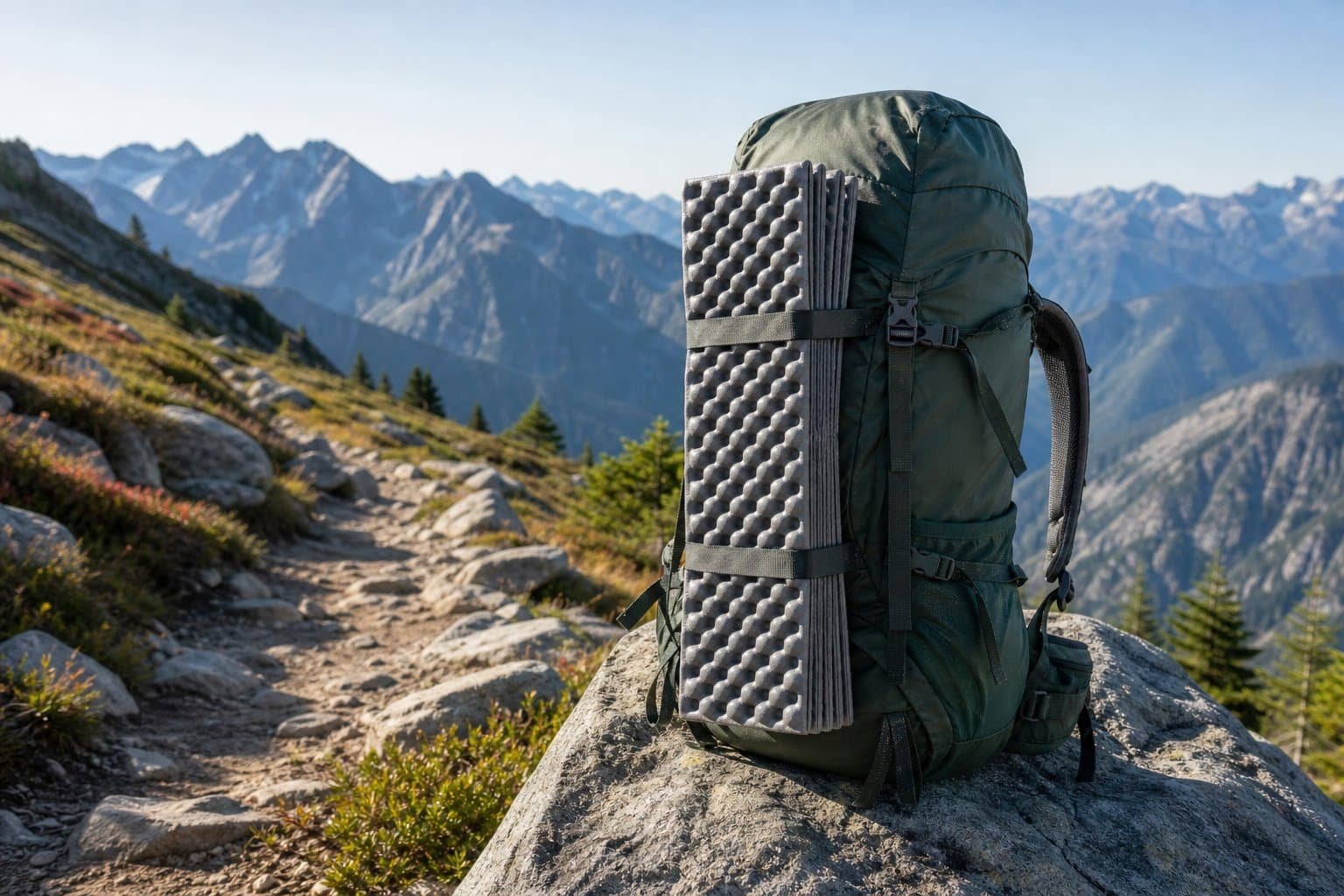
- Backpacking? Go closed-cell Pads like the Z Lite SOL and NEMO Switchback weigh about 14 oz and can’t puncture.
- Car camping? Go memory foam A 3–4 in memory foam pad is far more comfortable, but too bulky to carry far.
- R-value 2 is three-season Most closed-cell pads test around R 2. For cold ground, stack one under an insulated air pad.
- Side sleepers need thickness Under 1 in of foam feels hard on hips and shoulders; thicker foam or a second pad helps.
Choosing a foam sleeping pad comes down to one decision: do you need to carry it? A closed-cell foam sleeping pad is the lightest, toughest option for hiking and backpacking, while a memory foam sleeping pad trades pack size for real comfort at a drive-in campsite. If you are new to pads in general, our guide to choosing a sleeping pad for camping covers air and self-inflating types too.


Top pick Z Lite SOL | Comfiest CCF Switchback | Wide roll RidgeRest L | Memory foam HomeMate 3in | |
|---|---|---|---|---|
|
|
|
|
| |
| Foam type | Closed-cell | Closed-cell | Closed-cell | Memory + support foam |
| Style | Folding | Folding | Roll-up | Roll-up |
| R-value | 2 | 2 | 2.0 | Not quoted |
| Thickness | 0.75 in | 0.9 in | Not quoted | 3 in |
| Size | 72 x 20 in | 72 x 20 in | 77 x 25 in | 72 x 24 in |
| Weight | 14 oz | 14.5 oz | 19 oz | Not quoted |
| Warranty | Limited lifetime | Lifetime (defects) | Not quoted | Not quoted |
| Check price | Check price | Check price | Check price |
The best foam sleeping pad for every kind of camping: our reviews
Each review covers foam type, R-value, thickness, size, weight, packed size and warranty, plus the complaints owners raise most often. The first four are closed-cell pads for carrying; the last two are memory foam pads for car camping.
Folding closed-cell foam, R-value 2 (Therm-a-Rest), 14 oz, 72 x 20 x 0.75 in, folds to 20 x 5 x 5.5 in, limited lifetime warranty
The Z Lite SOL has been the default closed cell foam pad on long trails for years, and the reasons are simple. It weighs 14 oz in the regular 72 x 20 in size, folds accordion-style into a 20 x 5 x 5.5 in block that straps to the outside of a pack, and it can’t puncture. Therm-a-Rest’s own site now lists an R-value of 2; the Amazon listing still quotes an older 2.6 figure, so plan around 2. The dimpled egg-crate surface traps a little warm air, and the reflective ThermaCapture coating on one side bounces some radiant heat back towards you.
The trade-off is comfort. At 0.75 in thick it is firm, and back sleepers usually get on with it better than side sleepers. Owners and reviewers also note the silver coating wears off over time and the folds can collect dirt. It is made in the USA and covered by a limited lifetime warranty. Use it on its own for summer backpacking, or under an inflatable pad as cold-weather insurance.
- Light at 14 oz
- Can’t puncture or deflate
- Folds flat, sets up in seconds
- Doubles as a sit pad
- Limited lifetime warranty
- Firm for side sleepers
- R-value 2 is a three-season figure
- Reflective coating wears with use
Folding dual-density foam, R-value 2, 14.5 oz, 72 x 20 x 0.9 in, packs to 20 x 5.5 x 5 in, NEMO lifetime warranty
NEMO’s Switchback is the main rival to the Z Lite SOL and, for many people, the slightly more comfortable one. It is 0.9 in thick against the Z Lite’s 0.75 in, and the hexagonal nodes nest tightly when folded, so it packs into roughly the same 20 x 5.5 x 5 in block. SectionHiker and REI list it at 14.5 oz and R-value 2 for the 72 x 20 in regular size. NEMO uses dual-density foam, a softer top layer over a more resilient base, and a metallized film to reflect warmth back up.
Reviewers who have used both often call it the comfier of the two, but it is still a foam pad: it won’t feel like an air mattress. The most common complaint, raised by Outdoor Life, is that the nodes compress and fray after a few heavy seasons. Others note that the outside of the folded pad picks up dirt and moisture. NEMO backs it with a lifetime warranty against defects, and there is a shorter version if you want to save weight.
- Slightly thicker and plusher than most CCF pads
- Packs compactly
- Light at 14.5 oz
- Lifetime warranty against defects
- Nodes can compress after heavy use
- Still firm for side sleepers
- R-value 2 is three-season only
Roll-up cross-linked polyethylene foam, R-value 2, 19 oz, 77 x 25 in, made in the USA
The RidgeRest Classic is Therm-a-Rest’s original roll-up foam pad, and the Large size is the one to choose if a 20 in pad leaves your elbows on the tent floor. It measures 77 x 25 in and weighs 19 oz, with an R-value of 2.0. The ridged surface gives raised peaks for support and valleys that trap warm air. It is made from cross-linked polyethylene that shrugs off rocks, sticks and sharp ground, and it is usually cheaper than the folding pads above.
Outdoor Life lists the regular RidgeRest at about 0.63 in thick, so it is thinner than the Switchback and feels firm. Rolling it is the other trade-off: a roll is bulkier than a folded pad and usually rides on the outside of a pack, and it doesn’t lie as flat as a folding pad straight away in cold weather. For car campers, scouts and bigger sleepers who want a durable ground layer, it is excellent value.
- Wide 25 in and long 77 in
- Very durable foam
- Good value
- Made in the USA
- Bulky roll
- Thin and firm
- Takes time to lie flat when cold
Roll-up closed-cell foam, 72 x 19 x 3/8 in, straps included, 1-year warranty
The Stansport Pack Lite is about as simple as a foam sleeping pad gets: a 72 x 19 in roll of closed-cell foam, 3/8 in thick, with straps to keep it rolled. Stansport doesn’t quote an R-value or weight on the listing, so treat it as a light-duty pad for warm nights rather than a cold-weather solution. It keeps damp ground away from your sleeping bag, it can’t puncture, and it costs a fraction of the branded pads.
At 3/8 in thick it won’t give much cushioning on its own. It works best as a spare pad for kids or guests, a layer under a cot or air mattress, or a sit pad around camp. It comes with a one-year warranty against manufacturer defects.
- Very cheap
- Can’t puncture
- Straps included
- Handy as a spare or under-layer
- Only 3/8 in thick
- No R-value or weight quoted
- Narrow at 19 in

3 in memory foam over high-density support foam, 72 x 24 x 3 in, removable washable cover, non-slip waterproof base, straps and bag
If you drive to your campsite, a memory foam sleeping pad is the comfort upgrade foam campers ask about most. The HomeMate is a 72 x 24 x 3 in roll-up mattress that pairs a memory foam top with high-density support foam underneath, so hips and shoulders sink in a little without bottoming out. It has a zip-off washable cover, a non-slip waterproof bottom, straps and a storage bag, and hook-and-loop connectors let you join two pads side by side.
Be realistic about the downsides. It is far bulkier than a closed-cell pad and is made for car camping, cots, vans and truck beds, not backpacking. HomeMate doesn’t quote a weight, R-value or warranty. Memory foam also firms up in cold temperatures, and like all compressed-shipped foam it may need a day or two to fully expand when new. If comfort matters more than pack size, it is a good-value way to get a real-bed feel at camp.
- 3 in of foam for real cushioning
- Comfortable for side sleepers
- Washable cover
- Pads can be joined together
- Bulky, car camping only
- No R-value, weight or warranty quoted
- Firms up in the cold
4 in: 3 in high-density support foam plus 1 in memory foam, 72 x 24 in, built-in pillow, waterproof velvet cover, non-slip base, travel bag, 1-year warranty
The Easthome is the thickest pad in this guide at 4 in, built from 3 in of high-density support foam topped with 1 in of memory foam for a medium-firm feel. It includes a built-in pillow, a removable waterproof velvet cover with a coated top and bottom, a non-slip base, adjustable straps and a travel bag. The foam is OEKO-TEX certified, and Easthome gives a one-year warranty, which is more than several rival memory foam pads quote.
It is the most bed-like option here, but also the bulkiest and among the most expensive. Easthome’s own listing notes it isn’t meant for long-distance carrying, so keep it for car camping, guest beds, cots and road trips. No weight or R-value is listed. If you want maximum comfort and have the boot space, it is a strong choice.
- Thickest pad here at 4 in
- Built-in pillow
- Waterproof, washable cover
- 1-year warranty
- Bulky and heavy to carry
- Pricier than most foam pads
- No R-value or weight quoted
Closed-cell vs memory foam: which foam sleeping pad is right for you?
Both are foam, but they are built for opposite jobs. A closed cell foam pad is made of tiny sealed bubbles of polyethylene or EVA. Because the cells are sealed, the foam doesn’t absorb water, doesn’t compress much under your weight and can’t be punctured. That makes it light and almost indestructible, but also thin and firm.
A memory foam sleeping pad uses open-cell viscoelastic foam, usually as a top layer over denser support foam. The open cells let it soften and mould around your hips and shoulders, which is why it feels so much more like a mattress. The same structure makes it heavier, bulkier and more vulnerable to moisture, so it needs a cover and a dry tent floor.
Closed-cell foam pads
Closed-cell pads such as the Z Lite SOL, NEMO Switchback and RidgeRest Classic are the traditional backpacking choice. REI’s guide to closed-cell vs self-inflating pads sums up the strengths: they are lighter than self-inflating pads, affordable, resistant to punctures and tears, and need almost no maintenance. You can strap one to the outside of a pack, sit on it at lunch and throw it straight onto rocky ground.
The weaknesses are just as clear. Most are under an inch thick, so they offer less cushioning, and most have an R-value around 2. That is fine for summer and much of spring and autumn, but not enough on its own for frozen ground. Side sleepers in particular often find a lone closed-cell pad hard on the hip.
Memory foam sleeping pads
Memory foam pads are typically 2–4 in thick, 24 in wide and come with a removable cover. They are made for car camping, cots, vans, truck beds and spare beds. Because they don’t need inflating, they can’t leak, and many campers who struggle to sleep on air mattresses find them far more comfortable.
They have their own problems. They are heavy and roll up into a bundle the size of a sleeping bag or larger. Memory foam is temperature-sensitive and feels firmer on cold nights. Compressed pads usually need 24–48 hours to recover their full thickness after unboxing. And because the foam is open-cell, a wet cover or a puddle on the tent floor can soak in. Most budget memory foam pads also don’t publish a tested R-value, so you can’t compare warmth directly.
What about self-inflating foam pads?
Self-inflating pads sit in between: an open-cell foam core inside an airtight shell, with a valve. They are warmer and more comfortable than closed-cell foam and lighter than memory foam, but they can puncture and are pricier. If that middle ground appeals, see our roundup of the best self-inflating camping mats.
How warm is a foam sleeping pad? R-values explained
R-value measures how well a pad resists heat flowing from your body into the ground. Since 2020 most major brands have tested pads to the ASTM F3340 standard, so R-values from different brands are broadly comparable. Featherstone, for example, labels its El Cordion closed-cell pad as ASTM F3340 rated. Higher numbers are warmer, and R-values add together when you stack pads.
Most closed-cell foam pads test at about R 2. The Z Lite SOL, NEMO Switchback and RidgeRest Classic all sit at 2, and the Featherstone El Cordion lists 2.1. That suits nights above roughly freezing for most people. For colder trips, our guide to what R-value a sleeping pad needs for winter explains why R 4–5 or more is a better target.
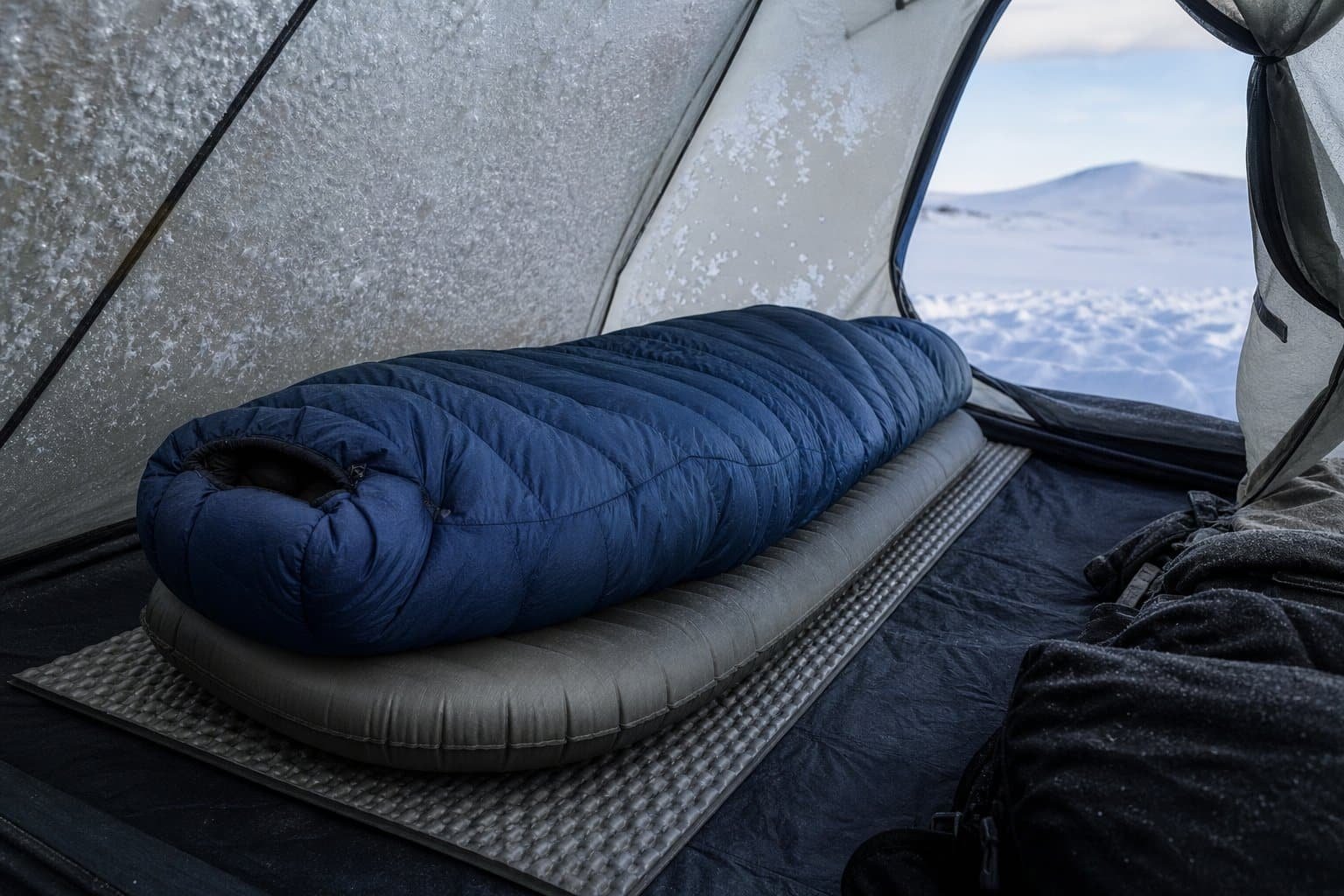
This is where a closed cell foam pad really earns its place. Put one under an insulated air pad and you add about R 2, plus a puncture-proof layer that protects the air pad from frozen ground and sharp debris. If the air pad fails, you still have something between you and the snow. Our article on stacking sleeping pads for warmth covers the details, and pairing the stack with one of our best cold weather sleeping bags covers the other half of a warm night.
Reflective coatings, like the silver layer on the Z Lite SOL and the metallized film on the Switchback, help a little. Therm-a-Rest says its ThermaCapture coating increases warmth by around 20 percent. Many people sleep with the silver side up in cold weather and down in warm weather, though the published R-value already accounts for the coating.
Folding vs rolling closed cell foam pads
Closed-cell pads come in two shapes. Folding pads, often called accordion or Z-fold pads, fold into a rectangular block. They lie flat the moment you open them, stack neatly under an air pad and are easy to use as a seat. The Z Lite SOL and Switchback are both folding pads.
Roll-up pads such as the RidgeRest Classic and Stansport Pack Lite roll into a cylinder. They are often cheaper, a little more durable because there are no fold lines to wear, and the large sizes are wider. The downside is a bulkier pack shape, and on a cold morning a roll can try to curl back up until it warms. If you hike with your pad strapped to the outside of a pack, both shapes work; if you want it inside, neither is small.
Is a foam sleeping pad comfortable for side sleepers?
A thin closed-cell pad is the hardest option for side sleepers, because the hip and shoulder take your whole weight on a small area. If you sleep on your side and want to carry foam, look at the thicker Switchback, fold a jacket under your hip, or use the foam pad under an inflatable one. A memory foam sleeping pad is the opposite story: at 3–4 in thick it is usually the most comfortable choice for side sleepers who camp by car. Our list of sleeping mats for side sleepers has more options.
Back sleepers usually find a closed-cell pad perfectly acceptable, especially on soft ground. Clearing stones and pine cones, pitching on grass or leaf litter and using a pillow all make more difference than many people expect.
Weight and packed size
A regular closed-cell pad weighs 14–19 oz and packs to about 20 x 5 x 5.5 in folded or 20 x 6–8 in rolled. That is heavier and bulkier than a top ultralight air pad, but you never carry a repair kit or pump. A short or torso-length pad can save a few more ounces if you put your pack under your legs.
Memory foam is a different class. A 3–4 in pad usually weighs several pounds and rolls into a large bundle with straps or a bag. That is no problem in a car boot or a van, but it rules memory foam out for backpacking, canoe portages or long walks from the car park.
Foam sleeping pad vs inflatable pad
Inflatable pads win on comfort per ounce and on warmth: many insulated air pads reach R 4–7 while packing smaller than a water bottle. Foam wins on reliability, price and simplicity. A foam pad never leaks, doesn’t crinkle and is ready to sleep on in seconds. Many experienced backpackers carry both on cold trips: foam underneath for insurance and an air pad on top for comfort.
For car camping, the comparison is memory foam against air beds. Air beds are cheaper and pack smaller, but they lose pressure overnight as the air cools, can feel bouncy and are cold without insulation. A memory foam pad is warmer to lie on and gives steady support, at the cost of bulk.
Common foam pad problems and fixes
It feels too hard. Choose the thickest closed-cell pad you can carry, pitch on softer ground or add a second pad. For car camping, switch to memory foam.
I’m cold from underneath. R 2 isn’t a winter rating. Stack the foam pad under an insulated air pad, and make sure your sleeping bag is rated for the night.
The pad slides around. Foam pads can slip on a nylon tent floor. Some memory foam pads have non-slip bases; for closed-cell pads, a few dabs of seam sealer on the underside or a sleeping bag strap helps.
The nodes have flattened. All foam compresses over years of use. Heavily used folding pads lose loft at the folds first, so rotate which end is under your hips.
My memory foam pad is still thin. New compressed pads can take 24–48 hours to expand fully. Unroll it at home a couple of days before your trip.
The memory foam pad smells. New foam can have a mild odour at first. Air it out in a ventilated space before your trip, and look for certifications such as OEKO-TEX or CertiPUR-US if that matters to you.
Who should choose a foam sleeping pad?
A foam sleeping pad suits more campers than its simple looks suggest. Thru-hikers and long-distance backpackers choose closed-cell foam because it can’t fail, even after months of nightly use on rough ground. Desert and alpine hikers like it because thorns, sharp rocks and abrasive granite are no threat. Scout leaders and parents buy foam because kids can drag it around, sit on it and drop it in the dirt without anything breaking, and because it costs far less than an air pad.
Car campers have different priorities. If you set up a tent beside the car, sleep in the back of an SUV or truck bed, or need a spare bed for visiting family, a memory foam sleeping pad gives a level of comfort no thin pad can match. The weight doesn’t matter when you only carry it a few yards, and many families keep one at home as a guest bed between trips.
Foam is a weaker choice if you sleep cold and only want to carry one pad, or if you are a side sleeper on a long backpacking trip. In those cases an insulated air pad, perhaps with a short foam pad underneath, is usually the better buy.
Foam pads for cots, hammocks and kids
A foam pad is one of the best upgrades for a camping cot. Cot fabric is suspended in the air, so cold air passes underneath and chills you from below, even on mild nights. A closed cell foam pad on top of the cot blocks that draught, and a 2–3 in memory foam topper makes a cot feel much more like a bed. The HomeMate’s straps and the cot-sized 72 x 24 in footprint of both memory foam picks are designed for exactly this. If you are still choosing a cot, see our guide to the best camping beds for adults.
Hammock campers often slide a closed-cell pad inside the hammock in place of an underquilt for cool nights. Folding pads can feel awkward in a curved hammock, so many people prefer a roll-up pad there. For children, a short closed-cell pad is light, cheap and nearly indestructible, and it doubles as a seat or a play mat around camp.
How much should you spend on a foam pad?
Basic closed-cell rolls like the Stansport Pack Lite are among the cheapest sleeping pads you can buy. Branded folding pads from Therm-a-Rest and NEMO usually cost more but add a tested R-value, better foam, reflective coatings and long warranties. Memory foam pads range from budget roll-ups to premium car-camping mattresses costing several hundred dollars, with thickness, cover quality and warranty driving most of the difference. Because Amazon prices change often, check the current price with the buttons above rather than relying on a fixed figure.
For most people, the best value is a branded closed-cell pad for carrying and, if you car camp often, a mid-priced 3–4 in memory foam pad for the car. Many campers end up owning both and choose by trip.
How to care for a foam pad
Closed-cell pads need little care: shake off dirt, wipe with mild soapy water and let them dry before storing. Store them flat or loosely folded rather than crushed under heavy gear. Keep them away from campfire sparks and stove flames, because polyethylene foam melts easily.
For memory foam, unzip and wash the cover as the maker recommends, and spot-clean the foam only. Always dry it fully before rolling it up, and store it unrolled if you have space, which helps it keep its shape.
Foam sleeping pad myths
Most closed-cell pads test at about R 2, a three-season figure. For frozen ground, stack one under an insulated air pad.
Thick foam does insulate, but most budget memory foam pads don’t publish a tested R-value, and open-cell foam that gets damp loses warmth.
They can’t puncture, but the foam slowly compresses over years of use, especially at the folds.
What to look for in a foam sleeping pad
Closed-cell foam for anything you carry; memory foam only when the car is close by.
Look for an ASTM F3340 R-value. Around 2 is three-season; stack pads for colder nights.
Under 1 in is firm. Side sleepers should favour the thickest pad they can carry or 3–4 in memory foam.
Standard pads are 72 x 20 in. Taller or broader sleepers should look for 77 x 25 in sizes.
Folding pads lie flat and stack neatly; rolling pads are often cheaper and wider.
For memory foam, a removable washable cover and a stated warranty are worth having.
How to use a foam pad for winter warmth
- Put the foam pad down first
Lay the closed-cell pad on the tent floor, directly under your sleeping area.
- Add your air pad on top
Place the inflatable pad on the foam, so the foam protects it from frozen ground and sharp debris.
- Add the R-values
A foam pad of R 2 under an air pad of R 4 gives roughly R 6 in total.
- Match your sleeping bag
Pick a bag rated for the night’s low, and plan around its comfort rating.
- Keep the foam handy
Use the foam pad as a sit mat during the day so you aren’t losing heat to cold rocks or snow.
How we chose these foam sleeping pads
We have not tested every pad in this list ourselves. Our picks are based on Amazon listings, maker and retailer specifications from Therm-a-Rest, NEMO, REI and SectionHiker, buying advice from REI and Outdoor Life, and recurring owner complaints about thin, firm pads, compressed nodes, worn coatings and slow-expanding memory foam.
-
Warmth
We favoured pads with a stated, tested R-value.
-
Comfort
We compared thickness, foam type and feedback from side and back sleepers.
-
Portability
We checked weight, packed size and whether each pad suits backpacking or car camping.
-
Durability and value
We weighed price against build quality and stated warranty.
What is the best foam sleeping pad?
For backpacking, the Therm-a-Rest Z Lite SOL: 14 oz, R-value 2, puncture-proof and folds flat. For car camping, a 3–4 in memory foam pad such as the HomeMate 3 Inch is much more comfortable.
Is closed-cell foam or memory foam better for camping?
Closed-cell foam is better for carrying: it is light, waterproof and can’t puncture. Memory foam is better for comfort when you camp by car, but it is heavy and bulky.
Is a foam sleeping pad warm enough for winter?
Not on its own in most cases. Closed-cell pads are typically around R 2. Stack one under an insulated air pad for winter, or choose a pad system with a total R-value of 5 or more.
Which side of the Z Lite SOL goes up?
Therm-a-Rest designs the reflective side to face up to bounce heat back to you. Many campers flip it in warm weather.
Can side sleepers use a foam pad?
Yes, but thin closed-cell pads can feel hard on the hips. Thicker pads like the NEMO Switchback help a little, and memory foam or a foam-plus-air-pad stack helps a lot.
How long does a foam sleeping pad last?
Closed-cell pads often last many seasons because they can’t puncture, though the foam slowly compresses. Replace one when it no longer insulates or cushions you well.
Final thoughts on choosing a foam sleeping pad
The right foam sleeping pad is the one that matches how far you carry it. If you hike, a closed cell foam pad like the Z Lite SOL or NEMO Switchback gives you a light, puncture-proof bed that sets up in seconds, and it becomes a vital warmth layer under an air pad in winter. If you camp beside the car, a memory foam sleeping pad such as the HomeMate or Easthome turns a hard tent floor into something close to a real bed. Either way, check the R-value against the coldest night you expect, and remember that comfort and warmth both improve when you stack pads. For more sleep gear, browse our sleeping pads and air mats guide.
Which foam sleeping pad should you buy?
- Best overall closed-cell: Therm-a-Rest Z Lite SOL Foam Sleeping Pad
- Most comfortable closed-cell: NEMO Switchback Foam Sleeping Pad
- Best wide roll-up pad: Therm-a-Rest RidgeRest Classic Large
- Best budget backup: Stansport Pack Lite Foam Sleeping Pad
- Best memory foam value: HomeMate 3 Inch Memory Foam Camping Mattress Pad
- Thickest memory foam pick: Easthome 4 Inch Memory Foam Camping Mattress Pad with Pillow
For most backpackers, the Therm-a-Rest Z Lite SOL is the best foam sleeping pad: 14 oz, R-value 2, folds flat and can’t puncture. The NEMO Switchback is a little plusher, the RidgeRest Classic Large suits bigger campers on a budget, and the Stansport Pack Lite is a cheap spare. For car camping, the HomeMate 3 Inch is the best-value memory foam pad, and the Easthome 4 Inch is the most bed-like.
CampEquipmentPlus relies on reader support. Purchases made via links on our website may earn us an affiliate commission at no extra cost to you, helping keep the site running.